

Blair Mowat Premieres Track From Eddie Izzard-Led 'Doctor Jekyll'
If you're a fan of Danny Elfman's spooky soundtracks for his longtime collaborator Tim Burton, meet the new heir to the throne. Blair Mowat is a Scottish, BAFTA-nominated composer who lends his robust sound to Doctor Jekyll, the upcoming British horror film directed by Joe Stephenson. Mowat's 17-track album will be released on all digital platforms on Friday, October 27th, coinciding with the film's UK premiere date.
The fabulous Eddie Izzard stars as both Dr. Nina Jekyll and Rachel Hyde in this haunting and unique adaptation of the classic tale. A wealthy woman in class and stature, Dr. Jekyll made a fortune in the pharmaceutical industry, quickly becoming a household name. But her success came at a cost. After a scandal forced her out of the spotlight, she was relinquished to live in seclusion with her demons. In need of an assistant and, begrudgingly, company, Jekyll hires Rob - a young father and ex-con straight out of rehab who is trying to get back on his feet. However, it soon becomes clear that there are evil forces at play, and Rob's wits are tested in a game of cat and mouse with a mysterious and manipulative entity.
Cinemacy is excited to premiere the track "Jekyll And Hyde" from Hammer Studios' Doctor Jekyll, below:
Says Blair Mowat of the duality of his work on Doctor Jekyll, "Our director, Joe Stephenson, was looking for a bold, gothic, and dramatic score mixing traditional Hammer tropes with a modern sensibility. Much like Jekyll and Hyde, this a score of two parts, recorded with two different orchestras - the Budapest Art Orchestra and The Royal Scottish National Orchestra. This helped to emphasize the split personality of the score switching from sparse haunting horror to the operatic gothic explosions we hear towards the end of the film. A 30-person choir helped achieve a sense of scale when we needed it and Jekyll's textural effects are performed on a variety of rare old string instruments such as the Viola Da Gamba and Stroh Violin, evoking the sense of an ancient evil."
If you listen closely, Mowat says you're in for a treat: “Fans may even notice that the main theme rhythmically spells out the title Doctor Jekyll."
With over two hundred scores for film, theatre, and television to his name, Mowat continues to push into new territory. His clients range from The English National Ballet and The Royal Shakespeare Company to BBC One (the Doctor Who spin-off series Class), SKY (The Amazing Mr. Blunden) & ITV (McDonald & Dodds). Both McDonald & Dodds and The Amazing Mr. Blunden were double nominated for Best Original TV Score and Best Opening Titles in the Music & Sound Awards. More recently, the BAFTA-nominated, award-winning composer scored Russell T Davies' drama Nolly, starring Helena Bonham Carter, and Men Up. As a musical arranger, he has worked on shows including Doctor Who and David Attenborough's Life Story.

'Anatomy of a Fall' is a Masterfully Executed Courtroom Thriller
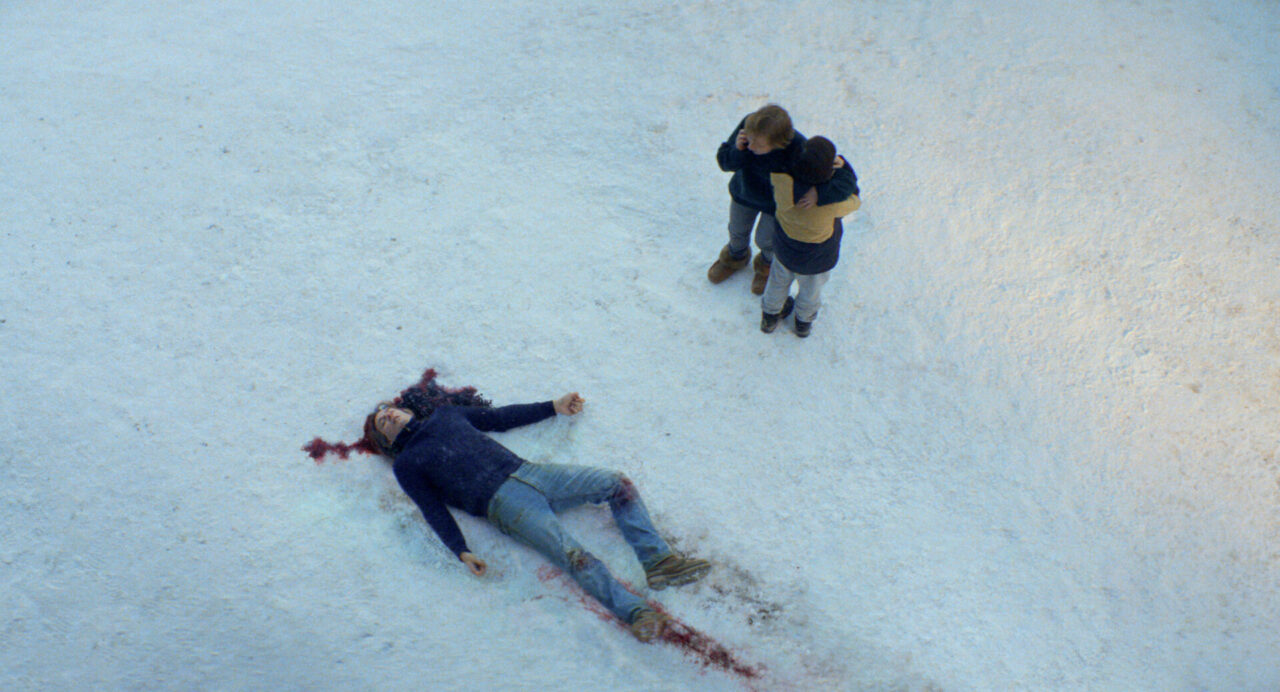
When an unexplained death occurs in a cabin in a remote town in the French Alps, a woman is presumed guilty of murder and is forced into the most grueling physical and emotional fight for her life in the psychologically gripping drama, Anatomy of a Fall. Masterfully executed by French director Justine Triet with a sensational performance by Sandra Hüller that will leave you gobsmacked, Anatomy of a Fall is a masterclass in film pacing and a thorough examination of morality and how we react to complexities that arise in decaying relationships.
Was it suicide, or something much more sinister? This is the devastating corner that German author Sandra (Hüller) finds herself in after her husband, Samuel (Samuel Theis), is found dead in the snow. His lifeless body, lying directly below an open window from the third floor of their wood cabin, was discovered by the couple’s vision-impaired young son Daniel (Milo Machado Graner), and his seeing-eye dog, Snoop (a Border Collie named Messi). It’s a horrifying moment for Sandra, whose grief is abruptly cut short after she becomes the prime suspect in his death.
Sandra vehemently denies any involvement, despite the couple having their issues (the film opens with tense passive aggression from both parties). However, Sandra’s insistence, plus the lack of witnesses and a motive, initially gives Sandra’s lawyer, Maître Vincent Renzi (Swann Arlaud), a sense of confidence that this case will wrap up neatly. As proceedings get underway in the small French village, it’s clear that Sandra is up against a prosecution team with a relentless determination for a conviction. But the more evidence Sandra is confronted with, including a previous novel she wrote that shares similarities to the crime at hand, we find ourselves wondering… is she actually guilty?
https://www.youtube.com/watch?v=FUXawkH-ONM&ab_channel=NEON
In every sense of the word, Anatomy of a Fall is perfection. Don’t let the nearly three-hour runtime intimidate you, this courtroom drama soars by with brevity. The chain of events that unravel from the beginning of the trial builds upon themselves until we reach a monumental moment in the closing arguments, with powerful monologues from both the prosecution and defense. Triet, along with screenwriter Arthur Harari, have a “Shakespearean meets Sorkin” way with words that fit together so precisely, you can’t help but smile. Just as breathtaking as the screenplay–and the phenomenal acting by all involved–is the lack of a notable score. Triet’s decision to forgo additional music in an effort to lessen the emotional manipulation that a score can give and guide the audience to only focus on the characters instead is an untraditional and wildly commendable choice.
The title, Anatomy of a Fall, has a double meaning here too, which is powerful in both a literal and metaphorical sense. On one hand, there is the physical act of the fall which is the catalyst for the film. The entire basis of the trial is to prove that the fall was either accidental or manufactured. The anatomy is dissected from all angles. On the other hand, the fall also alludes to Sandra’s reputation, a sort of fall from grace as an esteemed author to a scorned woman capable of murder. Sandra endures scrutiny and dissection of her own, with her private life unexpectedly becoming public and judged by strangers who have the capability to ruin her future.
What makes Anatomy of a Fall so striking are the palpable feelings of tension and remorse, due in large part to the onscreen acting. Sandra Hüller (Toni Erdmann, Zone of Interest) was destined to play this part, her embodiment of this complex and compelling character is truly one of the most remarkable performances I’ve seen this year. And I can’t close without mentioning Snoop, whose performance is mind-blowingly incredible that I couldn’t help but laugh. Snoop is a star!
A crime room thriller with excellent storytelling, a unique directorial vision, and stunning performances from both human and canine, Anatomy of a Fall is the must-watch film of the season.
In 'The Holdovers,' Lost Souls Connect Over Christmas
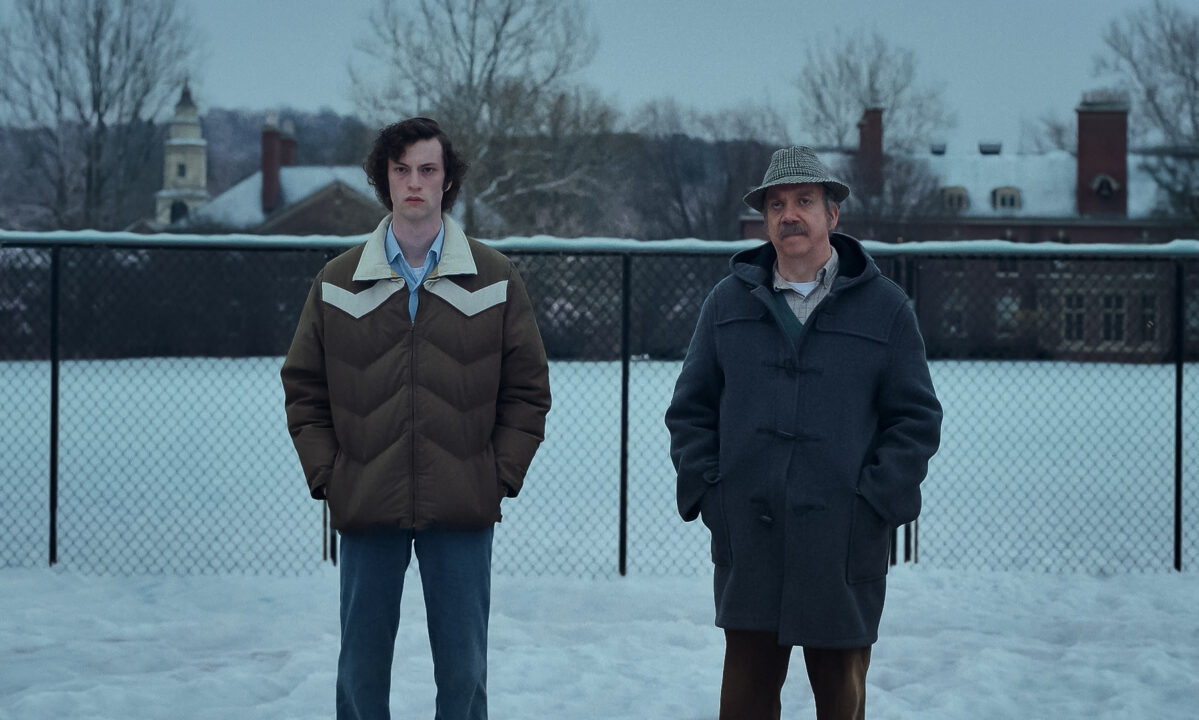
At the expense of sounding corny, The Holdovers is a film that truly warms the heart and soul, like the cinematic equivalent of a self-soothing hug by a crackling fireplace. Directed by Alexander Payne (Nebraska, Sideways), Paul Giamatti returns to the big screen in top-tier form as a cranky and out-of-touch professor whose cold heart begins to melt after forging an unlikely connection with a student. The Holdovers is a beautifully told story about the human condition and how understanding an individual's complexity can lead to an empathetic, life-changing awakening.
What one will notice immediately as the film opens is the visual homage to classic cinema of the 1970s. The desaturation and film stock quality make The Holdovers feel as if it is a treasure pulled from the archives of yesteryear. This throwback aesthetic carries on throughout the entirety of the film and is largely responsible for the overall tonal sense of comfort and warmth. The Holdovers doesn't just take place in 1970, Alexander Payne wanted audiences to feel as if the film was made in the time period as well.
Paul Hunham (Giamatti) is an ancient history teacher at Barton Academy, the New England-set boarding school for the upper echelon of privileged society. Paul is a single man, never married, and fiercely devoted to educating his students despite his ill attempts to inspire. His strict style of teaching and less than generous "Christmas gift" to the students of homework over the holiday break makes Paul the most despised professor on campus. All Paul wants for Christmas is a break from his students but as fate would have it, he is stuck with supervisor duty. This means he is forced to stay on campus and oversee the handful of students who aren't going home for the break, or the "holdovers".
15-year-old Angus Tully (Sessa) is one of the unlucky boys whose mom and new stepfather refuse to release him from Barton Academy for the holidays. Angus's frustration at the situation grows substantially when, comically, the four other boys who were initially holdovers manage to get released into the care of a friend's wealthy dad. This leaves Angus stuck with Paul and the only other faculty resident on campus, Barton Academy's head cook Mary Lamb (Da'Vine Joy Randolph).
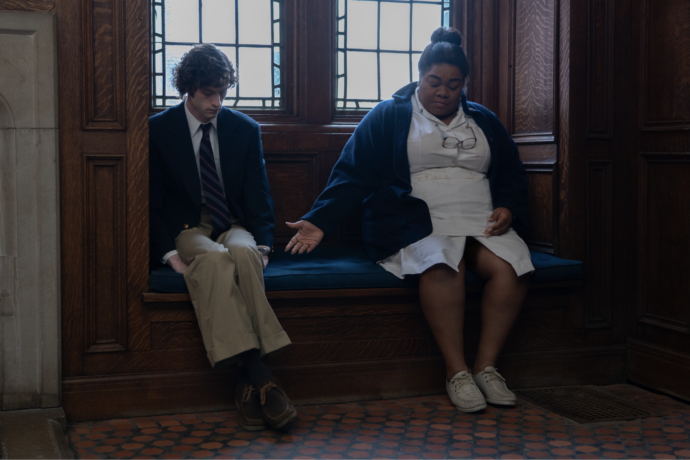
Paul is a self-appointed loner who is forced into a parental role, Angus is a smart kid with bad behavior, and Mary is a caretaker who is navigating through the heartbreak of losing her only son. All three are tortured by their own thoughts and sense of hopelessness and, ironically, their lack of communication in expressing these feelings causes them to miss out on a chance for connection. Despite their many differences, Paul, Angus, and Mary are more alike than they even realize. Over the course of the two-week holiday break, the trio engages in comical misadventures, turbulent growing pains, and emotional catharsis–ultimately leading to the creation of an impromptu family unit that they all so desperately wanted.
The Holdovers feels like an instant classic, anchored by a knockout performance from Paul Giamatti. His pompous, pipe-smoking, historical text-spewing character is not only a riot to watch on screen but also mimics the classic tortoise archetype. He retreats into his shell when feeling threatened and is extremely vulnerable without his defensive armor. Paul's armor in this case is his intelligence, which is constantly tested by the wilding, unruly, and hare-like Angus. Newcomer Dominic Sessa is a breath of fresh air, acting as if he was somehow plucked from the 70s as well. The authenticity in his performance is incredibly impressive and sets a high bar for any future projects. The consistently wonderful Da'Vine Joy Randolph delivers an awards-worthy rendition of a single grieving mother experiencing many emotions at once. She is undeniably phenomenal.
The world of The Holdovers feels so real and tangible, in large part due to the outstanding production design by Ryan Warren Smith which is artfully realized and captured by cinematographer Eigil Bryld. A sweeping and delicately pieced orchestral score by composer Mark Orton–which includes the standard guitar, piano, and strings along with the unexpected addition of a toy trumpet, sleigh bells, and a marxophone–perfectly compliments the abundance of synced songs. Music supervisor Matt Aberle must have had their hands full licensing tracks from Cat Stevens, The Allman Brothers Band, and Labi Siffre among others.
A film to experience with friends and loved ones this holiday season, The Holdovers promises to spread joy and put a smile on the faces of even the most curmudgeonly of people.
Animated Horror Film 'Canvas' Echoes Real-Time Hopelessness
The heaviness of current world events can feel like we are living in a simulation, a sort of "hell on earth" scenario. This real-life recurring feeling of hopelessness for humanity tees up audiences for what to expect in writer-director Ryan Guiterman's animated sci-fi horror film, Canvas. This film doesn't offer respite from the horrible atrocities that seem all too commonplace nowadays; instead, Guiterman uses society's most vulnerable characteristics as the catalyst for his arthouse horror film. If you're ready to embrace even more doom and gloom, then buckle up and let Canvas take you for a ride.
Canvas had its World Premiere at the Annecy Animation Film Festival in 2022 and Gravitas Ventures secured worldwide rights shortly thereafter. In this midnight movie, a demon known as "The Painter" (Ell Peck) comes to Earth with a gruesome mission—to create new spawn from chaos and death. The omniscient godlike being speaks in a baritone rumble, in Latin, which is in stark contrast to the protagonist of the film, George Rohan (Steve Key). George is an FBI agent who has been assigned a special place within the "Painter Defense Agency" to keep the demon at bay and civilization safe. No one is to know the existential threat that "The Painter" poses for fear of total chaos and unmanageable uprising, and so it is George's job to keep things close to the vest. Meanwhile, journalist Reila Martin (Isabel Ellison) is hard at work attempting to expose George's growing web of lies. But secrets this big can only be kept for so long until they burst at the seams, at which point it may be too late.
https://www.youtube.com/watch?v=C1hfxtfq4LE&ab_channel=GravitasVentures
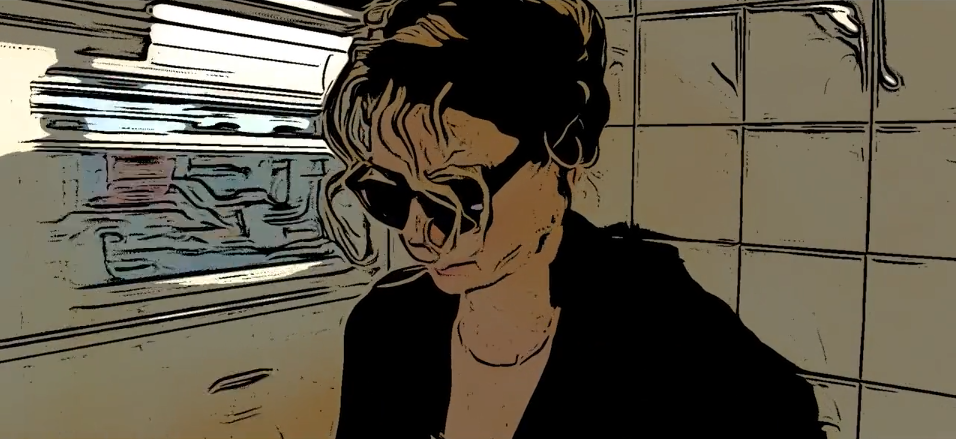
The impressionistic art style combined with its use of animation, live-action, and motion capture gives Canvas a sense of individuality among its animated peers. The Mortal Kombat-like font and use of heavy blacks and dark colors throughout are good indicators that this film is not family-friendly, or easily digestible for the average consumer. However, it doesn't seem like Ryan Guiterman is concerned with pleasing the masses. The target audience for this film is open-minded cinephiles who appreciate the art of graphic novels and respond to thinly veiled political subject matter.
What we see on screen looks like a comic book come to life, the merging of artistic mediums makes for a visually captivating watch. At times though, scenes are colored too dark and prove challenging to decipher what is happening in detail. The score, while appropriately dark and disturbing, seems to have been the victim of a poor mix job. There are moments when it is too overpowering and loud, which drowns out the dialogue in key scenes, making it challenging to understand.
Despite its technical obstacles, Canvas is a bold and pointed debut by a clearly gifted storyteller. The film ends on a note that seems to entertain the idea of a sequel. If Canvas 2 becomes a reality, I'm all in.

'Once Within a Time': Philip Glass Scores This Surrealist Fantasy
Steven Soderbergh and Alexander Rodnyansky present Once Within a Time, an experimental arthouse film written and directed by 83-year-old Godfrey Reggio. Imagine the free-flowing creativity of Disney's Fantasia in the style of Georges Méliès' 1902 silent film A Trip to the Moon (widely considered the first film ever made) and then add a dash of psychedelics. The result is something akin to Once Within a Time, a mind-bending surrealist fantasy that must be experienced on the big screen.
The original music composed by Philip Glass (who worked with Reggio on the 1982 indie musical Koyaanisqatsi) is the reason why I initially sought out this film before realizing that it is entirely wordless. The music isn't just important here, it is critical, serving as the emotional and emotive lifeblood of the story. With no comprehensible dialogue, the driving force of the film is undeniably the score. From the barbaric opening number to the whimsical tapestry that coats the kaleidoscope of visuals, Philip Glass creates another unforgettable masterpiece–which would also make for a phenomenal opera (manifesting this now).
Clocking in at only 51 minutes, with 10 of those minutes dedicated to the rolling credits, Once Within a Time is an avant-garde expressionist comedy where nothing and everything makes sense. It is a full sensory experience that celebrates art, music, and the gift of time. This multidisciplinary work–which includes puppetry, stop-motion animation, film tinting, and shadow-play, among others–explores humanity's relationship with five fundamental elements: earth, air, water, fire, and money, and how the narrow line between annihilation and redemption is reaching a critical moment.
The juxtaposition of seeing modern-day technology and public figures depicted in this old-fashioned aesthetic feels unsettling in a way that is hard to describe. iPhones and emojis are translated into tangible characters, visualized in archaic style after being put through the insanely creative mind of director Godfrey Reggio. Is that Greta Thunberg's face on an artist's wooden display doll? Is that Mike Tyson in a wrestling ring wearing a feather coat? One can extrapolate many meanings from every frame, like an endless spool of thread of infinite length, but it seems the true meaning that Reggio puts forth is open to audience interpretation where there are no wrong answers.
Once Within a Time isn't just a film to watch but rather, one to experience. The film ends with a question: "Which age is this: the sunset or the dawn?". This question is posed in multiple languages so everyone can participate in this philosophical conversation starter. Despite its apocalyptic leanings and purposefully open-ended storylines, Once Within a Time doesn't leave audiences in a state of doom and gloom. Rather, it expands the mind and leaves shreds of hope for future generations that rebirth will always come. There is no "happily ever after" because "after" is "now" and we will continue to exist in the "now", forever.
Playing at Braindead Cinemas this Friday, October 20th.
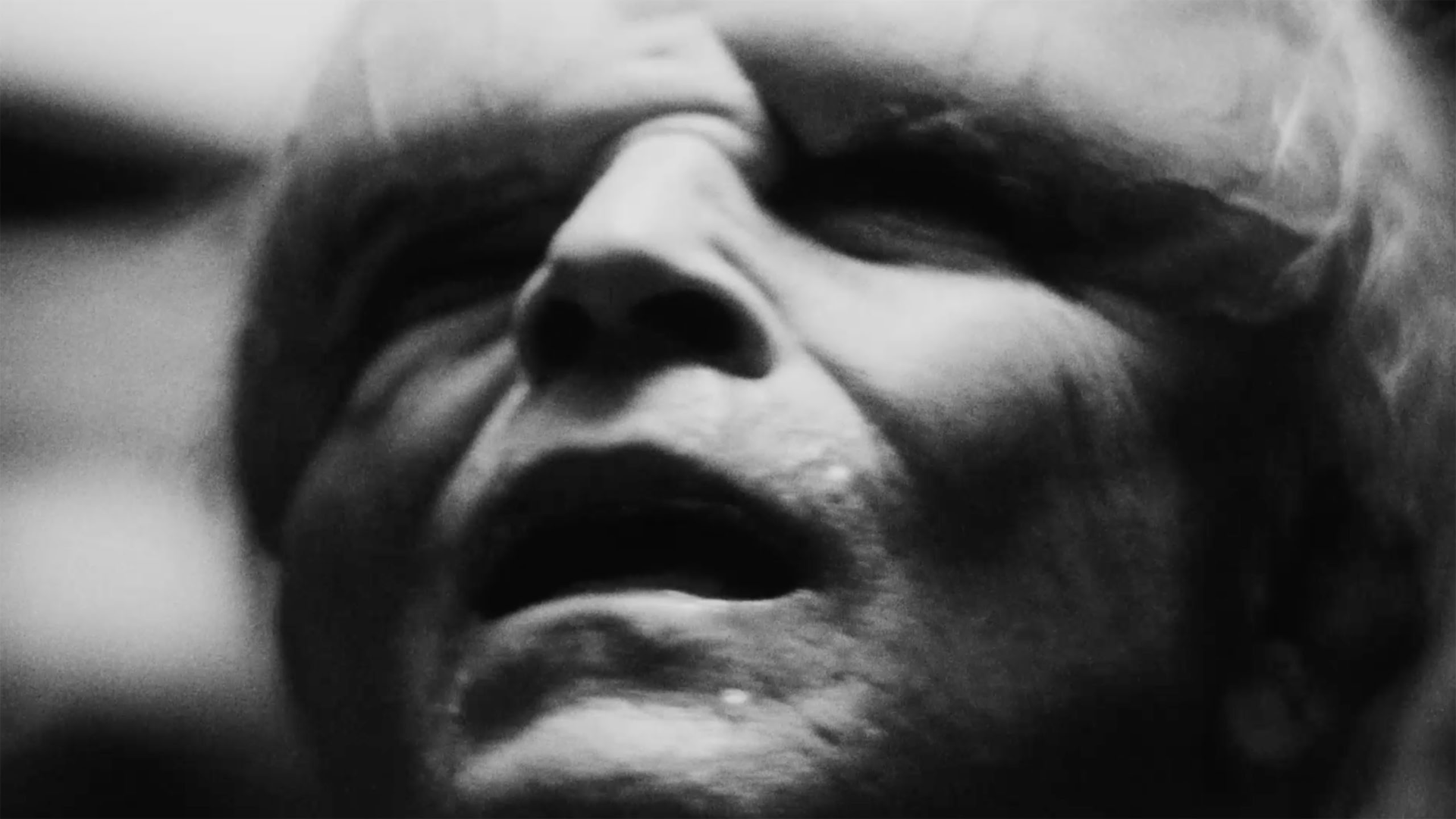
'Divinity' is a Lo-Fi, Mind-Melting, Perverted Affair
Director Eddie Alcazar has a gift for bringing to life the most mind-bending experimental films, and his latest Divinity is no different. In 2016, Alcazar released the grindhouse horror short film FUCKKKYOUUU, followed by his ambitious and equally mesmerizing feature, Perfect (2018). Unapologetic and defiantly bold, Divinity plays at the intersection of absurdity and video nasty – the place where Alcazar and his creativity thrive.
Set in an undefined time in the future, Divinity stars Stephen Dorff as Jaxxon Pierce, the heir of controversial scientist Sterling Pierce (Scott Bakula) who created a life-changing serum called "Divinity." When used properly, the serum promises immortality to those who inject it. High off of his father's legacy, Jaxxson's determination to take "Divinity" to the next level reaches a fever pitch when his vision of the future – one where he lives forever – becomes ever closer to reality. However, his plans for domination become thwarted when two unnamed brothers (Moises Arias, Jason Genao) show up unannounced with a plan to capture Jaxxson and get their hands on "Divinity" for themselves.
Not far away from the impending abduction is a sorority of women, led by a domineering Ziva (Bella Thorne). Her appearance throughout the film acts as interludes to the story's over-arcing structure, as she preaches about the destruction "Divinity" will cause to humanity. Another strong female character is the sex worker Nikita (Karrueche Tran), who initially finds herself at the home of Jaxxon Pierce to spend some two-on-one time with the brothers before accidentally inserting herself into their twisted game.
In addition to the acceptably kooky performances from all involved, the music is perhaps the biggest standout – which says a lot given the overwhelming distractions on screen at any given time. DJ Muggs and composer Dean Hurley, best known for his collaborations with David Lynch, create eerie, drone-heavy soundscapes that perfectly encapsulate Alcazar's bizarre world. Aiding in the film's visual aesthetic is cinematographer Danny Hiele, who previously worked in a similar 16mm black-and-white fashion on FUCKKKYOUUU. The crunchy quality feels as if it's been recovered from a 70's era time capsule, like a dirty little secret that should have never seen the light of day.
To call Divinity a wild ride would be an understatement. This is a lo-fi, mind-melting, perverted affair. Executive-produced by Steven Soderbergh, Divinity is another successful demonstration of Eddie Alcazar's unique and singular vision.
This review originally ran on January 30, 2023, during the Sundance Film Festival
In LA theaters on Friday, 10/20, and Nationwide on 11/3.

The Trial of 'Reality Winner': Hero or Traitor?
Former Air Force veteran and NSA contractor Reality Winner was just 25 years old when she was charged under the Espionage Act, facing a decade in prison for leaking a classified document that seemed to prove Russia's interference in the 2016 Presidential election. At the time, then-President Trump vehemently denied any wrongdoing in his quest for the ultimate power position, claiming that any talk of Russia's collusion was just a distraction from his victory. It was a tense time in America, made even more unbearable for Reality as she stared at a document that contradicted everything Trump was saying publicly. Taking matters into her own hands, she made a rushed decision to leak the document. Just as quickly, she was faced with the consequences.
The politically-charged documentarian Sonia Kennebeck (Enemies of the State, National Bird) brings the story of the now 31-year-old Reality Winner back into the public's consciousness in the self-titled documentary, Reality Winner. Executive produced by Wim Wenders, the film is the first official statement from Reality since her release from prison on June 2, 2021. Using intimate, never-before-heard conversations between Reality and her family, Kennebeck crafts a thought-provoking exposé about the risks of whistleblowing, even if acting in good faith on behalf of the country, and begs the question if her actions constitute that of a traitor or a hero.
Throughout the swift 94-minute runtime, Reality recounts the morning of her initial confrontation with FBI agents, her struggle to adjust to prison, and her eventual release and acclimation back into the world post-Covid. Soft-spoken yet unabashedly confident, Reality conducts the sit-down interview in the yard of her parent's home (and who can blame her for wanting to be outside after spending years in a jail cell). Assisting in the storytelling is Reality's mother, Billie Winner-Davis, whose own emotional rollercoaster is a painstaking watch. Through their own words and corresponding verité footage, Reality and Billie's individual experiences over the last five years show an unwavering strength in the midst of a radioactive political climate.
The story of Reality Winner is a fascinating one but we must remember that at the center of it all is a young woman who still struggles to navigate through these uncharted territories. She says as much toward the end of the film by professing she is still battling an uphill fight. She has joined the ranks of previous whistleblowers Chelsea Manning, Thomas Drake, and Edward Snowden, a group she never intended to be part of. While there isn't any "new" information shed on Reality that isn't already accessible on Google, the documentary is still an engaging story and recounts a historic moment in American politics.
Ironically, in June of 2023, Donald Trump was also indicted under the Espionage Act for his possession of classified documents, just like Reality five years prior.
Codebreaker Films / 94 minutes / English

'The Mission' Investigates a Fatal Sermon
The Broadway musical "The Book of Mormon" is highly praised for its tongue-in-cheek mockery of well-meaning but ignorant religious zealots. As the story goes, a young and naive Mormon missionary enters into unwelcome territory with his Godly paraphernalia in hand, determined to convert an entire Ugandan tribal community into followers of the Church of Jesus Christ of Latter-day Saints. The musical is outrageous, flamboyantly exaggerated, and makes for the perfect date night activity. However, after American missionary John Chau died during an attempt to proselytize his beliefs to the isolated and highly unpredictable Sentinelese tribe, the plot of the silly musical that felt so farfetched suddenly feels much darker.
Emmy-winning directors Jesse Moss and Amanda McBaine (Boys State) bring the tragic story of John Chau's fatal sermon to the screen in The Mission. In 2018, John's death made headlines around the world when he was killed with bows and arrows at the hands of the Indigenous people who live on the remote North Sentinel Island. The Sentinelese are widely considered to be among the most vulnerable and dangerous in the world, and history has shown that they don't take kindly to foreigners entering their territory. John saw these obstacles as all the more reason to venture, illegally, to the remote island. He viewed the Sentinelese as victims of Satan's last stronghold, and he was determined to be the one who could convince them to follow God and was willing to die trying.
The backbone of the documentary relies on John's posthumous diary, which was turned over to his family after his death. Journal entries are read aloud by a voice actor who captures John's wide-eyed optimism and free spirit mentality. "If God is for you, who can be against you," he writes–an eerie foreshadowing of how his false sense of security put him in a deadly situation. Interviews with his family and friends tell a similar story of a young man who was adventurous, self-sufficient, and deeply committed to his church. Limited archival footage also means that the dependency on video archives is crucial, and animation is used to depict scenes that could otherwise not have been shown.
What makes John's story all the more heartbreaking is his unintentional arrogance and assumption that he was invincible under God's eye, which turned his final sermon into a self-inflicted suicide mission. Experts and religious leaders comment on the fact that "people who exist out of time"–much like the Sentinelese–is a seductive narrative to Westerners who feel compelled to push their beliefs and societal structure onto them. But not everybody needs or wants "saving."
On one hand, John's Evangelical Christian faith gave him purpose. On the other, his dedication was responsible for his death. The filmmakers bring up both sides of this conundrum, making it difficult to confidently place blame on any one person. Was he brainwashed into thinking he could actually save these people? Did he literally believe he was a messiah? And if so, did the church encourage these delusions? John's story is harrowing because of how unavoidable the outcome could have been, making The Mission a fascinating albeit heartbreaking watch.
National Geographic Documentary Films / 103 mins / USA / 2023 / English, Latin, Piraha, Hindi, Sarikoli, Onge

'A Binding Truth' Uncovers a Complicated Familial History
Two former high school classmates, one black and one white, explore a complicated familial history in director Louise Woehrle's incredible documentary, A Binding Truth. What initially started out as a sports biopic about the regional football superstar Jimmie Lee Kirkpatrick gracefully morphs into something far more affecting. Making its Midwest Premiere at the Heartland International Film Festival in Indianapolis next week, A Binding Truth turns a sports story into a larger civil rights story, ultimately crafting a universal story of America.
Back in the mid-1960s, Jimmie Lee Kirkpatrick was highly regarded as one of the best football players in his hometown of North Carolina. His skill and coordination on the field were so precise that he caught the attention of a neighboring high school coach, who persuaded Jimmie to transfer and play for his team. This move was unprecedented for many reasons but mainly because that meant Jimmie would be leaving his black, segregated high school in order to join the team at the white, affluent school. The move ultimately ended up being the best decision Jimmie ever made. Not only because he made history as the high school's first black football star, but because a connection he made with one of his classmates nearly 50 years later uncovered a decades-long truth about his family's history as slaves in the American South.
Despite their superficial differences, Jimmie Kirkpatrick and his new white classmate, Hugh "De" Kirkpatrick, had more in common than they realized. They shared the same last name, which led to an investigation into the backstory of both Jimmie and De's family trees. Burdened with the guilt of generations before him, De, a forensic psychologist, dives deep into his research to ask the question, "How could anyone justify owning another human being?". The reason they shared a last name is because De's family had forced it upon Jimmie's family as a signal of "property ownership". This family secret of once being slaveholders was unknown to De, and the film gracefully allows both De and Jimmie to come to terms with this uncomfortable reality at their own pace.
There are some moments that are difficult to get through with dry eyes. The archival interviews from Jimmie and De's family and friends can be haunting, uncomfortable, and yet absolutely necessary to hear. As far as subject matter goes, the film has a Remember the Titans quality to it, so fans of the Denzel Washington-led blockbuster should no doubt seek out this indie documentary.
Ending on an overall heartwarming note, the film does leave audiences with some sobering statistics. It's hard to imagine now, but in 1860, nearly 40% of the county's population, where they grew up, was enslaved. While De Kirkpatrick is not at fault for the actions of the generations before him, he teaches us that acknowledging the wrongdoings and committing to making a change is all any of us can do to ensure a compassionate future for all. Jimmie's resilience throughout the film is equally as commendable and an example of how resiliency and the power of positive connection contribute to healing.
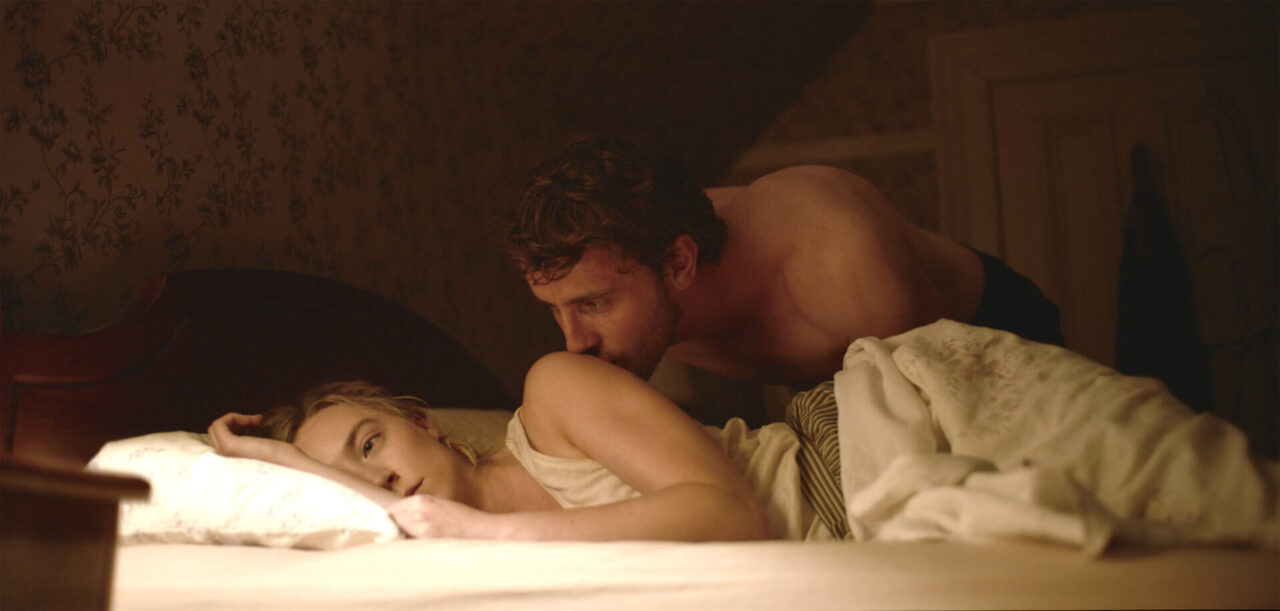
'Foe' Explores Modern Love in A Dystopian Future
Paul Mescal continues to ignite indie film fans with his sensitive, connection-driven characters. Most recently, this includes Foe, the sci-fi dystopian romance from director Garth Davis. Based on the book by Iain Reid, who co-wrote the screenplay alongside Davis, Foe is a dysfunctional love story for our modern times. More than just an examination of a relationship on life support, Foe seductively gets under the skin and passionately pulls at the heartstrings of anyone who has ever felt like an outsider looking in on their own life, trapped in a body with no control over how to use it.
Set forty years in the future but for the most part, still grounded in reality, a young man and his wife live in a secluded farmhouse far away from the commotion of the city. There is a palpable tension from the moment we meet Junior (Mescal) and Hen (Saoirse Ronan) but it is hard to pinpoint exactly what is creating their invisible walls. There does not seem to be a presence of anger, but more so the lack of empathy.
One night, Junior and Hen receive an unexpected knock at their door and find a stranger named Terrance (Aaron Pierre) on the porch. The man claims to be a representative of OuterMore, a corporate entity exploring the viability of off-world habitation, and he comes with shocking news: Junior has been involuntarily drafted into their space program. The exact dates are unclear but it wouldn't be a stretch to assume that Junior would be gone for years. Hen, rightfully devastated and confused, is consoled by Terrance's follow-up proposition. He tells her that in Junior's absence, an AI body double will be created in his place.
Junior–who has had no say in the matter and is visibly agitated that his life is being thrown into chaos–is against the idea of an AI model. Despite his outrage, Terrance tells Junior he has no choice but to go along with the plan and quickly infiltrates the couple's life, conducting experiments and intimate interviews all in the name of research. Going through this uncertainty together creates an unstable and highly emotional ebb and flow between Junior and Hen that swirls to a tsunami-like crescendo towards the film's bittersweet end.
https://youtu.be/sAh-xgggcfI?si=qlk25ddNdH9ty9wZ
Garth Davis crafts an emotionally-drenched story about autonomy and choice in the name of love. Three characters make up the world of Foe, and all are truly spellbinding. For his part as the slowly unraveling and desperate Junior, Paul Mescal gives the performance of a lifetime. No stone is left unturned as he dials up the manic and physical outbursts, with his vulnerability (including his naked body) on display. Saoirse Ronan commands the room in every scene with her gentle and quietly stirring force. Her embodiment of a woman who exists as just a shell of herself is both relatable and frustrating.
Setting the film's visual tone is award-winning cinematographer Mátyás Erdély who makes desolation and despair look so beautiful. Musically, the score is stunning-which is no surprise given that composer and cellist Oliver Coates reteams with the Aftersun star for another melodic heartbreaker. Coates contributes more of the classical elements to the score while Korean composer Park Jiha aided in more of the soundtrack's primal and worldly sounds.
At times, the film does feel a bit clunky and overly dramatic. A more subtle approach, especially with Junior's emotional expression, would have felt more authentic and made his periodic breakdowns feel more impactful and affecting. Instead, we begin to lose compassion seeing him wail in nearly every other scene. I also couldn't help but wonder how Drake Doremus would have approached this script. His gentle touch when it comes to stirring up the raw and ugly side of love is what this film would have benefited from immensely.
While the film is not perfect, it does bring up existential questions that are worth pondering like the use of AI to express our thoughts through words that we don't write ourselves, and the harsh reality of saving troubled relationships on a declining planet. "Do you think more about the future, or the past," asks Hen one morning. It's a simple question but one that I personally haven't been able to honestly answer myself. Foe is a film that asks thought-provoking questions like these in spades. If you are like me and love a film that leaves you spiritually and intellectually stimulated, Foe will be your friend.
Amazon Studios / 108 Minutes / Rated R / English
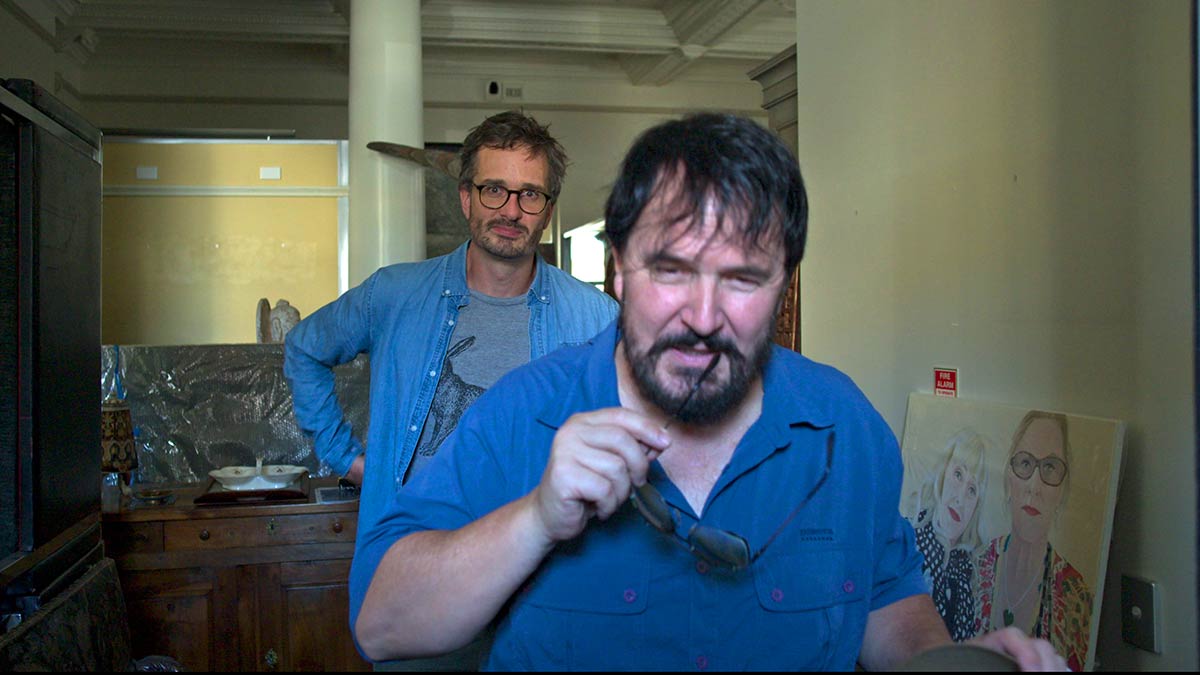
The Crazy Case of 'Mister Organ': David Farrier Dips Into Darkness
From the filmmaker behind the disturbingly engrossing 2016 documentary, Tickled, comes another wacky story about the dark underbelly of society. Journalist David Farrier stumbles into another absurd dimension in Mister Organ, where an accidental run-in with a man acting as a wheel clamper turns into a nonstop psychological game of cat and mouse, and the repercussions of engaging with a psychopath still haunt David to this day.
This story is one that only David Farrier is qualified to tell. In his own words, this is the type of "weird mess" that he has become synonymous with. What starts out as a rather mundane inquiry into the abnormal parking enforcements of a New Zealand antique shop, Bashford Antiques, spirals into a whodunit-type mystery that ends up leaving David with more questions than answers.
Jillian Bashford is the owner of Bashford Antiques, and she has a parking problem. Frustrated with the public using her private carport, she hires a man named Michael Organ as her late-night watchdog. If anyone is caught parking in the shop's designated area, Michael clamps their tires and only releases them for $700. Naturally, people are outraged. But not Ms. Bashford or Mr. Organ. Hearing the outrageous fee piques David's interest, and so he begins investigating the situation. Quickly, he discovers that there is so much more than meets the eye. As David gathers clues in real time, he begins piecing together the fact that Michael Organ is a mysterious, possibly dangerous, man. Court records and public documents show that he has claimed to be a prince as well as a lawyer, but his discovery is quickly met with caution as David discovers that Michael has also purposefully misspelled his name on legal documents to cover his tracks. Conversations with former acquaintances uncover even more intrigue, and all roads eventually lead to David and Michael meeting face-to-face.
What follows is unhinged chaos. Michael Organ is a black hole, and David Farrier has fallen into it. Michael is hostile and intimidating but also flamboyant and speaks in a monotone, molasses-like cadence. He is also extremely arrogant, the type of man who talks over you and won't stop talking until his point is made, regardless if he's interrupting an interview or live radio broadcast. Over the course of the film, as David unrelentingly pursues answers to his questions, his sanity begins to suffer. A psychological battle against a narcissist is one that David cannot win, and he realizes he has to stop.
Mister Organ will stir up plenty of emotions throughout its 96-minute runtime. Intrigue, annoyance, and hilarity all stay at the surface, mixing interchangeably depending on Michael Organ's mood and willingness to engage with David. Bringing the dark energy to an already palpable sense of tension is the score by composer Lachlan Anderson. The music is simmering and creepy, the perfect slow burn to accompany the arc of the film.
As a documentary journalist, David Farrier proves in Mister Organ that not all stories have happy endings or even conclusive ones. Calling Michael a "fuckwit who bores people to death until they jump off a building" may not live up to traditional journalist standards but David's vulnerability and defeatedness after engaging with Michael for three years on and off is a fascinating thing to witness. Mister Organ is an enthralling and equally disturbing documentary that exposes hidden secrets. It's also a cautionary tale about blind trust, begging us to think twice before engaging with a stranger.
Distributed by Drafthouse Films and MUBI / 96 minutes / New Zealand / 2022 / English
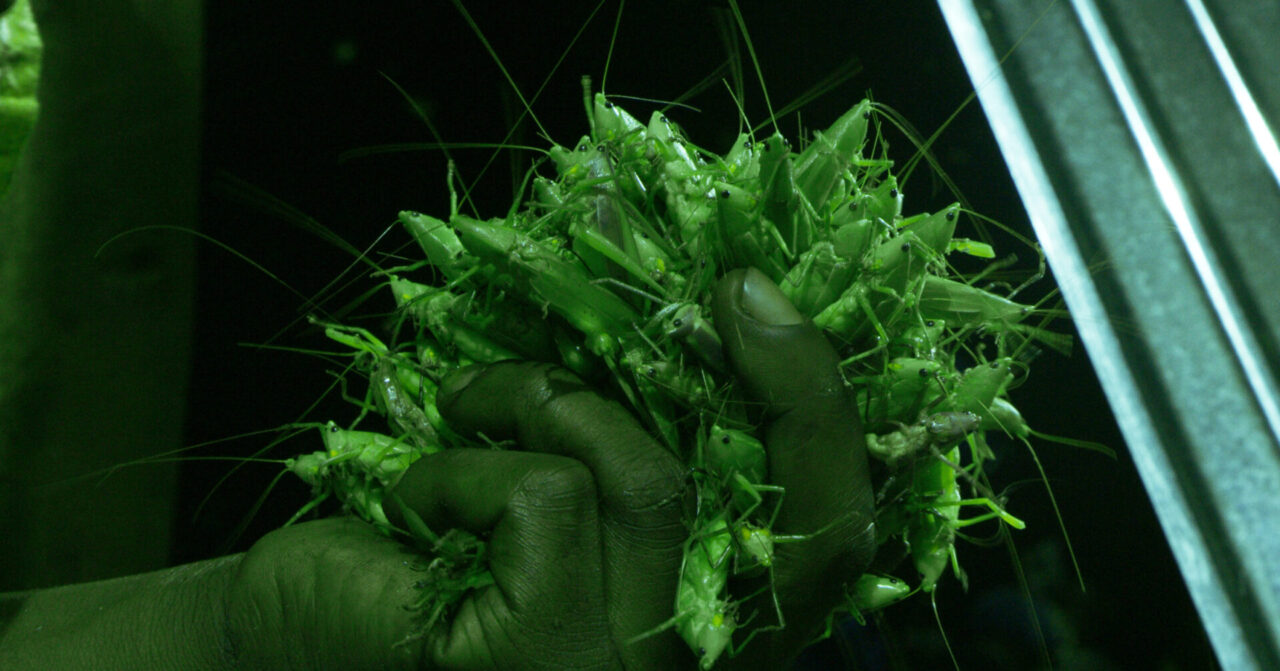
'Grasshopper Republic': Discover the Magic of These Delicate-Winged Insects
Shot in cinema verité style with special attention paid to spatial structure, director Daniel McCabe immerses audiences into the harvest season of a Ugandan grasshopper trapping team in the reverential documentary, Grasshopper Republic. Mesmerizing close-ups of these intricate and delicate winged insects with vibrant coloring and distinct chirping sounds, display a quality of beauty that is so often overlooked. As magical as they appear, the grasshoppers are more often regarded as a life source for a section of the Ugandan community, both as a bartering tool and in their food supply. Over the course of three seasons, McCabe highlights the tireless efforts of the trapping team and the lengths they go to secure this elusive prey by the barrel load.
Grasshopper Republic opens with the trance-like birth of a grasshopper, which looks more like an alien species than an earthly animal. Pale green transparent bodies with long extended antennas and black beady eyes fill the screen, all captured with special macro cameras akin to BBC's Planet Earth. This birth sequence foreshadows the pacing of the remainder of the film, which is to say it is slow and methodical. There is an intentional lack of dialogue and no talking head interviews are given. Rather, Daniel McCabe relies on field recordings and natural audio from the remote forests and villages to help build out the film's natural aesthetic.
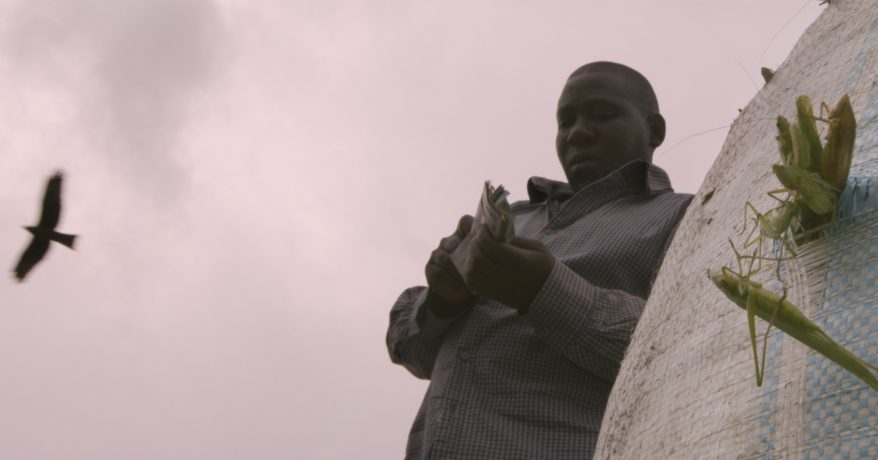
With no acknowledgment of a camera presence, the documentary's biggest strength is its commitment to being immersive and observational. We quietly watch as the trapping team builds makeshift traps to catch grasshoppers and the ecological fallout that comes along with it, including the potential havoc wreaked on the village crops. Bringing this intensity to life is the wonderfully rich score from composer Robert Aiki Aubrey Lowe (Candyman, Master, Telemarketers). His use of synths and reverb sounds like the buzzing of a swarm of insects, which really hits a crescendo near the end of the film when millions of grasshoppers appear in the sky like shooting stars.
Director Daniel McCabe found inspiration for Grasshopper Republic in the photobook "Nsenene" by Michele Sibiloni. This influence translates into a gorgeous documentary that plays more like an art piece than a traditional film. Commentary on living in symbiosis with nature is prevalent throughout the 94-minute runtime and serves as a beautiful reminder of gratitude for nature and its abundance.
Joseph Trapanese Premieres Tracks From 'No One Will Save You'
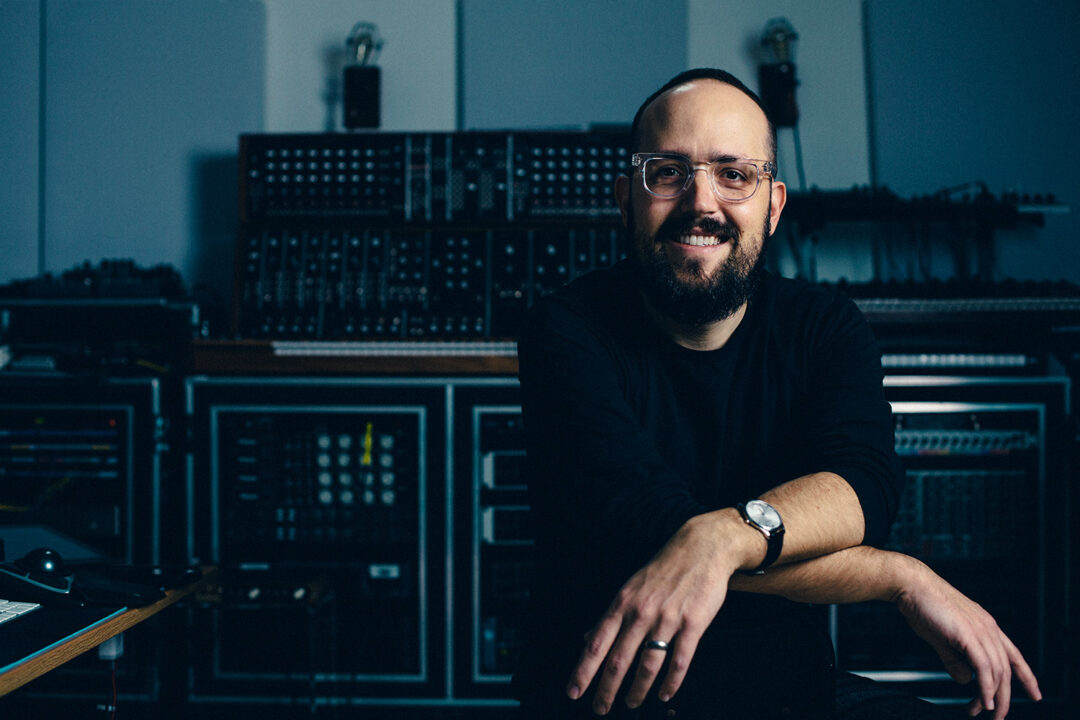
Award-winning composer Joseph Trapanese gets otherwordly in his latest film No One Will Save You, Netflix's new sci-fi thriller starring Kaitlyn Dever. Adding eerie flare to an otherwise predominately orchestral score, the 30-song soundtrack is a tightly packaged medley of anxiety and sonic exploration, making it an easy contender for standalone listening during the upcoming spooky season.
In No One Will Save You, written and directed by Brian Duffield, Brynn (Kaitlyn Dever) is an outcast who finds herself alienated from her community. She finds peace in her childhood home, comforted by nostalgia for the past. One night, Brynn wakes up in a panic to the sound of strange noises which turn out to be coming from alien intruders. Threatening her safety and future, Brynn is forced to fight the extraterrestrial beings if she stands any chance of survival. From 20th Century Studios, No One Will Save You begins streaming on Sept. 22, 2023, exclusively on Hulu in the U.S., Star+ in Latin America, and Disney+ in all other territories.
Cinemacy is excited to share excerpts from three tracks: "Preparation", "Bike Into Town", and "Storm Chaser", from Netflix's No One Will Save You, below:
If you've seen the trailer, then you know just how important the sound design is to the film's overall atmospheric unease. There is no dialogue or line delivery of any kind in the trailer, just sound effects, foley, and score. The threat that Brynn faces is heightened by the music, and Trapanese delivers the psychological tension with his haunting score. Using re-recorded fragments of ideas, detuned and reversed with the orchestra, he crafts a tense sonic landscape that will keep audiences on edge. "Preparation", "Bike Into Town", and "Storm Chaser" all blend orchestral elements with altered textures that create a uniquely dark and moody ambiance.
Joseph Trapanese began his film scoring career as the key collaborator on some of the most memorable scores of recent cinema history – as arranger and orchestrator for Daft Punk’s Tron: Legacy, co-composer, arranger, orchestrator, and conductor for M83’s Oblivion, and co-composer and co-producer with Mike Shinoda for The Raid series. Known for integrating his extensive classical training with his skill producing electronic music, he has crafted uniquely hybrid and inventive scores for a number of films including director Joseph Kosinski’s 2022 sci-fi thriller Spiderhead, Nicolas Cage’s genre-bending 2021 Sundance selection Prisoners of the Ghostland, Disney’s 2019 live-action remake Lady and the Tramp, Kumail Nanjiani and Dave Bautista’s buddy cop action-comedy Stuber, Mads Mikkelson’s 2018 Cannes selection Arctic, Universal’s landmark rap biopic Straight Outta Compton, and the second and third installments of the Divergent series, Insurgent and Allegiant. In addition, he has lent his innovative sound to Netflix’s The Witcher, the critically acclaimed original series Shadow and Bone, and interactive projects for Disney Interactive, EA, Lucasfilm, and Ubisoft.
Hollywood Recordings is releasing the 'No One Will Save You (Original Motion Picture Soundtrack)' on Friday, September 22nd.

'Carpet Cowboys': Look Inside the "Carpet Capitol of the World"
When was the last time you thought about the creation of carpet? If your answer is almost never, join the club. That plushy surface that embraces our feet is rarely given a second thought. Modern homes typically avoid the aesthetic altogether, citing its dated look and maintenance as a burden for homeowners and prospective buyers. Although carpet may be out of vogue for the majority, for a small cult-like community in Dalton, Georgia–often referred to as the "Carpet Capitol of the World"–carpet is the only thing on their minds.
The stylish documentary Carpet Cowboys is a macro look at the businessmen and innovators behind some of the country's mundane masterpieces. Directed by Emily Mackenzie and Noah Collier with Riel Roch-Decter producing and John Wilson (yes, of Max's docu-series How To with John Wilson) and Sebastian Pardo as Executive Producers, the meticulously eccentric Carpet Cowboys is the result of sharp-witted and contemporary creatives behind the lens. Humorous (sometimes uncomfortably so) while remaining observational and objective, this documentary is an all-around fresh and fun watch.
Throughout the film's swift 84-minute runtime, we're introduced to some of the men who have disrupted the carpet industry. That includes Scottish ex-pat Roderick James, a hotel and casino carpet designer (the most animated of the bunch). Like a Michael Scott-type caricature who's passionate about textiles, Rod peacocks his personal style through his wardrobe which primarily consists of his cowboy hat, fringe suede jacket, and stacks of thick silver rings. His eye for design may not translate in a fashion sense but when it comes to patterns for his textile business, Rod knows a good carpet design when he sees one. His iPhone is his tool and the outside world is his inspiration. Capturing the bark of a tree or blades of grass in a field can become Rod's next pattern (which is ironic considering he is capturing natural elements and memorializing them on an item that belongs indoors).
In a similar way that How To with John Wilson acts as an observation commentary on the niche cultural interests of a community, Carpet Cowboys follows the same blueprint. Mastering the balance of neutrality while also infusing comedy into the pacing and editing is a tricky task but one that Emily Mackenzie and Noah Collier accomplish gracefully. They set up various scenes with a keen eye for dramatics but don't interfere with the subjects onscreen to create the humor. Rather, they patiently let the characters bring the humor themselves, which they always do. This makes the film feel truly authentic, and not forced or contrived. These are real people with a real passion for carpets and no matter how silly or lighthearted that sounds, the subjects are never painted in a negative or "less than" light. To each, their own.
Carpet Cowboys is more than just a film about carpets. It also serves as a commentary on the American Dream and the rapidly changing landscape for small business owners and entrepreneurs. Set to a score by electronic ambient artist Kara-Lis Coverdale (stage name K-LC), Carpet Cowboys is an offbeat yet heartfelt film that, possibly for the first time ever, will have you pondering the story behind what's beneath your feet.
85 mins / USA / 2023 / English

'Scrapper': Growing Pains and Young Parenthood
When it comes to finding indie films, this year's Sundance darling Scrapper is a needle in a haystack. Honoring both the magical bewilderment of childhood and the stark realization of adulthood, Scrapper is an emotionally deft drama that is brimming with creativity and an abundance of love.
Slotting nicely in between The Florida Project and Aftersun–two films that also perfectly execute the young parent and adolescent relationship dynamic–director Charlotte Regan crafts a charming, heartfelt film about the growing pains within a family when an estranged young father re-enters the life of his pre-teen daughter after a tragedy.
Scrapper stars Lola Campbell as Georgie, a precarious and independent twelve-year-old who lives alone in the house she once shared with her single mother who recently passed from cancer. When we meet our protagonist, it is some time after her mother’s death, and Georgie seems to have adjusted to parenting herself. She spends most of her time with her best friend Ali (Alin Uzun), stealing bikes for money to make ends meet, and lies to anyone who questions her living situation, claiming that her fictional uncle is her guardian.
But for as brave of a face Georgie masquerades with in public, the loneliness is never far. Prominently displayed on a wall within the house is a checklist and upon closer inspection, it’s clear that Georgie is working her way through the 5 stages of grief. Little does she know that her life is about to change when she gets an unexpected visitor one morning: her estranged dad.
https://www.youtube.com/watch?v=slyUJ1_eK4E
Jason (Harris Dickinson) has been an absentee father for all of Georgie’s life, so their first encounter is no different than meeting a stranger. It takes time before Georgie begins to slowly warm up to Jason, whose well-intentioned but immature outlook on life comes with its own set of consequences. It’s clear that father and daughter both have a lot of growing up to do and in their own eccentric ways, Georgie and Jason start to navigate their new normal with each other by their side.
Charlotte Regan’s past career as a music video director is evident throughout Scrapper, from the quick cuts to the interesting composition and a beautifully stoic color grade. The film lands in a similar orbit to Andrea Arnold’s Fish Tank in the sense that both share a powerful point of view of the British working class, but Scrapper offers the viewer a more optimistic, playful experience. Lola Campbell is a delight to watch light up the screen and is the perfect scene partner with Triangle of Sadness star Harris Dickinson. For his part as the reformed bad boy, Dickinson wears his heart on his sleeve as the character’s vulnerability unravels throughout the film.
Winner of the World Cinema Grand Jury Prize at the 2023 Sundance Film Festival, Scrapper is a full-bodied coming-of-age film that ranks among the best of the year. Tenderly told with creative execution and striking performances, this independent film serves as a springboard for all involved, proving that these are all stars on the rise.