
My Animal
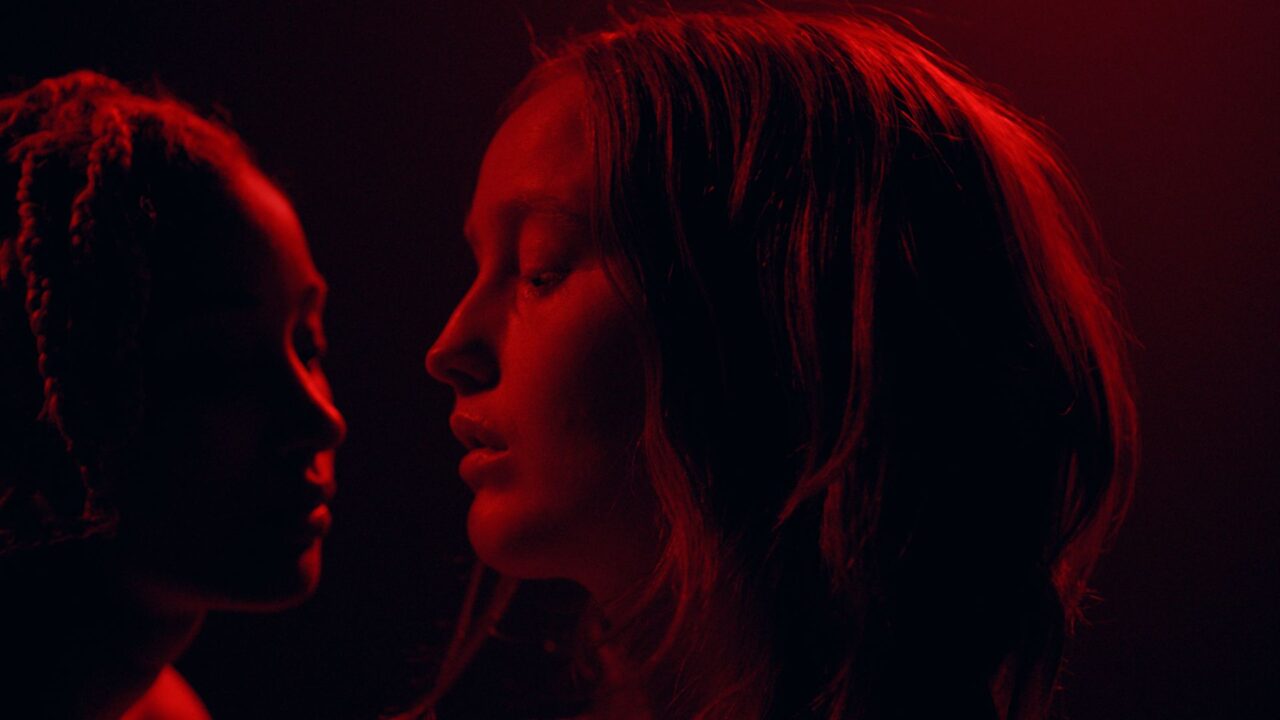
In a stylish and sleek feature film debut from director Jacqueline Castel, My Animal is a ravishing, methodical tailspin into the life of a high schooler who finds herself in the center of two conflicting pulls: inheritance vs. nonconformity. Making its World Premiere at the 2023 Sundance Film Festival, this LGBTQ+ thriller is a fierce statement about identity and gives a platform to an exciting new voice in indie film.
Bobbi Salvör Menuez (Euphoria) and Amandla Stenberg (Bodies Bodies Bodies) star in this erotically-charged, supernatural coming-of-age story about “forbidden” love. Heather (Menuez) is an outcast in every sense of the word. She lives with her overbearing family on the outskirts of a small town where her freedom is limited, being forced into lockdown during every full moon. She finds temporary joy during the day at the local ice rink, quietly obsessing over the hockey team and constantly trying to persuade the coach to let her join this overwhelmingly male sport. Heather is used to being told no throughout her life, whether it be by the hockey coach, her family, or society in general. That’s why, when she meets Jonny (Stenberg) and isn’t met with an immediate dismissal, Heather latches onto this relationship as if it’s her life force.
https://youtu.be/fBelb-efRgA?si=YmXd-Sei1vAaNWLp
Love can transform one into a beast. As Heather’s desire intensifies, so does her carnivorous, animalistic instincts. Under the moonlight, Heather transforms into a teenage werewolf unable to regulate any sense of composure or normalcy. This hidden secret is why her family operates as recluses from society, but like any teenage girl, Heather doesn’t want to be an “other.” She is desperate to be normal, not a lone wolf. Jonny’s presence in her life, while threatening to her parents, allows Heather to finally feel seen and accepted as she is.
Jacqueline Castel doesn’t concoct the stereotypical werewolf story with obvious tropes and outcomes in My Animal. Instead, she serves us a layered genre film that feels weighty in its point of view. Bobbi Salvör Menuez, who identifies as they/them, is perfectly cast as the angsty teenager searching for self-acceptance. Heather’s character arc is beautifully realized through Menuez’s performance, perhaps her best work to date. Without knowing for sure, I can only imagine Menuez brought some of their life experience into the role of Heather, adding to the character's authenticity and depth. Aiding the film sonically is the electronic score by composer Augustus Muller (half of the duo Boy Harsher).
My Animal taps into the feeling of “otherness” that is often experienced throughout a lifetime. Through this provocative vessel, Jacqueline Castel encourages the viewer to reflect on their own coming-of-age story and tap into the potential werewolf inside all of us.
Distributed by Paramount Movies. In theaters Friday, September 8th, coming to VOD Friday, September 15th.

'Bottoms' Review: The Perfect Back-to-School Raunchy Rom-Com
As the credits rolled at the end of Shiva Baby back in 2021, I contemplated an immediate re-watch. I didn’t want the good times to end. This progressive, cool girl comedy that filmmaker Emma Seligman so effortlessly brought to life (in her directorial debut, no less) had reawakened a part of me that had been dormant for some time. This is the type of movie that spoke to me, and I wanted more of it! Luckily, her sophomore feature, Bottoms, lives up to the hype. After a World Premiere at the 2023 SXSW Film Festival, Bottoms is coming to theaters on Friday, August 25th.
Two Unpopular Queer High School Girls Start a Fight Club to Have Sex Before Graduation
Exploring sexuality is a recurring theme throughout 28-year-old writer/director Emma Seligman’s relatively short repertoire. In Bottoms, which was co-written by her Shiva Baby collaborator and the film’s co-lead actor Rachel Sennott (The Idol, Bodies Bodies, Bodies), two high school outsiders attempt to lose their virginity by devising a sneaky plan to get close to their crushes which, to no surprise, inevitably turns into complete and utter chaos.
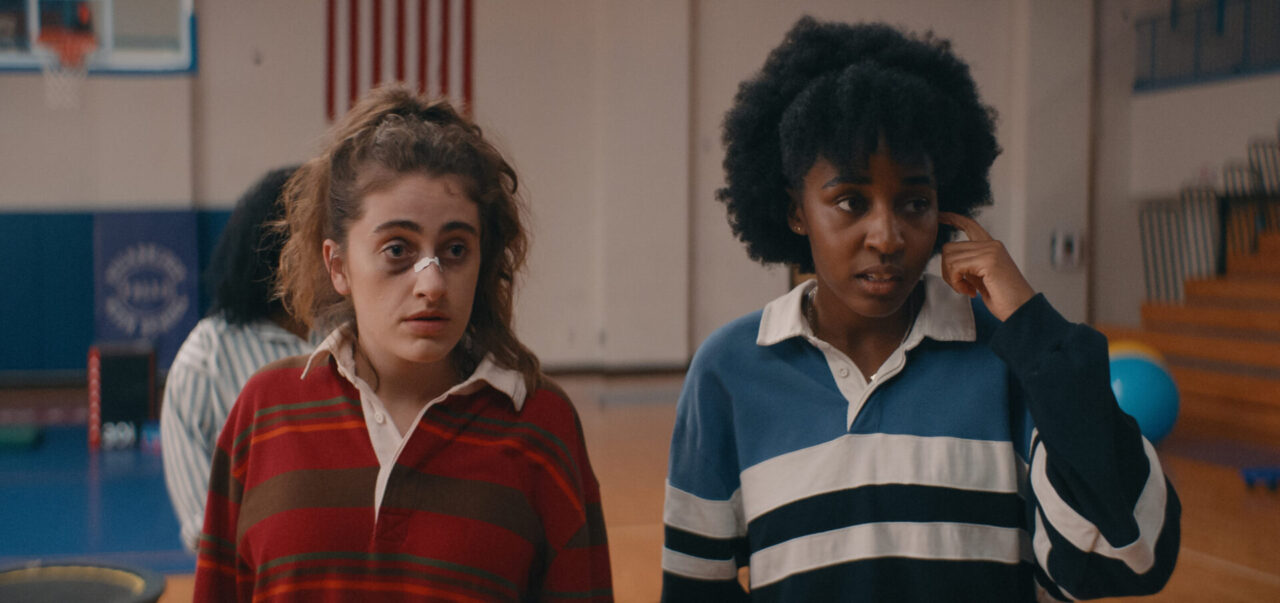
Rachel Sennott and Ayo Edebiri (The Bear) play PJ and Josie, best friends about to enter another dreadful year of high school. Both proudly queer, and sexually frustrated, they have the unconventional idea to start a fight club in an attempt to get close to Isabel (Havana Rose Liu) and Brittany (Kaia Gerber), the hot cheerleaders and most popular girls in school. Like Cady Heron infiltrating the “Plastics” orbit in Mean Girls, PJ and Josie bask in the sweet victory of success. Girls of all social circles are flooding their self-defense class, literally throwing themselves at each other during made-up games of floor wrestling and slap fighting.
Long gone are the days of being called just “gay, untalented, and ugly.” The popular girls are finally paying attention. Of course, things don’t stay perfect forever as the football team intercepts PJ and Josie’s long con, threatening to expose them for the horny teenagers they really are.
Quick-Witted and Sharp Banter Between Sennott and Edebiri
Many factors can be attributed to the success of Bottoms, especially the quick-witted and sharp banter between Sennott and Edebiri. Together, they are magnetic, exuding this instant familiarity that draws us in and doesn’t let us go. Their comedic timing is spot-on, and the dialogue delivery hits every time. The script, co-written by Seligman and Sennott, is the right amount of self-aware and gut-punch funny. Subtle one-off comments said under the breath, like “You don’t care about feminism, your favorite show is Entourage”, are some of the film’s most memorable moments.
Best of all, Bottoms evokes a sense of nostalgia for rom-coms of the past. Imagine Superbad, Bring It On, and American Pie told through the lens of queer, sexually starved high school girls. Adding to the sense of female empowerment is seeing how many women contributed to the making of Bottoms behind the scenes and leading departments such as cinematography (Maria Rusche), editing (Hanna Park), casting (Maribeth Fox), and art direction (Michelle Jones).
Takeaway
Bottoms is a film for the girls, for the alt-Barbie crowd. A fierce soundtrack, which includes a perfectly-placed Avril Lavigne “Complicated” sync, and an original score by Leo Birenberg and Charli XCX is the perfect companion to the film’s fast-paced, frenetic energy. It’s definitely worth staying through the entire film so you don’t miss the bloopers and outtakes that are sprinkled throughout the end credits.
If you’re looking for the perfect back-to-school raunchy rom-com, make sure Bottoms is on the top of your watchlist.
Mob Land
Director Nicholas Maggio is pushing the boundaries of what a “crime film” can be. At first glance, the lush, artful aesthetic in his neo-noir drama, Mob Land, looks like it belongs on the cover of Vogue as much as it does on American Cinematographer. It’s a welcoming observation, one that the arthouse crowd will most certainly be surprised by. The photographer-turned-filmmaker builds a bridge between the traditional and untraditional schools of thought with Mob Land, proving that a crime film can be just as effective with less frills and more visceral observation.
Mob Land is a devastating look at the consequences of desperation. The film centers around Shelby (Shiloh Fernandez) and his brother-in-law, Trey (Kevin Dillon). Living in a small, Southern town that is in the throes of addiction, Trey schemes up a plan for some quick cash. Enlisting his hesitant brother-in-law, Trey and Shelby decide to rob a pill mill with the agreement that no one gets hurt. What was supposed to be a relatively harmless act quickly turns violent when shorts are fired, derailing the expectations for a silent steal and causing the men to fall into a panicked fight-or-flight state.
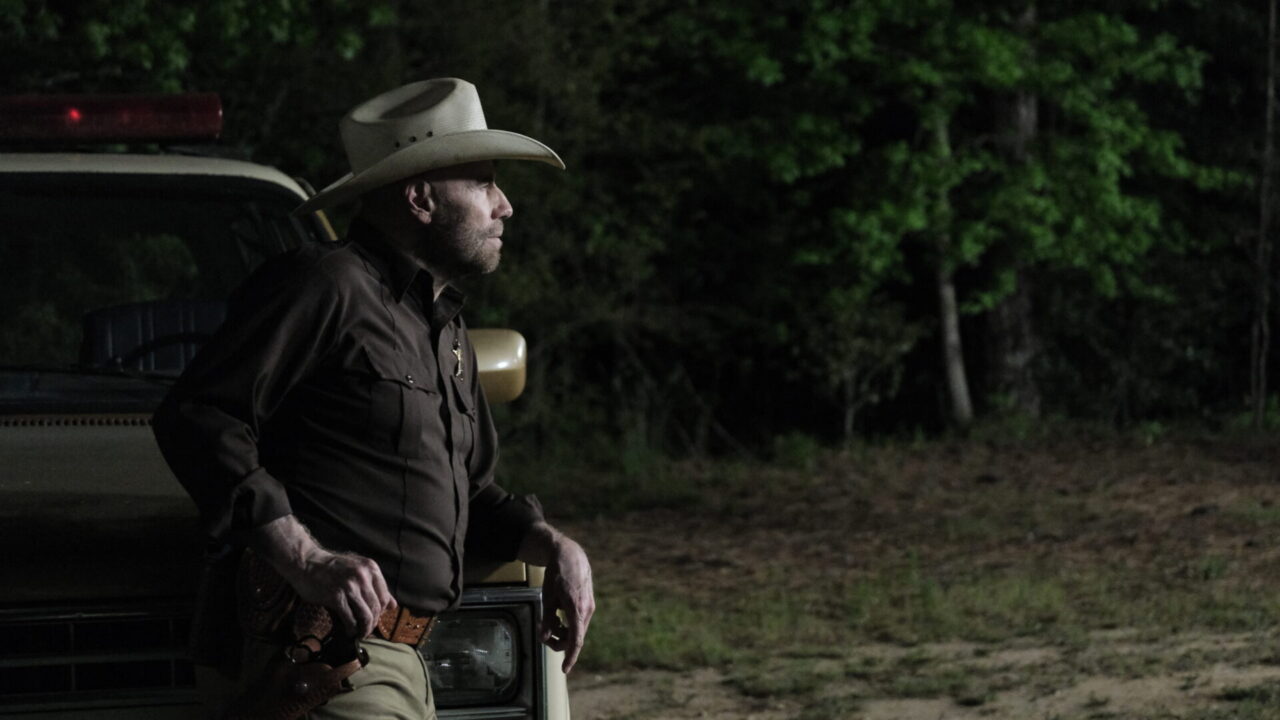
Meanwhile, the local sheriff, Bodie Davis (John Travolta) catches wind of the robbery and throughout his investigation, discovers harsh truths and dirty secrets about this small town and the people in it. But Sheriff Bodie isn’t necessarily the one to fear, Shelby and Trey know that there is an unspoken hierarchy amongst the community which puts mafia man Clayton Minor (Stephen Dorff) in charge. When they realize that the money they stole from the pill mill was Clayton’s, Shelby and Trey are terrified that they may have accidentally executed their own death warrant.
Mob Land lends itself to traditional themes of family and trust, but what makes this feel different from other crime films is how Maggio captures the quiet nuances of a drug-addicted Americana town. The story itself is told through an unconditional lens with its overall dark and gritty texture; handheld camerawork by cinematographer Nick Matthews makes the film feel alive as if the viewer is a cowering witness hiding from the fights that erupt on screen. The score by composer David Gerald Steinberg swells with tension and emotive energy but also knows when to restrain itself and let the characters organically reach certain arcs without the aid of the music. Performances by all involved, including Ashley Benson who plays opposite Shiloh Fernandez as his wife Caroline, capture an authentic sense of clinging to any strands of hope for a better future, no matter how grim the odds.
The juxtaposition at the heart of Mob Land is the act of doing the “bad” in an attempt to regain the “good.” Shelby isn’t a bad guy, and neither is Trey or Clayton for that matter. They are all just men fighting to survive in a cruel, unfair world, using whatever resources they have to gain any sense of security. The philosophical questions of morality and nihilism arise throughout the film, encouraging the viewer to imagine what their role would be in this scenario.
There are consequences to living fast, which Mob Land explores in rich detail. Paying homage to the independent crime thrillers of the past, Mob Land is a fresh and thrilling joyride worth taking.
Mob Land is distributed by Saban Films. Now playing in select theaters, coming to digital and VOD this Friday, August 25th.
On The Line
To say that On The Line, the emergency dispatch thriller from filmmaker Oliver Pearn, covers new territory would be a stretch. Predecessors with a generally similar storyline include the Danish award-winning film The Guilty (2018), the 2021 remake of the same name starring Jake Gyllenhaal, The Call (2013) starring Halle Berry, and the 2015 drama Operator (2015) starring Mischa Barton, to name a few. However, it’s worth admiring that On The Line utilizes a minimalist approach to give this micro-indie film an edge over its studio counterparts. The film builds tension with its use of only one location and one performer.
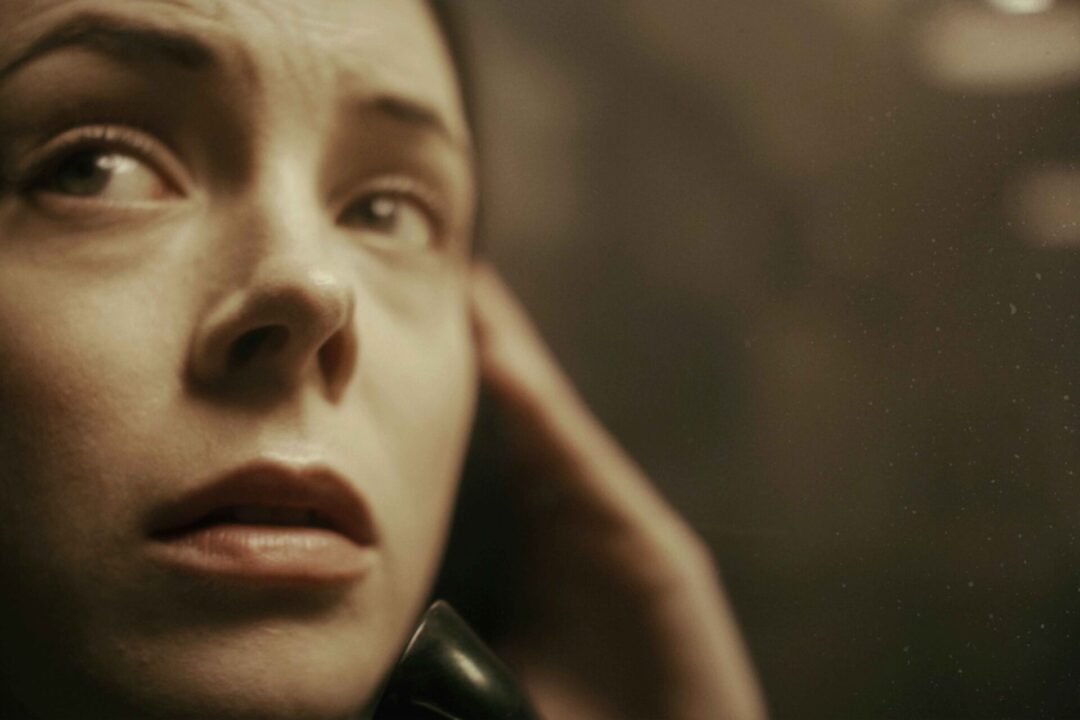
On The Line tells the story of a telephone operator residing in the northern Channel Islands in the UK. It’s the mid-1960s and telephone calls are dependent on operators successfully transferring the lines on their switchboards. For 24-year-old Agnes (Victoria Lucie), her shift at the office starts out like any other. She listens to conversations among friends and loved ones as she connects their calls without a second thought. However, Agnes is pulled back into reality after intercepting a phone call from a woman in distress who is desperate for police intervention. The woman, Martha, is in trouble and cannot share many details about her situation due to her captor being close by, so Agnes is forced to play detective and figure out how to save Martha on her own.
Shot entirely in a single room and with only one actor on screen (although the voices of the other actors are heard through the telephone), On The Line successfully builds authentic tension. The audience is with Agnes for the entirety of the film, hearing events unfold in real-time and anticipating the next move right alongside her. To this end, actor Victoria Lucie doesn’t just carry the film, she is the film.
Using a minimal, no-frills approach, filmmaker Oliver Pearn also plays into the psychology of the situation. Over the course of their scattered calls, Agnes develops a parasocial attachment to Martha and blurs the line between professional integrity and personal curiosity. This simple yet effective internal struggle adds another dimension to the character of Agnes and provides the film with an overall sense of tiptoeing around disaster.
On The Line is a microbudget indie with a bounty of potential. Never reaching above its comfort zone, the film doesn't intend to reinvent the wheel but rather add a very satisfying option to this crime drama genre.
Medusa Deluxe
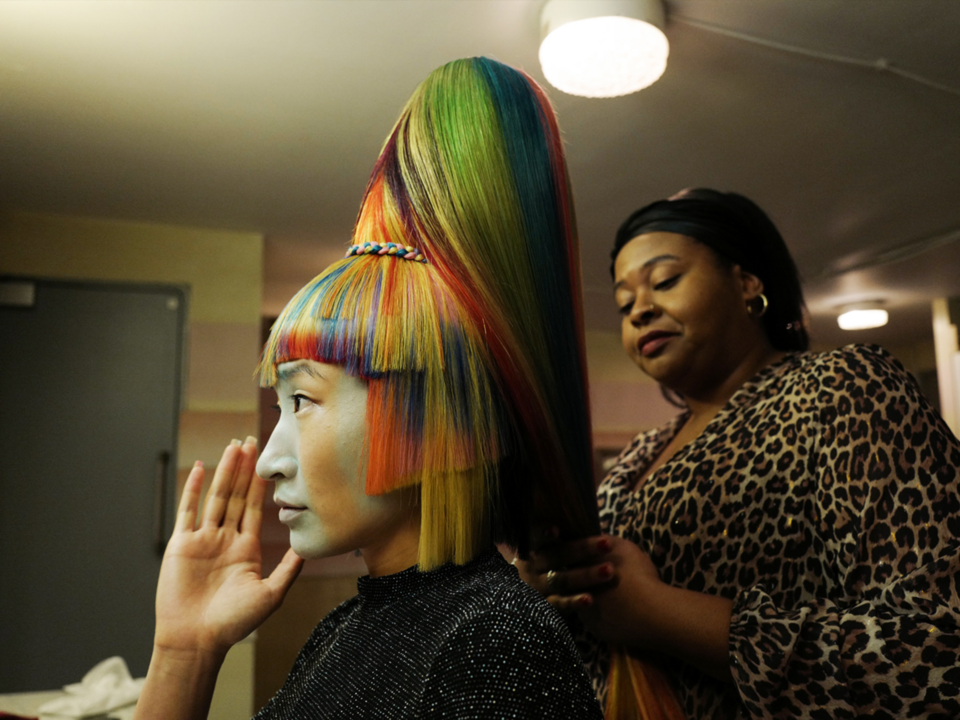
The cutthroat world of competitive hairstyling turns into an up-do whodunnit in writer/director Thomas Hardiman’s murder mystery, Medusa Deluxe. Set in contemporary England, the unthinkable happens backstage at a local hairdressing competition: a stylist is scalped. Once the body is discovered, what follows is a rupture of chaos and mayhem as friends and frenemies alike begin pointing their fingers at each other, proving that in this business, obsession breeds jealousy and talent can be deadly.
Medusa Deluxe, the feature film debut from Thomas Hardiman, is a stylish thrill romp that will have you mesmerized right from the jump. Shot entirely as a one-take (and pretty convincing at that), the film effortlessly weaves in and out of green rooms and intimate conversations, building insurmountable tension with every passing minute. Obvious comparisons include Birdman, which Medusa Deluxe seems to take inspiration from in its use of backstage maze-work and seamless transitions.
Perhaps not as easily digestible for the general population as Rian Johnson’s Knives Out, Medusa Deluxe is the arthouse answer to the stereotypical whodunnit. Using shears instead of knives, Thomas Hardiman crafts an edgy, pulpy murder mystery that is propelled by a trifecta of excellence: cast, craft, and vision.
The cast of mostly unknown actors all give emotionally engaging performances. Many actors recite monologues with the intonation of seasoned thespians, which gives a sense of weight and seriousness to an otherwise surreal circumstance. The ensemble cast includes Anita-Joy Uwajeh, Clare Perksins, Darrell D’Silva, Debris Stevenson, Harriet Webb, Heider Ali, Kae Alexander, Kayla Meikle, Lilit Lesser, Luke Pasqualino, and Nicholas Karimi who are all vital players in the story’s bigger picture.
One of the biggest strengths of the film comes from the score by British electronic artist, Koreless. His signature sound of sleek, percussive electro is the perfect counterpart to the film’s fluid nature. The score consists of less “start and stop” musical moments and more continuous mood-building that fuels revelations onscreen. Feelings of uneasiness take shape through the use of off-tempo beats that sync up and then fall out of rhythm, thus painting a dreary, twisted soundscape.
Operatic in both its images and sound, Medusa Deluxe is a visionary breakthrough. Filmmaker Thomas Hardiman has created something truly unique with a voice and vision all its own. Dedicated to the hairdressers of the world, Medusa Deluxe is one fantastical trip worth taking.
Distributed by A24. Now playing on VOD and in select theaters, including the Los Feliz Theater.
Lola
Imagine Back to the Future as art-house science fiction with Christopher Nolan flare, and you’ll have some semblance of what to expect from Lola, the feature film debut from director Andrew Legge. One-of-a-kind in its execution and storytelling, Lola is a hidden gem that is just waiting to be discovered by larger audiences.
The film industry is in a tumultuous time right now with the ongoing conversations surrounding A.I. and its unknown impact. We’re seeing, firsthand, the ramifications of how technology is altering the future of film as we know it. This controversy sets the perfect backdrop in which to watch Lola, an ambitious story about how history can be made and unmade by human invention.
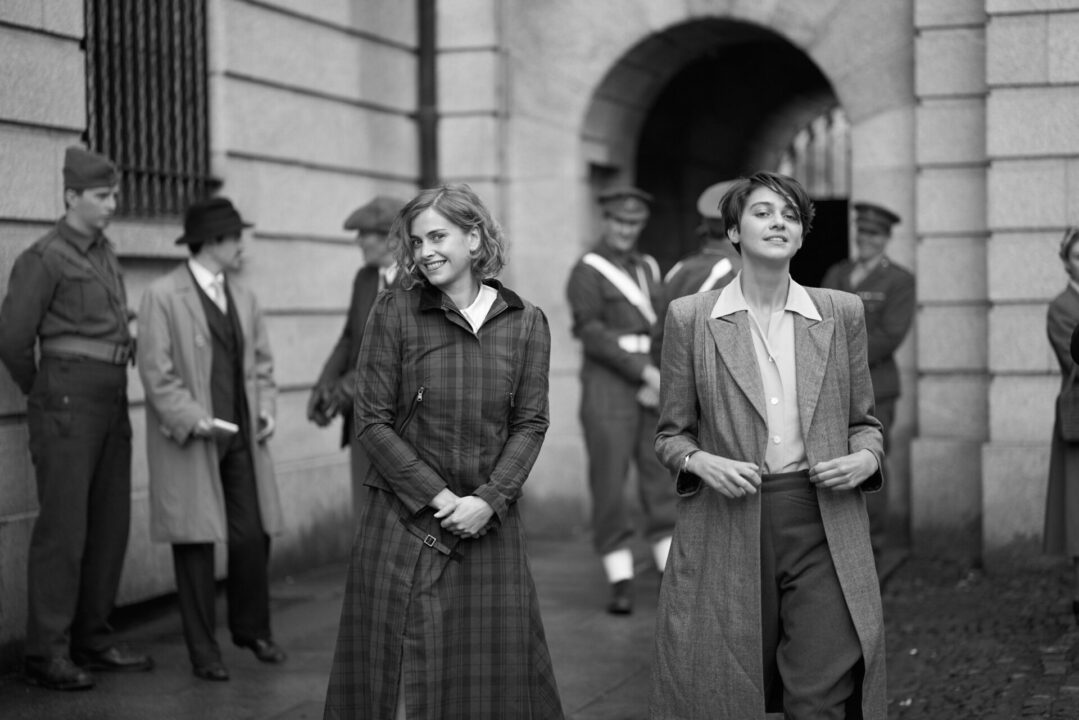
Lola takes place in 1941 England and centers around two sisters, Thom (Emma Appleton) and Mars (Stefanie Martini), who have built a machine that intercepts radio and TV broadcasts from the future. The machine, which they call LOLA, opens a limitless portal to the future. Turning on the device and seeing David Bowie singing “Space Oddity” is a revelation. They listen to iconic songs before they have been made, like The Kinks “You Really Got Me”, and place bets on games already knowing their outcomes. The sisters’ intention is to use LOLA for good, and they do… until things go terribly wrong.
With World War II impending, Thom and Mars use LOLA to change history by altering the course of the deadly event. Ecstatic about their contribution to history, they quickly realize that adding new variables has led to a new set of consequences. For starters, David Bowie is no longer a pop icon. In fact, they may have accidentally erased him altogether. They stopped the war and saved lives, but also existentially grapple with what they sacrificed.
Lola encourages critical thinking, much like the anecdote of the train going down the tracks toward a group of people. If you were to control the lever, would you let fate prevail and let the train strike the group, or would you alter its course by intentionally switching tracks, instead going in the direction of a single person? The film encourages audiences to examine these hypothetical questions, and therefore, I recommend watching with another person to engage in a post-screening Q&A. Transfixing performances by Stefanie Martini and Emma Appleton further add to the film’s charm. The experimental score by Irish singer-songwriter Neil Hannon is one of the most inventive and clever I’ve heard all year.
If you could control the butterfly effect, would you? Technology has the capability to enhance humanity thereby creating a perfect society, but at what cost? Lola tackles universe timeline jumping in the same fashion as Everything Everywhere All At Once, but even compared to the 7-time Academy Award-winning film, it still stands tall. A nominee for Best First Feature at the 2022 Locarno International Film Festival, Lola is a delightful film that deserves your attention.
Distributed by Dark Sky Films. Now available on VOD.
The Engine Inside
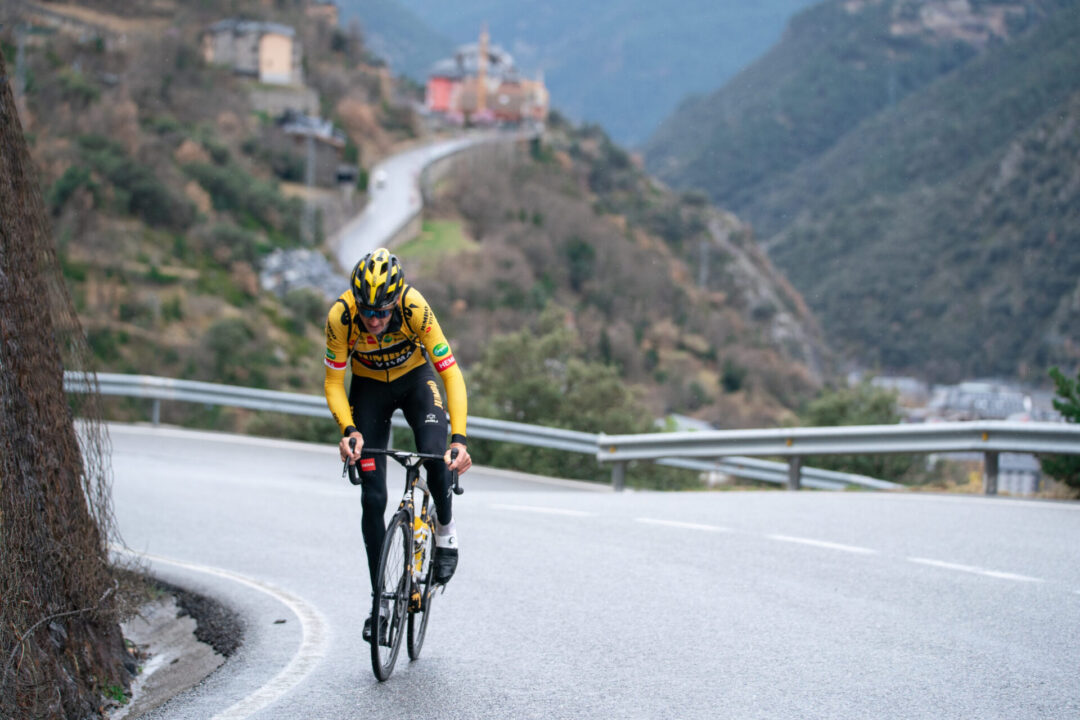
If you consider yourself a gearhead, the documentary The Engine Inside will feel like a warm embrace from the greater cycling community. However, those who aren’t passionate about the two-wheeled machine may feel a bit like an outsider looking in. Regardless, the film’s niche commercial appeal has a wider universal message that applies to everyone: a bike has the potential to solve global problems and move humanity forward. We just need to be willing to embrace it.
The Engine Inside, directed by Darcy Wittenburg, Colin Jones, and Darren McCullough, is more than just a love letter to the bicycle. It teeters on appearing like a PSA, or a long-form call to action to get audiences to ditch their cars and incorporate more bikes into their daily lives.
This nearly 200-year-old machine is the star of the film, its importance made known from the voiceover narration by a David Attenborough-sounding English gentleman. Throughout the brisk 83 minutes, we are introduced to people from all over the globe whose lives have been greatly affected by a bicycle. Through their vulnerable stories, we come to realize that a bike can be more than a tool or a toy, many consider it a source of therapy and freedom.
It’s clear that this film was made with the purest of intentions and goodwill, and not necessarily for cinematic accolades and awards. That said, at times it lingers on melodramatic moments that distract from the film’s intention of hopefulness. Slow-motion crying about past trauma and claims of feeling “discriminated against” or that “humanity treats people on bikes like punching bags” comes off heavy-handed. No doubt these emotions are valid but perhaps the effect would have been toned down if the documentary didn’t also incorporate a strong dependence on music with lyrics. The film is wall-to-wall music, which can come off as claustrophobic and forced.
The Engine Inside doesn’t necessarily tell the history of the bike, but rather the effects of the bike on people’s lives. Interesting facts are sprinkled throughout, like where the white “ghost bikes” originated from, and how bicycles and cars share the same laws. By the end of the documentary, it is the filmmakers’ goal that audiences consider this alternative way of living. After all, it is the cleanest engine around.
Passages
Passages, the new film by acclaimed American director Ira Sachs, has the potential to be one of my favorite films of the year. A love triangle of sadness set in Paris, the film explores the intricacy of modern relationships and how sticky they can become when a sexual awakening threatens to disrupt the dynamic. Making its premiere at the 2023 Sundance Film Festival, Passages is a rapture of desire and sexual fluidity.
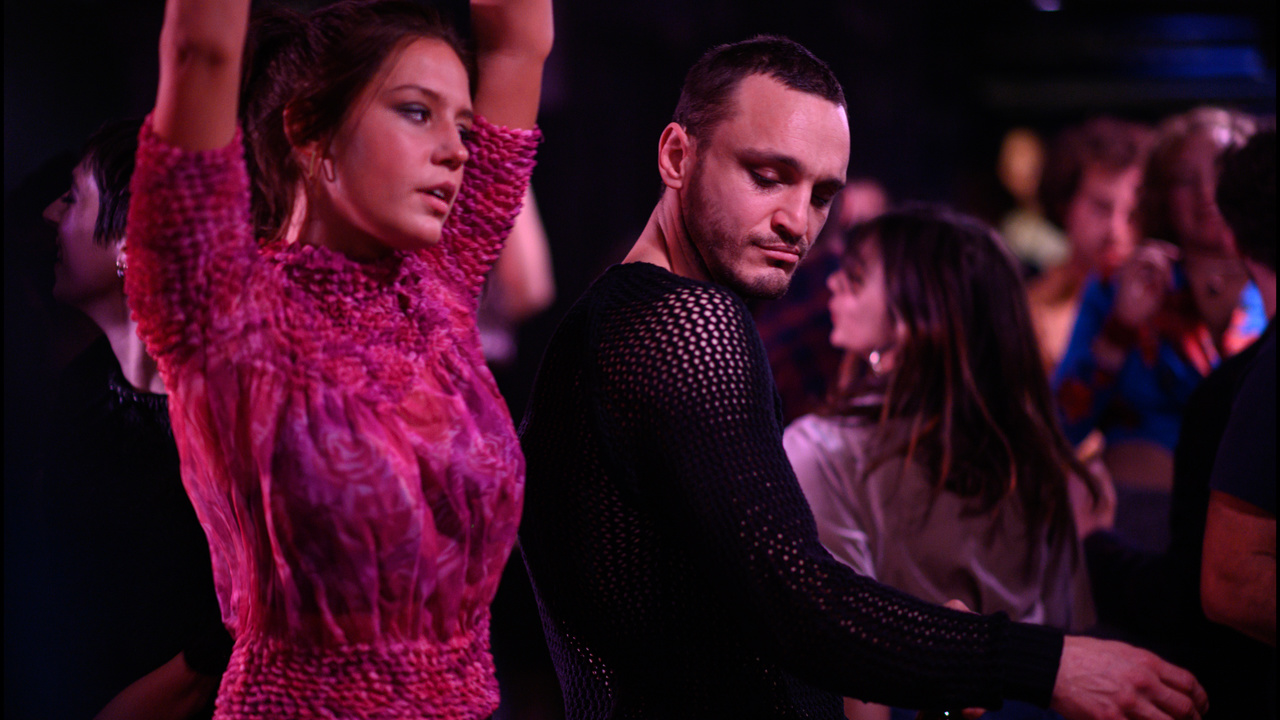
Passages stars Franz Rogowski (Transit) as Tomas, a queer German film director who struggles with unexpected lust for a woman after the completion of shooting his passion project. The security Tomas once felt in his marriage to his partner Martin (Ben Whishaw, Women Talking), is shaken when he lays eyes on the beautiful Agathe (Adèle Exarchopoulos, Blue Is the Warmest Color) at his film’s wrap party. Naturally seductive and charismatic, Agathe persuades Tomas to follow her to the dance floor after Martin turns down Tomas’s pleas to dance, citing an early wake-up call the next day. In the middle of a crowded club, electro-disco blaring, Tomas and Agathe move in complete synchronicity. Their first encounter doesn’t quite reach a palpable sexual tension, but rather an intriguing curiosity and flirtation.
Tomas ends up spending the night with Agathe and immediately tells Martin about his sexual deviation the next morning. Martin is understanding of Tomas’s desire for exploration but somewhat dismisses the event as a one-time thing. After all, Tomas isn’t attracted to women, or so Martin thinks. The bisexual grey zone Tomas finds himself straddling becomes almost too unbearable. He can’t stop thinking about Agathe, his uncaged animalistic desire to spend time with her, sleep with her, and build a concurrent life with her becomes what he now desires. He’s fallen in love with her, and her with him, but anytime Tomas feels too removed from Martin, he also can’t help but crawl his way back into Martin's life too.
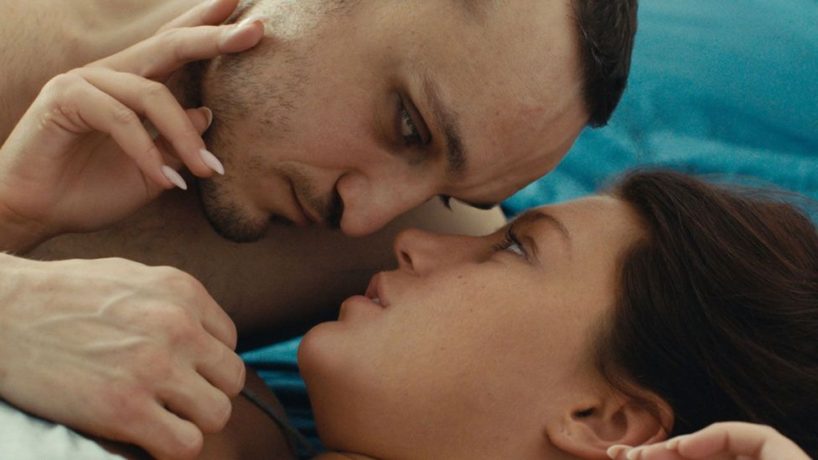
Ira Sachs’s seductive, NC-17 drama continues in a rather exhausting way for Tomas. His displays of love toward Agathe and Martin are expressed and then squandered as Tomas realizes that choosing between the two proves impossible. Things get even more complicated when Agathe reveals something that will change the course of Tomas and Martin’s life forever.
Bringing empathy to an otherwise self-absorbed character, Franz Rogowski gives one of the best performances of his career. He is a magnet on screen, visibly working through a never-ending stream of complicated emotions. Acting opposite him as his dejected lover is Ben Whishaw, whose own character's journey is fascinating. Don’t mistake his quietness for weakness, as Martin seems to be the ultimate voice of reason in the film. Adèle Exarchopoulos once again proves her star power with an incredible turn as Agathe, the strong-willed Parisian whose self-imposed blinders to Tomas’s double life is a constant, depleting struggle.
It’s no surprise that Passages is expertly crafted, from the set design to the styling and soundtrack. In the early moments of the film, when Tomas and Agathe meet for the first time, the song that accompanies this crucial moment has the lyrics, “I know you but I want to know you more” – an obvious foreshadowing of their tumultuous love affair. The film ends with a jazz piece, symbolic of chaos and disorientation.
Passages, distributed by MUBI, is an unconventional love story for modern times. From top to bottom, it’s an unforgettable watch that leaves ripples of desire and despair in its wake.
The Beasts
The thought of human extinction is a truly terrifying concept. Whether it be from ecological threats brought on by climate change, or at our own hands through over-consumption and corporate greed, those who choose a simple life are increasingly facing difficulties. As society adapts to more advanced technology and capabilities, those who refuse to adapt either get lost in the nostalgia of the past or are forced to embrace the changes.
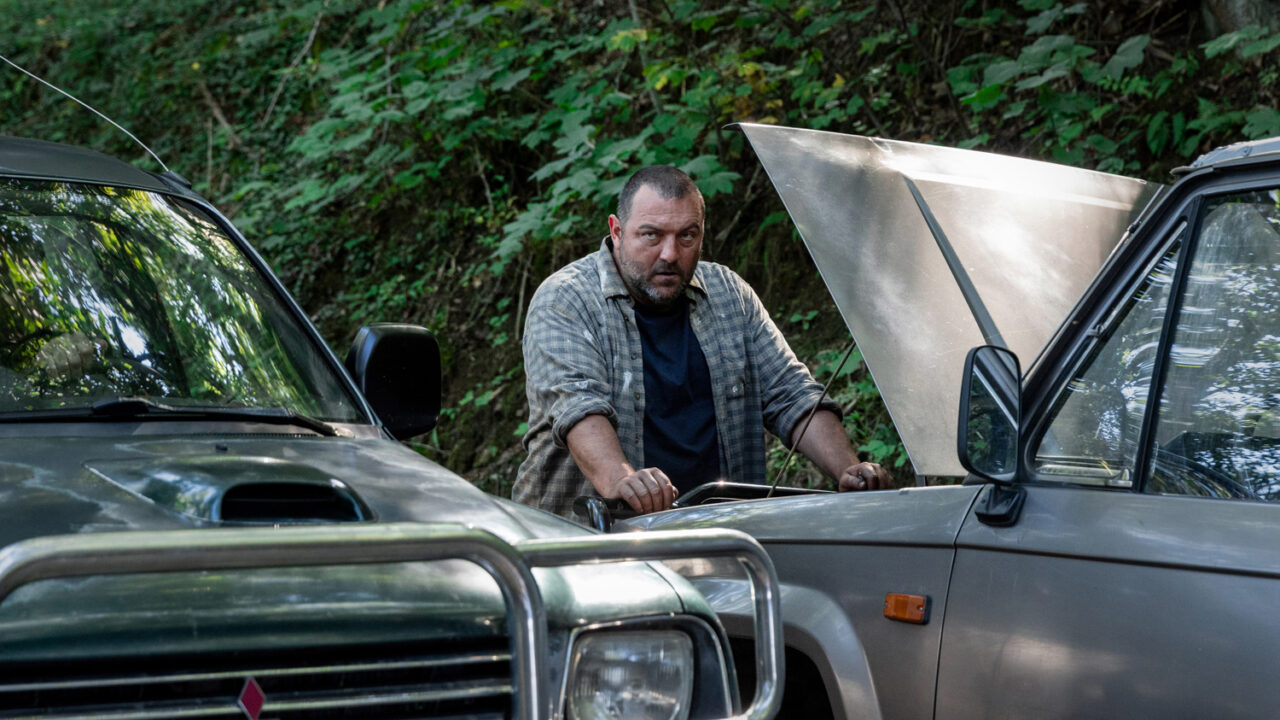
Survival and identity are key elements in Spanish director Rodrigo Sorogoyen’s haunting eco-thriller The Beasts, a simmering piece of filmmaking that broods with tension and despair. Part true-crime drama and part social realism, The Beasts is an exceptional viewing experience that offers multi-layered commentary on gentrification and the repercussions of strongly-held beliefs.
Set in a picturesque Galician farming village commonly referred to as the “Wild West” of Spain, a middle-aged French couple, Olga and Antoine (Marina Foïs and Denis Ménochet), find themselves at odds with their contentious neighbors after moving into the community. Their new home sits in a region that, while beautiful, is fraught with economic hardship and desperation. The couple, uprooted from their previous life, decide to relocate to the village to try their hand as organic farmers. Their love for the work is unquestionably pure; Olga and Antoine rigorously stick to their harvesting schedule so they have enough produce to sell at the local farmer’s market in town. Their land is their livelihood, and the most important asset in their lives.
However, longtime residents of the village aren’t thrilled with their new neighbors’ hobby, especially when it comes between a potentially lucrative business deal. Local brothers, Xan (Luis Zahera) and Lorenzo (Diego Anido), are also farmers who’ve struggled for generations to earn a living but see their ticket out of survival mode when foreign interests offer quick cash to use the land to develop wind turbines. Olga and Antoine strongly object to selling the property, which enrages the brothers. Psychological torture ensues, causing Antoine to fear for his and his wife’s safety. This brewing fight between good-intentioned immigrants and desperate natives reaches a breaking point toward the middle of the film, building to a crescendo that is entirely gripping.
In The Beasts, Rodrigo Sorogoyen creates a dazzling display of complex gentrification dynamics through beautiful visuals and a pulsating score. The soundtrack by composer Olivier Arson creeps in and out of scenes with its organic melodies. The instruments sound as if they could have been sourced from natural elements, adding to the earthy tone that encompasses the film. Conceptually, the film feels breathy and lived in. The actors – who all give phenomenal performances – are given space and time to embody the dialogue, without any feeling of rushed or inconclusive moments.
Akin to the Icelandic eco-thriller Woman at War, The Beasts similarly hits on the struggle to preserve our natural environment. What this film does so well is portray all of the sides to the story, blurring the line between victim and perpetrator. Winner of nine Goya Awards, Spain’s equivalent of the Academy Awards, including Best Picture and Best Director, The Beasts is a revelation and a film not to be missed.
Distributed by Greenwich Entertainment. Opening at the Laemmle Royal this Friday, 8/4.
Kokomo City
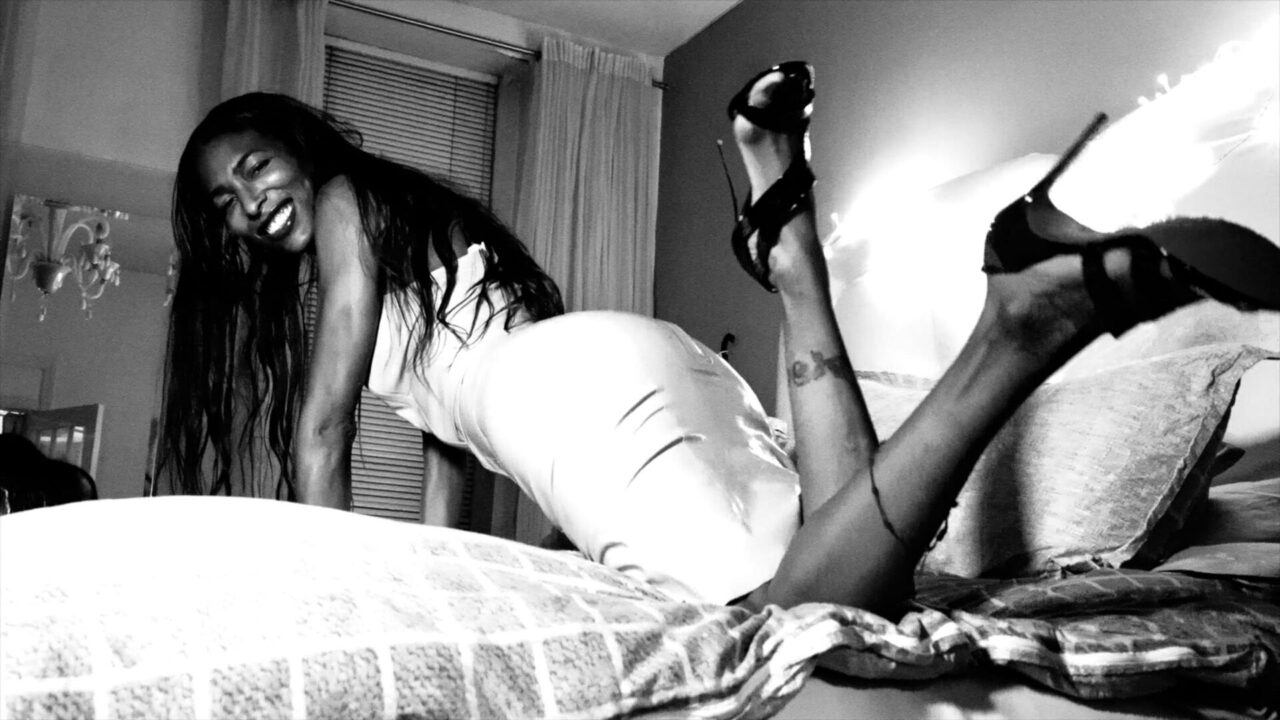
Winner of the 2023 Sundance Film Festival NEXT Innovator Award and the NEXT Audience Award, Kokomo City is a fireball of energy and truth that is ready to burst into theaters. Directed, produced, edited, and shot by filmmaker D. Smith, Kokomo City proves that a documentary is only as good as its subjects, and what we have here are excellent subjects telling unapologetically raw and unforgettable stories.
Seen through a bold black-and-white filter, this tell-all highlights four Black transgender sex workers in Atlanta and New York City. Daniella Carter, Koko Da Doll, Liyah Mitchell, and Dominique Silver share their private experiences – past and present – as “entrepreneurs” who have taken an unconventional route toward self-sufficiency and independence. Unfiltered and definitely NSFW, the women get candid as they bare all to D. Smith whose understanding and empathy permeates from behind the camera.
Kokomo City humanizes the people who are often referred to as a statistic, or an “other”. We see their faces, learn their names, and are given access to their complicated world for 73 minutes. Comprised entirely of interviews which range from the logistics of "topping" and "bottoming" with clients, to familial disappointment and disownment, the film doesn’t glamorize the sex industry in the slightest but shows how the promise of fast money is enticing enough to those in desperate financial situations. It’s a sad reality that D. Smith captures with such elegance and grace through engaging and rhetorical questions.
The subject matter is dark, but there is lighthearted humor throughout the film that keeps audiences from pitying the women onscreen. Rather, we admire their bravery in the face of violence or bigotry. Despite coming from different backgrounds, the women all agree on one fact: this is survival work and it’s risky. For too long, women and those who are woman-identifying have put their lives in the hands of men, trusting them to keep us safe. For Black trans sex workers, every client is a potential threat, which highlights the horrible conditions they must continue to accept.
Aside from spotlighting a tragic existence, if Kokomo City does nothing else, hopefully, it will aid in the visibility of transgender women on screen. D. Smith has taken a conversation that has been purposefully avoided for years and made a feature film that shines a bright spotlight on these vulnerable, human experiences.
Distributed by Magnolia Pictures. Opening this Friday at Alamo Drafthouse Cinema Downtown Los Angeles.
Loud & Longing
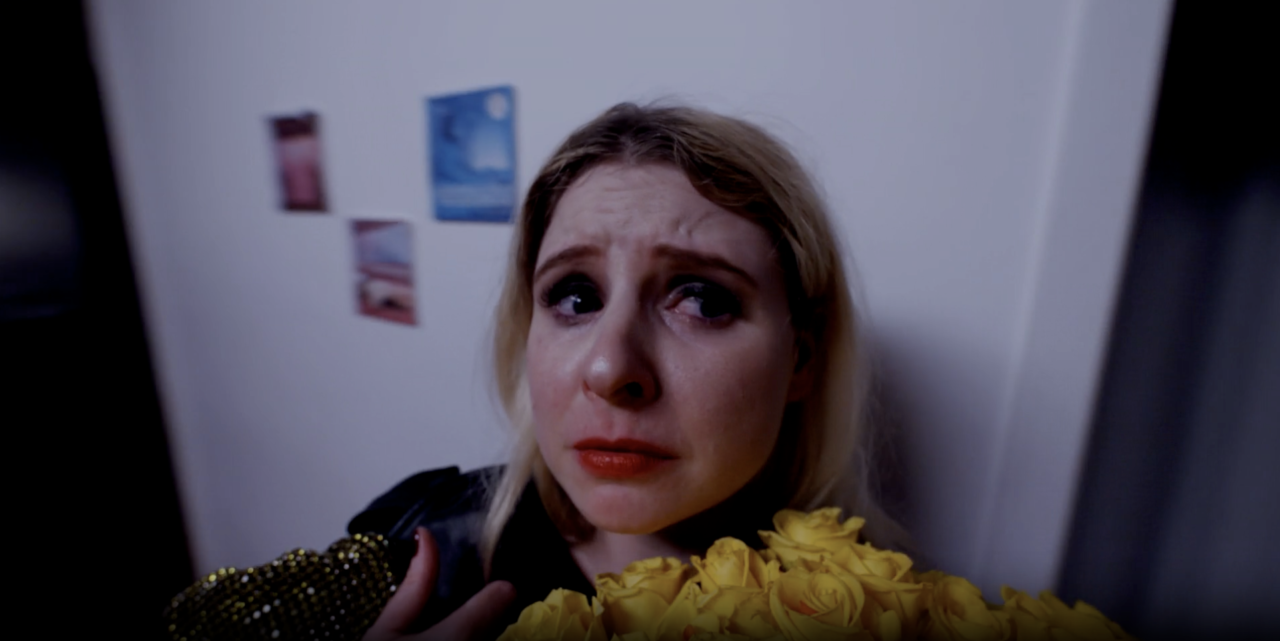
New York City has the potential to either bring out the best in a person or break them. This city that never sleeps is a central character in Loud & Longing, a film that acts as a cinematic love letter to NYC and the brave dreamers who call it home. For as opportunity-riddled as the concrete jungle can be, many aspirational artists have been met with a reality check that threatens to crush their ambition and overall outlook on life. As this micro-indie shows, it helps to have a chosen family that understands the entrepreneurial struggle and can offer support throughout the inevitable highs and lows.
The ultra-low-budget film from directors Isabel Ellison and Ryan Guiterman tackles the darker side of chasing a dream while still weighed down by unprocessed baggage. Lucy (director Isabel Ellison) and Lucien (Sam Encarnación) are childhood friends in their early thirties who find themselves together in New York. Each a creative on the verge of a career breakthrough, Lucy, an actor, and Lucien, an artist, also share a trauma bond that emerges from the shadows when her cousin Matt (Max Carpenter) shows up in town. Matt brings with him the reminder of a shared painful history, one that includes abuse, addiction, and loss. But even in the darkest of moments, Lucy and Lucien keep their head above water with the support of their friends.
A diverse cast of queer and trans millennials creates the film's emotional heartbeat, in a similar fashion to Jonathan Larson's eclectic cast of Rent. All struggling with something, it's only through unwavering friendship that Lucy and Lucien are able to survive their worst moments. The themes of recovery and reclaiming one's identity ring true throughout the leaden script from writers Isabel Ellison and Brian Otaño.
Loud & Longing has a 2010's arthouse quality to it and presents in a similar style to the Safdie brothers' 2014 film Heaven Knows What. Stripped back of any superfluous characteristics, Loud & Longing is bare-bones but still manages to keep its edge. This aesthetic works in terms of building the world within the film but faces problems when it comes to the literal viewing of it. Dipping into questionable sound quality and mixing, the film's light and fluid nature comes to an abrupt halt when technical inconsistencies occur. Gaffes aside, Loud & Longing ultimately succeeds as an ode to the misfit and a prudent reminder that we are not an island, and should consider ourselves fortunate to have a friend in our corner.

Talk To Me
A24’s latest horror film Talk to Me is a litmus test of physical restraint. How long can you go without clenching your fists, squirming in your seat, or covering your eyes is determined by your tolerance for intense gore, and–to be frank–sheer insanity. Supernatural forces conjure chaos in Australian filmmakers Danny and Michael Philippou’s directorial debut, making for a whiplash of thrills that will no doubt delight any masochistic horror fan.
Written by Danny Philippou and Bill Hinzman (and based on a concept by an additional ten people), Talk to Me tells a story of a group of high schoolers who get caught up in conjuring spirits. The film also comments on the natural coming-of-age tendencies to experiment with boundaries and the enticing element of danger.
A couple of years after the unexpected death of her mother, Mia (Sophie Wilde) is beginning to have some semblance of a normal life again. Growing accustomed to not having her mom by her side, Mia finds comfort and stability with her best friend’s family, Jade (Alexandra Jensen), her younger brother Riley (Joe Bird), and their mother Sue (Miranda Otto).
One night, Mia and Jade invite a small group over to their house to try out a bizarre ritual that has been sweeping social media. Lighting a candle, holding the hand of an embalmed paranormal body part, and whispering the words “Talk to me, I’ll let you in,” is all it takes for demonic spirits to cross over from the other side and inhabit the body of the victim. Or, that’s what the group of friends are led to believe. A time limit of about 90 seconds is discussed beforehand; anything longer than that and the spirits could take over your body forever. Of course, things don’t go as planned during the group’s night of conjuring as they accidentally unleash the most demonic, nightmarish supernatural forces that quickly overstay their welcome.
The Philippou brothers push maximalist extremes in every direction. From the scratchy string-heavy score by composer Cornel Wilczek to the hyper-realistic special effects makeup, there is a lot to digest. Blood floods out of pores like a rapidly flowing river and skin flakes off like hardened scotch tape in such astute detail, it’s enough to make one’s stomach a bit queasy. These aesthetics help elevate the performances as well. Alexandra Jensen, playing Mia’s BFF Jade, steals the show with her grounded yet increasingly unhinged performance.
On the whole, Talk To Me is a staggering directorial debut. The Philippou brothers know how to capture the audience's attention and have them hanging onto every word. Their fresh voices and stylish aesthetic in the horror genre are welcome, and I look forward to seeing what nightmarish brainchild they’ll come out with next.
Distributed by A24. Talk To Me opens in theaters on Friday, July 28th.
https://youtu.be/aLAKJu9aJys
'Nathan-ism' Explores Truth and Fiction Through This Cartoonist
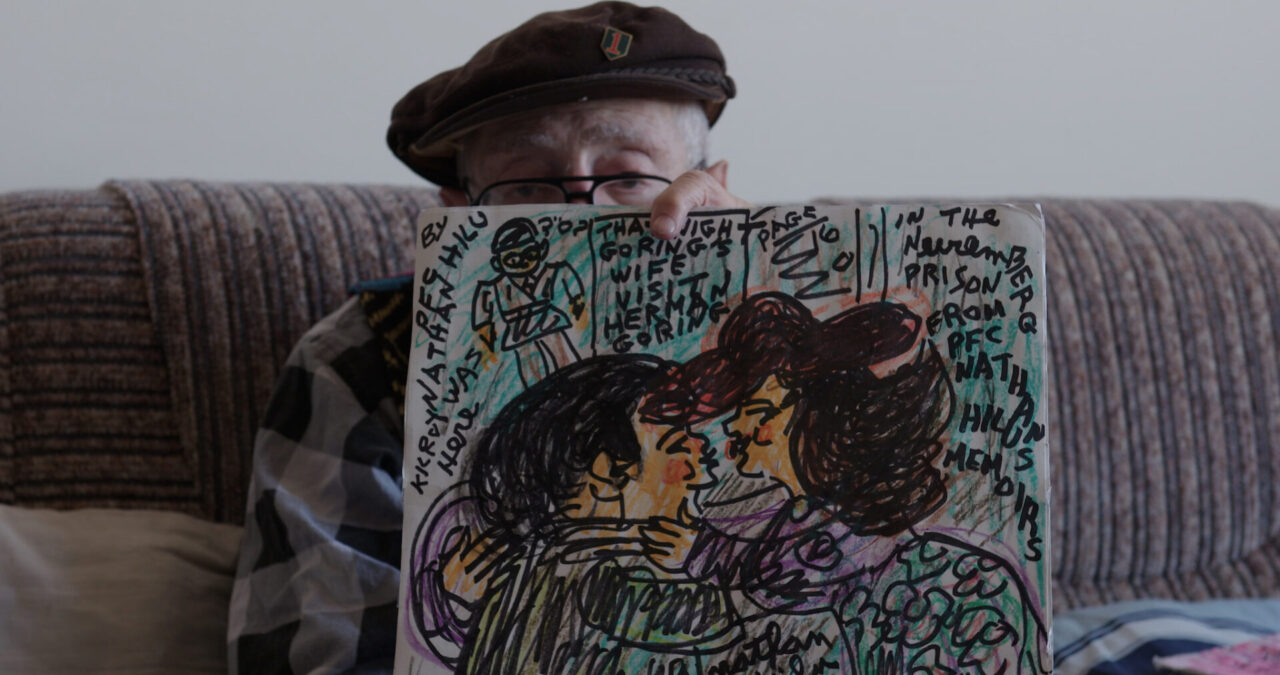
In Nathan-ism, filmmaker Elan Golod does two things at once. He introduces audiences to WWII veteran and bespoke cartoonist Nathan Hilu while simultaneously commenting on the juxtaposition between the impermanence of life and the everlasting nature of art. Nathan is well into his 90s but that doesn’t slow him down in the slightest, in fact, quite the contrary in fact. He is determined to present his memory on paper and continue creating pieces of art that reflect the monumental moments in his life. Through his own words and pictures, Nathan shares intimate moments of history that otherwise may have been lost to time.
Putting marker to paper, Nathan tells the film’s director that he still doesn’t consider himself an artist but more of a “memory man” who illustrates his recollections from decades prior. The son of Syrian Jewish immigrants, Nathan recalls the moment his life changed forever. In the mid-1940s, at the end of WWII, he received an assignment from the U.S. Army to guard top Nazi war criminals at the Nuremberg trials. This experience would serve as the catalyst for Nathan’s art as he therapeutically recounts the tragic events using crayons and markers.
The colorful output on the pages stands in stark contrast to what is being depicted; hangings, death, and heartbreak fill up the corners of his sketchbook. "Every soldier has memories,” Nathan reminds us, as he sits in his recliner, doodling with his sun-spotted and wrinkled hands that embody his astute wisdom and life experience. The art world took notice of Nathan’s works and story, leading to gallery runs and a retrospective exhibit at the Hebrew Union College Museum.
Urgency is the subtext of Nathan-ism. Despite his age, the sentiment rings true for all of us that it’s never too late. Nathan has a very storied life, one which Elan tells in vivid detail that compliments the cartoonist’s eccentric personality. Composer Christopher Bowen’s score is whimsical and bright, painting the film in an overall optimistic light. Also attached as Executive Producer is the Emmy Award-winning Caryn Capotosto, whose recent documentary Won’t You Be My Neighbor won an Independent Spirit Award (2019) for Best Documentary, a Producers Guild Award (2019), and a Critics’ Choice Award (2018) for Best Documentary.
In art, there are many types of “-isms”: modernism, surrealism, impressionism, etc. Adding to this list, “Nathan-ism” stands for authenticity and reflection. Running at a brisk 79 minutes, Nathan-ism is a feel-good documentary that offers audiences the opportunity for self-reflection about the moments in their lives that could lead to meaningful works of art.
While Nathan died in 2019, his art and stories will live on forever.
Bobi Wine: The People's President
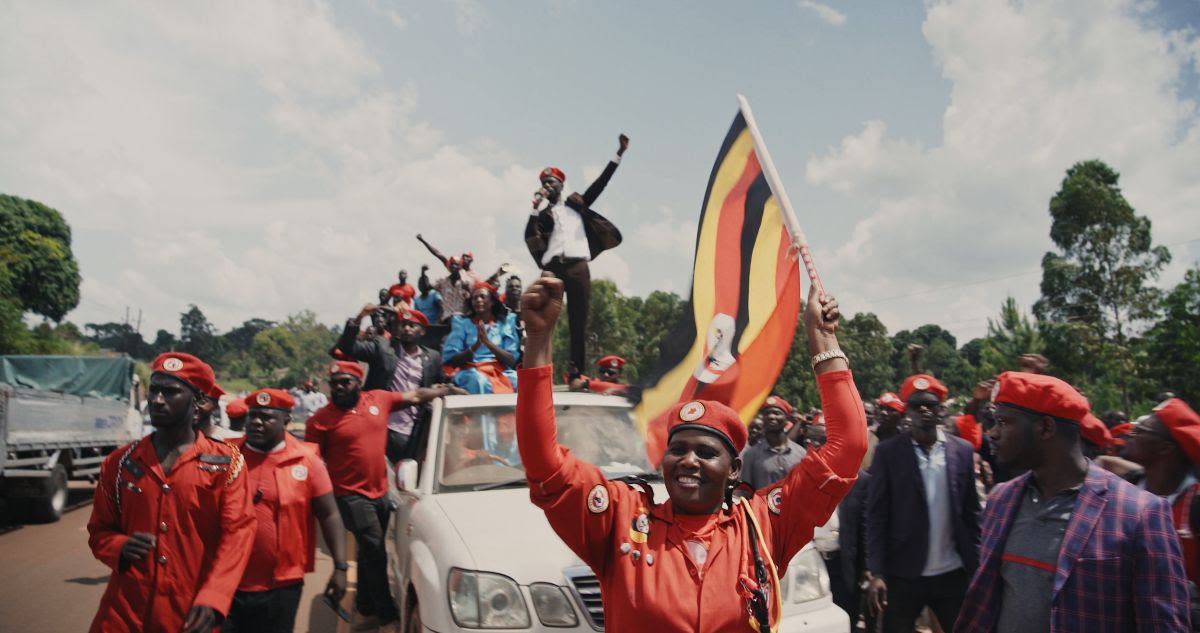
If there’s one documentary you seek out this year, make it this one. Equal parts inspiring, educational, entertaining, and emotionally activating, the story of Ugandan musician turned politician Bobi Wine is an incredible exposé of the hypocrisy of political elections and the hero who was willing to sacrifice his life to defend the oppressed. Documented over five years by filmmakers Christopher Sharp and Moses Bwayo, Bobi Wine: The People’s President charts the fascinating trajectory of one man’s selfless dedication to his people in true David vs Goliath fashion.
Robert Kyagulanyi Ssentamu was born in the slums of Kampala, which shaped his identity as he grew into a young man. His awareness of the lack of equality within his country’s political system struck a nerve with the budding social activist who, at that time, was expressing his frustration through music. With colorful vocals and infectious beats, Bobi’s catchy tunes held a deeper meaning than just entertainment value, these songs were calls for freedom. Robert adopted the stage name Bobi Wine and then, a star was born. As his musical career turned him into a national superstar, Bobi remained a man of the people and returned to the slums often to encourage future generations to persevere through the tough times.
Bobi’s dreams extended beyond the recording studio – his eyes were set on Parliament. He secured a seat within the government and quickly realized that behind the facade was corruption, illegal activity, and anti-republic intentions. Since 1986, Uganda had been under a ruthless regime led by power-hungry Yoweri Museveni, and the opposition wanted him gone. With a Presidential election upcoming, Museveni was determined to take another five-year term after he unethically changed the country’s constitution to make him eligible to run again. As a result, Bobi decides to gear up for the biggest battle of his life and run against the most powerful man in Uganda.

Bobi’s campaign journey is documented in harrowing detail throughout the film’s 2-hour runtime. Caravaning from town to town in an effort to connect with the voiceless people in remote Ugandan towns, Bobi and his team of supporters continuously risk persecution, intimidation, and even death from Museveni’s military. Told through intimate conversations with filmmakers Christopher Sharp and Moses Bwayo, Bobi gives audiences a glimpse into his secret life at home with his wife, Barbie, and their three children, revealing the sacrifices he makes to keep them safe.
The music that drives the film is a compilation of Bobi’s own recordings. Similar to the way Rodriguez came into the musical zeitgeist after the debut of the documentary Searching for Sugar Man – which also happened to also be produced by Bobi Wine‘s John Battsek – Bobi’s music has the potential to find its way to a mainstream audience. Inspiring activism through music, Bobi sings about denouncing the dictatorial regime and fighting for freedom. It’s a universally resonating message that you’ll be eager to sing along to.
The target on Bobi Wine’s head is never out of sight, even today., and the very act of making this documentary is already an act of defiance. If there’s one takeaway from the film, it’s that nobody can stop Bobi Wine from carrying on. Getting his message out into the Western world would be a huge victory for all the Ugandan people who feel oppressed at the hands of their own government. We owe it to Bobi, the filmmakers, and our fellow world citizens to listen to their stories and then act in a way that allows for liberty and freedom to prevail.
Distributed by Nat Geo Docs. Opening in select theaters on Friday, July 28th.
The Deepest Breath
Every decision we make on this earth, whether on land or sea, is left to some degree of chance. Even with years of experience, we can never truly predict with full certainty the outcome of a situation. Yet in some ways, this unpredictability is part of the beauty of life. Happenstance is what brought Alessia Zecchini and Stephen Keenan together, and fate is why their story is so painstakingly tragic. To bring this story to life, director Laura McGann takes audiences on an emotionally-stirring and reflective journey throughout the lives of these two sea-bound soulmates in the documentary The Deepest Breath, now streaming on Netflix.
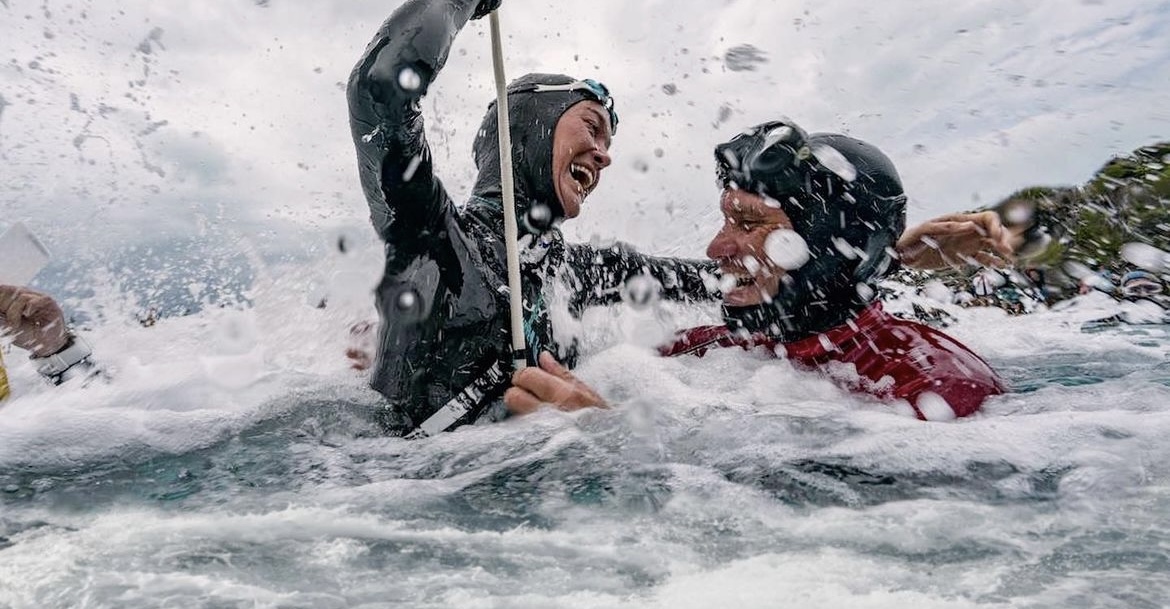
On the surface, The Deepest Breath can be described as a tragic love story between a world-champion Italian freediver, Alessia Zecchini, and her Irish safety expert coach, Stephen Keenan. But dive a little deeper, and you’ll soon discover that it’s so much more than that. This film tells a poignant story about pushing the limits of the human body – mentally and physically – and the vulnerability that it takes to surrender everything in the name of love.
From the very first frame, audiences are submerged into the little-known world of freediving. Don’t be surprised if you catch yourself attempting to hold your breath simultaneously with the divers on screen, as I subconsciously did. My pathetic 45 seconds compared to their nearly four minutes is laughable, and really puts into perspective why freediving is highly considered by many athletes to be the most dangerous sport in the world.
Alessia Zecchini meets this challenge head-on as she competes for the title of world champion freediver. Her dedication to the sport is admirable, if not foolish at times. Throughout the film, we witness her compete in different exotic tropical locations, whose beauty is often overshadowed by the deadly activity happening underneath the water. Plunging hundreds of feet downward with a single breath leads to occasional blackouts, where bodies are pulled to the surface by expert divers and given lifesaving treatments like CPR. Given the circumstances, there is no doubt that the bond between a diver and their safety expert is a precious one. Alessia and Stephen prove this ten times over throughout the film and their intimate moments are such a privilege to witness.
The crux of The Deepest Breath takes place in the moments between an inhale and an exhale. A mere matter of seconds can feel like a lifetime when one is submerged hundreds of feet in the ocean. Director Laura McGann has complete control of the emotional power of the story, which is complemented by the beautifully layered score by Nainita Desai. Produced by John Battsek of Ventureland, in association with A24, Motive Films, and RAW, The Deepest Breath is a full-bodied viewing experience and an incredible homage to those who are willing to risk it all for their dream.
Now streaming on Netflix.