
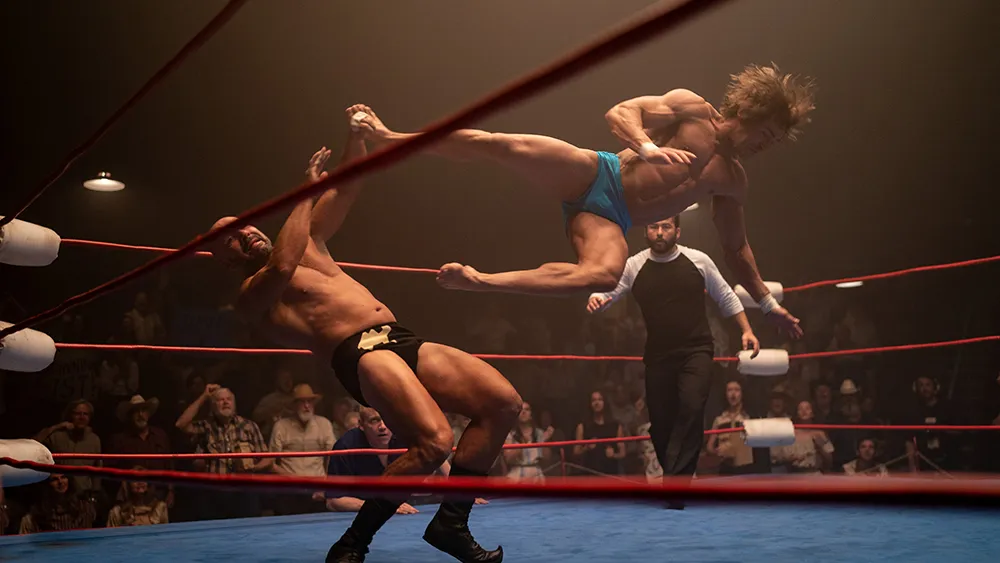
'The Iron Claw': The Hereditary Curse of Family Legacy
For a film so deeply rooted in machismo culture and the bonds of brotherhood, there is a soft side to The Iron Claw that is so unexpectedly moving it brought a grown woman (me) to tears. Director Sean Durkin's biopic of the world's most infamous wrestling family tells a haunting story of legacy, expectation, and the costly price of success. Complicated family dynamics between an oppressive father and his four compliant sons create such palpable tension and discomfort that it can be hard to watch at times without intense feelings of parasocial guilt. Despite this, I'm hard-pressed to recommend anything else. Durkin and his incredible ensemble cast bring to the screen one of the most visceral films of the year, one full of tenacity and grit, and easily among my favorites of 2023.
Set in the early 1980s, The Iron Claw tells the true story of the Von Erich family and their tragic, unfinished legacy within the competitive world of professional wrestling. Born and raised in Texas, the bond between the Von Erich brothers – Kevin (Zac Efron), Kerry (Jeremy Allen White), David (Harris Dickinson), and Mike (Stanley Simons) – is truly something special. Not only do they share a love of wrestling, but they all endured growing up in the shadow of their domineering father and coach, Fritz Von Erich (Holt McCallany). Determined to have his sons pick up where he left off and push the family name toward victory, Fritz creates an environment where winning a medal equates to winning his respect.
The tough love, despite its borderline abusive tendencies, seems to work. Kevin's (Efron) commitment to the sport proves unwavering as he climbs the ranks and starts becoming a notable figure. He seems like the obvious choice to lead the Von Erich dynasty to victory but obstacles make his road to stardom difficult. His brother Kerry (White), whose Olympic discus dreams were dashed after President Carter denied Americans from competing due to political reasons, realigns his athletic ambitions and sets his sights on the wrestling ring as well. David (Dickinson), known for his outgoing personality, follows suit and quickly becomes Fritz's favorite son – a title Fritz doesn't shy away from publicly declaring. His attempts to subtly pit the boys against each other to stir up aggression and animosity have an adverse effect; the Von Erich boys instead band together to become a source of refuge and understanding.
This story could have resulted in many different outcomes, but the deaths of three of the four brothers never crossed my mind. For those unfamiliar with the story, unfathomable misfortune and loss pollute the Von Erich family's legacy. All silently suffering from childhood trauma at the hands of their father, which they express in different ways. It's a heartbreaking realization that Fritz is clearly more concerned about his family's legacy than his individual children's well-being and future.
As the credits rolled, I was left gobsmacked. The ensemble cast is phenomenal, nothing short of astounding. For his role as the sole survivor, Zac Efron undergoes a full-body transformation that is worthy of every award. Jeremy Allen White and Harris Dickinson tap into their raging animalistic side and give some of their best performances to date. It's guttural, emotive, and tender all at once. Breakout star Stanley Simons, who plays the youngest brother Mike, is breathtaking. His presence among the film's A-list stars feels authentic and grounded, a tall order for any actor but one that he fills with ease. Holt McCallany as Fritz and Maura Tierney as the boys' emotionally detached and stoic mother, Doris, are both pitch perfect. The film is incredibly physical, and all who participate in the logistical aspects of the performance, both in the ring and outside of it, are exceptional. The amount of work that went into preparing for these roles and the amount of muscle that had to be built to achieve the Von Erichs' signature stature is an astounding feat.
In a career-defining role for Efron, as well as for director Sean Durkin, The Iron Claw lands squarely within the narrow qualifications for perfection. It is both a ghost story about lost potential as well as a testament to the antithesis of fame. It's complicated, emotionally taxing, and devastatingly abrupt. The Iron Claw should go down in history as one of the best sports biopics of all time.
In theaters this Friday, December 22, 2023.

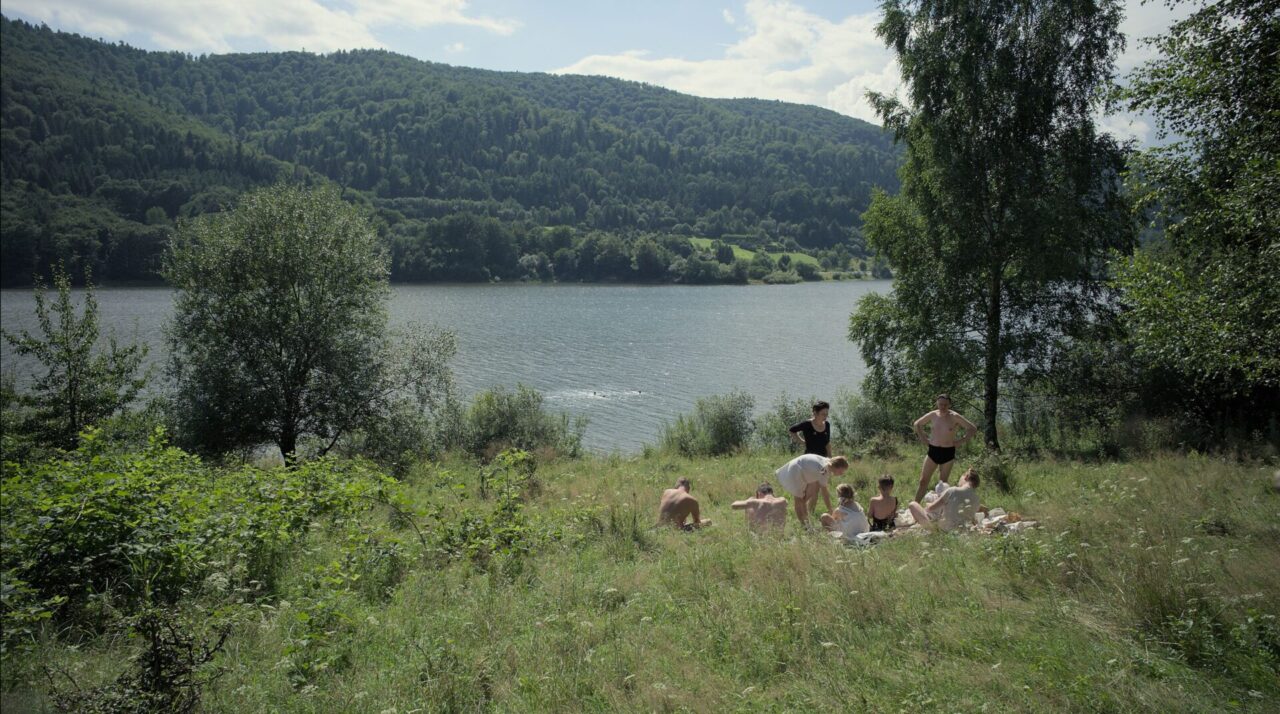
'The Zone of Interest': The Immersive Disquiet of Holocaust Atrocity
I was tempted to make this review my shortest one yet at only five words long: "You must see this film." Words can only go so far when describing Jonathan Glazer's hauntingly grim immersive experience, The Zone of Interest. Winner of the Grand Prix at the 2023 Cannes Film Festival, this Holocaust-set drama is a chilling portrayal of history's most atrocious cruelties. If you're like me, it will leave you speechless.
Based on the biographical novel by Martin Amis, The Zone of Interest views the devastating events of the Holocaust from the perspective of a German militia family. The phrase "Zone of Interest" was commonly used by the Nazi SS to describe the small area immediately surrounding the Auschwitz concentration camp. And it's here where this film takes place.
The commandant of Auschwitz, Rudolf Höss (Christian Friedel), and his wife Hedwig (Sandra Hüller), attempt to build a dream life for their family despite being surrounded by the consistent sounds of suffering and death. Their picturesque home and luscious garden lay in stark contrast to the concentration camp that borders their property. As much as Hedwig and her young children seem to easily drown out the sounds of gunshots, crying, and screaming, we as viewers know that there is no escaping the horrors that are taking place behind the walls. Inside the family's home is a haven; but step one foot outside, and it's hell.
When Rudolf is informed that his superiors want him to move to a different city, Hedwig is beside herself. She refuses to leave the beautiful home she made for herself and, for a while, their marriage is only barely surviving. Rudolf views his responsibilities as a death camp commandment with the utmost respect and obeys his orders, taking this new position as an opportunity to better provide for his family. It's a morality mind warp, as on one hand, Rudolf cares so little about human life that he is actively encouraging mass genocide. On the other, he sacrifices everything to give his family the best life he possibly can. As a viewer, confronting guilt, conflict, and humanity comes in unpredictable, emotional waves.
https://www.youtube.com/watch?v=r-vfg3KkV54&ab_channel=A24
Witnessing the atrocities of the Holocaust from a perspective we don't often see–that of the Germans–is one of the reasons why The Zone of Interest is such an uncomfortable watch. There reaches a point where the screams from behind the concentration camp walls become almost ambient, like a horrific yet subtle soundtrack that plays in perpetuity. Adding to the discomfort is the intentional lack of any musical score. Composer Mica Levy (Under the Skin, Monos) contributed ambient-heavy, noise-distorted sound to aid in the opening and end credit roll, but aside from those two moments, there is no additional music. Instead, sound designer Johnnie Burn is heavily relied upon to craft a sensational auditory world that runs concurrently with what is playing onscreen.
Capturing the nuances and complexities in stunning detail is cinematographer Łukasz Żal (Ida, Cold War, I'm Thinking of Ending Things). True to form, Żal's compositions are masterfully composed, even with Glazer's unconventional production technique. Fixed and partially hidden cameras were placed around the entire family house, and the actors were required to perform long, unbroken takes, never knowing which moments would be used in the final edit. Due to the nature of the shoot, Friedel and Hüller were tasked with improvising some scenes while others were carefully scripted.
For most of the production, Glazer and Żal watched the scene play out through monitors while stationed in a separate concrete bunker with a team of focus pullers working via a system of remote cables. Says Glazer: “The phrase I kept using was ‘Big Brother in the Nazi house.’ We couldn’t do that, of course, but it was more like the feeling of ‘Let’s watch people in their day-to-day lives.’ I wanted to capture the contrast between somebody pouring a cup of coffee in their kitchen and somebody being murdered on the other side of the wall, the co-existence of those two extremes.”
The performances from Christian Friedel and Sandra Hüller as stiff and detached protagonists are among the year's best. They keep the audience at arm's length, and their vacant eyes say more than any words could. Psychologically mystifying, the duality of playing a character with human emotions, yet seemingly devoid of apathy, is a fine line to walk. Yet Friedel and Hüller walk it with a stark, horrifying precision.
The Zone of Interest is, at its core, a rather simple story about one Nazi family's existence and contributions to one of the worst events in human history. It's a difficult film to witness and an even more difficult one to forget.
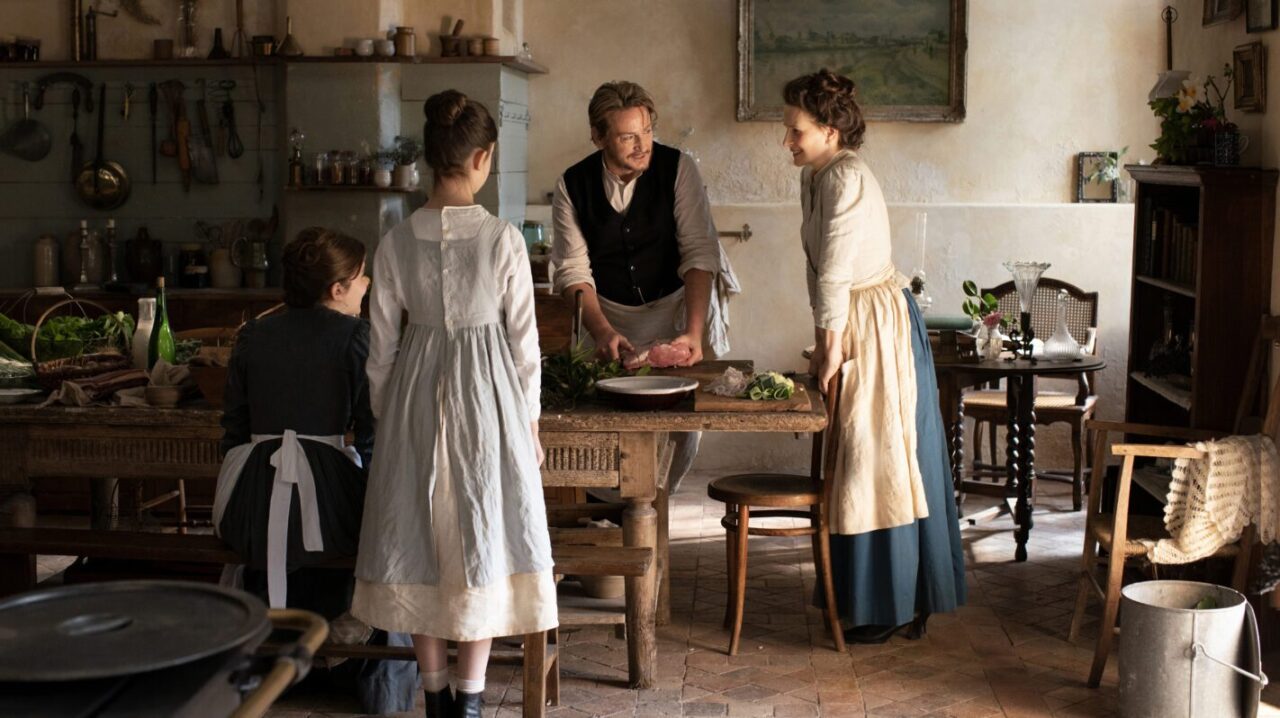
'The Taste of Things' Is a Transfixing Culinary Triumph
Perhaps one of the most viscerally indulgent films of the year, filmmaker Tran Anh Hung's The Taste of Things offers a sizzling, gastronomic treat that aims to satiate all of the senses. At the heart of the film is a tender love story between two middle-aged cooks in their "autumn" years whose commitment to each other consistently reverberates throughout their rich, albeit, repetitive life.
The year is 1889 and Eugénie Chatagne (Juliette Binoche) can be found doing what she does best: cooking. Commanding the kitchen as if on auto-pilot, Eugénie waltzes around the stoves and counters with stunning confidence and finesse. No recipe books to be found, she adds thinly sliced vegetables to the pot au feu, dashes of salt to the brine of fish, and whole milk to the pastries that will no doubt come out perfectly golden brown. Eugénie is a food artist and is highly respected by chef Dodin Bouffant (Benoît Magimel), whose meals are often prepared for him and his friends by Eugénie.
Admiring more than just her skills, Dodin is infatuated with Eugénie and expresses his love often. The two cooks have worked together for over 20 years and their love for each other has sustained time, growing stronger with each passing year. It is never explicitly addressed why Eugénie has kept Dodin at a distance, romantically speaking, despite clearly having so much love for him, too. However, their love circumvents the need for traditional labels. They express their devotion through the food they prepare for each other; acts of service are their love language and they are fluent in their declaration.
The Taste of Things is nothing if not a flavorful feast for the eyes and ears. The opening of the film takes audiences on an artful journey through the intangible senses as we watch Eugénie and her young apprentice prepare a multi-course meal fit for a king. With such synchronicity–as if choreographing a ballet–we watch her quietly create some of the most gorgeous plates of French cuisine to ever exist on screen. It's almost comical how appetizing the food looks and how we can practically taste every individual course in such fine detail. Three-star chef Pierre Gagnaire served as a consultant on the film, helping director Tran Anh Hung achieve perfection on a plate.
Juliette Binoche delivers a reliably strong performance as the self-assured Eugénie, her grace and embodiment of the character are truly felt. Acting opposite Binoche is Benoît Magimel, her real-life former partner and father to their daughter, Hana Magimel. Binoche shared this connection in an exclusive Q&A during an early screening to a stunned audience, who mostly had no idea there was a prior history between the two leads. This personal backstory aids the film in insurmountable ways. Another unconventional takeaway is that for as much joie de vivre that surrounds The Taste of Things, there is a noticeable lack of score. A singular piano piece from Jules Massenet’s opera “Thaïs” is the only musical element in the film, however, the film never lacks for sound. The elements of cooking–sizzling butter, burning wood, running water, chopping vegetables–all aid in creating the film's aroma-based soundtrack.
The richness that seeps throughout the scenes in The Taste of Things is a vision to behold. Let yourself get washed away in the sights and smells of Tran Anh Hung's transfixing culinary triumph.
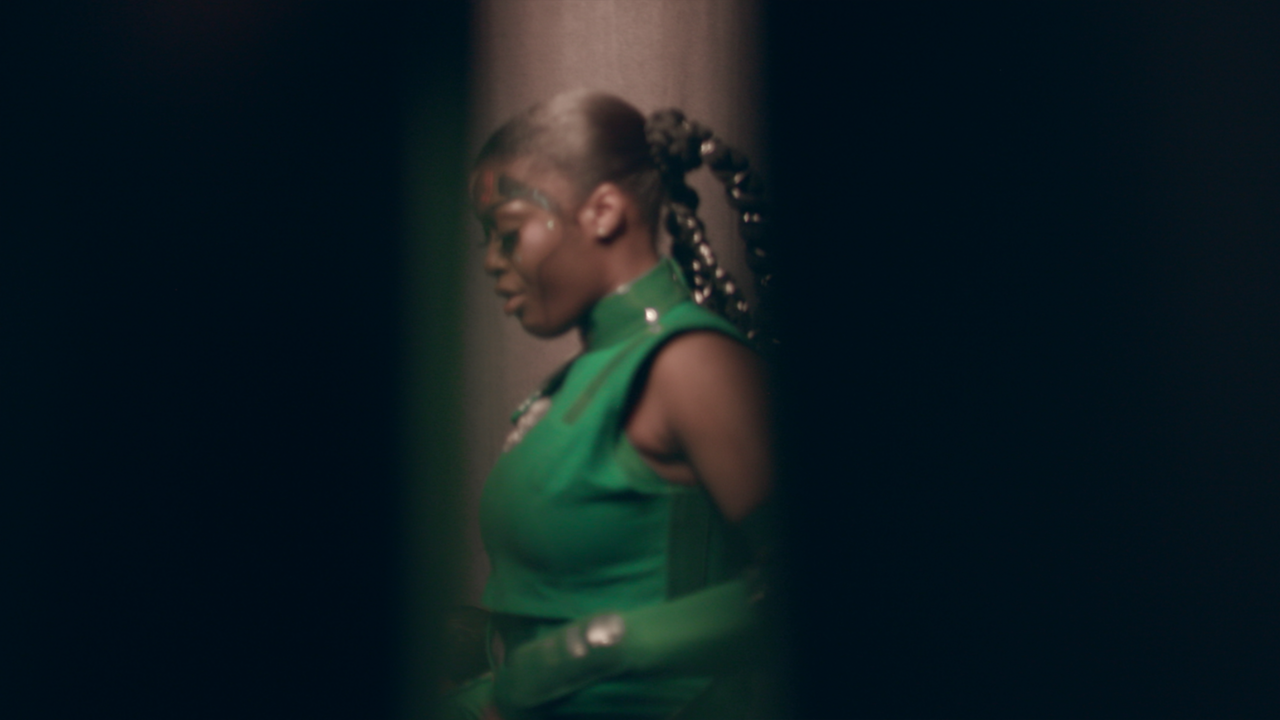
In 'Cypher,' Rapper Tierra Whack Confronts A Stalker
Tierra Whack does things differently. The 27-year-old rapper from Philadelphia is using a medium other than music to let fans get a sneak peek into her world in her off-the-wall documentary Cypher, which won Best U.S. Narrative Feature at the 2023 Tribeca Film Festival. From a 15-year-old street rapper who went by the name “Dizzle Dizz” to signing to Interscope Records and receiving widespread critical acclaim in only a few years, Tierra is a force of nature. Her talent is undeniable, her style is unapologetically bold, and her confidence serves as inspiration. That much we know about Tierra Whack. But Cypher cheekily shows that there is much more to be discovered.
Cypher is billed as a pseudo-documentary, akin to the 2020 Sundance-selected The Nowhere Inn, starring St. Vincent and Carrie Brownstein. Whereas I wasn’t a big fan of the latter, I’m happy to report that Cypher’s execution nails the undefinable tone, perfecting the balance of authentic musical moments and self-aware mystery plots. Written and directed by Chris Moukarbel (Gaga: Five Foot Two, Banksy Does New York), Cypher grants access to Tierra’s life behind the scenes.
The film starts out simple enough, we see her in the studio, hanging out with friends, and performing in front of thousands of fans. Things take a turn after one of her shows, where she engages in a conversation with a woman she thought was a fan. Turns out, the fan, Tina Johnson-Banner is a conspiracy theorist who has been stalking Tierra both in person and online. Tina is a devout follower of a secret cult that claims Tierra Whack is the chosen one, their messiah, and won’t stop until the occult ritual is complete.
It serves to point out that the title Cypher is very intentional. One meaning of the word, perhaps more obvious, is a message written in a secret code. The other usage is to describe a gathering of rappers in a circle who make music together. This double meaning is indicative of the film’s slyness and hidden-in-plain-sight message.
Enjoyably self-aware, uncomfortably humorous, and poignantly dark, Cypher is an entertaining watch with a message. Through a consumer-friendly lens, it points out the many dark sides of being a public figure and how “fame” puts personal safety at risk. Especially in the age of social media and parasocial relationships that fans can develop with their ideals, Cypher proves that you never know who’s truly watching you.
This review originally ran on June 23, 2023 during the Tribeca Film Festival

In 'Smoke Sauna Sisterhood' Women Bare Their Bodies And Souls
Imagine a sauna in the middle of a snowy forest. The smell of steaming rocks, burnt embers, and warm cedar infiltrates your senses. If you're like me, a feeling of ease immediately floods your body. A deep inhale, followed by an even deeper exhale dispels all feelings of negativity and stress. Here, secluded from the distractions of the outside world, the mind is free to roam.
In Smoke Sauna Sisterhood, which premiered in the World Cinema Documentary category at this year's Sundance Film Festival, director Anna Hints dedicates her film to the sacred Estonian tradition of "savvusanna kombõ," or, smoke saunas heated by a stove. For an hour and a half, we feel as if we are among a local group of women who frequent the sauna to cleanse their bodies and minds and connect with fellow feminine spirits.
Smoke Sauna Sisterhood follows a very loose narrative structure. Forgoing a linear storyline, the film plays mostly like a fly-on-the-wall observational documentary. Nameless women of all ages and sizes gather at the sauna deep in the southern Estonia forest. There, they bare not only their bodies but their souls. Each with a story to tell, the women take turns leading vulnerable conversations around such topics as sex, relationships, cancer, shame, body image, and death. Much like a church confessional, the sauna acts as a safe space for complete honesty, no matter how complex the topic at hand is.
The film draws a poignant parallel between women and mother nature: both act as a resource for life. This sentiment is explored abstractly through their stories and in respectfully photographed images of their naked bodies. The environment of the film is also completely absorbing and stunning. Cinematographer Ants Tammik highlights the rich, organic colors of the Estonian outback from the depths of the damp sauna to the purity of the vast, snow-covered ground. Seeing these women set against this backdrop is nothing short of magical.
Smoke Sauna Sisterhood is a striking celebration of natural beauty in all forms. For as vulnerable as these women seemingly are – naked and confessing to shortcomings or defeats – their strength is beyond measure. The film's intimacy, combined with universally poignant themes, makes Smoke Sauna Sisterhood a rare, much-needed cinematic escape.
This review originally ran on January 29, 2023 during the Sundance Film Festival
https://youtu.be/u57aVf1-SBk?si=AscSKNBZ90iSec0J
'Maestro' Hits All The Right Notes With Stunning Finesse
A star was born in Bradley Cooper's directorial debut, and that star has matured into a force of nature in his sophomore feature, the Leonard Bernstein biopic, Maestro. The depth of beauty runs deep throughout the film's 129-minute runtime, as Cooper offers audiences a richly observed panoramic portrait of a misunderstood artist whose music contributed to some of the most unforgettable scores of all time. Starring as the multi-hyphenated conductor/composer himself, Bradley Cooper's ability to capture magic both onscreen and off is a sight–and sound–to behold. Move over Lydia Tár, there's a new maestro in town.
The biographical drama serves as a character study of Leonard Bernstein (Cooper) at five different pivotal stages in his life. Spanning 25 years young to 71 years old, the film's primary focus isn't solely centered around musical achievements or performances. Rather, audiences embark on a decades-long love story between the flighty Bernstein and the grounded and mature love of his life, actress Felicia Montealegre Cohn Bernstein (Carey Mulligan). The film weaves through their lighthearted honeymoon phase with a stoic black-and-white color grade. Signaling a sense of reminiscence for the past, nearly half of the film is portrayed in black and white. During this time period, both Bernstein and Montealegre's careers accelerate, albeit at different paces and scales, and signs of tomfoolery on Leonard's behalf become apparent. We learn that Leonard, prior to marrying Felicia, had been in a relationship with a man (Matt Bomer) and his attraction to men is still very much being acted upon. This creates a growing conflict within their relationship, and an internal explosion within Felicia is embodied in the film as it visually transforms into color.
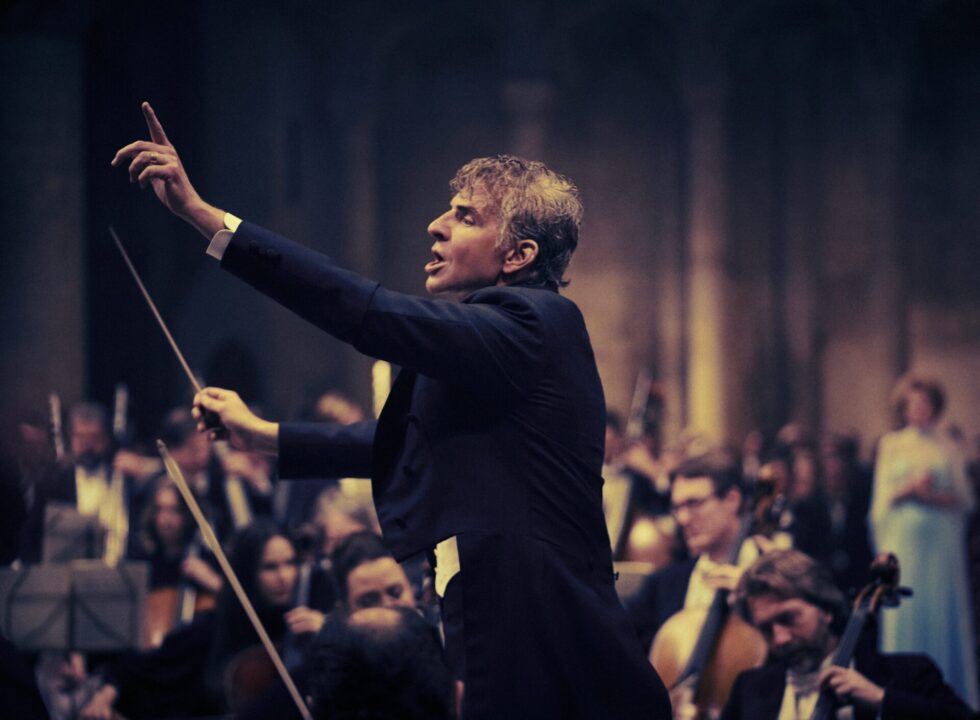
The couple's intricate and complicated relationship dynamic fills the second half of the film, which is now portrayed in stunning color. Family, friends, instruments, and cigarettes come in and out of every scene, it is fully captivating both visually and musically. The film's sudden color switch causes our eyes and ears to perk up with the expectation that something big will be coming, and oh boy, does it deliver. In perhaps one of the finest musical scenes I've ever witnessed in a movie, Bradley Cooper takes the stage near the end of the film's third act and gives the performance of a lifetime. His embodiment of Leonard Bernstein conducting a full orchestra and choir in a six-minute stunning one-take had chills running down both of my legs. Taking place in an equally beautiful old church, the grand concerto comes to a dramatic end, and the audience I was sitting with erupted into rapturous applause, myself included. I think we collectively forgot that this is a movie and not a full-bodied, 3-D experience accompanied by the London Symphony Orchestra. It was a moment that resonated with me more than any other film moment this year.
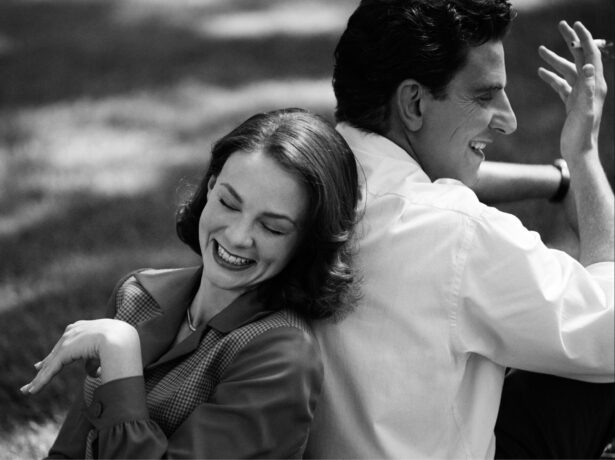
The craftwork that makes up Maestro is impeccable, from the costumes to the makeup and prosthetics used to portray Bernstein's later years. The richness and nuanced characteristics are captured by the master of photography, Matthew Libatique, in stunning detail. Playing to the strengths of both the black and white and color, Libatique brings the man and the music to life. Further reviving the virtuoso's story is the score, which were all instrumental works pulled from the Bernstein archives.
On the performance front, Bradley Cooper fully transforms into Leonard Bernstein and at times, it's easy to forget that this isn't a documentary. His speech pattern and his physical performance are magnetic, it's hard to look at anyone else when he's on screen. That's not to say Carey Mulligan isn't also a dynamic force, but her strength comes from a more subtle place. The opportunity to explore Leonard and Felicia's yin/yang personalities–independent of and with each other–is an actor's playground. There is so much material to devour yet Cooper and Mulligan never let the combative and unpredictable nature of the Bernsteins' relationship feel forced or unnecessarily fraught.
Maestro is the result of a finely tuned synchronicity from all sides. Performance, direction, aesthetics, and craft all contribute to this monumental work of art. Some may be baffled to hear that the musical component of Bernstein's legacy plays second fiddle to his complicated love story, but rest assured, there is no shortage of awe-inducing moments that will have you whispering "wow" from under your breath. Maestro hits all the right notes and then some.

'Saltburn' Is a Glossy Romp Through Hipster Affluence
If Saltburn was a person, he would be that hipster kid with main character energy. The unchallenged confidence and colorful charisma make for a staggering first impression but behind the initial charm exists a desperation to be seen as cool. Following her directorial debut Promising Young Woman, filmmaker Emerald Fennell crafts a slightly edgy film about loud luxury that skews favorably toward Gen Z. Saltburn offers a fun enough viewing experience but I'm not sure it's sticky enough to stay in the public consciousness for long.
Much like a modern-day adaptation of The Talented Mr. Ripley for the streaming generation, Saltburn tells the rags-to-riches story of college student Oliver Quick (Barry Keoghan). Entering his first year at Oxford University, Oliver struggles to fit in with his high-society peers. A chance encounter with the (objectively) gorgeous aristocrat Felix Catton (Jacob Elordi) brings Oliver into a world that, up until then, had been far from within his reach. As summer break approaches, Felix invites Oliver to spend the next few months with him at Saltburn, the grand English manor that has been in the Catton family for generations. Given Oliver's dysfunctional family dynamic and subsequent vow that he would never step foot in his childhood home again, he graciously accepts Felix's invitation.
Upon arriving at Saltburn, there is a period of adjustment for Oliver who is not used to wearing full black tie attire to dinner and having waitstaff at every beck and call, but it only takes a couple of days to adapt to the Catton's laissez-faire lifestyle. It's not long before he too is peacocking as an heir to the Saltburn estate, much to the delight of Felix's delusional parents Sir James (Richard E. Grant) and Elspeth (Rosamund Pike). Oliver is becoming obsessed with his newly adopted association with wealth, power, and–more disturbingly–Felix.
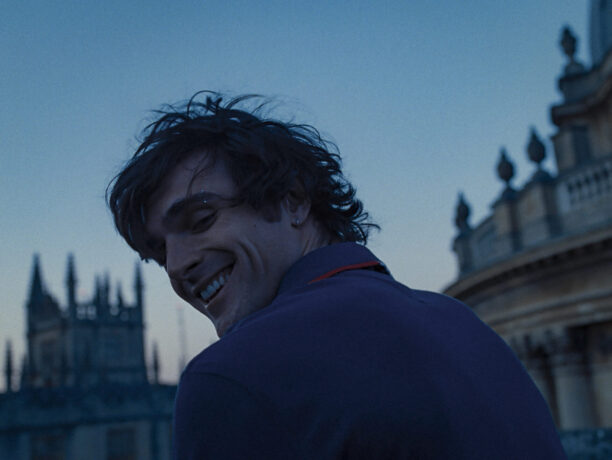
There's a saying that goes, "Eat the rich", but in this case, it's more like "Drink the rich's bath water." As Oliver continues to lose himself in Saltburn, the darker and more voyeuristic his actions become. It's apparent that Oliver is in love, but with who–or what–is the burning question. From here, the film explodes into a dizzying array of power games, privilege, seduction, and madness.
Despite the abundance of riches that purposefully bloat the film, there is a superficiality that lingers throughout Saltburn as if the whole thing is playing too safe. It's provocative enough at times to garner gasps from the audience (and is definitely not a kid's movie by any means) but it seems to stay too comfortable on the surface rather than digging deeper and exploring more complex depths of the narrative. Working with what they have on the page, the performances are deliciously satisfying. Barry Keoghan is by far the scene stealer and brings an undeniable electricity to the role of Oliver. Watching his career trajectory from co-starring in The Killing of a Sacred Deer and American Animals to headlining major studio films like The Banshees of Inisherin and Saltburn has been so rewarding to experience. Visually, every frame looks like a glossy pop-magazine come to life. Shot in stunning detail by Damian Chazelle's go-to cinematographer Linus Sandgren, Saltburn's richly crafted aesthetic plays in perfect unison with the onscreen shenanigans.
Emerald Fennell's sophomore feature is a time capsule of mid-2000s glamour and full of sweaty, horny college students. The nostalgia is nice but not substantial enough to carry the film on its own. There is a line early on in the film when Oliver engages in a debate with his professor and fellow classmate about style vs substance, arguing "It's not what you say but how you say it." Unfortunately, Fennell follows Oliver's methodology, Saltburn is all style and limited substance.

'Aligned' Is a Gorgeous Meditation on Self-Acceptance
Captivating scenery and hypnotic movements run abundant in writer/director Apollo Bakopoulos' heartfelt film, Aligned. The gorgeous opening dance montage and accompanying piano score sets up audiences for an intimate evolution of self-reflection as we watch Aeneas, an aspiring professional dancer, embark on a life-changing journey of self-discovery. Making its World Premiere at the 2023 Brooklyn Film Festival, Aligned is an inspiring watch that comes with a positive message, leaving the viewer with a sense of good vibrations and a tangible spark of self-confidence to carry with them throughout the day.
Aeneas (Panos Malakos) seems to have it all, a supportive girlfriend, his health, and the opportunity of a lifetime: a three-month residency to train at a dance academy in Greece, which will bring him closer to his ultimate goal of becoming a professional dancer. He arrives in Athens from New York City full of excitement and open to the possibility of what lies ahead. Once at the studio, he is immediately introduced to Alex (Dimitris Fritzelas), a fellow dancer who quickly becomes a friend. Intimacy is the universal dancers' language and the closer the two men become on stage, the more that translates off stage as well.
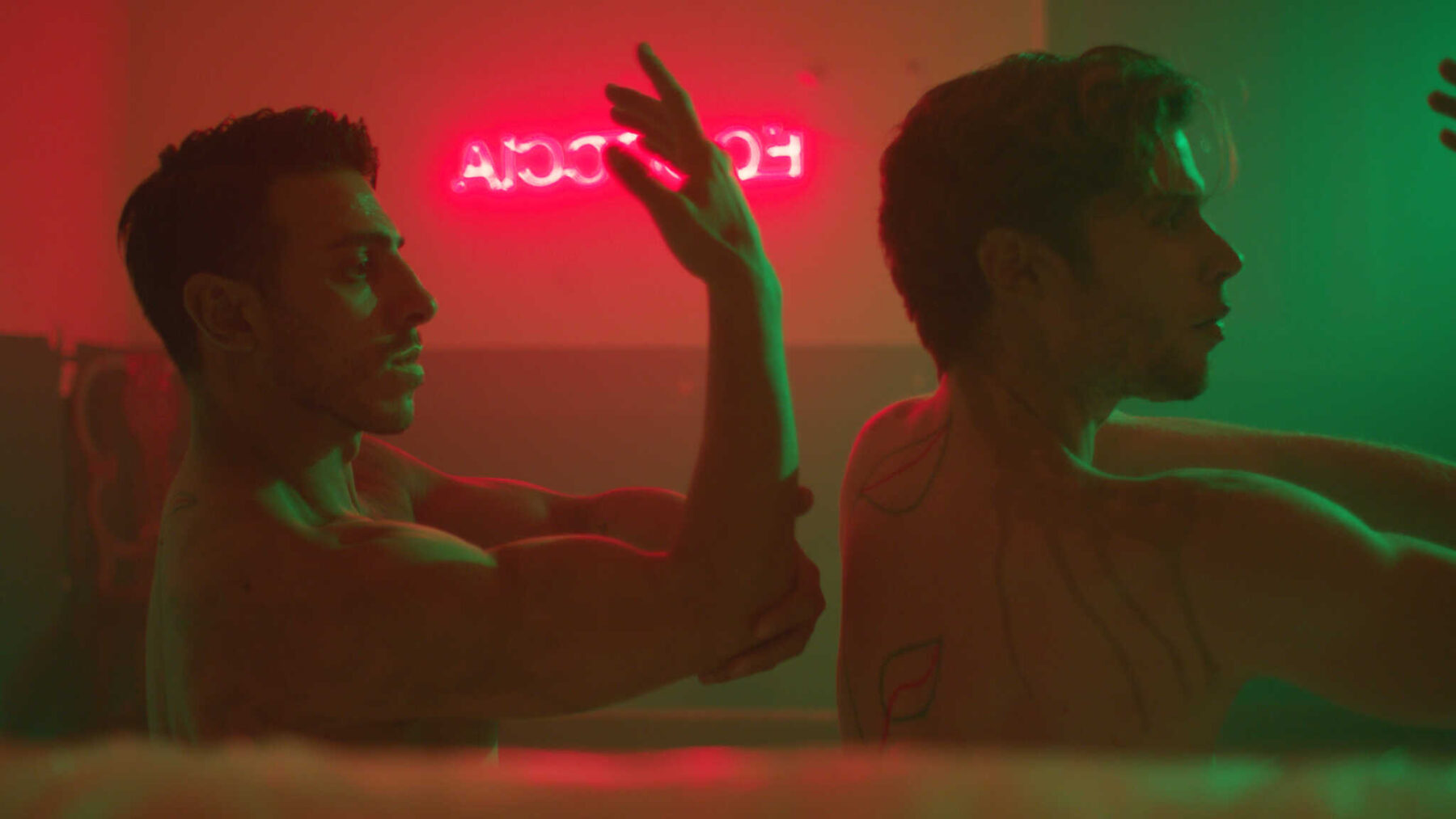
Through their shared cultural heritage, Aeneas and Alex find a deep and unexpected connection they both acknowledge is worth exploring further. Aeneas expresses his lack of self-confidence and vulnerability to a receptive Alex, who offers non-judgemental comfort and support. His advice, to lead with the heart rather than the mind, is a common phrase repeated throughout Aeneas' self-discovery journey. At a crossroads with his newfound queer interest in Athens and a deteriorating relationship with his girlfriend at home, Aeneas is finally able to confront his deep-rooted insecurities and feel the transformative power of self-love.
Running 78 minutes long, Aligned jumps into the crux of the story immediately and doesn't linger on supplemental details or scenes that drag the material down. The filmmaker could have been tempted to linger on the dance sequences and additional distractions, however, the decision to stick to the bare bones of what is necessary is a mature and respectable approach. The fluid camerawork that captures the beautiful dance montages between the two men embodies the feeling of freedom and non-sexual physical intimacy. One scene, in particular, stands out as truly stunning, when the men improvise a dance in their apartment. This is the first time they advance from the boundaries of platonic friendship into a more emotionally invested relationship. Without words, they convey everything we need to know.
Filmmaker Apollo Bakopoulos creates a gateway to openly discussing one's insecurities and struggles with low self-esteem in Aligned, showing that living authentically is the only true path to happiness. Aeneas' struggles are meant to hold up a mirror to our own self-sabotaging habits, and Alex's words of affirmation are intended to resonate with us as well. Fear and familiarity have been the invisible chains holding Aeneas back from embodying his true self. It's scary forging into the unknown, but it's even scarier living in complacency and regret. Through the captivating dance and photography of Aligned, we are offered a gentle reminder that self-acceptance is a journey and takes time. There is no linear path, and forward momentum leads to freedom.
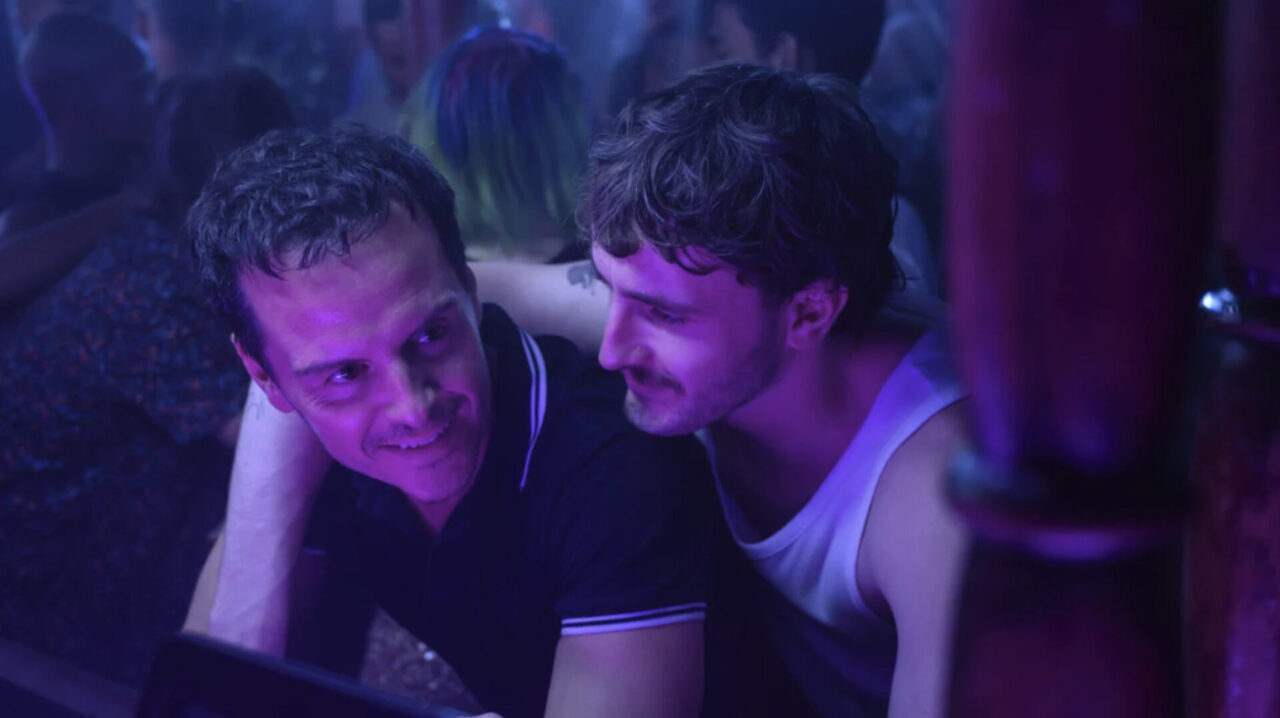
'All of Us Strangers': Enter the Liminal Space Where Love and Loss Co-Exist
If you look closely, you'll see writer/director Andrew Haigh hidden in plain sight throughout the melancholic romantic drama, All Of Us Strangers. Loosely adapted from the Japanese ghost story Strangers, written by Taichi Yamada in 1987, Haigh infuses chapters from his own life story into this mesmerizing tale of love, loss, and second chances. His personal connection to the material makes the film feel that much more fragile; Haigh's finely tuned singular experience doesn't omit his audience but rather, it creates a universal resonance where audiences can see themselves reflected in the film too.
Adam (Andrew Scott) lives a quiet (albeit, seemingly lonely) life as a queer screenwriter living in an apartment tower in contemporary London. The film opens with a gorgeous skyline shot of a blood-orange sun, marking the end of another unproductive day for Adam. His recent attempt to put pen to paper on his latest screenplay is coming up fruitless. He moves apathetically, going through the motions of the evening until an interruption by his mysterious neighbor, Harry (Paul Mescal). Harry is a charmer and unabashedly flirtatious. In a bold move for this near-stranger, Harry invites himself inside Adam's apartment and subsequently proceeds to pierce a hole in Adam's self-protective armor. This is jarring for Adam since he has lived his life in subdued modesty but sensing the start of a personal evolution, he embraces Harry and the unknown.
As Harry begins chipping away at Adam's tough exterior, offering him the space to feel safe exploring a relationship with a man, another revelation is on the horizon for Adam. Looking for inspiration for his script, Adam turns to old photos from his childhood. This walk down memory lane triggers something internal and Adam is inexplicably drawn to make a pilgrimage to his childhood home where he lived with his mum and dad (Claire Foy and Jamie Bell) before their sudden deaths. Adam was only 12 years old when his parents died in a car crash over the Christmas holiday, and since then, he has learned to cope by pushing down any emotions surrounding their existence. As he reaches the house, a flood of visceral memories come rushing back as Adam sees his parents standing before him, just as they looked 30 years ago. Is this a dream? It must be, but it feels very real to Adam. Regardless, this surreal experience gives everyone–dad, mum, and child–the opportunity to finally have proper closure and a final goodbye.
The fragility that stems from an adult man reckoning with childhood trauma is a devastatingly cathartic experience to witness. Andrew Scott was born to embody the role of Adam, his nuanced mannerisms and sensational performance are heartbreaking as we see a scared boy hiding inside a grown man. Scott plays Adam's vulnerability journey with such a dynamic range–he starts off fairly constricted and uncomfortable but over the course of the 105-minute runtime, he is exploring a cacophony of emotions. Acting opposite Scott is Paul Mescal's Harry, a good-natured free spirit who wears his heart on his sleeve. Their dynamic is raw, at times fraught with miscommunications, but at the foundation is an acceptance that we would be lucky to be immersed in.
Haigh captures the tone of All of Us Strangers through the use of 35mm film to evoke the "texture" of memory. This analog vessel is an embodiment of the time period as well as the sentiment that memories, much like the physical element of film, can fade or become distorted with time. Aiding in the tonal aesthetic is the subtle yet enriching score by French pianist Emilie Levienaise-Farrouch. Her compositions turn feelings of detachment and catharsis into auditory sensations and offer a beautiful finishing touch.
There is a quote I heard recently that reads, "Be nicer to your parents, it's their first time experiencing the world too." I couldn't stop thinking about that as I was watching All of Us Strangers. Haigh's emphasis on connection and the complicated human experience, set against a mesmerizing, reality-bending backdrop, is a visual and sensational knockout. At its core, All of Us Strangers is a devastating tale of navigating through grief, and while heartache never feels great, the ability to experience such an emotion is a testament to being alive, which is always something worth being grateful for.
This review is part of our AFI FEST 2023 coverage.

'Lead and Copper': An Exposé On The Horrifying Flint Water Crisis
The Flint, Michigan water crisis will forever be remembered as one of the worst public health disasters in American history. The human-created disaster spanned 2014 - 2016 and tens of thousands of lives were forever damaged by their local government's carelessness and corporate greed. In the documentary Lead and Copper, filmmaker William Hart investigates why Flint officials made the deadly water supply switch in the first place and the severe consequences the community still faces today.
I'd bet that a majority of Americans have never been to Flint, but the opening few minutes of the film do an excellent job of making the audience feel as if we had spent our whole lives there. Sweeping shots of the city, the rolling hills, and robust rivers portray a picturesque community that made up this small but mighty town. All was well in Flint until April 2014, when the city irrationally changed its water supply source from the Detroit-supplied Lake Huron to the Flint River. At the time, Flint residents were paying the highest water bill in the United States at around $230 a month–a shocking statistic that the film lays bare in bold lettering. The local governing officials were becoming fed up with the price gouging and decided to switch to a cheaper, albeit riskier, option. Behind closed doors, it was decided that the municipality water would come from the Flint River, which was meant to be a band-aid, not the solution, to the wider water accessibility issue.
Flint residents familiar with the local river didn't even want to swim in that water, let alone drink it. Quickly, it became blatantly obvious that the switch was the wrong course of action. The community complained of yellow/brown water that resembled cooking grease pouring out of their faucets. People were getting sick, their hair and skin had become visibly damaged, and that wasn't even the worst of it. To everyone's horror, the city was denying there was anything wrong. People turned to buying bottled water in bulk to shower with and wash their dishes. It was unsustainable, costly, and unfair. Eventually, city officials couldn't deny the issue any longer. These people, under their watch, had been poisoned.
The stories that survivors of the water crisis tell in such detail throughout the film are enough to make you gag in disgust, both at the tainted water they were subjected to as well as their local government. William Hart interviews many people who came to the same conclusion nearly 10 years ago, which is that this happened because Flint officials valued money over human lives. Exposed emails to and from city officials further confirm the theory of turning a blind eye to the lead and copper rules and regulations. The lack of action by those in power signaled that human lives are expendable, especially ones that may run along racial or economic lines.
The film itself is presented in a typical documentary format, including interviews with subjects in their home or business and the inclusion of archival footage from court proceedings and council meetings. The score comes across as a little heavy-handed at times, yet on the whole, the film does an excellent job of recapping the water crisis as well as providing a compelling human interest story about the resilience of the Flint residents. One quote that really struck a chord comes from Elijah Eugene Cummings, the politician and civil rights advocate who served in the U.S. House of Representatives for Maryland's 7th congressional district from 1996 until his death in 2019. Cummings perfectly sums up the course of thinking that we should all be leading with, especially those in positions of power and influence: "We don't inherit our environment from our ancestors, we borrow it from our children."
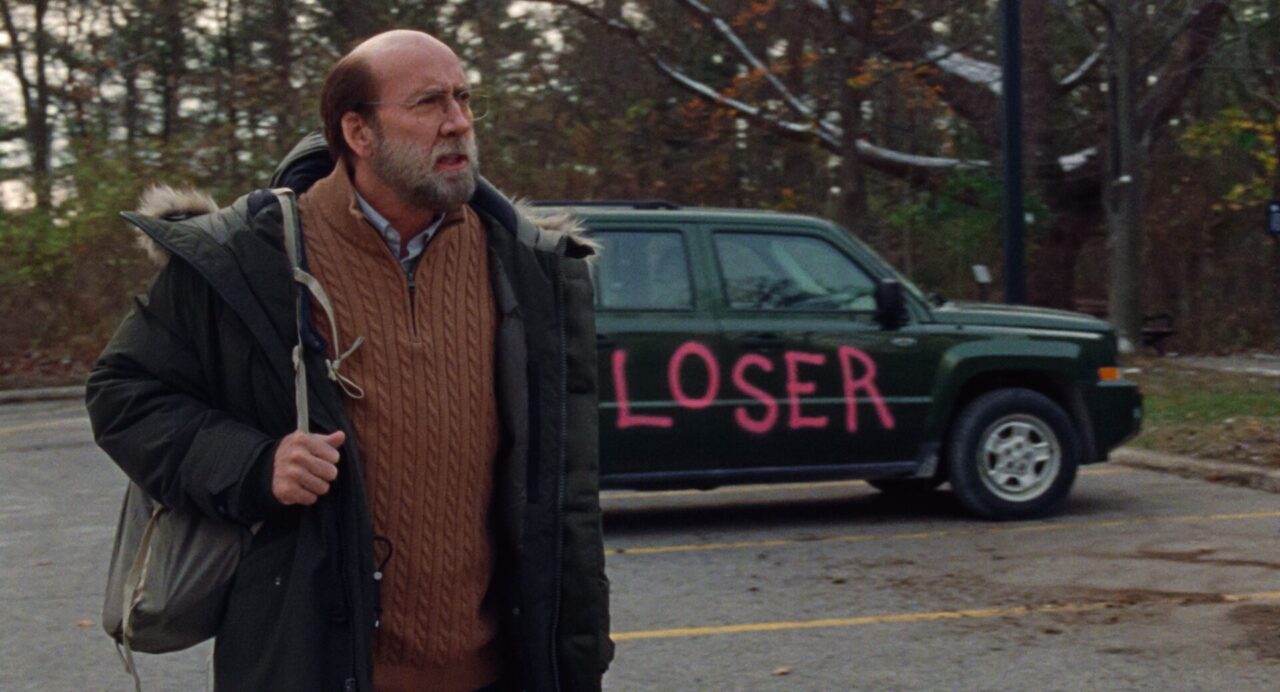
'Dream Scenario': Nic Cage Delivers Brilliance in This Existential Tragicomedy
I'm convinced that Norwegian writer/director Kristoffer Borgli found a way to enter into my dreams and subconscious. That's the only way I can explain how Dream Scenario and his previous film, Sick of Myself, feel so tailor-made for me. A dark comedy about a flawed protagonist struggling with loneliness, sign me up! Distributed by A24 and produced by Ari Aster, Dream Scenario is visually stunning, completely original, and most excitingly: refreshingly weird. In a somewhat meta role for Nicolas Cage, who is used to his "memeification" at this stage in his career, Dream Scenario is a film I didn't want to wake up from.
Paul Matthews (Nicolas Cage) is a middle-aged, married, father of two. He is a tenured professor at the local university and is content with his life in upper-middle-class suburbia. Everything about Paul is ordinary, and that is fine with him. He is comfortable with the way things are. Each day carries on just like every other until, in a bizarre turn of events, Paul is informed that people have been unexplainably dreaming about him at night. His daughter, his students, his colleagues, and his former ex-girlfriend have all seen Paul in their dreams, which are surreally depicted in various degrees. What starts out as a couple of strange coincidences turns into an international phenomenon when total strangers report seeing Paul appear in their dreams as well. Soon enough, this ordinary man becomes the most talked about person on the planet, catapulting him into a worldwide celebrity with a fan base that the Kardashians would be jealous of.
Just as quickly as his 15 minutes of fame falls into his lap, it ruthlessly begins to fade. The dreams that were once harmless sharply turn into night terrors, with people fearing for their safety, even if they are close to Paul in real life. Paul initially had no control over his stardom and now realizes that his downfall is out of his hands as well. His wife (Julianne Nicholson) grows frustrated with Paul's explosive behavior at home, his children (Jessica Clement and Lily Bird) become embarrassed by him, and his managers (Michael Cera and Kate Berlant) become desperate to secure opportunities for their once-celebrity client. In a twisted turn of fate, Paul's rise to fame and subsequent fall into obscurity leaves him destitute, heartbroken, and delusional.
Through Dream Scenario, Kristoffer Borgli explores themes of modern celebrity and hive mentality with sharp, edgy humor. The premise is totally wacky and yet with every scene, I fall deeper in love with Paul Matthews and start to develop a sense of protectiveness around him. The script is something special and only could have been brought to life by one man: Nicolas Cage. His performance is masterfully measured and equally unhinged in all of the right moments (Paul Matthews and Paul Hunham from Alexander Payne's The Holdovers would definitely be the friends who drink scotch and complain about their bratty students in an alternate universe). Cage is magnetic in both solo scenes and acting alongside the always fabulous Julianne Nicholson. Cage agrees with the film's specialness, saying, “It was one of the best scripts I’ve read, quite frankly, and I think it’s my best performance and probably the best movie I’ve ever made.”
On the craft side, exceptional editing by Borgli acts as an omniscient character that further aids in punchlines and humorous moments. The score by composer Owen Pallett is much more grounded than the film itself, mirroring the stable and steady life Paul had before he shot to stardom. An assortment of strings and simple melodies from a grand piano create a classical sound that is unexpected for this zany of a film. As a chamber music composer, Pallett brings his experience working with esteemed groups and artists–including The National Ballet of Canada, the Toronto Symphony Orchestra, Frank Ocean, and Sigur Rós–to this dark comedy. The Dream Scenario score could have easily gone in the direction of Son Lux x Everything Everywhere All At Once or Colin Stetson x Hereditary, but the decision to explore simple, more organic sounds feels like the right call here. While the score breathes, it allows the stellar sound design to get noticed.
Dream Scenario is one of the most unforgettable films of the year and will no doubt put Kristoffer Borgli's name in the mainstream consciousness. Fans of Eternal Sunshine of the Spotless Mind and Curb Your Enthusiasm will find tonal similarities abound in Dream Scenario although the film successfully carves out a niche for itself as a wholly original concept. It's not a stretch to say that Nic Cage may find himself the darling of awards season once again. Wouldn't that be a dream come true?

'Shadow Brother Sunday': Alden Ehrenreich Crafts a Tight, Tense Debut Short Film
Any time a well-known actor steps out from behind the lens and into the role of a filmmaker, it comes with an additional layer of pressure. After starring in a string of big-screen hits, including Netflix's Fair Play, Disney's Solo: A Star Wars Story, Elizabeth Banks' Cocaine Bear, and the Coen Brothers' Hail, Caesar!, Alden Ehrenreich proves that his expansion into directing has come by way of learning the tricks of the trade from some of the industry's best. The experience of working with top-tier directors effortlessly translates onto the screen in his short debut film, Shadow Brother Sunday. After watching the film, it's easy to recognize that the guy's got talent, and hopefully, this is just the beginning of a very storied and fruitful filmmaking career.
In Shadow Brother Sunday, which Ehrenreich wrote and directed, he transforms himself into Cole, an aspiring musician whose jealousy toward his famous brother seeps into dangerous territory. When Jacob (Nick Robinson), an actor on the rise, returns home to attend the premiere of his latest film with his family, the general mood in the household is celebratory and bright. That is, until Cole enters and brings with him a dark cloud of negativity and gloom. Frustrated with his financial situation and seeing an easy opportunity for quick cash, Cole entertains the idea of selling his brother's personal information to a gossip site. The decision weighs on Cole; he loves his brother, yet feels entitled to the same amount of success that Jacob is currently basking in. Time is ticking, and Cole has to make a choice: stand by his brother, or sell him out.
Ehrenreich uses the film's 15-minute runtime to craft a concise drama. The pacing hits the right tension notes and ends on a cliffhanger that will hopefully be addressed in a feature-length adaptation (one can dream!). As a filmmaker, Ehrenreich wanted to create as much authenticity for the actors as possible, which is why his performance is immersed in method acting–gaining over 20 pounds to fully embody Cole's uncomfortable physical state. He also set up dinner parties so that the faux family could get acquainted off-camera and organically develop their relationships.
For transparency's sake, Ehrenreich didn't claim to take this project on alone. Shadow Brother Sunday is equipped with backing and support that most directors in the short film space only dream of, including Francis Ford Coppola serving as Executive Producer and Elizabeth Banks moderating the premiere's Q&A. Still, Hollywood legends aside, the film could hold its own
As Ehrenreich continues down the directorial path with confidence and passion, I believe he could follow a similar trajectory to Bradley Cooper (Maestro, A Star is Born). Shadow Brother Sunday premiered at the 2023 Tribeca Film Festival and won a Special Jury Award for Excellence in Filmmaking from the Salute Your Shorts Film Festival. It qualifies to be considered for a 2024 Academy® Award.
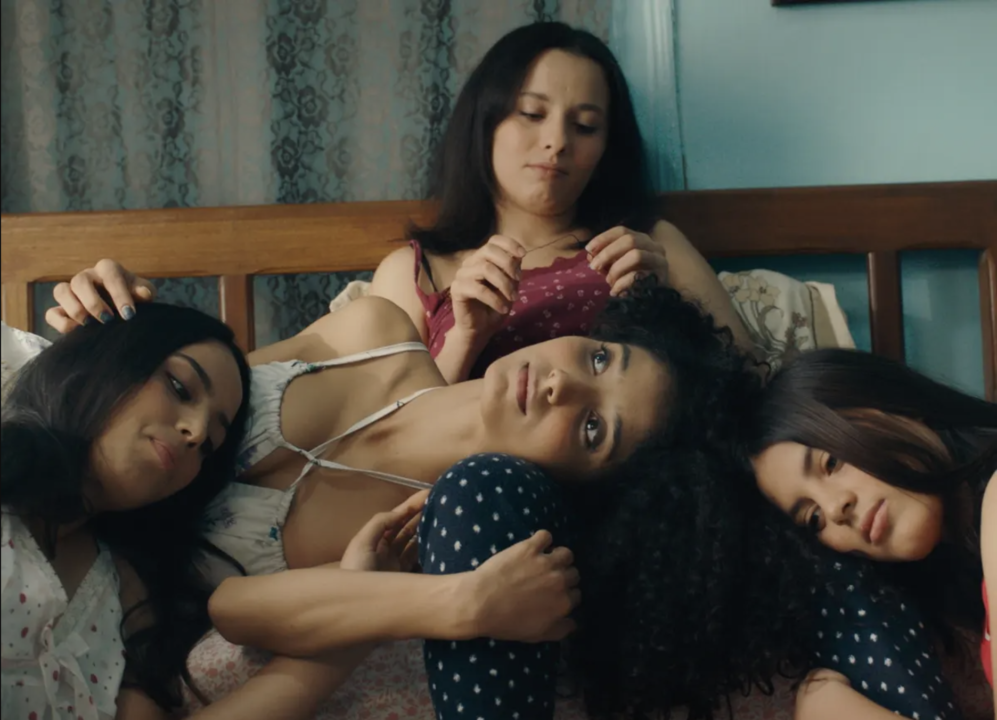
In 'Four Daughters,' Heartbreak Blurs the Lines of Reality
Winner of the Golden Eye for Best Documentary at the 2023 Cannes Film Festival, Four Daughters is a film of defiance. Directed by Oscar-nominated Tunisian filmmaker Kaouther Ben Hania, Four Daughters expertly blurs the lines between fiction and non-fiction to tell the origin story of Olfa, her four daughters, and the generational trauma that casts an overwhelming shadow on their shared future. This isn't your traditional documentary, not in the slightest. While the events are real–tragically so–the storytelling approach is entirely unique and singular. Not only has Kaouther Ben Hania crafted an unforgettable work of art with Four Daughters, but she may have also invented a new genre of film.
Olfa Hamrouni is a middle-aged mother living in Tunisia with her two younger daughters, Eya and Tayssir. Her two older girls, Ghofrane and Rahma, left the family home years ago after becoming radicalized by extremist groups in their hometown. This loss has been nearly impossible for Olfa and her younger girls to accept. There was no closure in the form of a "goodbye," no see you later, just absence one night, leaving the remaining family with guilt, anger, shame, and sadness. Reacting to this missing piece in their previously tight family circle, director Kaouther Ben Hania reimagines what life would be like if Ghofrane and Rahma returned home. Casting professional actresses as the missing eldest daughters, including acclaimed Egyptian-Tunisian actress Hend Sabri as Olfa, Olfa is reunited with her missing girls through re-enactment scenes and given the opportunity to heal past wounds and unpack complicated family history together.
Recounting moments from her life through intimate interviews, Olfa is also present in many of the reunification scenes. However, another actor steps in to play her in scenes that become too upsetting (including scenes of sexual abuse and violence). This is method acting taken to an extreme and such a stunning process to observe as an audience member.
Under the guidance of director Kaouther Ben Hania, the family re-enacts specific scenes in an effort to express their feelings toward "Ghofrane" and "Rahma" and work through their family issues which, it turns out, is quite traumatic. In one example, a man playing Olfa's partner, Wissem, is in a scene that depicts addiction and sexual abuse. The confrontation from the younger girls (Eya and Tayssir) gets to be too overwhelming for the male actor, who calls off the shoot and leaves the scene, needing to smoke a cigarette in an effort to come down from the emotional toll of the scene.
Ghofrane and Rahma's homecoming may be manufactured, but the feelings their presence evokes are real. It's obvious that this acting is a form of therapy for Olfa, Eya, and Tayssir, who vulnerably relive their own trauma in this safe setting. Behind the camera, the string composition by composer Amine Bouhafa is a hauntingly beautiful representation of melancholy. Each note carries with it a sense of forlorn longing and heartbreak.
The magic of Kaouther Ben Hania's Four Daughters is its ability to incorporate performance art within a documentary without feeling inauthentic. It never strays from the purpose-driven mission of searching for inner truth. The sad truth is that Olfa may never get her two daughters back but, if this film offers even the slightest respite from that devastating reality, then it will have served its purpose.
In theaters on November 3 in Los Angeles, with expansion to follow.

'Alone Together' Offers Jordan Peele-Inspired Gothic Horror
Dysfunction runs rampant in director Will Kresch's tightly woven horror film, Alone Together. Considered a "bottle movie" for its primary use of only one location, Alone Together tells the story of one woman's attempt to escape the shadow of her trauma–both physical and emotional–and the lengths to which she is willing to go in her fight for survival. Set against the COVID-19 backdrop, one of the scariest parts of the film is having to relive the pandemic all over again.
Have you ever felt alone despite being in a relationship? That is the case with Nassdja (DeAnna S Wright), a woman at her wit's end who, seemingly going against her intuition, continues to stay in a toxic relationship with her aggressive boyfriend, Luke (played by the director's brother, Matthew Kresch). As COVID-19 ramps up and forces the couple to shelter in place, they decide to go into lockdown together at Luke's family's cabin in the woods. The location is remote and far away from family or friends, and with unreliable wifi, they will essentially be living off the grid. Nassdja convinces herself that this could be their chance at re-connection but immediately upon entering the house, she feels a rush of uneasiness overcome her. Horror sets in when she realizes that they are not alone.
Alone Together drops viewers into brute intensity from the jump, and the heaviness of the film never really lets up. What starts out as reality-based conflicts evolve into intense, psychedelic visions with haunting malevolent spirits, making for a trippy and shocking turn of events. This transition from normalcy to otherworldly catastrophes keeps the audience engaged and guessing at every turn. The film really shines during the dream sequences, which are fantastically executed from all sides. The colors, music, erratic camera angles, and editing all work so well. Alone Together offers Jordan Peele-inspired horror and delivers tenfold on maximizing the gothic, dark undertones.
Co-writer/director Will Kresch set out to make a film that felt unforgiving, and it's safe to say he succeeded. Kresch summarizes, "I wanted to remind people what it's like to feel under siege by loss and pain, and be forced to mine their souls to uncover the strength and grit to fight to survive. To hack through all that agony and find yourself standing over the mangled corpse of your malefactors, with a bloodied grin, celebrating that tangy coppery taste on your tongue, because like life itself, I believe movies are best when they are thrill rides that reflect reality in all its pain and exhilaration."

Jason Momoa Narrates 'Deep Rising,' an Ecological Wake-Up Call
Ever since I became scuba certified last month, I have taken an even deeper interest in the health of our ocean and the well-being of the incredible creatures that call it home. The experience of existing underwater–even for just an hour–is unlike anything I've felt before. My senses became much more fine-tuned to the sights and sounds of this abundant, alien-like ecosystem, and I felt an unexpected connection to my pre-historic roots. Director Matthieu Rytz's documentary Deep Rising calls our attention to the existential threats that face this beautiful landscape and arms audiences with information about the devastating reality that we are barreling toward if we don't make major changes, fast.
Aquaman himself, Jason Momoa, lends his commanding voice to the film as he narrates throughout this ecological wake-up call. "We are tied to the ocean," he says stoically. "It has always shaped human lives." As humans have evolved throughout the centuries, we have learned how to adapt to our environment. In the case of Deep Rising, the problem we face today is the fact that we are pulling resources from the ocean without understanding its complexities and the cause and effect of such actions. The resources at hand are deep sea nodules containing highly sought-after metals. As capitalists discovered these nodules' potential to become the new source of energy to fuel the earth and the economy, mining these rocklike objects became a top priority with little regard to how disrupting the ecosystem could have devastating effects.
Through fly-on-the-wall coverage, Deep Rising exposes the people and businesses behind the for-profit motives of greenlighting massive extractions of metals that are deemed essential to the electric battery revolution. The bigger picture that the film tries and lacklusterly succeeds in driving home is the fact that we should be developing alternative methods for harnessing energy that do not involve destruction, such as hydrogen. While Rytz has a justifiable cause for creating this film, the story itself is presented in a very dry manner. Footage from committee hearings, press conferences, and business pitches tend to come across as sterile and stand in stark contrast to the whimsical, effervescent sea life we’re lucky to get a peek at up close. There is creative respite in Ólafur Arnalds’ score, which is by far the standout of the film. The Icelandic composer creates a sense of icy foreboding with vast and deep notes along with consumer-friendly house music on a loop.
Deep Rising is an urgent geopolitical and scientific documentary that carries a strong message: the bottom of the seafloor is home to the most unimaginable life forms that have existed since the beginning of time, so why do we humans feel that it is our right to take their resources for ourselves? As Rytz elegantly states, "In order to address the climate crisis, we must protect the biodiversity of our ocean and as humanity is fast devouring the finite resources of our Blue Planet, we are witnessing the sixth mass extinction before our very eyes. While the world’s human population represents a minuscule 0.01 percent of all living things, our own body mass consists mostly of the primordial ocean and microbes. Protecting ocean biodiversity then, is not just about securing the future of turtles, dolphins, whales, and all the other amazing sea life we love and cherish. It is bigger than that. Because the biosphere does not belong to us; we belong to it."
For fans of: Leviathan, Chasing Coral