
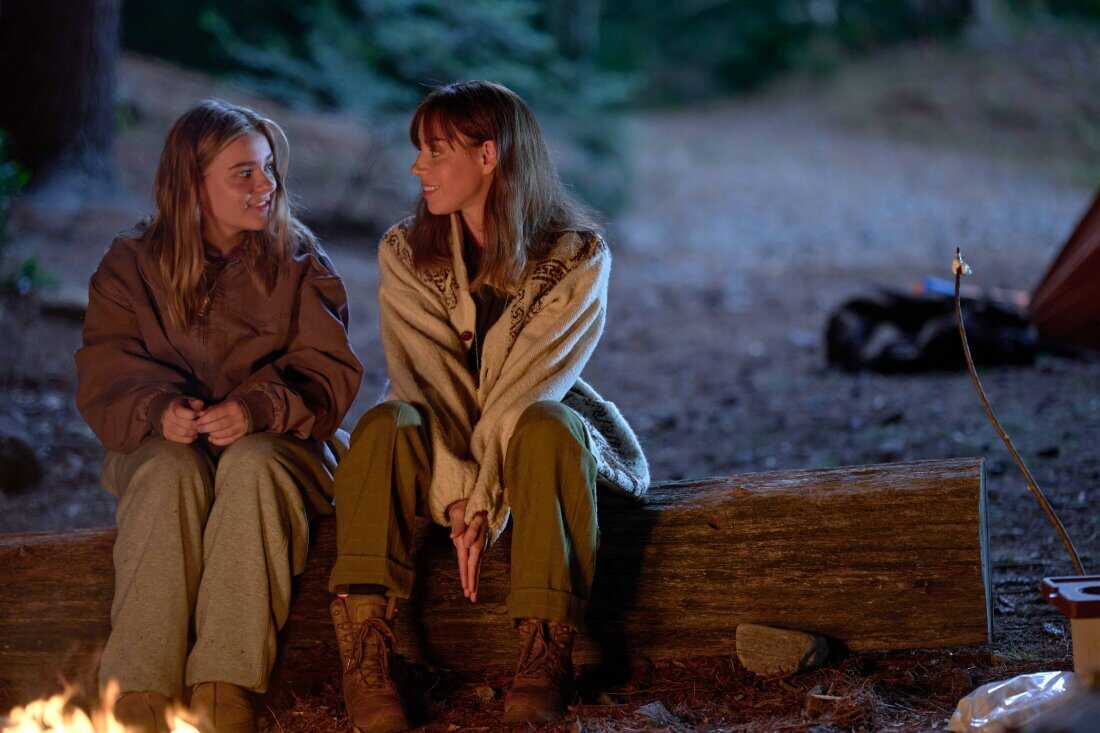
'My Old Ass' Review: A Mushroom Trip Leads to an Uncanny Discovery
In 2021, Megan Park made her directorial debut at SXSW with The Fallout. The drama, starring Jenna Ortega and Maddie Ziegler, went on to win the festival's top honor, the Grand Jury Prize for Narrative Feature. Three years later, Park returns with another festival darling in her sophomore film, My Old Ass. Featuring a delightfully deadpan Aubrey Plaza and rising star Maisy Stella, My Old Ass premiered at the 2024 Sundance Film Festival to near-universal audience admiration before it was acquired by Amazon MGM Studios for $15 million.
A Life-Changing Mushroom Trip Leads to an Uncanny Discovery
Elliott (Stella) is counting down the last days of summer at home before relocating to the big city for college. On the evening of her 18th birthday, Elliott and a couple of friends celebrate her impending adulthood by camping. They bring with them a plastic baggie of mushrooms that are all but guaranteed to induce a psychedelic trip. Elliott doesn't immediately feel the effects and is convinced she is immune to the drug. That is until she comes face to face–literally–with her future self. Sitting next to 18-year-old Elliott is 39-year-old Elliott (Plaza), whose words of wisdom and foreboding messages about what to expect in her future become all too much.
Watch My Old Ass here.
Both intrigued and horrified, Elliott eventually begins to humor her future self's warnings, whom she endearingly calls her "old ass". The most simplistic of the requests: stay away from a boy named Chad. It seems easy enough. But when she eventually bumps into a tall, blonde-haired, blue-eyed stranger who introduces himself as Chad (Percy Hynes White), her intentions get muddy with desire. Everything becomes complicated until Elliott comes to the realization that she only has one life, and she wants to live it to the fullest.
A Modern-Day Coming-of-Age Story
My Old Ass has many classic coming-of-age tropes that audiences will find comforting, like the journey of self-discovery and the butterflies of a first love. The film strikes the right balance between these nostalgic moments and more progressive themes, like navigating a fluid sexual identity. Director Megan Park crafts an honest, heartfelt story that also encapsulates a sense of freshness. The film's comedic leanings offer a charming examination of young adulthood.
Maisy Stella commands the screen as the angsty adolescent with a heart of gold. Her naturalness onscreen against comedy veteran Aubrey Plaza is impressive, giving a wise beyond-her-years aura. For her part as the titular "old ass," Plaza is expectedly great. Her dialogue delivery hits every humorous inflection point and even offers us a curve ball during the final scene's more emotional moments. My only complaint is that I wish we had more of her! Plaza only appears in two scenes, albeit very pivotal ones, but I selfishly wanted her presence to linger throughout the film.
Takeaway
A feel-good comedy that will leave audiences reminiscing about the good ol' days, My Old Ass checks the box as another homerun from filmmaker Megan Park. The film ends on a heartwarming, slightly melancholy note, serving as a reminder that love is a gift, uncertainty is unavoidable, and the only thing you can't get back is time, so it is important to appreciate the moment.


'The Substance' Review: Vanity Fares Poorly in this Multi-Sensory Stunner
Youth is a hot commodity in Hollywood. Once you lose it, you can never get it back. Everyone ages, of course, but if you're a fading A-List celebrity, one forehead wrinkle can be the difference between bankable and broke. In the erotically-charged body horror film, The Substance, French filmmaker Coralie Fargeat explores the toxic repercussions of ageism and body image. Bordering on fetishism when it comes to the film industry's obsession with beauty, Fargeat's latest work takes a stand against this demoralizing, anti-feminist treatment of women's bodies. In the ultimate power move, The Substance is a graphic and gory cinematic rallying cry that aims to upend the effects of toxic beauty culture.
Comparison is the Thief of Happiness
Demi Moore plays Elizabeth Sparkle, a Jane Fonda-type who has made a career for herself as an actor-turned-fitness personality. Despite having a star on the Hollywood Walk of Fame and her own aerobic morning show, Elizabeth knows her time in the spotlight is running out. She sees her life begin to play out in the past tense, picking up on the not-so-subtle cues from her boss, Harvey (Dennis Quaid), like "you were great". Despite her legendary status in the industry, she can't avoid the inevitable. She will be aged out of Hollywood. If becoming old makes one invisible, regaining youth is the only way to feel desired. Luckily, there's a drug for that.
Watch The Substance trailer here.
A chance encounter leads Elizabeth to discover a miracle drug that claims to be the fountain of youth. One injection of "the substance" is all it takes for her to become reborn as the gorgeous, twenty-something Sue (Margaret Qualley). Blinded by this promise of a younger self, Elizabeth acquires and injects the neon-green liquid into her body. After a demonic exorcism-like process, Sue is born and she is beautiful. Her long limbs, silky hair, and clear porcelain skin stand in stark contrast to Elizabeth's aging body.
Taking the substance comes with a non-negotiable rule: Remember, you are one. Therefore, the time between Elizabeth and Sue needs to be split equally. For one week, the world gets Elizabeth, the next week they get Sue. While the women take turns as sentient beings, their counterpart lays unconscious on the bathroom floor, being fed through a tube until it's time to wake up. Things go according to plan, in the beginning at least. Both Elizabeth and Sue are respectful of the schedule and Sue quickly becomes Hollywood's budding darling. The divide between Elizabeth's hopelessness and resentment and Sue's optimism and success escalates, eventually reaching a breaking point. What follows is a multi-sensory monstrosity as both women battle to break free from their repression and regain control of their womanhood.
A Visionary Feat, On-Screen and Off
Behind the riotous visual elements of The Substance, director Coralie Fargeat crafts a deeply personal message that resonates. It is depressing to see a woman, as beautiful as Demi Moore, give up on her life all because she is getting older. The film is satirical and unhinged in its exploration of this theme, yet I couldn't help but still feel a sadness toward women who feel ashamed of their bodies in this way. Portraying Elizabeth Sparkle is Demi Moore's latest crowning achievement. Her theatrical skills and comedic timing are on full display and are especially mesmerizing toward the film's second half. Margaret Qualley as Sue is another perfect casting choice. Her shift from a Bambi-like demeanor to a greedy it-girl is methodical and devilishly fun to watch.
Amplifying the onscreen visuals are a pitch-perfect score and sound design. What starts as slightly campy in tone, the sound eventually morphs into a hypnotic and brutal sonic experience. ASMR tingles, especially at the very beginning of the film, add another layer of full-body chills.
Takeaway
As the credits rolled after nearly two and a half hours, my jaw was practically on the floor. What had I just witnessed?! The last time I had a similar reaction was when I saw Titane, the provocative body horror film by Julia Ducournau (and, ironically, another French filmmaker). With The Substance, Coralie Fargeat cements herself as a new visionary and bold voice in modern cinema. The Substance is defiant, deranged, and demonic... and I loved every bloody second of it. It is the most fun I've had watching a movie all year!
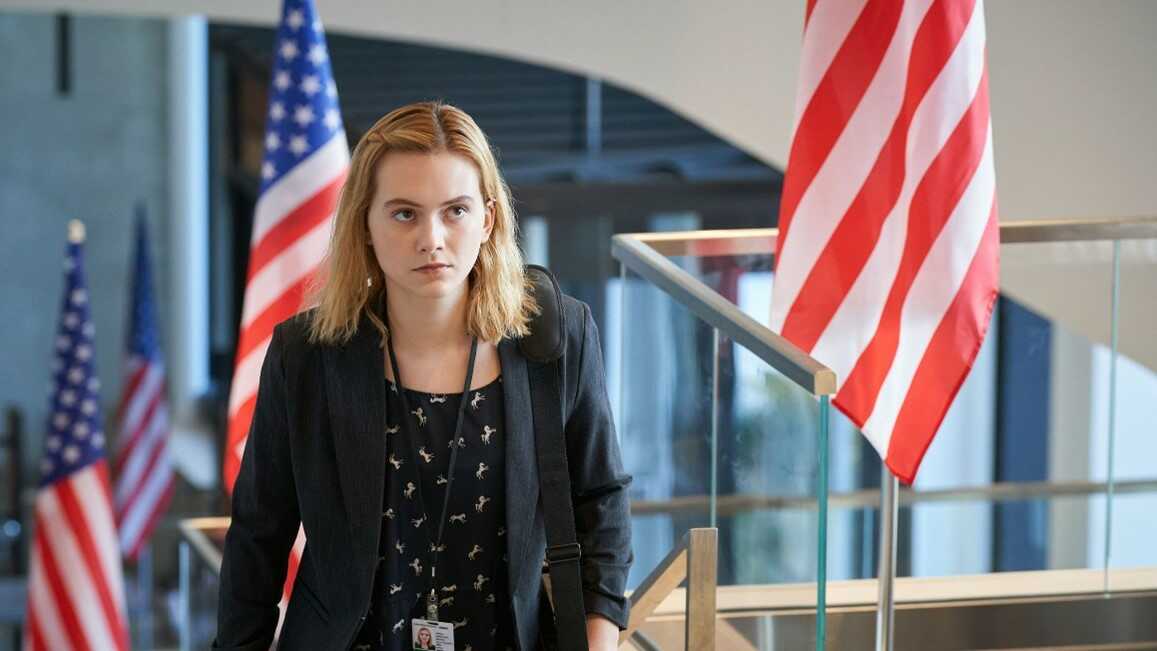
'Winner' Review: A Story of Political Scandal (Based on Reality)
Over the past two years, a handful of interpretations have told the story of America's most unusual vigilante with the equally unusual name, Reality Winner. In 2023, Sydney Sweeney starred in the hybrid drama-documentary, Reality, which used actual police transcripts as its script. Later that year, Sonia Kennebeck directed the documentary Reality Winner, which included exclusive access to Reality herself, and was conducted over five years. It would seem like audiences may have gotten their fill of the girl with the remarkable name, but in Winner, Susanna Fogel's more comedic take on the matter is a refreshing and welcomed entry into the Reality Winner cinematic universe.
Reality Winner: Traitor or Hero
Reality (Emilia Jones) is a wise-beyond-her-years misfit who has never been satisfied with the status quo. She lives in Texas with her mom (Connie Britton), dad (Zach Galifianakis), and sister (Kathryn Newton). Her interests have always extended well beyond her high school classroom, and ultimately as far as the global stage. Upon graduating, the 18-year-old ditches any college plans to enroll in the U.S. Air Force. Reality's passion and expertise in the field of language translation make her a hot commodity for government positions. She quickly excels to a position as an NSA contractor. Here, she spends her days translating the Afghani language of Pashto into English to detect threats to the US.
One afternoon, triggered by an outburst by former President Donald Trump regarding election fraud, Reality decides this is the moment for her to take matters into her own hands. She knowingly accesses and sends out a set of classified documents to a political journalist that contradicts Trump's rhetoric, hopeful that the steps she took to conceal her identity will be enough. As we now know, it wasn't enough, and Reality is caught and sentenced to years in prison.
Turns Out, Espionage is a Laughing Matter
Winner's success comes from its light comedy, which garners laughs from many sharp one-liners. Emilia Jones makes for a convincing Reality, her voice-over narration lands perfectly between naive and smart-aleck. The rest of the performances are short but sweet, aiding instead of scene-stealing. As the film's visionary, Susanna Fogel brings a youthfulness and energy to a story we have never seen before. Fogel crafts Winner as an enigma that has yet to be completely figured out. She pays equal attention to the whistleblowing plotline as she does to Reality's personal life, including her family and romantic relationships.
Takeaway
It's true that Winner may not add a lot of new information to the existing conversation. However, Susanna Fogel preserves the themes of morality and justice. Bi-partisan in its agenda, Winner is an offensive, fun, and entertaining film about one of America's infamous whistleblowers.

John Gürtler, Jan Miserre Debut Track from Sony Pictures Classics 'The Outrun'
In the Saoirse Ronan-led drama The Outrun, award-winning composers John Gürtler and Jan Miserre craft a score so deeply immersive that it feels like the closest thing you can get to experiencing the natural elements without stepping outside. The duo creates a beautiful sonic tapestry that delicately drapes Nora Fingscheidt's festival darling by capturing the wild beauty of Scotland's picturesque landscapes. Blending harp, strings, flute, and double bass clarinet with modular synthesizers and drones, Gürtler and Miserre's unique approach to the film score can be enjoyed in its entirety when the soundtrack is released via Decca Records on Friday, September 13th.
A Festival Darling
Based on Amy Liptrot’s memoir of the same name, The Outrun is a raw and honest depiction of addiction and recovery. After a decade away in London, 29-year-old Rona (Saoirse Ronan) returns home to the Scottish Orkney Islands. Sober but lonely, she tries to suppress her memory of the events that set her on this journey of recovery. Slowly the mystical land enters her inner world and – one day at a time – Rona finds hope and strength in herself among the heavy gales and the bracingly cold sea. The film made its World Premiere at the 2024 Sundance Film Festival to critical acclaim.
Cinemacy is proud to premiere "The Long Way Home" from The Outrun (Original Soundtrack), below:
The Unique Inspiration Behind the Score
The nearly five-minute-long track starts gently before building into an epic horn and string soliloquy. As if Rona's suppression of memories finally bursts wide open, the song reaches a fever pitch around the 3:30 mark before settling into a calm resting place. Unlike traditional productions, The Outrun editors and producers didn't use any temp tracks. This could have easily swayed the composers' approach to the score. Instead, they booked early recording sessions to develop authentic recordings that guided the film’s musical direction.
Says Gürtler and Miserre of the inspiration behind the score: "During script development, Nora [director] added the idea of Rona [Ronan] conducting the weather, symbolizing Rona reconnecting with herself and the natural world around her. The idea was to maintain the feeling of ecstasy Rona experienced in a London club. But this time standing atop a cliff in the wind, with giant waves crashing around her. At the same time, it was clear that all the mystical tales and harsh realities of Rona’s experience should converge in a forgiving and hopeful manner. The title “The Long Way Home” came to me before this moment was written into the script, but it held up well for this scene."
About John Gürtler and Jan Miserre
John Gürtler and Jan Miserre are award-winning composers known for their collaborative work in film music. John Gürtler, a London-born, Berlin-based multi-instrumentalist, is recognized for his ability to create diverse and emotionally resonant scores. He received the European Film Award for his work on Nora Fingscheidt’s “System Crasher”. Jan Miserre, from Erlangen, Bavaria, was influenced by his jazz saxophonist father and began playing piano at age four. He studied Jazz Piano at the University of Arts in Berlin. Miserre has received several awards, including the GEMA Musik Author’s Prize for New Talent and the German Documentary Music Award.
Together, Gürtler and Miserre focus on international co-productions, often working on projects from their base in Berlin. Their diverse backgrounds and collaborative energy create compelling scores for film and television, earning them widespread acclaim and numerous awards.
Pre-order the soundtrack here.
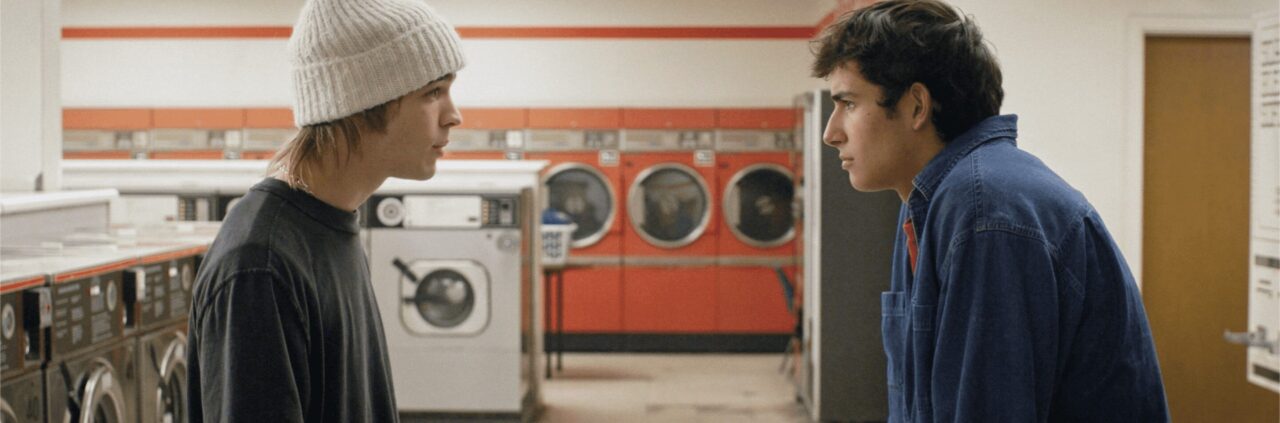
'Dirty Laundry' Review: Hard Truths Are Revealed in This Magical Coming of Age Comedy
Dirty Laundry, the feature film written and directed by Rocky Walls, offers a nostalgic nod to male friendship. Set in 1997, the film stars Mitchell Wray and Charlie Schultz as two teenagers navigating a life event when their relationship is tested supernaturally. Delightfully similar to Freaky Friday in its story arc and resolution, Dirty Laundry tells a heartfelt story full of authenticity. Due to its relatability surrounding coming-of-age themes, it's the perfect film for adolescents, especially those entering high school.
A Nostalgic Nod to the 90s
The film opens with a montage that feels extracted from a 90s rom-com. The pop-rock soundtrack hits all the right notes and sets the stage for our protagonists, Kyle (Wray) and Eric (Schultz). It's a Thursday night, which to them means only one thing: It's time to call their bi-weekly business meeting at the local laundromat to order. Every other Thursday is laundry night, and the boys use that time to work on their developing business plan.
Watch the Dirty Laundry trailer here.
On this night, they encounter a woman who offers unsolicited life advice and leaves them with a parting gift as a spell. Once she leaves, the boys realize her magic spell has removed their lying ability. Kyle and Eric have fun with this newfound power, asking each other questions and knowing they will get the truth. However, the lightheartedness turns into a make-it-or-break-it moment when some hard truths are shared that threaten to disrupt their friendship.
Takeaway
Truth and friendship can never be fully separated in Dirty Laundry, whose title also refers to the secrets we all harbor within ourselves. Filmmaker Rocky Walls uses trust as the cornerstone of this sentimental coming-of-age film, and the result is a timeless story about the power of friendship. Dirty Laundry may not be a big blockbuster with an infinite budget, but it is a charming, small-scale production that is sure to relate to younger audiences.
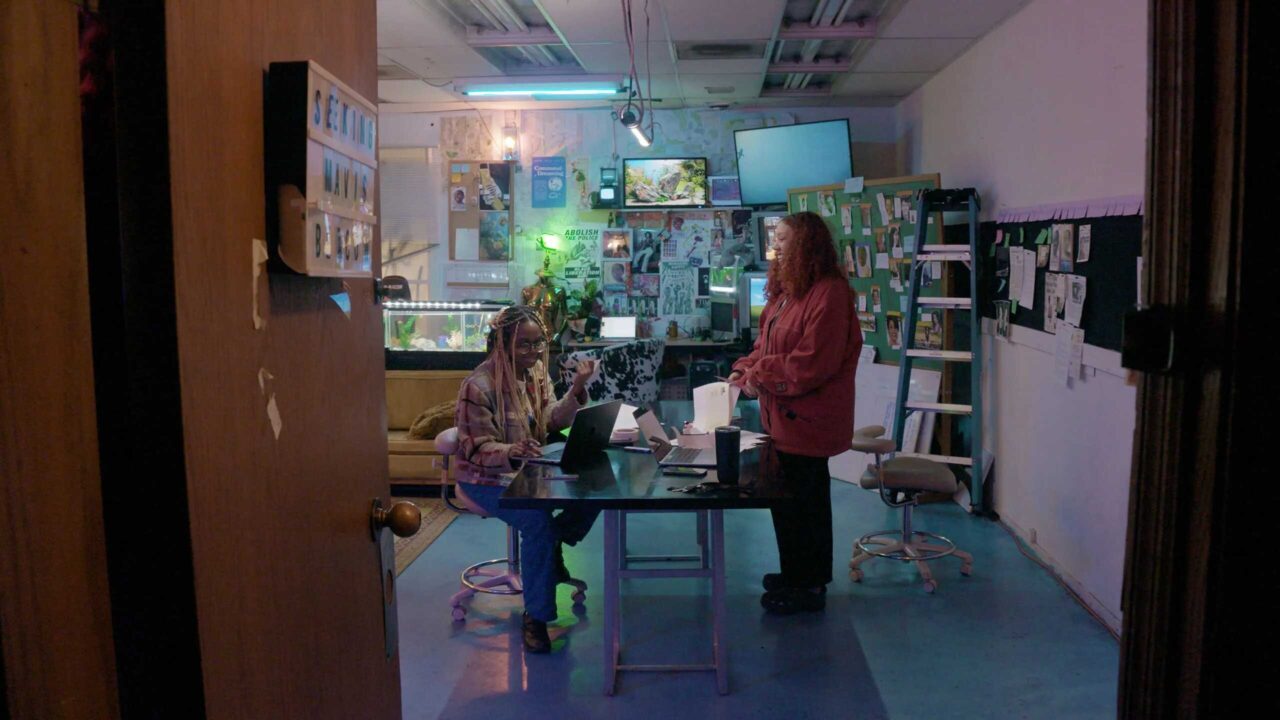
'Seeking Mavis Beacon' Review: On Being Lost & Found in the Digital Age
If you were born in the early 80s, there's a good chance you're familiar with the name Mavis Beacon. Her beautiful smile graced the cover of "Mavis Beacon Teaches Typing!", a software game used to assist middle school-aged children in becoming fluent in computer literacy. Many remember her as an icon and a symbol of excellence, with Oprah, Obama, and Wendy Williams singing her praises. But the shocking truth we come to learn in the hybrid documentary, Seeking Mavis Beacon, is that this legendary figure never actually existed.
The Woman Who Never Existed
Avid Mavis Beacon fangirl and filmmaker Jazmin Jones enlists her friend, Olivia Ross, a cyber security wunderkind and self-described "cyber doula", to investigate the disappearance of the woman they affectionately call the "The Aunt Jemima of Technology". Working out of a shared warehouse space in West Oakland, the young women embark on a years-long investigation to locate the most recognizable woman in technology, who had been out of the public eye for 26 years. After thorough "e-detective" work, they are stunned to discover that their beloved hero is a result of collective misremembering, better known as the Mandela Effect.
Upon further discovery, they confirm that Mavis Beacon was never a real person. Three middle-aged white men created the character, and the woman behind the facade is a Caribbean-born former high fashion model named Renee L’esperance. This bombshell throws Jazmin and Olivia for a loop, and they quickly pivot their search toward Renee. Who was she? Where is she now? And most importantly, does she want to be found?
Watch the Seeking Mavis Beacon trailer here.
Does the Right to Privacy Exist in the Digital Age?
Seeking Mavis Beacon starts as an engaging investigative documentary but slowly morphs into a cultural examination of ethical journalism, digital privacy, and the right to have one's story told on one's own terms. Renee L’esperance never makes an appearance in the documentary, which is a disappointing conclusion for audiences and I'm sure even more so for the filmmaker. However, her unwillingness to participate in the film and protect her privacy serves as a fitting reminder that you can't always control the narrative.
Another perspective that Seeking Mavis Beacon takes is the cultural impact Mavis Beacon continues to have in the tech world today. Her creation predates Apple's Siri and Amazon's Alexa, leading us to question why all tech caregivers seem to be female. Further still, the film questions why Mavis was written as a Black woman. Was it an effort to address cultural inclusion, or was it the result of the coded gaze? It's an important observation, especially given the fact that most coders and programmers continue to be white men.
Takeaway
It's obvious that Seeking Mavis Beacon is a passion project through and through. Jazmin and Olivia are insightful and personable protagonists. Their side quests are charming, even if they don't always serve the plot. At times, however, the film feels slightly off-balance. It tends to overcompensate with a focus on the women's personal lives as much as on their mission to find Mavis. Perhaps they felt the need to pad the film with these unrelated moments to make up for not being able to include Renee. While this isn't distracting, the edit could have been a little tighter and the runtime cut by at least 10 minutes.
Jazmin and Olivia have accomplished their mission. They located Mavis but Mavis didn't want to be found. While not quite the Hollywood ending, Seeking Mavis Beacon is a fascinating journey and conversation starter about privacy in the digital age.
'My First Film' Review: A Meta Retelling of a Failed Film Shoot
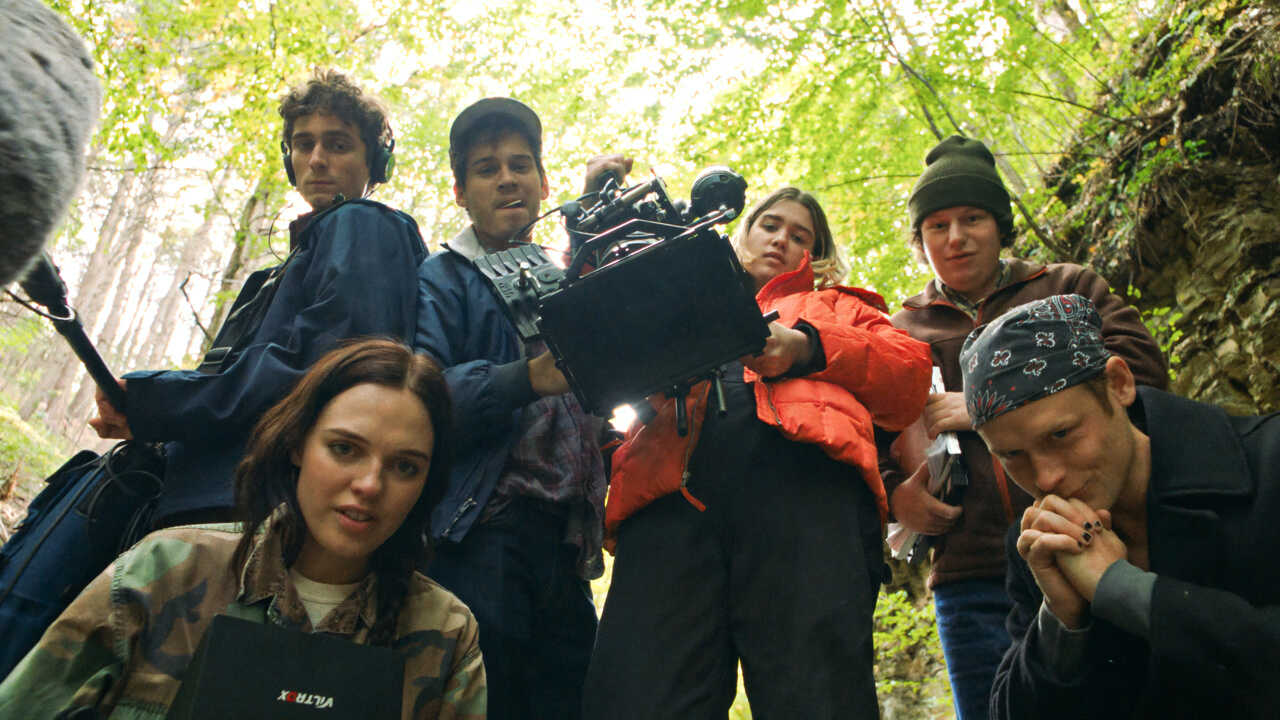
My First Film is an experience unlike any other, where the boundaries of life and art imitate each other so closely that it's hard to tell where reality stops and fiction begins. Centered around a retelling of history from personal experiences, filmmaker Zia Anger draws inspiration from her past, and the failed development of what would have been her debut film. Channeling that heartache and frustration into artistic expression, Anger dramatizes her experience into this true feature debut, aptly titled My First Film.
An Indie Film Descends Into Chaos
"This probably shouldn't be a film..." says Vita (Odessa Young) as she types on her computer. Narrating through voiceover, the young filmmaker, meant to resemble director Zia Anger, sets the stage for the difficult journey we the audience are about to embark on with her. She speaks in hindsight, as most of the film takes place 15 years earlier. Vita recounts having to beg, borrow, and steal to get $5,000 to make her semi-autobiographical first feature. Nothing was going to get in her way of making this movie. Well, almost nothing.
Watch My First Film trailer here.
Fifteen years earlier: Energetic and brimming with passion, Vita assembles a group of friends to help her shoot the semi-autobiographical film, "Always All Ways, Anne Marie", a story about a young woman from a small town who gets pregnant and decides to leave home. A novice director in every sense of the word, Vita's eagerness can't compensate for her inexperience. Through no fault of anyone in particular, except for maybe the stoner crew members, the indie production quickly descends into chaos. On-set tension with her friend and lead actress Dina (Devon Ross) makes their relationship uncomfortable. Her well-meaning but distraction-prone boyfriend causes many derailments, which only increases Vita's resentment toward him. And when a near-fatal accident threatens one of the key cast members, Vita knows her dream project has officially unraveled and appears lost forever.
Set to an Abstract Score by Perfume Genius
Anyone who has spent time on a film set, professionally or in college, will feel nostalgic watching My First Film. Zia Anger captures those small but essential moments, when you're low on sleep, short on money, and spending hours a day hanging with friends. It's a magical time that doesn't come without its complications, including relationship dynamics. Perfume Genius (Michael Alden Hadreas) lends his whimsical artistry to the score as the film's composer. The breathiness and light vocals further contribute to the film's overall sense of intimacy.
Takeaway
Zia Anger touches on a deeply personal and sensitive moment in her life in My First Film. It feels cathartic to watch, and I can only imagine how therapeutic it was to make. Much like how Dina expresses herself in ways that Vita is afraid to, Vita acts as a vessel for Anger to explore deep, unearthed emotions. My First Film is a reflective critique of artistic truth. Through intricate and fearless storytelling, this labor of love stands as a powerful statement from an exciting director we should keep on our radar.

'Antarctic Voyage' Review: The Wildlife Inhabiting a Remote Island
Nature and science intersect in the documentary Antarctic Voyage, a fascinating exploration of animal life in one of Earth's least explored locations. Award-winning filmmaker Kevin Schreck takes audiences on a journey at sea as he documents a 2024 biological research expedition to the remote island of South Georgia at the top of the Antarctic convergence in the Southern Ocean.
A Fascinating Study of Remote Seabirds
Scientific consultant and field biologist, Dr. Samantha Monier, acts as the guide throughout the film's 48-minute runtime. She and her crew travel for days to reach their South Georgia Island destination, often considered one of the most remote and biodiverse places on Earth. Surrounded by ice and icebergs the size of apartment buildings (and that's just what's visible from the sea surface), the beauty of the island is breathtaking. Once Dr. Monier plants her feet on the icy ground, she gets to work on her research. During her weeks-long stay on the island, she will be studying predator associations between marine mammals and seabirds around the island.
It doesn't take long to see incredible and natural wonders play out in front of her and the camera. We catch glimpses of albatross soaring over the ocean's surface, with a wingspan of 12 feet, they are among the largest flying birds alive today. Another species native to this island is a carnivorous duck whose preferred meals of penguins are tough to stomach as a viewer. While the animals are charming and (mostly) cute, the landscape is dazzling in its own right. Stunning sunsets, crystal clear waters, and magnificent glaciers shine, providing a fairytale backdrop to this advanced research. However, aside from its beauty, the images also serve as a stark reminder that these elements are currently threatened by the effects of global warming.
Part Modern-Day Adventure Film, Part Visual Tone Poem
Antarctic Voyage is billed as part modern-day adventure film and part visual tone poem. Interestingly, the film does feel operatic at times, especially when leaning into the more abstract montages of birds flying overhead and water splashing below. It doesn't have the same production resources as, say, a David Attenborough documentary but the limited budget gives Antarctic Voyage a more cinéma vérité quality. Unconventionally approachable for a science-based film, the documentary proves that a good story stands out despite budgetary constraints.
Takeaway
Whether you are an avid ocean and animal advocate or just enjoy a documentary that sparks curiosity, Antarctic Voyage is a journey worth taking. It's hard not to feel inspired after witnessing the polar region's majestic wildlife, and feel gratitude for the explorers who dedicate their lives to preserving and understanding our fragile, natural world.

Kathryn Bostic Debuts Track from Hulu's 'The Supremes At Earl's All-You-Can-Eat'
Composer Kathryn Bostic brings her soulful artistry to the small screen with her score for Searchlight’s The Supremes At Earl's All You Can Eat. A prolific composer, songwriter, pianist, and vocalist, Bostic blends raw blues influences into each piece to create a cohesive 13-track album. Hollywood Records will release 'The Supremes At Earl’s All-You-Can-Eat (Original Soundtrack)' on digital platforms on Friday, August 23, coinciding with the film’s release on Hulu.
From Best-Selling Novel to Feature Film
The Supremes At Earl’s All-You-Can-Eat is a comedy/drama based on the 2013 New York Times best-selling novel by Edward Kelsey Moore. The film follows lifelong best friends Odette (Aunjanue Ellis-Taylor), Barbara Jean (Sanaa Lathan), and Clarice (Uzo Aduba) known as “The Supremes”, who share the unbreakable bonds of sisterhood from decades of weathering life’s ups and downs. Through the good times and bad, marriage and children, love and loss, unexpected circumstances threaten to shake up their dynamic as the trio faces their most challenging times yet. Directed by Tina Mabry, the film was written for the screen by Cee Marcellus and Tina Mabry.
Cinemacy is proud to premiere a three-track score sampler from The Supremes At Earl’s All-You-Can-Eat (Original Soundtrack), below:
Drawing from her jazz and classical expertise, Kathryn Bostic's score gives a unique emotional depth to the characters' backgrounds. The track "Clarice" is an uptempo piano soliloquy that elicits a tangible sense of longing. "Making Amends" has a more sweeping, cinematic flare with the inclusion of strings and bass notes. Her orchestral track "Sycamore Tree" offers a slower, more meditative, pace and poignantly reflects the characters' evolution over time.
Says Bostic of the music, “The score reflects the growing friendship of the three main characters; Clarice, Odette, and Barbara-Jean as they explore challenges and triumphs within their own lives. I chose a simple melody that grows in variations and mood to reflect their personal catharsis that inevitably tests their friendship as well. Instrumentation is primarily orchestral and piano in addition to some bluesy guitar, vocal, and bass motifs. I wanted the score to support this brilliant cast and elevate their dynamic performance in very subtle ways.”
About Kathryn Bostic
Kathryn Bostic scored an Emmy nomination for her work on the documentaries Amy Tan: Unintended Memoir and NAACP award-winning Toni Morrison: The Pieces I Am. In addition to her film & TV repertoire, she has also written for Broadway, most notably collaborating with the iconic playwright August Wilson on The Gem of the Ocean. Bostic has also collaborated with many prominent orchestras. In 2019, her piece “The Great Migration—A Symphony in Celebration of August Wilson” premiered with the Pittsburgh Symphony Orchestra.
In 2016, Bostic became the first female African American composer to become a member of the Music Branch of the Academy of Motion Picture Arts & Sciences. She held the role of Vice President of the Alliance for Women Film Composers from 2016-2018. She is also a recipient of many fellowships and awards including the prestigious Sundance Time Warner Fellowship, Sundance Fellowship for Feature Film Scoring, Sundance/Skywalker Documentary Film Scoring, African American Film Critics Award for Best Music in Film, BMI Conducting Fellowship and Society of Composers and Lyricists “Outstanding Music for Independent Feature Film.” As a vocalist, she has toured and recorded with many celebrated artists including Nas, Ryuichi Sakamoto, and David Byrne.
'The Cavalry' Review: Spotlighting Israeli Police Horses Through Video Art
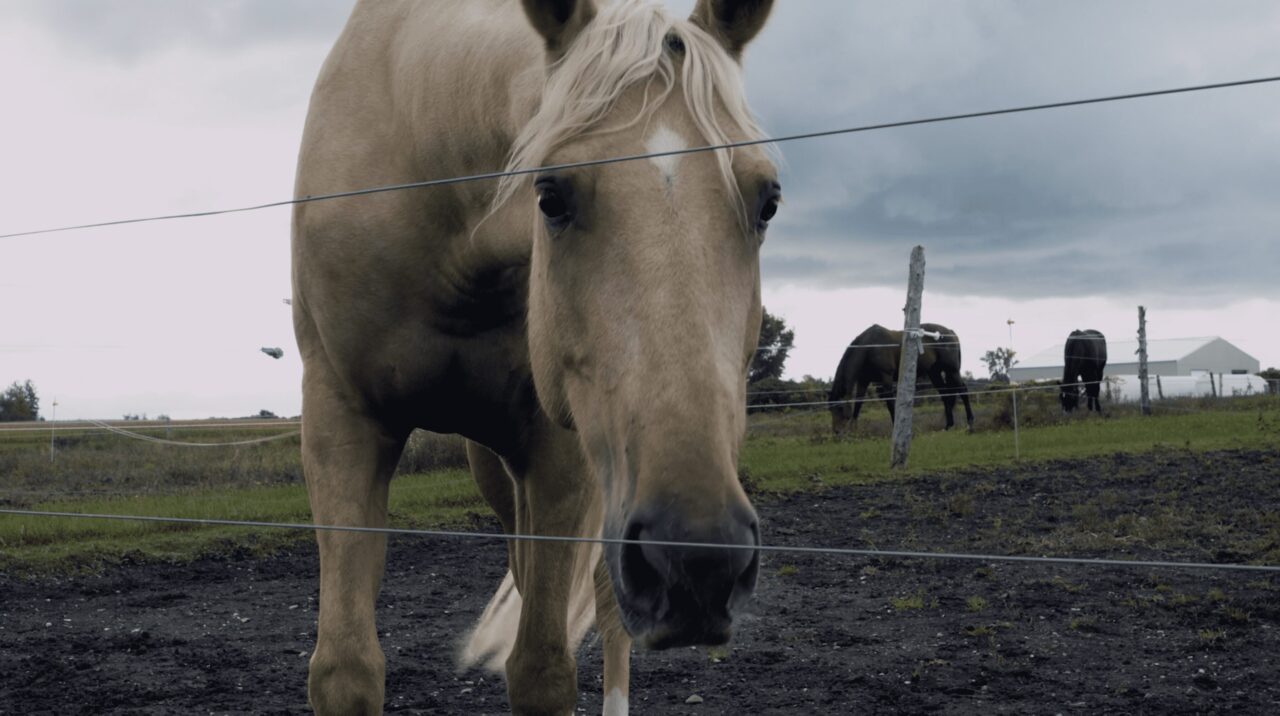
Premiering this week at the Locarno Film Festival, The Cavalry is a stunning experimental short documentary that plays like a modern-day Trojan horse. In the opening shot, director Alina Orlov serenades the audience with field recordings of birds chirping, waves ascending, and wind swirling throughout a picturesque seaside community. The beauty of this natural setting is amplified when the camera cuts to an outlet called the Green Mountain Stables. Here, we come face to face with a majestic Friesian horse. But this isn't any ordinary horse, this is a horse belonging to the Israeli police.
A Horse as a Political Weapon
While much of the 17-minute documentary focuses on the training of a single police horse, The Cavalry isn't a story about horses. The deeper message captures the reality of living under the separation border of Isreal and the West Bank. Masking political chaos behind the beauty of this innocent horse is a skilled angle that Orlov accomplishes artfully. Captions take the place of voiceovers and narratively move the story forward.
The film picks up as a new horse joins the Israeli police troop and undergoes training. Like boot camp for aspiring soldiers, the horse is put through drills that condition the animal to face fear. It's non-abusive and at times, even comical to witness. The horse's quiet assertiveness, even while being poked and prodded by the Israeli soldier, is admirable and cultivates a relationship built on trust. As we witness an evolving bond, it is clear that The Cavalry is a film that honors this rich history between man and mammals.
Art Film Meets Political Documentary
Director Alina Orlov takes an experimental approach when it comes to the visual aesthetic. The footage of modern, daily life is seen in kaleidoscopic colors and contrasting imagery. Mixed media is used to represent historical moments in time. Both images are stark and breathtaking. The decision to end the film with images of protests and the horses in action is a sobering reality of the many faces of war.
Takeaway
Despite being a short film, The Cavalry feels much bigger than its runtime. Part video art and part hyper-realistic documentary, The Cavalry is a stunning observation of control and oppression in our society.
'Skincare' Review: Beauty is a Cutthroat Business
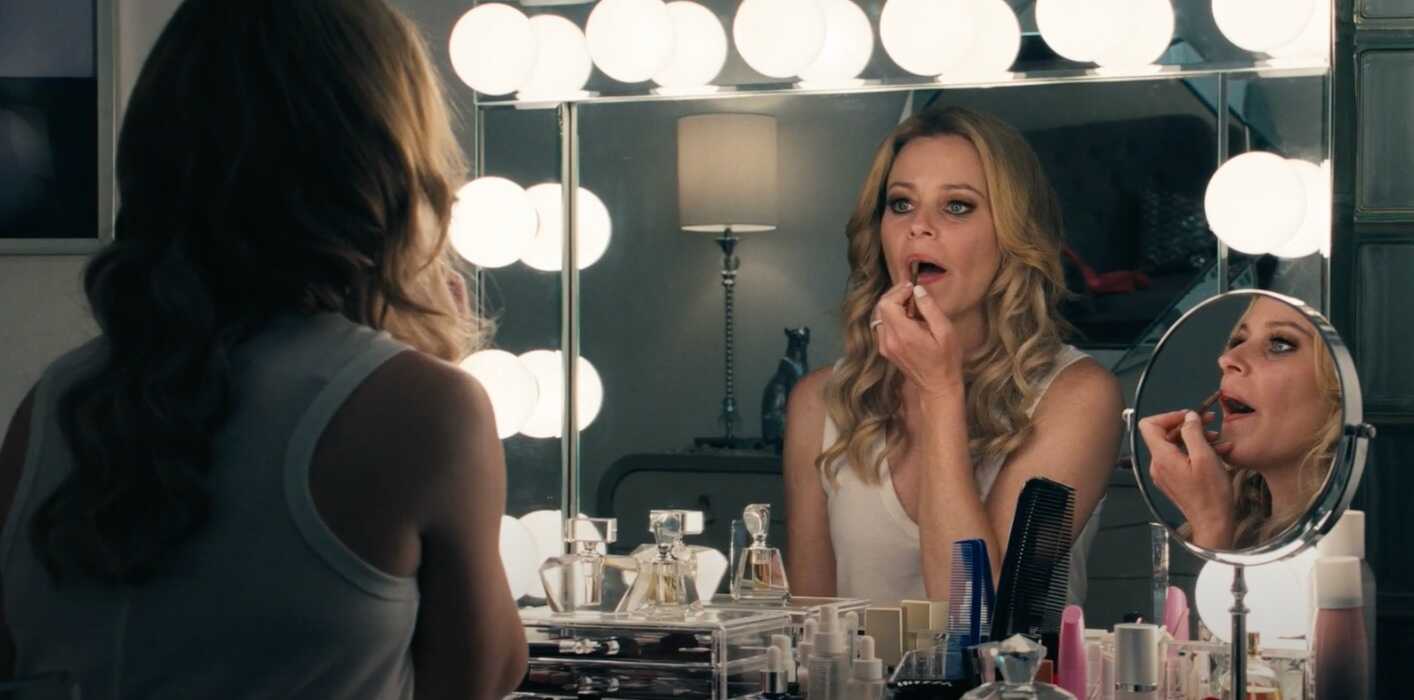
Elizabeth Banks stars as a Hollywood esthetician who finds herself in the middle of a murder plot in the stylish thriller, Skincare. A fictional story inspired by true events, Skincare is a wild ride that brings out the best in its cast. Matched by a strong score and striking visuals, Skincare serves as a cautionary tale that even beautiful people can do ugly things.
From American Dream to Skincare Queen
To succeed in Hollywood means to be the best, and no one knows that better than celebrity facialist Hope Goldman (Banks). From American Dream to skincare queen, Hope's impact on the beauty industry is similar to how Rachel Zoe influenced fashion. If reputation is everything in this business, then Hope Goldman is royalty.
After working for years to build up her brand, Hope is finally ready to expand her empire by launching a namesake product line. The jars are beautifully elegant with a minimalist high-end appeal, similar to Sunday Reily. It's the moment Hope has been waiting for her entire life. Little did she know that when a competitor moves in directly across the street from her studio, her life will spiral into chaos. Never one to back down from competition, Hope knows that beauty is a cutthroat business and is willing to do whatever it takes to protect her brand.
Watch the Skincare trailer here.
"Shimmer by Angel" is Hollywood's newest skincare boutique helmed by rival facialist Angel Vergara (Luis Gerardo Méndez), and he quickly outshines Hope Goldman. Angel claims that his products can reverse the effects of aging, and the Hollywood elites flock to his studio in droves. As her competitor is gaining traction in their shared niche space, Hope can't help but wonder what devilish games Angel is playing. Ever since his presence in her life, Hope has been stalked, harassed, and catfished. Each incident becomes increasingly more threatening and Hope doesn't know how to stop it. Enlisting her friend and confidant, Jordan (Lewis Pullman), Hope is determined to solve this mystery and take back control of her life, no matter the cost.
A New Musical Discovery
Skincare marks writer/director Austin Peters' first narrative feature film. A successful music video director prior, Austin infuses the same gusto and energy into his feature. Skincare is clever, aesthetically bold, and an all-around fun watch. The cast, led by the always-excellent Elizabeth Banks, embrace their roles as morally ambiguous characters. Dark humor is infused with villainous acts, making for an engaging and unique whodunit.
Music also plays a big part in creating the changing atmosphere of the story. The soundtrack by Senegalese-born Kuwaiti musician and conceptual artist Fatima Al Qadiri is a standout, a fiery discovery. Fatima starts with a spa-inspired dreamlike score comprised of flutes and harps, before moving into heavy metal as the film's tonal shift takes place. It works so well and compliments the visuals perfectly. Every so often, I find myself so moved by a piece of music that I seek out the composer's personal work. I immediately connected with Fatima's sound and recommend you check her out as well.
Takeaway
Dynamic and memorable, Skincare is an engaging watch from start to finish. Not only did it leave me with a newfound appreciation for Elizabeth Banks as an actor, but I also came away with a new music discovery in composer Fatima Al Qadiri.

'Last Man Standing' Review: The Last "Real" Jewish Gangster
Last Man Standing: The Chronicles of Myron Sugerman is a heartwarming retrospective of the life of Myron Sugerman, the last "real" Jewish gangster. Listening to Myron, who is 83 years young at the time of production, is like witnessing your grandpa tell tales from his childhood in colorful detail. Last Man Standing is a bit of a slow-burn but that only reaffirms director Jonny Caplan's commitment to methodical storytelling and giving space to let Myron tell his story in his own words.
The Last "Real" Jewish Gangster
Myron was born in the 1930s in Newark, New Jersey. His father, Barney "Sugie" Sugerman, was involved in the mob scene, yet was also regarded as a respectable figure in that community. Despite being in a gang, his father was not a gangster, and Myron differentiates between the two labels. Regardless of his father's actual involvement, one thing is clear. Myron was born into a life of crime, but he chose to exercise his influence by following in his father's footsteps. Taking on the family business, Myron sold and operated slot machines, jukeboxes, and more for over 50 years.
From Mobster to Family Man
Dealing with the machinery wasn't all fun and games. In this line of work, Myron did business with top-ranking gang members. They included the Gambino crime family, the Colombian Cali Cartel, and the Japanese organized crime syndicate called the Yakuza, among others. Myron recounts his life as an outlaw living outside the law, traveling worldwide, and making business deals with dangerous men. He even talks about helping a famous Nazi hunter track down the Angel of Death, Josef Mengele, in Paraguay. His exciting life has since been tamed as a now-married father of three, with Myron humbly reflecting on his riskier moments. He has no complaints and few regrets, he admits towards the end of the film. One thing is for certain, Myron Sugerman led a fascinating life.
Takeaway
Director Jonny Caplan doesn't stray far from the traditional interview-style documentary in Last Man Standing. The archival images are abundant and the modern-day footage, which shows Myron attending weekly lunches with his old gang pals at an Italian restaurant or Jewish deli, is intimate and heartwarming. As he's matured, Myron candidly speaks about his contributions to history. And despite his questions about the relevance of his legacy, Myron's contribution of sharing his story with the world is an incredible gift. The film had its World Premiere at the Miami Jewish Film Festival.
'5.7 Seconds' Review: Women Beware, Danger Lurks Everywhere
The opening shot of the short film 5.7 Seconds goes from 0 - 60 in an instant. Crafted to look like a Michael Bay action trailer, the intensity of the full-bodied music score combined with the apocalyptic color saturation lends itself to a thrilling watch. Writers and directors Shane Cibella and Tim Aslin’s 14-minute horror film is a thought-provoking exploration of humanity and will leave viewers questioning whether the devil we know is truly better than the devil we don’t.
Nowadays, Danger Lurks Everywhere
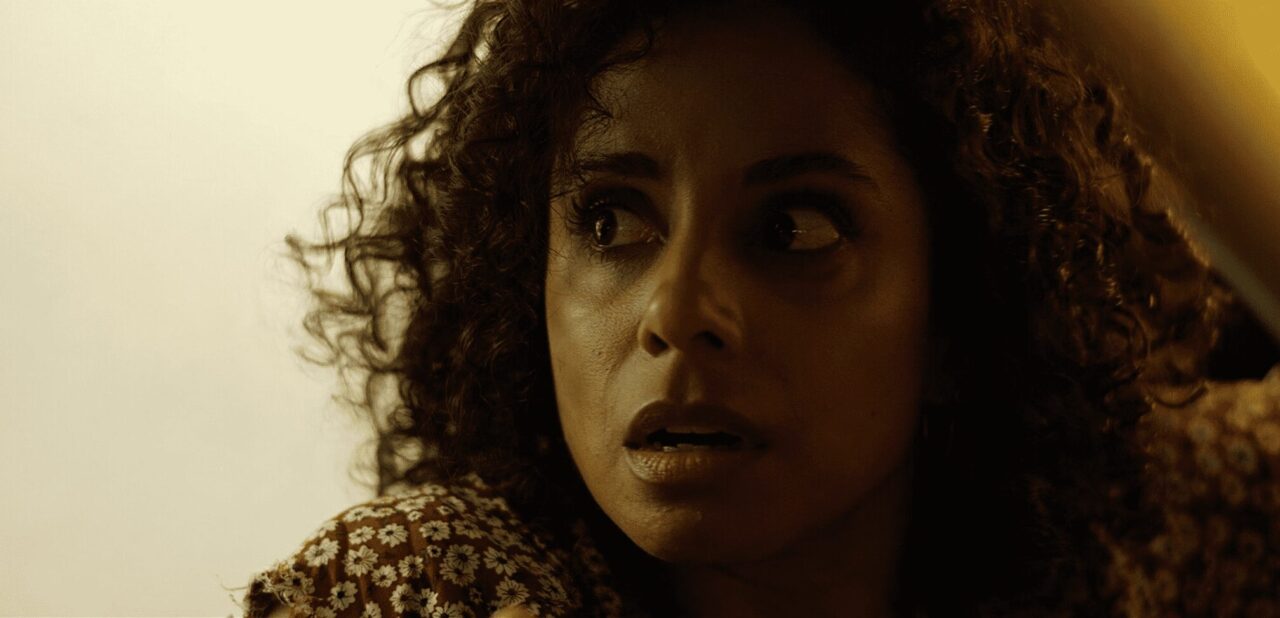
Jane (Shante DeLoach) frantically finds refuge in an abandoned car during a moment of sheer panic. We can’t see exactly what she's trying to escape from but her demeanor makes it clear that evil lurks nearby. Just as she’s beginning to feel safe in her hideaway spot, a stranger appears in the car's backseat.
Upon the realization that she is not alone, the camera glides around the claustrophobic environment of the SUV. Seeing the mysterious man forces Jane to make an impulse decision. Does she attempt to work together with this man to fight the threats looming outside? As she contemplates this scenario, Jane makes a horrifying discovery that jeopardizes her life. This man isn’t a friend and definitely isn’t safe. She's horrified by the thought that she may have been better off fighting the demons outside than the one next to her.
Fed Up with Toxic Masculinity
Evoking a similar uneasiness as 28 Days Later, 5.7 Seconds doesn’t shy away from darker themes of assault and stalking. The protagonist is a woman pushed to the edge and fed up with toxic masculinity. Her entrapment, both literally and figuratively, is a feeling that many women have experienced. It’s incredibly rewarding to see her in action, taking a stand against her abuser.
Takeaway
5.7 Seconds feels like it’s just a snippet of a larger story. Given the narrative restraints that inevitably come with a short film, more character development and environmental context would have been a great touch. Perhaps the filmmakers will have the opportunity to adapt this into a feature and if they do, I’ll enthusiastically buy a ticket for opening night. 5.7 Seconds premiered at the 2024 LA International Short Film Festival.

'Flatters' Review: Oops, I Married a Conspiracy Theorist
An unsuspecting man finds out that his newlywed bride is a worrying shade of kooky in the dark comedy Flatters. Directed by Dennis Flippin, this 12-minute short film is a humorous look at relationship icks and the consequences of accidentally marrying a conspiracy theorist.
Who the F did I marry!?
Lenny (Doug Wyckoff) is a single, middle-aged cat man who lives a simple life in an airstream next to the river. In a voiceover that lasts nearly the entire first half of the film, Lenny explains that he is interested in exploring the world of online dating. Turning to Craigslist (a major red flag), he hopes to find a love connection. He quickly matches with Georgia and the two hit it off immediately. Fast forward to the near future, Lenny and his Craigslist lover are married and cohabitating in his trailer. Things seem all good in Lenny's world. That is, until Georgia reveals a side of herself that leaves Lenny truly befuddled.
Georgia, an author, excitedly shares her new book with Lenny, titled Flatters: The Truth About Our Flat Earth. Dumbfounded, Lenny clarifies what he already knows to be true... does Georgia really believe the Earth is flat? As she begins spewing nonsense about how the moon landing was staged, and how NASA has been guarding the edge of the Earth this entire time, Lenny begins to panic. Who the F did he marry!?
Flatters the feature film, coming soon
Flatters is a thoroughly engaging film that offers lead actor Doug Wyckoff a solid vehicle to stretch his comedic muscles. Visually, the film has the color palette of a soap opera but the action of a cable network comedy. Director Dennis Flippin leans into the obscure, especially during the film's final moments. He isn't afraid to be bold in achieving his vision. Now with the 12-minute short film under his belt, Flippin plans to turn Flatters into a feature.
Takeaway
Making its World Premiere at the LA Shorts International Film Festival, Flatters is lighthearted fare that pokes fun at the consequences of rushing into relationships, especially if they were conceived through Craigslist.

'Hollywoodgate' Review: Exploring Newfound Taliban Territory
Hollywoodgate is a film that exists by pure luck and delusion. Harnessing a bravery last seen in the Academy Award-winning documentary 20 Days in Mariupol, Hollywoodgate offers viewers a first-hand account of the inner workings of never-before-seen Taliban territory. Filmmaker Ibrahim Nash'at risks his life by documenting this historic moment in time, just days after the United States hurriedly pulled out of Afghanistan, subsequently leaving billions of dollars worth of military equipment and technology in the hands of terrorists.
The Taliban takes over an abandoned U.S. intelligence base
After the horror of 9/11, US and NATO forces invaded Afghanistan to help overthrow the Taliban for their role in safeguarding Al Qaeda. On August 31, 2021, nearly three years ago, the Taliban reclaimed Kabul. Hollywoodgate is an exposé on the sequence of events that happened once the last American soldier was removed from the CIA base camp, and the resulting threat to humanity that continues to lay in wait today.
Watch the Hollywoodgate trailer here.
The footage that Ibrahim Nash'at, an Egyptian journalist, captures from the base camp is displayed in starkly intimate detail. His access is unparalleled and truly astounding. In an early voiceover, Ibrahim explains that he negotiated an arrangement with the Taliban. His assimilation into their community would not only grant him limited access to the abandoned US airbase, but to the men themselves. Specifically, he would be documenting Malawi Mansour, a novice Air Force commander, and M.J. Mukhtar, a psychologically tortured young lieutenant. Armed with one translator and one camera, Ibrahim Nash'at bravely documents the Taliban's exploration of the former CIA base, and the beginning of their transition into a military regime. "If his intentions are bad he will die soon," one of the men says regarding Ibrahim's presence.
Recreating American defense weapons... to use against America
Ibrahim is slow and steady with his camera movements as he trails behind the men exploring the army base. His actions are very methodical and observational, one wrong move could be a death sentence. One of the film's more humorous moments (if you can call it that) occurs when one Taliban member opens an abandoned refrigerator to find leftover Fireball and Jaggermeister. They curiously inspect the bottles, perhaps tempted to take a sip. The more shocking discoveries are enough to send a chill down your spine. They discover endless bottles of medicine, tech equipment, and defective aircrafts, prompting the men to realize that these leftovers haven't been properly destroyed as the US made their rapid escape, and can now be rebuilt. And that is what they set out to do: recreate American defense weapons to use against America.
The tone of Hollywoodgate is suspenseful with an air of mystery surrounding it. The chilling score by the German composer Volker Bertelmann perfectly complements the intimacy and riskiness of the production. For his part as director, cinematographer, and co-writer, Ibrahim Nash'at delivers a staggering, once-in-a-lifetime documentary.
Takeaway
Making its World Premiere at the 2023 Venice Film Festival, Hollywoodgate is an urgent and required viewing. As if the film wasn't worrisome enough, it ends with a sobering fact that is hard to forget. According to the Pentagon, the US left over $7 Billion worth of our military resources in Afghanistan when we abruptly pulled out. To the world's horror, this equipment is now considered operational and could likely be in the hands of unknown Taliban members.