

'El Planeta' is a Mumblecore Gem From a New Cinematic Voice
It's worth paying attention when director Miranda July gives her stamp of approval to an up-and-coming filmmaker. "From the very first scene my heart started to pound with that feeling of discovery," says July. "A brand new, totally modern, cinematic voice!” And who is the recipient of such praise? Argentinian artist Amalia Ulman and her new film, El Planeta.
A dark comedy like Kajillionaire.
Coincidentally, El Planeta is a dark comedy that feels like a step-sister to July's own Kajillionaire. Similarly, it explores the mother-daughter dynamic set against awkward hijinks and expectation hangovers.
El Planeta takes place amidst the devastation of Spain's economic crisis. After the passing of her father, amateur fashion stylist Leonor (Ulman) reunites with her eccentric and unemployed mother María (played by Amalia's real-life mom, Ale Ulman). Together, the duo work through life's mundane ups and downs. They bluff and grift their way to fund their superficially extravagant lifestyle, debt and inevitable eviction always looming.
Related: 'Kajillionaire' Review: A Family of Scammers Long For Connection

An impressive debut film.
El Planeta is Amalia's debut feature film. Its premiere at the 2021 Sundance Film Festival put Amalia and her feature on track for success, albeit, predominately in the arthouse world.
Static shots and long one takes make this mumblecore darling feel like a filmed staged play, however, it never feels slighted by its simplicity. The characters make every scene come alive, which can be attributed to the film's dry comedic center. Lines like, "If I keep eating carbs I'm going to have a poor person's body" are delivered in a perfect deadpan tone.
An indie gem waiting to be discovered.
There isn’t much of a plot to talk about, though. In fact, one could argue that there is really no “point” to the film. El Planeta feels very much like a cathartic personal expression for Amalia as many of the saddening events that occur in the film are based on her own life with her mother, which includes suffering homelessness and hunger.
However, El Planeta is not an autobiography. The genuineness and authenticity of Amalia’s script and vision give the film its depth and purpose. Ultimately, I’m with Miranda July on this one. El Planeta and Amalia Ulman are indie gems just waiting to be discovered.
Distributed by Utopia, currently playing at Landmark Westwood. Available on VOD this Friday, 10/8.

'Titane': The Most Horrifically Insane Film You'll See All Year
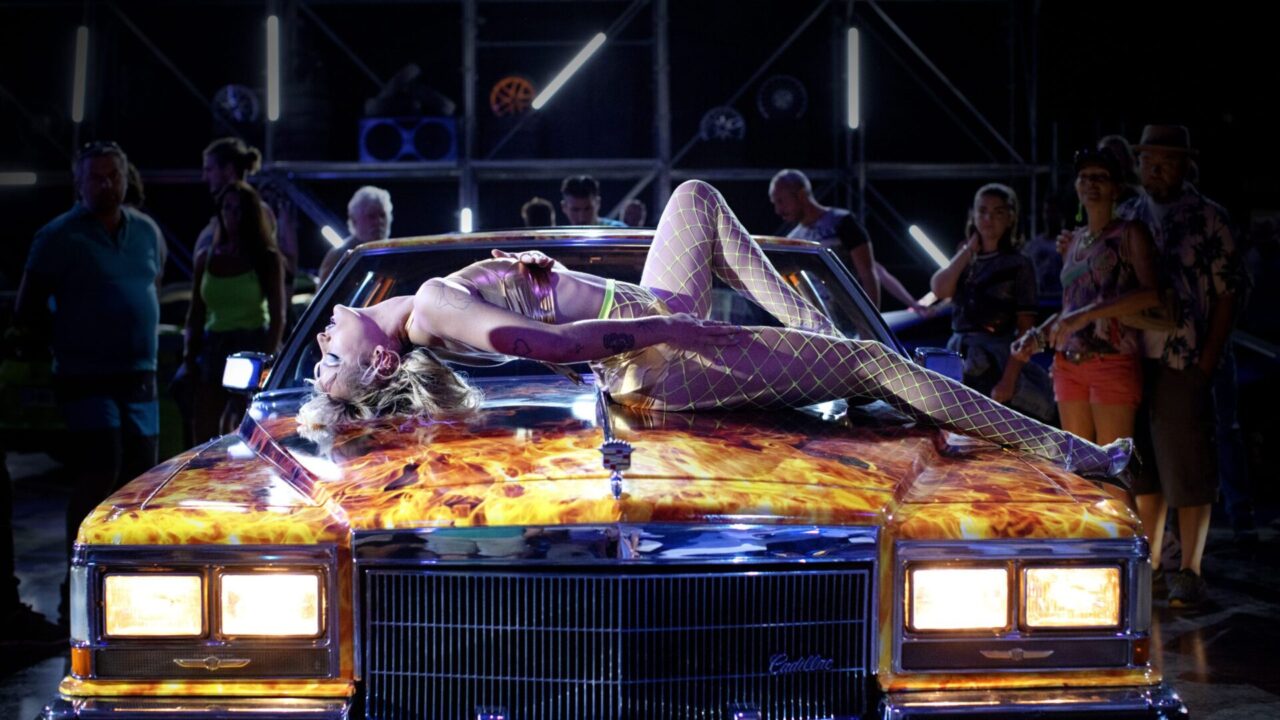
When a movie hits you like a ton of bricks, so much so that the whiplash you felt after leaving the theater three weeks ago still courses through your body, you know you've just witnessed something special. In that case, Titane–winner of the Palme d'Or at this year's Cannes Film Festival–is one of the most special films I've ever seen.
The visceral nature of all of French provocateur Julia Ducournau's anti-hero feminist films is nothing short of a vivid nightmare come to life (if you haven't seen her cringe-worthy film Raw yet, I give you permission to stop reading this review and start watching immediately–currently streaming on Netflix). Ducournau is a stylistic and savvy storyteller who weaves vulnerability with vengeance in a way that is so unique, I believe she is currently elevating the horror genre to be more than just blood and gore, but blood and gore *with purpose*. Tarantino wishes!
Related: ‘Raw’ Review: Campus Cannibalism Has Never Been More Cinematic
Imagine if Charlie (Milly Shapiro) from Hereditary survived that car accident, or if The Female (Scarlett Johansson) in Under The Skin continued her vigilante justice against pervy men. That's barely scratching the surface of Titane's multi-layered saturnine storyline, one rife with existential dread, unconditional love, and animalistic needs, all set to a killer score by Ducournau's past collaborator, Jim Williams.
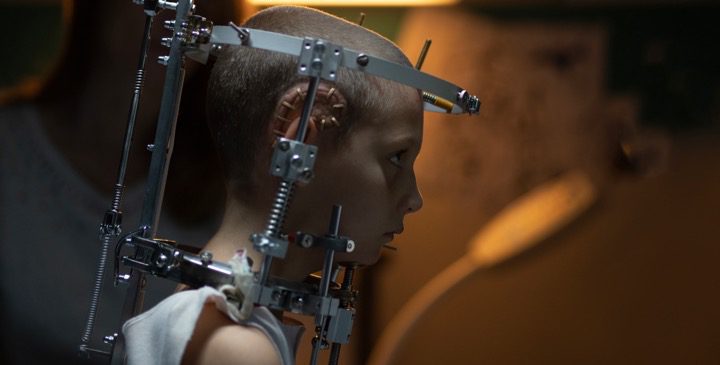
There is so much I want to say about Titane, specifically the WTF moment in the bus station bathroom, and the first encounter our protagonist Alexia (played magnificently by Agathe Rousselle) has with an overeager "fan" in her car, and that end scene! But I know the best way to experience this film is to go in completely blind and so I'll bite my tongue (but not so hard that it starts to bleed, contrary to a Ducournau act).
I can say with certainty that Titane is the most horrifically insane film you will see all year. This begs to be seen on the big screen and thankfully, it is playing in most theaters everywhere.
Distributed by NEON, 'Titane' is now playing in theaters.
In 'Mayday,' A Badass Sisterhood of Soldiers Run The World
Our ‘Mayday' review was first published after the film’s premiere at the 2021 Sundance Film Festival.
Sisterhood reigns supreme in writer/director Karen Cinorre's action film, Mayday. Take a trip to this women-dominated fantasyland, and you'll find that pent-up rage from years of gender-based injustice is personified as WW2-era ladies as cold-blooded killers. Best described as a "feminist war film," Mayday's callousness stops just short of being a full-out "anti-men" to be a thought-provoking, female-empowering fantasy film.
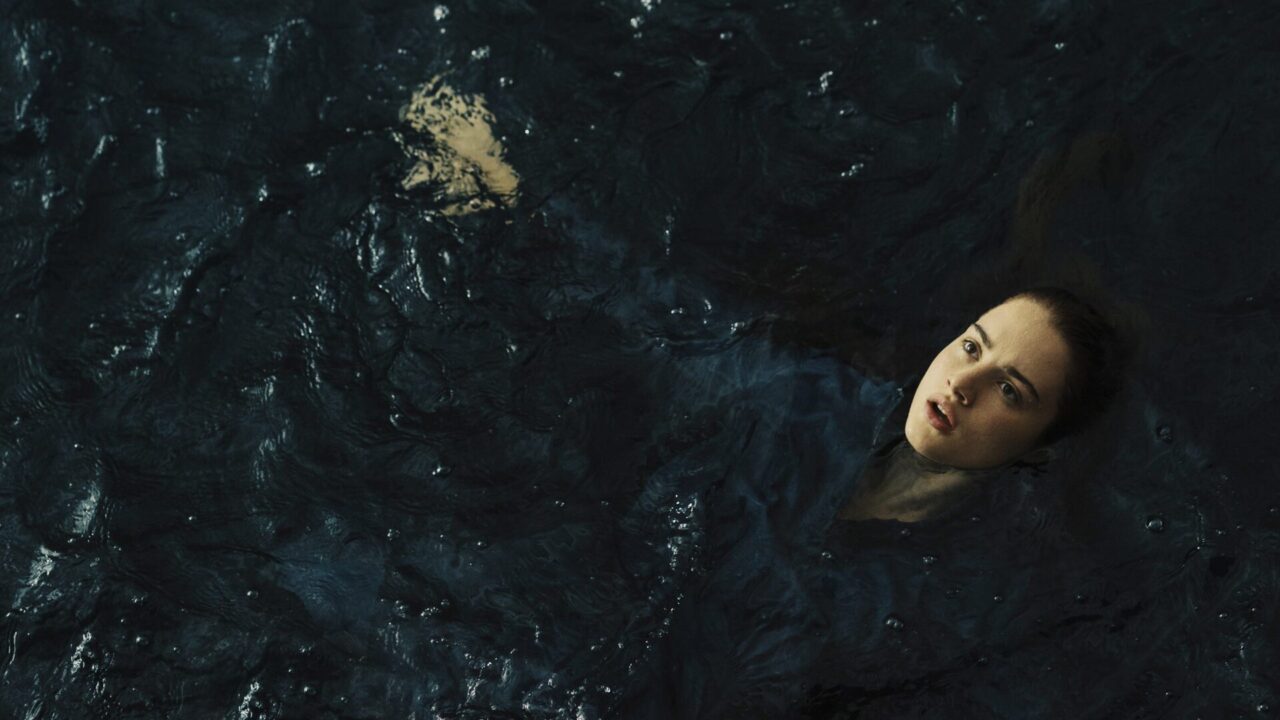
For Ana (Grace Van Patten), a caterer at a small venue in town, an approaching storm acts as a daunting premonition of changes to come. Although she's (unfortunately) used to being taken advantage of by her sleazy male superiors, it's clear that she still values the friendships with the rest of her co-workers, men and women alike. On this particular stormy day, however, Ana's natural submissiveness is about to come face to face with a domineering feminist future, in which supernatural events occur that transport Ana into an alternate reality where women are in charge.
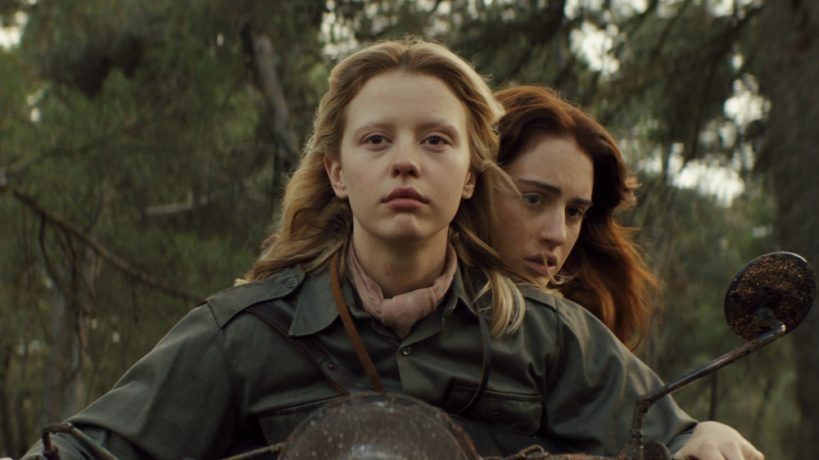
It's no coincidence that Ana is wearing a blue dress and white apron combo (much like Alice falling into Wonderland), awakening on an unfamiliar coastline. Dazed and confused, she is taken in by Marsha (Mia Goth), who acts as the white rabbit to Ana's Alice. Her memory wiped clean, Marsha provides context as to where she is: it seems that Ana's fallen into a fever dream where the patriarchy doesn't exist. Marsha introduces Ana to two more women, Gert (Soko) and Bea (Havana Rose Liu), a band of women and sorority of soldiers whose mission is to lure and kill every man who views them as a damsel in distress... AKA, all men.
It doesn't matter if you're a "good" guy or a "bad" guy in Mayday–so long as you're a guy, you're a target. It's a divisive premise that may ruffle a few feathers, but much like its badass characters, Mayday isn't interested in playing it safe. Director Karen Cinorre's bold vision is brought to life in beautiful fashion by cinematographer Sam Levy who, after working on films like Lady Bird and Frances Ha, knows a thing or two about creating a cinematic environment for strong women to thrive. Adding to the film's edginess is experimental composer Colin Stetson (Hereditary), who opens the floodgates of chaos with his chilling polyphonic sax.
With Mayday, Cinorre makes a strong statement on the roles that men and women play in society, which is further strengthened by its excellent cast. Grace Van Patten and Mia Goth give hard-hitting performances, with both an emotional and physical range on full display. And can we just say, that any film that Juliette Lewis is in, is already that much better. Mayday might not be for everyone (even I cringed at some of the one-liners that came off as a little, what I'd call "emo"), but the bigger question is well worth asking: Would the world be better with women in charge?
Distributed by Magnolia Pictures. In theaters and On Demand this Friday, October 1, 2021.

St. Vincent and Carrie Brownstein Cryptically Talk About 'The Nowhere Inn'
In perhaps the most legendary duo of all time (in our opinion), Annie Clark (aka St. Vincent) and Carrie Brownstein play themselves as they shed their onstage personas and get real in The Nowhere Inn.
Boundary-blurring and enticingly self-aware, Bill Benz’s directorial debut made its World Premiere at the 2020 Sundance Film Festival, where we caught up with the stars and filmmakers.

TIFF: 'As In Heaven' is a Visually Spellbinding Tale of Blind Faith
Before its screening at this year's Toronto International Film Festival, writer/director Tea Lindeburg introduced her new film as an act of love that was inspired by a novel she read in the early stages of motherhood. After completing the Danish book A Night of Death (En Dødsnat), written in 1912 by author Marie Bregendahl and based on her childhood growing up in the 1880s, Lindeburg immediately knew that she needed to turn the book into a film. The result is As in Heaven, a visually spellbinding tale of blind faith that, despite taking place in the 19th-Century, still rings true to contemporary situations today.
As in Heaven is set in a working class farming community in rural Denmark. Lise (Flora Ofelia Hofmann Lindahl) is a young, independent woman who has her sights set on leaving the farm and attending school, much to her mother's pride. Making the most of the time she has left at home, Lise embraces the responsibility of caring for her younger brothers and sisters to assist her heavily pregnant mother. This quality time with her siblings offers her the chance to reflect on her life, and what she wants out of it.

The times, being what they are–religious dogma and superstition being almost as interchangeable as truth–Lise's mother and housekeeper decide to forgo necessary prenatal care because they trust in superstitions over medicine. This confuses Lise, who feels conflicted between trusting that God will protect her mother and knowing that intervening with doctors and medical assistance is necessary for her mother's survival. Falling into a spiral of questioning everything she thought she knew, Lise's life plans–once promising and optimistic–are becoming less clear.
As in Heaven looks as if it could take place in the same universe as Robert Eggers's The VVitch. Both films have a similar spiritual theme and full of rich and organic visuals. The film grain quality of Lindeburg's piece gives it a texture that looks as if a painting on canvas has come to life. Set to a hauntingly dark score by award-winning musician/poet/writer Kristian Leth, As in Heaven is both intellectually and aesthetically engaging.
At its core, As in Heaven is a cautionary tale about the dangers of misinformation and, to a certain extent, religion. Devout believers live with a blatant acceptance that anything that happens to them is because of "God's Plan," no intervening is necessary because whatever will be, will be. That passive approach to life is not one that our protagonist chooses to live by, and I don't blame her. Lise's doubts may reflect most of the audience's feelings, but Lindeburg makes sure to not create a distinction between good versus bad, and right versus wrong. With this in mind, and at the end of her introductory message, she left the audience with a simple request, "Filmmaker's note: handle with care."

'The Year of the Everlasting Storm' Is What Pandemic Cinema Looks Like
The Year of the Everlasting Storm is a collection of films from seven of contemporary cinema's most celebrated directors, whose distinct aesthetics each create various expressions that showcase how they dealt with living through a global pandemic. Equally heartfelt and unique, Jafar Panahi, Anthony Chen, Malik Vitthal, Laura Poitras, Dominga Sotomayor, David Lowery, and Apichatpong Weerasethakul each craft stories so deep and expressive in just 20 minutes, it feels as if we're getting a peek into the inner workings of their minds throughout the most chaotic of times.
The Year of the Everlasting Storm takes its name from a short poem that is presented onscreen, kicking off the anthology series in a seemingly chaptered and formulaic way (and no, it's not a callback to David Lowery's The Green Knight, where prior knowledge of the aforementioned poem is encouraged beforehand). However, of the seven films presented, no two are alike–much like the directors themselves. From Jafar Panahi's mumblecore family dramedy in Iran, to Laura Poitras's investigative political documentary in New York, The Year of the Everlasting Storm is a cinephile's smorgasbord that tells very different global stories from very different perspectives. The only underlying commonality is the pandemic production-affected restraints in which the films were made.
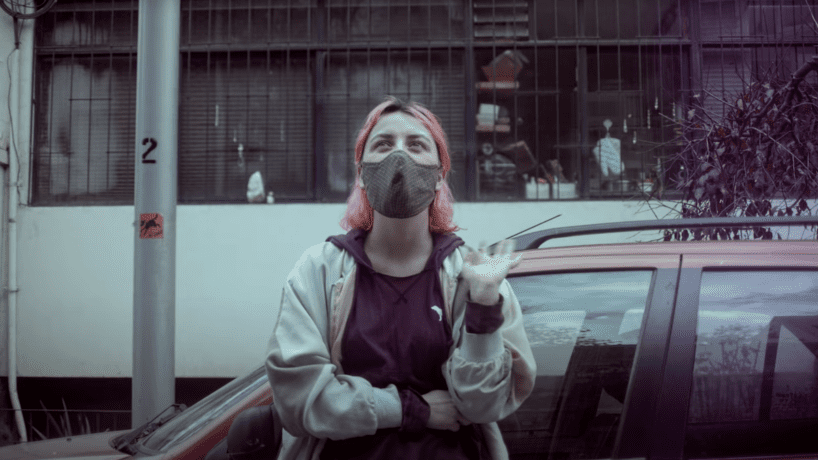
We all react to stress and despair in different ways. Some turn to family, others turn inward, but a majority of us all desperately want one thing: to connect. This theme of reconnection is prevalent throughout all of the films, be it in a literal sense or more abstract. David Lowery's film focuses on a woman's quest to revisit her past. Malik Vitthal's mixed media piece is centered around reclaiming his family. Anthony Chen tells a story about a struggling young couple on the verge of a marital breakdown. And Dominga Sotomayor shares a portrait of a middle-aged woman longing to play a motherly role in her daughter's life.
Perhaps the simplest entry (and my personal favorite) is the observational closing film from Thai master Apichatpong Weerasethakul. His films always stay true to the present moment and this is no different. Intricate attention to sound and his visual patience are what tie everything together. Weerasethakul is able to recenter us, bringing our thoughts back to the here and now.
The Year of the Everlasting Storm, which made its premiere at this year's Cannes Film Festival, should be enjoyed as a time capsule of modern-day life through filmmaking. Playing more like a museum gallery exhibition rather than a traditional film with plot structure or character development, this anthology series is a remarkable piece of art that transcends boundaries and creative restraints.
Distributed by NEON. Opening at the Laemmle Royal this Friday.
'Moments Like This Never Last' Review: Do You Know Dash Snow?
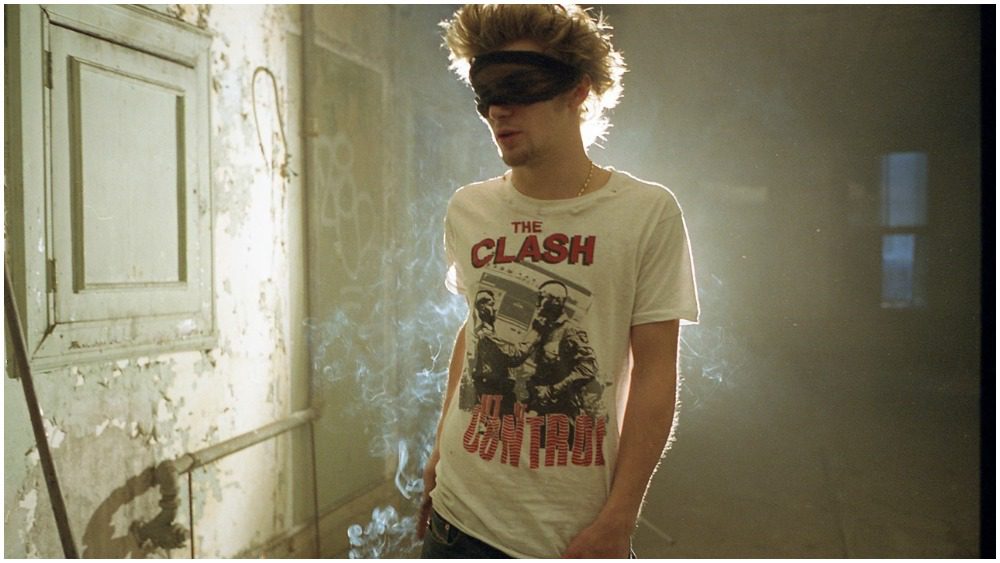
"What keeps you alive?" Iconoclast and legendary NYC artist Dash Snow struggles to find an answer. What he isn't able to articulate is all too apparent to those who knew and loved the mischievous rebel; his love for creating art, his relationships with his friends, and devotion to the city that raised him, NYC, all contributed to why Snow continued to wake up day after day, until one day, that wasn't enough anymore. As documented in director Cheryl Dunn's memoir, Moments Like This Never Last, audiences are given an intimate look into the personal life of another artist gone too soon.
Dash Snow was born Dashiell Alexander Whitney Snow and had always rejected the inherent privilege that came from being born into a wealthy family. He had nothing against his parents but wanted to find success the old-fashioned way: through hard work and dumb luck. Dash was a true student of the school of hard knocks, living his life doing dumb stuff with his equally grimy friends on the street of New York City, and creating magic in his path.
He had a polaroid camera with him wherever he went and those pictures became Dash's legacy. The energy of 2000s NYC–pre-internet–is captured with such palpable energy and Cheryl Dunn does a stellar job bringing Dash's spirit to life through his photos, home videos, and interviews with his friends and collaborators like Ryan McGinley and Larry Clark (Kids).

Unfortunately, there was a stronger love that overtook his passion for making art and staying sober for his girlfriend, Jade Berreau, and their young daughter, Secret, and that was drugs. There is an unspoken pressure in the art world that to succeed, you must "be crazy, and do a lot of drugs." Heroin didn't become prevalent in Dash's life until after he had some buzz to his name and that's what ended up killing him in an East Village hotel room at the age of 27.
Dash Snow was a charismatic, complicated, and outrageously talented figure who many compared to Basquiat. His signature style of politically charged graffiti and sexually explicit photos (snorting coke off an erect penis being one of his most infamous) cemented him as a legendary fixture in the post-punk revival arts scene.
Moments Like This Never Last pays tribute to the live fast lifestyle that Dash embraced. In a similar fashion, Cheryl Dunn's portrayal is a gritty labor of love that makes us feel like we knew him personally, too. Made in collaboration with VICE studios, the film also features music from LCD Soundsystem, Nick Cave with Grinderman, Cat Power, with an original score by Brian DeGraw.
Distributed by Utopia Media. Opening this Friday at Laemmle Cinemas and on VOD.

'Dreams on Fire' Fantasia Review: An Electric Underground Dance Drama
Waiting on the sidelines of a dimly lit dance floor in an otherwise neon-soaked Tokyo club, a Yume (Bambi Naka) is about to live out her biggest dream and face her biggest fear. By stepping out onto the dance floor, she is quite literally taking her first step towards becoming a professional dancer. But with little formal training and no money to her name, Yume is prepared to give her blood, sweat, and tears to turn this dream into a reality.
Canadian-born, Japan-based filmmaker Philippe McKie's underground dance drama Dreams on Fire is a fascinating character study of a young woman's stalwart ambition to succeed. Mesmerizing choreography and heavy-hitting music from IC3PEAK, S.P.Y, Hospital Records, and Shogun Audio contribute to the film's vibey EDM aesthetic and electrifying narrative.
Before she found herself in that Tokyo nightclub, Yume was an aspiring dancer from a small country village. Convinced that she'll receive no opportunities in her small town, she naively runs away from home and heads to Tokyo where she believes her future awaits her. Yume is a beautiful girl but lacks agency and general life experience, making her an easy target for the vultures of the darker side of the dance world.
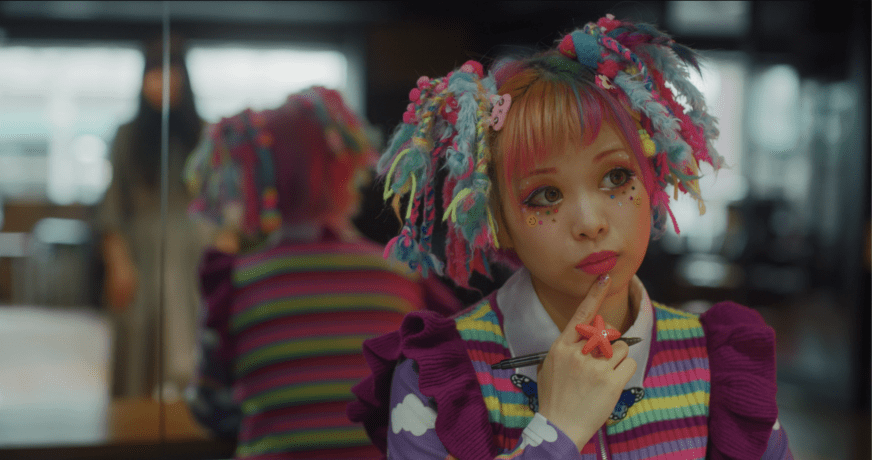
Initially, Yume lands a job as a "hostess" which turned out to be nothing more than a female companion for wealthy businessmen. Then, seeing an opportunity to focus on dancing, she accepts a role as a go-go dancer for fetish nights at a seedy nightclub in the city. Unknowingly, Yume starts heading down a slippery slope as the roles become more and more sexual; they are technically dance-related, but not the kind she ultimately wants.
Not one to give up, she continues to hustle toward her professional aspirations until a chance encounter sets her on a different trajectory.Hands down, Bambi Naka is the undiscovered highlight of Dreams on Fire. The former lead dancer on Madonna's "Rebel Heart Tour," Bambi makes her feature film debut as a complex, layered character whose talent is equally matched by her ambition. She is mesmerizing to watch, both in dialogue-heavy scenes and scenes that show off her incredible dance floor agility. I really hope to see more of her in films to come.
In addition to the awe-inspiring performance from Naka, the supporting cast is equally as energetic and commanding on-screen. Standouts include model, YouTube make-up influencer, and Harajuku Fashion icon Haruka Kurebayashi; popular idol group Akishibu Project member Rinomaru; adult-film star Okuda Saki; celebrated fetish and circus performer YUSURA; and Mika, Mirin, and Yuriya of the internationally recognized, widely acclaimed go-go dance crew CyberJapan.
Dreams on Fire is a testament to Lady Gaga's favorite quote, "There can be a hundred people in the room, and 99 don't believe in you, but one does." She was roasted on the awards circuit in 2018 for repeating that statement over and over again, but there's no denying that it's good advice. Advice that Yume stuck with and ultimately led to her life-changing big break.

'Love, Life and Goldfish' Fantasia Review: A J-Pop Love Story
Full disclosure: I've never listened to a BTS song all the way through (much to the horror of one of my closest friends). I was shocked to discover that the girl group BLACKPINK has over 40 million Instagram followers. However, despite not being familiar with the K-pop or J-pop genre specifically, I've always been a fan of movie musicals, which is why I was intrigued by Love, Life and Goldfish. Based on the manga series “Sukutte Goran” by Noriko Otani and directed by Yukinori Makabe, this was the perfect introduction to J-pop for a novice like myself.
Our protagonist, Makoto Kashiba (Matsuya Onoe) is a young businessman who has been exiled from his high-profile job at a Tokyo banking firm and relocated to a small town in the middle of nowhere. After making a critical mistake on the job, Makoto is full of self-doubt, apathy, and confidence. Upon arriving at his new place of employment, he meets Yoshino Ikoma (Kanako Momota) a local woman who works at a consumer-friendly goldfish game shop nearby. Her childlike bewilderment and lassie fare attitude are initially off-putting to the logic-based Makoto, but over time he begins to see that her view of the world is nothing to judge and starts to fall in love. But his love for Yoshino doesn't come without its complications, specifically the attention from another man.

Yoshino is far more than just Makoto's manic pixie dream girl, although she does contribute to him finding happiness again. In addition to reviving Makoto's mood by using her beloved goldfish, which she claims bring out the inner child, joy, and happiness, she too suffers from poor self-confidence. Yoshino has ambitions and dreams of her own that Makoto helps her achieve, playing the piano in public being her biggest obstacle to overcome. Their shared sense of fear of failure is what makes their bond so special. In the most complimentary way, they have a "reject finds reject" love story that resonates on a universal level.
Love, Life and Goldfish is a fairly standard romantic comedy much like John Carney's Sing Street (but nothing like Leos Carax's Annette). Short musical ditties (both in English and Japanese) keeps the film flowing nicely and make for a lighthearted time. Staying true to its theatrical roots, there is a brief one-minute and 30-second intermission about halfway through the film and it ends with a big finale song and dance number. The performances are fabulous and flamboyant, the visuals are colorful and magical, and the music itself is contagiously upbeat. Love, Life and Goldfish thrives off of its musical numbers and has officially succeeded in converting me to a J-pop fan.
'Alien on Stage' Fantasia Review: Amateurs Remake a Sci-Fi Classic
Directors Lucy Harvey and Danielle Kummer found a needle in a haystack when they stumbled into a low-budget production of Ridley Scott's Alien at a local theatre in Dorset. The small coastal town in the southwest of England featured handmade costumes to sub-par performances. And yet, there was something so incredibly charming about this production and the genuineness of the people involved that the directors knew this was something that should be seen by the world (and not just the handful of people who made up the theatre troop's small audience).
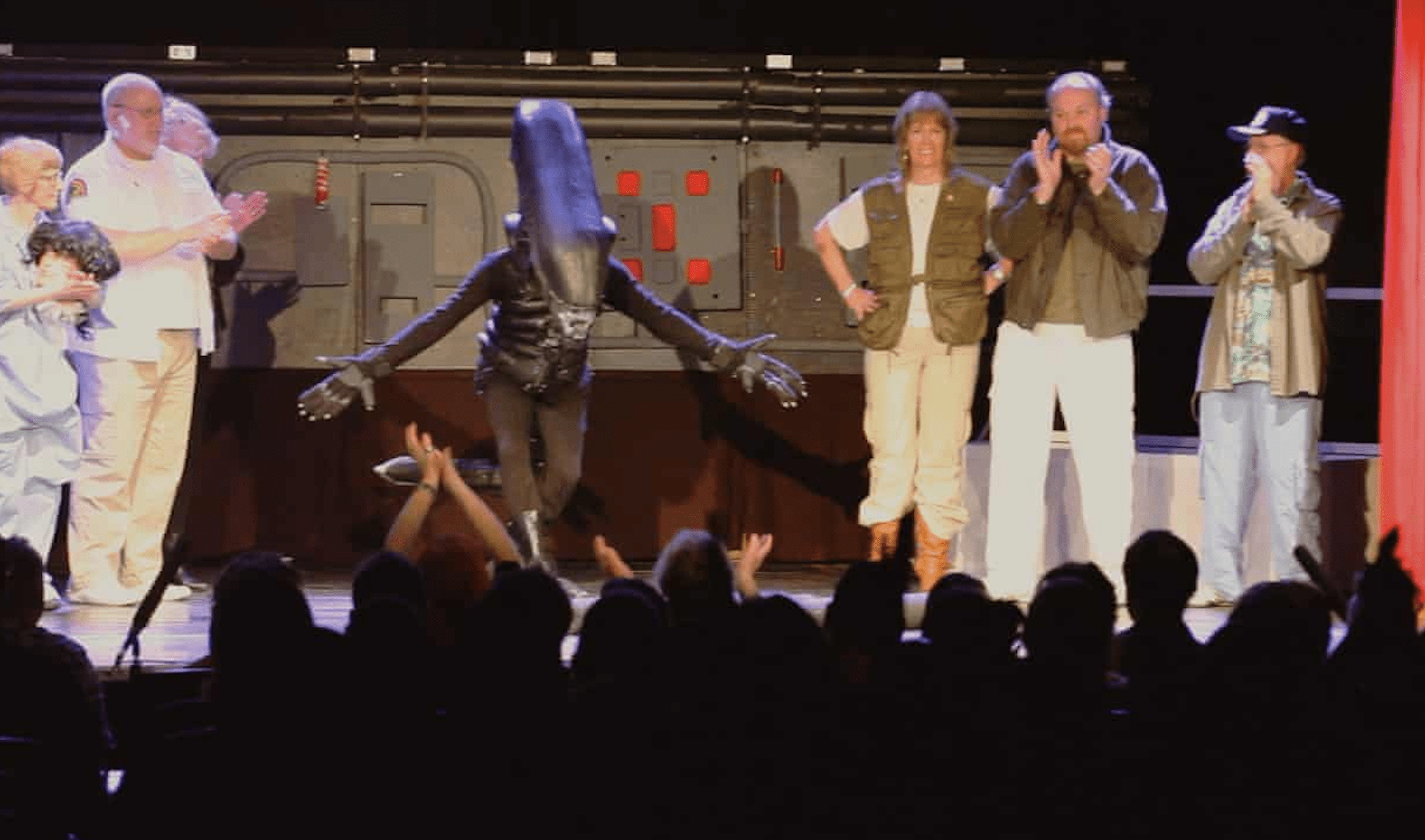
The result is Alien on Stage. A heartwarming story about an eclectic cast of bus drivers and aspiring thespians from a small English town, they are given the opportunity of a lifetime: to perform their humble stage play adaptation of Alien to a 400-seat, sold-out crowd at the Leicester Square Theatre in London for one night only. For context, Dorset is 2 1/2 hours south of London, and their audience count was roughy around 20 people per show.
Watching this ensemble of amateur actors is like watching a Christopher Guest film come to life. There is a consistent flow of cringe-worthy and charismatic moments throughout that make for quietly hilarious and lighthearted entertainment. Led by army veteran turned theatre director Dave Mitchell (with heavy Michael Scott-like qualities), he is tasked to bring Alien to theatrical life.
His kooky cast consists of his wife who plays Ridley, his son who agrees to stage-manage, and a handful of middle-aged bus drivers who got bit by the acting bug later in life. Their combined efforts to make Alien the highest quality production despite monetary restrictions and lack of "formal" acting skills is a sweet reminder that passion outweighs everything else. To see them having fun and finding purpose in their work (despite the questionable feedback) brings a contagious positivity that outlasts the length of the film.
The film's physical execution also lends itself to the overall blatant awkwardness. Despite Alien on Stage looking like it was shot in the mid-90s with outdated technology and questionable fashion choices, the documentary is, in fact, a modern film. This is something I was told repeatedly but had a hard time believing until I confirmed it myself.
Alien on Stage is the definition of "charming." In front of and behind the camera, this is a testament to never giving up on your dreams because you never know when your lucky break will come. And who doesn't want to watch a film about lovable misfits shooting for the moon and landing among the stars? For one night, at least.
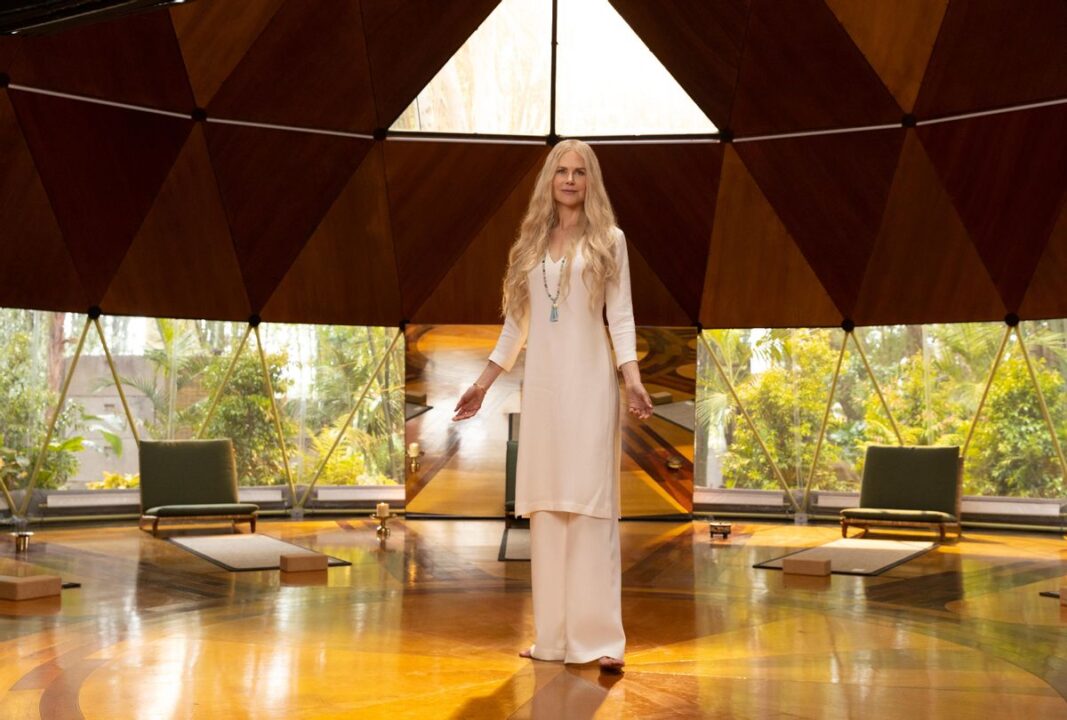
First Listen From Hulu's 'Nine Perfect Strangers'
If you're looking for a new show to binge-watch, we have your answer right here: Nine Perfect Strangers. Based on The New York Times bestselling book by Liane Moriarty, the series' initial (and obvious) draw is its stellar cast, which includes Nicole Kidman as a mind/body/soul guru and Melissa McCarthy, Michael Shannon, Luke Evans, Bobby Cannavale, Regina Hall, and Samara Weaving as wellness-seeking city dwellers looking for a break from their hectic lives. Upon closer inspection, however, there is something more to love- a soundtrack composed by Golden Globe and two-time Oscar-nominee Marco Beltrami (Hurt Locker, Free Solo, Scream franchise), and Miles Hankins (Being Serena).
Nine Perfect Strangers takes place at a boutique health-and-wellness resort that promises healing and transformation. Led by the resort's director, Masha (Kidman), she helps guide the nine stressed-out guests toward a better way of living. Masha may seem like a woman on a mission to reinvigorate their tired minds and bodies, but quickly we learn that not everything is as it seems.
The basis of the show is steeped in psychological instability, and the score reflects that uneasiness in its varying melodic and intensely dissonant tone. Cinemacy is thrilled to share an exclusive first listen of the track "Test Pilots."
Nine Perfect Strangers marks Beltrami's fourth musical collaboration with director Jonathan Levine (Long Shot, Warm Bodies, The Night Before), but repetition isn't something he is concerned about, noting, "I love him as a director because his projects always seem to examine the human condition from radically different angles and this inspires innovation in the score."
When talking about what to expect in the series' soundtrack – which releases on Lakeshore Records this Friday – Beltrami says the score "ranges from textural synthesis and at times cacophonous sound design, to overtly tuneful moments. This is reflected through the instrumentation which includes string quartet and piano with an electronic score.”
Hankins went on to say, “We wanted the score to underpin it all with a sense of uncertainty and experimented with layering different musical ideas, recording them to tape, and then altering the speed or pitch of certain elements to varying degrees. At times, the result gives some of the cues a meditative or otherworldly feeling.”
The Hulu Original series directed by Jonathan Levine premieres on August 18 with three episodes. Endeavor Content and Lakeshore Records are releasing the Nine Perfect Strangers—Original Series Soundtrack digitally on August 20.

'Days': A Portrait of Loneliness While Drifting Through a City
Tsai Ming-Liang's Days is like the equivalent of a deep inhale during a morning meditation. It is a slow awakening that, by the end of it, leaves you with an expanded sense of full body awareness and total compassion for yourself and those around you. Quietly arresting with beautifully piercing imagery, Days forgoes something that most of contemporary cinema cannot do without: words.
The story is quite simple, but its emotional impact hits in full force. A middle-aged man (Lee Kang-Sheng) suffers from body pain and finds himself living the life of a drifter in Japan. He meets another man, Non (Anong Houngheuangsy), and they both find consolation in each other for a short while before returning to their separate lives and parting ways.
I now understand why Tsai is considered one of Taiwanese cinema's most celebrated "Second New Wave" directors. He lets the story unfold with steady precision and utmost trust in his cast and crew. This is "slow cinema," the entire film exists without any scripted dialogue, and any conversations overheard are intentionally not subtitled in English. In the best way possible, Days feels less like a film and more like an experience akin to those YouTube ASMR walking tours through various cities.
Every scene is comprised of a one-take shot, all mostly stagnant and steady in a single location but sometimes forward-moving through crowded city streets. Our protagonist drifts through these scenes with a somberness and reservation about him, if only we could crack his apathetic outer shell and get to the root of his suffering.
The feeling of isolation even when surrounded by people evokes a special kind of sadness. It's not so much the "un-belonging" that hurts, at least in that case you're being physically seen and then rejected. It's the invisibleness that is truly painful. To feel unworthy of even being acknowledged can feel like being thrown off of a ship with a boulder tied to your ankle. It can take you to a dark place, fast. But Days doesn't lean into the obvious tropes of depression, which could feel too forced in a film like this. Rather, emphasis is placed on the subtle satisfaction that comes from the protagonist's minimalist lifestyle and simple daily routines.
Days offers a nice change of pace to the typical movie-going experience and comes with the highest recommendation from me.
Distributed by Grasshopper Film. Now playing in select theaters.

John Carroll Kirby Releases Soundtrack to 'Cryptozoo'
The album 'My Garden' singlehandedly got me through quarantine last year. John Carroll Kirby is a pianist, producer, and composer from Los Angeles who creates beautifully meditative tracks, as well as being the go-to collaborator for Solange and Frank Ocean, among others. He can now add film composer to his resume with the release of the Cryptozoo soundtrack, out today via Stones Throw Records.
John Carroll Kirby teams up with writer/director Dash Shaw in the animated feature film Cryptozoo, a counter-culture-minded fantasy-adventure about the existence of imaginary creatures. Featuring the voices of Lake Bell, Zoe Kazan, Michael Cera and Louisa Krause, Cryptozoo also speaks to humans’ varying efforts of safeguarding and domesticating endangered species and understanding the “other” in the hopes of conceiving a utopian world.
In addition to the soundtrack release today – which can be streamed via Bandcamp, Apple, and Spotify – Kirby's also dropped the accompanying music video for the track “Mystic Brine," also created by Dash Shaw. In the video, Kirby is transported into the richly drawn, hallucinatory world of Cryptozoo, giving audiences a sneak peek of what to expect before the film hits theaters and streaming platforms next Friday, August 20.
Of his experience working on the film, Kirby says, “When I was composing the score to Cryptozoo, I imagined what it was like to be among the cryptids. Dash and the team brought that vision to life in this video where I get to make music for my magical new friends!”
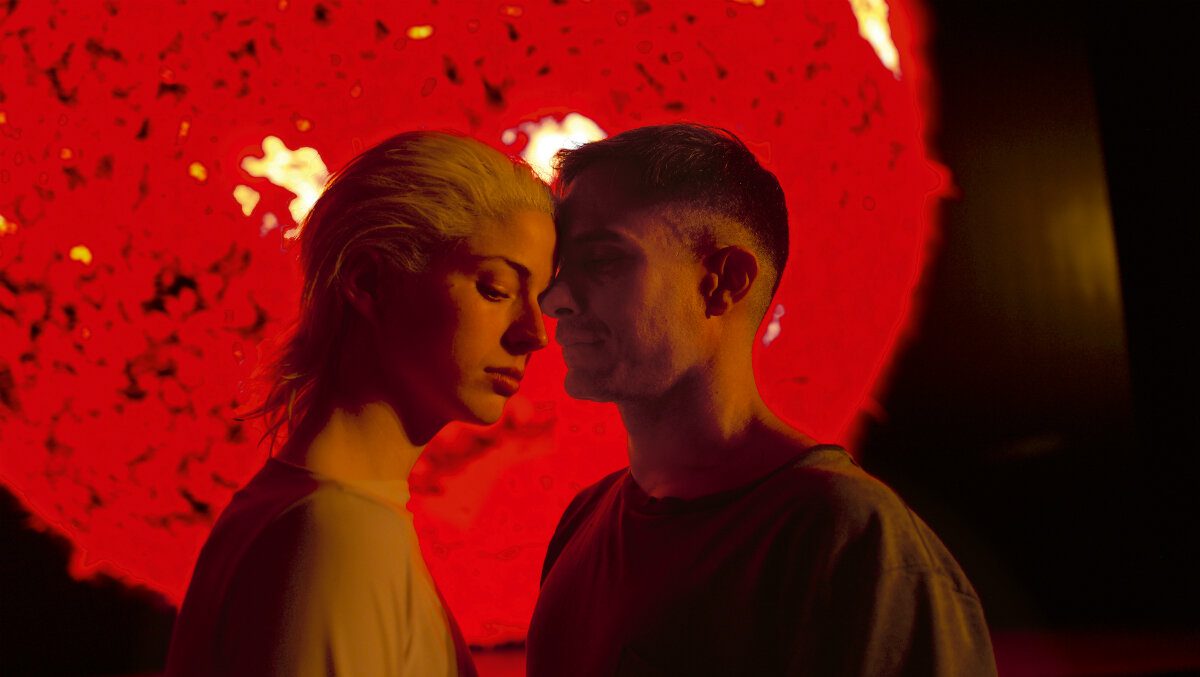
The Sexually-Charged Dance Drama 'Ema' Will Hypnotize You
Set in the neon-soaked Chilean city of Valparaíso, Ema is a sexually-charged dance drama about regret, redemption, and reggaeton. It's a film that provokes and will make one question the expectations of the traditional family dynamic. Larraín doesn't shy away from exploring ugly behaviors and self-serving desires that are usually only thought about and rarely acted upon, yet Ema acts on them all.
Ema (Mariana Di Girolamo) is a dancer in an ensemble troupe lead by her partner and famed choreographer Gastón (Gael García Bernal). What we assume was once an intense and passionate relationship is now all but sizzling after a traumatic incident puts the couple at odds with each other and seeking a divorce. After multiple disturbing incidents with their adopted son Polo (Cristián Suárez), a troubled eight-year-old boy with seemingly sociopathic tendencies, Ema and Gastón resort to giving the boy back to foster care, a decision that is met with judgment from others. Their regret isn't immediate but rather culminates over time. Once realized, Ema sets out to get Polo back, willing to do whatever (and whoever) in the process.
I can best describe Ema as a mix between Gaspar Noé's Love meets Luca Guadagnino's Suspiria, but this film hits very specific psychological notes that make it wholly unique. Strong performances really draw the audience into the world of Ema- most notably the controlling yet sensitive nature of Gael García Bernal's Gastón opposite Ema's fearlessness and defiant personality traits portrayed by Mariana Di Girolamo. Larraín also reteams with recording artist and experimental composer Nicolas Jaar (Neruda) to create another pulsating and equally unsettling score. The ambient electronic nature of Jaar's work gives off an air of sensuality, self-indulgence, and uninhibitedness that lingers long after watching.
A true art-house production, Ema is a hypnotic watch that will get your blood pumping and mind reeling with amazement.
This review originally ran on May 5, 2020 for MUBI's screening premiere.
Distributed by Music Box Films. 'Ema' opens at the Landmark Theaters Nuart this Friday, August 13th.

'Homeroom' Captures College Anxieties Amidst COVID
2020 was a challenging year for all of us but it was especially hard for high school seniors as the expectations of lavish graduation parties, prom dresses, and college-bound dreams were dashed in a matter of days. From director Peter Nicks and produced by Ryan Coogler, Homeroom follows the 2019-2020 class of Oakland High School seniors as they attempt to create systemic change and leave a lasting legacy in their hometown while adjusting to life in a pandemic.
Homeroom feels very much like A24's Boys State in the way it captures intimate and vulnerable moments from impressionable and impassioned teenagers. Sticking to his signature style of vérité filmmaking, Peter Nicks observes a handful of students as they prepare to submit college applications, sit through mundane history lectures, attend various club meetings, and rehearse for the school play.
The documentary begins in the fall of 2019–pre-pandemic–when the biggest topic of conversation is the ethics of policing in schools. Students want to defund the police, citing that implicit bias sparks unnecessary fear, especially in predominately black and brown schools like theirs. Their arguments are articulate and strong, appealing to city council members and school board members alike.
The film takes a turn with the introduction of COVID-19 in early March 2020, picking up a sense of urgency that differs from the more structured first Act. As Homeroom shows, the seniors of today are highly adaptable, goal-oriented, and inspired teenagers. They use their iPhones to create TikTok videos, as well as catch up on the latest from ex-President Trump's first impeachment trial. They're paying attention. They don't fear speaking up to authority figures; instead, they see teachers and faculty as their allies who share a common goal of unifying the school district in harmony.
From the everyday pressures of high school life to the unexpected introduction of COVID-19, Nicks lets the action and drama unfold onscreen without provocation, capturing a year's worth of trauma that is uncomfortable to relive. The murders of George Floyd and Breonna Taylor, "murder hornets", and the racially-charged murder of Bay area teenager Nia Wilson are just some of the devastating events that this class has had to navigate through.
Homeroom proves that the youth have the power, and fostering safe environments for them to grow and learn will be key in creating tomorrow's leaders. On a personal yet somber note, the film is dedicated to Karina Nicks, Peter's 16-year-old daughter who died suddenly in September 2019. As the final installment to Nicks' three-part trilogy of character-driven social issue films, Homeroom is a gratifying and inspiring ending to this chapter on Oakland, CA.
This review originally ran on January 29, 2021 during the Sundance Film Festival.
Distributed by Hulu. 'Homeroom' premieres on Hulu on Thursday, August 12th.