

SXSW: 'Self-Portrait' is a Voyeuristic Symphony of Our Daily Lives
Someone is always watching. In director Joële Walinga's experimental film Self-Portrait, hundreds (possibly thousands, I couldn't keep track) of film clips from surveillance cameras around the world are weaved together to illustrate a "candid peek of humanity," per the film's SXSW summary.
A seemingly nice sentiment–especially on the heels of quarantine–the film's offering of connectedness is what drew me in initially. As the credits rolled, however, I found the film's existence to be much more voyeuristic, making a darker statement that forces you to realize just how much, and how often, you're being watched.
The film itself is a montage of real moments captured globally through unlocked surveillance cameras. With no narrative structure in place, no real story being told, we embark on a worldwide journey via footage stitched together with its original audio. We hear the mumble of kids playing on a suburban street, see a flock of birds blissfully idle in the sky, listen to Christmas music playing at an outdoor market, and watch the rising tides of the ocean.
Both soothing is its uninterrupted observation of nature and claustrophobic in its intrusive, omniscient presence, Self-Portrait gives us many ways to interpret its message.


'Rock Bottom Riser' is a Psychedelically Explosive Nature Doc
Where to watch: Now playing in Los Angeles at the Lumiere Music Hall.
Having screened in 35mm at the Metrograph Theater in New York, experimental filmmaker Fern Silva's Rock Bottom Riser makes its way to Los Angeles tomorrow, March 12th, and–trust me–you don't want to miss it. With an explosion of piercing, hypnotic visuals set to a sensational score, Rock Bottom Riser is more of an experience than a traditional film, making for a truly unforgettable impression on the eyes, ears, and mind.
Fern Silva's psychedelic approach to showing the ongoing crisis indigenous Hawaiians face over scientific expansion into their most sacred natural mountains is not your average nature documentary. Silva uses different techniques to show the importance of ethnography, geology, and the cosmos in our evolutionary fight for survival. While at times its non-narrative structure can feel overwhelming, Silva's avant-garde masterpiece is to be interpreted literally or metaphorically as you see fit. The only worry I had was that if I blinked, I'd miss something spectacular. And so, I didn't blink.
From underwater volcanic eruptions to images of the stars in the night sky, Rock Bottom Riser holds the ethos of the Hawaiian culture close to its heart. The symbiotic relationship we have with the natural world is expressed in so many different ways in this film, and the recurring statement that "Earth is our mother, Sky is our father" is one of the more easily digestible lines of impact.
Perhaps most striking is Silva's conviction that we, the audience, are all students of life on a never-ending journey towards sustainability and survival. “A bird is never lost with its internal compass,” says one man in reference to the importance of astronomy. Astronomy gives us a chance for survival and allows us to navigate the probability of living off of Earth.
Distributed by The Cinema Guild, 1 hour 9 minutes.

In 'FRESH,' Sebastian Stan Takes a Deliciously Twisted Turn
Our review of ‘FRESH’ was first published as part of our Sundance Film Festival 2022 coverage.
Where to watch: Now streaming on Hulu.
Contemporary horror stories that involve dating will never not interest me. I played that game once before. The mental and physical toll it took to be actively "single and ready to mingle" was like competing in a never-ending relay race of emotional uncertainties. The apps were a minefield of Chads, Brads, and single dads, and with each swipe, my optimism for a genuine connection dwindled. But, I guess I've never been chained, tortured, and slowly chipped away at so that cannibals could feast on my flesh–as happens new film FRESH. So I guess, it could've been worse.
Debuting in the Midnight category at the Sundance Film Festival, FRESH is a campy thriller that will make any young woman think twice about entrusting a sexy stranger with their life. Noa (Daisy Edgar-Jones) is a frustrated twenty-something whose dating life is on life support. After a truly unbelievable awkward date, she is hesitant to fall for the charms of Steve (Sebastian Stan), the handsome doctor she serendipitously meets at the local grocery store.
https://www.youtube.com/watch?v=HjTy4dxtg8o
Steve makes Noa feel special, important, beautiful, and his suave moves apparently cause Noa to lose any sense of caution as she agrees to take an extended trip out of town to a "surprise " location with this man who she's only known for a few days.
Of course, things don't go well for Noa, who slowly realizes that the drink Steve's made her is making her slowly lose consciousness. In the classic "wolf in sheep's clothing" reveal, Noa awakens, chained. Steve admits that he kidnaps and dismembers young women to sell their body meat on the black market. And Noa is for sale next.
If you're one who keeps up with Hollywood gossip, you might have immediately thought "Armie Hammer!" (which is where my mind went too). FRESH benefits from this real-life correlation, making the absurd seem, actually, not so farfetched (which is the real horror here!). Sebastian Stan is captivating to watch on screen as the charming narcissist.
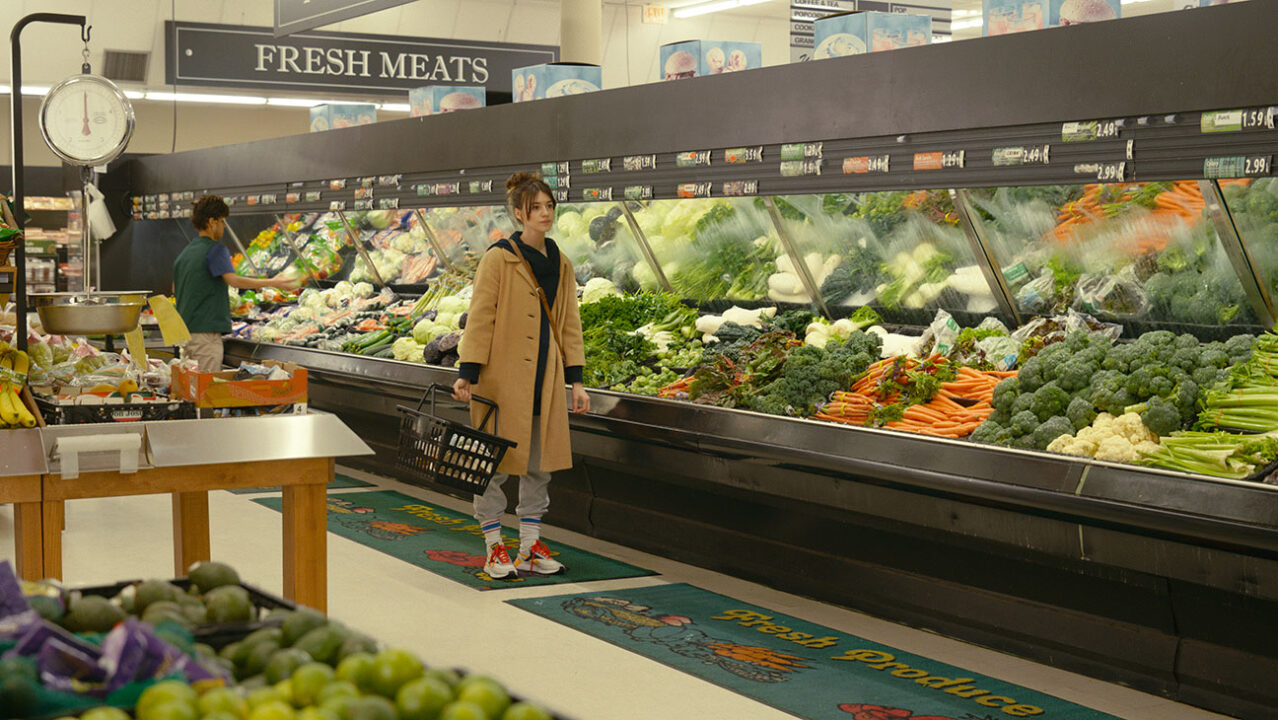
It's easy to see how he was able to win Noa over so quickly with his sultry stare and quick comfortability. Daisy Edgar-Jones holds it down as our vulnerable turned badass heroine. So much of her performance is dependent on her body language, and if awards were given for best non-verbal performance, Edgar-Jones would take the gold.
Director Mimi Cave built up quite the reputation as someone to watch in the music video space, working with artists like Sleigh Bells and Sylvan Esso. Using her experience of marrying sound to picture, Cave relies heavily on chart-toppers and deep cuts to help guide the players throughout the film, the music almost acting like a secondary character. Furthering the film's ominous disposition is the sweepingly tense score by composer Alex Somers.
While it didn't necessarily blow me away, FRESH is a satiating watch if you're looking to whet your horror palate.
114 minutes.

Matthew Gray Gubler is a Pagan Priest With a Preppy Past in 'King Knight'
Where to watch: ‘King Knight’ is available to watch now on Digital and VOD, and playing at Cinelounge Sunset and Alamo Drafthouse on Friday, February 18th.
Matthew Gray Gubler has such an insanely large and dedicated fanbase that the mere mention of his name is among the best PR a film of his can receive. So, let me just say: Matthew Gray Gubler. His new movie, King Knight, is a farcical dark comedy in which Gubler plays Thorn, the high priest of a small pagan cult alongside his partner and high priestess Willow (Angela Sarafyan). Under their leadership, Thorn and Willow advise their new-age witch community on everything from relationship issues to life advice. They put out metaphorical fires with ease but, unbeknownst to them, there's about to be a disruption in the coven.
However, Thorn is hiding a secret: one so big that it stands to blow up his pagan paradise and jeopardize everything he loves. Despite trying to hide all evidence, Willow uncovers Thorn's deepest, darkest secret in an email from his former high school classmate: an invitation to attend his 20-year reunion, addressed to the class President, Prom King, and "Most Likely to Succeed" honor student, Thornton.
Screaming in terror, Willow is horrified to learn that Thorn actually comes from a preppy, well-adjusted background and doesn't have a dark, emo past as he led her to believe. "You might as well be a Chad!" she yells at him, as he sheepishly avoids eye contact. It's the film's funniest scene and perfectly describes the tone of the film. Thorn's further confession to playing lacrosse sends Willow into an uncontrollable frenzy. "I fucking hate you!" she screams, as we laugh.
Thorn is forced to comfort his squeaky clean past once and for all. He agrees to attend his high school reunion, using the opportunity to go on a solo vision quest and try to discover who he really is. Impressive mixed-media animation depicts Thorn's journey of self-discovery as he wanders throughout the desert drunk on ayahuasca and regret.
The humor of King Knight comes from the characters taking themselves so seriously despite its obviously silly premise. It's shot like a horror film with a techno dubstep score by Steve Damstra, and a supporting cast that reads like an underground comedy set: Andy Milonakis, Kate Comer, Johnny Pemberton, and Nelson Franklin are just some of the names that make up the new wave witch cult. Matthew Gray Gubler is charming as always, and Angela Sarafyan's levelheadedness offers a nice balance to his zaniness.
King Knight is a goofy eighty-one minutes of fun, well worth the investment if you're looking for a humble indie film to make you smile–or to just gush over Matthew Gray Gubler.
Distributed by XYZ Films. 81 minutes.

UFO Cult Bizarreness Abounds in 'Cosmic Dawn,' Based on a True Story
If you're in the mood for some low-stakes, campy cult bizarreness, Cosmic Dawn may pique your interest. Written and directed by Jefferson Moneo, this isn't your average sci-fi story that's rooted in imagination and make-believe; this is based on Moneo's own lived experience. He states, "Cosmic Dawn was shaped by an extraterrestrial encounter I had as a child. Like Aurora in the film, no one believed my story." Now we're talking.
Starring Camille Rowe as Aurora, the film tackles an ambitious premise with obvious production quality limitations, but still makes for an enjoyable watch. Aurora was never the same after witnessing the disappearance of her mother by a UFO as a child. The unexplainable paranormal event wreaked havoc on her life. Everyone believed she was crazy, despite knowing that what she saw was true. It isn't until she meets Natalie (Emmanuelle Chriqui) at a local bookstore that she finally feels seen. Natalie reveals herself to be a member of The Cosmic Dawn, a UFO worshipping cult that all share a common paranormal experience (and a karaoke obsession).
Aurora is skeptical at first but eventually falls in with the cult and its high-powered feminine leader Elyse (Antonia Zegers). Elyse is a visionary, revered by her members in the same way Peoples Temple leader Jim Jones or Indian guru Bhagwan Shree Rajneesh were admired. It's not until Aurora is invited to a remote island compound for The Cosmic Dawn retreat that she begins to question Elyse's motives, sanity, and self.
Cosmic Dawn plays in a nonlinear timeline, jumping very liberally back and forth four years into the future throughout the film. A bit distracting at times, the purpose is to show that Aurora's integration into the cult happened four years in the past. Even though she has since moved on and distanced herself from The Cosmic Dawn, Aurora soon discovers that she hasn't really escaped Elyse's control.
While Jefferson Moneo never explicitly says what he saw as a child that inspired this film, we're led to believe it was some truly wacky stuff. Camille Rowe embodies a traumatized child turned adult with undeniable magnetism. Even when dressed the same as the other cult members in full-length jumpsuits, Rowe always stands out. As a whole, Cosmic Dawn has a similar The Scary of Sixty-First vibe that feels intentionally trippy and off-center. That's not a big surprise given that the score is composed by Alan Howarth and features music by MGMT.
One of the big takeaways after watching Cosmic Dawn is the film's message of discovery and acceptance. Acceptance is a journey that looks different for everyone but staying true to yourself and your beliefs will keep you on the right path. Just be aware that a belief in UFOs may lead you on a direct path to the mothership.
Distributed by Cranked up. 98 mins. Opening in theaters and VOD on Friday, February 11, 2022.

Sundance: Celebrating 'The Janes,' Who Gave Abortions to Those in Need
There were a few common storylines that ran throughout the Sundance Film Festival this year. Eco-consciousness and Black trauma in White America were a couple of notable standouts. Another undeniably sensitive topic that connected a handful of films (like Happening and Call Jane) is abortion–or more specifically, highlighting a woman's right to choose. Recent political and public debate over this subject only increased the timeliness of Emma Pildes and Tia Lessin's historical documentary, The Janes.
The opening sequence of the film plays like a standard talking heads interview setup. Notably, though, it's missing the score. With no music to aid in relieving tension, we're left to ingest all of the horrifying statistics and personal anecdotes that are boldly shared by a handful of brave women. The decision to not include any music during this scene makes a huge impact on the story and prepares us for the psychological and emotional hardship that is to come.
The rest of The Janes follows a pretty familiar documentary structure, strewn with facts and personal asides. In the 1960s, abortion wasn't part of standard medical practice. Abortion was a crime. Young women literally had to turn to the mob to get an illegal abortion in dingy motel rooms, left to bleed and care for themselves post-operation. Some women were assaulted by rogue male doctors AFTER they got their abortion, but couldn't say anything to authorities because the procedure was illegal in the first place. And for those who claim that protection would solve the problem, women in the film recall that law at the time that you had to be married to get access to birth control (a bit counterintuitive if you ask me). Some women found a workaround by buying fake rings to get contraceptives for themselves.
Those are only a few of the many horrifying tales discussed in The Janes. The heaviness of the past (and horror that history could repeat itself) is slightly relieved as we learn more about the women behind "Jane" and the impact they've had on so many young women's lives. JANE is the anonymous pseudonym for the Chicago-based underground network of women who provided safe abortions for people in need. They were both an unlicensed medical facility and a support group for women with nowhere else to turn. Their heroism and bravery in the face of total injustice are admirable, to say the least.
In a stunning mix of archival and present-day footage, co-directors Emma Pildes and Tia Lessin craft a powerful portrait of strength and resilience. It's incredible–in both the positive and negative sense–that over 50 years later, we're still having the conversation around a woman's body and her right to choose. However, The Janes is another step in the long-treaded journey towards progress and activism.
1 hour 41 minutes.

'Belle' Mixes Beauty and The Beast with the Metaverse
When Mark Zuckerberg recently announced Facebook's plans of creating a virtual reality – "The Metaverse" – to the world, I immediately thought of the online virtual parties that I "attended" during last year's Sundance Film Festival. My user-created avatar mingled with other online avatars "at the bar" and "on the dance floor," but in reality, I was simply navigating my character from the comfort of my couch.
I thought to myself, "This future is kind of a bummer." But as the new movie Belle shows, maybe I just wasn't in the "right" virtual reality.
In this new mesmerizing animated film, Academy Award-nominated director Mamoru Hosoda shows us that not all virtual societies are awkward fantasy lands. Distributed by legendary Anime production company GKids, Belle is a cautionary tale about the joys and dangers that can be experienced as we all continue to grow up using immersive social media.
Painfully shy schoolgirl Suzu is the embodiment of adolescent insecurity. Having lost her mother as a child, she has always struggled to live a fully secure life. That changes when she downloads the app "U," a fully immersive virtual society that boasts over 5 billion users. Through "U's" advanced technology, Suzu's hidden strengths in the real world are used to create her online avatar. And so, she gets the confidence that she so desperately lacks in the real world to excel in an alternate, online one.

She creates the avatar "Belle": a beautiful, fairy-esque woman with cotton candy hair and the voice of an angel. As Belle, Suzu dazzles everyone with her charm and talent. She makes the other avatars feel good about themselves, and in turn, she begins appreciating and embracing her individuality within the metaverse.
Her connection gets disrupted when a cyberbully known as "The Beast" begins trolling the other avatars and threatening her safety online. Determined to restore peace within "U," Belle takes it upon herself to uncover the identity behind the Beast, hoping that by knowing that while second chances are hard to come by in reality, everyone can start over in "U."
If you're thinking this sounds like a hybrid of Beauty and the Beast meets The Matrix, you're not wrong. Belle is a young woman in distress who is trying to comfort an unruly Beast, only to realize that it's his pain that is masquerading as strength. And he's not truly a horrible person after all.
Despite being an animated film, Belle is not necessarily a children's movie. Director Mamoru Hosoda takes familiar childhood themes of bullying, friendship, and forgiveness and presents them through the lens of future-facing technology which feels like an optimistic, albeit slightly naive, view of the upcoming digital trends.
Having sat through the film completely enthralled with the complexity and beauty of this make believe virtual reality, I'm more open to giving avatar parties another chance. And with the news that this year's Sundance Film Festival is going completely virtual this year, I may just have my chance.
Belle is in select IMAX theaters starting Wednesday, January 12, ahead of its nationwide theatrical release on Friday, January 14.

'The Scary of Sixty-First': Conspiracies and Spiritual Torture
It's hard to decipher whether or not writer/director Dasha Nekrasova's debut feature The Scary of Sixty-First is fetishizing the rabbit hole littered with conspiracy theorists and Q Anon stans or if it's ironically holding a mirror up to their insanity and shouting 'See, look how crazy you're acting!'. In either case, Nekrasova's done her job. Nekrasova, alongside co-writer Madeline Quinn, abrasively shoves the red pill down our throats and draws us into a reality where spiritually tortured women are given a voice, and a body, to express their most repressed and traumatic secrets.
Distributed by cult favorite Utopia, known for its support of boundary-pushing indie films, The Scary of Sixty-First tells the story of two young women, Noelle (Madeline Quinn) and Addie (Betsey Brown), who find their dream apartment: a beautiful walkup in Manhattan. However, their sighs of relief are quickly met with caution; a dead rodent in the fridge, a mirror hung on the ceiling in one of the bedrooms, and a mysterious tarot card in the bathroom all feel like bad omens to the new roommates. But none of that compares to the graphic and sexual night terrors Addie experiences on that first night. Something is very wrong here.
Soon after Addie's phantom spell, a mysterious girl shows up at their apartment. The girl (Nekrasova) claims to be an independent investigator who demands entry into the apartment to look for clues left by the previous tenant: Jeffrey Epstein.
"Something extremely sinister happened in this apartment," says the girl to Addie. "In your room." Noelle takes the bait and joins the girl in frantically trying to uncover the mystery of the apartment. They turn into amateur internet sleuths as they mull over publicly available Epstein evidence, do a virtual deep dive into his "pedo island," and uncover the fact that the apartment used to be orgy flophouse. Addie, meanwhile, continues to be controlled by supernatural occurrences. The further the girls go down the rabbit hole of bizarre theories and developing romantic connections, the more unhinged Addie becomes. "The important thing is we are awake," says the girl. But we are left to wonder, is this nightmare we are living in real life, or just a bad dream?
The Scary of Sixty-First is not the most polished film, or even that scary - as its title would suggest - but what it does so well is bathe you in uncertainty and doubt. It's a psychological gnawing of the mind that is politically and socially provocative, which is to be expected for a film that calls itself an homage to Stanley Kubrick’s Eyes Wide Shut. Shot in 16mm film by cinematographer Hunter Zimny and set to a score by Uncut Gems contributor Eli Keszler, The Scary of Sixty-First is a deadpan delivery thesis statement on the disturbing subculture of conspiracy theorists and the tangled webs they leave behind.
Distributed by Utopia. The Scary of Sixty-First is now playing in select theaters and VOD.

'Memoria' is an Ambient Adventure Through the Senses
Palme D’or winning Thai director Apichatpong Weerasethakul is a master of his craft. Paying attention to the finest of details and the most delicate of sounds, his films all share a common thread of acute sensory exploration. His canon is that of a true auteur.
That said, it's not surprising that his latest feature, Memoria, is a continuation of this legacy.
Tilda Swinton stars as Jessica, a Scottish orchid farmer who has taken up residence in Bogota, near the jungles of Columbia, to be close to her ill sister. Early one morning, Jessica hears a thunderous 'bang' that sends chills down her spine, due to its unexpected occurrence and the strange metallic vibrato the sound omits. Unable to locate the source of the noise, Jessica begins experiencing a mysterious sensory syndrome as she attempts to locate and quiet the growing sonic sensation in her head.

Winner of the Grand Jury prize at the 2021 Cannes Film Festival, Memoria is Weerasethakul's first dive into English-language filmmaking; the only deviant from his otherwise stereotypical "slow cinema" outputs. Tilda Swinton commands attention from the very first frame; her performance amongst the small cast of nine billable characters is transfixing, to be expected. Her co-stars include a French archaeologist and a young studio producer, both of whom hold steady in their respective scenes that, at times, can last over 10 minutes straight.
Those familiar with Weerasethakul's filmography know that the art-house filmmaker is not the most consumer-friendly, so a succinct plot (and dare I say, payoff) is not easily identifiable. Memoria gives plenty to ruminate on throughout the course of its 2-hour runtime, making way for a deep, open-ended conversation with peers post-screening. Also worth discussing: the film's 35 co-producers!
I can't end my review without talking about the music of Memoria. Colombian composer César López's serene score is the perfect companion to this otherwise quiet film. Listen to the title track "Memoria" for a sense of the ethereal goodness.
Distributed by NEON. Memoria opens at the IFC Center in New York on 12/26 before "moving from city to city, theater to theater, week by week, playing in front of only one solitary audience at any given time.” Per NEON, the film will only play in theaters, and it will not become available on DVD, on-demand, or streaming platforms.

'The Novice' is a Rowing Drama That Strives For Perfection
Winner of Best U.S. Narrative Feature Film at this year’s Tribeca Film Festival, The Novice is a college drama that shows the dark side of striving for perfection. Picture the adrenaline-inducing anxiety of Whiplash combined with the relentless nature of Black Swan and you'll find The Novice fits squarely in the middle of these hyper-intense character studies.
The Novice follows Alex Dall (Isabelle Fuhrman - Best Actress winner at Tribeca Film Festival), a queer female collegiate rower whose struggle with being a perfectionist goes from being a positive attribute to a cry for help. Over the course of a few months, her dangerously obsessive pursuit to attain straight A's and stand out on her school's crew team affects her mental health, physical health, and relationships with peers and love interests alike. Alex doesn't care who she offends on the way up, as long as she moves up.

The film is nontraditional in its editing style with quick cuts and fast-paced shooting, seemingly reminiscent of how I'd image Alex's mind to be: racing constantly. Its eerie nature and gloomy aesthetic hums with desire, doubt, and secrets.
The Novice is Lauren Hadaway's directorial debut, but the former competitive rower didn't need years of filmmaking experience to successfully bring the rarely-seen portrayal of women's crew to the big screen. What's even more impressive are the dual storylines that are equally fraught with increasing psychosis. Not only is Alex developing gnarly open wounds on her palms from the incessant rowing, she is also stumbling through a relationship with her Physics teacher's assistant, Dani (Dilone).
Set to a rich score by Alex Weston, The Novice is a cautionary tale about what happens when we push our human potential too far. For Alex, "quitting" is the most offensive word and "relaxing" should be viewed as a privilege. Sadly, there are people who subscribe to this way of thinking that, although maybe not as severely as Alex, could alleviate the self-appointed pressure to be perfect. Grit is a great thing when used appropriately, and as writer/director Lauren Hadaway shows us in stark detail, there is such a thing as taking it too far.
This review originally ran on June 24, 2021, during the Tribeca Film Festival.
Distributed by IFC Films, The Novice opens in theaters this Friday, 12/17.

'Project Space 13' is Performance Art During Covid Panic
If you feel like reliving a not-so-distant nightmare, queue up writer/director Michael Bilandic's fascinatingly bizarre feature, Project Space 13. This suffocating satire offers a trippy look at how a performance artist and two security guards spend a night in SoHo at the height of the 2020 Covid apocalypse.
Nate (Keith Poulson) is an amateur performance artist in NYC who finally gets his big break when he's invited by Pieter (Jason Grisell) to take up residency at his high-scale Manhattan art gallery. Nate's provocative and jarring piece includes self-isolation in a prison-like cage, relying on a dominant robot accomplice for food (fried bugs), relief (excrement supplies), and torture (electrical shocks). However, as luck would have it, the city shuts down on night one of his three-month show. But Nate is stubborn and refuses to quit, so the galley hires a security guard duo (Hunter Zimny and Theodore Bouloukos) to watch over the space and Nate. As the city turns more chaotic by the minute and deranged, desperate civilians begin to threaten their safety, the three men start preparing for the worst – spilling their darkest secrets in the process.
Project Space 13 has a Marina Abramović meets Dash Snow vibe that makes for an intentionally uneasy watch. Bilandic's daft protagonist, embodied by Keith Poulson, is a self-righteous artist who claims to dwell at the center of art & technology. His stance is admirable, even sympathetic, but his method of getting his point across via provocative performance art while the city plunges into chaos around him is charmingly naive.
Cinematographer Sean Price Williams, best known for his work on the Safdie brothers' Good Time, lends his artfully chaotic eye to this micro-indie feature, giving the film an unsteadiness that perfectly encapsulates how we all felt during the height of the Covid confusion. Further pushing the film into the arthouse column is the original score by "Cult Film Composer" Paul Grimstad (Heaven Knows What, Jobe'z World). I'm still trying to shake the sounds of a baby's cry set against a sporadic drum line beat from the opening sequence. And trust me, the end title credit remix is a jam worth waiting for.
Project Space 13 is streaming exclusively on MUBI.

Lorne Balfe Premieres New Track From 'Silent Night'
Grammy-winning composer Lorne Balfe upgrades a classic Christmas carol in the British dark comedy Silent Night, and we've got the exclusive.
Silent Night, starring Keira Knightley and directed by Camille Griffin, follows parents Nell (Knightley) and Simon (Matthew Goode) as they invite their closest friends to join their family for Christmas dinner at their idyllic home in the English countryside. As the group comes together, it feels like old times. But behind all of the laughter and merriment, something is not quite right. The world outside is facing impending doom, and no amount of gifts, games, or Prosecco can make mankind’s imminent destruction go away.
A choir of voices sings the familiar titular hymn, but their proclamation that "all is calm, all is bright" feels anything but cheery. Rapturous orchestration builds throughout the piece until it reaches a moment of calm, which is where the strong soloists take over and ease the suspense.
Cinemacy is thrilled to premiere the first track from Silent Night, "All Is Calm,” before its release on Friday, December 10th. Click here to pre-save the soundtrack now.
"Musically, we sought to think big," says Balfe, who brings his years of expertise and extraordinary talent to Camille Griffin's feature-length directorial debut. "We filled the silence with a full orchestra, Bulgarian and Viennese choirs, incredible soloists, and the Christmas powerhouse that is Michael Buble who helps sell the film's dystopian reality by bridging our worlds with easily recognizable nostalgia.”
Originally from Inverness, Scotland, Balfe was destined to be a composer. At 8 years old, he wrote and sold “jingles” for advertisements, and at 13, he auditioned to be a percussionist with the Edinburgh Symphony Orchestra (he secured a spot, of course, and became their youngest member). Balfe's drive and passion led him to pursue a career as a film composer in the U.S., where he continues to leave lasting impressions in the industry. His critical acclaim extends far and wide, having worked on compositions for the Mission Impossible franchise, Black Widow, The Lego Batman Movie, and the Oscar-nominated The Florida Project.
Distributed by AMC+ and RLJE Films, 'Silent Night' is now playing in theaters and streaming exclusively on AMC+. The OST will be released by Lakeshore Records on Friday, December 10.

In 'Wolf,' George MacKay and Lily-Rose Depp Embrace Their Animal Sides
I love my family's pug, Papacito. His rolls of back fat, droopy lips, and sensational snoring are what make him (and all pugs, really) so lovable. The thought of being a pug though is absolutely horrifying.
For some people, this is more than just a humorous "what if." Clinical lycanthropy is a real mental disorder in which a person believes that they were born into the wrong body and are, in their truest form, a nonhuman animal. These delusions are not new either. The first major case dates back to the 1850s when a man truly believed he was a werewolf. This fascinating taboo of "species dysphoria" is the basis of Nathalie Biancheri's high concept arthouse film Wolf.
George MacKay (1917) plays Jacob, a quiet young man who enters a facility that claims to cure a very specific psychosis: species dysphoria, or his belief that he is a wolf. Having gotten in trouble for acting on his animalistic instincts, Jacob and his fellow animal peers undergo intense and often graphic treatments at the hands of a man called The Zookeeper (Paddy Considine).
During his time at the clinic, Jacob befriends a Panda (Karise Yansen), steers clear of the Parrott (Lola Petticrew), is followed by the German Shepard (Fionn O'Shea), and unexpectedly, falls in love with the Wildcat, played by Lily-Rose Depp (The King). Her feline features compliment Jacob's canine characteristics, and the two are quick to fall in puppy love. However, Jacob soon realizes that he is faced with a life-changing decision: can he deny his "true self" for true love?
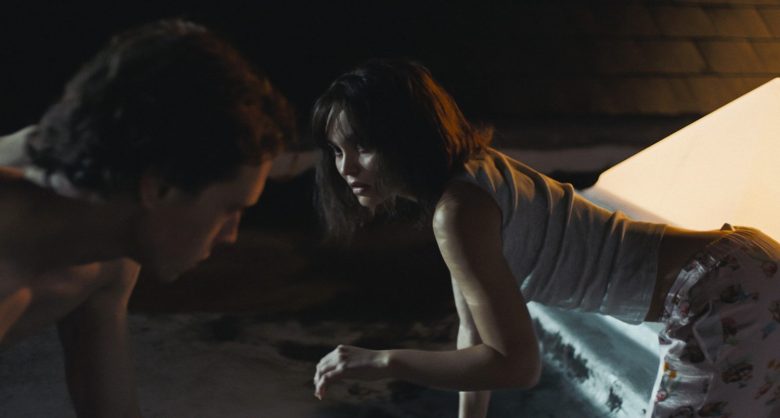
It's easy to quickly draw comparisons to Yorgos Lanthimos' The Lobster (in my opinion one of the best movies ever made). But the similarities stop short of being a carbon copy of the Greek weird wave output. Wolf is a gritty juxtaposition between the beauty and complexity of staying true to oneself.
Despite the humorous thought of actors crawling on the floor and howling like animals for the majority of the film, Wolf is definitely not a comedy. The Zookeeper forces a young man who thinks he's a Squirrel to climb up a tree using his fingernails which, as one could assume, ends in excruciating pain. He also pressures the girl who believes she's a Parrot to jump from the window of their building, claiming that if she's a real bird, she will be fine in her ascension.
Psychological torture and manipulation run rampant throughout the film, further illustrating that the idea of conversion therapy treatment centers are often fraught with abuse and power struggles. Further supporting the dark nature of the film is the primal score by Polish composer Stefan Wesolowsky, whose use of cellos, old synthesizers, flute, contrabass saxophone, and more create an edgy, untamed vibe.
George MacKay is the true star here, fully committing physically and emotionally to the role. His ability to stabilize and strengthen every scene he's in is a true talent, and he shines the brightest on screen.
Giving the audience much to ponder post-watch, Wolf is a high concept, humble production that, at its core, is a film that celebrates the beauty of individuality.
Distributed by Focus Features. 'Wolf' opens in theaters this Friday.

'Flee' is a Breathtaking Recount of Survival
Remarkably moving in both its story and delivery, Jonas Poher Rasmussen's animated feature Flee is a must-watch. Expanding our idea of what a documentary can be, Flee's depiction of an Afghan refugee's decades-long plight for survival and, most importantly, self-acceptance, is a deep well of emotional fragility. Executive produced by Riz Ahmed and Nikolaj Coster-Waldau, Flee was also the first film to be acquired (by NEON) from the 2021 Sundance Film Festival.
The film begins with a title card informing us that what we are about to watch is based on a true story, but some names and locations have been changed to protect identities and avoid persecution. For the next hour and a half, we become wrapped up in the life story of Amin Nawabi (a pseudonym) as he tells his harrowing journey of life as a young gay man who was always on the run from the police, the government, and his own feelings.
In a very poised, yet hesitant way, much like he is talking to a new therapist, Amin describes his earliest childhood memories as a three-year-old in Kabul, Afghanistan in the 1980s. A-ha's 'Take on Me' plays under b-roll of live-action footage– a jarring reminder that despite the film's mostly animated look, this is not make-believe. After his father mysteriously disappears and Amin and his brother risk getting drafted into the military–which might as well be a death sentence– the family flees Afghanistan with hopes and prayers as their only game plan.

What follows is horrifying abuse and multiple life or death situations while constantly crossing borders to cover their tracks. Forever in flux, it is hard to plan for the future when you're forced to live a day at a time. Especially as a gay man, Amin's fight for survival was his only goal.
Set against a haunting score by composer Uno Helmersson (The Painter and the Thief) and powerful uses of the tracks 'Breathe In' and 'Help Me' by the American-Icelandic artist Low Roar, Flee will put you through your own emotional journey. Mesmerizing visuals span throughout Amin's life; from childhood to the present day, living in Stockholm with his partner, and even though it's drawn in 2-D animation, we feel his pain. We see the tears well up in his eyes and sense the tension and anxiety he has carried around his entire life. And that last shot... just brilliant.
Flee is a remarkable feat for the entire filmmaking team and one of the most profound films I've seen in a long time.
This review originally ran on January 30, 2021, during the Sundance Film Festival.
Distributed by NEON. Opening in theaters this Friday.

Uno Helmersson Premieres First Track from 'Flee'
When I watched Flee at the end of my virtual 2021 Sundance Film Festival run, I knew I had just witnessed something extraordinary. My jaw was on the floor and I was wiping tears from my eyes simultaneously, yet still wishing there was an "encore" button I could click to watch it all over again.
What makes this documentary so special aside from its sympathetic story about Amin, a gay refugee from Afghanistan who opens up about his past for the first time, is the music. The powerful placements of the tracks ‘Breathe In’ and ‘Help Me’ by the American-Icelandic artist Low Roar evoke a tender subtext that cannot be expressed through dialogue alone. However, it's the hauntingly beautiful score by Swedish composer and multi-instrumentalist Uno Helmersson (The Painter and the Thief) that will sweep you off your feet and take you through your own emotional journey.
Cinemacy is honored to premiere the first track from Flee titled "Leaving Family Behind" before its release on Friday, December 3rd. Listen below.
"Leaving Family Behind", like the rest of Helmersson's score, does an astute job of complimenting the picture without distracting from the film's already emotional narrative. It flows organically in tandem with the animation, the orchestration really brings the film to life. The score, like Flee itself, is a triumphant work of art.
Helmersson, who currently has over 70 IMDB credits to his name, was born and raised in a rural part of northern Sweden (and now lives in Stockholm). He has always been musically gifted; he took organ classes as a child and was accepted into the Royal College of Music in Stockholm in 2002. His path to international acclaim started when he met Johan Söderqvist, one of the most prominent composers of film music in the Nordics. Since then, he has worked on numerous film and TV scores and has been acknowledged with a Golden FIPA Award at the Biarritz International Festival of Audiovisual Programming for the Scandinavian TV series Bron/Broen.
Ever since winning the Sundance Grand Jury prize earlier this year, Flee has been a front-runner in the pre-awards chatter, landing on every Best Documentary nomination list from around the globe. I wouldn't be surprised if this also makes all of the Best Soundtrack lists too.
Distributed by NEON, Flee is Denmark’s official selection for Best International Feature Film at the 94th Academy Awards. Coming to theaters on Friday, December 3rd. The OST will be released by Milan Records on the same day.