

Chanda Dancy Premieres Track From ‘Devotion’
There's a scene in director J.D. Dillard's upcoming aerial war epic, Devotion, that completely caught me off guard. Navy officer Jesse Brown – played by a mesmerizing Jonathan Majors – stares intensely at his reflection in the mirror at base camp. It's quiet, eerily so, until composer Chanda Dancy's ruminating score takes hold of the scene and pushes Jesse to the verge of a total breakdown. The restraint in this pivotal moment of character development could be viewed as risky to some, but it's the delicate attention to detail and subtext that makes this war drama sound unlike other films in the genre.
Based on the bestselling book of the same name by Adam Makos, Devotion tells the inspirational true story of Jesse Brown (Majors), the first Black aviator in Navy history, and his comrade and friend, Tom Hudner (Glen Powell), as they set out to fight in the Korean War at the start of the 1950s. The film depicts a brutal reality – one of hardship, loss, and hate – while also keeping the themes of brotherhood, sacrifice, and love close by. It's a rich film full of high moments, tragic realizations, and everything in between – all of which are encapsulated in Chanda's emotive orchestral score.
Cinemacy is excited to premiere “The Lighthouse”, from Sony Pictures and Black Label Media’s Devotion, below:
Much like the fighter jets in the film, "The Lighthouse" soars through a symphony of melodic strings and EDM synths. Chanda brings the audience into the cockpit of the plane by using sounds that resemble engines, wind, and other elements of flight. Speaking about her creative process, she explains, "Love is everlasting - love for your friends, love for your family, love for country, and love for your fellow human. That is the true meaning of Devotion, and I wanted the score to reflect that. From the elation of flight in “The Lighthouse”, to tender love for a wife in “A Gift For Daisy”, true friendship in “Be There For Them”, duty to country in “Procedure”, and the very essence of standing up and showing up for others in “Measure Of A Man”, I hope to give the listener a sense of these emotions, and in turn, a glimpse into the lives of Jesse Brown, Daisy Brown, Tom Hudner, and the aviators of U.S. Navy VFA-32."
Chanda started composing orchestral works at the age of 12 and is an alumnus of both the USC Film Scoring Program and the Sundance Composers Lab. Her most recent project, the documentary Aftershock, won the Impact for Change award at the 2022 Sundance Film Festival in addition to being nominated for the Grand Jury prize. Her 18+ years of experience in the film and TV space has not gone unnoticed in the music community, as Anthony Parnther, conductor of the San Bernardino Symphony, confidently states that Chanda is “quickly gaining recognition as a foremost black American contemporary composer.” Her next project is scoring the upcoming Whitney Houston biopic, I Wanna Dance with Somebody.
Lakeshore Records is releasing the ‘Devotion’ Original Motion Picture Soundtrack on Friday, November 18th. Listen to the album here.
‘Devotion’ opens in theaters everywhere on Wednesday, November 23rd.


'Utama' Elegantly Depicts The Honoring of Family Traditions
Utama comes into my life at a time when I'm feeling extra sensitive toward the importance of honoring family traditions passed down from older generations. One's legacy can be appreciated while still earthside, but it's especially in death when their physical absence is felt, does their impact realize itself. Life, death, and how we spend the time in between is the thesis statement of writer-director Alejandro Loayza Grisi's subtle yet remarkably powerful debut feature, Utama.
Immediately taken by the colorful garments set against a dry and dusty landscape, we're transported to the Bolivian Altiplano, home of elderly Quechua couple Virginio and Sisa (José Calcina and Luisa Quispe). Presumably, in their late eighties or so, the couple spends their days following the same simple routine: he manages the llamas and she walks to town to gather water.
However, when their only source of drinking water goes dry, the effects of this ongoing drought begin to have real consequences for the townspeople. It doesn't help that Virginio is secretly battling a mystery cough, and a lack of appropriate resources like water could cause him grave danger.
Amidst the troubling prospects, Virginio and Sisa are in for a surprise when their grandson, Clever (Santos Choque), shows up at their remote home. His hope is that he can convince his grandparents–specifically his bullheaded grandfather–to move with him to the city where water and resources are boundless.
https://www.youtube.com/watch?v=WmI3R__51Qc
But Virginio is offended by Clever's good-natured offer; he won't accept a handout, even from his own family. Virginio's stubbornness and loyalty to tradition are at odds with Clever's more progressive way of life. His unwillingness to adapt ultimately does more harm than good to his family.
Utama, which literally translates to "our home," is a tightly packaged, slow burn of a film that radiates with a heart both onscreen and off. Alejandro Loayza Grisi's portrait of a struggling community proves to be as devastating as it is breathtaking.
Loayza Grisi's respect for the people and the culture is apparent from the very first frame, as we get swept up in the picturesque visuals and unique sounds of Bolivia. The decision to use non-actors, José Calcina and Luisa Quispe, further grounds the film in its reality, almost teetering on the feeling of a documentary.
An elegant depiction of honoring family traditions and their impact on future generations, Utama is a beautifully crafted film that radiates with sincerity.
This review was first published on Jan 25, 2022 as part of our Sundance Film Festival 2022 coverage.
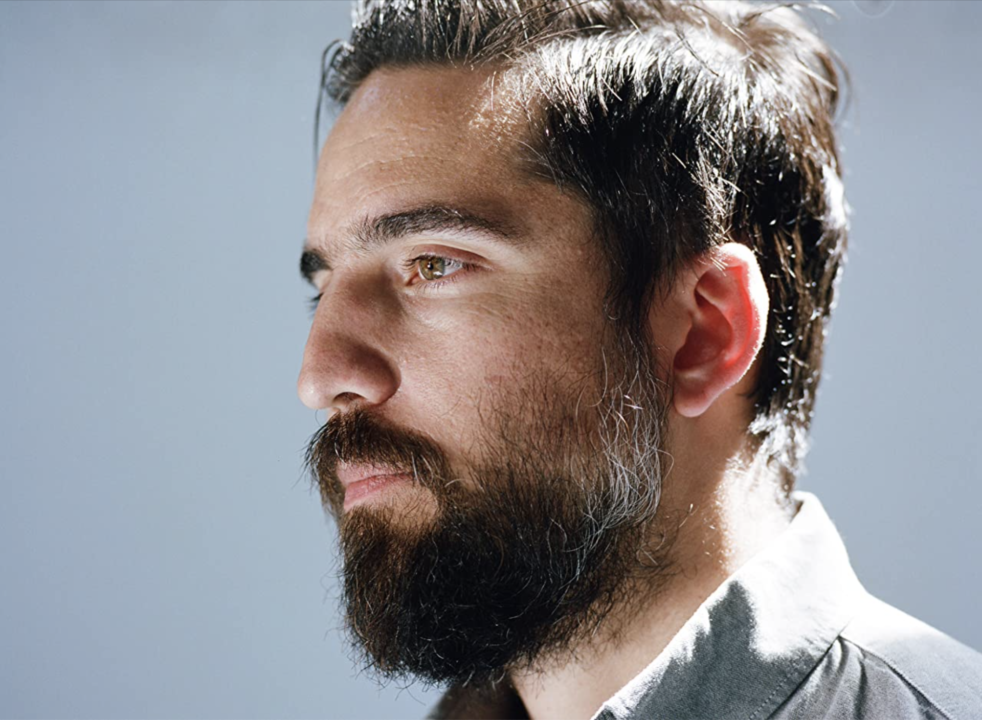
Jimmy LaValle Shares Track From 'Something in the Dirt'
It's always a eureka moment when you discover a new film or filmmaker that you believe will be the industry's next big breakout. Sundance is known for bringing a plethora of both established talent and artists on the rise to its festival lineup, which is accessible to all via its virtual screening platform. As you're watching from home, look deeper into these independent gems and you'll find there is so much to be discovered sonically as well, like composer Jimmy LaValle and his score for the sci-fi horror film Something in the Dirt.
Directed by Justin Benson and Aaron Moorhead (Marvel’s Moon Knight), Something in the Dirt is described as an oddball, twisted talkie with supernatural tendencies. Using this as his reference, LaValle uses synthesizers and various tonal effects to bring a nuanced palette of textures and dense, evocative atmospheres to this sci-fi feature.
Cinemacy is thrilled to premiere “Is that Morse Code?" from Something in the Dirt.
Jimmy LaValle has been releasing music as The Album Leaf since 1999, and much like his synth-forward, electro-musical moniker, LaValle continues to explore the boundaries of sound in his film compositions. His music defies easy categorization, much like the minimalist composers and sound manipulators he considers idols like Philip Glass and Cliff Martinez. LaValle is carving out a niche in the music industry with his signature style that creates soothing melodies that are highlighted by jolts of unexpected dissonance. He continues to explore the unlimited horizons of sound and composition with his film soundtracks.
To hear more of LaValle's score, check out Something in the Dirt, opening this Friday at AMC Theaters.
This article was originally published on January 24, 2022, during the Sundance Film Festival
'Brainwashed: Sex-Camera-Power' Exposes the Male Gaze in Film
Nina Menkes is not only one of America’s earliest independent filmmakers but is also considered a cinematic feminist pioneer. Her first feature, Magdalena Viraga (1986) tells the story of a prostitute who gets sent to prison for killing her pimp. The film went on to win the Independent/Experimental Film and Video Award at the Los Angeles Film Critics Association Awards that same year. Since her bold debut, Menkes has spent the last 30+ years observing a disturbing trend within the film industry, which she exposes in her latest documentary, Brainwashed: Sex-Camera-Power.
Playing like a TED Talk, Menkes takes the stage in a packed auditorium to discuss the nuanced but damaging gendered politics of shot design. She opens her argument by playing a clip from Bladerunner 2049 (2017), that infamous scene where a naked Ana de Armas interacts with Ryan Gosling. Over the course of the film's hour-and-a-half runtime, clips like these will prove her hypothesis that shot design is gendered, and males are consistently shot differently than females. Welcome to feminist film school 101.
As Menkes shows, being a filmmaker also means accepting a great level of responsibility. What you create has an effect on those who watch your movie. And for too long, women have been treated less than or objectified more than their male counterparts.
Aiding in Menkes' theory is Laura Mulvey, the film theorist who coined the term the "Male Gaze." Mulvey, alongside film school professors, psychotherapists, and film directors, all contribute stories from their first-hand experiences of misogyny in the industry that has a love/hate relationship with women.
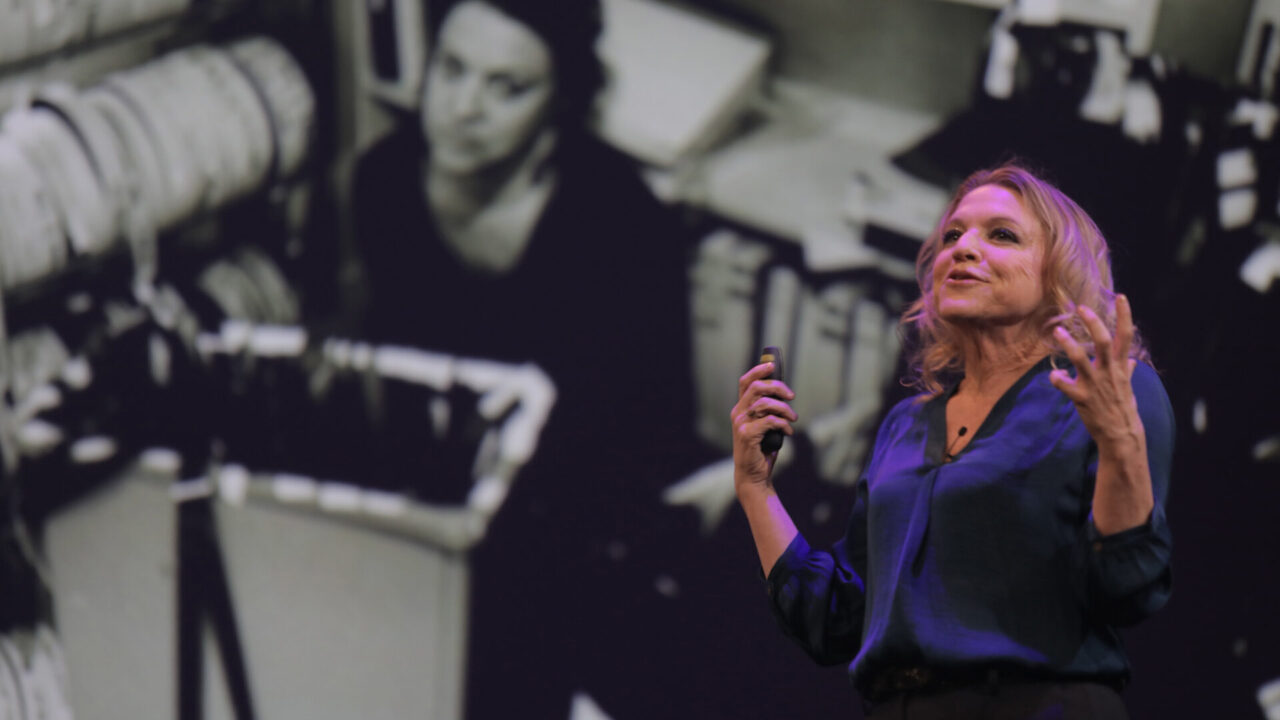
Using over 175 film clips from Hollywood blockbusters and cult classics, Menkes points out how simple, subtle techniques like framing and lighting can disempower women on the screen. For example, women are countlessly shot in fragmented ways, like close-ups on breasts, hips, and butts while men are usually always shot full body (even in hyper-sexualized films like Magic Mike). Another point, slow-motion has been consistently used on women to emphasize sexualization or victimization, whereas it's used on men to emphasize action scenes and toughness.
Menkes calls this a vicious triangle of repeated torment: the visual language of cinema can lead to employment discrimination against women which can lead to sexual abuse/assault. All that to say, what we see on screen has real-life consequences, "If the camera is predatory, the culture is predatory as well."
Although the points Menkes addresses are hard to hear (at times I even found myself wanting to defend these films), her points are indisputable. Watching her criticize scenes from some of my favorite films like Phantom Thread, Contempt, and Eyes Wide Shut (okay, that one may be obvious) made me feel uncomfortable–but that's the point. Brainwashed: Sex-Camera-Power is provocative on purpose. Its whole purpose is to shake up the industry to the subliminally victimizing messaging that we've been watching and accepting for far too long.
This review originally ran on January 26, 2022, during the Sundance Film Festival.
107 min. Distributed by Kino Lorber. In theaters this Friday, October 21st, aia Kino Lorber at DCTV's New Firehouse Cinema in NYC and the Laemmle in LA.
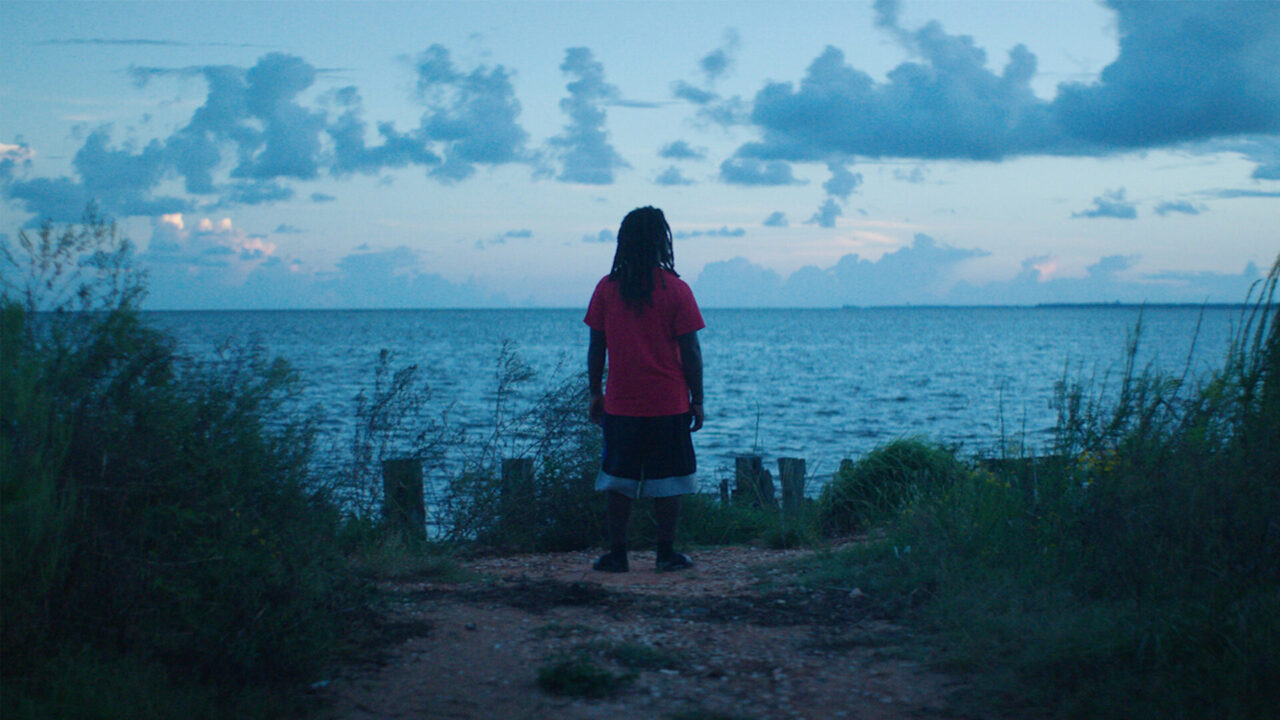
'Descendant' Uncovers the Last, Secret American Slave Ship
In her latest film, Descendant, documentary director Margaret Brown points her lens at a decades-long mystery that has cast a shadow on the small Africatown community of Mobile, Alabama.
For generations, residents of the blue-collar town–which was founded by enslaved ancestors–have passed down a sordid oral history of their origin story. Namely, the kidnapping and selling of their ancestors to slave owners back in the 1800s.
What Margaret and her film crew are here to investigate is a local legend that the last known slaving vessel brought to America in 1860–an illegal ship called the Clotilda–is still buried somewhere off the coast of the town of Mobile.
Direct descendants from the Clotilda never gave up hope that one day, the missing ship would be recovered. Although they had no physical evidence to prove that the Clotilda was so close, word of mouth passed down from generation to generation kept its history and memory alive.
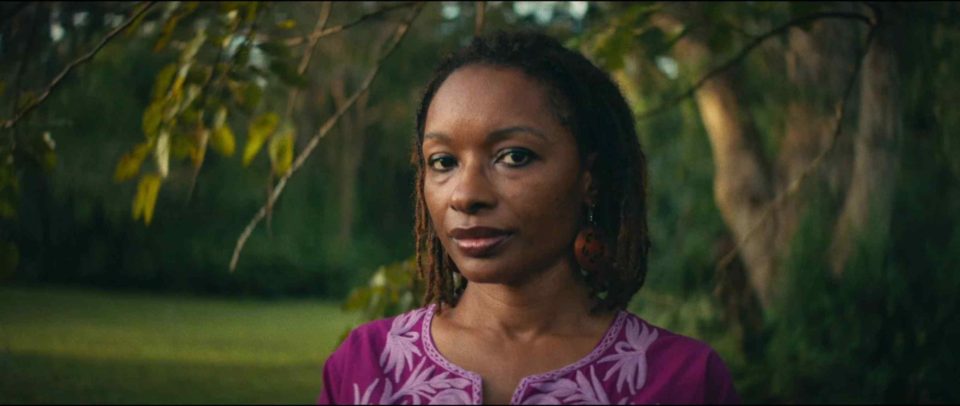
The community was in shock when the government agreed to search for the ship in 2018, and it was a miracle when the ship was, in fact, found. As we come to discover, the captain and other men who were engaged in this illegal activity tried to hide their reprehensible act by sinking and burning the slave ship. And it had been kept a secret for over 100 years.
“Many black people don’t know who they are,” says one of the Africatown residents, a heartbreaking fact to comprehend. There are many Americans whose family history has been forever lost due to intentional destruction at the hands of slave owners and other abusers. While that’s a devastating reality, how the community of Mobile, Alabama chose to persevere through hardship is admirable, and is a true testament to their strength and spirit.
One of the strongest scenes from Descendent comes toward the end when a direct descendant of the slave ship captain meets the direct descendants of the slaves his family trafficked over 100 years ago. It’s highly emotional for all involved, but shame is quickly met with grace and forgiveness. I don’t think I’ve ever seen such an act of strength shown onscreen before.
In addition to highlighting a community that is totally deserving of a platform to finally tell its story, Descendant also pays homage to the earliest days of storytelling. Before technology, stories were passed down verbally; a total oral history. Now, we rely on visual mediums to communicate and remember our special moments. Descendant proves that history can never be erased if we continue to talk and share our stories, no matter how deeply a secret may be buried.
Distributed by Netflix. 108 min.
In Theaters and on Netflix this Friday, October 21st.
This review originally ran on January 27, 2022, during the Sundance Film Festival.
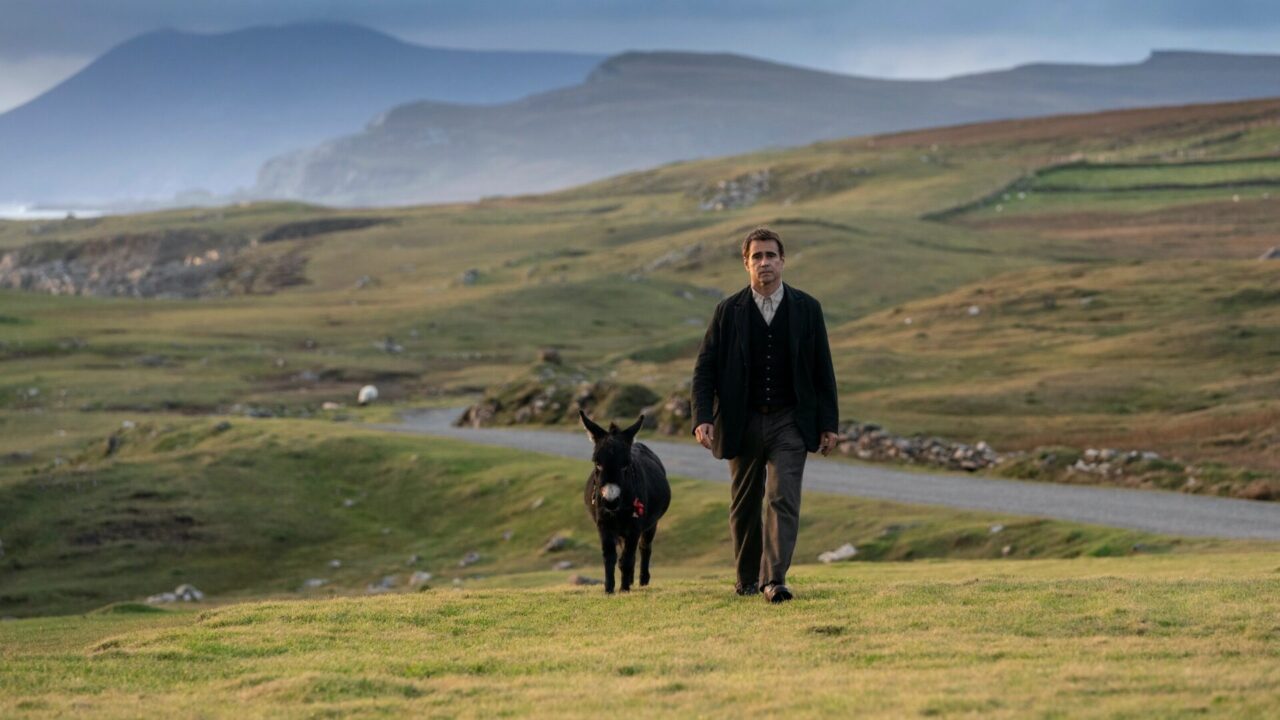
The Banshees of Inisherin
The meaning of life is hidden within The Banshees of Inisherin, I just know it. How we spend our days – our very limited time on this planet – is the crux of writer/director Martin McDonagh's buddy comedy that also doubles as a cinematic spiritual awakening. On the surface, this is a forlorn story about a friendship breakup between the well-meaning but dim-witted Pádraic Súilleabháin (Colin Farrell) and his longtime friend Colm Doherty (Brendan Gleeson), a stoic man a couple of decades his senior. But this isn't just a story about ex-BFFs. Filmed on location on the idyllic Irish coast, The Banshees of Inisherin is a quiet masterpiece that tackles the rhetorical question of how to live a reverential, more conscious life.
Colm's sudden ex-communication is a mystery to Pádraic, who cannot comprehend why he would abruptly end their relationship. His stubbornness and refusal to talk only confuses Pádraic further and with no understanding of social cues or personal space, he continues to bother Colm for answers, much like a mosquito buzzing in your ear that you swat at but it still won't leave you alone. Pádraic's sister Siobhan (Kerry Condon) and his acquaintance Dominic Kearney (Barry Keoghan) do the best they can to help Pádraic move on, but he can't. He needs to know why. And finally, Colm tells him.
As we get older, we realize that we have control over what we choose to tolerate in our lives. The people-pleasing default that many grew up with slowly morphs into making autonomous decisions that may or may not align with other people's expectations – much like Colm. Seemingly overnight, he has reached a new level of self-awareness and decides to prioritize what matters most in life: time. In an effort to stop wasting what precious time he has left, Colm has decided that he will no longer put up with Pádraic's small talk, benign chatter, and fleeting thoughts. Colm has found that playing the fiddle – creating something with permanence like music – is a better use of his time. And so he exchanges Pádraic for a fiddle. The fascinating observation here is that both men, confident in their opposing wants, are both right. And, one could argue, both are completely wrong. Colm wants to be left alone; Pádraic wants company. Who deserves to get what they want?
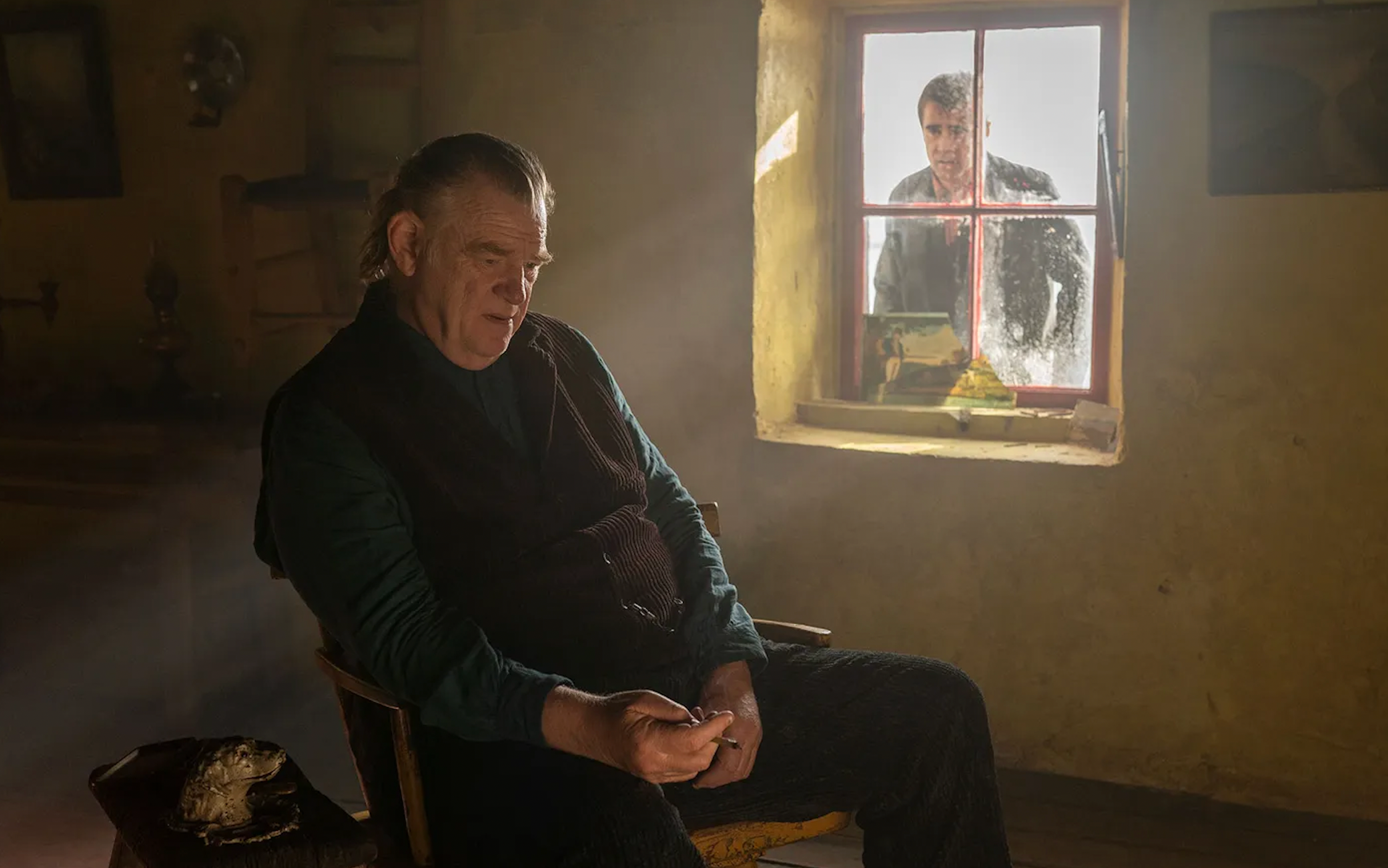
The Banshees of Inisherin caught me completely off guard. I thought I was walking into a standard, period-set drama about a complicated relationship between two grown men, but my premature assumptions were quickly proven to be wrong. What we have here is an unforgettably dazzling achievement – both onscreen and off – with some of the year's most phenomenal performances, original dialogue, and affecting score. Colin Farrell channels a Larry David-type unawareness that gives this dark comedy a more contemporary feel. His sweet demeanor is at odds with Brendan Gleeson's boorish ignorance and watching these two celebrated actors play out his dynamic on screen together is something special.
Religion is a looming figure throughout Banshees, both literally and metaphorically. Cinematographer Ben Davis uses his sharp eye for detail to create gorgeous shots that look like renaissance paintings. Even with the breathtaking views of the Irish coast and vibrant hills, some of my favorite shots take place indoors. Many times, we see our protagonists peering into homes through windowpanes that look like a crucifix. Recalling the Catholic belief that "God is always watching," which Colm knows firsthand as he routinely participates in confessional, this use of framing seems to imply the judgment the characters cast on others.
Off camera, it's fun to play the six degrees of separation game within the cast. Writer/director Martin McDonagh worked with Colin and Brendan in 2008's In Bruges and re-teamed with Colin in 2012's Seven Psychopaths. In 2017, Colin worked with Barry in Yorgos Lanthimos' The Killing of a Sacred Deer. Composer Carter Burwell and Cinematographer Ben Davis also return after their work on Martin's Academy Award-winning Three Billboards Outside Ebbing, Missouri.
The tonal bait and switch from dark comedy to introspective, sensitive drama is what makes The Banshees of Inisherin such a powerful film. It hints at the meaning of life in a delicate way and leaves audiences with some food for thought as the credits roll. It's also a film that I'm already looking forward to rewatching again, and again.
Distributed by Searchlight Pictures. In theaters Friday, October 21st.
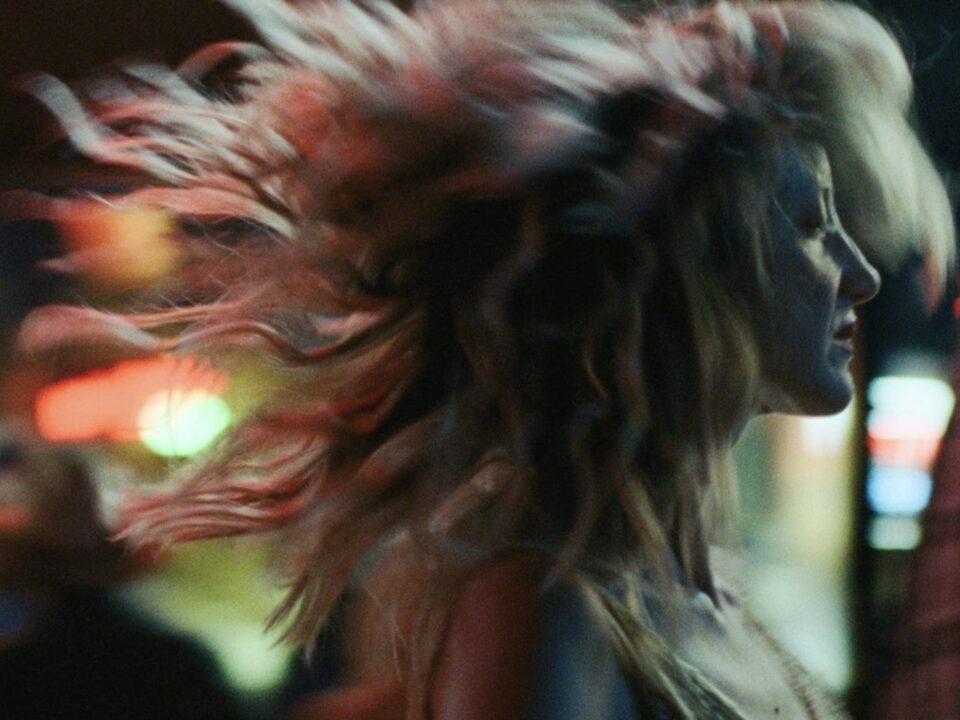
In 'To Leslie,' Andrea Riseborough is an Unlucky Lottery Winner
Winning the lottery has the potential to change someone's life forever but there have been many times, very publicly, when this fairytale spirals into a dark nightmare and makes for one very unlucky winner. This is when we meet Leslie (Andrea Riseborough), a woman who once had it all before blowing her fortune and finding herself completely at rock bottom. Making its World Premiere at SXSW, director Michael Morris' feature film To Leslie – inspired by true events – tells the story of one woman's fall from grace and her fight to reach normalcy once again.
"Here I Am" by Dolly Parton opens the film as we see Leslie and her preteen son James (Owen Teague) celebrating her $190,000 lottery win on cable TV. As a single mother in West Texas, Leslie's excitement can't be contained as she boasts about what she wants to do with her newfound "fortune". Fast forward six years later, and we see a disheveled Leslie who is now an alcoholic living out of a single suitcase and sleeping on the streets – a far cry from the woman she was on TV not that long ago.
Penniless and abandoned, Leslie seeks to rekindle her relationship with her now teenage son. Their relationship, like most things in Leslie's life since the event, has become strained and fragile. Despite his initial hesitancy, James lets his mom back into his life under the condition that alcohol is forbidden. But Leslie is an addict and it's not long before he finds her drunk, on his couch, from the alcohol she bought by stealing his roommate's cash. Having burned that bridge, again, Leslie is forced to return home alone and finds herself even further from the fractured relationship she desperately tried to mend.
It's here, outside of a roadside motel, where Leslie catches the attention of Sweeney (Marc Maron) and Royal (Andre Royo). Seeing – and at this point, smelling – her desperation, Sweeney offers Leslie room & board in exchange for her help cleaning the rooms and grounds of the motel. She accepts and thus begins Leslie's slow journey of redemption, self-forgiveness, and shot at a second chance at life.
Andrea Riseborough brings Leslie's story to life with such urgency and fragility; we are angry at her decision to drink but at the same time, understand that it's a disease controlling her actions and not her better judgment. Riseborough plays up Leslie's many layers, she is not afraid to get grimy and vulnerable. Rounding out the cast of supporting characters are the equally impressive Allison Janney and Stephen Root, in addition to Marc Maron, Andre Royo, and Owen Teague.
To Leslie is a humble story about survival, the struggle to acknowledge your past – no matter how littered – and serves as a reminder that it's never too late to better your life.
This review was first published on March 18, 2022 as part of our SXSW 2022 coverage.
Triangle of Sadness
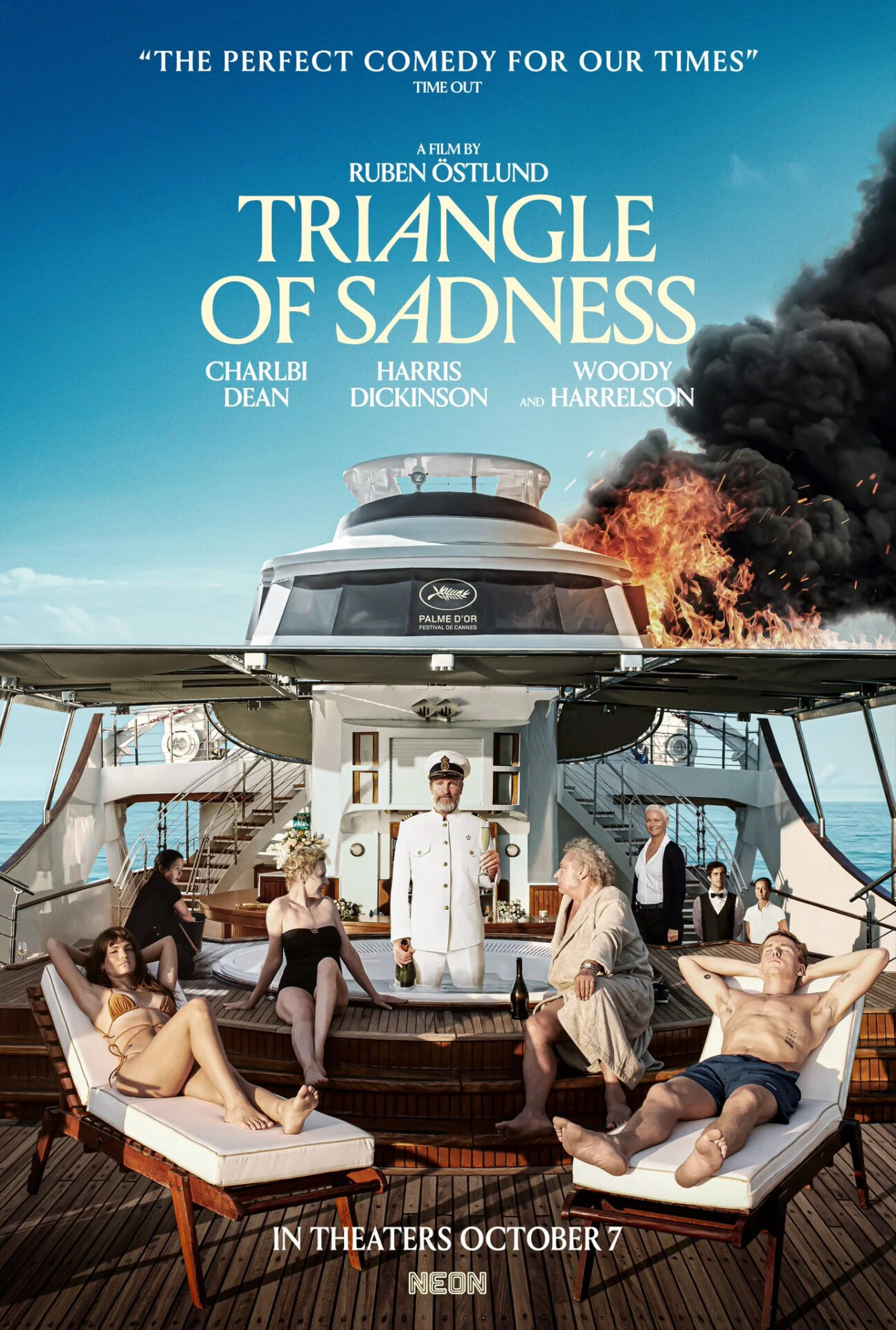
Money, sex, politics. These are the three biggest motivating factors that drive human behavior. These wants–a triangle of desires, if you will–also make for a ripe comedy of errors, in acclaimed Swedish writer/director Ruben Östlund’s latest, Triangle of Sadness. Receiving both an eight-minute standing ovation and winning the Palme d'Or at this year's Cannes Film Festival, Östlund’s sixth feature film once again transports audiences into an elite society where the rules of reality are blurred, dignity is destroyed, and mayhem lurks around every corner.
Triangle of Sadness is split into three acts. The first of which dives into the backstory of our main protagonists, high fashion models Carl (Harris Dickinson) and Yaya (Charlbi Dean). As they navigate the nuances of their relationship, gender politics come into play pretty quickly–given that they work in one of the few industries where women are paid more than men. Little things like who picks up the check become long debates where traditional vs feminist stereotypes are discussed, picked apart, and thrown out the window. But they're determined to make it work, whether or not they're truly in love (or just in lust).
The next time we see Carl and Yaya, they're aboard a multi-million yacht, which Yaya was gifted because of her "influencer" status. Carl and Yaya embrace being in the company of the ultra-rich, all the while noticing their chunky jewelry and thick cigars. They befriend a cast of kooky characters, all flawed by either ignorance, misplaced empathy, or hierarchical standards. Although, the luxury cruise proves to be anything but relaxing. With a drunk Captain (Woody Harrelson) at the helm, chaos ensues. Complete, utter chaos. Trigger warning time: if the sight of vomit makes you gag, you need to look away for at least a solid 10 minutes during the Captain's dinner scene. Trust me.
It's best going into act three without knowing too much, so I'll just leave it at this: Parasite meets "Gilligan's Island."
I can't go on without addressing Charlbi Dean's unexpected passing prior to the film's release in theaters. Her talent in Triangle of Sadness–her feature film debut–is magnetic. It's truly a heartbreaking loss for the industry as a whole that we won't get to see more of her. Harris Dickinson is equally as charming, his natural sense of humor and spot-on mannerisms elevate every scene he's in. Triangle of Sadness's secret weapon, however, is in the ensemble cast comprised of Dolly de Leon, Zlatko Burić, Henrik Dorsin, and Vicki Berlin. Kudos to casting director Pauline Hansson for putting together such a perfect group! The characters are written so strong on their own but when they're all together, that's when the magic happens. There were a handful of line deliveries and bits of dialogue that had me laughing so hard I was crying.
Triangle of Sadness runs about 2 hours 30 minutes. Even though that could have been cut down by at least 15 minutes, the payoff at the end is well worth it. Ruben Östlund's script plants the seeds in the first act, waters them in the second, and they have a massive growth spurt in the final act. Triangle of Sadness is a triumph and one I haven't stopped thinking about since first watching it.
149 minutes. Triangle of Sadness is distributed by NEON.
'Mija' Gives Two Mexican American Musicians the Spotlight
Why Disney+ has delayed Mija's release date again* is baffling. Why Mija billboards and advertisements haven't been plastered around LA as much as She Hulk Attorney at Law is equally as absurd. I can't wrap my head around why this documentary – a film about two young Mexican American women following a dream – is seemingly being pushed aside by one of the largest corporations in the film industry. While frustrating, I have to believe that Mija will eventually become available to the general population and when it does, be prepared for an emotionally-charged portrait of daughters of illegal immigrants paving their own path in America.
Four-time Emmy-nominated, Mexican American filmmaker Isabel Castro makes her documentary feature debut with Mija, which first premiered at the 2022 Sundance Film Festival. Our protagonist is Doris Anahi Muñoz, a music-obsessed entrepreneur and the only daughter in a family of four. Her parents and brother immigrated from Mexico to San Bernardino before Doris was born and her U.S. citizenship means she's the only one in her family with documentation. This pressure to provide for her family while simultaneously attempting to pursue her own passion as a music executive can be overwhelming at times, but Doris is a nurturer at heart and takes the responsibility in stride. Sure, she inherited her family’s fears, but she has also inherited their dreams.
Music became her sanctuary. Since the thought of ever returning to Mexico seemed impossible, Doris and her family would listen to songs that re-connected them to their Mexican roots. This sense of pride and commitment to uplifting her community lead her to Omar Banos aka Cuco, whom she spotted and managed throughout the majority of his rising success. When 2020 hit and the tours stopped booking, Cuco and Doris went their separate ways – a devastating blow that put her stability in jeopardy. Resilient as she is, it didn’t take Doris long before spotting her next artist: Jacks Haupt, a Pop-R&B artist from Dallas, TX.
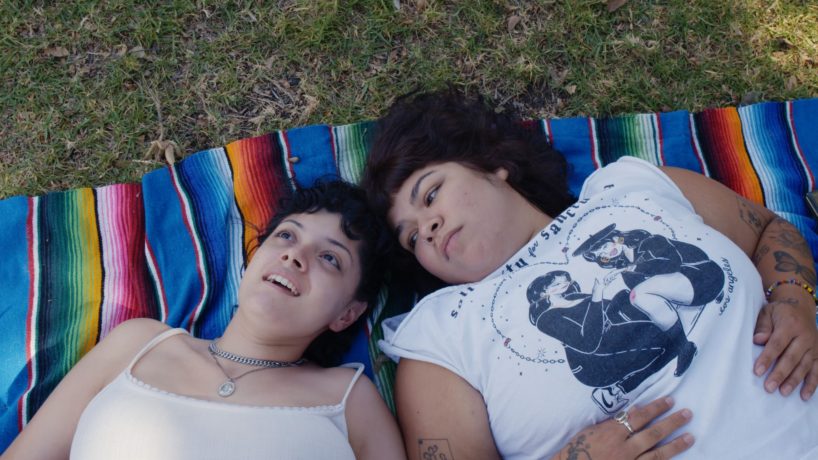
Despite being essentially strangers at first, Jacks and Doris’ shared backstory – that of being a young, Mexican American women in America following a dream – creates a bond that ignites the other. Mija follows their relationship and individual journeys of what it means to “make it” and what success looks and feels like to them. Mija is ultimately a feel good film but not without an emotional curveball or two thrown in.
Isabel Castro weaves Mija’s dual storyline of immigration and entrepreneurship together so beautifully. It’s a specific story on the surface but one that will no doubt resonate universally, appealing to anyone who has ever felt like the odds have been against them. At the center of it all, Mija asks the rhetorical question: Who is allowed to dream? Doris, Jacks, and all immigrants deserve the opportunity to pursue their passion without guilt. Their perspective on the world, and their contribution to the arts, is vital to creative prosperity.
*Mija's original release date was slated for September 16th. It was then delayed to September 23rd. As of this review, it has been pushed again with no explanation and removed from the official September Disney+ release schedule.
'Moonage Daydream': Bowie Is Back In This Explosive Rock Doc
They say never meet your heroes. Unfortunately, I'll never have the chance to meet one of mine. The world changed on January 10, 2016, when the news of David Bowie's death stunned everyone who knew and loved him. If you listened closely, you could hear the collective gasp from fans worldwide as we sat in disbelief. How could he be gone when, just two days earlier, his 26th studio album – Blackstar – was released? It wasn't fair. Bowie was one of those rare artists who only got better with time. And now we were to be robbed of what genius he could have contributed in his golden years. Moonage Daydream may be the closest thing we'll get to having another Bowie experience, and that's reason enough to consider this documentary a treasure.
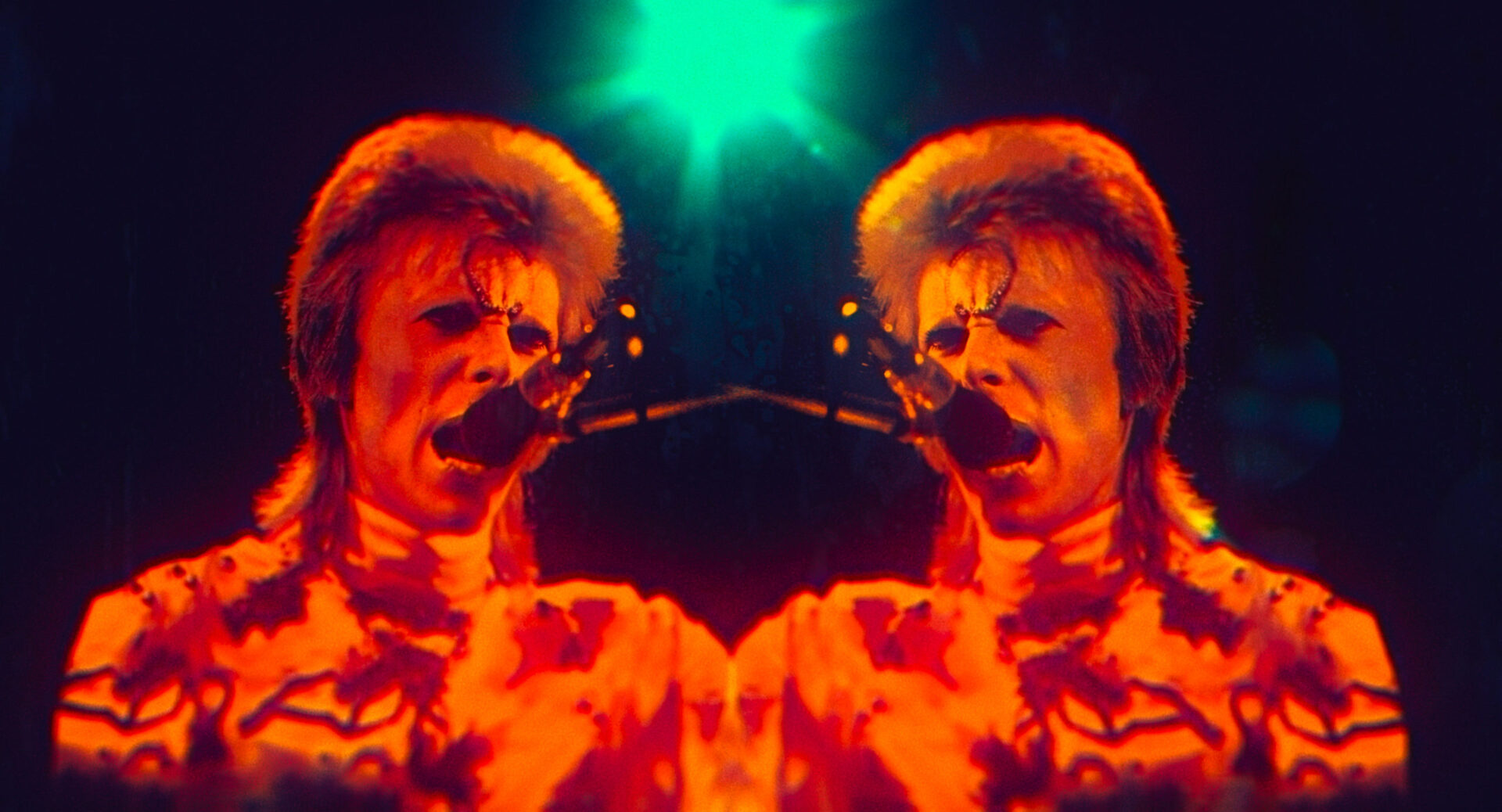
Director Brett Morgen's (The Kid Stays in the Picture, Kurt Cobain: Montage of Heck, Jane) kaleidoscopic retrospective of one of the greatest artists of our time is an amalgamation of sight, sound, and spirit. The film premiered at this year's Cannes Film Festival and more recently, crossed the pond with screenings at TIFF, before opening in theaters last Friday. Unlike a traditional biopic, which can be hard to tonally get right, Moonage Daydream plays like a video collage of rare concert footage, TV talkshow appearances, and behind the scenes moments. It truly is David Bowie like you've never seen him before. Plus, this is the only officially sanctioned film from the Bowie estate (which says a lot).
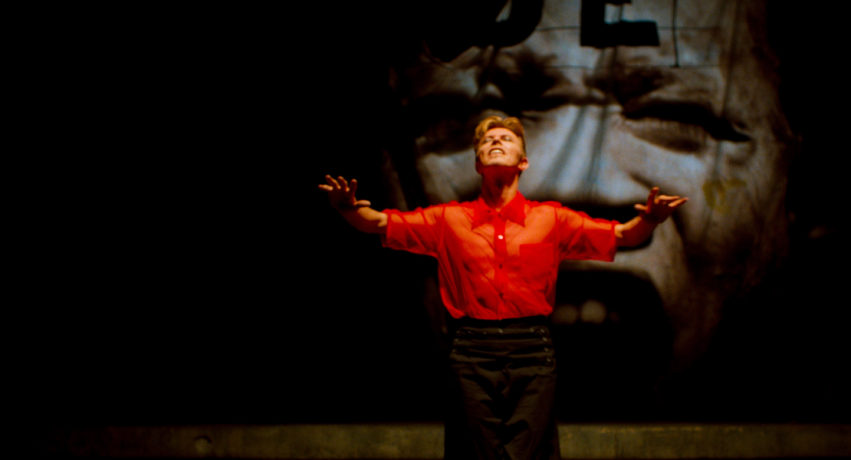
Moonage Daydream is so whimsical that, for a moment, it's easy to forget Bowie himself isn't calling the shots behind the lens. Morgen channels his protagonists' energy and playfulness by breaking the "rules" of traditional documentary storytelling. There is no beginning, middle, or end here. Rather, we jump forward and back in time, onstage and off, creating intimate controlled chaos. Visually, it's stunning. And sonically, it's outstanding. Long-time collaborator, friend, and music producer Tony Visconti and Academy Award-winning sound mixer Paul Massey (Bohemian Rhapsody) remixed and translated Bowie’s original stems for theaters in 12.0, 5.0, Atmos, and 7.1/5.1. That's nerd talk for: see it in an IMAX theater!
Running 2 hours and 15 minutes, Moonage Daydream is the furthest thing from a sleepy affair. Prepare for a full-body adrenaline rush as your mind attempts to wrap around a technicolor explosion of the senses. You don't have to be a David Bowie fan to appreciate the film either; although there is a high chance you will be converted into one by the end credits. Moonage Daydream is a love letter to a hero who continues to inspire us, even in the afterlife.
'Moonage Daydream' is distributed by NEON. Now playing at the TCL Chinese Theater and AMC theaters.

'The Story of Film: A New Generation' Is a Must-Watch For Any Movie Lover
Jordan Peele's Nope packed a lot of themes into its 2-hour 10-minute runtime. Some themes were more obvious (human attempts to control uncontrollable forces), while others were more subtextual (filmmaking as a tool to shape our understanding of cultures). Like any good film, different themes will resonate with different people for different reasons. Various perspectives and takeaways further fuel the post-screening conversation, which can lead to a broadening of world views or start a fiery discourse on #FilmTwitter. Either way, there is a passion that lingers with the audience because, in one way or another, they have been affected by what they saw on screen. That's the power that Jordan Peele and countless other filmmakers harness when they make a movie.
This effect that cinema has on us is at the heart of filmmaker and critic Mark Cousins' epic documentary, The Story of Film: A New Generation. With a runtime of just under 3 hours, Cousins follows up his previously released miniseries The Story of Film: An Odyssey (2011) by compiling some of the best moments in film history to prove how cinema is continuing to innovate year after year.
The film pays homage to legends of the past by opening with a beautiful monologue praising Singin' in the Rain's Stanley Donen, The Piano's Jane Campion, Varda par Agnès' Agnès Varda, and other auteurs we cinephiles hold in high regard. "Who are their equivalents in the 21st Century?" Cousins asks somewhat rhetorically, as we revisit clips and scenes from some of the most revered classic and contemporary films of all time.
Cousins' main thesis statement is expressed by showing how different film genres have evolved over time. The structure of modern Musicals, Slow Cinema, and Action films are compared to films of the past, proving that filmmakers are not reinventing the wheel as much as they are building upon it. It can be argued that George Miller's Mad Max took inspiration from Buster Keaton's The General. Todd Phillips' Joker is more similar to Disney's Frozen than ever imagined. Apichatpong Weerasethakul's Cemetery of Splendor and Kelly Reichardt's Certain Women tell the same tale, through different lenses.
Cinema is always finding new ways of reinventing itself. Whether it be visually with the integration of sophisticated AI as seen in Martin Scorsese's The Irishman, or thematically by breaking the rules of genre like Jonathan Glazer's Under the Skin – which blended the boundaries between documentary and narrative – The Story of Film: A New Generation proves that film is not dead.
The Story of Film: A New Generation is now playing in New York, Los Angeles, and select additional cities, followed by a digital release on all major platforms on Tuesday, September 20. This compelling new documentary will arrive on DVD on Tuesday, October 18.
'Bodies Bodies Bodies' is a Cringey, Yet Crucial, Part of the Gen Z Cinematic Universe
Where to Watch: Bodies Bodies Bodies is playing at Alamo Drafthouse Cinema DTLA, AMC Theaters, and more. Now playing at Rooftop Cinema Club DTLA.
Bodies Bodies Bodies has been out in theaters for almost a month now. Shortly after its release, the film found itself at the center of juicy #FilmTwitter internet gossip when lead actor Amandla Stenberg called out NYT culture critic Lena Wilson for her controversial take that reduced the film to a “95-minute advertisement for cleavage”. The aftermath of that statement has certainly drawn more attention to the film (and there's no such thing as bad PR, as the old saying goes), but what's been fascinating about seeing this unfold is how eerily on brand the whole discourse is. Here are two people with "Main Character Energy" unabashedly expressing their critiques and clapbacks through social media for validation from the invisible audience they're trying to win over.
Without even realizing it, Stenberg and Wilson's actions are like an extension of Bodies Bodies Bodies' thesis statement of cancel culture (as of writing this, Wilson's Twitter account has been deactivated), the desperation for acceptance among peers, and how social media has the power to divide us all.
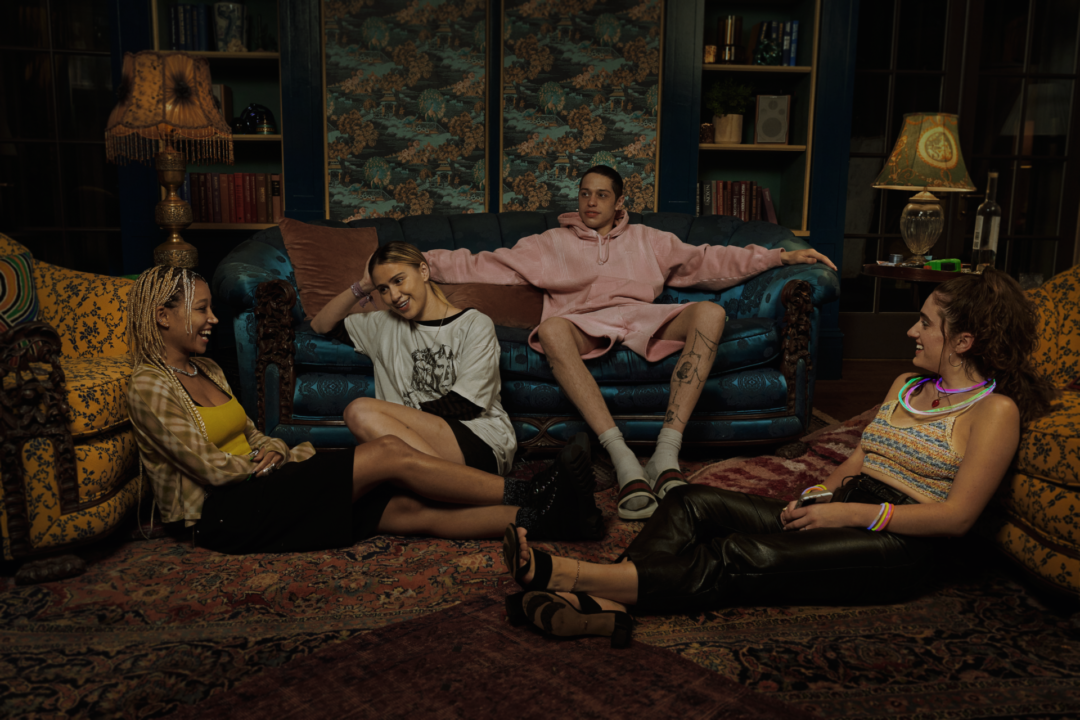
It's hard to feel empathy for a group of entitled 20-somethings with so much disposable income and so little self-awareness, so the right approach to have when watching this film is to laugh at, not with, the characters. Sophie (Stenberg) and her new girlfriend Bee (Maria Bakalova) arrive a couple of days late to the highly anticipated "Hurricane Party" at her friend's vacant mansion in the woods, but their timing turns out to be just right as they narrowly avoid the big storm. Quickly after Sophie and Bee's arrival, the weather changes and forces the entire group inside to partake in drugs, booze, food, and more drugs.
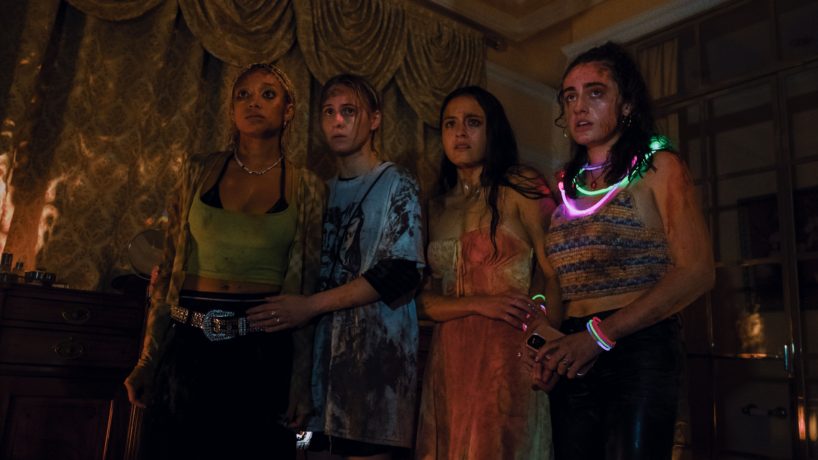
Myha'la Herrold, Chase Sui Wonders, Rachel Sennott, Lee Pace, and Pete Davidson round out the friend group, each adding their own quirky personality traits to the characters. Sennott's dramatic over-acting steals the show while Davidson doesn't do much acting at all in his role as "David" (lol), which will either excite or annoy his fans. His screen time is minimal in comparison to the rest of the cast, so it's puzzling that he seems to have been the focal point of the film's campaign- further evidenced by the film's header picture on its landing page on the A24 website. Davidson's good for a few laughs with his natural comedic timing but overall isn't as well utilized as one would have assumed. But I digress...
Stuck inside the house for an undetermined amount of time, the friends decide to play a game of Bodies Bodies Bodies. The rules are similar to the game Mafia but in BBB, every round begins by randomly slapping your neighbor in the face, a move that we all know will only lead to heightened tension among those with repressed anger issues and emotional angst (aka all of them). The fun party game quickly turns into a real-life game of Clue when David is found dead – throat slit – and no one knows who did it or why. As they try to figure out just what the hell is going on, the friends slowly turn into frenemies and begin to question everything and everyone, especially the new girl, Bee. Who is she, really? And going one step further, how well do you really know your best friends?
Bodies Bodies Bodies is a masterclass of self-awareness when it comes to the "style over substance" archetype. Directed by Halina Reijn with a screenplay by Sarah DeLappe, the intentional cringe of overly-woke vocabulary and everyone's fragile egos can be challenging to digest, even for a dark comedy, but it does fit squarely into the Gen Z cinematic universe.
So, is Bodies Bodies Bodies a film that needs to be seen in theaters? Not necessarily. In fact, I believe this film would be best enjoyed at home with friends and an alcoholic beverage or two of your choice. It's lighthearted fun for the most part until you realize that behind the campy and provocative moments is the horrifying reality that stories like this happen in the real world all the time, Bodies Bodies Bodies becomes more of a twisted cautionary tale for the social media obsessed.
'Honk For Jesus. Save Your Soul' is a Flashy Satire of Organized Religion
Where to Watch: Honk for Jesus. Save Your Soul opens this Friday in select theaters, including Alamo Drafthouse Cinema DTLA, AMC Americana, and more.
One of the more light-hearted films to shine at this year's Sundance Film Festival comes from writer-director Adamma Ebo and her producing partner and twin, Adanne. The sisters' feature debut, Honk For Jesus. Save Your Soul, is a flashy satire that pokes fun at the extravagant facade of organized religion and celebrity within a Southern Baptist megachurch.
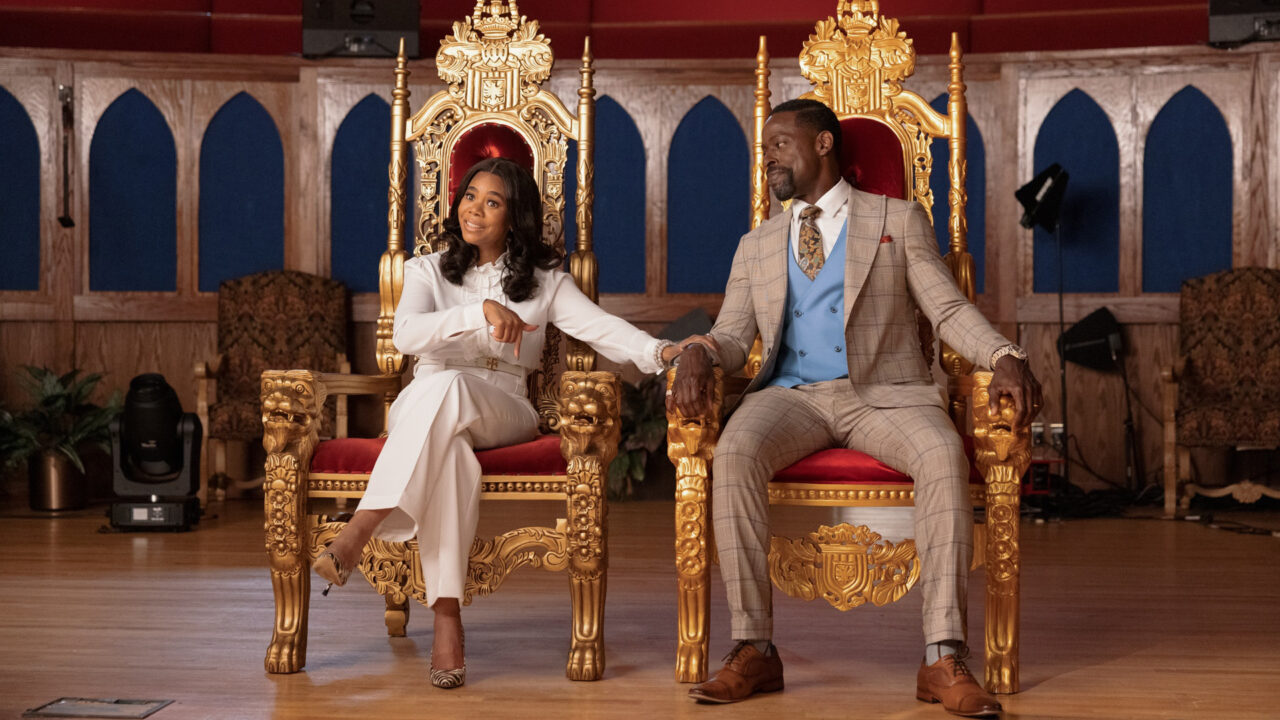
Pastor Lee-Curtis Childs (Sterling K. Brown) is an outgoing man who leads a congregation of thousands at his megachurch, "Wander To Greater Paths." Or, used to lead, anyway. As the film opens, it's revealed that his not-so-angelic past has come back to haunt him.
In order to regain the trust of his community, Pastor Childs has enlisted the help of a documentary crew to chronicle his redemption journey; one that he calls his "ultimate comeback."
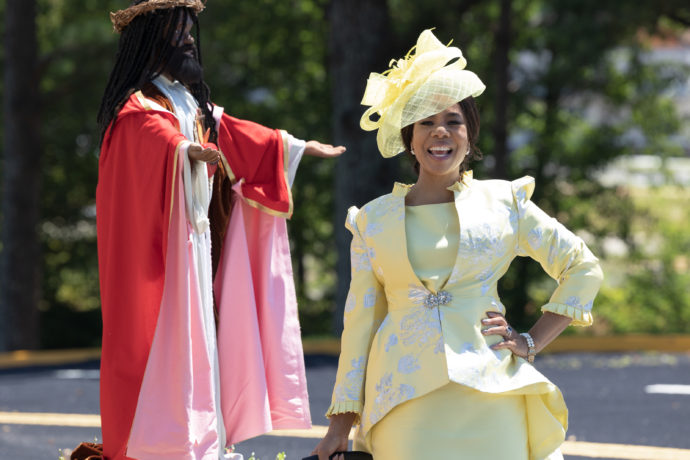
Regina Hall stars as Trinitie Childs in HONK FOR JESUS. SAVE YOUR SOUL, a Focus Features release.
Credit: Steve Swisher / © 2021 Pinky Promise LLC
Not thrilled with the situation she finds herself in is his wife–the first lady of the church–Trinitie Childs (Regina Hall). Her willingness to participate in the documentary is comically dense at first, stating to the camera crew, "I have been blessed with some beautiful Prada!," completely unaware of how unnecessarily flamboyant a statement that is.
Trinitie and Pastor Childs work together to put on a united front for the cameras with the forced smiles of pageant contestants. They're committed to making their redemption story as emotionally seductive as possible, but their faith in the documentary–as well as their own marriage–gets put to the test many times along the way.
Adamma and Adanne use humor to portray the ugly truth that not all who preach from the pulpit are free from sin. The creative decision to shoot partially in faux-documentary style contributes to its overarching comedic tone. Watching Sterling K. Brown ham it up to the cameras in one moment and then drop the facade in the narrative storyline draws a chuckle every time. His character is the epitome of how Michael Scott from The Office would look running a Southern Baptist megachurch.
Honk For Jesus. Save Your Soul is a sharp comedy that soars on the backs of Brown and this year's Sundance darling, Regina Hall. Their acting talents are on full display here, unobstructed by the fluff that films with bigger production budgets can easily distract from. The strength of the humble yet ambitious script was inspired by Ebo's own experience growing up in megachurch culture in Atlanta, Georgia. With this personal insight, the film captures a complex issue at the heart of organized religion but tells it in a way that makes it accessible and enjoyable for everyone who's interested in attending.
This review originally ran during the 2022 Sundance Film Festival

'Three Minutes: A Lengthening' Gives Life Back to the Ghosts of the Past
Where to Watch: Three Minutes: A Lengthening opens this Friday at Laemmle Royal with additional theatrical engagements to follow.
It's the genuine spark that lights up the faces of nearly 150 men, women, and children as they look directly into David Kurtz's camera lens, that hurts the most in hindsight. It was a fleeting moment during David's sightseeing trip to Poland in 1938 and, if anything, he was inconvenienced by the crowd's presence in his shot. He wanted to capture the beautiful architecture of the city but was instead met with curious faces and locals from the community infiltrating his framing. David captured roughly three minutes of footage here before continuing on his trip. Little did anyone know that a short time later, most of the people that David got on film that day would be dead.
Writer/director Bianca Stigter gives life and dignity back to those in David's footage in the gripping documentary, Three Minutes: A Lengthening. Narrated by Helena Bonham Carter and co-produced by Steve McQueen, the film contains the only moving images that exist of the Jewish inhabitants of Nasielsk, Poland before the Holocaust.
Glenn Kurtz, David's grandson, spent four arduous years attempting to identify the people in his grandfather's images. His search spanned various countries, film preservation laboratories, and even an abandoned Luftwaffe airfield, which he details throughout the film. Acting as part film historian and part detective, Glenn narrows down key details in the grainy footage that ultimately end up leading him to a precise location: Nasielsk, Poland. His search yielded tangible results too, as he was able to locate seven living survivors, one of whom contributes to the film.
Distributed by Super LTD, Three Minutes: A Lengthening is a powerful portrait of the lives lost and a poignant celebration of the power of film. With only three minutes of archival footage in total, Bianca Stigter creatively stretches and humbly manipulates the images to create a 70-minute feature that is ripe with emotional depth.
In a similar style to Dawson City: Frozen Time, Three Minutes: A Lengthening keeps the memory of the dead alive by preserving the last known artifact of their existence.
Jeremy W. Bullock Shares Track From 'I Love My Dad'
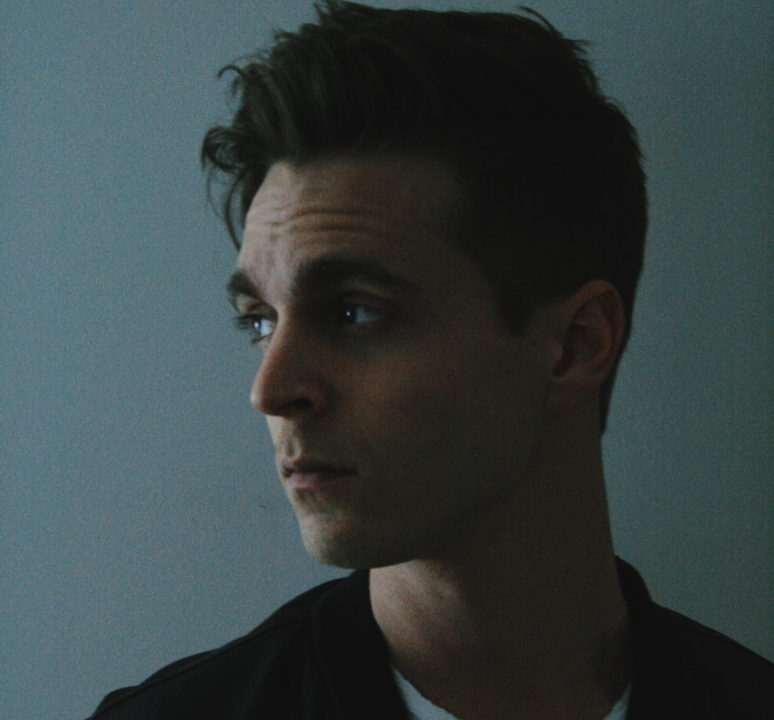
What would you do if you discovered that your dad had catfished you? Instead of the pretty girl you thought you were talking to via Facebook message, it was actually your estranged father desperately trying to get back into your life by any means necessary. For writer/director James Morosini, he wrote a screenplay, starring himself, about his truly bizarre real-life experience. Cinemacy watched I Love My Dad at this year's SXSW Film Festival, and we weren't surprised when it won both the Grand Jury Award and the Audience Award. The film is a delicate mix of charming and cringe-worthy, the performances by Patton Oswalt and Morosini are authentically tight, and all of this is amplified by the percussion-driven, cheeky score by composer Jeremy W. Bullock.
Jeremy plays with the "cat and mouse" theme of the film by creating a score that feels both mischievous and forward-moving. It's often light and playful but also isn't afraid to get chaotic during some of the film's more uncomfortable moments, which there are plenty of! Bullock strikes all the right notes as he delicately finds the balance between the comedic and the awkward moments, and brings James' real-life experience to the big screen in such a thoughtful and charming way.
Cinemacy is excited to premiere “Hey Frankie”, from Magnolia Pictures' I Love My Dad, below:
“During the pandemic, as a way of escaping from the chaos that was going on in the world, I found myself heavily inspired by electronic ambient music that was coming out of Japan in the mid to late '80s," says Jeremy. "A lot of that music was made with Japanese synthesizers at the time that had a bunch of modeled percussion sounds on them (mallets, wood blocks, etc.) Playing around with sounds that were familiar yet artificial ended up being a huge part of the score for us”.
Director James Morosini comments, “This was a tricky film to score because we were aiming to create a very specific tonal blend. Playful and harrowing. Sincere and sarcastic. We spent hour after hour talking through the story and then finding sounds that reflected the emotional nuances of each moment. I hope folks who watch this film take a moment to appreciate the tremendous efforts of my good friend and collaborator Jeremy’s wonderful work.”
A songwriter and multi-instrumentalist, Jeremy is also a founding member of the indie rock band Wild Cub, which started in Nashville, TN alongside fellow composer Keegan DeWitt. In 2016, he relocated to Los Angeles in order to fully dedicate himself to working in music for film and TV, and has since gone on to score the upcoming docuseries for Hulu Who Is Private Dulaney, the HBO docuseries Atlanta’s Missing and Murdered: The Lost Children, the Netflix docuseries 7 Days Out, and more.
Saltwater Music is releasing the ‘I Love My Dad’ Original Motion Picture Score on Friday, August 19th. Listen to the album here.
‘I Love My Dad’ is now playing at the Alamo Drafthouse in LA, the Laemmle Monica Film Center, and Laemmle Claremont 5.