
Enys Men
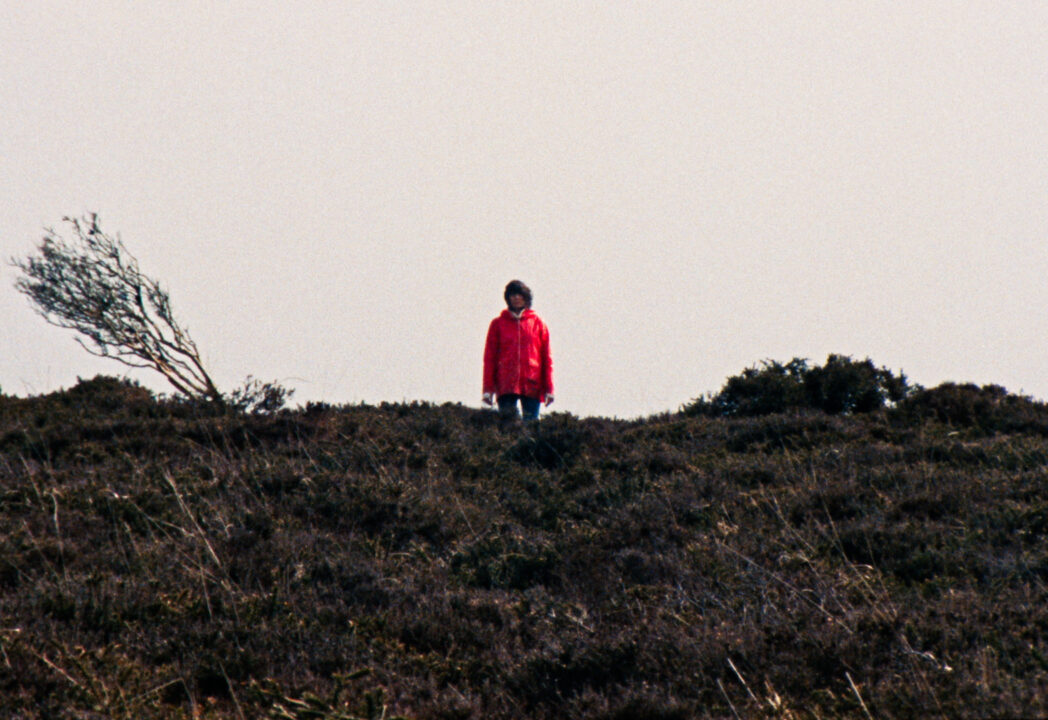
Filmmaker Mark Jenkin takes us on a trip through the cerebral cortex in the art film-psychological horror hybrid, Enys Men. Acting as the film's director, writer, cinematographer, editor, and composer, Jenkin puts every fiber of his being into this visionary feat. The result is a genuinely singular point of view – albeit abstract – that touches on the idea of life and death and its meaning in the metaphysical and spiritual realm.
To put it simply, Enys Men tells the story of a wildlife volunteer (Mary Woodvine) who is in the middle of a residency on a remote island in Cornwall, UK. Her responsibilities center around a small patch of flowers, observing their growth and noting any inconsistencies in their development. Alone with her thoughts, day in and day out, she begins to crack at the seams, losing her grip on reality and fading into delusion.
Much like how Robert Eggers' film The Lighthouse is a slow spiral into madness, our protagonist encounters a similar fate. Being the only living person on the secluded British island (or is she?), the volunteer begins to lose herself among the earthly offerings and folkloric superstitions. Mark Jenkin's aesthetic throughout Enys Men is swoon-worthy, from the highly saturated colors to the score that weaves together field recordings with long drawn-out synths. Jenkin uses the same type of equipment and film stock as many low-budget horror films of the 70s, which is how he achieves this retro look.
Some people will get a thrill from the labyrinth that unfolds within the 90-minute runtime, giddy to get lost in the uncanniness of the script and the purposefully vague and nonsensical montages the film so devilishly derails into. Others may try to assign meaning to the madness, to which I say, good luck! I fell right in between these two sentiments. I found myself transfixed by the film's visual and sonic grip, yet I stumbled when I tried to understand the "why" of the plot.
Enys Men is a film that simultaneously feels both dated and timeless. It could have existed 50 years ago and its ingenuity would not have been lost to time. For those interested in checking out this transfixing work, be prepared for long stretches of nothingness. It may be a beautiful trip. but you've been warned that this isn't your stereotypical traditional horror film.
91 minutes. Opening this Friday in select theaters.
https://youtu.be/f7Pwf94_XLY

Inside
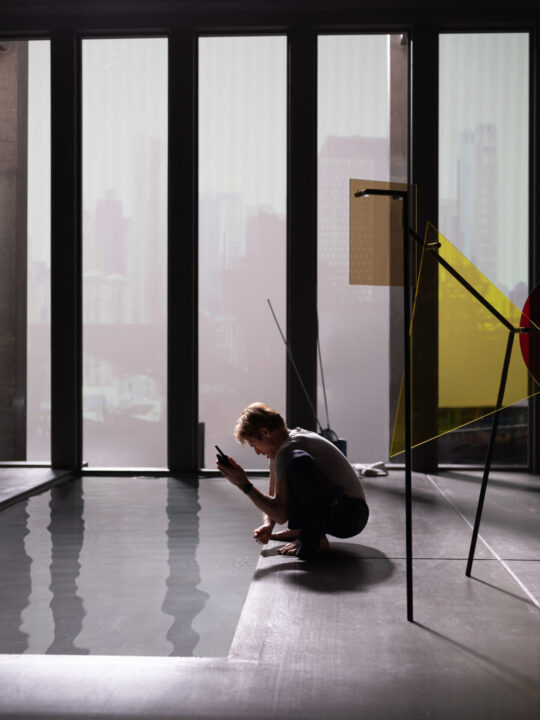
Willem Dafoe puts on a one-man show in the tragically dismal psychological thriller, Inside. Greek filmmaker Vasilis Katsoupis makes a bold directorial debut here, poking holes in the perception of affluence within the art world and its superficial meaning when compared to life itself. Starring Willem Dafoe in the role of a lifetime – who acts alone for nearly the entire film – Inside offers high-concept commentary on the meaning of art and what happens when we devoid it of context.
Cats die. Music fades. But art is for keeps. This is the mantra that justifies the actions of Nemo (Dafoe), a member of an art thief ring who has successfully broken into the temporarily vacant NYC penthouse of an ultra-wealthy art collector. Remembering a prompt he was given as a schoolboy about what he would save from a house fire, Nemo recalls putting the priority on his sketchbook, not on his parents. Fast forward to today, Nemo is hurriedly pulling paintings and memorabilia off of the apartment's towering walls as his partner, only heard from through a walkie-talkie, gives him a minute-by-minute countdown. Nemo has millions of dollars worth of artwork in his bag. Everything has gone according to plan. That is until the high-tech security system is accidentally triggered and locks Nemo inside the palatial apartment.
After a frantic effort to disable the alarm's blinding lights and screeching alerts, the reality of the situation sets in. His partner – scared off by the misstep – abandons him. The museum quality doors won't open. There is no exit in sight. Also, the apartment's temperature system has been wrecked, and uncontrollably raises the interior up degree by degree. With food scarce and the water supply cut, Nemo is sweating out more of his sanity with every hour that passes. It's funny; on the one hand, literally, he is worth millions of dollars. But what good is it to be a millionaire when you're dead?
For a film about extravagance, it's fairly minimal in its execution. Willem Dafoe gives a tour de force performance and holds nothing back, his malnourished frame getting more obvious as the days pass with little to no food or water. By watching Inside, we're witnessing a man unravel from the inside; going from sensible to insane in a matter of days (or weeks, it's purposefully ambiguous). Dafoe's execution of a psychological mental is extraordinary, never once feeling forced or untrue. Paired with the airy, unnerving score by Frederik Van de Moortel, the increasingly frenetic energy gets absorbed by the audience. I caught myself taking shallow breaths during heightened moments of tension multiple times.
Despite this being a film about the disillusionment of art, its gorgeousness is still something to swoon over. The architecture, spacial awareness, interior design, and gallery walls would no doubt be featured among Architectural Digest's most-watched home tours. There's also an abstract beauty to the film in the way director Vasilis Katsoupis plays with sound and space. Reverberations and sporadic moments of deafness in the music edit combined with the rich and dramatic lighting foreshadow the space's stronghold over Nemo, and its ability to destroy him.
Inside is isolation insanity at its peak while simultaneously shining a light on the dark side of luxury. Despite its gritty and suffocating nature, this is one of the most beautifully meditative films on materialism that I've seen in a long time.
Distributed by Focus Features. Opening in theaters this Friday. For times and locations, click here.
Nainita Desai Debuts Track From 'Villeneuve Pironi'
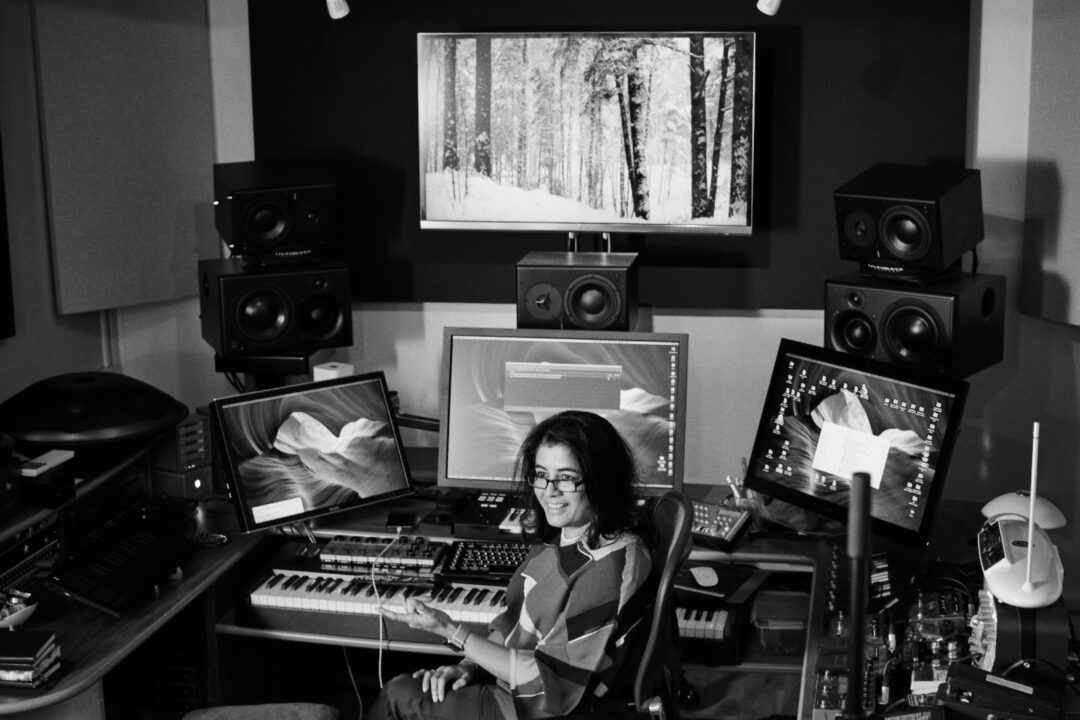
Betrayal is one of the cornerstones of filmmaker Torquil Jones' upcoming documentary about one of the sports world's most tragic events. And who better to encapsulate this frenetic, invigorating energy and put it into music than Jones' past collaborator, the Emmy-winning composer Nainita Desai?
Having last worked together on the Primetime Emmy and Grierson-nominated Netflix documentary 14 Peaks: Nothing Is Impossible, Desai jumps into the driver's seat of the multi-award-winning director's latest project, Villeneuve Pironi for Sky TV in the UK.
Villeneuve Pironi tells the story of two supremely gifted Ferrari F1 drivers, forever torn apart by a historic and hugely controversial moment in time. In this epic story, friendship, duplicity, ambition, and honor all collide at racing speeds. Told through compelling interviews by both the Villeneuve and Pironi families, a friendship becomes a rivalry and a rivalry becomes a tragedy in this Shakespearean tale, told – for the very first time – by those who were closest to the men involved.
Cinemacy is excited to premiere the track "The Betrayal - End Credits" from Villeneuve Pironi
A pulsating electronic beat – which could quickly be mistaken for a heartbeat – sets the tone at the onset of the score. As the tension builds, the inclusion of orchestral strings adds another layer of mysticism and passion. This nod to the documentary's larger themes of unpredictability and intrigue within the score is both subtle and imperative; Nainita has smartly designed her sound with this experimental, deeply immersive approach in mind.
"I wanted to create something almost operatic with 'The Betrayal', says Nainita. "It is the emotional culmination of the friendship with a dramatic twist that takes place over the course of a thrilling race. On top of the energy, propulsive earthy percussion floats a strong melody that has gravitas and elegance followed by a counter melody that eventually takes over. It emulates the real-life rivalry between Gilles and Didier and the outcome of the race.”
Nainita continues to expand her reputation as an in-demand composer within the industry. Her previous score for the documentary The Reason I Jump was highly regarded throughout the awards circuit, winning the News and Documentary Emmy in the Outstanding Music Composition category and landing nominations at the British Independent Film Awards and the Cinema Eye Honors. In addition to film scores, she also has a long list of credits in the television and video game space. Her next film, The Deepest Breath, premiered at the 2023 Sundance Film Festival in collaboration with A24, Ventureland, Motive Films, and RAW, and is set to be released later this year.
"Villeneuve Pironi" (Original Motion Picture Soundtrack) will be released on digital platforms from Sky Music this Friday, March 17th.
Icelandic Composer and Filmmaker Kira Kira Debuts 'We The Lightnings'
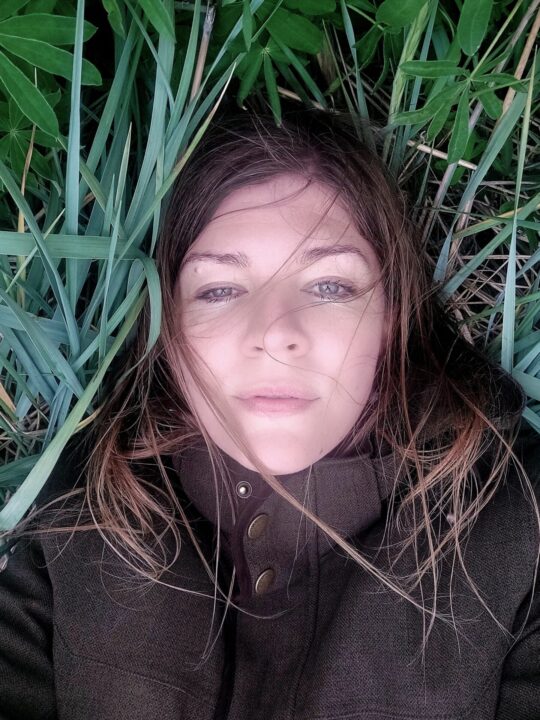
A score is the heartbeat of a film; the smallest of nuances in a key change or the inclusion of certain instruments or effects can alter how one perceives the story being told. It can be hard for a filmmaker to get their vision to translate sonically, but not for Kristìn Björk Kristjánsdòttir. Kristìn – who goes by the name Kira Kira – dually operates as both the director and composer in her short animated film We The Lightnings, a tenderly told story about the healing power of love, friendship, music, and nature when a person comes undone.
We The Lightnings is made up of dreamlike hybrid animation with art from Oscar nominee Sara Gunnarsdóttir (My Year of Dicks). The film revolves around Nua, a young woman who returns to her birthplace in rural Iceland, a sanctuary at the end of the road where her friends have gathered for a letting go ritual in honor of her mother’s passing. Music, performed by an ensemble of Icelandic musicians who appear in the film and play on the score, serves as the welcoming embrace that catches Nua on her arrival back home after her life has spiraled out of control.
Cinemacy is excited to premiere the title track from We The Lightnings.
The dreamy atmospheric vocals with lullaby-like melodies feel like a warm hug by a cozy fire. It immediately transports the audience to a safe place, one where we are given permission to feel our raw emotions and complicated feelings. Through her score, Kira Kira connects with the sense of grasping for tangible connection, only to realize that the most precious gifts of all – time, love, and memory – can never be held. It's the feeling of letting go that so beautifully resonates throughout the track We The Lightnings, its ethereal nature as precious as life itself.
"The music I wrote for We The Lightnings is an act of love for that which remains with us at times of loss," says Kira Kira. "So rather than lamenting what or those who have passed, I like to gently move on in the certainty that love does not die. Music is energy and keeping a sacred space of clarity around it is paramount to me. That does not mean articulating why or explaining how. It is just a filtering system that only lets love through. I hope the music beams some sense of wonder and comfort out there."
Born in Reykjavik, Kristìn comes from a background of experimental ambient music and soundscapes. In 1999, she founded the music collective/label Kitchen Motors with guitarist Hilmar Jensson and the late, great composer Jóhann Jóhannsson. In 2011, Kristìn's first film Grandma Lo-fi won the sound & vision award at CPH DOX and screened at MoMA, SXSW, IFFR, and hundreds of international film festivals. In addition to film scoring, Kristìn has recorded 5 solo albums that have been released internationally on various labels, including Berlin's Morr Music, Tokyo's After hours, California's Time Released Sound, and Iceland’s Smekkleysa.
“We The Lightnings” (Original Film Soundtrack) will be released on digital platforms and 10” vinyl from Reykjavik Record Shop this Friday, March 10th.

Our Favorite Moments from the 2023 Film Independent Spirit Awards
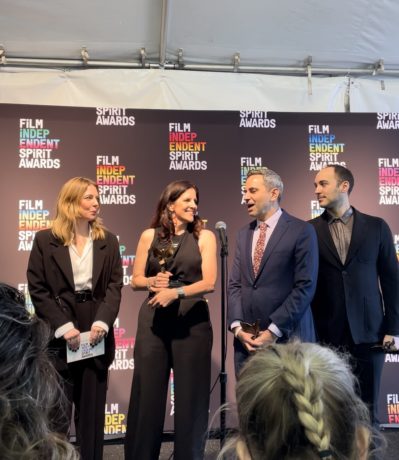
Last Saturday, Cinemacy returned to the giant tent on the Santa Monica beach to celebrate the 38th annual Film Independent Spirit Awards.
The event has become a mainstay throughout awards season for its total dedication to celebrating independent storytellers, and always attracts top talent who recognize the importance of keeping indie film alive. This year brought new changes too, including the switch to gender-neutral acting categories ("Best Actor/Actress" became "Best Lead Performance"), a distribution shift from being broadcast live on the IFC channel to IMDb.com, and – perhaps most impressively – Everything Everywhere All At Once's near awards sweep. With the Academy Awards only days away, the Spirit Awards have had a history of predicting who will walk away with an Oscar on Sunday. Keep reading for highlights from this year's awards show, as well as where you can watch the winners.
Everything Everywhere All at Once
This is no doubt the darling of awards season, racking up seven total trophies at this year's awards show including Best Feature, Best Director, Best Screenplay, Best Lead, Supporting, and Breakthrough Performance, and Best Editing. Directed by Daniel Kwan and Daniel Scheinert, the film stars Michelle Yeoh, Ke Huy Quan, Stephanie Hsu, and Jamie Lee Curtis in roles that are guaranteed to take you through the full spectrum of emotion. The logline is simple: an exhausted Chinese American woman can't seem to finish her taxes. But this doesn't even begin to scratch the surface of the absurdist comedy's unexpected depths, its unmatched genius vision, and unforgettable pop cultural moments (hot dog fingers, Raccacoonie, everything bagel). You can rent Everything Everywhere All At Once on iTunes and Amazon, now streaming on Showtime.
Aftersun
It's hard to believe that Aftersun is director Charlotte Wells' first feature. The mastery of craft and the confidence to let her actors, Paul Mescal and Frankie Corio, explore their characters on screen is something that usually comes with years of experience. It's no surprise that the Best First Feature award went to Wells, who generously shared the honor with her filmmaking crew. Aftersun tells the story of a young, single father and his daughter on holiday before she is set to return to her mother's house and start up the school year. Wells so effortlessly captures the innocence of childhood memories and the unbreakable bond between father and daughter. Aftersun still remains among Cinemacy's favorite films of 2023, and clearly, the rest of the independent film community agrees. We're all excited to follow Wells' career and are looking forward to seeing what she does next. Aftersun is available to rent on Apple TV and Amazon.
Women Talking
Director Sarah Polley and her incredible cast of actors took home the Robert Altman award for best ensemble. Sarah and her casting director John Buchan, who also happens to be her brother, accepted the honor by acknowledging the strength and power of the women who turned Miriam Toews' novel into a force of nature on screen. Women Talking tells the story of a group of women within an isolated religious community who grapple with reconciling a brutal reality with their faith. Starring Claire Foy, Rooney Mara, Jessie Buckley, Judith Ivey, and Frances McDormand. Women Talking is available to rent on Apple TV and Amazon.
All the Beauty and the Bloodshed
Winner of Best Documentary, All the Beauty and the Bloodshed is a standout, revelatory addition to the growing number of films raising awareness around the opioid crisis. Academy Award-winning filmmaker Laura Poitras (Citizenfour) uses her gifts as a documentarian to tell the story of renowned photographer and activist Nan Goldin, whose mission has become to seek justice against the Sackler family, the pharmaceutical dynasty who was greatly responsible for the opioid epidemic's unfathomable death toll. Interweaving rare footage and intimate interviews, All the Beauty and the Bloodshed is a tough watch told in a tender way. All the Beauty and the Bloodshed is streaming on DirectTV, available to rent on Amazon and YouTube.
God's Time
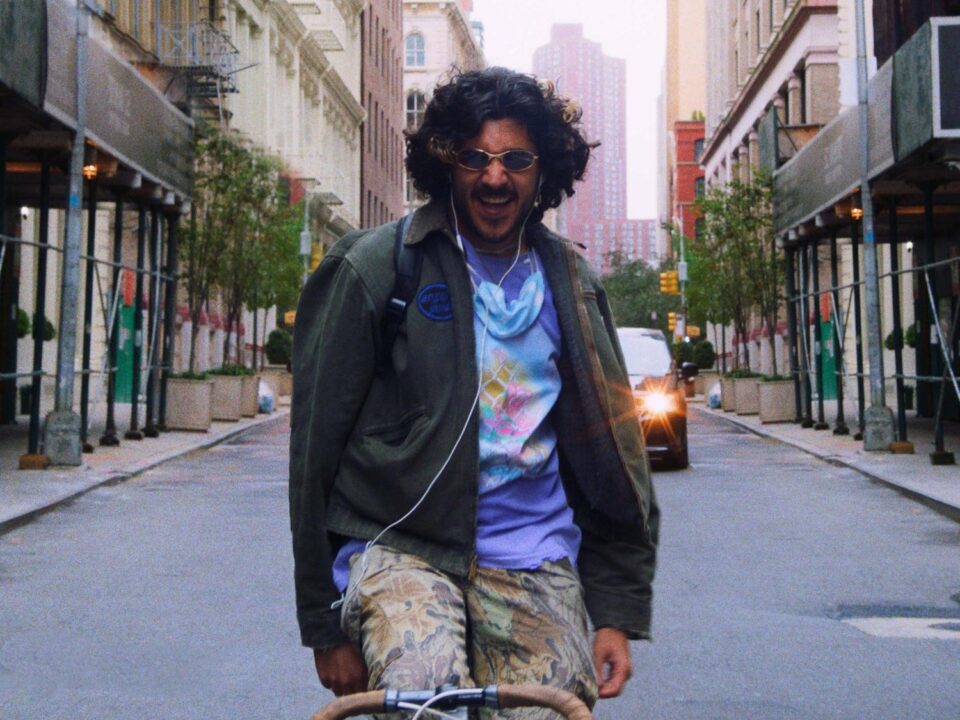
The chaotic energy of New York City is bottled up, shaken, and set to explode in writer-director Daniel Antebi's offbeat comedy, God's Time. The first-time filmmaker tells the tale of two addicts on a misguided mission to stop the murder of their mutual crush's ex-boyfriend. It's messy, but so is life sometimes! God's Time is not for the sensitive viewer. Its lighthearted look at sobriety mixed with tongue-in-cheek humor about addiction woes make for an at-times uncomfortable watch but it's obvious that Antebi doesn't try to play this dark comedy safe.
Addiction comes in many forms, and for best friends Dev (Ben Groh) and Luca (Dion Costelloe), it's the embodiment of Regina (Liz Caribel Sierra). Regina is a fellow recovering addict and the source of their shared infatuation. A topic that comes up a lot during their recovery meetings is Regina's passionate hatred of her ex-boyfriend (rightfully so–he stole her dog, after all).
Her flippant comment of saying she wants to kill him is usually followed by "In God's time," a semi-morbid sentiment that implies he has death coming to him soon enough. But when Regina leaves out that three-word foreshadowing during one outburst, Dev and Luca are convinced that this was her premature confession. And so, they take it upon themselves to stop a crime that hasn't yet been committed.
For fans of Jobe'z World, Zola, or any Safdie Brothers-adjacent film, God's Time has similar tonal energy. Dev continuously breaks the 4th wall and addresses the audience, keeping us up to speed on their thought processes (no matter how bizarre). It's fast-paced and hip, fitting squarely into the growing category of films for the Euphoria crowd.
Daniel Antebi's unique perspective on recovery is a welcomed one, as he allows audiences to find humor in the darkest of places. He offers us the opportunity to laugh with the characters as they poke fun at the antiquated notion of trusting a higher power to fix your problems. Produced by Topic Studios, God's Time is an intoxicating serotonin hit that you'll want to chase.
Distributed by IFC Films. Opening at Laemmle Glendale and on VOD this Friday.
This review originally ran on June 22, 2022, during the Tribeca Film Festival.
The Integrity of Joseph Chambers
If a tree falls in a forest and no one is around to hear it, does it make a sound? Or, in director Robert Machoian's case, if a man murders another man in a secluded nature preserve and no one sees it, is he guilty? Exploring themes of personal accountability and masculine fragility told through an intimate lens, The Integrity of Joseph Chambers is a methodical study of human behavior and the self-preservation tactics we default to when we fear the unknown.
Robert Machoian's previous feature film, 2020's Sundance-selected drama The Killing of Two Lovers, offered an introspective look into a fraught relationship from the perspective of a scorned ex-lover. Machoian once again re-teams with his lead actor Clayne Crawford (Hollywood Critics Association Award-nominee), who played the jilted ex in the slow-burn drama. That same ethos of exploring the darker sides of man's ability to rationalize hardships is very much on display here too, in his new film The Integrity of Joseph Chambers.
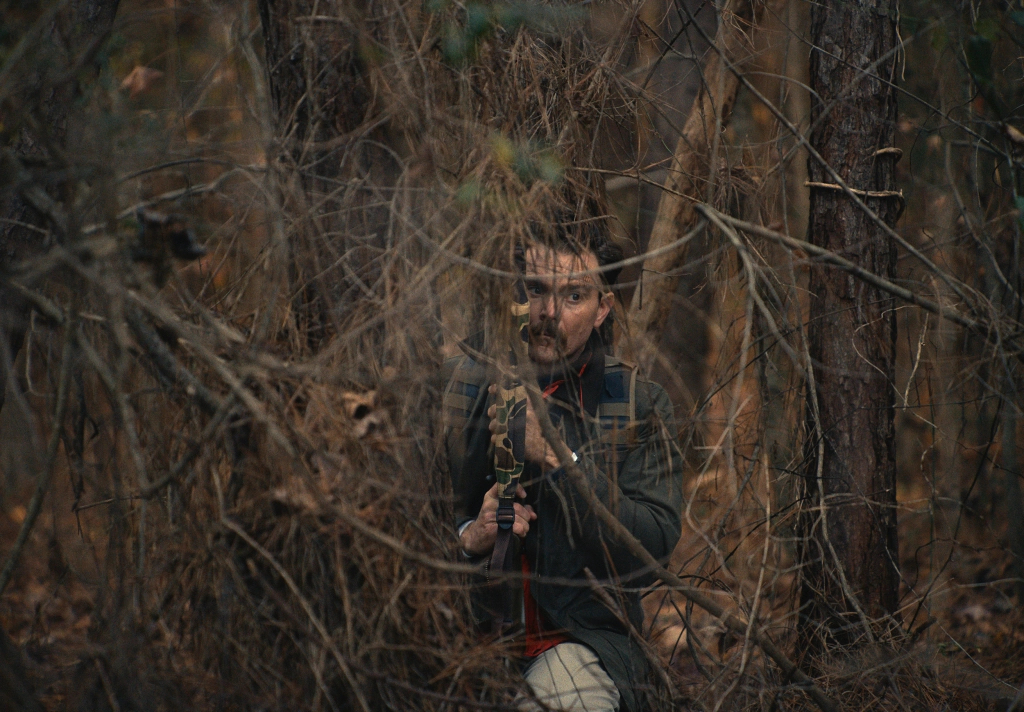
Here, Crawford plays Joseph Chambers, an insurance salesman who, despite being an inexperienced hunter, challenges himself to catch a deer. Believing that his manhood is on the line if he can't provide for his family with his "survivalist instincts," he disregards his wife's (Jordana Brewster) numerous attempts to get him to bring a friend along. After all, what if something happened and Joseph was out in the woods, alone?
The day starts out smoothly enough, Joseph eats his packed lunch and plays with his hunting rifle. However, things take a dark turn when he shoots at what he thinks is a deer, only to discover it was a man. This revelation causes Joseph to spiral, jumping between scenarios that involve burying the body and hiding the evidence to coming clean to the police. Either way, his life is forever changed.
This dilemma gives the film its psychologically thrilling roots. We're left to ponder – what would we do if we were Joseph? Director Robert Machoian does so much with so little; the setting is bare, and the film's entirety rests on Clayne Crawford's performance. But it is the combination of sound editing and score that gives the film life and much-needed emotional catharsis. Composer William Ryan Fritch crafts a hauntingly visceral sonic language that perfectly adds to the slow burn of the visuals. Rounding out the film's small but mighty impact are supporting actors Michael Raymond-James and Jeffrey Dean Morgan.
The Integrity of Joseph Chambers is a psychologically impactful watch that faces an ugly truth. Are we really selfish beings, capable of lying and cheating when we think there are no consequences? Or does the thought of unraveling morality cause us to feel shame, making us own up to our mistakes? That's the chilling question at the center of this layered, pointedly crafted character study.
This review originally ran on June 14, 2022 during the Tribeca Film Festival
Distributed by Gravitas Ventures. 96 minutes. In Select Theaters and VOD on Friday, February 17th
The Good Nurse
A killer nurse's trajectory from doctor's scrubs to handcuffs is depicted in the eerie crime drama The Good Nurse (now streaming on Netflix). Based on the true story of Charlie Cullen's 16-year crime spree – which included the murder of at least 29 hospital patients and up to 400 additional victims – the film details the horrific events that led to his eventual arrest. Directed by Tobias Lindholm, whose previous credits include screenwriter on 2021's Oscar-winning film Another Round and writing the teleplay for one of Netflix's most binge-able crime series, Mindhunter.
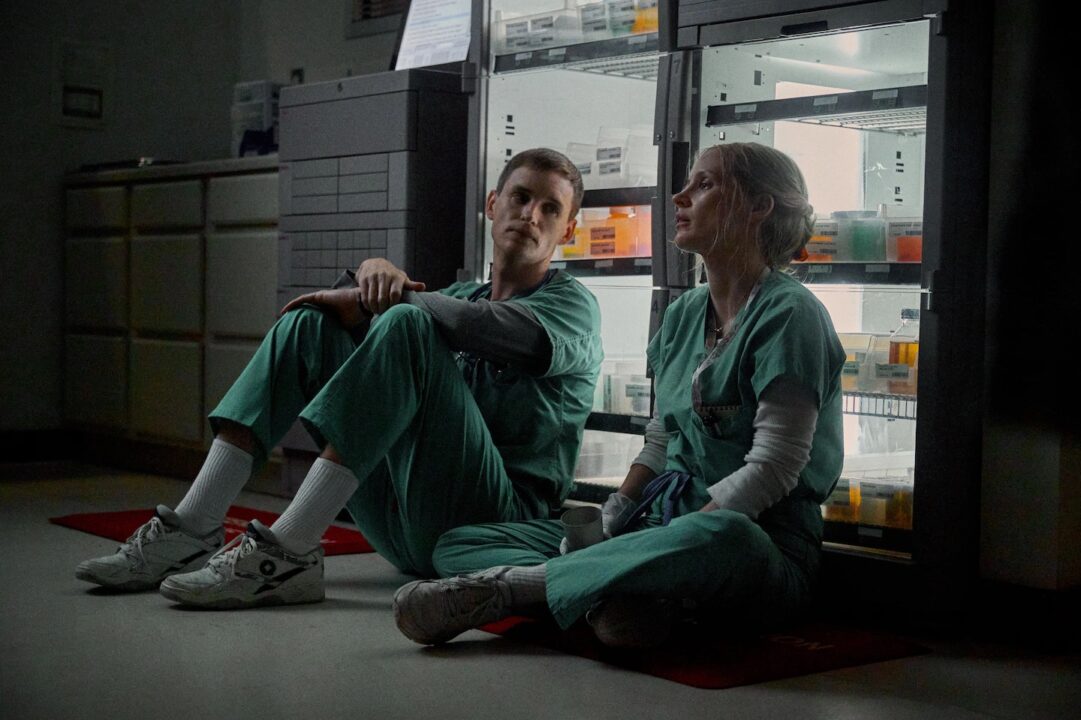
Academy Award-winning actor Eddie Redmayne transforms himself into the 40-year-old sociopath Charlie Cullen. Having bounced around from hospital to hospital throughout his questionable tenure as an ICU nurse, he lands on the floor of a hospital in Central New Jersey in 2003. Here, he meets fellow ICU nurse Amy Loughren (Academy Award-winner Jessica Chastain), a compassionate woman and single mother of two whose own struggle with her health is becoming life-threatening. Amy immediately takes to Charlie's sweet disposition and kind nature, and his goodwill extends beyond that of just a colleague. Their relationship quickly goes from co-workers to friends, staying purely platonic but genuinely invested. However, Amy soon discovers that Charlie's projection of being a good guy isn't necessarily true for everyone he meets.
While initially optimistic about Charlie's addition to the hospital staff, his presence is overshadowed by the mysterious death of two patients. These unnatural circumstances lead the hospital's senior staff to involve state police and an external investigation into their causes of death is quickly launched. The two detectives assigned to the case, Danny Baldwin (Nnamdi Asomugha) and Tim Braun (Noah Emmerich), are immediately suspicious of the hospital's vow of secrecy and believe they are hiding behind loopholes in the law. When a light is cast on Charlie's sketchy employment history and possible involvement, the detectives reach out to Amy to see if they can crack the case, with her help, from the inside. Reluctant to believe that her friend is a murderer, seeds of doubt have already been planted and Amy takes it upon herself to risk their relationship, his future, and her life, to see that justice is served.
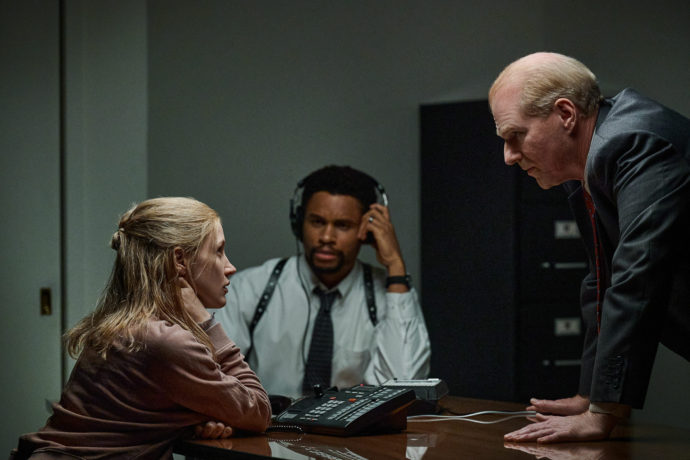
The Good Nurse does an especially good job of capturing the essence of feeling unsettled. Masterfully crafted to match the nature of the crimes, the film is deliberately paced so that the audience feels like they're uncovering Charlie's inconsistencies at the same time as Amy. Running just over 2 hours long, the film successfully builds suspense until the pressure cooker of intensity explodes at the very end, evidenced by Eddie Redmayne's remarkably powerful performance. His characterization of a serial killer is subtle yet undeniably haunting. In her role as an empathetic woman who finds herself struggling with mounting internal conflict, Jessica Chastain is the film's emotional vehicle. Her battle is internal yet we all clearly feel her plight, which is further explored through the film's soundtrack by ambient musician and composer, Biosphere.
Produced by Darren Aronofsky's production company Protozoa Pictures and FilmNation Entertainment, The Good Nurse is a thrilling watch that feels too surreal to be true. However, for as entertaining as it is to see onscreen, the lingering takeaway that not all service workers in uniform have good intentions is a dark realization that I haven't been able to stop thinking about.
2 hours 1 minute. Rated R for language. 'The Good Nurse' is now available to stream on Netflix.
Fingers in the Wind
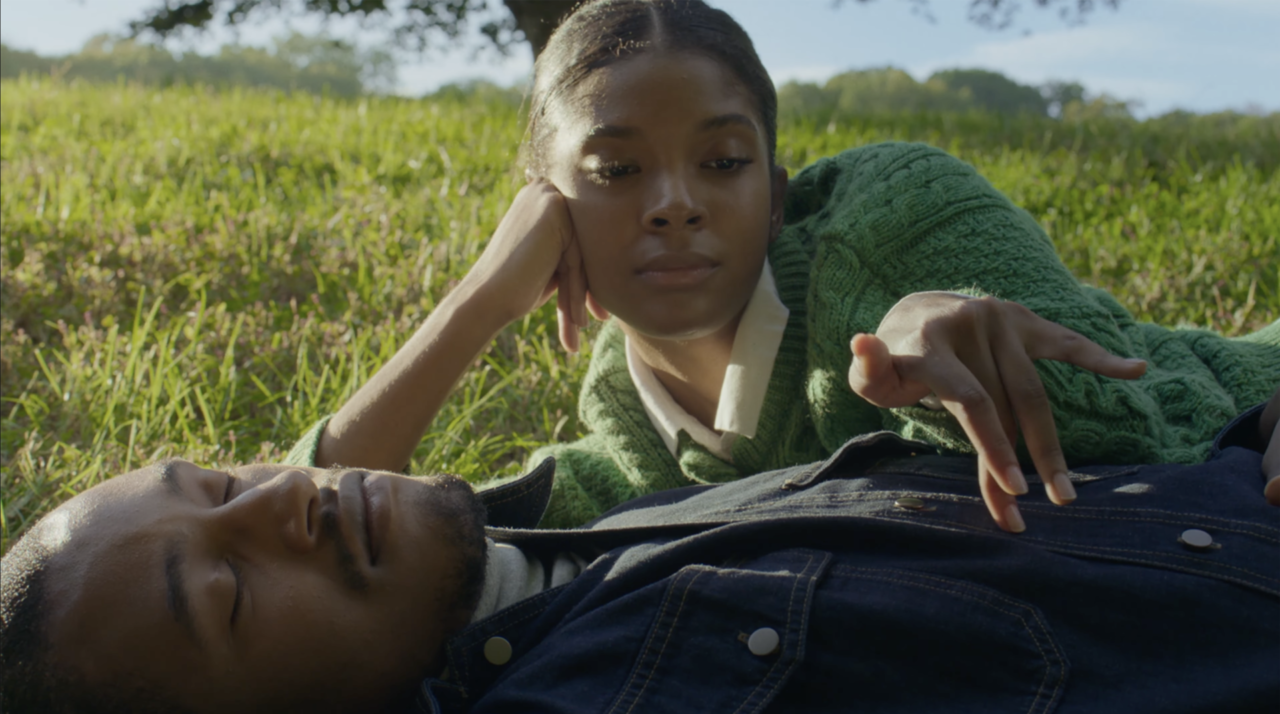
Independent filmmaker Chad Murdock delicately crafts a tender story of love and longing in his feature-length directorial debut, Fingers in the Wind. This mystery/romance hybrid sets three Black and queer young adults front and center, in the midst of evolving relationship dynamics and memories of the past. Serving as director, writer, producer, and editor, Chad's preference for pastel visuals and restrained editing saturates the screen in a warm, artful way.
Set in a quaint section of NYC – untraditional to the majority of films set in the city – the audience can immediately settle into the film's calming atmosphere. A beautifully composed one-shot, running almost two minutes in length, foreshadows one of the film's defining themes: reflection. Opaque glass windows from the central location, a flower market, reflect a sort of optimism and newness stemming from the vibrant fresh flowers and active city streets. The protagonist, Young Man (Azendé Kendale Johnson), enters the frame and buys a bouquet of pink flowers, which will be prevalent throughout the rest of the film.
Meanwhile, two women Naya (Maya Holliday) and Faye (Taylor Brianna) are coming to terms with the end of their friendship. The reason for the breakup isn't immediately clear, only that their relationship has become "empty". Faye is heartbroken and quietly shocked at the drastic measure Naya has taken to sever ties. It's shortly after saying goodbye to her former friend when a vulnerable Faye comes across the young man from the flower shop, who she believes she recognizes from her past as Kenny. Coincidentally, he does not recognize her but their undeniable chemistry cannot be overlooked, so Faye chalks up her misremembering to the passage of time and continues to spend the rest of the day with him.
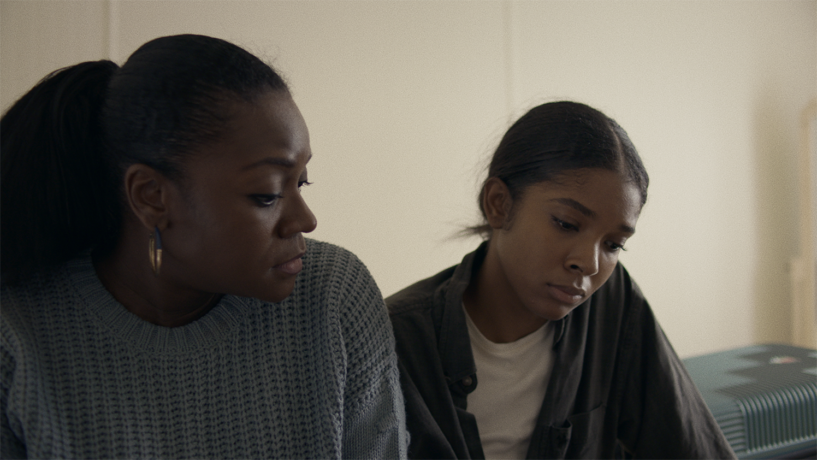
It's here when we start to realize that not everything is as it seems. After Faye confides in the man by sharing a deep-rooted secret of past trauma, the film takes a more surreal approach in its storytelling format. Like its title suggests, Fingers in the Wind encapsulates the feeling of trying to grasp onto something intangible, like a feeling or a moment in time. Confident performances from Taylor Brianna and Azendé Kendale Johnson, in particular, help guide the audience through the ambiguity of some of the film's more challenging scenes.
Fingers in the Wind is a measured, artful examination of friendship, memory, desires, and longing. At times, it feels reminiscent of a Shakespearean love story of courting, although it plays rather ambiguously which could hinder its universal audience appeal. However, it is an impressive debut from a new voice in cinema, especially one that's focused on Black, queer, coming-of-age stories.
Women Talking
It's been a while since we've seen a memorable arthouse output from Orion Pictures, the production company behind box office classics like The Terminator (1984), RoboCop (1987), and The Silence of the Lambs (1991). Their re-introduction to the art-centric, indie crowd hits a high note with writer/director Sarah Polley's powerful feminist drama, Women Talking. Based on Miriam Toews' 2018 novel of the same name, Women Talking is an unapologetic statement of radical awakening and action, where feminine needs are the focus and sisterhood is an act of self-preservation.
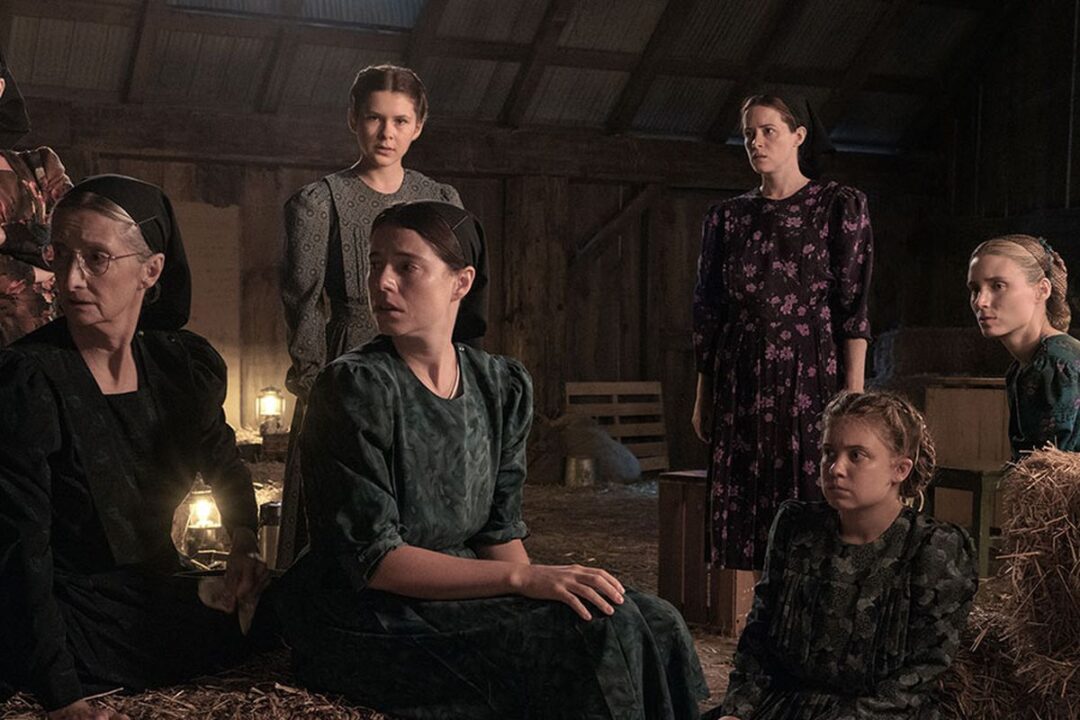
At first glance, it looks as though we've been transported to a remote compound in the early 1900s. Kids running around outside free from screens, conservatively dressed women unloading goods from horse-drawn buggies, and pencils and paper taking the place of computers. But this is not a time-period piece. This is what an isolated religious community looks like in 2010, as close to Amish as one can get without directly saying so. The audience is dropped into the middle of heightened tension as soon as the film begins – clearly, there are disturbing issues that must be dealt with. A group of women from the community's most prominent families are appointed to sort out the impending dilemma.
The men of the community, who have been mysteriously absent from the compound since the beginning of the film, are accused of sexually violent acts towards the women and children. Outraged and disgusted by their predatory and vile behavior, there is no disagreement from the women the men need to stop. Where it becomes a point of contention is how – or if – the women choose to retaliate.
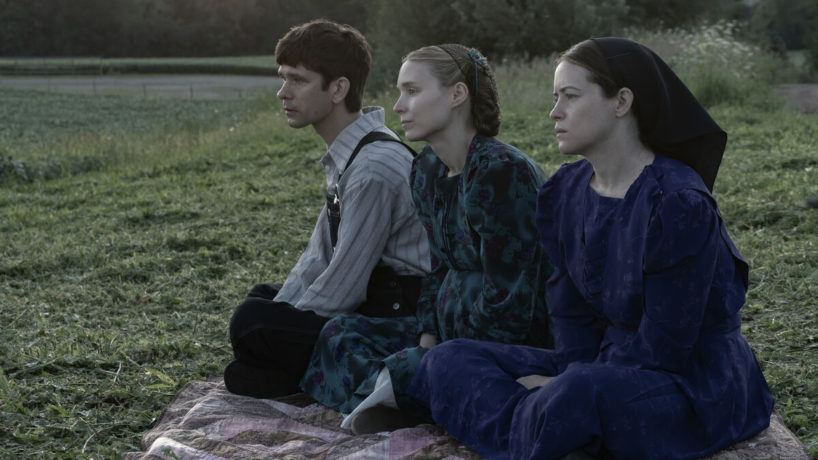
Within the group are those who want to stay and keep things status quo (Scarface Janz - Frances McDormand), those who want to stay and fight (Salome - Claire Foy), and those who want to leave (Ona - Rooney Mara). The arguments for their varied positions all come back to their interpretation of the Bible, which some take literally while others interpret it more vaguely. Everyone is sensitive to the religious element but that doesn't stop the women from candidly voicing their opinions, no matter how divisive. Acting as the group’s secretary is the affable school teacher (and sole male) August Epp (Ben Whishaw), who writes down the points and arguments made by the illiterate women. Shot almost entirely in the hayloft where these conversations take place, the tension builds like a pressure cooker until a decision is finally reached.
Women Talking derives its strength and staying power not just from the eloquently-voiced script, but also from its phenomenal ensemble cast. Rooney Mara, Claire Foy, Jessie Buckley, Frances McDormand, Judith Ivey, Sheila McCarthy, Michelle McLeod, Kate Hallett, Liv McNeil, August Winter, and Ben Whishaw give some of the year's best performances. Like a delicately woven web, the characters' lives intertwine amongst heartache, elation, and love. Despite their differing views, they continue their heated conversations for the greater good and immediate future of the women of their community (a gentle reminder that earnest communication can de-escalate many problems).
Resilience is the backbone of Sarah Polley's script adaptation, beautifully realized on the big screen. The film lacks saturation, giving off cool blues and greys, perhaps in an attempt to show how devoid of color and joy this moment is in all of their lives. The trauma these women are dealing with is both felt and seen. Behind the scenes is another strong female force in composer Hildur Guðnadóttir. Her layered, transcendent score builds throughout the entire film until it culminates in a glorious final sweeping shot that will evoke goosebumps.
Explosive, euphoric, and powerful, Women Talking is a passionate piece of filmmaking from all sides. It broaches difficult subject matter with empathy and compassion and encourages audiences to do the same.
Distributed by Orion Pictures. 104 minutes. Rated PG-13. In select theaters Christmas, everywhere January 20, 2023.
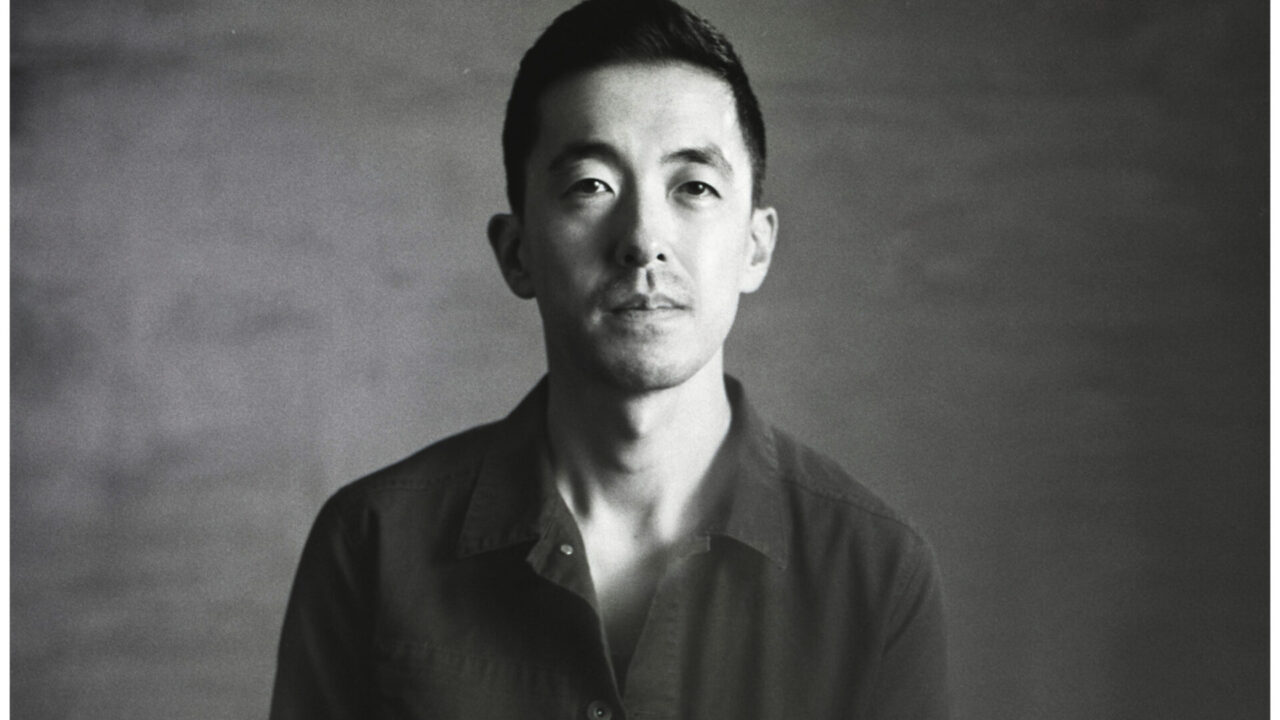
Brian H. Kim Debuts Track From 'Spoiler Alert'
Los Angeles-based composer Brian H. Kim reunites with director Michael Showalter in Focus Features' latest Spoiler Alert, based on Michael Ausiello’s best-selling memoir Spoiler Alert: The Hero Dies. Blending soft synth notes with evocative strings and gently stroked piano keys, Brian guides the audience through the highs and lows of navigating life when the happy ending you expected doesn't go according to plan.
Starring Jim Parsons and Ben Aldridge, Spoiler Alert is a heartwarming, soulful story that follows the 14-year love affair between entertainment journalist Michael (Parsons) and his partner, Kit (Aldridge). Since the beginning of their relationship, Michael has always been in awe of Kit. From his close-knit family (Sally Field and Bill Irwin) to his supportive friends, Michael realizes that Kit is living the life he always wanted. Their love and admiration for each other are strong – seemingly unbreakable – and their future looks stable and bright. However, when a terminal diagnosis enters the relationship, their Happily Ever After begins to look very different.
Cinemacy is excited to premiere “I Will Delete It, Michael”, from Focus Features' Spoiler Alert, below:
Brian's awareness of the sensitive nature of the subject matter is brightly reflected in this beautiful track. As heard here, Brian intentionally creates music that feels authentic and true to the characters onscreen without overpowering the story. He doesn't force the audience to emote through stereotypical musical tropes, rather, he gives the audience space to figure out their own feelings and identify their own thoughts. He explains, "‘I Will Delete It, Michael’ accompanies one of the film’s most emotional moments — a love scene with almost no dialogue that is a culmination of Michael and Kit’s 14 years together. I used a combination of prepared piano, strings, and atmospheric synths with long, dreamy delays, playing a melody and progression that would become ‘Michael and Kit’s theme’ as we worked on the film. This theme returns in crucial moments later in the film, but it is at its fullest in this scene.”
Spoiler Alert is Brian's first wide-release studio feature. His repertoire is expansive, having created scores under a myriad of musical genres including the rhythmic beats in Panic (Amazon) and Search Party (HBO Max) to more cinematic orchestrations in G.B.F. (dir. Darren Stein) and Hello, My Name Is Doris (dir. Michael Showalter). Outside of the film industry, Brian has recorded with artists such as Adele, Lin-Manuel Miranda, Neil Patrick Harris, Patrick Stump, and Boyz II Men.
Back Lot Music is releasing the ‘Spoiler Alert’ Original Motion Picture Soundtrack on Friday, December 9th. Listen to the album here.
‘Spoiler Alert’ is now playing in select theaters, everywhere December 9.

The UnRedacted
Back in January, an independent documentary called Jihad Rehab had its world premiere at the Sundance Film Festival. Fast forward to October 11th, Jihad Rehab–now going by The UnRedacted–has resurfaced in the zeitgeist after the film's director Meg Smaker made an appearance on the Sam Harris podcast, Making Sense. Her story is inspirational, to say the least, and I encourage everyone to give the episode "A Tale of Cancellation" a listen. Last month, I was invited to watch The UnRedacted at a small theater in Glendale, CA. With no official distribution or release plan, The UnRedacted is a film that no one can see. However, its story is still worth telling in hopes that this will change.
The heartbeat of the film is empathy which, ironically, upsets many of the film's naysayers. The UnRedacted follows a small group of former terrorists and Guantanamo Bay detainees as they attempt to reintegrate into society by spending a mandated amount of time at the Prince Mohammed Bin Nayef Center for Advice and Care, a rehab institution for Islamist jihadis in Saudi Arabia. Meg Smaker's film is highly intimate as she is the one sitting across from the men asking them, in their native Yemeni tongue, questions about their childhoods, their decision to join terrorist organizations, and their dreams for the future.
It's easy to feel hatred toward these strangers at the onset, it goes against every instinct to empathize with evil. However, Meg's film intends to push audiences out of their comfort zone. The UnRedacted encourages us to look beyond one's horrifying past, without judgment, and just listen.
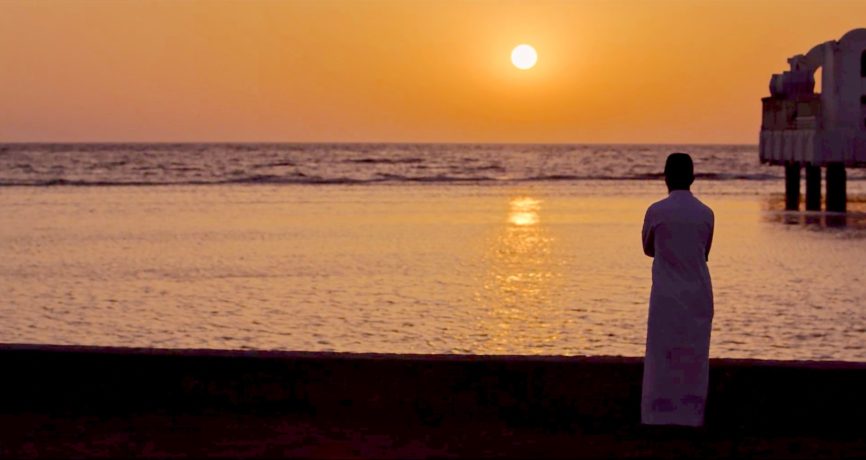
At times, it feels almost surreal to acknowledge any feelings of sympathy for the men who participated in al-Qaeda's reign of terror. Years spent at Guantanamo Bay didn't offer any humanitarian rehabilitation, which is why it is vital that behavioral and psychological centers like Prince Mohammed Bin Nayef Center for Advice and Care exist. Through drawing, expressive writing, and other creative activities, the men are given the opportunity to process their past and set their sights on a brighter future. Enrolling in classes to learn basic skills, like navigating the internet and balancing a checkbook to dating advice and interpersonal communication, are all intended to set up the men for success once they graduate and enter the outside world again.
This is not a film that has a "happy ending", nor did it set out to be. This is a film that shows reality in all of its confusing and complex forms. Sure, the controversy surrounding the subject matter is layered and divisive, and best explained by Meg Smaker through her own words in her conversation with Sam Harris. But just because something is hard to watch, doesn't mean it should be erased. The UnRedacted is not a hateful anti-American film, quite the contrary in fact. The UnRedacted is a symbolic peace offering to those who have wronged, showing that if one is committed to change and truly redemptive, a second chance at life is possible.
At the time of this review, The UnRedacted is still unavailable for viewing.
Edit: A correction was made on December 3rd, 2022: an earlier version of this article misstated that the film had been pulled from the Sundance Film Festival lineup following its World Premiere; Sundance Institute has confirmed that the film had all of its intended screenings at the festival.
'EO' is a Stunning, Emotive Arthouse Gem
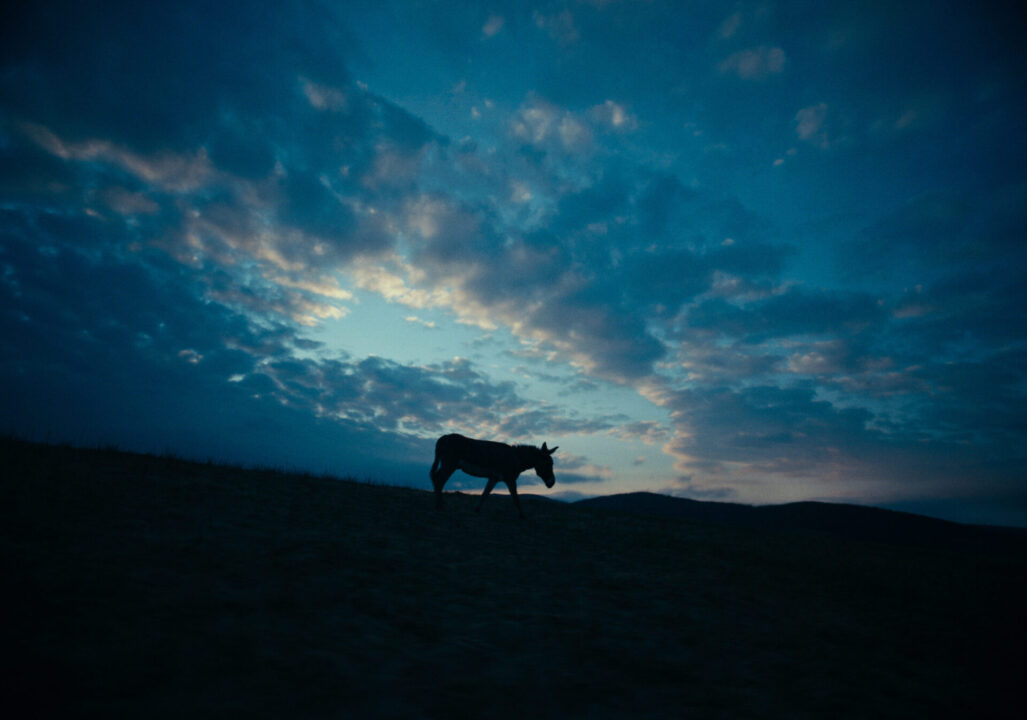
EO is a future classic. Declaring its imminent legacy might seem premature to some, but it feels wholly appropriate after having witnessed the film's singular, spectacular vision. 84-year-old director Jerzy Skolimowski's film about a wayward donkey tells a story not just of human nature and goodwill but the reality of detachment and survival. Stark imagery combined with a pitch-perfect score and sound design, EO is a truly unforgettable piece of filmmaking.
Running just 88 minutes long, the film opens with a mesmerizing shot of EO and his handler performing one of their routine circus shows under the big top. Lights are flashing, the crowd is cheering – it's disorienting but impossible to look away. EO remains calm under the pressure. Outside of the circus, however, local activists confront the traveling show with broad claims of animal abuse and rip EO from the comforts of his environment, taking him away from the only home and people he has ever known. He is boarded with the other animals and driven all over Europe for days before he is eventually dropped off at a barn in an unfamiliar destination.
Despite being "freed", EO is restless and longs for the routine and the personal attention he received from his circus handler (Sandra Drzymalska). Without words, EO conveys his determination to change his circumstance through action as he escapes the barn and begins his journey back through the Polish and Italian countryside, encountering highs and lows–cruelty and kindness–in equal measure.
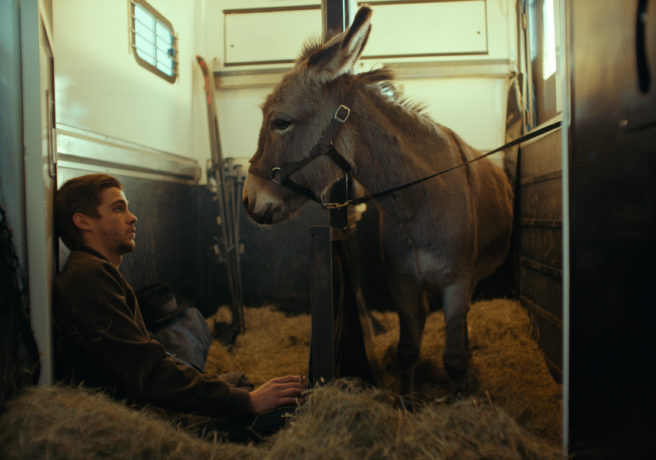
The protagonist of the picture, a gray Sardinian donkey named Tako, is the heart of the film. His expressive eyes and cheeky personality convey so much through subtle movements and melancholic grunts. Six donkeys were used throughout the filming process, and it's been made clear that no animals were harmed in the making of the film.
Aiding EO's valiant journey is the sweeping, full-bodied orchestral score from Polish composer Pawel Mykietyn. Mixing classical symphonic melodies with more contemporary, synth-based electrics, EO's score is a fusion of operatic peaks and gentle ambient soundscapes. Sound in general is heightened throughout EO, from visceral ADR to intimate ASMR, our senses tingle in every scene.
After many successful festival runs, including Cannes (Jury Prize winner, Palme d'Or nominee) and the European Film Awards (European Original Score winner), EO has continued to have a strong hold on me. Tenderly told with striking visuals and a ruminating score, EO deserves a top spot in the modern arthouse canon.
Distributed by Janus Films. 88 minutes. Not rated. Opening at the Los Feliz 3, Alamo Drafthouse DTLA, and Laemmle Royal this Friday, December 2, 2022.

'Good Night Oppy' Tells An Unexpected Love Story Between Man and Machine
If the rock scene from Everything Everywhere All at Once – you know the one – unexpectedly brought a tear to your eye, make sure you bring a box of tissues to Good Night Oppy. Having its world premiere at the Telluride Film Festival before playing at TIFF, this documentary tells the true story of two NASA robots who defied the odds by surviving nearly 15 years longer than expected. See how I used the word "surviving"? I almost wrote "living" which, as we all know, inanimate objects cannot be considered living things. But director Ryan White gives us reason to pause as we can't help but form an emotional attachment to these autonomous rovers over the course of the film.
In 2004, the Mars Exploration rovers Opportunity and "twin sister" Spirit landed on opposite sides of the foreign planet. The goal coming out of NASA's Jet Propulsion Laboratory in Pasadena, CA was to determine once and for all if there was neutral water on Mars, furthering the possibility of life. A team of scientists and researchers spent years developing rovers that could investigate the Red Planet and communicate back to Earth through complex tech systems. Opportunity and Spirit were built to have a life expectancy of 90 days. So, imagine the excitement when both rovers made it to day 91 and the disbelief when they hit the one year mark, and so on until nearly 15 years later.
Of course, Good Night Oppy is only as sentimental as you allow yourself to get as the viewer. Imagine the *Criterion-selected* film Wall-E come to life – if that film tugged at your heartstrings, be prepared for a similar feeling with Oppy. Featuring photo-real special visual effects and animation by Industrial Light & Magic, the visual effects company founded by George Lucas, Good Night Oppy has that classic Star Wars look: rich and stunning.
The story at the heart of the film is the quintessential American Dream. A team of scientists from around the world come together to propel US space exploration into the future, quite literally reaching for the stars. Good Night Oppy offers audiences old-fashioned, feel-good optimism and stands as a testament to just how powerful inanimate objects can be when personified by humans.
Distributed by Prime Video. 105 minutes. Rated PG. Available to stream on Amazon Prime Video on Wednesday, November 23, 2022.
This review originally ran on September 23, 2022 during the Toronto International Film Festival.
'The Menu' Serves a Slice of Humble Pie to Elitist Eaters
The world of fine dining is an elusive one. The thought of spending a month's paycheck on a meal–regardless of how many Michelin stars it has–feels like a blasé act reserved for the affluent community (and the affluent community alone). So, when the opportunity arises to enter into the world of elitist eaters for one unforgettable night, of course, one would jump at the opportunity. What could possibly go wrong? Turns out, a lot. Director Mark Mylod's (Succession) satirical thriller The Menu puts a clever spin on the "Eat the Rich" anecdote that, while mesmerizing to look at with the right amount of humor, leaves us wanting more.
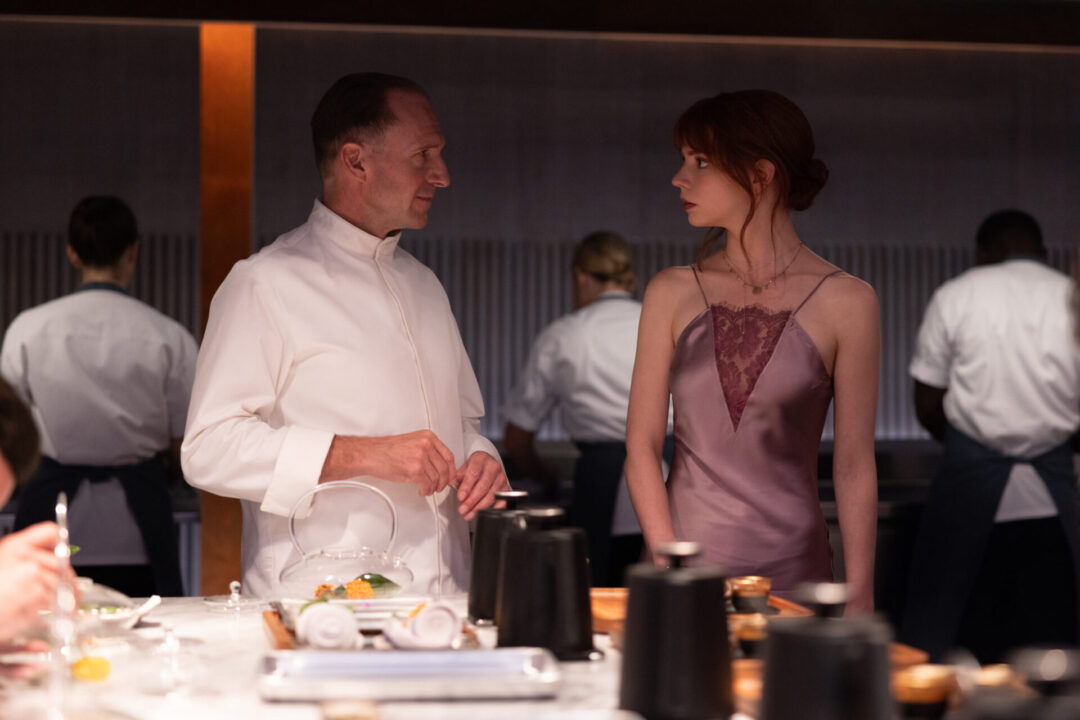
Margot (Anya Taylor-Joy) and Tyler (Nicholas Hoult) are a well-off and stylish couple who are about to embark on the experience of a lifetime: partake in a lavish tasting menu from the globally-celebrated Chef Julian Slowik (Ralph Fiennes). From the onset, the couple gives an "oil & vinegar," "opposites attract" vibe; an apathetic Margot in her black leather jacket tries to stay interested as she listens to an overzealous Tyler talk about what they can expect at Hawthorn, the exclusive restaurant on the remote island they are heading towards. With tickets in hand for this once-in-a-lifetime dining experience costing thousands of dollars (which a sensible Margot immediately views as suspicious) the couple, along with a handful of other guests, board the charter boat headed to fine dining mecca.
Awaiting them on the island is the reclusive Chef Julian Slowik, manager Elsa (Hong Chau), and their obedient staff, who have prepared a luxurious night for the special guests. Along with Margot and Tyler are boisterous tech bros, Bryce (Rob Yang), Soren (Arturo Castro), and Dave (Mark St. Cyr), well-mannered repeat customers, Anne (Judith Light) and Richard (Reed Birney), arrogant restaurant critic Lillian Bloom (Janet McTeer) and her minion editor Ted (Paul Adelstein), an aging movie star (John Leguizamo) and his assistant Felicity (Aimee Carrero). It's a cornucopia of egos and entitlement, to which Margot is definitely the odd woman out. Once seated in the minimalist open-concept kitchen and dining area, the guests are treated to avant-garde creations that are both wacky and genius. "Bread is food for the poor," laments Chef, so he offers his guests a bread basket with no bread. Confused but engaged, the guests embrace the theatrics of the Chef's multi-course menu. However, things take a dark turn when a sous chef commits suicide as part of the menu and the guests realize that danger is served.
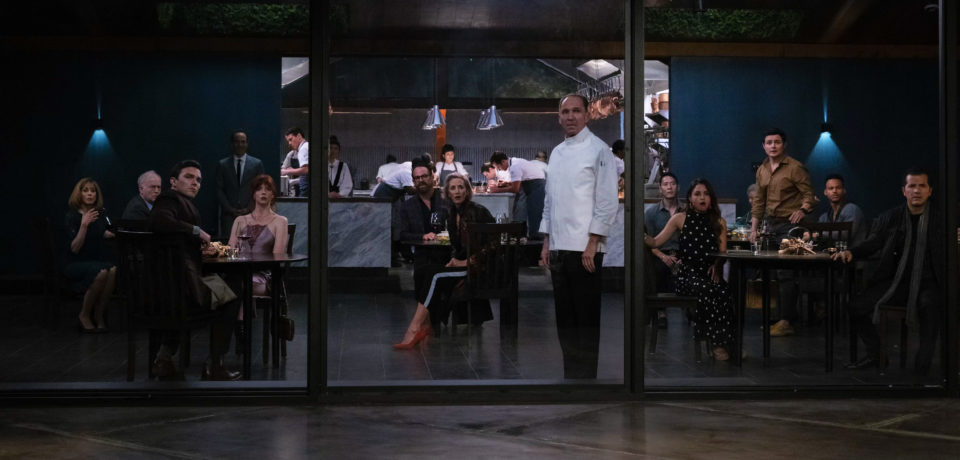
The Menu has a cheekiness that feels both fun and dark; there are moments that are laugh-out-loud funny–mostly due to Ralph Fiennes' *chef's kiss* performance– while other moments exude heightened tension. The containment of the characters on the remote island with no working wifi or plausible escape route works in the film's favor and builds suspense and a sense of dread almost immediately. Adding to the film's robust tension is the score from celebrated composer Colin Stetson (who created the eerie soundscape for Hereditary).
Director Mark Mylod pokes fun at food culture not just within the story of The Menu, but in how the film is structured. Before the film begins, a title card acts as an invitation into this elitist culinary experience, welcoming audiences to the event that is to unfold. An obvious inspiration is also the David Gelb-helmed Netflix series, Chef's Table. Some shots pay homage to the show by mimicking how the distinct courses are framed, described, and lusted over by eager foodies.
However, what falls short is the story itself. The execution is fully-formed, but the plot feels half-baked. The biggest question I was left with after viewing was "Why?" Why this group of guests? Why did Chef choose this night? Why that grand finale? Perhaps answers to those questions would've helped provide answers to another qualm I have about the inadequate backstory. The characters deserved more backstory, especially Tyler who-contrary to what the poster implies–is not a main character. I'm aware that what I'm going to say next is purely a personal preference but I also wasn't convinced Anya Taylor-Joy was the right actress for this role. It felt as if she was going through the motions. In this role, she lacks the charisma and power that is needed when acting against Ralph Finnes, making for an off-balanced output.
Ultimately, for as beautiful and stylish as it is, The Menu leaves a mediocre aftertaste. If you're looking for an "Eat the Rich" film, I suggest The Menu be your appetizer and Triangle of Sadness be your main course. Perhaps Bones and All can be dessert.
106 minutes. Rated R. 'The Menu' is now playing in theaters.