

'In a Valley of Violence' Review: An Old-School Western with Fresh, Distinct Attitude
Self-admittedly, I'm not the biggest horror fan, so my first introduction to director Ti West was at the 2013 AFI Film Festival where his thriller/horror film The Sacrament was shown during the midnight screening series. As the lights came up at the end, I felt rejuvenated– despite it being nearly 2am. There was something about the way this director works a story that kept me on the edge of my seat, from guessing at potential plot twists, to excitedly giddy when the unexpected happens. This same charisma can be felt in West's latest directorial endeavor In a Valley of Violence. A departure from his traditional safe zone of low budget horror, this in no way means that Valley lacks in the obscenely bloody department.
Ethan Hawke plays Paul, a handsome drifter who is wandering through the hot and barren desert towards Mexico with only the clothes on his back and a loyal canine companion protectively at his side, a border collie/blue heeler mix, named Abby (Jumpy). While scouting their next move, Paul discovers a shortcut through the poor and forgotten mining town of Denton, often referred to by outsiders as the "Valley of Violence." Paul quickly learns that Denton lives up to its reputation as he comes across the outspoken and brash Gilly (James Ransone), son of the town's Marshal (John Travolta), as well as his fianceé Ellen (Karen Gillan), and his equally obnoxious associates.
A fist fight between Paul and Gilly in the town's square is just the beginning of a terrible downward spiral for both the men and the town as a whole. Revenge becomes the foremost thing on their minds, and neither one plans to stop until they see the other dead. Boundaries are crossed, relationships are torn apart, and blood spews from every possible direction. However, Paul discovers that not everyone is out to get him. The young and loquacious Mary Anne (Taissa Farmiga), who happens to be Ellen's younger sister, becomes deeply infatuated with Paul's mysterious character and sees him as her ticket out of town.
West does a superb job in paying homage to the classic movies of Western Americana. From the stylized opening credits to the dramatic camera push-ins on characters and even the color grade, he sets an old-school mood with a fresh, distinct attitude. It may be that West attributes some of Valley's style to horror master Quentin Tarantino, specifically The Hateful Eight and Django Unchained. Although, with a runtime of 104 minutes (compared to 167 minutes and 165 minutes, respectively) West's pacing proves to be tighter and more succinct.
Expect to see another solid performance from Hawke, who takes his even-keeled, grungy anti-hero persona and delivers high-intensity action to the scenes that need it most. Not to be upstaged is John Travolta as The Marshal. It was truly a pleasure seeing Travolta in this role; not only did he steal scenes with his spot on comedic timing, it is generally good to see him back on the big screen. And speaking of stealing scenes– I believe Jumpy's performance as Abby the dog is the best we've seen since The Artist. Given the fact that she tucks herself into bed, takes bubble baths and a myriad of other equally impressive tricks. As the only dog cast in the role, she really is the MVP of the film.
All of this to say, Ti West's film, which he also wrote and edited, is a fantastic and original work from the guy previously known as the "horror director." West shows the film industry and fans alike what is possible when stereotypes become broken and one challenges himself creatively. As you get ready to see In a Valley of Violence this weekend (and I recommend you should), be prepared to laugh, shed a few tears, and most importantly, be ready to be entertained.
'In a Valley of Violence' is rated R for violence and language. 104 minutes. Opening at the ArcLight Santa Monica and On Demand & Digital HD Friday, October 21st.


'Do Not Resist' is An Unsettling Exposé of Those Sworn "To Serve and Protect"
On Saturday, October 8th, three Palm Springs police officers were shot after responding to a family disturbance call, a seemingly routine operation that ended up being anything but.
Jose Gilbert "Gil" Vega, 63, a 35-year veteran who was due to retire in December, and Lesley Zerebny, 27, who had just returned from maternity leave after giving birth four months earlier, were both killed as a direct result of their gun-related injuries. As tragic and shocking as this situation is, officer-involved shootings– from both sides of the gun– are no longer isolated incidents, but instead are becoming more commonplace each day. The pervasive question of "how did we get here" is what makes director Craig Atkinson's timely documentary Do Not Resist so compelling as he shines a light on the reality of American policing today, the militarization of the force, and the effect it is having on the communities they are sworn to protect.
Do Not Resist opens on the streets of Ferguson, Missouri during one of the nightly protests following Michael Brown's shooting death in 2014, where tension and emotions are at an all-time high. Atkinson and his camera become a fly on the wall as hundreds roam the streets chanting "No Justice, No Peace" and "Hands Up, Don't Shoot" while police try to control the ever-growing, increasingly hostile crowd. It's these types of scenarios that raise the question of how to ensure the safety of citizens and the officers themselves. Many seem to think that military-grade weapons, armored cars, and other various equipment will make communities a safer place, and since the federal government has given police departments more than $40 billion in military-style equipment since 9/11, access to this weaponry is so much easier.
But who is this benefitting, really? Atkinson attempts to show how citizens disagree with the choice to accept such high-powered weapons for fear that America will become a militarized war zone and in turn, the rights and free will of citizens will come second to an officer's agenda. "More Mayberry, Less Fallujah" one protestor's sign reads. Then there are those who side with law enforcement, claiming that they need these specific weapons, because "at some point, the state has warranted it." And who can blame the officers for assuming the worst in others when they are consistently being trained by those in positions of authority that they are "men and women of violence" and "violence is your weapon." Is it really any surprise then that the first reaction is to turn to military-style protection?
This issue, in general, is a divisive one, and while Do Not Resist does side with those critical of law enforcement's tactics, there is no arguing with the facts and numbers it presents onscreen. We see and hear first-hand accounts of police training seminars admiring the reputation of law enforcement in places like Mexico and Russia and acknowledging the use of city-wide CCTV cameras with software that allows the government to track people and objects. It is all extremely eye-opening and a disturbing reality check of what 21st-century American police culture looks like today.
It can all be boiled down to the age-old question: Which came first, the chicken or the egg? In this case, are extreme policing tactics to blame for the citizen's distrust of cops and subsequent violent behavior? Or is the out of control behavior of citizens the reason for such heightened and extreme police security? Attacks on and by law enforcement, in general, is nothing new, but the rate at which it continues to happen is shocking. In the Los Angeles area alone, there have been a number of fatal police shootings in South L.A., Pasadena, as well as El Cajon, to name a few. However, there are two sides to the story, and director Craig Atkinson gives us a peek into this issue in this Tribeca award-winning documentary.
Directly or indirectly, we find ourselves at a crossroads right now when it comes to trusting the police. New cases of police brutality primarily against black men, some of whom are found to be unarmed and non-threatening, seem to make headlines every other week and only further perpetuate the stereotype of the "crooked cop." Do Not Resist does not attempt to answer the question of how to solve this problem, rather, it forces one to become aware of the situation that is unfolding in our neighborhoods, affecting our family and friends, and tarnishing our nation. Just over an hour-long (any longer would have been incredibly depressing), Do Not Resist should definitely be mandatory viewing.

'Under the Shadow' Review: Exposes a Haunting Fairytale From the Quran
October is the perfect time to revisit those classic thrilling tales that run chills down your spine (for a full list of what is available to stream now, check out our What's Streaming Feature).With Halloween quickly approaching, it is time to look past the traditional werewolves and vampires, and check out the Farsi-language Iranian festival-breakout, Under the Shadow. Marrying politics of the 1980s with timeless horror, writer/director Babak Anvari's feature-length directorial debut is a fresh take on international folklore, where spooks have no bounds.
The film begins with a title card giving historical context to clarify the situation of the characters, who are living in Tehran– the epicenter of the Iran-Iraq War during the 1980's. Our protagonist is Shideh (Narges Rashidi), a wife, mother, and aspiring doctor, who is told she cannot continue her studies due to her previous involvement in political activities. Frustrated and resentful, Shideh finds herself at a crossroads when her husband Iraj (Bobby Naderi), a practicing doctor, is drafted by the army to aid wounded soldiers on the frontlines of battle. She ignores his pleas to take herself and their daughter Dorsa (Avin Manshadi) to find safety out of town and instead opts to stay home alone in their modest apartment.
Strange things begin happening in the complex like an airstrike that hits the apartment, but miraculously the missile fails to explode. Soon, personal possessions begin disappearing; for daughter, Dorsa, it is her favorite doll and for Shideh, her Jane Fonda workout VHS tape. Slowly, the once strong woman, Shideh finds herself transforming into an unstable and fearful girl. Then the hallucinations begin, making it hard to differentiate reality from a nightmare. As Shideh nears brink of insanity, she learns from a superstitious neighbor that this could be the work of Djinn, Middle Eastern spirits that travel with the wind to possess unsuspecting victims. This brings up more questions than answers, but ultimately Shideh knows that she has to face whatever is tormenting her family head on for any chance of survival.
Under the Shadow has a Sixth Sense vibe in the way that it is a psychological slow burn for most of the film, but the last 20 minutes really gets the heart rate pumping. That said, there are early moments of discomfort that fully engage the audience into caring for our protagonist. For example, Shideh choosing to stay in the house alone is the equivalent of the stereotypical scenario of a girl walking home alone through the woods at night, an obviously bad idea! Our stomach is in knots as we foreshadow the events to come, and with credit to director Babak Anvari, the events that do come are unexpected. There are no cheap tricks or forced emotional pulls here, rather, good old-fashioned mind games.
It is no surprise why Under the Shadow has been a festival favorite; not only does it take the horror genre to new heights by introducing Western audiences to Djinn, the haunting fairytale from the Quran, but it also has this refreshing feeling of a genre film done right. Narges Rashidi takes command as Shideh and her performance is powerfully affecting. Not to be out "shadowed" is her 9-year-old co-star Avin Manshadi, who makes her acting debut in this film. Solid performances coupled with an equally powerful script gives Under the Shadow all the necessary ingredients to be a staple in the horror film catalog.
'Under the Shadow' is rated PG-13 for terror, scary images, and brief language. 84 minutes. In theaters at Sundance Sunset Cinema and on VoD tomorrow, October 7th.
Review: 'Danny Says' is a Larger Than Life Look at Rock and Roll Legends
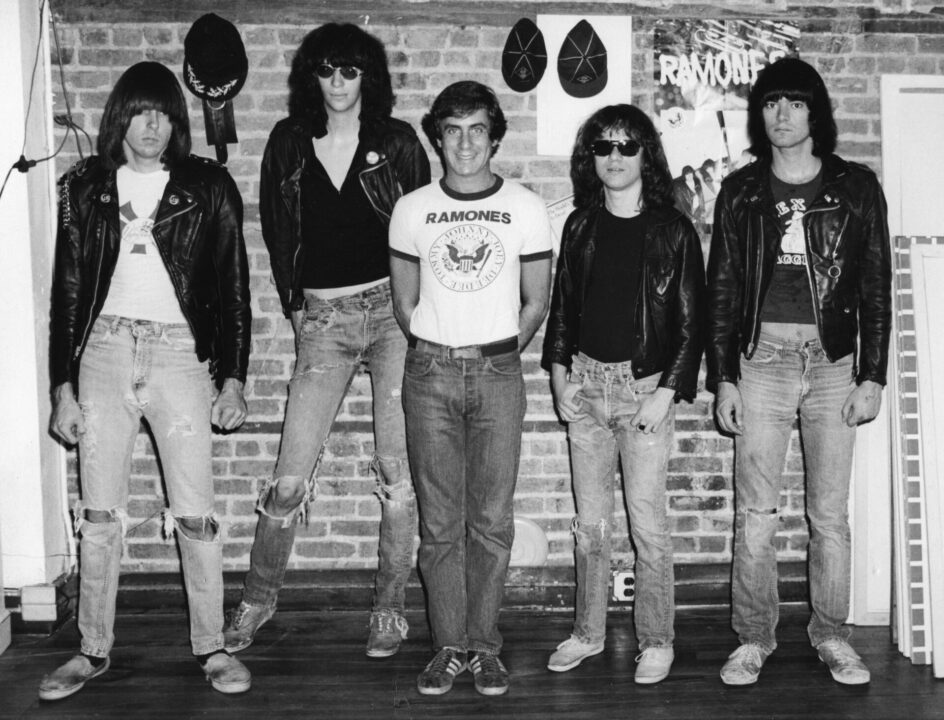
In 1980, The Ramones released their fifth studio album, End of the Century, which included the love ballad Danny Says, a departure from their typical sweaty rock and roll hits. Danny Says went on to become one of the band's more well-known songs and was covered by artists such as the Foo Fighters and Tom Waits. The titular "Danny" in the song, and in director Brendan Toller's documentary of the same name, is Danny Fields– the charismatically flamboyant manager of the Ramones, the self-appointed press agent of The Doors, and an all-around legend in the 1960's music scene.
"Danny Says" follows the career highs and lows of a self-proclaimed homosexual Jewish boy from Queens, NY, who dropped out of Harvard at 19, while pursuing a law degree. Danny had always gone against the grain as a young boy, after catching an impromptu performance of Nina Simone, he fell in love with the energy of live music. From there, he found himself rubbing shoulders with Andy Warhol and Edie Sedwick at the Silver Factory, to feeding drugs to Jim Morrison and signing The Stooges and MC5. Danny's live fast, play hard attitude makes for an incredible story which is made even more powerful with the abundance of archival footage.
Since some of the stories Danny tells don't have an actual video component, director Brendan Toller uses mixed media in the form of cartoons to better explain the narrative. This works so well on two levels; one, the cartoons are stylistically engaging and beautiful works of art even as stand-alone pieces. The second is the fact that these stories are so radically wild, the simpleness of the cartoon lets the audience focus on the story rather than get distracted by the visuals on screen. One story, in particular, is extremely effective with this directorial storytelling. Danny admits that while working at a magazine during the early part of his career, he was the one who put John Lennon's infamous comment about "The Beatles being more popular than Jesus" on the front cover, effectively responsible for the chaos that ensued which included album burning, Ku Klux Klan demonstrations, and radio boycotts all aimed at the most popular band of the times.
For as many interesting stories as Danny and the film tell, it can get a bit frustrating to battle the spotty audio quality. There are times when we are straining to hear past the interviewee's echo, and that can test the attention span. However, one should definitely look past those brief moments for maximum enjoyment. The film is very conversational in nature, similar to the 2013 documentary "Supermensch: The Legend of Shep Gordon," giving the audience the opportunity to see Danny Fields in his true form, up close and personal.
Fans of the short-lived HBO series "Vinyl" will definitely enjoy seeing this real life Richie Finestra retell his stories of drug-infested parties and late night shenanigans with the biggest stars in rock and roll. In the beginning, Fields was just another Silver Factory party boy who thought he had made it big when Nico crashed his house party. To hear and see his evolution to one of the most influential names in rock and roll history is not only an entertaining watch, it is an essential one.
"Danny Says" is not rated. 104 minutes. Opening at Sundance Sunset Cinemas and VOD this Friday, September 30th.

Movie Stars Captured by Their Biggest Fan in 'The Lovers and the Despot'
In May of 2015, episode #556 of the podcast This American Life, host Ira Glass told a story about two South Korean nationals, both celebrities in the filmmaking world, and the harrowing tale of kidnapping and brainwashing at the hands of North Korean dictator Kim Jong-il, and also their Hollywood-style escape. Listening to the podcast, my mind raced with thoughts– mostly second guessing every other sentence because there is no way this could be a true story, right? Directors Ross Adam and Robert Cannan take this fascinating historical case and add visuals and firsthand accounts to the story, making it one of the year's most terrifying films in "The Lovers and the Despot."
The lovers, in this case, are South Korean filmmaker Shin Sang-ok and actress Choi Eun-hee. They met on a movie set in the 70's and fell in love, however, relationships in the film industry are hard to sustain (just ask Brangelina), and the two eventually divorced after Shin fathered two children with his mistress. As their relationship is crumbling, across the water in North Korea, movie buff and despot Kim Jong-il complains about the state of his country's film industry, particularly the excessive crying scenes. "This isn't a funeral. Is it?" he demands. Upset that North Korean films have been overlooked by the global film festival circuit, he asks how he can get the famous Shin Sang-ok and Choi Eun-hee over to his country to rebrand the flailing movie business. It is then that their fate has been decided.
What follows is an outlandish story that seems like a script to a Hollywood blockbuster rather than the actual account. Choi and Shin were kidnapped separately, sent to Kim Jong-il, where they became his personal filmmakers. The duo always planned to escape, but necessary for their survival, it couldn’t be until the time was right. In the meantime, they knew they had to adhere to his fascist regime. The duo went on to make 17 feature films before they finally found an opportunity to escape.
Perhaps the craziest thing of all is the fact that what makes all of this true hangs on one piece of evidence: taped recordings of Kim Jong-il planning the capture of Shin and Choi. We hear those tapes for the first time and it is enough to send chills down one's spine. Without saying how the tapes were obtained, we are told it was a "source" who smuggled them out which adds another layer to the mystery!
With a story like this, the interviews should carry the film with very little reliance on distractive filmmaking. For the most part, Adam and Cannan stick to this method of cinematic subtlety. Interviewees include Choi, her adoptive son and daughter, and other government and undercover officials. To visualize their journey, the directors use clips from Shin's previous films, which can get confusing at times as to whether or not what we're watching is a dramatization or the actual footage. Gaining access behind North Korea's guarded gates is a rare feat on its own, and the glimpses of daily life seen in the film are some of the most powerful visuals. Out of control weeping at Kim Jong-il's funeral, manic zealousness at Kim Jong-un's inauguration, it is all so absurd and must be seen to be believed.
"The Lovers and the Despot" is not rated. 98 minutes. Opening at the Laemmle in Santa Monica on Friday.

'Miss Stevens' a Satisfying Film in Front Of and Behind the Camera
Coming off of a successful festival run, including a Best Actress win for Lily Rabe at this year's SXSW Film Fest, "Miss Stevens" is finally hitting select theaters Friday, September 16th. This tightly knit independent film is Julia Hart's directorial debut, and although she may not have many hits on her IMDb page (past credit includes screenwriter of "The Keeping Room"), Hart puts her uniquely understated directorial style on display in "Miss Stevens."
29-year-old high school English teacher Miss Stevens (Lily Rabe) is clearly going through a personal crisis, but nevertheless, is obligated to chaperone the drama club as they enter a weeklong competition. Trying not to let her worries bring her down, she actively engages in conversation with the three students during the hours-long car ride. Margot (Lili Reinhart) the overachiever and Sam (Anthony Quintal) the flamboyant talkative one, begin to develop a special personal relationship with Miss Stevens, but it is Billy (Timothée Chalamet) the slacker, who ends up taking his feelings to the next level. With her emotional guard down, Miss Stevens finds comfort in Billy's charm. Despite not being romantically interested in him, she soon realizes that this source of happiness is causing the lines betweenstudent/teacher relationship to get blurred.
The storyline is simple enough, and no, Miss Stevens is not a modern day Mrs. Robinson. She is a woman with troubled thoughts, although it takes well over the first 50 minutes to figure out just what her struggles are. Until we reach that clarity, there is consistent questioning as to what her story is, which becomes a bit tiring. Stevens often comes off as disinterested and distracted and if our main character doesn't even seem to be invested in her life, it’s difficult for the audience to care. However, the film does hit its stride after the revelation and subsequent reactions from those around her. Strong performances from Chalamet and Reinhart add liveliness and charisma, a perfect balance to Rabe's passiveness.
For as relatively little experience in the industry as Julia Hart has, she's managed to create an emotionally palpable movie that is relatable to anyone who remembers their favorite grade school teacher. Realizing that teachers had lives outside of the classroom (and even first names!) was a concept that seemed incomprehensible, and Hart executes this feeling exceptionally. With an underlying theme of lack of funding for the arts, this film hits all the right notes. It may not come off as very warm or funny despite its being billed as a comedy, yet “Miss Stevens” is a satisfying film both in front of and behind the camera.
"Miss Stevens" is not rated. 86 minutes. Opening at the Sundance Sunset this Friday and will be available on VOD September 20th.

'The People Garden' is a Quietly Somber and Arresting Art Film
Often times when films take place Japan, we are thrust into a bustling neon city with undeniable infectious energy- think "Lost in Translation," "Kill Bill Vol. 1," and "Black Rain" to name a few. Rarely are we given the opportunity to see the lush, green forests and wildlife that take up about 67% of the country's landscape*. Writer/director Nadia Litz captures this unspeakable beauty in her film, "The People Garden," yet turns the fairytale imagery on its head by drenching the woody oasis in mystery and death.
Sweetpea (Dree Hemingway) lands in a Japanese airport with only one small suitcase in tow, it is obvious that she is not planning on staying long. She is here to break up with her boyfriend, Jamie (François Arnaud). Jamie is on location filming a music video deep in the woods, and her calls to him go unanswered. After getting a ride from a guy named Mak (Jai West), and befriending a local girl to help her navigate through the dense forest, she finally arrives on the film set and immediately becomes very uneasy. Not only is Jamie missing, everyone seems to be hiding something. Determined to figure out what is going on, Sweetpea takes matters into her own hands.
"The People Garden" is a quietly somber yet beautiful art film that bubbles with emotion; from the beginning scenes up until the very end, we are engaged and wondering what will happen next. Starting out with a clever twist, Litz makes it clear early on that this film is not going to be predictable or straightforward by any means.
Dree Hemingway is the perfect choice for the role of Sweetpea, the way she carries herself is engaging to watch on screen (and her model looks don't hurt). She runs the full emotional gamut in the film's 80-minute runtime, from anxious to scared, daring to devastated. A rising star in the indie film circuit (her great-grandfather is Ernest Hemingway), Dree certainly proves that she deserves to be here and is more than just a famous last name.
Also returning to the screen is Pamela Anderson, who plays the role of Jamie's music video muse, Signe. She doesn't have many lines, but her performance is spot on, even slightly reminiscent of Lina Lamont from 'Singin' in the Rain.' Just the way she dangles from wires high above the forest's grounds is a breathtaking thing to see.
'The People Garden' is getting a very limited distribution, which is a shame because films like this deserve to be seen by all. Everyone who watches this film can take something away from this cinematic experience, from admiring Litz's directorial choices to lusting after Hemingway's wardrobe, do try to put 'The People Garden' on your list of under the radar, must-see movies.
* Taken from Save the World's Forests evaluation of protected and natural forests in Japan.
'The People Garden' is not rated. 80 minutes. Now playing at the Downtown Independent in Los Angeles, as well as VOD platforms.

Your First Look at Dree Hemingway in 'The People Garden' (Exclusive)
We scored an exclusive clip from director Nadia Litz's independent film, "The People Garden." When Sweetpea (Dree Hemingway) flies to Japan to break up with her rockstar boyfriend, she suddenly realizes that nothing is as it seems. Her boyfriend, Jamie, is missing, and nobody seems to be giving her a straight answer as to why. So, she takes it into her own hands to figure out what happened to Jamie.
An arresting performance from Dree Hemingway, this drama/mystery is coming to select theatres and VOD tomorrow, September 13th.

'Kicks' is a Cinderella Story for Sneakerheads
In a place where your shoes determine your status, you better believe that everyone will be doing whatever it takes to get their hands on the latest kicks.
Some will spend every last penny of their hard-earned cash on a brand new pair of shoes, while others will literally steal them off the feet of a child. It's a jungle out there in the Bay Area, or so Justin Tipping leads us to believe, in his directorial debut Kicks, an urban coming-of-age film loosely based on Tipping's experience growing up in West Oakland, where the unfairness of life seems unwavering and survival means learning how to stand up for yourself.
Brandon (Jahking Guillory) is convinced that a better pair of shoes will lead to a better life, and when he finally scores a brand new pair of rare Air Jordans, he couldn't be happier. He gets attention from girls and respect from his friends, Rico (Christopher Meyer) and Albert (Christopher Jordan Wallace–son of Notorious B.I.G.), but best of all, he escapes the reality of his impoverished life in Oakland. That is, until notorious local thug, Flaco (Kofi Siriboe), takes the shoes right off of his feet. But Brandon is not one to go down without a fight and, after enlisting his very hesitant friends, they set out to retrieve the stolen sneakers and teach Flaco a thing or two about messing with their crew.
There is no denying that Kicks will draw comparisons to other recent films, like this summer's release The Land or last year's Sundance hit Dope, but what Kicks offers in terms of variation are the surreal fever dreams that visit Brandon throughout the course of the film. His thoughts of escaping his reality and finding serenity become embodied in an astronaut that follows his character, much like a guardian angel. These pops of surreal visual effects are sprinkled throughout the film's overall hyper-naturalistic aesthetic, and the result is a beautiful achievement. Yes, all three films have killer soundtracks (Kicks enlists some heavyweight performers like Wu-Tang Clan, RJD2, and Charles Bradley) and share similar thematic threads of a young boy on a mission to get out of the ghetto. But it is the passion Brandon exudes over one pair of shoes, his only pair of shoes, that makes his story much more empathetic.
Kicks is a Cinderella story for a new generation, one in which a boy's transformation happens when he loses his shoes rather than slips his feet into them and the result is one powerful piece of work.
"Kicks" is rated R for violence, drug/alcohol use and language throughout, and sexual content - involving teens. 80 minutes. Opening in select theaters on Friday, September 9th.

Like Its Protagonist, 'White Girl' is an Alienating and Chaotic Watch
This review previously ran on August 17, 2016, during the Sundance NEXT FEST
After screening "White Girl" on the second day of the Sundance Next Fest film festival, director Elizabeth Wood sat down for a Q&A with famed director Catherine Hardwicke ("Thirteen," "Twilight") and moderator Jen Yamoto, a journalist from The Daily Beast. One of Jen's questions piqued my interest: In so many words, she asked Wood if any of the reviews had upset her – after all, "White Girl" is a very divisive film and so I would have expected Wood's answer to sound well-rehearsed and politically correct. What she responded with shocked me. She said the reviews that cast "White Girl" in an unfavorable light must have been written by men, men who are lacking in their own sexual conquests to give her film an unbiased review. Well, I'm here to say that I am a white girl, and hold the same critiques that have followed "White Girl."
"White Girl" tells the story of 18-year-old Leah (Morgan Saylor), a New York City transplant, who finds both love and trouble in gangbanger Blue (Brian 'Sene' Marc), the neighborhood drug dealer. While Leah herself is far from a virgin to the world of narcotics, falling for Blue leads her down a self-destructive path of zonked-out drug-fueled sweaty nights. When Blue gets busted for selling cocaine – his third strike – Leah naively tries to get him out of jail in any way she can, which ultimately ends up being a spiraling mess of destruction.
The association to Larry Clark's "Kids" is inescapable; whereas Clark's portrayal of impoverished NYC youth stands as a time capsule of adolescent life in the 90s, Wood's "White Girl" doesn't penetrate the thematic surface nearly deep enough to warrant essential viewing. This type of "Live Fast, Die Young" mentality that "White Girl" embodies results in a thinly felt story that tries too hard to look cool to be anything substantial. Although I have to say, the ending was the most powerful part of the entire movie, but maybe that's because it's just in those final moments when Leah finally processes her actions and the unjustifiable insanity that has just occurred.
I also just don't see how "race" plays into this film at all, a poor mark on this director's effectiveness to relay its meaning to this film. Arguably, Leah could have been of any ethnicity and the situations she found herself in would have been no different. There are no "implications of her being white or female," the only struggle she faces is when she is high out of her mind and making terrible decisions. Her interracial relationship with Blue is never seen as taboo, aside from the fact that he sells drugs, and Leah certainly doesn't act like there is any racial tension in her daily life. She has an internship at a predominately white culture & fashion magazine (along the lines of Nylon Magazine) with an attractive white boss (Justin Bartha), lives with a white roommate (India Menuez), and seeks help from a white lawyer (Chris Noth). Now the relationships she has with the above characters are not healthy ones, in fact, this is where I feel like the only social issue comes into play and that is peer pressure: pressure to snort drugs, sell drugs, and have sex. If more attention had been focused in this direction– an 18-year-old college student facing peer pressure from every which way– that would have been a more pertinent issue facing young girls today.
Yes, with its overtly explicit nature this subject matter is bold and has won fans since its Sundance debut, but unfortunately, so many of the directorial choices seemed purely for shock and awe. Other films with similar subject matter, such as "Bang Gang," and "Heaven Knows What," found a way to avoid falling under the "ostentatious" category. Elizabeth Wood has stated that "White Girl" had been a therapeutic project for her, a sort of biopic from her early college years. I'm hopeful that with this out of her system now, her next film will better utilize her voice and talents as a strong female director.
"White Girl" is not rated. 88 minutes. Opening at select Laemmle Theaters on Friday, September 9th.

Canadian-Set 'Yoga Hosers' is 'Eh'-Mazingly Absurd
One of the more wildly talked about movies from this year's Sundance Film Festival that is finally hitting theaters today is the flamboyant comedy-meets-fantasy film, "Yoga Hosers," directed by Kevin Smith. Set in a small Canadian town where the accents are as thick as maple syrup, two 15-year-old best friends, with extremely unhealthy cell phone addictions, discover that horrifying demons are taking over their workplace and threatening to ruin their late night plans. But what are these terrifying little creatures? Turns out that they're Nazi sympathizing sausages from Canada's past, appropriately called "Bratzis."
Colleen Collette (Lily-Rose Depp) and Colleen McKenzie (Harley Quinn Smith) are yoga enthusiasts by day and convenience store clerks by night. They work after school dead-end jobs at Eh-2-Zed, the local corner store that sells everything from toilet paper to "Pucky Charms" cereal. Their overall bratty attitude changes to excitement after senior heartthrob Hunter Calloway (Austin Butler) invites the girls to a totally awesome "Grade 12" party. However, things don't go according to plan when they get stuck working a late shift, and discover not only is Hunter not the sweet guy they thought he was, but that they have bigger fish to fry, or in this case, sausages. Enlisting help from Guy Lapointe (Johnny Depp), the girls are forced to defeat the meat that is threatening to kill them.
As one can safely assume by this point, "Yoga Hosers" is a wacky and wholly original moviegoing experience. The cheesiness factor is through the roof, but that is one of its biggest charms. Seeing a movie that is technically sophisticated with a top notch cast (scene stealer Ralph Garman's insanely spot-on impressions of Sylvester Stallone and Adam West draw the biggest laughs), yet one that does not take itself too seriously on screen, is a rare occurrence these days and should be recognized. Think "Bad Milo" meets "Sausage Party" in terms of the thematic guideline. However, one of my biggest critiques is how anti-climactic the ending is in comparison to the outlandish storyline. There is no stopping this crazy train and the ending could have followed through with the same emphasis.
What really makes "Yoga Hosers" great is the familial full-circle connections off-screen. Firstly, and most obviously, director Kevin Smith cast his actors close to the vest with his daughter Harley Quinn as the lead character, Colleen M. Another fun connection is between Lily-Rose Depp, who not only acts alongside one, but both of her parents in the film. Her mother Vanessa Paradis plays Ms. Maurice, the school's history teacher who tells the girls of the Nazi origins in Canada. Her father, Johnny Depp, brings his signature Mad Hatter/Inspector Clouseau-kookiness to his character Guy Lapointe, the legendary man-hunter from Montreal whose accent is as wacky as his bushy brows. Finally, a subtle but interesting connection comes from the airheaded yoga instructor Yogi Bayer, played by Justin Long. Not to venture into gossip magazine mode, but until recently, his longtime girlfriend was Amanda Seyfried, who also appears on the cover of the town's hottest magazine.
The biggest misfortune as an audience member would be to walk into "Yoga Hosers" unprepared; not in terms of knowing the plot twists and turns, but in being unable to appreciate this unusual cinematic presentation. It is a film that will provoke you to immediately either love it or hate it. Yet, despite its critics, there is no denying that "Yoga Hosers" is certainly one of the wildest films of the year. Here's a hint– you definitely want to stay through the end credits just to see Johnny Depp shred on the guitar during the closing song.
"Yoga Hosers" is rated PG-13 for crude humor, sexual references, comic violence, and brief drug material. 88 minutes. Now playing in select theaters.

WWI Thriller 'Game of Aces' Leaves Much to be Desired
Director Damien Lay tackles the ambitious genre of "WWI historical thriller" in his first narrative feature film, "Game of Aces." Set in the Arabian desert with a predetermined storyline of historical context, unfortunately, the film is as vast as the characters in it, leaving much to be desired in terms of overall experience.
When we meet Captain Jackson Cove (Chris Klien), an American alcoholic pilot who has been grounded due to crashing too many planes, he is on a mission to save the life of the German Captain Josef von Zimmerman (Werner Daehn) who has also crashed a plane in the middle of the desert. Cove becomes upset after learning that he is not on this rescue mission alone; Joining him is a young English nurse and German translator Eleanor Morgan (Victoria Summer), whose perfectly glossed red lips and side-swept bangs make her look more like a movie starlet from the roaring 1920s than a down and dirty sidekick- which I don't think was done intentionally. After the duo out-run a plane, dodge gunfire, and get over their initial quips with each other, they come to the aid of Zimmerman, which exposes a tangled web of corruption, lies, and the classic "who dunnit" question.
There are a few issues I had with this film and not just the low-quality sound effects that, for some reason, muted every other gunshot sound. "Game of Aces" wants to be a comedy, but just doesn't nail it. Whether that's due to the choppy edit, or the overall non-fluidity of the project, what we have here is a hum-drum film that is void of cohesive focus. Any wartime film is a high-risk movie to make due to the demanding accuracy and nature of the genre, and Lay seems to acknowledge this by having only three main characters. While a smart choice on the directorial front, as an audience member, having a limited number of characters stranded in the blazing desert, that can't decide whether or not to make a joke or tell a thrilling story, makes it a tough, repetitive watch.
Chris Klein delivers "punny" one-liners in his signature gravelly voice many times throughout the film. His performance is actually preferred over Daehn's delusional screaming, cartoonish guzzling of water, and overall act of losing his mind.
Despite the criticism, Damien Lay has managed to assemble a cast of genuinely engaging actors and create a film that feels distant from it's limited $500,000 budget. However, it seems like the challenges it faced were too overpowering for "Game of Aces" to make it out of the Arabian desert alive.
"Game of Aces" is rated R for some violence and language. In select theaters Friday, September 2nd.

'The Light Between Oceans' is a Darkly Poetic and Affecting Love Story
Director Derek Cianfrance certainly has a knack for portraying "love lost and found." His 2010 indie classic, "Blue Valentine," is a moody and contemporary observation of one couple's relationship evolving throughout the years while his 2013 indie hit, "The Place Beyond the Pines," dealt with familial struggles and the far-reaching repercussions of poor choices. Cianfrance continues to do what he does best, bringing his past experience of showcasing these same themes and questions to his first studio film, based on the acclaimed novel by M.L. Stedman, "The Light Between Oceans." While this film is another romantic drama, written for the screen by Cianfrance, it is a small departure in terms of it being a period film, but that makes it no less relatable to modern audiences.
After four years fighting abroad in World War I, all Tom Sherbourne (Michael Fassbender) craves is isolation and a relatively risk-free routine. When he is offered the position of the lighthouse keeper in a small coastal town in Western Australia, he graciously accepts. After arriving, he meets and quickly falls in love with Isabel (Alicia Vikander) and the two soon marry. Isabel follows Tom to the lighthouse, which stands in seclusion from the rest of the town. They are blissfully in love with each other and with the silence, domesticating their tiny space on the island they call home and ready to start a family of their own.
Their happiness comes to a sudden halt after two emotionally and physically painful miscarriages. Isabel becomes a shell of her former self, while Tom feels helpless in his efforts to console her. That is until a rowboat washes ashore with a newborn baby girl and her deceased father onboard. Isabel sees this as a sign from God and begs Tom to let her keep the baby instead of reporting the incident per his official protocol. Torn between what he knows is right and his wife's happiness, Tom finally gives in to Isabel's pleas. Life goes on for the couple and their newly acquired baby without consequence until Tom's guilt catches up with him when he sees Hannah Roennfeldt (Rachel Weisz) around town. As soon as he realizes that she is the baby girl's birth mother, he knows the awful decision he will have to make. The moral dilemma of whether or not to expose the truth would not only devastate Isabel but ruin the relationship with the little girl they've come to love and call their own.
It is this impossible choice and the events that follow which makes "The Light Between Oceans" so painstakingly brutal. While author M.L. Stedman takes credit for the story's tragic circumstances, it is the colorful world created by Cianfrance that really drives the story home. Breathtaking visuals cover the screen from start to finish, with the camerawork making the characters seem so small compared to their epic surroundings. These sweeping images of the environment are juxtaposed with extreme closeups as if we are looking at the most intimate details of their relationship through a magnifying glass. In many scenes, the beats between Tom and Isabel's dialogue last longer than a typical film's edit, giving the characters not only a chance to act but react, which is how it achieves its heightened emotional intensity.
Coming off of a strong 2015, Alicia Vikander proves why she deserves to stay on the top this year. Her doe-eyed innocence and warm presence make her a protagonist worth rooting for, despite her flaws. We understand that her heart is in the right place and feel her pain as she finds herself in unspeakable situations. Michael Fassbender taps into his sensitive side as Tom, putting on a brave face for his family despite battling a moral war internally. Rachel Weisz gives a layered performance as Hannah as she experiences a rollercoaster of emotional grief and joy throughout the film. Watching these three powerful lead actors (Vikander and Weisz are Academy-Award winners, Fassbender has been nominated twice), is like truly watching magic on screen.
It would be lazy to call "The Light Between Oceans" this year's "The Notebook," however, there is no denying the strong emotional parallels (plus the fact that Fassbender and Vikander are now dating after meeting on the set a lá Ryan Gosling and Rachel McAdams). "The Light Between Oceans" isn't easy to get through with dry eyes, but this timeless love story is as mesmerizing and beautiful as it is gut-wrenching and powerful, most definitely a top contender in this year's best of lists.
“The Light Between Oceans” is rated PG-13 for thematic material and some sexual content. 132 minutes. In theaters everywhere on September 2nd.

Natalie Portman is a Triple Threat in 'A Tale of Love and Darkness'
Natalie Portman has always been considered more ambitious than most of her Hollywood peers. Opting to attend Harvard to study psychology in 1999, while placing her career on hold, she is a perfect example for actors everywhere that one shouldn't rely on beauty and talent alone to survive in show business, brains are also important. "A Tale of Love and Darkness" further proves her abilities as a triple threat, in a film that Portman not only stars in– but wrote and directed– based on Israeli author Amos Oz's bestselling memoir. Oh, and did I mention the film is in Hebrew with English subtitles?
"A Tale of Love and Darkness" is told from the perspective of Amos as an elderly man, reminiscing about his childhood in the budding State of Israel in the 1940s and '50s. Amos (Amir Tessler) is a 10-year-old Jewish boy, not yet mature enough to comprehend the politics of the Middle East. He meets a young Arab girl at a party and they only speak a few words, but this is enough for him to contextualize the conflict around him. His father, Arieh (Gilad Kahana), is an author and is very aware of the political discourse in the country and tries to teach his son life lessons every day. His mother, Fania (Portman), puts on a brave face as the matriarch of the household amongst the turmoil, but she battles internal forces that eventually become too overwhelming. Sadly, the disappointment in the expectation of Jerusalem's independence vs reality of the aftermath strains the family dynamic, to the point that Amos is forced to say a much too early goodbye to his mom whose closeness was that of a best friend.
In tackling the vast historical context of Middle East politics, "A Tale of Love and Darkness" is slower and much denser than any of Portman's other works. Its appeal is that it is non-commercial, but that doesn't mean it lacks cinematic inspiration. Some of the most vivid scenes come from the nightly bedtime stories Fania tells Amos. Just as the character, Sara in "A Little Princess" created fantasy worlds for her friends while in boarding school, the stories Fania tells are acted out in a similar fashion.
This film is not just Natalie Portman's directorial debut, it has also been her passion project and she worked on it for over 10 years. It is an interesting choice for a filmmaker's debut, as it definitely goes against the grain of formulaic Hollywood films. However, after watching, it seems like no one else could have pulled off this striking balance between romance and melancholy as well as Portman.
"A Tale of Love and Darkness" is rated PG-13 for thematic content and some disturbing violent images. 95 minutes. Now playing at the Landmark Theater.

'Disorder' Successfully Fuses High-Stakes Thrills With Emotional Tension
This review originally ran on 11/10/15 during the AFI Film Festival
Among the films in the “New Auteurs” category is the French film "Disorder," a full sensory experience that successfully fuses a high-tension thriller with an engaging dramatic story that creates lasting uneasiness long past the hour and a half runtime.
Written and directed by Alice Winocour, "Disorder" tells the story of Vincent (Matthias Schoenaerts, "Rust and Bone"), an ex-soldier suffering from PTSD, who has been assigned to provide personal security to a high-profile and possibly-shady businessman’s wife, Jessie (Diane Kruger, "Inglorious Basterds") and her young son, Ali. Struggling to keep his traumatic past behind him, and despite piercing bouts of panic attacks, Vincent’s paranoia serves as foresight when masked men forcibly put his and the lives he’s promised to protect in danger.
Schoenaerts and Kruger create a quiet sense of unrest, adding personal and emotional tension between the two against the backdrop of the suspense of the film. With the sharp sound design from electronic music-maker Gesaffelstein, "Disorder" falls into the same vein as other traditional Hitchcockian films: progressively stylized and a great character study into the mental landscape of a man unhinged.
"Disorder" is not rated. 98 minutes. Opening at the Laemmle Royal Theater in Santa Monica this Friday.