

Talking with Dev Patel, Janelle Monáe, and the Rest of the 2017 Virtuosos Award Recipients [WATCH]
One of our favorite nights of the Santa Barbara International Film Festival is the presentation of the Virtuosos Award, which recognizes a select group of talent who have distinguished themselves by breakthrough performances in film this past year.
On the red carpet, we chat with the eight award recipients, who include Oscar-nominees and some of Hollywood's biggest and brightest stars. This year, we celebrate Aaron Taylor-Johnson (Nocturnal Animals), Dev Patel (Lion), Janelle Monáe (Hidden Figures, Moonlight), Mahershala Ali (Moonlight), Naomie Harris (Moonlight), Ruth Negga (Loving), Simon Helberg (Florence Foster Jenkins), and Stephen McKinley Henderson (Fences). An amazing line up of stellar performances indeed!


‘Lion' Review: A Destiny is Discovered In This Heartwarming Film
LION (2017)
Starring Dev Patel, Nicole Kidman, Rooney Mara
Directed by Garth Davis
Distributed by The Weinstein Company. 118 minutes. Rated PG-13
As its name implies, Lion is a dramatic and extraordinarily powerful film, now having been nominated for six Academy Awards. Directed by Garth Davis, Lion tells the incredible true story of five-year-old Saroo (Sunny Pawar) who, after being accidentally separated from his family in one of the world's busiest cities, Kolkata, India, ends up over 1,000 miles away from where he is later adopted by a loving couple in Australia. Two decades later and without even a last name to base his search on, his adulthood quest to discover his identity fuels an emotionally urgent and spiritual search for his true home.
Based on the story A Long Way Home by Saroo Brierley, the film immediately tugs at our heartstrings by introducing us to young Saroo, played by newcomer Sunny Pawar, whose innocence and curiosity of the world bursts out of his large doe eyes and small frame. After falling asleep on a moving train and traveling for an undocumented amount of time and distance, Saroo becomes a little boy lost in translation and environment who must survive in the threatening adult world amidst his confusion and isolation.
Saroo's fate is changed when he falls into the care of an orphanage and is quickly adopted by Sue (Nicole Kidman) and John Brierley (David Wenham). Years pass and Saroo, now in his late twenties (Dev Patel), is fully settled into life in Australia, taking college courses and in a steady relationship with Lucy (Rooney Mara). One night, sparked by a sudden and vivid flashback, Saroo decides that, with the help of Google Earth and only a handful of memories, he is ready to give all he has to find his childhood home and birth mother, some twenty-five years later.
Dev Patel's Best Supporting Actor nomination is fully deserved in this role, as he brings the emotional crossroads that Saroo faces to life in an extraordinarily measured performance. The complex emotions he balances of desperately wanting to find his birth family without wanting to hurt the feelings of his adoptive parents' tip over when he can no longer hide his longing for answers to the life he once lived. Patel's portrayal of battling this personally felt and complex family dynamic is resilient, industrious, and confident – his story is a true hero's journey.
The world from five-year-old Saroo's perspective is a big, scary place, and cinematographer Greig Fraser knows how to portray the feeling of being a small person in a big, overwhelming world, and in a very intimate way. Fraser, who had been working on Rogue One: A Star Wars Story simultaneous to Lion, uses his experience in the Star Wars universe to epically convey the feeling of a (no pun intended) "force" bigger than oneself. In the first half of the film, five-year-old Saroo is physically lost among the colorful and crowded streets of India. Yet in the second half, a now older Saroo is emotionally lost, facing an identity-less and hopeless future that becomes the bleaker part of the film. In both instances, we feel the fevered and urgent energy pulsing from Saroo and the environments themselves, leading to a gripping climax and heart-filling ending.
Lion has all of the things that make up a great film: a phenomenal cast coupled with an impactful true story that leaves one with an optimistic outlook on life. While it’s emotional yearning can play a bit heavy-handed at times, Lion is an electrifying journey that creates a vast emotional scope on screen and undoubtedly, an abundance of tears that will be hard to hide from your neighbor. Yes, I admit, I'm speaking from experience.
"Lion" is rated PG-13 for thematic material and some sensuality. 118 minutes. Now playing in theaters.

Drake Doremus, Matthew Gray Gubler talk 'Newness' [WATCH]
The day we landed in Park City, Ryan and I had only a few hours to get from the airport, to our accommodations in Deer Valley, to the Eccles Center, where we were set to interview the cast and crew of "Newness," just minutes before the film's World Premiere at the Sundance Film Festival.
What started as a hectic day quickly turned into one of the most fun conversations I've had as I chatted with director Drake Doremus, Matthew Gray Gubler, Laia Costa, and screenwriter Ben York Jones. They shared in our excitement about what lay ahead that night and also the memory of Anton Yelchin (Doremus), our previous interview history (Gubler), filmmaking similarities of past films (Costa), and our common Alma Mater, Chapman University (Jones).

'Person to Person' Review: Dry Humor Fuels This Eccentric Ensemble Comedy
This year, Defa returned to Sundance to have his second directorial feature film, the simple yet simmering ensemble comedy – also titled "Person to Person" – once again embraced by audiences for its sophisticated story of smart hearts and wits between an eclectic bunch of New York City-dwellers.
When Salt Lake City native Dustin Guy Defa brought his short film "Person to Person" to the Sundance Film Festival back in 2014, it was nominated for a Grand Jury Prize in its category. This year, Defa returned to Sundance to have his second directorial feature film, the simple yet simmering ensemble comedy – also titled "Person to Person" – once again embraced by audiences for its sophisticated story of smart hearts and wits between an eclectic bunch of New York City-dwellers. Playing in the Next category of the festival, "Person to Person" (the feature) is series of inter-cut stories involving a mostly pair of persons in which subtly eccentric characters deliver hilariously dry deadpan-on-arrival humor about any of the mundane things that occur in daily life, revealing an insightful take on modern day human connections.
Standing apart from its more dynamic and showy festival-playing peers, this observational comedy is a gentle slice of life flick which follows various characters. And though its storylines do not intersect or have any connection to each other, together they amplify the normally mundane lives lived by today's young adults. Over the period of 24 hours, we are introduced to a collection of odd ducks, including Bene (Bene Coopersmith), a vinyl collector seeking revenge on the dumb deadbeat who sold him a fake record; Ray (George Sample III), who is facing the repercussions of posting nude pictures of his ex-girlfriend on the internet; angsty feminist teen Wendy (Tavi Gevinson), who suffers through the politics of high school, dating, and life itself; and Phil (Michael Cera), a reporter at a daily newspaper who takes it upon himself to train the company's new hire Claire (Abbi Jacobson) in investigating a hot lead and her first story – the (alleged) murder of a wife's (Michaela Watkins) husband.
Standing apart from its more dynamic and showy festival-playing peers, this observational comedy is a gentle slice of life flick which follows various characters.
This mashup-movie of comedic forces delivers not only a wholly funny and complete film but in the characters' wistful performances, also oozes an overall nostalgia itself. Shot on 16mm film, the old-school look is a warm and self-deprecating nod to the simpler days of yester-year's troubles, like the love child of Woody Allen and Charlie Brown. Defa constructs these surface-complicated personal relationships with a sense of uplift that conveys the struggle for connection as the thematic thread that ties the film's characters together.
Music also plays a large role as the thematic guideline to the characters feelings. Offbeat jazz tempos accompany a frantic Bene, who is as impulsively scattered as the music itself. Heavy metal – particularly of the headache-inducing variety – becomes another quirk of Cera’s Phil (a crucial dimension to his character as he addresses the music at face value when he finally gets Claire to join him in a head-banging session). This scene is perhaps the funniest in the film, largely due to Jacobson's ability to humor Cera, all the while remaining skeptical of his shenanigans.
"Person to Person" is a wonderfully compartmentalized comedy, whose story about the minutiae of everyday life will take a restrained yet worth it view to appreciate. Those looking for the immediate laughs that might more easily jump off the screen may grow tired of the film's tonal pacing and cadence, but its lovely brand of intelligentsia comedy will certainly find devoted audiences past its festival circuit.

'The Incredible Jessica James' Review: Jessica Williams' Star Burns Bright
"The Incredible Jessica James" is quite – dare I say it, incredible – for a number of reasons, an obvious one being that a strong and independent woman of color takes the helm, quirks and all, and we love her for it.
The closing-night film of the Sundance Film Festival has the pressure of being the last thing that audiences will remember after ten days of non-stop movie-hopping. And while that pressure may be too intense for some, the joyously crowd-pleasing "The Incredible Jessica James" is a film that's more than game to take on that challenge and honor. Writer/director Jim Strouse's ('People, Places, Things') comedy-vehicle stars Jessica Williams as a young aspiring New York City playwright struggling to let go of the past and embrace the uncertainty of her future (and all while dancing her way through it) is exactly the type of light-fared yet empowering film that will delight all who see it.
Opening with a hilariously on-point awkward Tinder date, Jessica James (Williams) shakes it off in the film's following title sequence, oozing charisma and spirit as she marches –but in this case, dances– to the beat of her own drum. Her upbeat energy gets her through receiving rejection letters for her original playwriting from every major theater company and carries over to her job as a non-profit theater teacher, educating and inspiring youths in Hell's Kitchen (which barely pays the bills of her "deep, deep, deep Bushwick apartment"). All this, while trying to regroup after a breakup with an ex (Lakeith Stanfield) which leads to a date set up by her pal (Noël Wells) with the recently-divorced app designer Boone (Chris O'Dowd). A connection sets in, forcing each other to navigate a confusing new world where their exes loom large in memory and professional frustrations set in.
A woman of color standing at six feet tall, Jessica Williams is a commanding on-screen presence displaying confidence to the bone with her "woke" millennial attitudes and values about gender, race, and cultural identity issues that sing and soar with her cool-chick attitude and vibe.
A woman of color standing at six feet tall, Jessica Williams is a commanding on-screen presence displaying confidence to the bone with her "woke" millennial attitudes and values about gender, race, and cultural identity issues that sing and soar with her cool-chick attitude and vibe. A former correspondent on the Jon Stewart-era "The Daily Show," she cut her teeth delivering comedic lines, which here, draw non-stop laughs from the audience throughout the film. Williams, who might draw a pop-culture comparison as the next Lena Dunham (but don't compare the two) for being a young actress and activist who doesn't only check all the boxes of what American independent film needs right now, but creates them.
Funnyman Chris O'Dowd plays a great comedic partner, whose sincerity and comedic sensibilities perfectly match Williams' (in height as well). As a fool in love who doesn't hide the messy reality of emotions that getting over an ex-lover entails, some of the film's strongest moments come from the honesty of modern-day dating rituals like Instagram stalking, "booty calls," and relationship labeling. As strong as these themes and central characters are, the supporting characters in Wells and Stanfield also add to the film's charming strengths.
"The Incredible Jessica James" is quite – dare I say it, incredible – for a number of reasons, an obvious one being that a strong and independent woman of color takes the helm, quirks and all, and we love her for it. It's a breakout role for Williams, who will no doubt find herself catapulting to bigger success. Since premiering at the festival, Netflix has acquired worldwide distribution rights to the film for just over a reportedly $3 million dollars and will start streaming as a Netflix Original later this year.
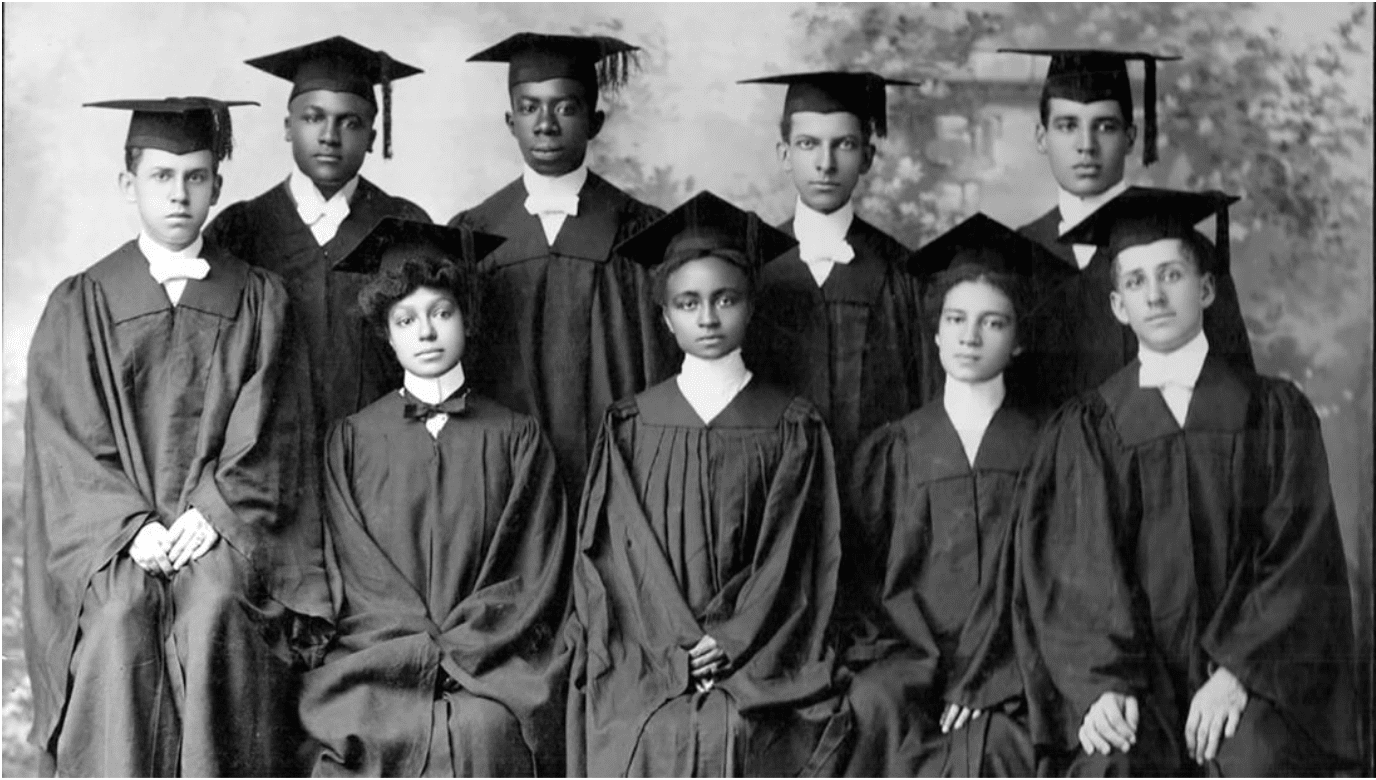
'Tell Them We Are Rising' Review: The History of America's Black Universities
The special environment that these colleges and universities provide is an unapologetic space where these young black adults can finally experience the feeling of being in the educational majority.
There is no doubt that we are living in a very politically stirring time right now– its reflection is not only seen on the streets but also on the screens at the Sundance Film Festival. Documentaries especially have seemed to take on a larger cultural importance, one of which is the film "Tell Them We Are Rising: The Story of Black Colleges and Universities." Renowned director and recipient of the National Humanities Medal from former President Barack Obama, Stanley Nelson takes the audience on an educational journey through the genesis of black colleges in America and how they hold up today.
Unlike other social commentaries on the oppression of African-Americans throughout history, "Rising" directs its attention on how, after the Civil War and end of slavery, formerly imprisoned blacks were able to self-sufficiently create schools and a pathway to higher learning. While we are familiar with the physical abuse that was associated with slavery, the prevention of learning and stunted intellectual knowledge was another often overlooked mistreatment. It was, in fact, illegal for white slave owners to "teach" their slaves how to read or write, therefore making those two skills extremely valuable once they were finally freed.
Unlike other social commentaries on the oppression of African-Americans throughout history, "Rising" directs its attention on how, after the Civil War and end of slavery, formerly imprisoned blacks were able to self-sufficiently create schools and a pathway to higher learning.
From its origin, Nelson leads us through time as we see an abundance of archival footage of former slaves, both men and women, reading books for the very first time. From children's school photos and tiny shacks they called a classroom, to pictures of the very first African-American graduates, the rise and accessibility of getting an education slowly lifted the community out of poverty– and essentially creating the black middle class. Of course, this road to success wasn't without segregated roadblocks and racist attacks which resulted in death for both black people and the white people who supported them.
"Separate but Equal," one of the clauses of The Fourteenth Amendment, is cast in an interesting light as the film points out that there can never be a situation in which separate can really be equal; while the creation of Historically Black Colleges and Universities (HBCU) may sound like another way of enacting an overturned law, we see just how important and valued these campuses were for students back then and still are for those who continue to enroll today. The special environment that these colleges and universities provide is an unapologetic space where these young black adults can finally experience the feeling of being in the educational majority. Some interviewees admit to never even having a black teacher until they enrolled in an HBCU. In turn, the faculty has a greater understanding of the struggle and a commitment to each students' success. Understanding how far they have come as a whole, many educators and students feel a strong sense of responsibility to keep HBCUs going, using the past as building blocks for a stronger future.
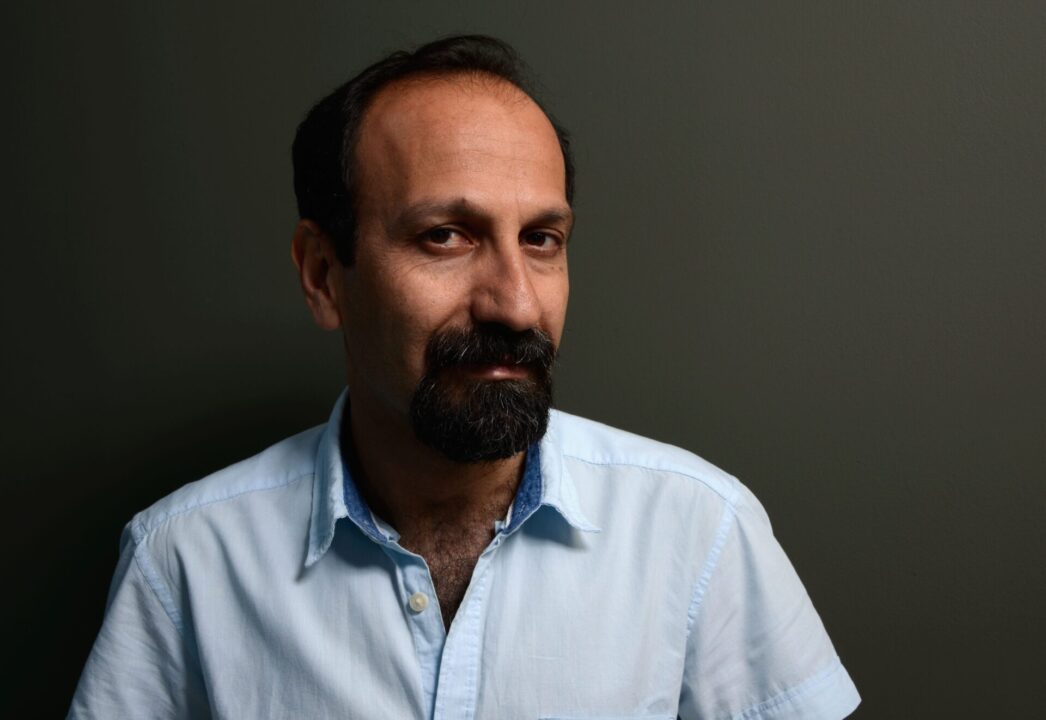
'The Salesman' Director Asghar Farhadi on Rushing Childhood and Past Regrets
I meet Iranian director Asghar Farhadi at the Cohen Media Group's conference center, located in the Pacific Design Center in West Hollywood, last week. Our previously scheduled interview had been delayed due to visa issues, but the timing couldn't have worked out better. His latest feature film, "The Salesman," had just been nominated for a Golden Globe and is now Iran's submission for Best Foreign Language film at the Academy Awards. Farhadi, who is not fluent in English, sits next to his translator as we begin the interview and from the very moment he speaks, he seems to transcend language altogether and tap into a higher consciousness. His wisdom and enlightenment are not solely focused on film, Farhadi also shares his thoughts on the loneliness despite modern-day technology, the connection he has to Death of a Salesman, and his personal regret of rushing his own childhood. We begin:
Where did you get the idea for this film?
For many years, I've had the idea of a couple who would rent [an apartment] whose previous tenant was a prostitute. But the story was never complete enough for me to decide to make it, until one day, I came to the realization of what it was [the couple] did in life; I thought if they were theater actors, it would help me a great dealt to help me find the part that was missing in my story. For them to be actors, what that means is they are individuals who know how to put themselves in the shoes of another and to have empathy... but in reality, how well do they succeed in putting themselves in another's shoes?
A major theme in the film is dealing with guilt, which then turns into feelings of revenge. How do you describe the revenge in the film?
We need to look at what revenge means. When someone does us harm and we pronounce judgment, and sentence, and execute that sentence against that person, this is what we call revenge.
Women, as a whole, tend to be forgiving than men. In my previous film, "The Past," I also point to this. Because women are capable of child-bearing, their gaze is pointed toward the future more. Men, perhaps because they worked the land, are more rooted to where they are and are looking [at the past] more. In "The Salesman," the woman is saying I am the one who has undergone harm and she wants to have a part in the judgment against the old man.
Another point that is significant is that a man has intruded on the couple's private space and attacked their honor. She's upset that her husband now wishes to act in the same way toward [the old man]. She doesn't want to force her husband to forgive the old man, but she says the way he's going about it is action that is not moral.
Can she achieve closure?
This is something that will remain with her life a lifelong wound. But she, at the same time, appears to have the capacity to understand the situation.
"I'm now coming to discover that cinema is not the most important thing in the world. Childhood and living are much more important things."

What was the first job you ever had, and if it wasn't film-related, when was the moment you knew you wanted to get into filmmaking?
I had no time to have another job, I was 13 when I made my first film and then made a short film each year [after]. The I quickly went on to University where I studied theater. Now, I regret it. I entered cinema too early. I started to ponder these serious questions too soon. I feel like my childhood was diminished. I wish I could go back and start these things a little later. I'm now coming to discover that cinema is not the most important thing in the world. Childhood and living are much more important things.
From "A Separation" to this film, this theme of communication feels very strong.
It is very important to me. In today's world, where language, the networks for communication have all expanded so much, it seems to me that we have so much more tools and devices for communicating. Why, then, are we so alone? And those who are not alone, are pretending not to be alone. People have become very alone. It seems to me, the more progress we make and the more we expand the language, the less we are communicating.
Relative to the past, humans have become more complicated. Like an object that has hundreds of facets, another individual would be the same. For these two to meet, to be joined, there's a very limited surface where they can meet. I'm not trying to say that the modern world is a bad world– it's a much more comfortable world– but misunderstandings are much more frequent in it than in the "old world."
"He thinks even if he's gone and dead, it's going to be ok– this family is going to carry on the same. Truly, when I think about this, I want to cry."

What was the significance of Death of a Salesman in the film?
It's a very well-loved play in my country. I like that play a great deal for a number of reasons. In the play, Arthur Miller empathizes with all of his main characters. It's not easy to say whether it's Willy Lohman or his son that's responsible for the crisis. A significant theme in that play is humiliation. Willy Lohman commits suicide because his son, co-workers, and neighbors, humiliate him. The tragedy of that play is that that individual feels completely useless in his family; he feels like he is nobody.
Do you know why Willy Lohman's job is traveling to different towns? When he goes away, no one feels he's gone in that house. He thinks even if he's gone and dead, it's going to be ok– this family is going to carry on the same. Truly, when I think about this, I want to cry. It's the most difficult situation for a father to be in. In my film, that old man is the Iranian Willy Lohman. Maybe it's what he's missing that caused him to establish a relationship with the prostitute.
In Death of a Salesman, the series of events is caused by the demolition of a building which sends the protagonist on a downward spiral. It also ends there. What significance does that have on "The Salesman?"
I see it as a prologue, a sort of foreshadowing of the way in which the relationships between people are undermined at the foundation– as if the more the film advances, the greater the cracks in the relationship become apparent.
"The Salesman" opens in theaters Friday, January 27th.

Morgan's Top 10 Films of 2016
What we consider to be the best of this year represents a combination of the movies that had the greatest emotional impact on us, matched with movies that felt innovative or groundbreaking. Here are the films I consider to be this year’s best:

10. Tony Robbins: I Am Not Your Guru
From Academy Award-winning director Joe Berlinger comes “Tony Robbins: I Am Not Your Guru,” a documentary about the larger-than-life motivational speaker and communicator: Tony Robbins. Berlinger trades in his darker, more investigative documentary exposé for something unapologetically hopeful, choosing to show the more uplifting side of Robbins’ work rather than a take-down approach. It's fun, funny, and flat-out inspiring.

9. Swiss Army Man
The writer/director duo Dan Kwan and Daniel Scheinert, collectively known as The Daniels, have a reputation for unique and highly entertaining work, and "Swiss Army Man" represents a conglomerate of numerous ideas that, while may sound far-reaching and absurd, somehow all work. This A24 title generated the most vocal reaction amongst 2016 Sundance festival-goers for it’s ridiculous, and now infamous, farting dead body played by Daniel Radcliffe and is perhaps the wildest film of the year.

8. The Fits
In 2015, director Anna Rose Holmer was declared one of Filmmaker Magazine’s “25 New Faces of Independent Film,” and after watching her feature directorial debut, “The Fits,” it’s obvious to see why. Holmer doesn’t only manage to capture the entire world of her story in a brisk 70-minute running time, she has the ability to evoke palpable emotion without the use of much dialogue, which culminates in a chills-inducing final scene. “The Fits” is equal parts dramatic and surreal, and on a larger scale, proves that creativity in the film industry is not dead.

7. Louder Than Bombs
Director Joachim Trier made his English-language debut with the drama "Louder Than Bombs," an intimate portrayal of one family’s relationship and the struggles they must overcome in the face of death. The film made its debut at the 2015 Cannes Film Festival and, coupled with Trier’s reputation as an acclaimed filmmaker and visionary, is sure to make waves in the indie/art house film scene. The title- "Louder Than Bombs"– suggests an epic, grandiose drama, but instead, what Trier creates is a meditative and restrained film that is not at all loud or brash. It is a psychological trip that leads back to the celebration of one’s own uniqueness coming together to fulfill the family dynamic.

6. Other People
Waterworks await in writer/director Chris Kelly's semi-autobiographical indie drama "Other People.' Jesse Plemons plays a struggling comedy writer who moves back in with his family in Sacramento to help take care of his terminally ill mother, played by the phenomenal Molly Shannon. Full of heart and humor, this was one of the only films of the year where my emotions bounced around all over the place, and not for the obvious reasons of death. "Other People" is a breakout, original work that may have flown under the radar this Fall, but stands as a rich contribution to the year's filmography.

5. Paterson
This self-meditative film from director Jim Jarmusch focuses on the quietly mundane life of its protagonist over the course of one week, which, at face value, may sound like a total bore, but is anything but boring. Adam Driver takes on the titular role of Paterson, a bus driver by profession and poet by passion. His relationships with his girlfriend, her dog, strangers, and friends all serve as inspiration for his poetry, as he can find beauty in the smallest of things. "Paterson" is a film that pushes its audience to actively follow along and the payoff is a poetically enrichening experience than a traditional film would offer.

4. Moonlight
"Moonlight" has topped many a film critics 'Best of' lists, and it's easy to see why. The powerhouse performances from all characters spanning over three succinct acts, with subject matter that stares tradition and stereotypes in the face to create emotionally-charged visual art, are just some of what makes this such a standout film. At a time when racially diverse films in Hollywood feel so scarce, director Barry Jenkins takes on this sensitive and personal subject matter and transforms it into a delicate new work. We can all only hope to see more films like this in 2017.

3. The Handmaiden
In director Park Chan-wook’s film "The Handmaiden," the 2.5-hour runtime leads us through a tangled web of sexually-charged tension made even more complicated by the layers of lies and deceit, while remaining a shocking and, at its core, beautiful piece of cinema. Essentially, this is a film where predicting what will happen next is utterly pointless, so it’s best to just sit back and let Chan-wook be your guide throughout this multidimensional journey. "The Handmaiden" should serve as an example of masterfully executed cinema from both sides of the camera. Despite its lengthy runtime with both Japanese and Korean subtitles, this is the rare occurrence where I am actually looking forward to rewatching the film again, knowing that when I do, I’ll walk away with an even deeper appreciation of Park Chan-wook’s unique style.

2. La La Land
This isn’t the first time thirty-six-year-old Ryan Gosling and twenty-eight-year-old Emma Stone have played on-screen lovers (“Gangster Squad,” “Crazy Stupid Love”), nor is it the first time thirty-one-year-old Damien Chazelle wrote and directed an electrifying feature film about an artist’s drive to perform onstage (Academy Award-winning “Whiplash”). Put them all together, and here we have one of the most feverishly loved films of the year– “La La Land,” an infectiously romantic modern-day musical that will sing and dance its way into your heart. “La La Land” is a throwback film that celebrates the way movies were made and the feelings that came with them, while simultaneously infusing that nostalgia into a glamorized modern Hollywood romance. For all these reasons, “La La Land” is pure magic and one of the year’s best.

1. The Lobster
Yorgos Lanthimos should be on your radar. The 42-year-old director, born in Athens, Greece, is a visionary unlike any other in modern cinema. Bringing strange and surreal worlds to the big screen with such confidence, his past feature films “Dogtooth” and “Alps” have won numerous awards (as well as an Academy Award nomination for Best Foreign Language Film). In the ambiguously titled film “The Lobster,” Lanthimos sends up this idea to make a darkly absurd, yet hilarious and thoughtful look at the amount of similarly programmed, artificialized, confining rules and structures that humans have put into place to connect with others. This is his third feature film, first in English, and in true Yorgos fashion, he finds the perfect balance between sharp-edged satire and romantic fable in such a way that is such to make “The Lobster,” in my opinion, the best film of 2016.

'La La Land' Review: This Modern Musical is a Beautiful, Bittersweet Look at Love and Stardom of Broadway Aspiration
This isn't the first time thirty-six-year-old Ryan Gosling and twenty-eight-year-old Emma Stone have played on-screen lovers ("Gangster Squad," "Crazy Stupid Love"), nor is it the first time thirty-one-year-old Damien Chazelle wrote and directed an electrifying feature film about an artist's drive to perform onstage (Academy Award-winning "Whiplash"). Put them all together, and here we have one of the most feverishly loved films of the year– "La La Land," an infectiously romantic modern-day musical that will sing and dance its way into your heart.
Like a lot of aspiring actresses, Mia (Emma Stone) has moved to LA to make it big, living with three roommates in a cramped apartment and only works as a barista on the Warner Brothers studio lot so she is within running distance to her less than glamorous auditions. It's here where self-important casting directors and waiting rooms filled with girls who look just like Mia leave her with broken spirits day in and day out. That is, until a lonely night's walk leads her to a dark, divey restaurant where the most beautiful piano music is playing inside. As she attempts to pay the pianist a compliment, he literally bumps right past her, both unaware that these soon-to-be star-crossed lovers will meet again, and soon.
The mystery man behind the piano is Sebastian (Ryan Gosling), an old-school jazz pianist who, when he's not playing music, obsesses over its history and laments its fading from modern culture (Gosling impressively was in piano lessons six days a week for months in preparation for the role). After running into each other at an LA party, Sebastian and Mia are drawn closer after discovering that each is as artistically unfulfilled as the other, but both sharing lofty dreams: hers of putting on that one-woman show and his of opening that Jazz club. But "La La Land" side-steps from the classic Hollywood story when the modern practicalities and realities set in– when sacrifices are to be made, will they be there to support their partner, or do what is necessary to achieve their own dreams?
With their undeniable on-screen chemistry, the casting of Gosling and Stone feel like this generation's Fred Astaire and Ginger Rogers. The two draw on their own unique musical experiences, Stone having recently wrapped up a three-month-long stint on Broadway as Sally Bowles in "Cabaret," and Gosling having crooned for his rock band side-project Dead Man's Bones. Director Damien Chazelle inherited his penchant for Jazz from his father, continuing his love of classical music at Princeton High School (he played the jazz drums) and later Harvard.
The storyline and sweeping dance sequences feel timeless, a classic homage to the great musicals of old Hollywood like "Singin' in the Rain," yet the mix of contemporary additions, like running Prius jokes and iPhone interruptions, keep the film's playful energy up and the fun at an all-time high. Although the songs themselves aren't necessarily as lyrically catchy as a traditional musical, composer Justin Hurwitz creates beautiful big studio melodies that accompany the lovely throwback visuals we see onscreen.
The polished and slick camera movements add to the jazzy, up-tempo energy of the film itself, framing the song and dance scenes wonderfully. From capturing a large and colorful dance ensemble on a freeway overpass in the film's opening number to a singular shot of Sebastian sitting in the spotlight alone at a piano, cinematographer Linus Sandgren brings the appropriate amount of visceral energy to every moment. The dramatic lighting allows for the audience to get lost in the story, and is a phenomenal touch to the film's theatrical cohesiveness. Plus, the decision to shoot on film also adds to the overall sense of spontaneity; not being able to immediately play back the day's takes, like one could if shooting digitally, demands a certain level of trust in the film's crew, much like how jazz musicians quickly learn how to trust each other while playing.
There is a line from the film that has stuck with me, even to this day, "To be a revolutionary, you can't be a traditionalist." This seems to speak to Chazelle's own moviemaking journey and his fervent passion to bring darkly moving musical-based films to the big screen. "La La Land" is a throwback film that celebrates the way movies were made and the feelings that came with them, while simultaneously infusing that nostalgia into a glamorized modern Hollywood romance. For all these reasons, "La La Land" is pure magic and one of the year's best.
“La La Land” is rated PG-13 for some language. 128 minutes. Opening in select theaters Friday, December 9th.

'Hunter Gatherer' Review: This Stylishly-Surreal Indie Finds Fools In Love
This film was reviewed on November 18th as first seen at this year's AFI FEST presented by Audi
Generating major festival buzz this year is indie gem "Hunter Gatherer," a somber slice of life from first-time writer and director Josh Locy. Locy, having previously worked as an art director on such films as "Camp X-Ray" and "Prince Avalanche," jumps full force into the director's seat and creates a memorable debut that finds the balance between a quiet simmer and powerful explosion. With support from "Avalanche" director David Gorden Green serving as the Executive Producer, "Hunter Gatherer" is a breath of fresh air within our current cinema landscape.
It's been three years since Ashley (Andre Royo) has been back in the low-income neighborhood of Los Angeles he calls home. After a stint in jail for an undisclosed crime, he returns home more eager than ever to reconnect with his friends and more importantly, the woman he left behind. However, Ashley is devastated and heartbroken to learn that Linda (Ashley Wilkerson), the love of his life, has since moved on and with no desire to look back on him or their relationship since it was his actions that took him away from her (the fact that he never wrote for years didn't help). But Ashley, confusing his naivete for positivity, thinks that despite all he has put her through, he can still win her back.
Needless to say, Ashely's not in the best of spirits when he meets Jeremy (George Sample III), an earnest young man who befriends his down-and-out self right away. Jeremy is an old soul, a family oriented, level-headed kid who does the best he can with what little he has. He subjects himself to medical research test groups for money, unaware that he is being taken advantage of by the doctors that he thinks truly care about his well-being. His relationship with Ashley very much resembles a yin and yang balance: Ashley is spontaneous and wild, Jeremy is thoughtful and respectable, but together they compliment each others personality quirks. After taking a liking to Jeremy's aunt Nat (Kellee Stewart), Ashley comes up with an idea to earn a quick buck – disposing of old refrigerators for cash. There is no doubt Ashley works hard, but his only goal is to use the money to win back Linda, regardless of the relationships he has with those who consider him a "friend."
While a lot of Ashley's actions are despicable, we can't help but root for him. After all, he is the definition of a fool in love. Andre Royo gives this character the much-needed qualities of compassion and sincerity, and his performance is a heartbreaking one. Royo, who may be best known as Bubbles on HBO's seminal television series classic "The Wire" proves that his talents extend far beyond just a memorable supporting character. He is a commanding leading man, playing to both the comedic and dramatic beats just right. A relative newcomer to the scene is George Sample III, and his is a name to remember. With his childlike innocence and specific character nuances, we can't help but feel maternally responsible for Jeremy's safety and happiness – at times a challenging task, but is made worth it just to see him smile.
Director Josh Locy didn't set out to make a "glass half-full" type of film, that is clear. His vision is a realistic one, with whimsical montages sprinkled in. These surreal moments are a nice break from the reality of the narrative and play as if we are in the inner workings of Ashley's mind, where all he thinks about is Linda. These stylish and artistic moments are much welcomed and give "Hunter Gatherer" even more depth and intrigue, making this somber indie comedy definitely one worth seeking out.
"Hunter Gatherer" is not rated. 90 minutes. Since reviewing, the film received a nomination for the Cassavetes Award (best film under 500k) at the 2017 Independent Spirit Awards.
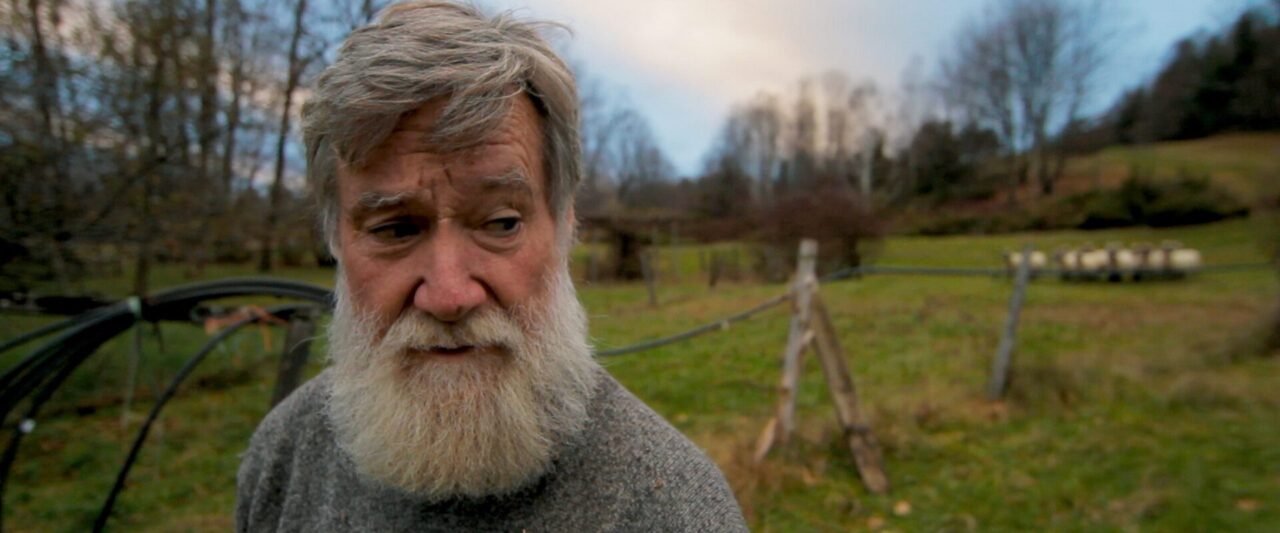
'Peter and the Farm' Review: A Tortured Artist Recounts Troubled Life
His stories range in heaviness, from the time he lost his fingers, to singing every word of West Side Story, yet are equally as impactful and sympathetic to hear.
At one point in our lives, I'm sure many of us have thought about escaping a 9-5 job and all of the responsibility that comes with it, to live as a farmer–at least I know the thought has crossed my mind. Trading in the close proximity of neighbors and the hustle & bustle of the city for acres of open air and grazing cattle seems like a welcome change to the constraints of daily life. In director Tony Stone's documentary, 'Peter and the Farm,' we are introduced to one such man who has lived his whole life on a farm, and for 33 years, he has lived there alone. This is the story of the wonderful and wacky Peter Dunning.
Peter is the quintessential image of a salt-of-the-earth worker- his leathery skin and dirty fingernails show the years of sacrifice and hard work that he has put into his 187-acre farm called “Mile Hill” in rural Vermont, where he produces organically raised pork, lamb, beef, and cow's milk. The bodily sacrifices are only one result of his hard knock life; Peter's outlandish attitude and hard-drinking ways have driven away three wives and four children. Without going into specifics, regret is painted all over his face, especially when it comes to his children and his dashed dreams of one day leaving them his most prized possession, his farm.
This is a portrait of a man who is longing for human connection but is his own worst enemy, much in the same vein as Foxcatcher Farms' John du Pont. At his lowest point, his breakdowns consist of handwritten suicide notes in which he describes feeling “trapped in the openness, this paradise in the midst of ugliness.” There are many occasions where he converses with the camera crew, breaking the fourth wall of filmmaking. At one point, he admits to never really trusting anyone in his life and considers the crew he has just met (and will probably never see again) to be his closest confidants. Peter is a tortured man, yet a strikingly poignant artist. His anecdotes are the film's narrative thread. His stories range from heaviness, from the time he lost his fingers, to singing every word of West Side Story, yet are equally as impactful and sympathetic to hear.
Mile Hill Farm is an idyllic, picturesque utopia where the lush grass vibrates with color and you can practically feel the cutting winds. This image is quite a juxtaposition to the scenes where Peter rounds up and slits a sheep's throat with his bare hands, skins and forcefully rips off the dead animal's wool, guts the intestines (which he feeds to the pigs), and finally, hangs it up to dry out for meat. Yes, it is graphic and no, it is not censored, however, Peter performs this brutal task as humanely as possible. Even with his persuasive monologues about how we, as humans, are programmed to live off of meat and eating animals is just going back to our roots, it doesn't make it any easier to watch.
Director Tony Stone, who is also credited as the film's cinematographer alongside Nathan Corbin, uses melodic camera movements capture both the beauty of the farm and the spontaneity of Peter, perfectly. Peter is portrayed as the type of man you want to simultaneously hug and run from, yet there is no denying that his infectious energy is what makes this film such a compelling watch.
'Peter and the Farm' is not rated. 91 minutes. Available on iTunes and VOD now, and opening in select theaters on Friday, November 18th.

'Elle' Review: The Unconventional Aftermath of Assault
This film was reviewed on November 18th as first seen at this year's AFI FEST presented by Audi
Given the outcome of our current political climate, it's been made evident that women nationwide are searching for a strong female role model: A woman who is both confident and nurturing, respectable and responsible. While looking to politics might not be the answer right now, Paul Verhoeven's latest film, 'Elle,' is divisive enough that it can either be that source of female empowerment for those who chant "My body, my choice," or likely irritate the alt-feminist. With a powerhouse performance from the legendary Isabelle Huppert, 'Elle' is an uncomfortable watch at times, but the result is nonetheless a provocative and emotionally-charged drama.
'Elle,' which translates to "she" in French, tells the story of Michèle Leblanc (Huppert), a middle-aged divorceé who finds herself the victim of a brutal rape, in her own home nonetheless. She has her reasons for not going to the police (which is uncovered later) and does her best to put it behind her. She keeps her composure at work where she oversees the production of a borderline pornographic medieval fantasy video game. However, little triggers like the sound of her cat's meow initiate violent flashbacks, which make it impossible for her to forget that night. What's worse, Michèle's attacker is stalking her, breaking into her home and leaving behind traces of his presence. The mind games finally become too much for her and the ruthless attitude she has held all along becomes jeopardized as she willingly and subconsciously gives into her attacker's sadistic ways.
What's so fascinating about this film is that our protagonist is a victim of rape, yet uses her situation as both empowering victimizing, simultaneously. This is not a black and white film in regards to Michèle's response to her attack – in fact, I'm sure there will be people who had the same reaction I did – one of, "Why is she doing that!?" It's a fact that Michèle and I would respond to in very different ways, especially once a disturbing childhood event may make sense of things. 'Elle' shouldn't be criticized for its offering of brutal honesty and insight into the emotionally complex feelings of this particular woman.
Director Paul Verhoeven, whose past credits include 'Total Recall,' 'Starship Troopers,' and 'Basic Instinct,' creates one of his most provocative films to date with plot and character twists that make this movie anything but conventional. 'Elle' is an adaptation of Philippe Djian's novel Oh..., and so while the story may not be original, Verhoeven's adept eye creates a visually stunning and layered world. Michèle is such an ambiguous character, our interest in her is always piqued as we wonder what she is going to do next. His ability to retain an audience's attention, especially during particularly grievous moments, is truly mesmerizing.
Despite its heavy thematic content, 'Elle' steers clear from ever being melodramatic or depressing. Humorous, albeit darkly humorous, dialogue is sprinkled throughout the film, giving audiences a much-needed outlet for laughter. After a successful festival run (the Cannes audience gave the film a seven-minute standing ovation), 'Elle' has been selected as France's choice for Best Foreign Language Oscar consideration.
'Elle' is rated R for violence involving sexual assault, disturbing sexual content, some grisly images, brief graphic nudity, and language. 130 minutes. Now playing at ArcLight Hollywood and the Landmark, expanding to additional cities in the coming weeks.

‘Nocturnal Animals’ Review: As Stylish and Seductive as its Director, Tom Ford
For all of its glitz and glamor, Nocturnal Animals is, at its core, an introspective look at love, loss, and loose ends.
Leave it to Tom Ford, world renowned fashion designer (fans include Beyonce, Anne Hathaway, Bradley Cooper, Will Smith, and Julianne Moore to name a few), to create such a visceral and complexly beautiful follow-up to his directorial debut A Single Man with the sexy revenge thriller Nocturnal Animals. Based on the novel Tony and Susan by Austin Wright, Ford proves that he can conquer yet another multi-million dollar industry with the same grace that has earned him an elite status in the fashion world. Using his expertise, Ford's meticulous eye picks up the minutiae of each character, giving the film a full-bodied story that makes it both an edge-of-your-seat thriller and also a breathtakingly gorgeous lookbook.


Upon first glance, Susan Morrow (Amy Adams) seems to have it all: a handsome husband (Armie Hammer), a beautiful modern home in the Hollywood Hills, and a prestigious career as an art gallery owner. However, the look on her face reveals that she is not happy; her handsome husband leaves her in that beautiful home alone most nights as he travels for business and conducts affairs on the side. Her latest gallery installation seems to taunt her with the one thing she wants most: freedom. Unsatisfied with her situation, Susan perks up upon receiving a book manuscript from her ex-husband Edward Sheffield (Jake Gyllenhaal), titled Nocturnal Animals. Although they haven't spoken in over 20 years, the note Edward sends along with the book explains that he wanted Susan to read his novel first, as she was the source of inspiration. As Susan delves deeper into Edward's story of heartbreak and revenge, she is forced to re-confront the dark secrets she had buried away and the consequences of the past she tried to forget.
The intricacy of Nocturnal Animals, which won the Grand Jury Prize at the 2016 Venice International Film Festival, comes into play as Susan begins to read the manuscript. Ford creates a "story within a story" with the novel- creating the world of the book as written by Edward. Jake Gyllenhaal also plays Edward's fictional character Tony Hastings, a married father of one. His wife, who is supposed to represent Susan in spirit, is Laura Hastings, played by Isla Fisher. Their daughter India (Ellie Bamber) completes this secular, fictional family. The scenes that are from the book's POV have a contemporary Western feel- both in its vibrant look (Ford shot on film) and character breakdown; including a malicious sociopath Ray Marcus, a phenomenally brutal performance by Aaron Taylor-Johnson, and the Southern-drawled antihero played by Michael Shannon who balances the comedic and temperamental personality of his character, Officer Bobby Andes, just right. As the film jumps from the past to present to fiction, it finds strength in the depth of all of its characters, which fuels the cyclical motion of this layered story.
It's a well-known fact that silence commands attention, and Tom Ford has mastered this art on screen. Amy Adams exhibits more acting through her detailed movements and expressions than she does through verbal communication. Her performance is kept close to the chest but is fully dramatic and confident nonetheless. Ford seems to find his comfort zone and subsequent directorial voice in this silence; he himself being a rather soft-spoken man. After watching his films, it's evident that they come from a personal place, not literal, per se, but an intimate origin.
For all of its glitz and glamour, Nocturnal Animals is, at its core, an introspective look at love, loss, and loose ends. This isn't the type of film that leaves you restless at night, fearing that a creature is going to interfere with your life in some way. Rather it leaves you wanting more- a fuller resolution, a ghost to pin tension on. Yet again, Tom Ford succeeds in leaving his audience with a topic of conversation to discuss after the film ends. The open ended-ness could perhaps be looked at as questionable screenwriting, but personally, I think it makes for one grand finale of emotional tension.
'Nocturnal Animals' is rated R for violence, menace, graphic nudity, and language. 117 minutes. In select theaters on Friday, November 18th.

'Trash Fire' Review: This Off-Kilter Horror Film is an Acquired Taste
Trash Fire is an acquired taste. It's doubtful that it will become a camp classic, although fans of off-kilter horror films may find this little flick enjoyable.
Too bad Halloween is over, the romantic comedy meets horror film Trash Fire would have been a nice addition to the campy holiday genre. The Adrian Grenier-starring film, which made its world premiere during the Midnight section of the 2016 Sundance Film Festival, doesn't quite live up to its name (and with a name like Trash, that is a good thing), although there is much to be desired in terms of overall cohesiveness and character likeability. Trash Fire may leave you thinking, WTF?– but if you can embrace the absurd then perhaps you can find some desirability here.
Immediately, writer/director Richard Bates Jr. thrusts his audience into the stylized world of a common horror film, complete with that greenish hue and monotone bass synth score. However, what is truly horrifying is witnessing the dysfunctional relationship between Owen (Grenier) and his girlfriend Isabel (Angela Trimbur). Owen is hard to sympathize with at first; his smart-ass attitude is alienating to both his relationships onscreen and the audience's relationship with him. He relentlessly insults Isabel's straight-laced, religious brother, Caleb (Matthew Gray Gubler), calling him a beige earthworm among other things. Just as the audience should give up any hope for Owen's self-reflection, Isabel's unexpected pregnancy forces him to re-examine his own childhood and attempt to make amends with his estranged younger sister, Pearl (AnnaLynne McCord).
The actual "horror"part of Trash Fire comes into play in the second half of the film. Violent flashbacks and seizures plague Owen, who grew up believing that an accidental fire he set killed both of his parents and left Pearl scarred for life. At this point in the film, the Owen we knew in the first act is completely transformed into a caring, selfless boyfriend (a major character overhaul that feels too rushed to be believable). Owen's snarky grandmother Violet (Fionnula Flanagan), whose true colors prove she is an evil woman, rounds out this crazy cast of characters.
While Trash Fire is not the type of film I typically gravitate towards, I give credit to Richard for executing his vision with intention. The color of the film is purposefully not welcoming or warm, perhaps a visual representation of Owen's discomfort with the relationships in his own life. The characters rarely converse together in the same frame, instead, addressing the camera in a medium shot. This direction, while original, feels unorganic– like the film is comprised of multiple "scenes" with a specific start and end point– rather than feeling like a fluid story.
Trash Fire is an acquired taste. It's doubtful that it will become a camp classic, although fans of off-kilter horror films may find this little flick enjoyable. But if this review can be summed up in a single image, look no further that the above picture. Grenier and Trimbur's faces say it all.
'Trash Fire' is rated R for some disturbing violence/behavior, strong sexuality, nudity, and language. 91 minutes. Now playing at the Laemmle Monica Film Center and on VOD.

'The Handmaiden' Is a Web of Lies, Deceit, and Sexual Tension
Often regarded as a Renaissance man of Korean cinema, Park Chan-wook does what all excellent filmmakers strive to do– create a technically engrossing and emotionally compelling story that resonates with its audience far after the credits are finished rolling.
"A story is all about the journey," Uncle Kouzuki says to Count Fujiwara as he cuts off the Count's fingers one by one, taking joy in the other man's pain. The sex-obsessed and domineering Uncle, while deplorable in every way, speaks a ring of truth in his observation of what makes a good story, and in the case of director Park Chan-wook's film The Handmaiden, the 2.5 hour journey we will embark on leads us through a tangled web of sexually-charged tension made even more complicated by the layers of lies and deceit, while remaining a shocking and, at its core, beautiful piece of cinema. Essentially, this is a film where predicting what will happen next is utterly pointless, so it's best to just sit back and let Chan-wook be your guide throughout this multidimensional journey.
The scene is set during the 1930's as a young Korean woman, Sookee (Kim Tae-ri), is chosen to work as a handmaiden to the young Japanese heiress Lady Hideko (Min-hee Kim). The Lady's family have all passed away, leaving her the sole proprietor of the family's fortune. Her first day on the job, Sookee meets the Lady at the beautiful, yet secluded, Korean estate where she lives with her much older Uncle Kouzuki (Jin-woong Jo)- who has made his plans of marrying her to inherit her wealth, clear. Both women are quickly drawn to each other, the lines of friendship become blurred and sexual tension arises, however, it is Sookee that is hiding an ulterior motive that may prove to be detrimental.
Before Sookee was hired as the handmaiden, she made her living as a forgery specialist and a pickpocket master. Seeing an opportunity to leave that life behind for good, Count Fujiwara (Jung-woo Ha) devised a plan to get Sookee close to the Lady, with the intention to convince the heiress to marry him instead of her Uncle. Soon after the Count and the Lady were to marry, he planned to put her in a mental hospital and keep all of her money to himself. He would give Sookee a cut of the wealth, as well as give her all of the Lady's clothes and beautiful garments. In theory, Sookee knows that following through with the plan is her ticket out of her dead-end life, however, after inadvertently growing personally attached to and starting to fall in love with Lady Hideko, she questions everything she thought she knew and wanted.
The Handmaiden is cut into three distinct parts, and what I have just described only takes place in the first act. Needless to say, there is a lot more drama than unfolds in the second and third part. The second act delves deeper into the Lady's childhood growing up alone and her relationship with her twisted uncle, a man who collects pornographic novels and forces his young niece to read them aloud to grown men. While the first act leaves the viewer with one sense of how the film is going to progress, the second act turns that theory on its head. We revisit scenes that occurred in the first act through a new lens in the second and third acts, proving that what you think you know, you really don't.
Park Chan-wook's phenomenal storytelling abilities are on heightened display here. Using the three-part structure to tell the same story through three very distinct characters gives the film a tangible sense of fullness. Scenes that seemed to be abruptly cut off at the height of sexual tension are revisited and followed through in later acts. Park Chan-wook doesn't hold back from getting graphic, but he does so in a way that doesn't feel overly pornographic for shock's sake. The energy he creates from the environment, the characters, and the situations make for one truly unforgettable viewing experience.
All of the performances are effective and wildly entertaining, but it is the debut from actress Kim Tae-ri who plays Sookee that is truly mesmerizing. Tae-ri beat out over 1,500 other actresses for the part and it is to her advantage that she had little to no acting experience prior. Her demeanor can best be likened to Belle's in Beauty and the Beast. Both have an innocence that is only intensified by their large, doe-eyes, but they are self-sufficient and have a backbone when they feel like they're in jeopardy. This may be just a coincidence, but even Sookee's outfit– a blue long-sleeved dress with a white apron– is reminiscent of the Disney princess.
If you were not familiar with Park Chan-wook's impressive filmography before The Handmaiden, (credits include Oldboy and Thirst), then you are in for a mind-blowing experience. Often regarded as a Renaissance man of Korean cinema, Park Chan-wook does what all excellent filmmakers strive to do– create a technically engrossing and emotionally compelling story that resonates with its audience far after the credits are finished rolling. The Handmaiden should serve as an example of masterfully executed cinema from both sides of the camera. Despite The Handmaiden's rather lengthy runtime with both Japanese and Korean subtitles, this is the rare occurrence where I am actually looking forward to rewatching the film again, knowing that when I do, I'll walk away with an even deeper appreciation of Park Chan-wook's unique style.
'The Handmaiden' is not rated. 144 minutes. Now playing at ArcLight Cinemas, The Landmark, Laemmle Theaters, and more.