

'PVT Chat' Review: Exposing the Erotic World of Webcam Connections
Technically, PVT Chat isn't rated. But what I can tell you after watching this sexually-charged dark drama is that it should be rated "B," for "Bold," "Brash," and–let's be honest here–"Boobs." Directed by Ben Hozie, PVT Chat is a low-budget, hyper-realistic look at a dark corner of the online sex industry that unabashedly brings the snuff film into the 21st century. Gaspar Noé, meet your successor.
Peter Vack stars (and bares all) as Jack, a single, NYC-dwelling millennial who passes his days playing online blackjack and chatting with cam girls from his janky apartment. He's a good-looking guy, someone who we wouldn't expect turns to sex workers and erotic masseuses to fulfill his kinks. Then again, this just proves that everyone carries secrets, especially the people we may not expect.
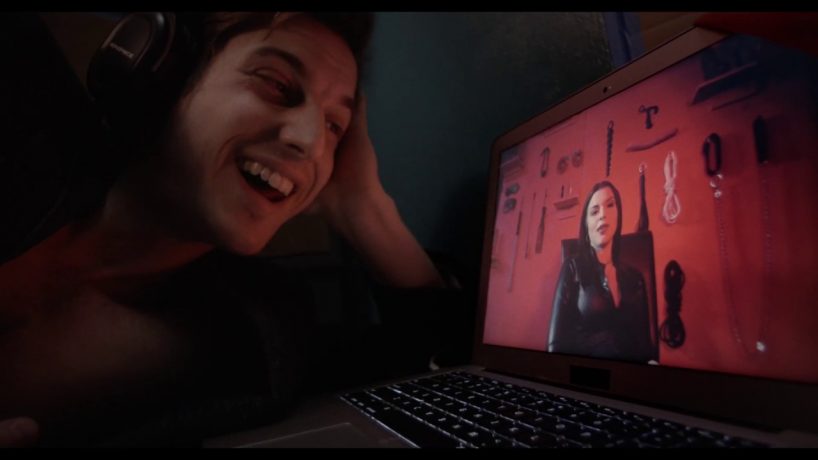
Jack carries out his relationships in both a transactional and superficial manner, but even though his life is lived mostly online, Jack soon finds out that his actions have consequences that extend beyond the computer screen. Reality hits when his daily chats with San Francisco-based dominatrix Scarlet (Julia Fox, Uncut Gems) turn from standard dirty talk to more personal confessions. One night, convinced he's spotted her on the streets of Chinatown, Jack is determined to turn his online fantasy into a real-life relationship.
At its core, PVT Chat is a romantic film about hedonistic freedom and fantasy, littered with vices and eroticism. Shot in a shaky manner reminiscent of the Safdie brothers, the cinematography feels as unstable as its protagonist. That is the point, though, as filmmaker/provocateur Ben Hozie wrote, directed, shot, and edited PVT Chat as a response to society's rigid view of sexual exploration and imagination. Peter Vack carries the film with total vulnerability (and full frontal nudity, including a self-pleasure sequence), and Julia Fox's tenderness and strength play perfectly into Vack's desperate need for human connection.
You've probably gathered by now that PVT Chat won't be for everyone. However, if you're curious to see out a film that will push you to the threshold of your comfort level–and beyond–PVT Chat aims to satisfy.
Distributed by Darkstar Pictures, PVT Chat is now available on-demand.

'Nordic Film Music Days' Celebrates The Year's Top Nordic Composers
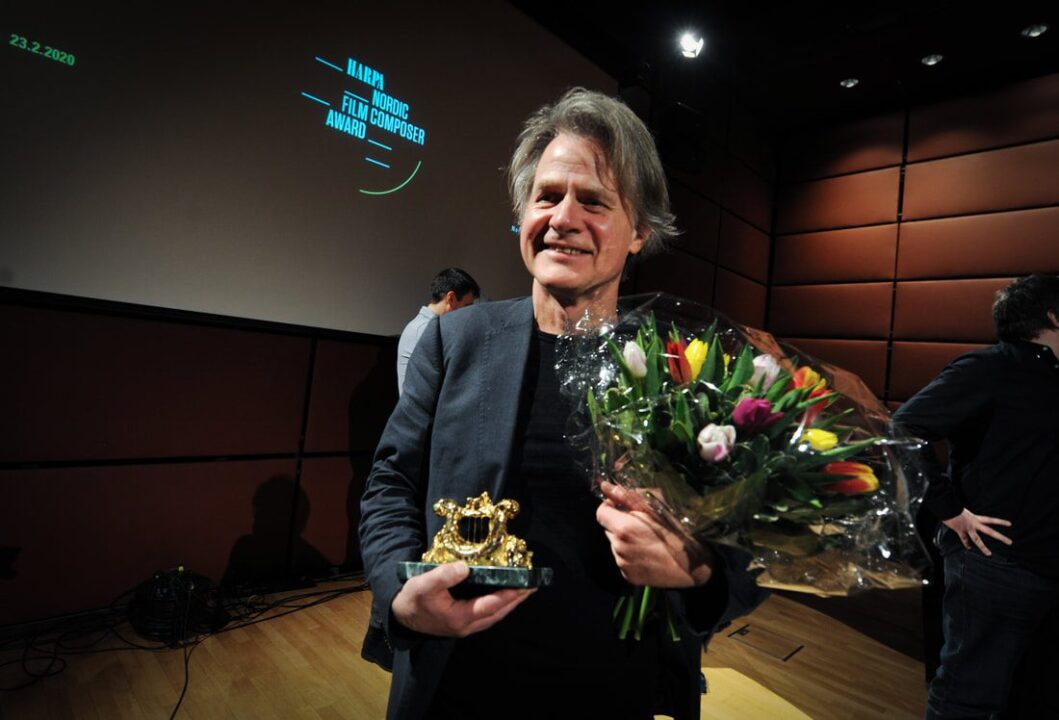
Since its inception in 2010, the HARPA Film Composers Award and the Nordic Film Music Days (NFMD) has been a highlight of the Berlin International Film Festival. Since we're still living in a virtual film festival world, the six-day long event has moved online, which is great news for those who have always wanted to sit in on the inner workings of the Nordic film and music scene without paying for a flight to Berlin.
The goal of any composer is to tell a story with sound, and Nordic films are generally known for going directly to core feelings. Each film has a unique sound that is easy to spot, and even easier to get lost in the swirling and dramatic emotions they elicit.
The Nordic Film Music Days kicks off this Saturday, February 13th, and includes screenings of nominated films, a panel conversation with the HARPA nominees, an overview on promotional materials for composers, a seminar on creating sustainable contracts, a panel on creativity, collaboration & working together and breakout rooms for composers & director meetings.
The highlight of the event takes place on Thursday, February 18th, when the crowning of the new HARPA award winner is announced. Over the last two months, national juries from each Nordic country have watched, listened, discussed, and decided which of the 50 submitted scores will proceed as their national nominee.
The 2021 nominees of the HARPA Nordic Film Composers Award include:
Flemming Nordkrog (Denmark) | Shine Your Eyes
Pessi Levanto (Finland) | Psychosia
Hugar aka Bergur Thorisson, Petur Jonsson (Iceland) | The Vasulka Effect
Marcus Paus (Norway) | Torden
Jon Ekstrand (Sweden) | 438 dagar
Past winners include:
2020 Berlin | Gaute Storaas (Norway) | Bröllop, begravning & dop
2019 Berlin | Davíð Þór Jónsson, Benedikt Erlingsson (Iceland)| Woman at war
2018 Berlin| Daníel Bjarnason (Iceland) | Under the Tree
2017 Berlin and Cannes | Sune Martin (Denmark) | Land of Mine
2016 Berlin | Honor award | Johann Johannsson (Iceland)
2016 Berlin | Atli Örvarsson | Rams
All events are free of charge and open to the public.
Register at Nordic Film Music Days.

'Minari' Review: This Touching Story of the American Dream Stands Tall
Despite awards shows that miscategorize and claim otherwise (looking at you Golden Globes), Minari is an American film. The soul of its story is the textbook definition of the American Dream. Directed with heartfelt empathy by Lee Isaac Chung, Minari is an intimate story about expectation vs reality, and the calculated risks that some are forced to take when pinning the future and well-being of their family on nothing more than hope.
The old adage "grow where you're planted" is a familiar one–it's what Jacob (Steven Yeun) plans to do, with abundance. Having immigrated from Korea with his wife Monica (Yeri Han) and two young children, Anne (Noel Cho) and David (Alan Kim), Jacob and his family settle into the outskirts of a small Arkansas town, where he plans to start a farm. Jacob's vision is to harvest and sell local Korean produce to small markets, and his DIY "can-do" attitude propels its rocky start.
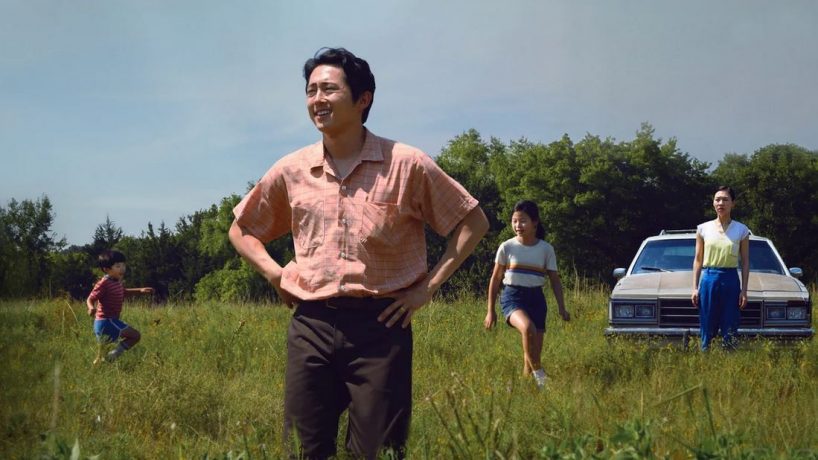
Jacob views his newly acquired acres of land as his personal "Garden of Eden" and a ticket to generational success. However, his expectation of the farm's promise vs the reality of it–which drains resources and money away from his family–is far from ideal. The family dynamic is put in flux as Jacob's attention becomes predominately set on work, causing Monica to grow more isolated and resentful. To ease the tension, it's decided that her mother Soonja (Yuh-jung Youn) will come from Korea to live with them and help raise the children, much to David's initial detest.
Where Minari really finds its emotional weight is the time we spend with the family and their home life, specifically the relationship between David and his grandma. Faced with so many life changes, cultural and otherwise, David isn't mature enough to articulate his feelings, so he ends up taking his frustrations out on Soonja via cheeky pranks. It's a familiar story of testing boundaries and the way Lee Isaac Chung captures David's spitfire precociousness and childhood innocence feels extremely personal. From there, the film builds and swirls with emotional tension, coming to a crescendo on the night an accidental fire breaks out and threatens everything Jacob has worked so hard for. It's in this moment when he has an epiphany: is "financial success" worth more than his well-being and safety, or has greed been masquerading as his relentless work ethic?

In addition to rich sweeping cinematography by Lachlan Milne, the costume design and score also leave lasting impressions. Jacob's red hat–a symbol that had been polluted by MAGA mobs–reclaims its status as a morally powerful accessory. Working as hard as he can to make ends meet and provide for his family, Jacob's hat, chosen by costume designer Susanna Song, represents the blood, sweat, and tears of all immigrants who come to America with dreams of a better future and, in this case, literally growing their money. Composer Emile Mosseri provides another unforgettable score that perfectly encapsulates the feeling of growth and rebirth with melodic strings and delicate piano keys.
Like the Minari, or crops of any kind, Lee Isaac Chung uses this beautiful cinematic vessel to show us that we grow where we're planted; we can flourish anywhere so long as we nurture ourselves. This sentiment is the thesis statement of Minari, embracing cultural differences is the only way to create a richly symbiotic tapestry of American life. Now, someone tell that to the HFPA.
Distributed by A24, Minari is available to watch on A24's virtual screening room this Friday, February 12, 2021.
'French Exit' Review: This High Society Satire Offers Quirky, Scattered Fun
For those who miss the floundering familiarities of a Woody Allen film but for moral reasons won't bring themselves to support the controversial filmmaker, Azazel Jacobs' French Exit attempts to quench that desire. If offbeat, quirky capers spearheaded by a strong female protagonist excite you, then know that there are plenty to be found in this Michelle Pfeiffer-Lucas Hedges two-hander. However, if you're looking for a film with substance that will provide either laughs or thought-provoking moments, you may find yourself, like me, disappointed.
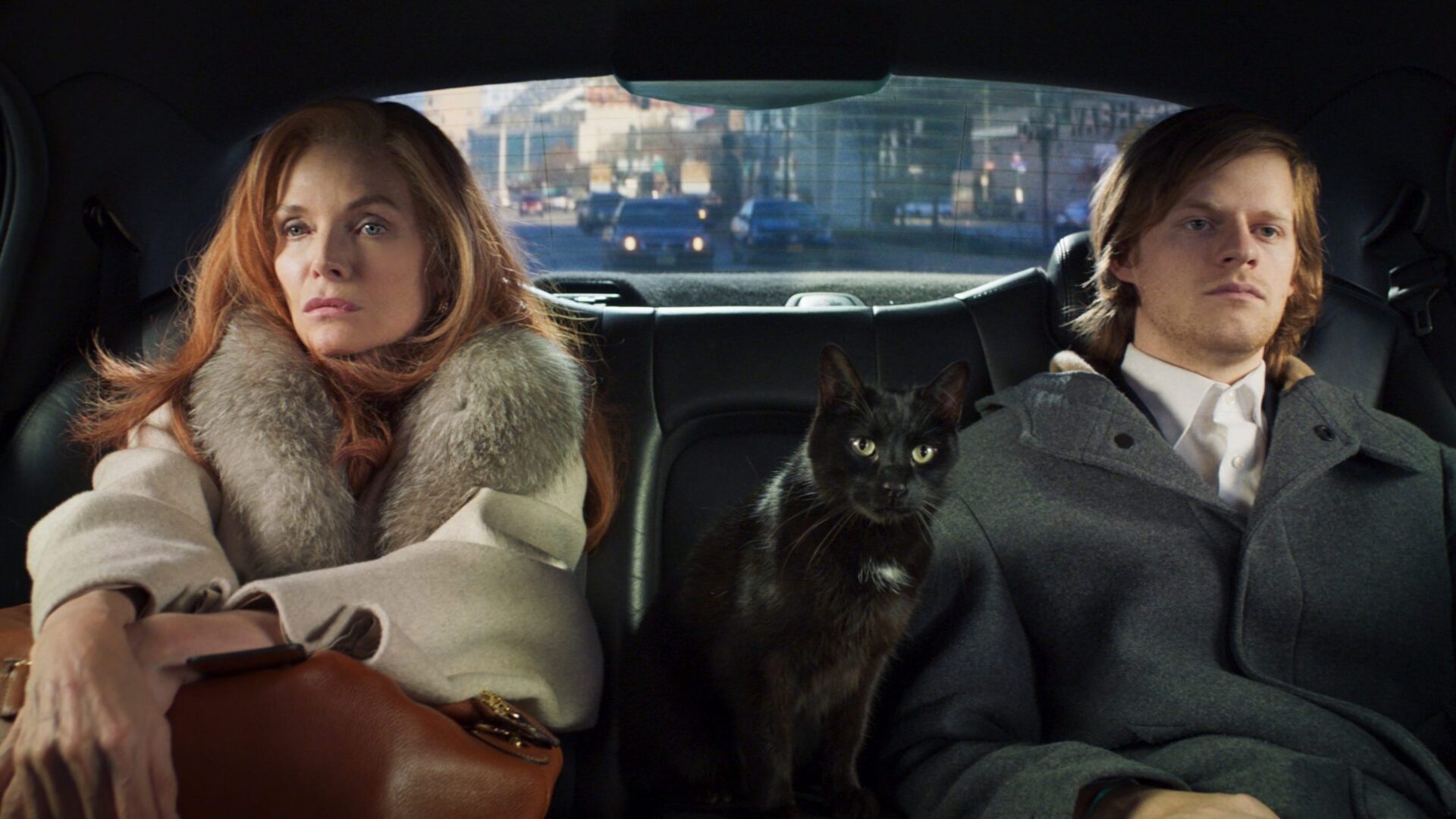
Based on the book of the same name by Patrick DeWitt, French Exit is a high society satire about Frances (Michelle Pfeiffer), a narcissistic woman who decides to flee the country 12 years after the death of her husband and, perhaps not coincidentally, the sudden end of her marital inheritance. Taking her apathetic son Malcolm (Lucas Hedges) and their cat Small Frank with her, they board a cruise ship from New York City to Paris to start over, no strings attached.
However, strings are aplenty as Frances and Malcolm arrive and face their new reality. In their varying depressed states, Frances and Malcolm acquire a hodgepodge cast of characters who end up living with them in their borrowed apartment, including a mindreader from the ship (Danielle Macdonald), a family friend (Valerie Mahaffey), Malcolm's ex-girlfriend (Imogen Poots), and more. As if their situation wasn't unconventional enough, Frances begins communicating with Small Frank via late-night séances, as she believes the soul of her dead husband (Tracy Letts) is embedded in the cat.
Is this a dark comedy, an oddball mid-life crisis drama, or all of the above?
French Exit has a cold shell and scattered tone that is hard to crack, which most likely is attributed to the shaky translation from book to screen. It isn't until about halfway through when Frances explains the reason why the cat is so important (hint: reincarnation) that we re-evaluate the type of film we think this is. Is this a dark comedy, an oddball mid-life crisis drama, or all of the above? This film floats in genre purgatory; it's not silly enough to crack a smile, nor is it vulnerable enough to feel connected to and sympathize with the characters. Despite its shortcomings, there is no doubt that French Exit should be acknowledged for its stellar lead performance from Pfeiffer (who earned a Golden Globe Award nomination for Best Actress Musical or Comedy for this role).
Genre-fluid and experimental, French Exit is a subversive film that gives its actors a platform to shine on, and us wanderlusters an appreciated glimpse of Paris from our TV screens. It also left me wondering if Lucas Hedges has invested in the cruise industry yet, as this is his second consecutive film in which he's traveled from NYC by boat (Let Them All Talk being the other). Just a thought.
Distributed by Sony Pictures Classics, French Exit opens at the Vineland Drive-In this Friday, February 12, 2021.
Listen to a Track From The Priyanka Chopra Jonas-Produced Film 'Evil Eye'
One listen and you'll be swept away in the hauntingly ethereal track that is "Protection," from the Amazon Studios and Blumhouse Television thriller Evil Eye. The Jason Blum and Priyanka Chopra Jonas-produced film is one of eight genre films in the Welcome To The Blumhouse anthology series, and the first commercial horror movie created by and starring South Asians.
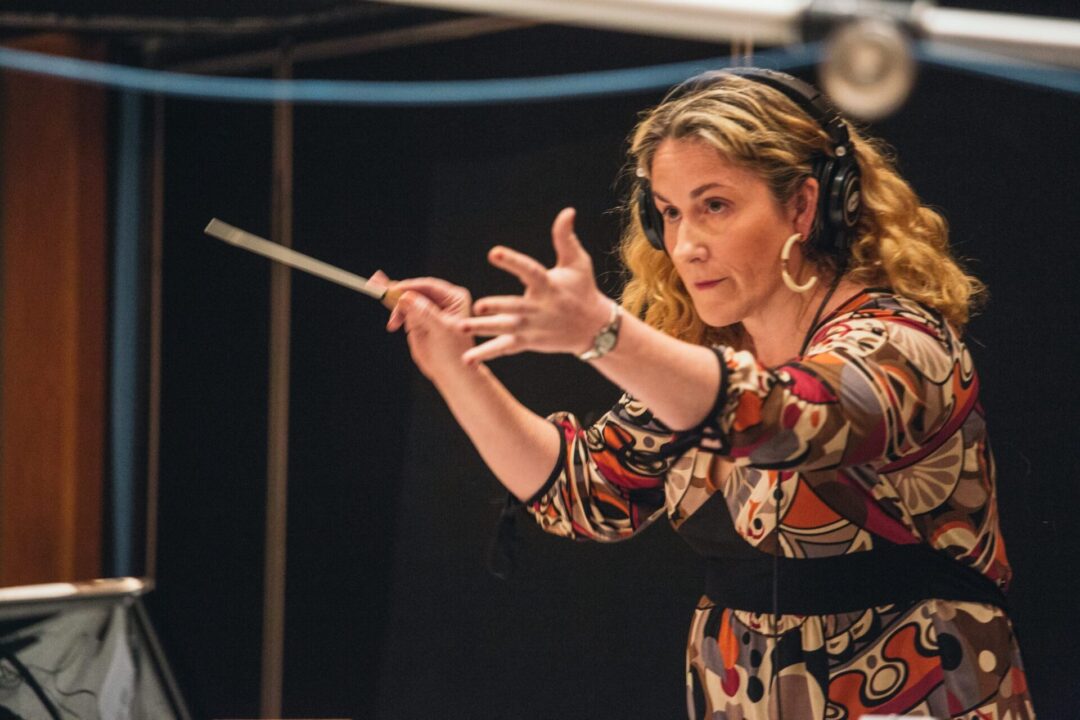
Cinemacy is excited to premiere the track by composer Ronit Kirchman (The Sinner, Limetown), who also recently won the Hollywood Music in Media Award for “Outstanding Score for a TV Movie/Streaming." Listen here:
Behind the scenes, Ronit took the film's monumental achievement in South Asian history and created a distinctive sound rooted in horror artistry with traditional Indian instruments and textures. Focusing on the film's mythology and reincarnation themes, Ronit’s sonic palette includes signature elements like flutes, harps, vocals, and a full complement of Hindustani percussion.
Kirchman explains: “It was truly a joy to compose the music for Evil Eye... I particularly enjoyed the opportunity to write emotional, melodic themes that trace family relationships and unfold in unexpected ways. The final scenes presented an exciting musical opportunity to amp up the intensity and provide maximum dramatic impact, transforming the vocabulary into something disturbingly resonant, yet newly threatening.”
'Evil Eye' is now streaming on Prime Video, and the soundtrack will be released by Lakeshore Records this Friday, February 12th.
In 'Malcolm & Marie,' Tortured Artists Shout in Black & White
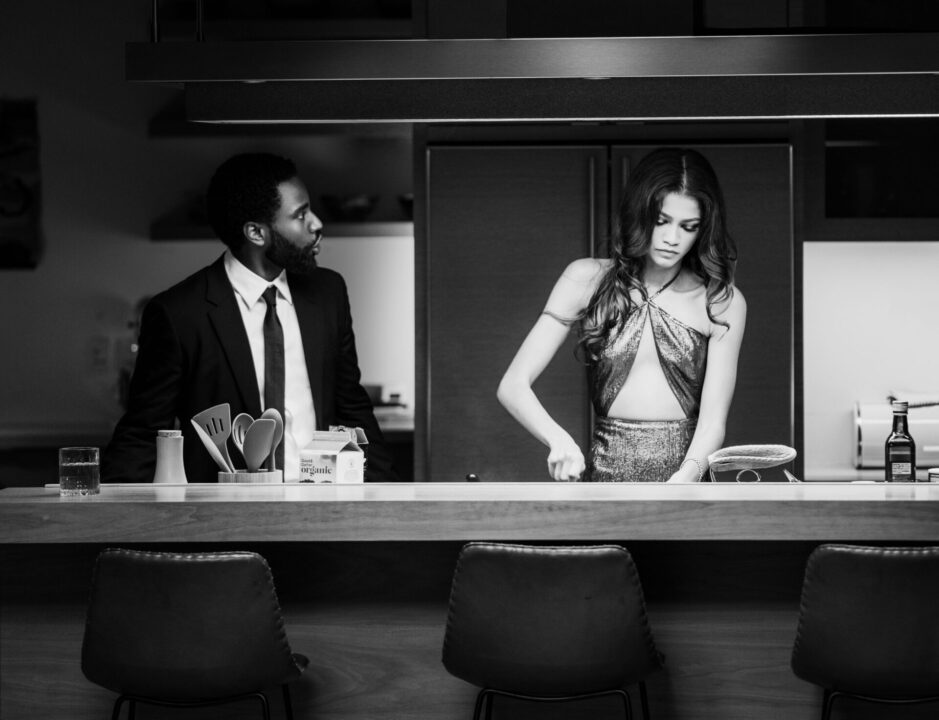
I'm probably one of the few "critics" who isn't offended by the biggest point of contention in director Sam Levinson's (Euphoria, Assassination Nation) stylishly enthralling romantic drama, Malcolm & Marie: the point being "critic bashing" or, "how criticism kills art." While I can't fully agree with that outlook (because my job would be rendered useless if so), I tend to agree with the bigger picture here: sometimes art for art's sake, without the need for a "message," is good enough. That said, if you're looking for a whirlwind of sharp monologues, snazzy music, and a story that exists purely for artistic expression, then you'll find a lot to love in Malcolm & Marie.
Once upon a time in Malibu, Malcolm (John David Washington) and his girlfriend Marie (Zendaya) return from an after-party of the premiere of his feature film. What was supposed to be a celebratory night of debauchery turns into a marathon all-nighter of introspective conversation about art, inspiration, and what it all means as the couple bicker about things in and out of their control, specifically the pending critics reviews.
The "arrogant director" and "overlooked muse" trope is on full display, as Malcolm and Marie bounce from room to room, hurling monologues at each other that border on verbal abuse, or as Marie puts it, "emotional fucking terrorism." Perhaps they're releasing the night's pent-up anxiety, or maybe they're finally letting go of built-up resentment but either way, they take it out on each other. He can't stand her neediness and she won't be his manic pixie dream girl any longer; but once the sun starts to rise on their emotionally taxing night, both of their inflated egos shrivel in the dawn of a new day.
The deft, meaty script is accredited to Levinson as well and is worth dissecting and re-visiting like a graduate thesis paper.
Malcolm & Marie is heavily music-driven, propelled by the talent of Euphoria's music supervisor Jen Malone. In addition to music by British singer-songwriter Timothy Lee McKenzie aka Labrinth, tracks like Dionne Warwick's "Get Rid of Him" provide further context into the emotional state of our protagonists.
The music is balanced out by the non-stop monologues, which the film delivers in spades. The deft, meaty script is accredited to Levinson as well and is worth dissecting and re-visiting like a graduate thesis paper. Shot entirely during the pandemic, Malcolm & Marie leans into this pressure cooker of emotional energy. Taking place in one location and with only two actors, the weight of the film rests solely on Washington and Zendaya who each give electrifying, passionate performances.
Levinson's not so subtle hint to his critics, via his mouthpiece Malcolm, is this: Critics sap the world of its mystery by trying to explain everything, and in their search for a "message," they miss the emotion. Malcolm & Marie is an artfully strong clap back to some of Levinson's own critics, and an equally impressive film for anyone who appreciates the beauty of pure artistic expression.
Distributed by Netflix, Malcolm & Marie is available to stream on Netflix today, February 5, 2021.
'Little Fish' Review: Falling In and Out of Love–And Consciousness
While Little Fish is, at its heart, a sci-fi romance, its central story of a devastating virus causing irreversible damage to its affected has become less "science fiction" and more accurately the bizarre reality in which we live. Based on the short story by Aja Gabel, Little Fish–directed by Chad Hartigan–is a sensitive and thought-provoking independent film that sparks nostalgia for simpler times.
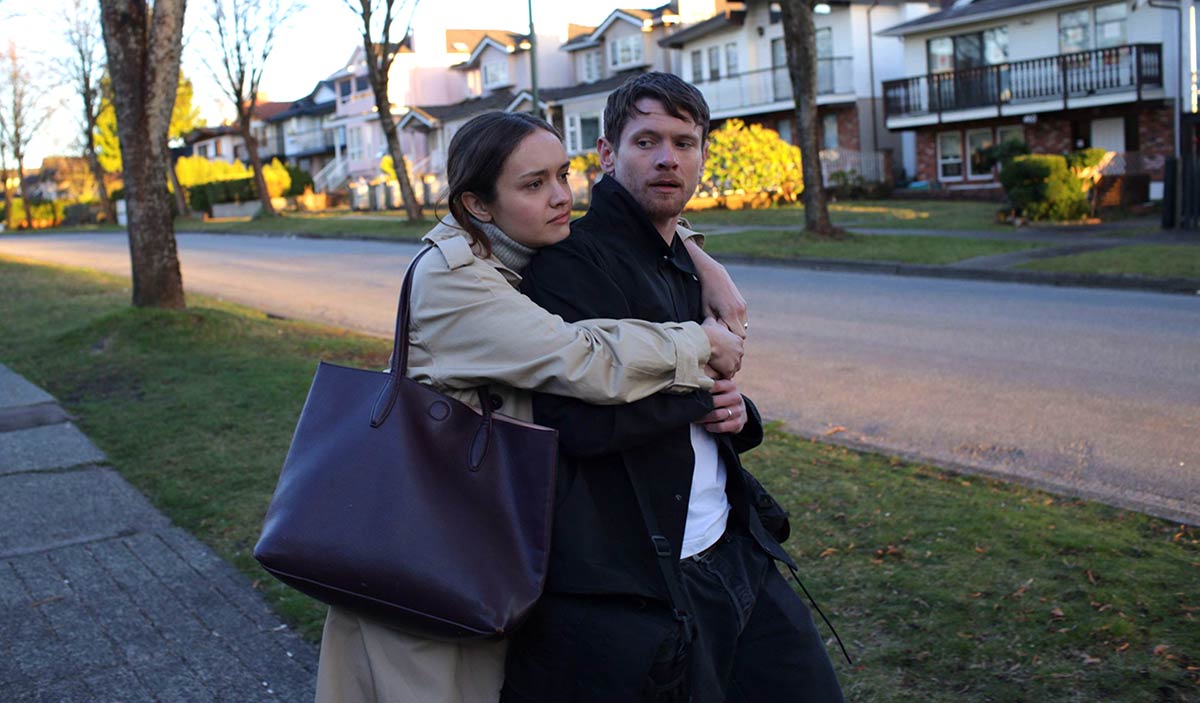
Little Fish is a story about falling in love and falling out of consciousness, of waking up one morning and not recognizing the love of your life. Newlyweds Emma (Olivia Cooke) and Jude (Jack O’Connell) have a steady relationship–a true "us against the world" outlook–but even their bond isn't immune to the newly discovered virus causing catastrophic symptoms. NIA (also known as Neuro-Inflammatory Affliction) is a wicked virus that attacks the brain and causes permanent memory loss. Some lose it all at once, others fade slowly. And Jude, regrettably, is fading away slowly.
Without a cure and complete memory loss inevitable, Emma and Jude take it upon themselves to recreate the moments from their love story in the hopes of prolonging his conscious mind. Cue the polaroids with notes written on the back, daily walks around the neighborhood, and tattooing a little fish on their feet–symbolic of their deeply felt love for each other–all serving as Emma's ways of recording everything she can to cherish the present moment.
Even the title alone has an ironic ring to it, as it's commonly believed that fish have a memory span of 30 seconds, their forgetfulness being their weakness.
Much like Jude's slow progression towards the unfamiliar, Little Fish feels like a slow and somber drip of passing time. It's heavy and heartbreaking, matching the grim outlook of our protagonist. However, Olivia Cooke and Jack O'Connell give passionate performances that allow us to connect. Set to a sweeping score by composer Keegan Dewitt, Little Fish embraces its dark undertones. Even the title alone has an ironic ring to it, as it's commonly believed that fish have a memory span of 30 seconds, their forgetfulness being their weakness.
As we're all still in the thick of fighting through the emotional hardships of our collective COVID pandemic, Little Fish holds up a mirror and asks how we can better remember the moments that are important to us. It's not possible to put time in a bottle, but we all have those moments that were so special, you wish you could relive them again and again (for most of us, that moment is anytime pre-March 2020). Little Fish encourages us to treat memories as sacred gifts because life without memory is no life at all.
Distributed by IFC Films, Little Fish opens on demand and at Cinelounge Drive-In Hollywood this Friday, February 5, 2021.
'Amy Tan: Unintended Memoir' Sundance Review: Amy Tan, An Open Book
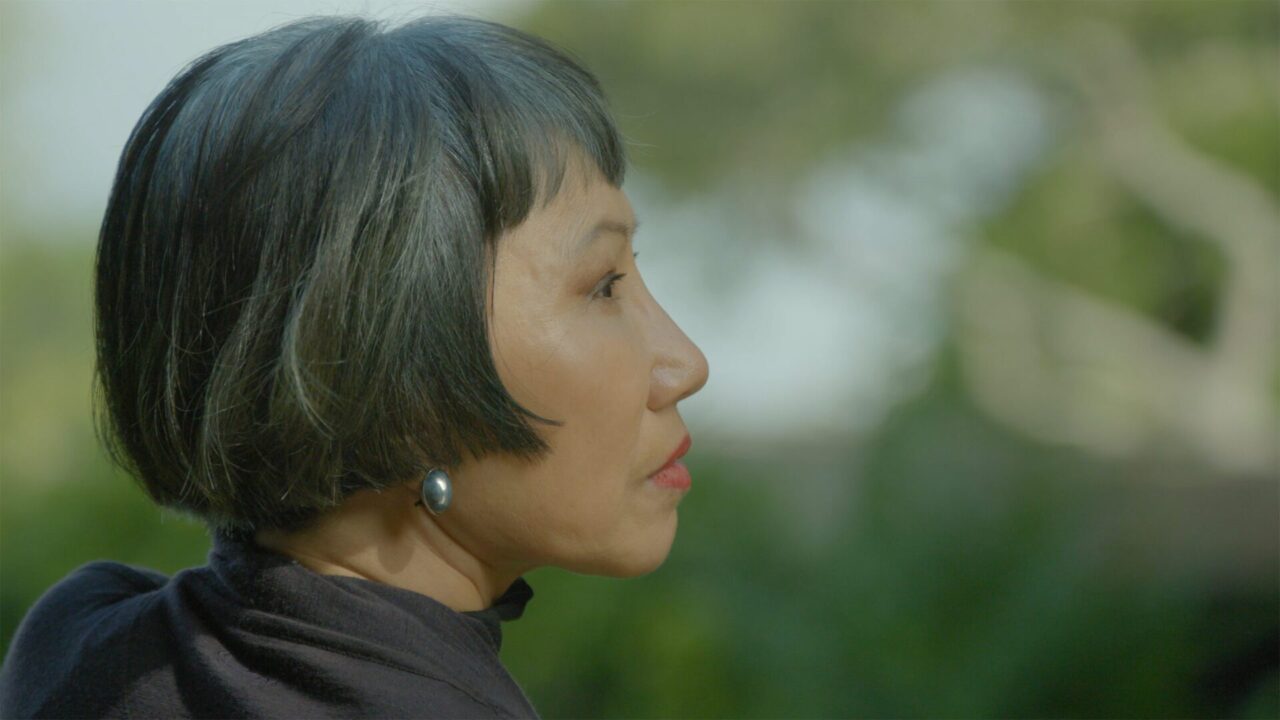
Much like a rigorously structured book, James Redford's Amy Tan: Unintended Memoir fits together perfectly like a puzzle to tell the story of the life of the prolific author. Composed quite seriously in nature and tone, the late director's (Robert Redford's son) documentary may be too rigid for my taste, but will no doubt be enjoyed for fans of Tan's, as well as those curious to learn more of this important literary figure.
Amy Tan: Unintended Memoir gives us the benefit of having Tan talk directly into the camera as she shares her struggles of growing up with a widowed and suicidal mother, whose pressure on their family to be "perfect Americans" caused incredible tension. Tan's strained relationship with her mother is seen as the bedrock of the documentary, and the heart-rendering reason as to why she never wanted to become a mother herself.
However, as Tan talks about growing older and developing more mature outlooks on life, she began to disassociate from that love/hate relationship and put those feelings into full-bodied character development for her books, beginning with the best-selling The Joy Luck Club.
From there, Unintended Memoir explores other undiscovered corners of Tan's life, including her battle with Lyme disease, joining a rock band, and her secret passion–bird watching–which add further interest to this complex person.
However, Unintended Memoir lacks cinematic imagination to tell her story. It's a very straight-forward approach, and has an old-school style of documentary filmmaking–which isn't a bad thing, per se; it just feels dated, whereas more diverse storytelling could have made her story even more impactful.
What surprised me the most to learn (out of all of her admissions) is that Tan didn't start intentionally writing until her mid-thirties. To know that a minority woman of color can follow her dreams at this time–and better yet, find tremendous success by writing straight from her heart and personal experiences, is incredibly inspiring. To go from a schoolgirl who was ashamed of her mom's Chinese food, to metamorphose into a revered idol in the Asian American community–and worldwide–is a beautiful evolution.
James Redford's documentary Amy Tan: Unintended Memoir might just make you want inspired to pick up one of Tan's novels–as it's done for me.
'How It Ends' Sundance Review: An Oddball Apocalyptic Comedy
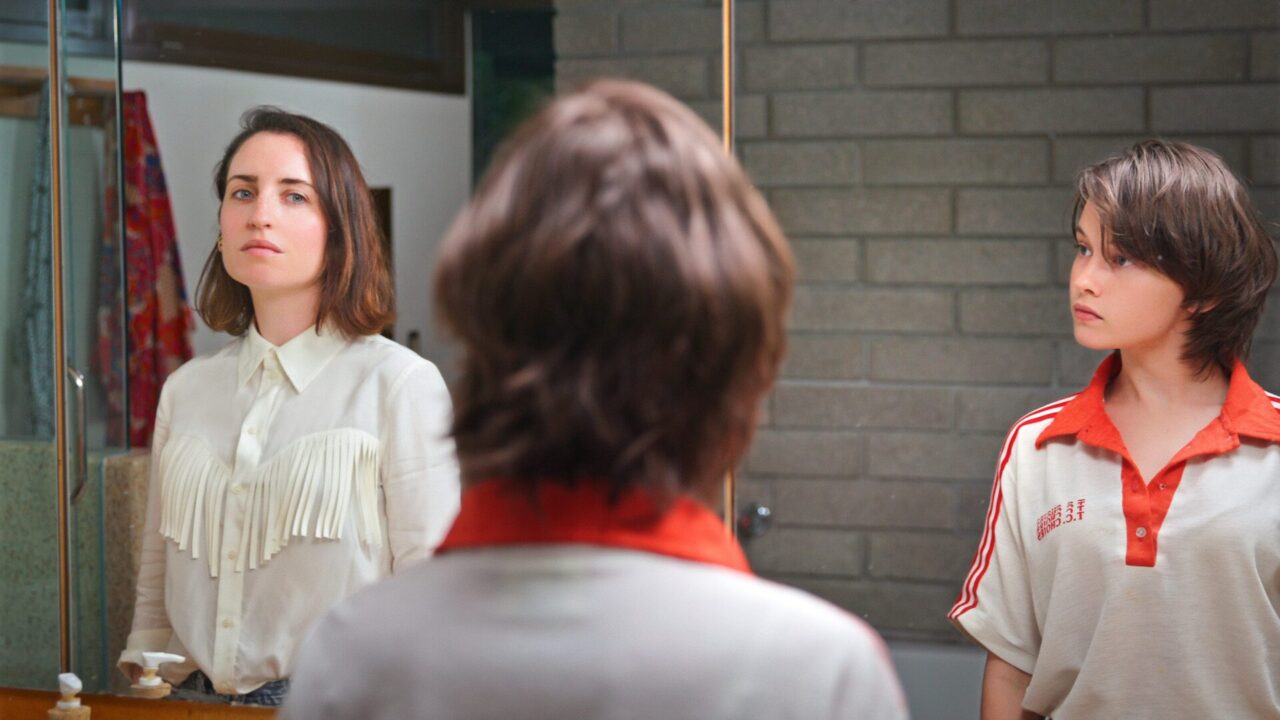
If you're like me, there was probably a point last year when you thought the world was going to end. Whether it was the confirmation that aliens and murder hornets exist or baking so much bread that you overdose on carbs, existential crises were a dime a dozen. The crazier the news got, the more it got me thinking: given the opportunity to plan my last day on Earth, what would I want to do? How It Ends is a charming, pre-apocalyptic film made at the height of the COVID-19 pandemic in Los Angeles (because that's how creatives deal with "end of the world" anxiety: they make things). This strange but oddly cathartic comedy is the brainchild of the married writing/directing duo Zoe Lister-Jones and Daryl Wein, who allow us to find the dark humor in this truly unprecedented moment in time.
Set primarily in Silver Lake (but jaunts around the Eastside), Eliza (Zoe-Lister Jones) and her metaphysical younger self (Cailee Spaeny) prepare to live out their last day on Earth. First stop, the weed dispensary. All Eliza wants to do is get high, eat until she pukes, and then die, but her younger self won't allow her to "go out" that way. She encourages Eliza to attend one last party but first, she must tie up loose ends with her ex-boyfriends (Lamorne Morris, Paul W. Downs), absentee parents (Helen Hunt, Bradley Whitford), and of course, her frienemy (Olivia Wilde). With the game plan set, Eliza and her younger self embark on an existential, soulful scavenger hunt for closure.
Given that filming restrictions were at an all-time high during production, How It Ends gives off an eerie minimalist presence. For the most part, there are no more than three people in a single shot, and the 6 feet distance rule is in full effect. In these conditions, it would have been easy to make something sterile. But How It Ends is the furthest thing from sterile, in large part due to one of the best ensemble casts of recent memory. Short but sweet scenes with a kooky Fred Armisen, a tripping Charlie Day and Mary Elizabeth Ellis, a singing Glenn Howerton, and the incredible Sharon Van Etten all give the film bursts of energy. Every actor's unique contribution to an already stellar script fills up the film's comedic heart.
You know how you can tell when someone is about to smile, but they try to hide it? That's the entire vibe of this film. Lister-Jones and Wein were able to assemble a stellar cast of actors, all of whom were psyched to be working after the film industry shut down. Even if their screentime was brief, like Nick Kroll or Ayo Edebiri, their genuine happiness to be back on a film set reverberates from the screen, making this lighthearted watch about a truly horrifying situation all the more bearable.
How It Ends is comedic relief that doubles as a cathartic time capsule for this zany moment in history. For all the panic we've gone through over the past year, let this film be a sigh of relief that there are brighter days ahead. It may be the end of the world as we know it, but I feel fine.
Watch This Ethereal Piano Rendition From 'I'm Thinking of Ending Things'
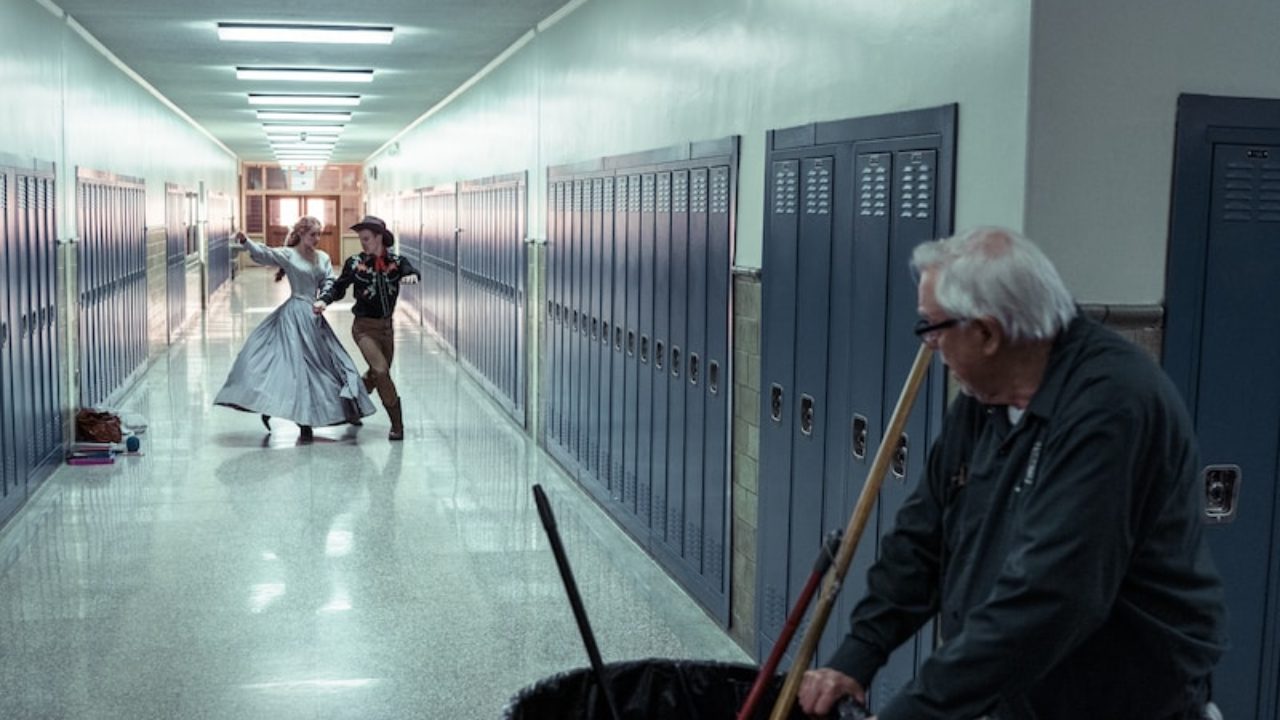
Charlie Kaufman's psychological drama I'm Thinking of Ending Things is full of surprises and bold choices. One of the more ambiguous and widely talked about moments comes in the form of a performance from the musical "Oklahoma!," which has sparked many "What does it all mean?" theories and YouTube video essays. But there's another musical moment that gets right to the heart of the film–the desire and longing for human connection–and that's the ethereal ballet sequence.
Cinemacy is excited to premiere the piano rendition of “Dream Ballet” from the original score of I’m Thinking of Ending Things by composer Jay Wadley and pianist Timo Andres. Timo effortlessly performs this 4 hand piano version with such mesmerizing grace and precision. In addition to the lovely musical interpretation, the short film's double exposure of Timo playing both piano parts also acts as a visual nod to the unique, Kaufman-esque style of filmmaking.
Check out the video below:
https://www.youtube.com/watch?v=BuE-Si02ChU&feature=youtu.be
Says Jay, “After finishing [I’m Thinking of Ending Things], I was very excited to find an opportunity to create a two-piano version of the ballet in the tradition of transcriptions of the ballets of Stravinsky, Tchaikovsky, and many others. It’s always a funny thing hearing a composition you wrote for one instrumentation or medium translated to another. This piece really evolves and takes on a new life of its own, developing into something entirely fresh while reflecting concepts and themes of the film both visually and, of course, musically.”
After watching Timo's stripped-down version, check out Jay's original orchestral version of “Dream Ballet” below.
You can watch I'm Thinking of Ending Things in concert at the Film Music House, presented by White Bear PR, at the virtual Sundance Film Festival.
The Standout Composers of Sundance 2021
One of the first things I look for when planning out my Sundance selects are the composers of Sundance, who contributed to the music, and who is the music supervisor.
I've worked in music supervision full-time for over six years, and I've grown accustomed to seeking out my colleagues' names first. Just like directors can have a distinct "style," so can composers. After falling in love with the score from The Last Black Man in San Francisco at the 2019 Sundance Film Festival, I now seek out any project that composer Emile Mosseri is attached to, knowing that it will most likely be a film I'm interested in (a theory that has proven true so far, see: Minari, Kajillionaire).
To me, the sound of a film is just as important as the person directing it or the actors involved. After scouring the Sundance slate, here are some of the musical standouts from this year's festival and, going forward, I'd love to see more women in this space.
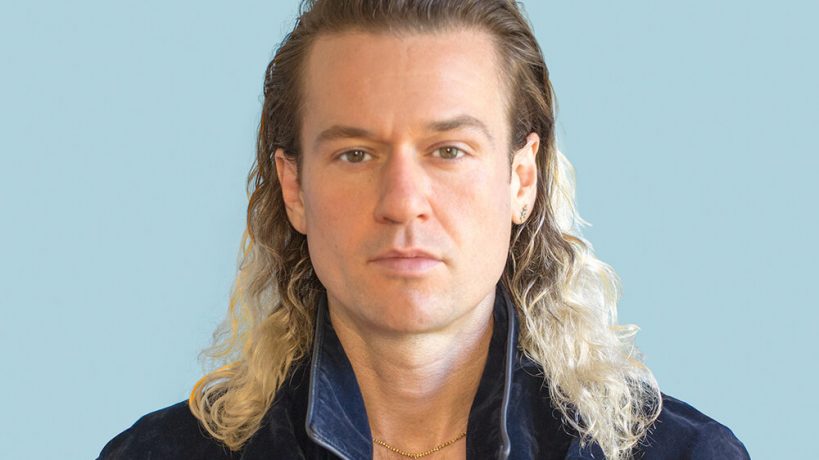
John Carroll Kirby (Cryptozoo)
John Carroll Kirby's album My Garden singlehandedly got me through quarantine last year. He's a pianist, producer, and composer from Los Angeles who creates beautifully meditative tracks, as well as being the go-to collaborator for Solange and Frank Ocean, among others.
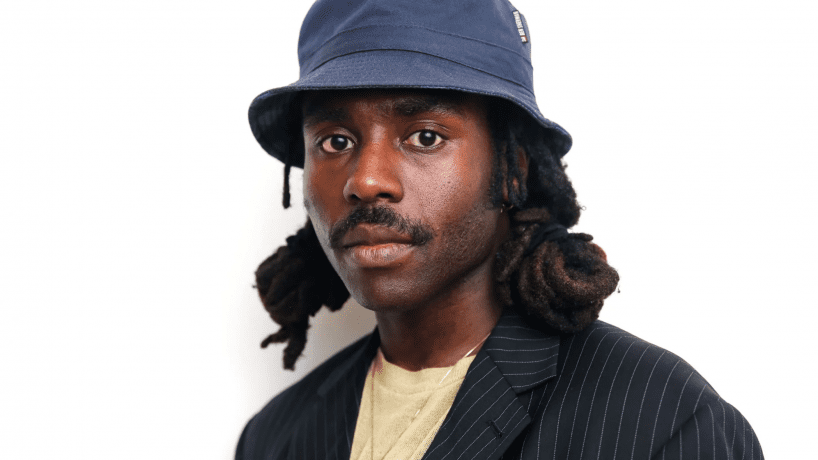
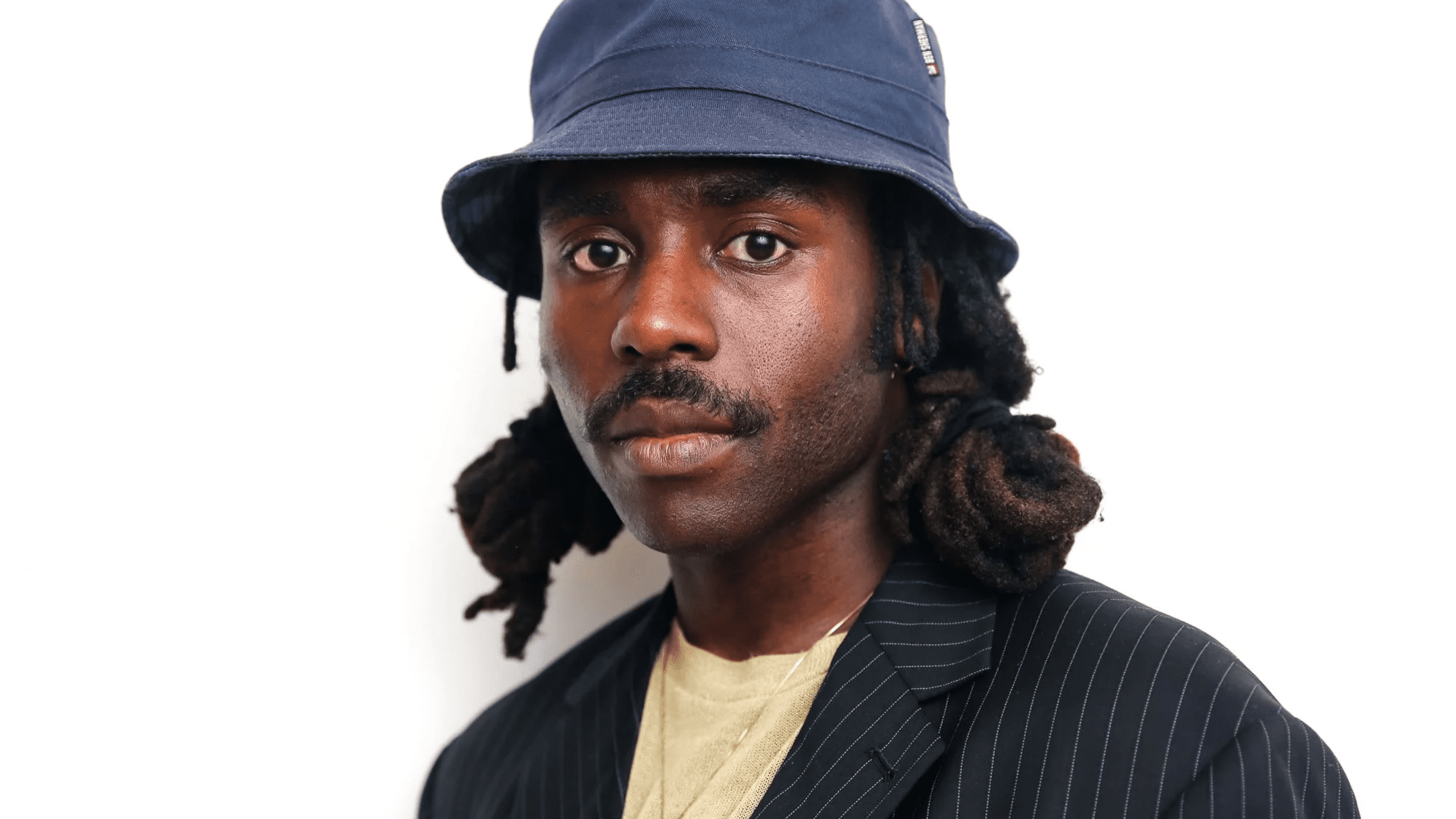
Devonté Hynes (Passing)
You might know him better as his moniker Blood Orange. Dev, described as a "polymath musician" by the New York Times, is one of the most dynamic and interesting artists working today, blending the gritty and melancholy to create a sound unique to him.
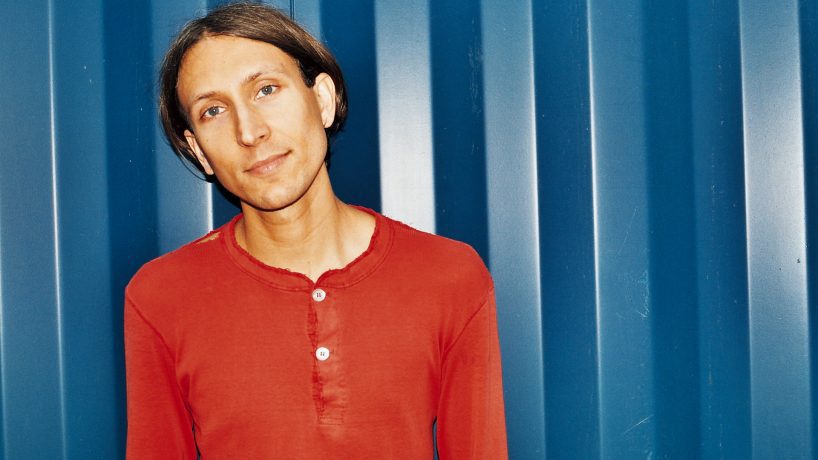
Alex Somers (Together, Together)
Having composed the playfully introspective soundtrack to one of my favorite films last year, Honey Boy, Alex Somers returns to Sundance with what I can only imagine will be another heartfelt and transcending score.

Alex G (We're All Going to the World's Fair)
A self-described singer-songwriter, dreamer, visionary, and leader, (Sandy) Alex G creates indie bedroom pop that feels like a modern-day Elliott Smith. Ryan and I are both excited to see what he does in a cinematic setting.
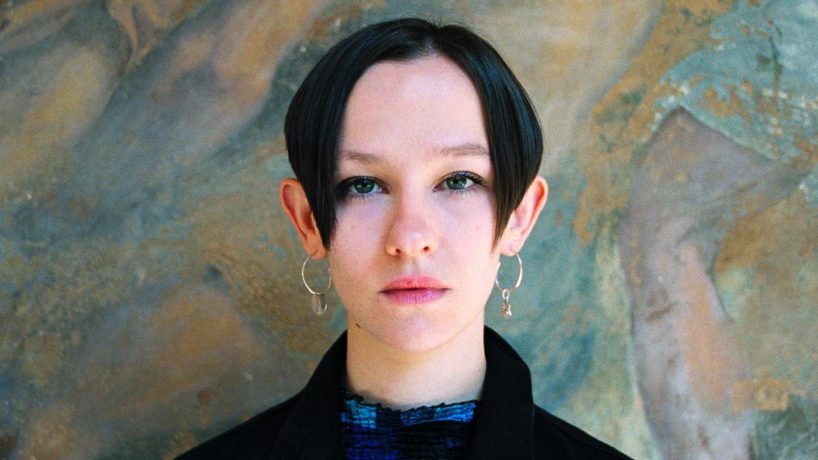
Caterina Barbieri (John and the Hole)
Caterina is an Italian composer and musician who explores themes related to machine intelligence. Pitchfork describes her synth-heavy sound like music that bends time and space.
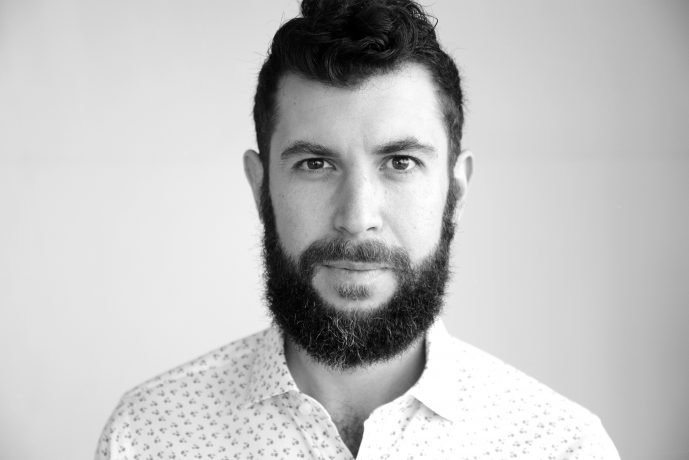
Mike Tuccillo (Homeroom)
Probably best known for scoring the Hulu/A24 series Ramy, Mike is also a producer and mixer. Tuccillo has mixed and contributed additional production to the majority of VÉRITÉ’s records which have more than 100 million plays on Spotify.
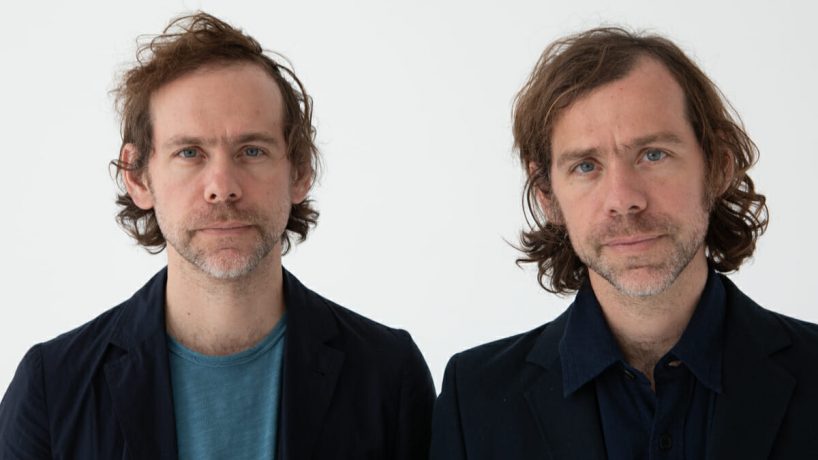
Aaron Dessner & Bryce Dessner (Jockey)
The Dessner twins may be better known as half of The National but did you know that they, along with my absolute favorite Justin Vernon (of Bon Iver), helped launch the 37d03d (PEOPLE) collective in 2016? 37d03d produces multi-artist events and operates an independent record label, all with the goal of supporting and encouraging spontaneous collaboration.
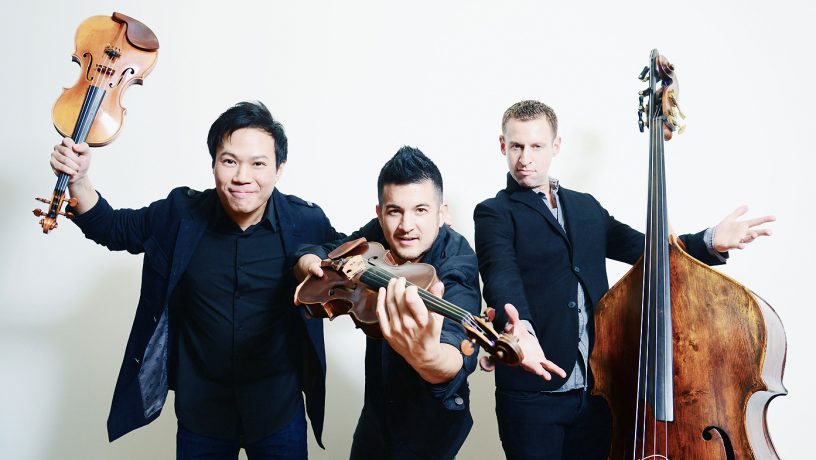
Time for Three (Land)
Guests of NPR's Tiny Desk, Time For Three is an unconventional trio that blends Americana, modern pop, and classical music genres to create a sound all their own.

Vagabon, SASAMI (Weirdo Night)
Not composers, per se, but I couldn't not talk about the performers in Weirdo Night, the brainchild of performance artist Jibz Cameron aka Dynasty Handbag. What used to be a monthly stage show at Zebulon in Los Angeles (that I miss so much), this homage to Weirdo Night includes performances from SASAMI, Vagabon, and more.
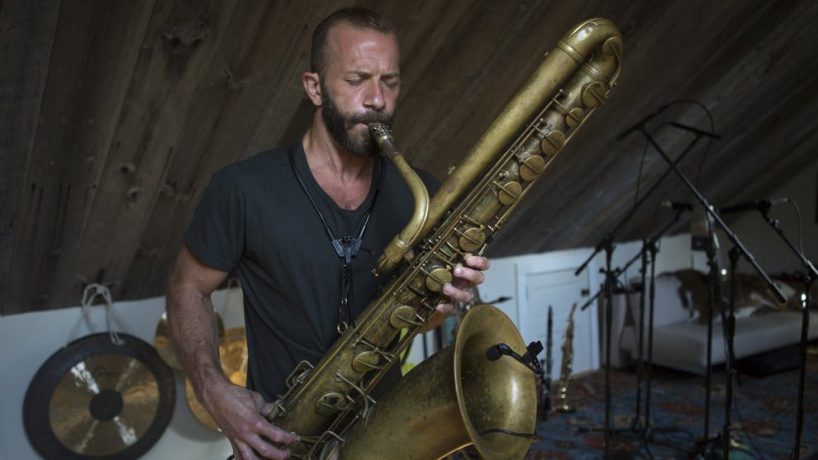
Colin Stetson (Mayday)
Probably best known for his haunting score in Hereditary, Colin's bass and alto saxophones produce emotionally rich and polyphonic compositions that transcend expectations of what solo horn playing can sound like.
PLUS:
Highlights from past years have been seeing Dark Rooms, Ethan Gruska, Brett Dennen, and more at the ASCAP Music Café, an intimate performance space that also serves as our recharging station in between screenings. Experiencing artists' showcases in this setting has always been one of my favorite parts of the festival experience, and as I (and the rest of the world) patiently wait for live music's highly anticipated return, a virtual venue promises to recreate this unique ASCAP lounge.
This article was updated 1/28/2021
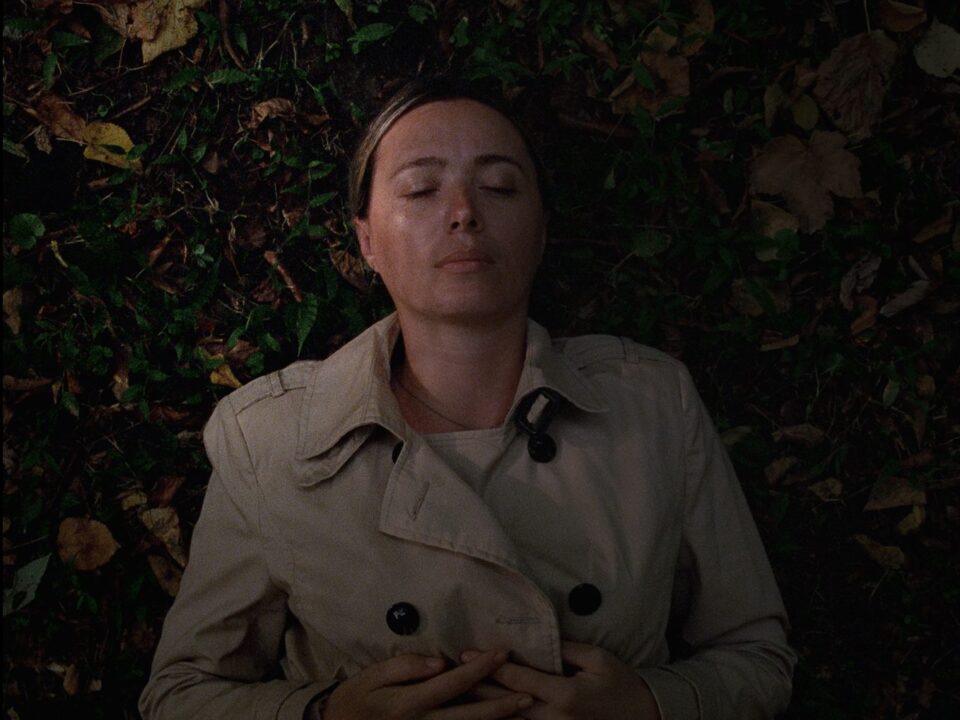
'Beginning' Review: Georgian Arthouse Film is a Provocative Experience
You can be religious yet still be soulless, as evidenced in director Dea Kulumbegashvili's slow-burning drama, Beginning. Executive produced by Carlos Reygadas (Our Time), Beginning takes patience and a steady eye to fully get wrapped up in its intricate character complexities, but those willing to immerse themselves in the unsettling are in for a provocative cinematic experience.
Set in a remote village outside of Tbilisi, Georgia, a sect of Jehovah’s Witness missionaries come under attack when arsonists burn down the community's church, leading David (Rati Oneli) and his wife Yana (Ia Sukhitashvili) to reevaluate their roles as leaders in the organization. Going to the police proves uneventful, as the authority's ambivalence towards the group only makes the situation more devastating. With David pre-occupied rebuilding the church, Yana becomes the target for a local detective (Kakha Kintsurashvili) who abuses his power in various sexual and physical ways. It breaks her spirit, leaving Yana questioning her role as a wife, mother, and spiritual believer.
Beginning will be remembered for its 35mm scenes comprised heavily of single-take shots lasting minutes long...
In her debut feature film, Dea Kulumbegashvili commands the screen with confidence. Beginning will be remembered for its 35mm scenes comprised heavily of single-take shots lasting minutes long, a convention that lags at times, but ultimately gives the film a sense of authenticity. Ia Sukhitashvili's performance as a woman at odds with herself is revelatory, in which her pain is seen and felt even without uttering a single word.
Beginning is a true art film; its untraditional structure of mostly one-take scenes won't be for everyone, but if you can carve out the two hours and ten minutes of watch time, the payoff is worth it. Plus, if Beginning gets a nomination for the Best International Feature, it will make history as the first Georgian Oscar nominee.
'Beginning' is available to watch on MUBI this Friday, January 29, 2021.

'Notturno' Review: What's Left When The War Stops?
Academy Award-nominated director Gianfranco Rosi (Fire at Sea) delivers another richly cinematic documentary with Notturno, and this time we’re transported to the heart of the Middle East where communities are still reeling from past and future wartime chaos.
Rosi and his crew shot Notturno–Italy's official Oscar entry for Best International Feature–over the last three years along the borders of Iraq, Kurdistan, Syria, and Lebanon. The beauty in the mundane, the heartache of reality, and the perseverance in the face of an unknown future are at the heart of this film, which lends itself to be a heavy, but highly-rewarding, watch.
The opening shot shows small groups of men running laps around a track at what looks like dawn. The image is jaw-dropping, beautiful in its simple composure. It feels eerily reminiscent of Claire Denis’s Beau Travail or Andrey Zvyagintsev’s Leviathan where the camera is steady and the subjects that run in and out of frame provide the spontaneous artistic direction. The rest of the film follows suit, where long takes create drawn-out scenes that give the audience the sense of being there too.
... [It] makes me want to reach through the TV screen and give them all a big, tight hug.
In one of the more devastating scenes, we observe a child therapist asking different children to express, through drawings, their various experiences under ISIS control. Listening to these innocent children describe beheadings, watching people get burned alive, and sharing that they still cry when they think about those moments makes me want to reach through the TV screen and give them all a big, tight hug.
Notturno gives a face and a voice to the human struggle in the Middle East. For as much as we might want to look away and not face the sick reality of violence and hardship, it is our duty as brothers and sisters of the world, and fellow humans, to acknowledge these tragedies. Watching this film and becoming aware of their daily struggles is a great first step.
Distributed by The Match Factory, available in select virtual theaters this Friday, January 22, 2021, and on Hulu January 29, 2021.

'MLK/FBI' Review: The Extreme Measures Taken to Silence a Hero
With all of the political unrest and never-ending news cycles populating our feeds and our minds as of late, another "charged" documentary may not sound like the type of film you'd want to spend your free time watching. I can relate to the feeling of utter exhaustion, but I hope you'll make MLK/FBI an exception. Sam Pollard's revelatory documentary exposes not just the private emotional hardships suffered by Dr. Martin Luther King, Jr. at the hands of then-FBI director J. Edgar Hoover, it stands as an eerie mirror to our current state of political manipulation and ongoing bias and violence toward the BIPOC community.
We all know Dr. Martin Luther King, Jr.'s life-changing contribution to American society through his March on Washington, the "I Have a Dream" speech and other inspirational, peaceful demonstrations that led to the desegregation of black people. What caught me by surprise was the FBI's many attempts to discredit his leadership by surveilling him with wiretaps, undercover photos, and bugging his family home. These findings from the early 60s have now been uncovered and are the basis of MLK/FBI.
Dr. King's rising success scared Hoover, the documentary claims, as a now-declassified memo sent around the FBI headquarters stated, "We must mark [Dr. King] now as the most dangerous Negro in the future of this Nation..." Hoover also thought Dr. King was "morally unfit" to be a leader for Black America, a hilariously ironic and completely ridiculous statement given the obvious example of what an actual morally unfit leader looks like.
Hoover also thought Dr. King was "morally unfit" to be a leader for Black America, a hilariously ironic and completely ridiculous statement given the obvious example of what an actual morally unfit leader looks like.
Educators and historians provide voiceovers that carry MLK/FBI and unanimously agree this was the "darkest part of bureau's history." The film is comprised of archival footage showing how they surveilled him, in addition to footage of political events, KKK rallies, interviews with Dr. King, and more. But for as shocking as this story is, at times, the film feels repetitive in its visuals. Perhaps seeing the narrators' faces throughout would provide a better human connection instead of watching scenes from a Buster Keaton or scripted Universal Pictures FBI film multiple times.
America has an ugly past; we can't ignore that. The only way to truly make progress towards a more inclusive future is to acknowledge past inequalities and make substantial changes so the attitudes and behaviors of the past don't bleed into the future. Dr. Martin Luther King, Jr. is remembered for many things, but right now, it's so important to revisit his message of fighting back with love, as "violence will not succeed in changing this nation."
Distributed by IFC Films, opening in select theaters, including the Arena Cinelounge Drive-In in Hollywood, and on-demand January 15, 2021 (MLK Weekend).
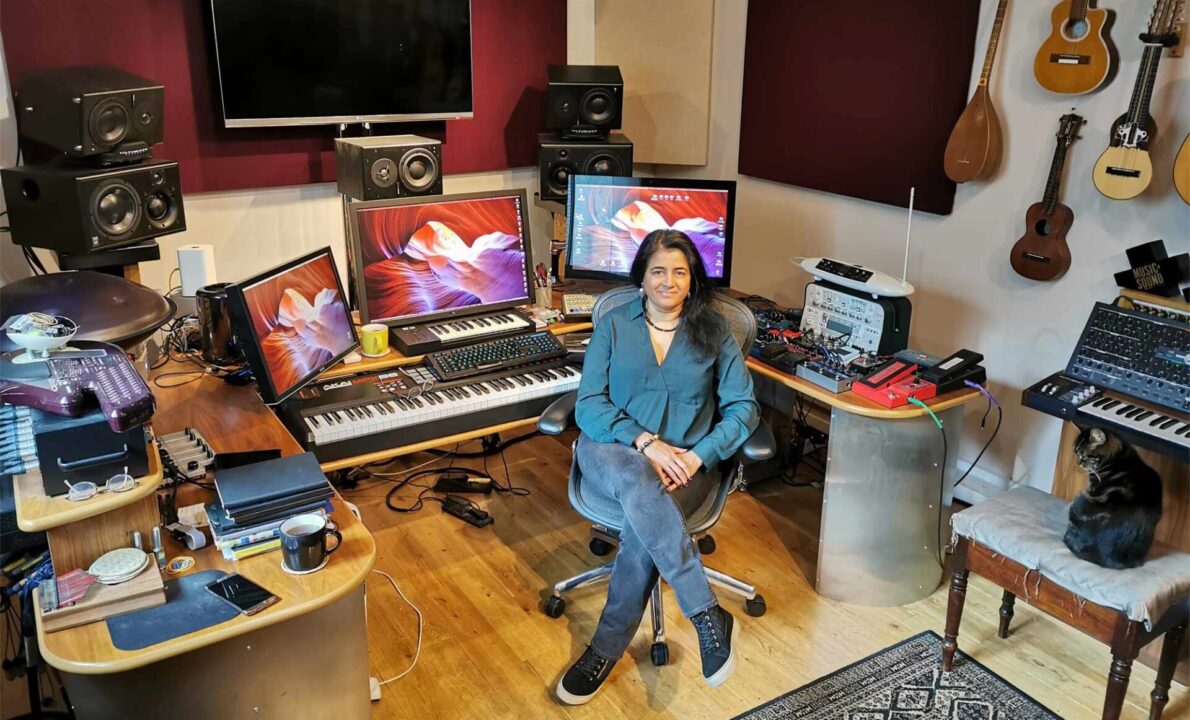
Nainita Desai Premieres Music Video from 'The Reason I Jump'
After last year's successful Sundance premiere, the award-winning documentary The Reason I Jump has finally made its way into virtual theaters. Directed by Jerry Rothwell and based on the book written by the young autistic artist Naoki Higashida when he was 13-years-old, The Reason I Jump celebrates the beauty of being different. Composer Nainita Desai further illustrates this sentiment in her companion music video "Beauty Is In The Detail," exclusively premiering on Cinemacy.
The central theme of the film is communication and all of its interpretative forms. With this in mind, Nainita's biggest challenge was illustrating and amplifying what it feels like to be autistic. Nainita successfully communicates intense sensory worlds into song by using orchestral strings, custom-made instruments, electronics, and found sound.
"The song represents the beauty of the neuro-diverse world and how the characters perceive the detail in objects before seeing the whole picture unfold before them," says Nainita. Plus, to keep the soundtrack inclusive and authentic to the film, Nainita reached out to Elisabeth Wiklander, a cellist with the London Philharmonic Orchestra who is autistic as well as a cultural ambassador for the National Autistic Society. Daniel Pioro (Phantom Thread) is the featured violinist on the track.
Nainita's contribution to the film continues to gain accolades from industry professionals. Most recently, she was recognized by the British Independent Film Awards and Cinema Eye Honors with best score nominations.
The soundtrack to The Reason I Jump will be released by the London-based label Mercury KX on April 16, 2021.