

Kirsten Johnson Talks the Art of Returning in 'Cameraperson'
You may recognize cinematographer Kirsten Johnson's work from any of her 45 credited IMDb films, including "Citizenfour," "Very Semi-Serious," and "The Invisible War" to name a few. "Cameraperson" marks her directorial debut and has been making waves on the film festival circuit ever since its premiere earlier this year. This multiple award-winning film about love, loss, and the human connection may be Johnson's first, but let's hope it's not her last. In our interview, we talk about improvisation on the job, the hard truth about missing shots, and the two things you must know before taking on the role as a cameraperson. We begin:
How did this film originate?
What is peculiar about the process of this film is that it emerged out of a completely different film that I worked on for three years, set in Afghanistan. When I completed that edit, a young Afghan woman who was in the film said, 'I'm sorry, I don't feel safe [being exposed].' From that point forward, we began trying to imagine how we could re-cut the film without her face in it. That edit went to Sundance through the composer's lab and the editor's lab. At the editor's lab, people thought the film didn't work. Then in one conversation, I told the story of how a truck dragged [a man] to his death and everybody really connected to that story. Suddenly we had almost the complete inverse idea, to use only Afghanistan visuals with me telling the story of other places on top of it... Then it became, 'What if the material just speaks for itself.' I think that decision to choose that restraint is the most important part of what makes the film function. It's kind of incredible, how one works through ideas.
Was there ever a time when you felt like you shouldn't be documenting a situation you found yourself in?
Yes, many times! You're always in these moments where people are exposing such intimate things and sometimes people don't realize what the consequences might be for them. I come from a generation of documentarians who existed before the internet when we believed we could promise people we could control the images. We all now know that is not the case. That's the challenge- it may even be that you feel fine with what you're doing in the moment, but then sometime in the future you realize the choice to be there with the camera was naive or exploitive.
"It's kind of incredible, how one works through ideas."

Because you've had time to film and acquire all of these moments, it's like you have this advantage to take a step back and see the bigger picture, whereas typical documentaries are shot for a contained amount of time. I think that's one of the reasons why the film is so impactful.
Yeah, it's not like I'm making a retrospective of my great career– no. It's that I have accumulated a quantity of questions that I have seen duplicated in many places, and I have experienced it over and over again. I have enough material to make these questions public.
One of the themes that I really enjoyed is this concept of returning, both editorially and literally.
Aww! What I'm learning about this process is that something different matters to everyone, things that I haven't even thought of. I haven't been speaking of "return" as a fundamental idea of the film, but it totally is. Thank you! In my line of work, the capacity to return is limited. I get hired to go to a place with a relationship that the director has created, and I'm not at liberty to just return somewhere because I love being with those people. I couldn't do that as a camera person, but I was always seeking to address the things left undone.
Do you struggle with setting up "the perfect shot" vs capturing moments on the fly?
Improvisation is the first mode, you can't know [what you're shooting] in advance. Even if you're working on a film that uses a tripod and all of the shots are locked up, the impulse is primarily an improvised one. You have to be ready, and you also have to accept how much you'll miss.
"You have to be ready, and you also have to accept how much you'll miss."

Oh, that's interesting.
I think you must miss so much to be fully engaged in the project. Managing that anger or frustration itself while you're shooting is constant. Also, if you've been consistently trying to make strong aesthetic decisions with your film and trying to frame things beautifully, and then something that comes out of left field is framed radically different, in some ways that signals to the viewer that people were out of control in that moment. I think we all agree that is where the most interesting emotion of human interaction happens– when people are out of control.
You've been showing this film for over 9 months, how has Cameraperson generally been received?
I've been overwhelmed by how beautifully it's been received. One of the really gratifying things for me is that [in the beginning], a lot of people told me that only filmmakers would be interested in this film– and that is not true. It's gratifying that people with no relation to documentary films, other than the fact that they are viewers, embrace it. The thing I love is that really young people love it too!
Have you shown this film to the people in it?
I'm hopeful that [I will find] as many as people as possible that were in the film and return to them. That would be amazing.
"One of the most important things you need to know as a cameraperson is that you can't be dehydrated and you can't go to the bathroom."

For filmmakers beginning their documentarian journey, what practical advice would you give?
You don't know what's going to happen and you may have to keep filming for hours on end, so one of the most important things you need to know as a cameraperson is that you can't be dehydrated and you can't go to the bathroom. You have to actually know how much water you need to drink to stay hydrated and not go to the bathroom. This is the best advice I can give anybody! I can shoot for 14 hours straight without having to go to the bathroom. If you have the capacity of being relaxed in your own body and to respond emotionally to what your filming, then you can do it. If you're tense or preoccupied in your body by whatever your physical restraints are, you cannot film the scene.


'Landfill Harmonic' Finds Beauty in a Place Most of the World Would Dismiss
The joy of non-fiction stories is that they can be as incredible as ever without giving the viewer skepticism like they would if a screenwriter had conceived it. Landfill Harmonic is an inspiring documentary about impoverished children who live in a garbage-filled outskirt in the capital city of Paraguay and their inventive way of getting past their circumstances.
A local trash collector named Colá starts making musical instruments out of the trash he finds. An environmentalist is sent to this town to help alleviate the unfixable trash problem but instead discovers a musical solution. Together these two community leaders take a group of schoolchildren and form “The Recycled Orchestra.” By making instruments out of trash, it gives them an opportunity to play music on instruments they could never otherwise afford, like violins and cellos. The result is a story that caught on like wildfire and allowed these children to become more well-known than they could’ve ever dreamed.
This is a story worth sharing in large part because of the intersection of many global problems that it connects: musical culture, environmentalism and waste, education to the impoverished, and more. The hook of seeing children learn music on instruments made of recycled garbage is an entrance into a community we otherwise would never imagine here in the US. It is stories like these that help bridge the world and build a collective understanding of communities across continents and nations.
There is nothing but exuberant praise to be given when discussing this film’s story. Unfortunately, the documentary upon which it is built does not always allow this premise to shine as brightly as it potentially could. The major issue is that there is a clear rift between the two central stories: the music and the trash-ridden community. Playing these instruments has given these musicians the opportunity to travel worldwide and share the power of their story. However, it’s never seen as a way to empower them upon returning home. All I saw was a major disconnect between getting to travel and play for other nations, and then returning home to the same situation as before. What would have been more impactful is showing a connection between their current situation and the long-term change for good that their music is creating. Otherwise, I fear the recycled orchestra comes across as more of a sideshow to the more affluent parts of the world. When the film builds to big moments, for example when the students are playing concerts, it doesn’t capture the power that the music is having on these kids as much as I imagine it would. The approach feels a little more like an outside perspective, whereas I would’ve preferred a clear direction as to where the narrative is going and how the characters are feeling toward the extraordinary situations they reach.
That being said, one message is clear: you can’t expect the people at the receiving end of a trash-producing world to be the ones to fix the problem. We all need to reduce waste drastically and the images in the film confirm this. How to do this on an impactful scale is a question I’d still like to see an answer to. I find that this film is a great introduction to the story but not as in-depth of an experience as many contemporary documentaries. At least there is no doubt that these young musicians have found hope and beauty in a place most of the world would easily dismiss.
"Landfill Harmonic" is not rated. 84 minutes. Opening at the Laemmle in Santa Monica on Friday, September 23rd.

'Cameraperson' is a Masterful Dive Into the Human Experience
When analyzing a film, two primary forces determine its quality. First, is how effective the emotional reaction is, as this is the foremost reason as to why we go to the movies. Second, is what the film does cinematically to achieve this goal. The excellent films are those that are able to push boundaries and try new things that work in ways we’ve never seen before. "Cameraperson" is such a film. It opens with a quick text describing what we’re about to see: director Kirsten Johnson has been a camera operator and cinematographer for 25 years, and in this documentary she has compiled a series of footage that she has shot, then edited it together as a memoir of her experience in this role. The result is an experimental project that pushes the potential of filmmaking and non-fiction storytelling to new heights, and a dive into something wholly unique.
From the get-go, she makes it extremely clear that there is an active human being behind the camera. In a conventional film, the artists are invisible and viewers are meant to forget the behind-the-scenes. This film starts out raw to expose the layer behind which our storyteller is operating. We see the parts that are usually omitted from a polished film, and through this, we gain an understanding of who the cameraperson is as an artist. Pulling clips from over 20 films, we then follow Kirsten Johnson and her camera all over the world: Bosnia, New York, Sudan, Yemen, Liberia, and more.
You can recognize that these images are pulled from the context of other stories, often of mass conflict and sometimes tragedy, but here Johnson uses them to tell a biographical story of her own, while at the same time miraculously covering the human condition as a whole. When two outwardly different clips are juxtaposed together, a larger narrative unfolds. Because of the sheer vastness of sources she’s pulling from, as a viewer you can feel that everything we see on screen has been deliberately put in this order to achieve a certain effect. Nothing feels out of place, and the entire runtime feels masterfully compiled.
The effect it achieves is absolutely stunning: we witness life of all forms and see universal themes everywhere. Traditionally, documentary and narrative films are made using material created in a relatively short amount of time: this film has the luxury of being able to take a step back and see the macro picture created in the filmmaker’s entire body of work, and what it means to her. The role of a “cameraperson” is one that nearly everyone inhabits daily in today’s world, and this film exposes the tribulations of when to film and what to film, questions that we all are used to deciding regularly. Our director may be a professional, but the work she does is relatable to anyone who’s ever hit record on a device and let it run.
While also giving us a taste of her career and an admiration for what she’s done, Johnson explores a handful of recurring motifs that she’s found in the world, entirely about the human condition but within that is an infinite number of themes. She never outwardly says what these are, but the editing does this for us. The story of a young mother in Alabama that the director filmed is powerful on its own, but when followed by footage of the director’s own mother, the results are exponentially more effective in ways I’ve never seen film achieve.
One of my favorite motifs that the film makes is the idea of returning somewhere. This works twofold: sometimes in the film’s editing we’ll return back to a clip we’ve previously seen and it has another meaning given the other footage shown in between. On a more literal level, there are moments where the cameraperson returns to a location she’s been to after a period of time, something we all begin to experience more often as we grow older, and the effect is profound.
Because "Cameraperson" covers so much ground, goes so many locations, and causes so many emotional reactions, it’s densely packed to the point it feels like you’ve watched an entire series of films by the time you’re done. That’s a high compliment: it’s a pure feast of filmmaking that left me with the same fulfillment I’d get from watching 20 different documentaries.
The film is so dense that even though I saw it back in January at Sundance, I knew I’d need to see it again and found even more moments that stayed with me: its density means it’s hard to keep track of it all mentally, but this is the type of film that could easily invite a revisit. Given its experimental nature, it’s also easy to find more details upon a repeat viewing.
As a fan of film and its potential for personal impact, rarely has one so powerfully achieved so much. Unconventional movies generally are more alienating to viewers, but this one is the opposite: it’s an invitation to dive into the human experience, through the lens of one individual whose seen so much life around the world.
Few movies have done so much for me as a viewer and achieved new heights in the emotional and cinematic experiences that I seek out. I reiterate that this is one that can’t be missed, at the very least because it’s one I can’t wait to discuss with people as they see it for themselves. Extremely personal and simultaneously universal, "Cameraperson" is one of this year’s most essential cinematic achievements and a formidable contender for one of the best films of the year.
'Cameraperson' is not rated. 102 minutes. In theaters on Friday.

'Pete's Dragon' is What the Family Movie Can and Should Be – Magical
It’s a travesty that the description ‘family movie’ has been marooned by studios and the public alike as a juvenile and tasteless affair. Animated movies aside, the subgenre is no longer seen for its potential: to enrich the lives of all those who watch it, provide a nourishing dose of spectacle to the wide-eyed young audiences and sincere delight to the parents and older folks that accompany them.
"Pete’s Dragon," opening nationwide tomorrow and the latest of Disney’s live-action remakes, has exactly that type of magic that’s been devoid at the cineplexes. I admittedly haven’t seen the original, one of Disney’s less-branded properties, so can only speak about how the current film stands. The title is a reference to our protagonist, Pete (Oakes Fegley), an orphaned boy who lives deep in the woods, alone with the green dragon, and for years has avoided human companionship. I expected the film to wait a long time to reveal the titular dragon as most movies would, but instead he’s introduced and shown right from the get-go, a nice device that reminds us this is their story, not the story of the outsider townspeople we’ll meet next. The dragon is shown early but its enchantment continually develops as stakes are raised. This introduction works as a way to immediately put us on our protagonist’s side: while the outsiders nearby don’t believe in such creatures, we as an audience do.
These outsiders are a well-cast ensemble of familiar actors, all living in small town U.S.A. Bryce Dallas Howard is Grace, the no-nonsense forest ranger who’s never seen a dragon. Her fiancé Jack (Wes Bentley) and brother-in-law Gavin (Karl Urban) are loggers encroaching upon the forest. Oona Laurence plays Jack’s daughter, Natalie, and continues to prove herself as one of the greatest current working child actors in this touching supporting performance. Lastly, the legend Robert Redford plays Grace’s wise father, Meacham, who shares the movies wisdom with a reverence that can only come from cinema’s finest in a role that likely was tailor-fitted to him.
Aside from Bentley’s character, who we don’t get too much of, this ensemble all shine in their respective roles, and each one is given the opportunity to grow as a character thanks to the adventure they’ll experience. There’s no need for crude humor or pandering kid jokes, our characters make the story come alive without lowering the bar. Time and time again the film respects our intelligence as viewers and develops with a certain grace that never takes us out of the story. It’s amazing that something simple and well-executed feels like a marvelous revelation in this case, but regardless I’m happy to have experienced it here.
I’m impressed at how easily the film could have diverted into overused tropes but doesn’t. From the moment the protagonists are established as loggers and rangers, I was waiting for the inevitable heavy-handed environmental message that always feels hypocritical coming from a major studio. As we learn more about Pete, I was ready for a certain orphan backstory that you’ll think has to be employed. But the film is above all that, it never succumbs to the on-the-nose mentality. Instead, these themes of wilderness/nature and mankind’s interference stay subdued knowing that within the context, all audiences are mature enough to understand what’s at stake.
And most of all, this is a beautiful story about what it means to grow up, perhaps the perfect theme for the genre. There’s even a feeling reminiscent of Room, one of last year’s finest entries, in the protagonist who similarly enters society for the first time, and the rest of us can relate to the emotion of life changing fast and taking on the new feelings while holding dear to the past. Rarely can a movie so smoothly depict an easily comprehensible storyline while also layering in meaningful themes to be understood differently by the many age groups who may all relate to varied experiences.
And on another note, only because I can speak about it, the 3D in this movie does no noticeable enhancing, so it isn’t worth the extra upcharge. The movie works great on its own, and I invite readers of all ages and interests to experience this treat; check your cynicism at the door and let the movie’s wonder and magic take you as it did for me.
At a time when both the world at large and my own personal experience feel like widespread compassion is shortchanged, "Pete's Dragon" is an adventurous and triumphant return to those joyous feelings that make the world feel like a better place. Let this film serve as a benchmark for what a family movie can and should be: an emotional embrace of heartwarming adventure from start to finish.
"Pete's Dragon" is rated PG for action, peril, and brief language. 102 minutes. In theaters nationwide tomorrow.
Doctor Calls For Goat Testicles in Darkly Humorous Doc, 'Nuts!'
Never have I seen a film morph the medium of moviemaking so well to emulate the spirit of its subject.
I shall make no attempt to conceal my sentiment with this review: I love this movie. "Nuts!" holds the distinction of being the first and only film I’ve seen twice at a film festival, and I had to check it out once more now that it is making its way into theaters.
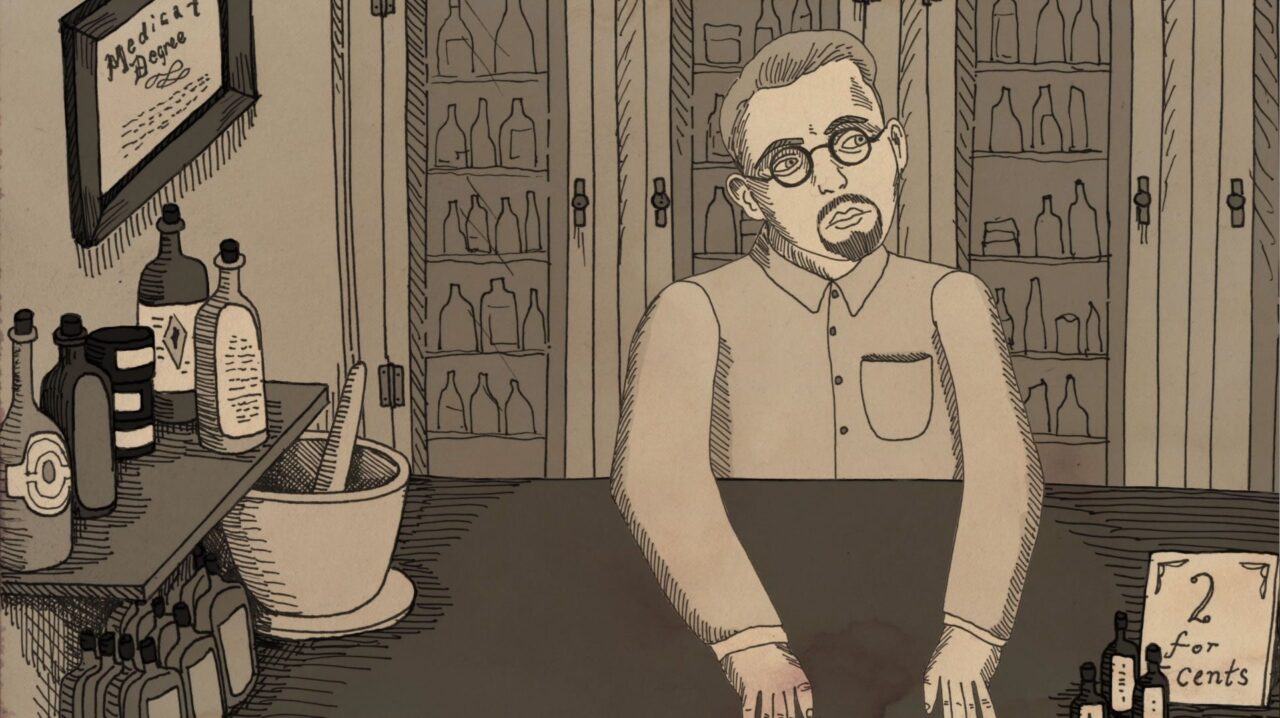
The premise fits the title, as we follow the life of Dr. John Romulus Brinkley, a ‘quack’ doctor who first achieved fame and notoriety in 1917 for claiming to cure male impotence by surgically implanting goat testicles in patient's scrotums. Through a series of animations, radio recordings, and archival footage, we learn the stranger-than-fiction life story of this Midwestern doctor. Brinkley quickly found fame and fortune through the burgeoning field of radio broadcasting and a variety of other successful schemes that are almost as absurd as his "goat balls" cure. As big government and national medical associations catch on to him and try to shut him down for being a fraud, Brinkley's schemes get even more outrageous in order to dodge their sabotage.
Like Dr. Brinkley, director Penny Lane throws such a mixture of absurdity at the audience that even repeat viewings keep one fully engaged and entertained. Never have I seen a film morph the medium of moviemaking so well to emulate the spirit of its subject ("Nuts!" won the U.S. Documentary Special Jury Award for Editing at Sundance back in January). The use of animation as its primary imagery effectively captures the essence of the character and his situation, more so than if it was entirely archival or relied on conventional recreations. Seven different animators capture different chapters of Brinkley’s life, and through some great use of symbols and keeping characters in the same attire, the varied styles all align to tell the story very well.
Penny Lane’s last film, "Our Nixon," is entirely made of archival footage, and you can see how in "Nuts!" she pushes the boundaries of her distinct signature style by incorporating more mediums onto her palette. All of these elements serve towards creating a richly dimensional story. Dr. Brinkley is a deceitful character and fittingly, "Nuts!" is a deceitful film of sorts. It understands how we absorb information, what we perceive as credible information, but then turns that on its head. Through a goofy story, we get insights into the larger historical context of Dr. Brinkley, as well as some poignant social commentary so relevant for today’s world, one won’t believe it could be real. There are many countless moments of humor, poignancy, or unexpected happenings, but I’d rather withhold them and let you see them for yourself firsthand.
On top of being a massive success in elevating the documentary genre by utilizing various creative elements, "Nuts!" is one of the funniest movies of the year as well - how could it not be, with such a silly premise? Dr. Brinkley is a character for the ages, and without this film, he would’ve easily been considered just another goofy American from the early 20th Century.
The combination of being unlike anything I’ve ever seen before while working with the material so effectively is what makes this an essential piece of filmmaking. Funny, engaging, innovative, and relevant, Penny Lane delivers all of this within a brisk 79 minutes. Oh, and lots of goats– It’s hard to ask for more from a film! Personally, if I were to make a best of the year list today, "Nuts!" would confidently be at the very top. It’s truly a one-of-a-kind experience that can’t be missed.
"Nuts!" is unrated. 79 minutes. Now playing at Cinefamily in Los Angeles and the Pasadena Playhouse.
'The BFG' Review: A Sleepy Adventure From Spielberg and Disney
Legendary filmmaker Steven Spielberg teams up with Disney for the very first time in his five-decade career to adapt the classic Roald Dahl novel The BFG, starring this year's Best Supporting Actor Oscar winner Mark Rylance ("Bridge of Spies"). Doesn’t it all sound a little too good to be true? Sprinkle in that there has never been a film adaptation of the beloved children's book (other than an animated TV movie), and that all of Spielberg’s top-tier collaborators have joined him here, including producer Kathleen Kennedy, composer John Williams, and cinematographer Janusz Kaminski. While this is a film that is almost hype-free due to its non-franchise intellectual property, it should be a no-brainer that all these combined forces could only make a truly heartwarming and dazzling film for all ages.
And yet, to be frank, this is a film that doesn’t work. "The BFG" is a fantastical bedtime story full of wonder and imagination, and yet in this adaptation, it is translated into something incredulously dull. The only thing worse than a poorly executed movie is a dull movie, and with all of its talent theoretically firing on all cylinders, it's amazing that this bore is their product.
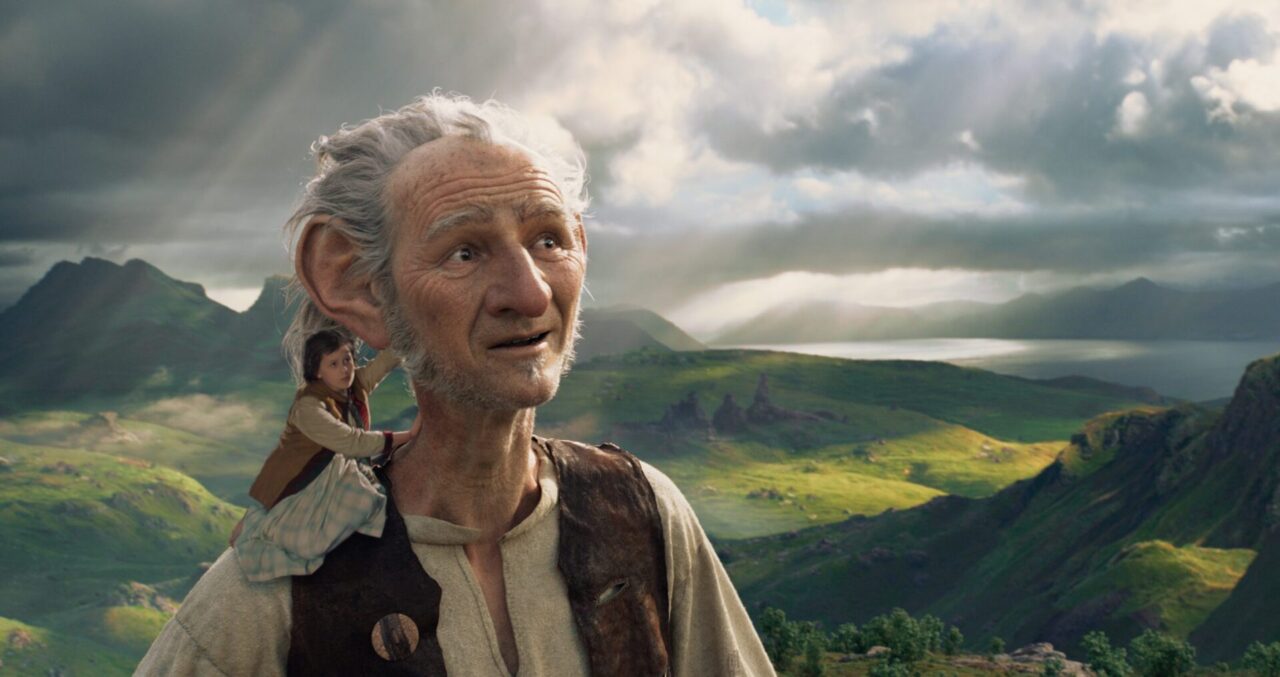
What it boils down to is the film’s lack of two essential pieces in making a movie feel fun or alive: spontaneity and tension. Take, for example, a sequence where The "Big Friendly Giant" (Rylance) takes young-but-bright orphan Sophie (Ruby Barnhill) to the Land of Giants where he catches dreams (in the form of colorful wisps) to later impress into the sleeping children of London. This is a moment that has all the likings to be as spectacularly wondrous as Avatar or Life of Pi, and if you've seen still images of the sequence, you’d be forgiven for thinking as such. However, the whole enterprise lacks any sort of urgency or surprise value to it, and even the camera movement, which intends to lend itself as a guide into this magical world, feels so pre-ordained that it cast a glaze over my eyes. Spielberg utilizes all of his typical conventions, which are more often than not marvelously executed, and yet here they’re all so obvious and on-the-nose that it’s impossible for them to generate any sense of magic.
https://www.youtube.com/watch?v=GZ0Bey4YUGI
To add insult to injury, Mark Rylance as The CGI-BFG has all the elements to be a charming and delightful character children will remember for years to come. And yet it comes down to the pacing. Something tells me that the CGI translation removed any sense of looseness or impromptu behavior. Every motion and step seems to follow a pattern and never strays into full or erratic behavior, despite playing a character that is meant to be loony and endearingly wacky. Compare this to a brilliant adaptation of a similarly loony Roald Dahl character: Willy Wonka. From his very first scene until his last, we never know what we’re going to get. He’s unpredictable and manages to feel so energized in both the mad-cap and sincere side of the character. The BFG character never gets room to try anything fun or challenge our expectations. I can only imagine that the emphasis on the animation took away any room for creative enlightenment. Or alternatively, perhaps the take on the character was simply too mild. I could’ve envisioned the BFG to come across as the way Yoda did in Empire Strikes Back, a great mix of wisdom and silliness. Neither are found in nearly the same capacity here.
The second element would be tension, or suspense. It seems as though everything in "The BFG" works exactly as it is meant to, and there’s virtually no conflict because character’s plans always seem to go as they intend to. Despite the presence of 9 child-eating giants, the sense of danger is never imminent (perhaps because the Land of Giants, where the giants live, is more than a hop-skip-and-jump away from London, where the giants are said to kidnap children from, yet never appear in), and the climax appears to be the most worry-free solution to any situation I’ve seen, children’s movie or otherwise.
In one particularly light and funny sequence involving the BFG and Sophie sitting for a royal breakfast, the film finally manages to break free of all of these criticisms for a solid, marvelous moment, where the audience finally gets to laugh and have some fun. There are no critiques to be had of this entire portion of the film. Sadly, it’s not enough to lift the weight that comes from the other sides of the film. Despite absolutely stunning visuals in every frame, the molasses pacing and lack of any unpredictability make this a bit of a slog to sit through.
The incorporation of CGI to a properly British children’s book in "The BFG" created a very poor match in a lack of ability to soar and unlock a world of imagination that Roald Dahl’s classic book is so ripe for. Never would I have ever expected that a Spielberg-Disney collaboration would produce something so uninspiring. It’s not that these giants are to be held to a higher standard, it only means that when their brainchild is truly unremarkable, the surprise is significantly higher. Despite all the makings to become a family classic, "The BFG" equates to one of the most sleepy and uninspiring movies of the year.
"The BFG" is rated PG for action/peril, some scary moments and brief rude humor. 117 min. In theaters everywhere this Friday.

‘Misconception’ Explores the Global Effect of the Growing Human Population
At this point, it would be optimistic to think that it is household knowledge in the U.S. that the world population has hit exceedingly high numbers, and has gone from 2 billion to 7 billion in 90 years. Yet, when broken down country by country, this growth isn’t even across the board. In some countries, the population continues to multiply rapidly, but in others (like Russia, as seen in the film briefly) the government is doing everything they can to encourage people to have more children because its population is declining! Indeed, our world is diverse and complex and no blanket solution can work for all parties involved. Here ends my stump speech and begins my review of "Misconception." Rather than focusing on the big picture as one would expect from a world population documentary, Jessica Yu and Participant Media instead focus on three individuals, each with their own dilemma directly affected by the flux of human population.
First is a 29-year-old man named Bao who lives in China. Due to the unprecedentedly effective one-child policy (which was just lifted this year), he is one of many single, “leftover” men who realizes that finding a spouse is extremely difficult and competitive. Plus, he faces increased pressure from his parents since he is their only child. Next is Denise, a pro-life advocate in Canada who travels to the UN in New York to lobby for countries to end family planning and women’s health programs. Even now, she sees the repercussions of Canada’s declining population. Last is Gladys in Uganda, who is a social worker who helps countless children who had been abandoned by their families due to poverty (and the average woman in Uganda currently gives birth to six children). These three separate stories across the globe are intercut with famous population speaker Hans Rosling who ties together some more of the large picture facts and figures in an engaging way.
The fact that it took me this long to explain the characters and situations of the documentary points out the film's biggest strengths and weaknesses. Rather than attempting to take the concept in broad strokes as would have likely been the easier initial approach, Yu succeeds in finding three specific, unique stories that each represent well the implications of larger, sociological problems. With these stories, however, come some limitations. Because the characters never interact, and once we’re done with one we never return to them, the documentary makes little attempt to connect the dots, and Rosling’s intellectually sound comments end up being great on their own but don’t need these stories to convey the message. These protagonists humanize the problem, but unfortunately, none of them change as individuals so we get nothing beyond their initial standpoints. Bao ends up exactly where he started by the end, and for the two women, their stories appear to be busy as usual for each of them. The Canadian and Ugandan storylines are nicely juxtaposed opposites, but I was left wanting to see the characters engage in meaningful conversation about their radically different viewpoints instead of just watching them speak what they already think to be true. And, as charming as the Chinese storyline is, it ends up being more about the culture and Bao’s circumstances with dating than a sociological discussion.
The film succeeds in showing us unique characters and situations but fails in tying them together as a feature film and displaying how they represent the issue at hand. Perhaps each would have been stronger as short vignettes? Unfortunately, a few nuggets of sincere intrigue don’t add up to a fully formed, masterfully executed feature documentary that I would have loved to see on a subject this important.
"Misconception" is rated PG-13 for mature thematic material including some sexual references. Opening at the Laemmle 's Music Hall 3 on Friday, 6/24.

Swiss Army Man
This review first ran during the Sundance Film Festival on January 26, 2016
Usually, fart jokes are associated with bad raunchy comedies (Adam Sandler’s recent career comes to mind), or really uncreative family movies. But here comes "Swiss Army Man" - the Sundance title that’s generated the most vocal reaction amongst festival-goers for it's ridiculous, and now infamous, farting dead body played by Daniel Radcliffe. This is only how the film begins, and let’s just say it toots even louder from there.
Paul Dano plays Hank, a man lost and alone on an island. Right when he’s about to give up on life, he discovers the aforementioned farting body and finds an unexpected answer to why his life is worth living. He discovers that many elements of this body can help him survive and find a way back home, and keeps himself sane (or perhaps insane) by talking to it.
As Hank develops a relationship with the dead body who calls himself Manny (one that starts out similar to Wilson in "Cast Away"), the intriguing absurdity keeps you engaged for the rest of the film. This is the type of film best seen with little information beyond the initial premise, as it is full of mystery boxes waiting to be uncovered. Thanks to the great use of locations and intricately beautiful production design by Jason Kisvarday, the world-building is fantastic and the wackiness becomes downright fun.
The writer/director duo Dan Kwan and Daniel Scheinert, collectively known as “The Daniels,” have a reputation for unique and highly entertaining work, and this feature represents a conglomerate of numerous ideas that, while may sound far-reaching and absurd, somehow all work. To get a small taste of what to expect from the mind of The Daniels', check out their work here, notable gems include DJ Snake's music video "Turn Down For What," and the short film "Dog Boarding."
On top of being a silly movie that doesn’t pretend to take itself seriously, "Swiss Army Man" sneaks in themes of societal behavior and what is considered weird vs what is normal. It’s rare to find a movie that is so unpredictable in an engaging way, and because "Swiss Army Man" begins with something so ridiculous and only goes deeper from there, it allows for limitless ideas on what is going to happen next and continues to be fun to watch. The reason the film may be polarizing to some is because of how silly it all is, but going in knowing what to expect is all you need to jump in and enjoy the show. There is little more to say without giving too much away – essentially, if you can accept absurdity and be along for the ride, this movie may just sneak up and treat you to a great time overall.
"Swiss Army Man" is rated R for language and sexual material.
https://youtu.be/yrK1f4TsQfM

'Team Foxcatcher' Enhances the Story of a Wrestling Team’s Collision with Du Pont Wealth
In 2014 Bennett Miller unearthed a story following the Foxcatcher wrestling team and translated it into one of the most compelling dramas of the current decade, evoking themes about what success and the American dream look like in conjunction to sports and wealth. I stand by that film as one that will only get better with time and a showcase in career-best performances from all three leads, not to mention a gripping drama.
Due to my interest and thorough enjoyment of this film, when I heard Netflix would be releasing a documentary about the same subject, I was immediately on board. I rewatched the majority of Bennett Miller’s film ahead of time to refresh my memory (highly recommended). As it turns out, while Miller’s film remains a fascinating depiction, the documentary covers even more territory that may have been too wild or unbelievable to include in a narrative film.
The documentary exclusively focuses on the relationship between John Eleuthère du Pont and the wrestling team led by Dave Schultz, and thanks to interviews with his former teammates, we get a really clear sense of how bonkers Du Pont's behavior really was. The real-life events depicted in the documentary are a tragic study of what may have made Du Pont so insane.
Having grown up on the family estate, he never had proper friendships or a relationship with his immediate family, and that matched with a few of his personal failures pretty thoroughly screwed him up. There is a compelling contradiction that an extremely wealthy and generous man is trying to prove himself to a group of wrestlers and yet can’t quite force it. And as much as you empathize with some of these bits, he’s still as villainous as can be, more so in real life than in Steve Carell’s depiction. This is what makes the "Foxcatcher" drama something that you can’t look away at.
The real-life events depicted in the documentary are a tragic study of what may have made Du Pont so insane. Having grown up on the family estate, he never had proper friendships or a relationship with his immediate family, and that matched with a few of his personal failures pretty thoroughly screwed him up. There is a compelling contradiction that an extremely wealthy and generous man is trying to prove himself to a group of wrestlers and yet can’t quite force it. And as much as you empathize with some of these bits, he’s still as villainous as can be, more so in real life than in Steve Carell’s depiction. This is what makes the "Foxcatcher" drama something that you can’t look away at.
The documentary benefits from having a vast amount of great archival footage, home videos from the wrestling families who lived on the Foxcatcher estate, as well as some documentaries made by Du Pont himself to highlight his wrestling facility. That little bit ties in extremely nicely to Bennett Miller’s film, and throughout this documentary we’re only affirmed at just how well he captured the look and feel of the characters and the estate. We will have some really compelling documentaries that take place from 1990 to present day due to the boom of home video and the immense amount of our lives that are being filmed nowadays, which is a discussion unto itself. In this case, every image we see of John Du Pont completely confirms what the interview subjects are saying about him, and because we know it’s real due to the archival footage, it’s even more baffling how much madness is at play.
This is a rare case of a true story so multidimensional that you can watch a feature film followed by a documentary and still feel like there’s even more to the story. Rarely have I been so satisfied with the experience and I can only recommend the same for each of you. Rent up "Foxcatcher" (even if you’ve already seen it a rewatch isn’t the worst idea) then stream "Team Foxcatcher" on Netflix and experience one of the most unnerving dramas that recent history has provided us with.
'Team Foxcatcher' is now available to stream on Netflix

The Lonely Island Starts ‘Never Stopping’ with 'Popstar'
Perhaps it was inevitable that the crew behind The Lonely Island and some of Saturday Night Live’s funniest videos would get their opportunity to put together a full-length piece. For those unfamiliar, the group’s multiple signatures include ridiculous yet somehow perfect lyrics, an array of celebrity cameos, and some great laugh-out-loud gags all within a quick music video. Taking this in mind, their decision to spoof the world of pop music, and more specifically, super-stardom, could not have been a better (one) direction to take in "Popstar: Never Stop Never Stopping."
We’re a culture oversaturated with celebrity icons we might not even like but who somehow continually make the news until eventually they’re discarded for the next of their kind. Perhaps no pop star is more quintessential to this than Justin Bieber, whose career took a nasty downward spiral and now remains in limbo. So the premise of Popstar essentially mirrors the state of ‘the Bieb’ in a time when it’s likely his career has peaked and yet there is so much more to do. Andy Sandberg plays Conner4Real, the Bieber surrogate, and the other two members of his Lonely Island posse (Akiva Schaffer and Jorma Taccone, who also directed the film), play his discarded former bandmates. This is all you really need to know as Lonely Island packs in a dense number of on-point jokes within a brisk 86 minutes.
Of course, the highlight of a Lonely Island movie should be the musical numbers, and here’s where things get a bit tricky for the production. In an effort to capture the blatant stupidity and narcissism seen in pop music, they produce songs that match their level of irritants or ridiculousness. While the film is self-aware to a T, unfortunately even these fake pop songs get old after a while. This is where the film had an opportunity to really take the whole Lonely Island package to the next level, but instead every song feels like a wasted opportunity and a limited level of humor. The rest of the film surrounding it is fun certainly, never dull, but feels like it could have gone even further in terms of making it a laugh-out-loud satire.
The last thing the film achieves in its transition from short video to feature length film is that it manages to wrangle in a massive number of celebrity cameos, many of which have stunning characterized versions of themselves. Sarah Silverman and Joan Allen are some of the only actors involved not playing themselves, and both are given great characters but I fear most of their parts got left on the cutting room floor. There’s a cameo for everybody, but for me, the best one was seeing an indie Sundance director make a blink-and-you’ll-miss appearance that was just as fun a surprise as some of the more brand name appearances. If you’re a fan of Lonely Island you will certainly have a good time at "Popstar," however, you may find yourself hoping that their next outing can get even bigger, funnier, and more musically catchy than what we have here.
"Popstar: Never Stop Never Stopping" is rated R for some graphic nudity, language throughout, sexual content and drug use. Now playing in theaters everywhere.

Latest 'X-Men' Entry is an ‘Apocalypse’ of Recycled Goods
In the current era of cinema where calling superhero movies oversaturated seems like an understatement, it’s amazing to think that just over a decade ago, the X-Men felt like something so fresh and exciting. Somehow this series has continued to move forward, despite a disastrous turn in its third entry (that even this new movie clearly hasn’t forgotten) and a complete continuity overhaul. Yet despite a villain unlike any we’ve seen before, as well as a slew of brand new faces to the franchise, "X-Men: Apocalypse" has hardly an iota of originality to it. Impressively, this film manages to borrow at least one set piece from every single previous entry, and unfortunately, that is the last thing the franchise needs to do to move forward. There are some positives in this continuity connection: a lot of what was established in "First Class" actually comes back into play here, and the second trilogy of the series actually feels tethered together, but after watching "Apocalypse" I’m reminded of how little memory I have for the details of these entries, so much so that multiple characters return who I hadn’t committed to memory since.
Of course, it’s impossible to forget the essential members of the cast, who are each perfectly suited for their roles. McAvoy, Fassbender, Lawrence, and Hoult are each rock stars in their respective characters and have anchored this series. It’s a shame that none of them seem to have any sort of reach in development. Magneto (Fassbender) always seems to have the exact same character arc in each film, leaving him exactly where we left him, conveniently so he can get going from there in the next entry. The pillar philosophies of Professor X (McAvoy) and Magneto, which famously mirror MLK and Malcolm X, were once so rich and dynamic, but now feel like recycled goods.
It all comes down to the issue that the series never seems to want to move forward, it just wants to tell the same story. The fact that William Stryker, who was amazing when played by Brian Cox in "X2", is still showing up for every entry as a supporting character (replaced by a younger, uncharismatic Josh Helman) has completed neutered his effect.
Squinting too closely at this movie unfortunately leaves so little to be desired. It’s got some fun sequences, a terrific cast, and a few of the set pieces are genuinely compelling, but the sum is something like heated up leftovers. Perhaps being uncreative is worse than being a bad movie, because there aren’t any cringe-worthy moments, but unoriginality seems like an even greater film sin to me.
Lastly, the talent of Oscar Isaac, one of the greatest working actors, is completed wasted. Yes, he has a scary reverberating voice, and his origin is pretty cool, but compared to Fassbender and McAvoy who both are able to display their chops on screen, Isaac gets completely buried in his blueness. What’s a shame is that his character is the one element of the film that appeared fresh and innovative, and yet this is the part of the movie that gets bogged down. The "X-Men" series has overstayed its welcome, and while the series as a whole has already dealt with overhauling and reinvigoration, it will need to keep doing that for every entry if it wants to remain worth the price of admission.
X-Men: Apocalypse is rated PG-13 for sequences of violence, action and destruction, brief strong language and some suggestive images. Now playing in theaters everywhere.

'Under the Gun' Director Stephanie Soechtig Talks Gun Control in New Documentary
This month acclaimed documentary director Stephanie Soechtig (Fed Up, Tapped) re-teams with executive producer Katie Couric to thoroughly investigate why gun violence is rampant as ever and any attempt at gun control is met with massive backlash. What is keeping the two sides of the debate - those favoring stricter gun control vs. second amendment purists - from finding a compromise? This thorough investigation is an insight into American culture at large and the levels at which the NRA and their lobbyists will go to have their way. It also gives humanity to the facts by introducing us to the families affected by national tragedies in Aurora, Newton, Isla Vista, and Tucson, as well as daily gun violence in Chicago. It's a must-see documentary that will spark the conversation even further, and give advocates even more ammunition in the form of facts and knowledge. After premiering the film at Sundance in January, we interviewed Soechtig about the film, the topic, the release strategy, and more:
What brought you to this topic after finishing your last documentary, "Fed Up"?
It was entirely Katie Couric's idea! She called me while we were promoting "Fed Up" – that film came out in theaters May 9, 2014 and on May 23rd the Isla Vista shooting happened, and in between that May 9th and May 23rd window we kept crossing paths. She was like, 'I want to talk to you, I have a great idea for a movie.' When Isla Vista happened, she said, 'I don't understand how this keeps happening.' My initial reaction was actually the same as it was for "Fed Up," this story was already part of the daily news cycle, how interesting could this be? I started looking into it and little by little, I realized the daily news cycle had only scratched the surface of this story. We set out to create a more comprehensive and holistic look at the picture by making it character-driven but also showing the history and the politics juxtaposed with these personal stories.
That was fascinating to me, the parallels between the lobbying and manipulation the NRA is doing compared to the tobacco industry 50 years ago.
Yeah, true.
With all of the people affected by gun violence, how did you find your subjects?
We wanted to look at the major shootings that had occurred at that time. Obviously, we couldn't do all of them, so Virginia Tech is noticeably absent. I'm from Brookfield, Connecticut which is the town that neighbors Newtown. Katie had interviewed the Barden family from Newtown just days after they lost their 7-year-old son Daniel, and we knew there was more of their story to tell so [including them] was obvious. Because Isla Vista is what prompted the film in the first place, Rich Martinez was one of the first people that we cast, and we met up with him just four months after he lost his son Christopher. [During our research], we were noticing that there were so many mass shootings in Chicago that weren't getting covered. People were calling it 'Another night in Chicago.' We wondered why they weren't getting the same attention as a Newtown or Aurora, Co. We wanted to look into that, so we went out to Chicago and met with a larger group of people and then decided to focus on the Bosley family specifically because they really paralleled the Newtown family. I liked the idea of juxtaposing them because the country obviously reacted completely differently to their loss than they did to the Sandy Hook tragedy. Why? Why are we so outraged when it happens in white suburbia yet we remain silent in Chicago? That's why we chose that family.
That was so eye-opening as a viewer, seeing the way the news uses words to describe certain events as either routine violence vs an actual tragedy.
The actual shooting feels the same, whether you're in Connecticut or Chicago, yet we as a nation have decided that it's different somehow. It's really sad when we don't approach situations the same way. That's something that I hope people reflect upon when they leave.
Did you face any resistance along the way while making the film?
It was difficult to get gun owners to talk to us, and it was really important to represent gun owners because, as we say in the film, the NRA only represents 5% of gun owners. We really wanted to speak to the other 95% but there is some fear out there from gun owners not wanting to enter this debate because of the fringe minority. You can even see it on our Facebook page now, there are people who say 'I open carry, but I believe in background checks' and they are getting attacked by other people. For that reason, some people were reluctant to talk to us.
How is creating a feature documentary a viable way to create a social change?
I think with an issue this complicated, it's been boiled down to soundbites for far too long and I think that's why we've all been misled. It needed this length of a film– I have two more hours that I didn't include in this film – to truly understand the nuances and complexities of the situation.
Can you talk about how the film is being distributed?
We had a few offers from various distributors at Sundance but was really appealing about the Epix/Lionsgate deal is that Epix was going to show the film for free over a "preview weekend," so anyone with cable or internet access can watch the film for free on May 15th. We're on iTunes, Amazon, and Cable VOD May 31st.
After watching the film, what can viewers do to help the movement and the cause?
On the website, we're going to have a 'Take Action' campaign where people can easily get involved.
What advice do you have for aspiring documentary filmmakers who want to make films with a social impact?
Don't let anyone tell you that you can't do it. It requires a tremendous amount of grit and determination to make a documentary and that can be really discouraging at times. I think persistence and good intentions makes the things you do rise to the top. For "Under the Gun," the intention was these families and how can something good come out of their loss. When you remind yourself of the underlying intention, I think it motivates you in a way that leads to the best film you can make.

'A Bigger Splash' Dives Deep Into a Sultry Rock Star Vacation
With an electrifying opening that can’t help but leave one immediately compelled, it’s in those first few minutes that A Bigger Splash makes its biggest mark at engaging the viewer. Like one of Tilda Swinton’s previous master films, We Need to Talk About Kevin, through a quick series of images and scenarios, we are told little but can sense that something is just a bit off.
The story begins when the rock star, Marianne Lane, and her boyfriend, Paul De Smedt, (Swinton and Matthias Schoenaerts) are interrupted by an old friend of theirs, Harry Hawkes, and his newly discovered daughter, Penelope Lannier (Ralph Fiennes and Dakota Johnson). These four characters each make up a corner of this film and equally tug at the fabric of the situation. Within the backdrop of a gorgeous house in Sicily, what unfolds is an erotic and also cringe-worthy dive into these characters and their relationships.
It’s clear early on that a major source of conflict will come from the various love and attractions that cross between the four characters, and equally important is the backstory that will unfold as it becomes increasingly clear that these people have a lot of baggage between them. The true heart of the film is Ralph Fiennes’ character Harry, the most boisterous of the bunch who also has the highest stakes in every relationship with the other four. Fiennes is an actor who has done such a wide variety of roles and blends so effortlessly into each one that it’s amazing he isn’t immediately thought of as an A-list star when he brings so much charisma everywhere he goes. Here, his character never sits still, never shuts up, and never misses an opportunity to dance or get naked. It’s as fun as you think it sounds.
Unfortunately, the one character whose motivations are never made clear is Schoenaerts’ character. Here is a very talented actor whose ability to be a heartthrob and also a serious artist is captivating to watch on screen. Furthermore, he has picked compelling material since becoming a breakout name. In this role, however, he is the one character whose actions and motivations I could not understand in terms of how they aligned with the story. Without saying too much, it seems too easy to let him quietly not explain many of the decisions he makes that shift the relationship with all the other characters.
Had the movie maintained the level of intrigue and quick visuals seen in the first few minutes, I would comfortably call this one of the best of the year. That being said, even once it’s underway, A Bigger Splash is an extremely sexy, compelling character study rich with human conflict and melodrama in ways not many other films are. By the time the movie is over, you’ll want to be booking a trip to Sicily, yet simultaneously wanting to cleanse yourself of all the hidden desires that we all carry with us.
A Bigger Splash is rated R for graphic nudity, some strong sexual content, language and brief drug use. Now playing at The Landmark.
'Ribbons' Ties Great Performances to an Indie Thriller
Opening with a crazy scene of a motel crime with images you don’t see every day, from the get-go Ribbons promises to be a film where all bets are off as to where we’ll end up over the course of the runtime.
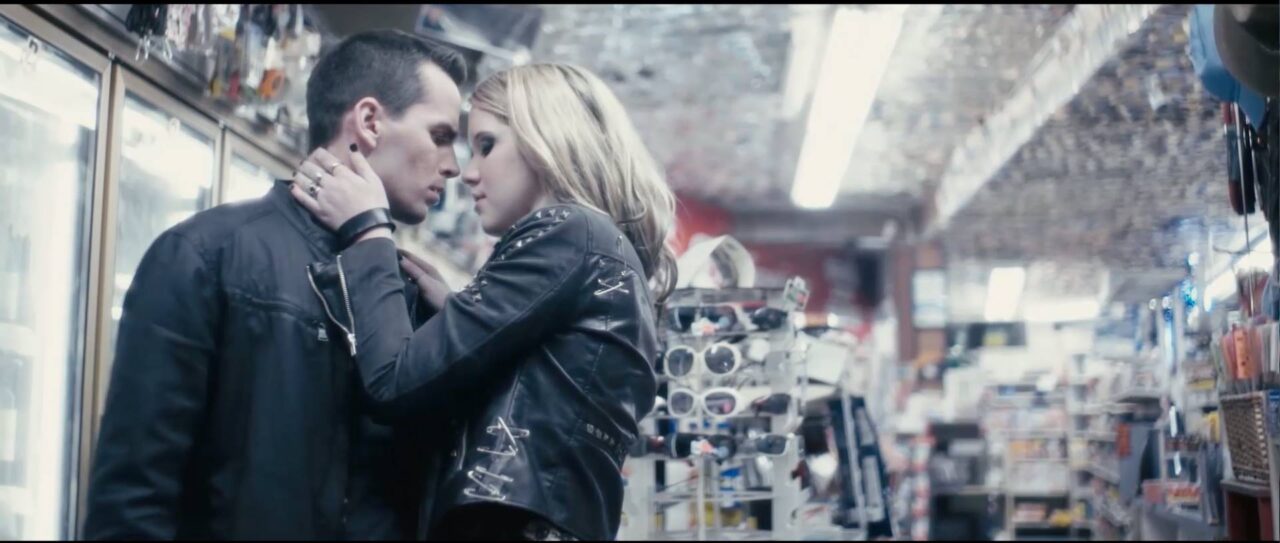
It quickly diverts us to our protagonist Vincent (Patrick Hickman), a veteran who is near suicidal after all the trauma he has experienced and has lost the reason to live. At a dive bar he meets Rachel (Haidyn Harvey), a teenager so clearly underage she has to have a backstory dark enough to lead her there. Overnight the two fall for each other, and next thing he knows, Vincent has found himself roped into a tense situation involving Rachel’s step-dad, Armenian mobsters, strippers, and cops.
While the two different storylines create for a confusing beginning, once the primary story gets underway the film finds its stride. The character of Bishop (Brian Krause), Rachel’s step-dad, gets the most material to chew as he is the definition of sleazy in every way, yet as the plot unfolds his behavior amazingly begins to all make sense. The three aforementioned protagonists are each given dynamic range and what initially seems like predictable character decisions end up having bigger payoffs later. The supporting characters are not given as much space and the secondary plot involving the cops/Armenians isn’t in the film long enough to go too in depth, but since the majority of the drama is between these three, once tension escalates it’s easy to get tied up in their story.
Perhaps the best moment comes when we realize that Rachel is more than who we thought she was. It is initially difficult to see a girl who looks so young inhabiting the world these characters live in with so much composure, but after we learn a few more details of her backstory, as well as her motivations, the earlier setups pay off. This in many ways summarizes the overall experience: the numerous rough edges are smoothed out thanks to the character layers that our protagonists are given.
Overall, Ribbons showcases the strength that a low-budget thriller should have, specifically strong developed lead characters and enough plot twists to feel fresh and keep the audience guessing. It contains serious topics such as PTSD, domestic violence, and drug use, but is best enjoyed as a pulpy thrill ride of the pure independent form.
Ribbons opens today with a limited theatrical release at Laemmle NoHo (until 4/16)
'Green Room' Proves That Young Director Saulnier Is Far From Green
Independent films often have a side story of their creation equally as compelling as the story within the film itself. It takes insurmountable odds to make a feature film. Writer/director Jeremy Saulnier’s breakout feature, Blue Ruin, intrigued me just from the story of how much work (and how many maxed out credit cards) it took to get it off the ground.
But upon Ruin's beginning, none of that story compared to how thrilling and well-executed the movie actually was. With all that said, I could not wait for whatever Saulnier decided to do next.Enter Green Room. There are numerous similarities–primarily in style–to these two features, but they are unique enough that they can be enjoyed separately.
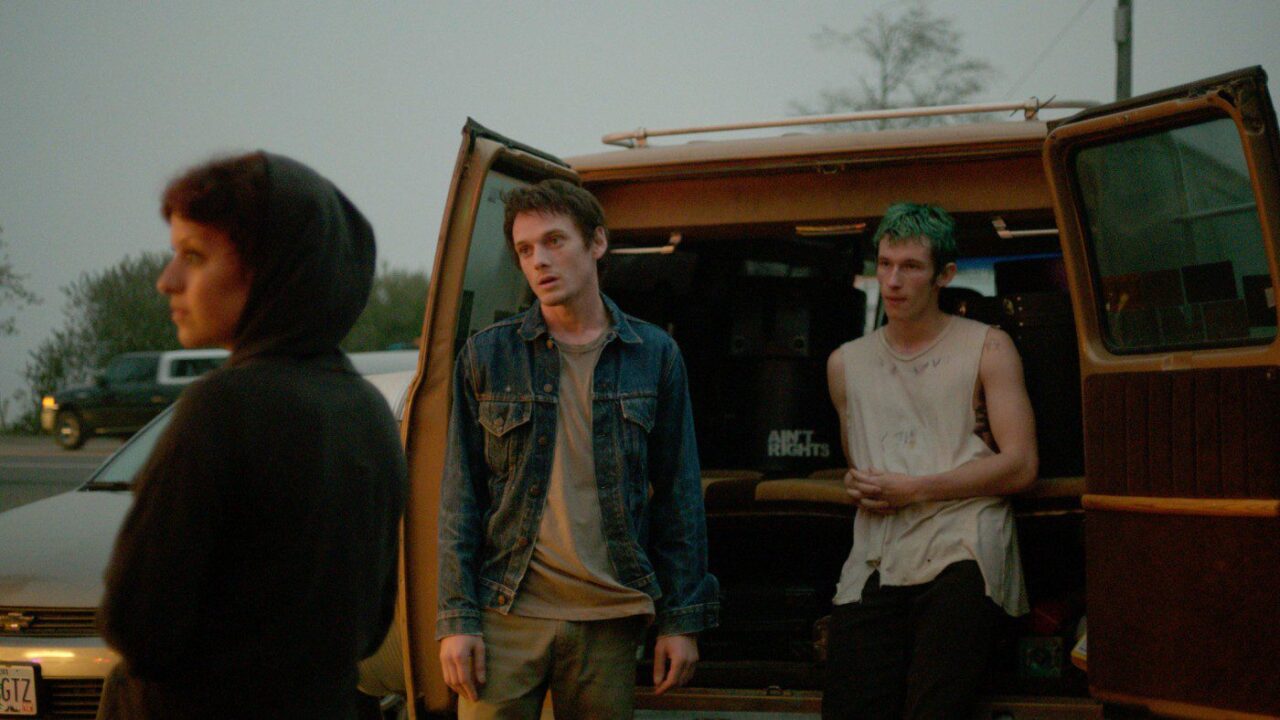
A punk rock band that is barely making ends meet gets a last-minute, $350 gig, at a Neo-Nazi bar in the backwoods of Oregon. When they witness an act of violence backstage that they weren't meant to see, let’s just say things go foul from there.
Again, we are put into a thrilling situation and then given a white-knuckle ride for the remaining duration. This one is essentially punk-rocker-good-guys on the inside vs. skinhead-bad-guys on the outside, and as soon as the pacing begins, it’s a tense experience until the very last shot.
One of Saulnier’s intriguing signatures is his deliberate use of the color in the movie title. Green Room features some element of green hue in nearly every shot, ranging from the harsh neon lights in the punk club to the awe-inspiring greenery of the rural Oregon scenery. As someone who loves viewing a director’s filmography, it excites me to think what color he might employ next in his through-line.
Anton Yelchin leads the cast with Imogen Poots and various other semi-familiar faces (Alia Shawkat, Callum Turner and Joe Cole) who round up the remaining punk rockers. On the opposition, Patrick Stewart plays the leader of the Nazis, Darcy Banker, and while it's not as terrifying as similar villains, Stewart slips into the role extremely well and creates a compelling and antagonizing force. Macon Blair, Saulnier’s Blue Ruin lead, plays Gabe, a conflicted Nazi, in this film and while his performance is another solid one where he nails all of those subtle beats at just the right moments, the pace at which his character develops leaves us feeling a bit short-changed. Further time spent with Gabe could have possibly made this his most creepy and memorable film yet. That being said, Green Room is a film where the character development and drama plays second fiddle to the intense visceral suspense that is drawn out in nearly every scene.
High tension thrillers are extremely hard to pull off, but have the potential to be some of cinema’s best when they do. Saulnier has now notched two under his belt and shows a clear upward trajectory. Call me a fan of both this movie and its director, and I look forward to the next thrill ride in this filmography.
Green Room is Rated R for strong brutal graphic violence, gory images, language and some drug content. In theaters in LA/NY Friday, April 15th, with a national rollout April 29th.