
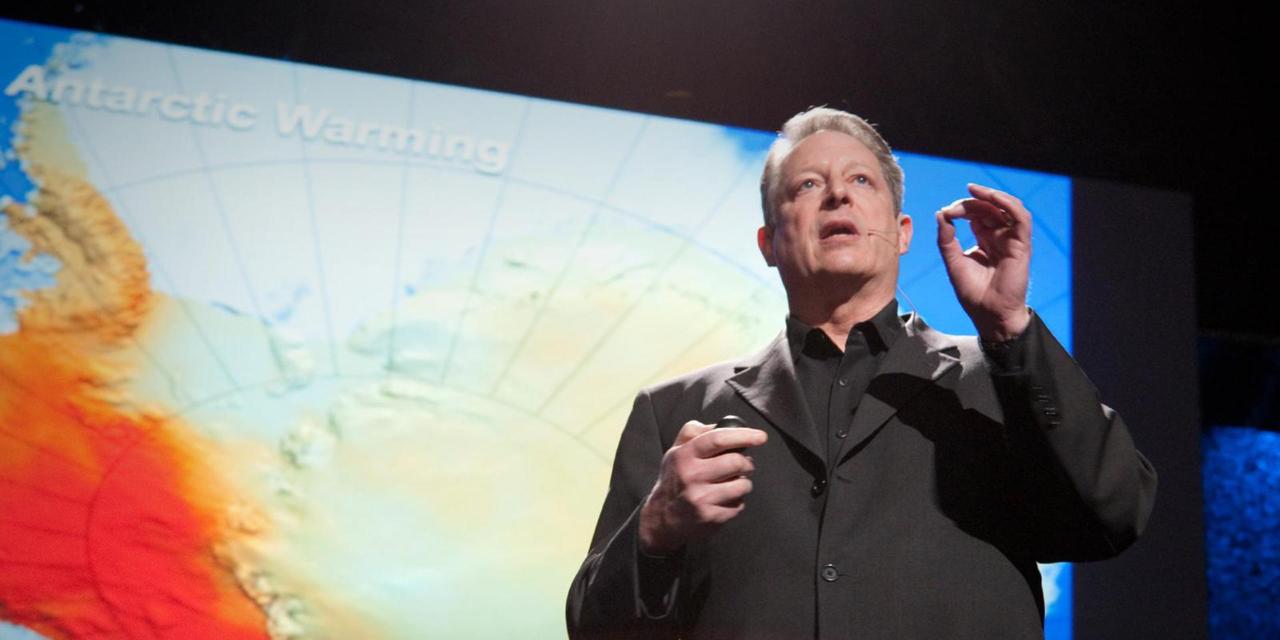
'An Inconvenient Sequel: Truth to Power' Review: Continuing the Conversation on Climate Change
In 2006, An Inconvenient Truth transcended what was thought possible from a documentary film and started a movement of cultural awareness toward climate change.
I was in grade school when I saw the film at the Mayan Theater in Denver, CO. While my well-read older sister had been reading about global warming for years prior (thanks to this magazine issue), I consider An Inconvenient Truth to be the beginning of my own journey toward environmental activism, which I continue regularly today, and I was far from alone. From that film’s end credits on, the call to action has dispersed into numerous topics due to the global nature of the issue. For some, the fight is against fossil fuels; for some, the fight is against deforestation and habitat loss; for some, the fight is against excess consumption. The list is long, detailed, and all relevant. Nothing is happening quickly enough, and the problem is worse than anyone hoping to get elected will tell you, so it isn’t a surprise there is room for a sequel to the original, monumental film.
For a sequel to a film that started these offshoot branches, what becomes the point of focus? The sequel doesn’t repeat Al Gore’s presentation of information. In fact, it doesn’t seem like the film is meant for those who are climate skeptics, perhaps intrinsically knowing they are not going to see it. Instead, the filmmakers take an approach of following Al Gore around the world, giving us a view into the in-between moments as he shares this information, confronts skeptics, and in one especially engaging moment, negotiates with government leaders at the Paris Climate Agreements.
Gore’s mission is to educate activists around the world who can help be the messengers to the people and organizations who are fueling an opposing denial. The film is not a deep dive into topics and specific issues. Nor is there a large sense of specific initiatives shown to viewers that they can take home with them. I’m torn because I recognize that of the environmental documentary sub-genre, this will be the one that remains the broadest. It can’t spend time at every place of advocacy, Gore is trying to launch movements from the top-down. But at the same time, Al Gore’s films will have the largest megaphone of their peers: they needed to use it more!
For someone who is already inclined toward this movement, the film is a refreshing reminder that action needs to happen, but it doesn't offer viewers the action steps in the way it could.To this day I still remember the powerful ending credits to the first film, as a series of legitimate steps rolled across the screen. Gore knows more about the subject than any of us, but I don’t feel like I learned any new ways to take action from this film, and that is an opportunity not properly recycled.
Gore knows more about the subject than any of us, but I don’t feel like I learned any new ways to take action from this film, and that is an opportunity not properly recycled.
I saw this film at an IDA screening that followed with a Q&A hosted by Anne Thompson. The directors of the film, husband-wife duo Bonni Cohen and Jon Shenk, decided to take a more follow-filmmaking approach with their powerful subject, and to their credit, seeing him a bit off the script works well. One of the most interesting things gained from the Q&A was that in reality, Al Gore is still a very damaged, internally conflicted individual, which is fascinating considering how public of a life he lives. It’s impossible to imagine what the 2000 election loss must have felt like for the person at the helm of it; there was no consolation for that moment and the filmmakers suggest he’s still scarred by that. We get some sense of that, but there was much more emotional weight in the first film and I would’ve liked to see this vulnerability as they described. If the movie is going to be all about Gore, it could have leaned a little further. But again, this appeals to someone who already respects him and wants to follow his action plans and with these story critiques, it’s still an important subject for audiences to see.
I make no secret of how important it is to change our habits and take as many steps as possible instead of sitting back and waiting for Al Gore to fix it. And of course, with a President who denies its existence, the only way we’re going to beat it is by doubling down. There’s a fine line between inspiring people to change and scaring away potential allies. But in the spirit of the film, and considering An Inconvenient Sequel lacks potential tangibility for viewers, I want to offer 4 extremely easy consumer steps to help fight climate change:
-
- Cut down on using plastic: There is a garbage patch in the Pacific Ocean twice the size of Texas, primarily full of plastic. We are near the point where there will be more plastic in the oceans than fish. This all comes down to Western society’s throwaway culture, serving everything in single-use containers. There is no need for a single-use straw and the amount that are thrown away every day is insane. Do your part and request no straw with your next drink. (more info: https://onelessstraw.org/)
-
- Stop eating beef: I was thrilled to hear in the Q&A that Al Gore is a vegan now, and yet still perplexed and disappointed this wasn’t once mentioned in the film (I imagine for fear of alienating people to actually change their habits instead of remaining complacent). But the reality is, eating meat, especially at the degree most Americans do, is beyond unsustainable. You can learn much more why facts here: http://www.cowspiracy.com/facts/ However, there are many tasty alternatives, so have no fear, I’ve been off it for years now and frankly, I don’t miss it.
-
- Carbon off-set your flights: Airfare is one of the craziest high contributors to global warming. It is extremely important to reduce the amount of flying one does, and additionally, here are two websites to first calculate and then help reduce your carbon footprint for not too expensive a price:
- And specifically related to this film: After you see the movie, go onto IMDb and give it a fair score. Not saying you have to give it a 10/10, but at the moment it’s not properly represented. The website is notorious for internet trolls, and currently, 1/3 of the votes for this film are a 1/10. These are not film critics’ opinions, they are denialists trying to sabotage it. Every fair rating on IMDb helps counterbalance these folks, a small but noble step.
'An Inconvenient Sequel' is rated PG for thematic elements and some troubling images. 98 minutes. Now available for purchase on Blu-Ray and DVD.


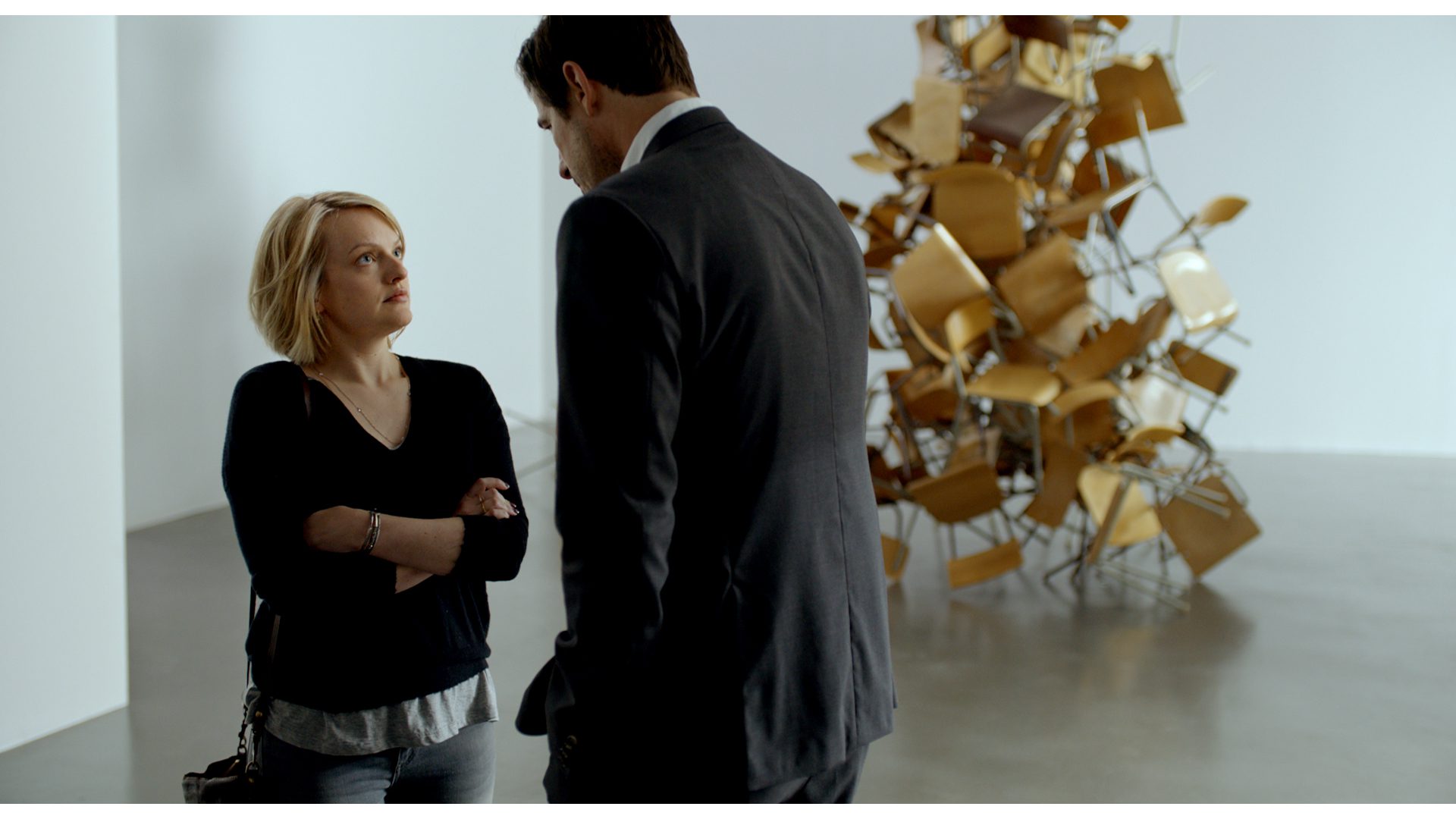
'The Square' Is a Satirical Look at Affluence And Modern Art
About once a year, if we’re lucky, a movie comes along that transcends the labels of ‘comedy,’ ‘drama,’ and other classified genres.
It will also prove that with top-tier filmmaking, you can utilize a full emotional range to tell a story. It is safe to say we have an entry for 2017 in Ruben Östlund’s The Square.
A modern art museum in Sweden, in the midst of vying to be cutting edge while also needing to maintain overhead and encouraging people to actually visit, is getting ready for it’s newest, boldest exhibit: “The Square.” At the helm of the museum is Christian (Claes Bang) who lives in a swanky apartment, drives a Tesla, and has no trouble scoring beautiful women. Because this new exhibit is almost entirely focused on helping people and trusting strangers, Christian presents himself with the challenge of upholding the artistic vision of altruism in the rest of his life.
In reaction to his generally self-serving behavior, the new exhibit pushes Christian out of his comfort zone. Yet in every earnest (or disingenuous) attempt to help other people – his co-workers, the homeless, family members – there is a bitter, comical pushback. The results are absolutely hilarious, perhaps because of how cringe-worthy and honest the situations are and how people react while trying to fall into societal norms. What is captured on screen is absolute magic.
In most American films, when we see characters who are wealthy, it is most often glamorized or normalized. Here, as was true of his last film, Östlund takes a critical examination of wealth in a way that we all can take a lesson from...
By using the world of modern art and affluence as its setting, The Square allows for any bizarre features to be fair game, while also utilizing cinematic artistry when necessary. Most importantly, this film is a satire of the wealthy do-gooders who reek of hypocrisy without even realizing it. In most American films, when we see characters who are wealthy, it is most often glamorized or normalized. Here, as was true of his last film, Östlund takes a critical examination of wealth in a way that we all can take a lesson from (I will never be able to walk by a homeless person begging on the street again without being reminded of how this movie handles that everyday scenario).
To English-speaking audiences, a trio of recognizable faces each plays a supporting role– Elisabeth Moss as a naive reporter. Dominic West as a self-serving artist. Lastly, Terry Notary, whose name doesn’t carry star power, but who does motion capture for the Kong and Planet of the Apes movies. Here, Notary plays a controversial performance artist and I’ll only say his animal motion capture work gets to play off extraordinarily. The star of the film remains Claes Bang, whose deadpan delivery as Christian, no matter what scenario he finds himself in, is both endlessly relatable and at times hysterical.
It is not required that you see Östlund’s last feature, Force Majeure before you see this film, however, it does prime you for what to expect from his particular style. His preceding film also deals with painfully comedic scenarios of an affluent family, in that case at a ski resort. That being said, the ideas and aspirations that Östlund introduced in Force Majeure are delivered in greater extremes in The Square, and the result is a more savory meal of a film.
It’s too early to see what the competition will be like for the Best Foreign Language film Oscar. History has proven that specific category has some of the most fallacy of the already fallible awards, but my reaction would be that this film is a shoe-in. The Square represents the first truly amazing movie of the fall awards season, and one I hope to return to and think about for many years to come.
'The Square' is rated R for language, some strong sexual content, and brief violence. 142 minutes. Opening this Friday at The Landmark and ArcLight Hollywood.
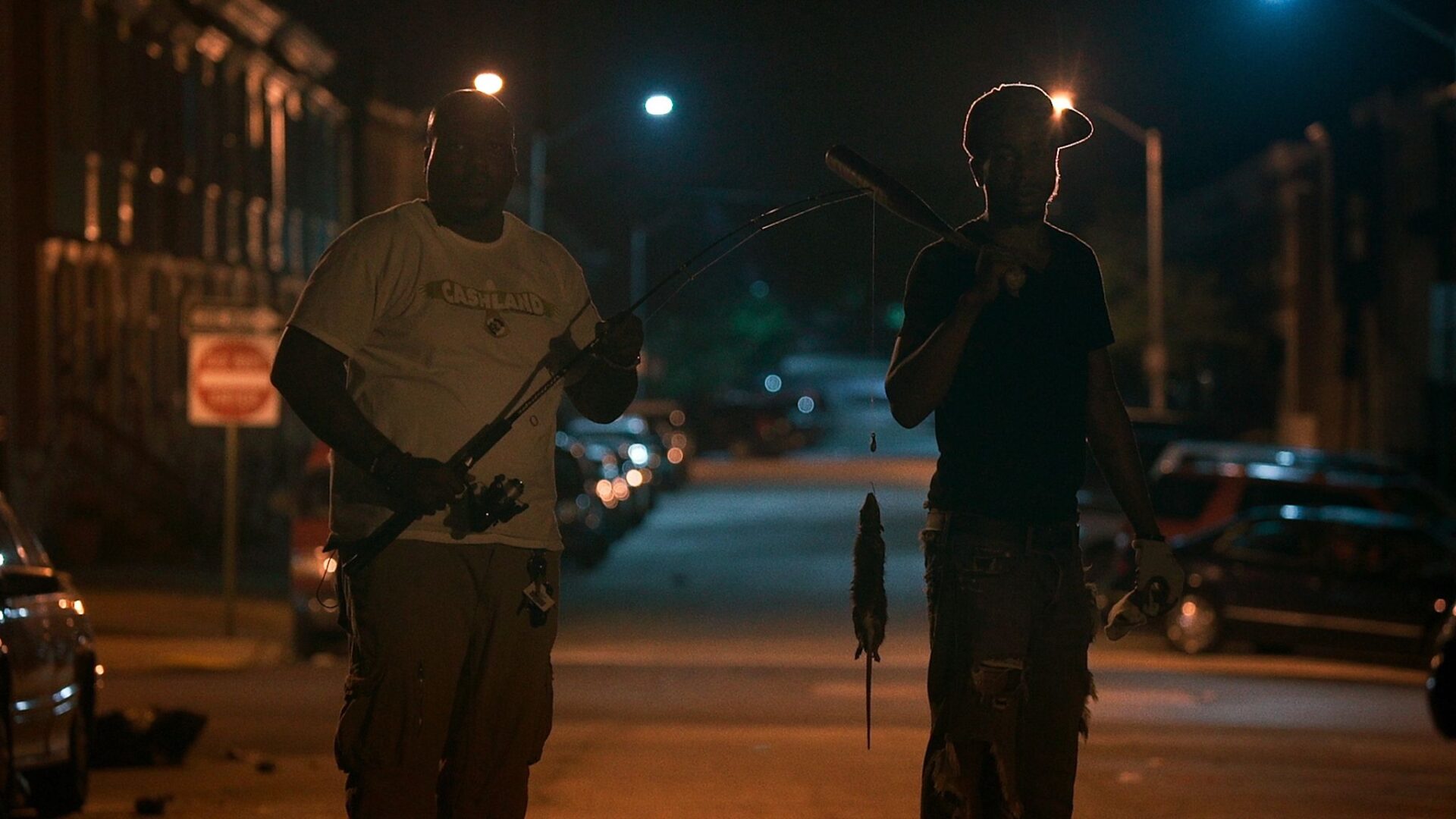
'Rat Film' Review: In the End, Life's a Game of Human and Rat
I dream of a day where experimental, conversation-starting films reach the size of an audience that mega-budget studio films receive.
This is counterintuitive because the small nature of these films is what allows them to take bold direction, but nonetheless, these are the types of films that use art to generate greater conversation. Rat Film is not only to be seen and experienced but to be discussed.
Two topics that initially seem to have no overlap are fused in this film to generate said discussion. The first, as implied by the title, is the Rat, and specifically, its relationship with humans. As an experiment subject, as a pest, as a pet, and more. The second topic is the city of Baltimore, a neighborhood with a nationwide reputation for its endless cycle of racial and class divisions. What can rats teach us about Baltimore? You could argue this is the thesis of the film.
Juxtaposing two seemingly unrelated subjects is an undervalued, powerful technique, found most often in unconventional documentaries. Watching Rat Film I’m reminded of We Come As Friends, which compares South Sudan to alien invasion, and Heart of a Dog, which compares the director’s pet dog to New York City. To pull off these type of allegories takes a visionary director with a singular perspective. The company of films in this space is few, but the ones that are successful remain on the mental shelf long after the initial viewing. My gut reaction is Rat Film will be long remembered by those who choose to view it.
The initial reasons for comparing rats and Baltimore are literal. We meet residents of the central, black neighborhoods who have a rat infestation. As each analogy enters the film, they become more allegorical, allowing the viewer to see the comparison for themselves rather than be spoon fed it.
My gut reaction is 'Rat Film' will be long remembered by those who choose to view it.
Baltimore is home to the prestigious Johns Hopkins University, which we learn has a long history of using rats for human behavioral experiments. More than any other animal, they are the ideal test subject for doctors starting at the turn of the 20th Century to hypothesize on how humans react in various scenarios. Their experiments are low-risk (unless you're a rat of course). But the ‘experiments’ in place by city planners in Baltimore have continued to have massive ramifications for the poor and black communities who still affected by decisions made that many years ago.
The film jumps between two distinct styles and this intercut give it texture and range. In present-day situations, we are given a vérité style, following a myriad of city inhabitants or people somehow associated with rats. Equal or more screen time takes a massively different approach, using an omnipresent, almost electronic female narrator to tell us relevant information while overlaying more unconventional imagery onscreen. Like the humans that experiment on rats, this narrator gives us an unbiased, emotionless recounting of relevant events, and what we’re told is hard to forget. A description of one rat experiment midway through the film– that can serve as a metaphor for Baltimore, capitalism, or whatever else you want it to– is particularly show-stopping.
A last observation is that this film would make a fantastic double feature with Step, another one of the great documentaries of 2017. Also set in Baltimore, Step is the ultimate story of hope and inspiration. It shows change in action from the bottom up, a contrast to Rat Film’s commentary on top-down elements of Baltimore and human/rat relationships. Together, they give a dimensional look at a city rich in history but plagued with systematic oppression.
Director Theo Anthony has created something truly one of a kind with Rat Film. Much more effective than a formal education and ripe for generating engaging conversation, this is a small-scale film worth visiting. It will surely join the ranks of innovative, thought-provoking documentaries that are unforgettable for anyone who watches it.
'Rat Film' is not rated. 82 minutes. Opening this Sunday, October 15th, at The Downtown Independent for a two week run with a national release to follow.
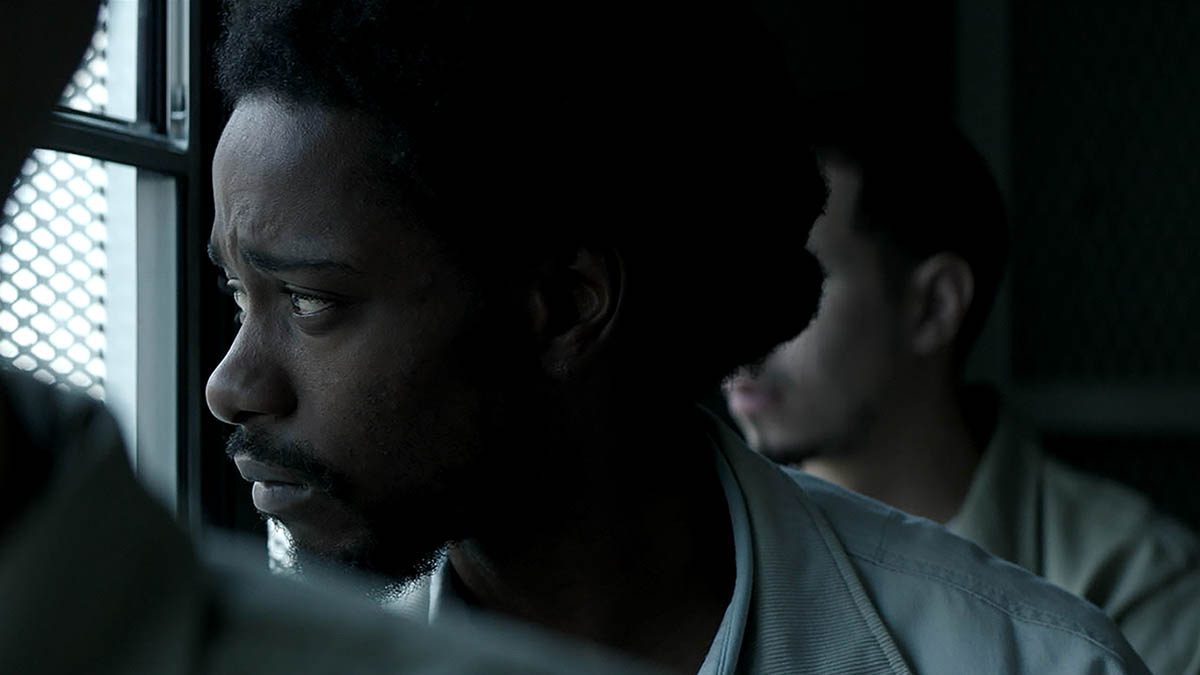
'Crown Heights' Review: A Compelling True Story Taken from the Podcast 'This American Life'
This review previously ran on February 1st as part of the Sundance Film Festival
For years, podcasts such as 'This American Life' have reinvigorated audio-based storytelling as a vital medium for captivating audiences.
Inevitably, a few stories stand out as worthy of adapting into movies, and this year at Sundance, Crown Heights enters this foray.
Based on a true story that unfortunately feels more commonplace than it should, the film covers the life journey of Colin Warner (Lakeith Stanfield), a young immigrant from Trinidad who, in 1980, was arrested for a homicide that he clearly did not commit. With brutally cruel detectives and an unjust judicial system, Colin finds himself serving a life sentence for something he played no part in. His best friend, Carl King (Nnamdi Asomugha) unexpectedly finds himself as the only person willing to help Colin fight for freedom, no matter how much opposition stands in their way.
The film sheds light on a painful reality that many individuals, especially those who are poor and/or non-white, find themselves wrongly imprisoned. It’s been only a few months since I was floored by Ava Duvernay’s essential documentary 13th, which ends up being a comprehensive education that all Americans need, and hopefully many will take since it’s streaming on Netflix. It’s possible then, that the individual, personal nature of "Crown Heights" can serve as a nice companion to that film’s scale.
After the film was done, a well-deserved standing ovation greeted the real Colin Warner, and like many others present, I felt personally compelled to shake his hand after seeing his story.
Unfortunately, the film never knows how to turn the true story into a movie with any sort of journey. The danger of any film based on a true story, especially one that takes place over multiple decades, is that it easily falls into the pitfall of being a highlight reel of events that took place, instead of any sort of transformative journey. In this case, even the passage of time is not properly handled: we’re never given any visual cue that much time has passed, only through text cards do we understand just how long it has been. There are potential dramatic moments that fizzle because of a lack of energy or attempts to tell them in a new manner. The movie is heavily dependent on courtroom and legal drama, and yet nothing about the way these scenes are handled feels like anything we haven’t seen before. Ultimately, the film feels like an exercise in going through the motions, rather that fully capturing the emotional journey one must face.
I must reiterate that this review is by no means a reflection of the power or relevance of Colin Warner’s story. After the film was done, a well-deserved standing ovation greeted the real Colin Warner, and like many others present, I felt personally compelled to shake his hand after seeing his story. That being said, I expected more from such a powerful true story, and this film offers little to no innovation and follows too closely to other trappings we’ve seen before. Compared to say, The Hurricane, which covers similar territory, we’re given very little memorable or intriguing ways of telling this story. In the end, I’ve seen many more innovative and emotionally inspiring ways of telling a story than this one, and while I’m grateful to know who Colin Warner is and his story, the film on its own has a limited effect.
94 minutes. 'Crown Heights' is rated R. Opening this Friday at ArcLight Hollywood, in theaters everywhere September 8th.
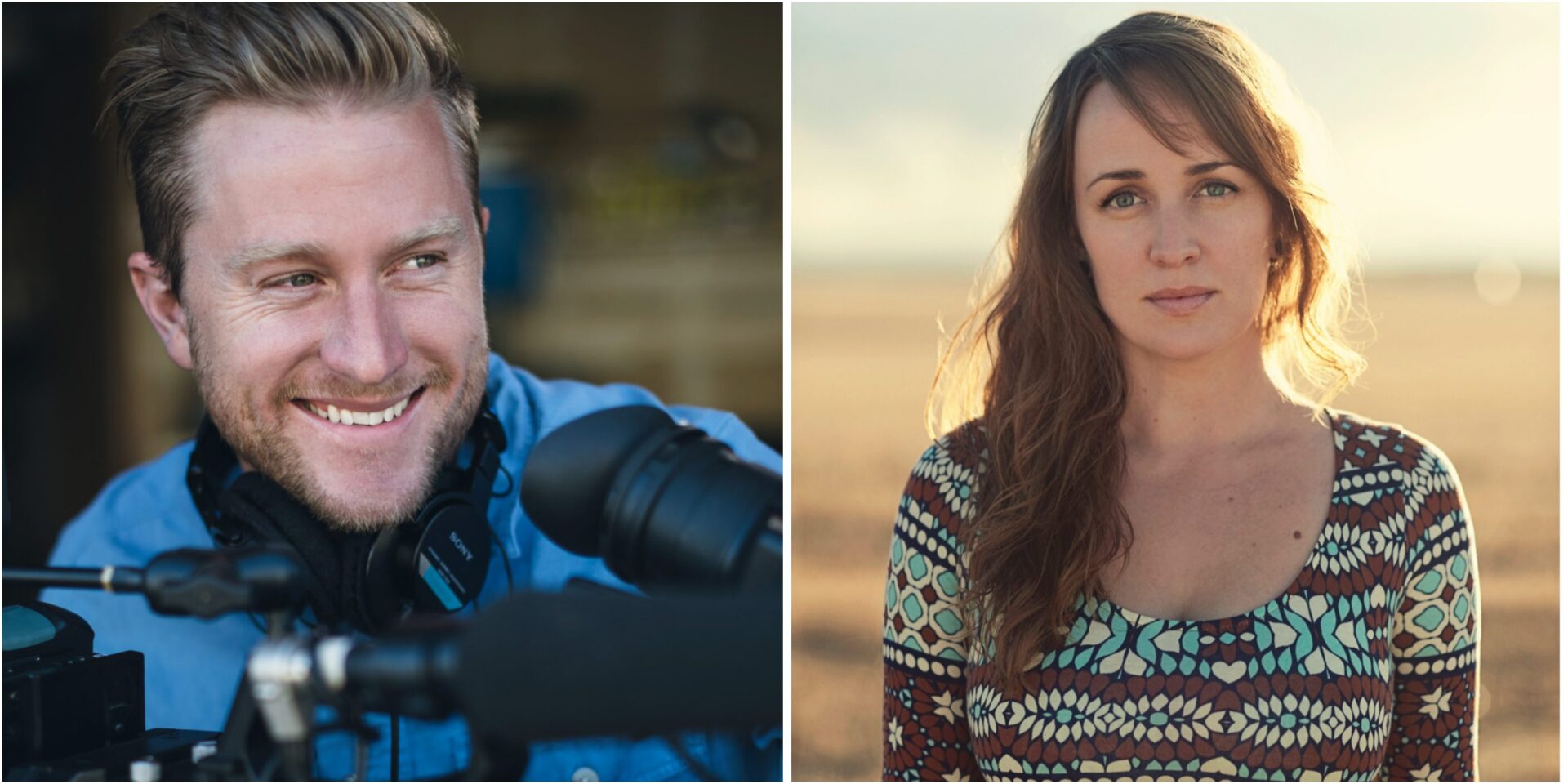
Co-Directors Aaron and Amanda Kopp Talk Artistic Choices in 'Liyana'
In an orphanage in the southern part of the African country of Swaziland, students are brought together and given an extraordinary project.
They are going to forge the story of Liyana, a fictional heroine born from their collective experiences and imaginations. The film of the same title, “Liyana,” is both a telling of this original story, as well as the non-fiction story of its young creators who made it up. In our exclusive interview with the filmmakers, which took place just days before the film went on the win the Best Documentary award at the LA Film Festival, Aaron Kopp and Amanda Kopp talked about artistic choices in multimedia mixed formats, the process in how the kids created the story of "Liyana," and so much more.
A theme that permeated throughout the film is the power of storytelling. How did you use that in the film?
Aaron Kopp: We're both storytellers in one way or another- my background is documentary TV and Amanda is a photographer. Stories are the language of humans, the fabric of society. We came upon the story over time. Knowing the kids really well and becoming friends with them, we wanted to make a film that they could be proud of and feel good about.
The process of the actual filmmaking itself was a positive experience. Even if the film failed miserably and nobody ever saw it, the making of this film was still good for [the kids]. We just didn't want to put them in the position of being vulnerable or exposed. There are definitely enough documentaries about Africans and African kids in particular that, how should I say this, don't exactly evoke respect and dignity. We wanted to make the opposite of that. So after a considerable amount of research, we figured out that if we could use this fictional character, that would be the key to our success.
Were you directly involved in setting up the initial premise of the creative therapy?
Amanda Kopp: Aaron had been doing research for several months about creative therapy and art therapy techniques, and we wanted to incorporate it all somehow. We came up with this "class structure" where we created a template of the hero's journey story arc so the kids had the freedom to work together to vote on different plot points and versions.
Aaron Kopp: Unfortunately, this awesome storytelling exercise isn't happening on a day to day basis where the kids live. That's something we would love to make happen.
How long did it take for the kids to create the full "Liyana" story?
Amanda Kopp: The process took several weeks. Every day, we would start the morning with a class and then we would break them up into groups where they would rehash what they had talked about in class. They would talk about the story of whatever scene they were covering that day. One kid would come up with a great idea and would share it with the other children and they would expand on it, and they would just collaborate together.
Aaron Kopp: The collaboration took about three weeks, but there was a lot of filming before and after that. The very first shoot we did for "Liyana" was in 2009. That was my research and development phase.
The process of the actual filmmaking itself was a positive experience. Even if the film failed miserably and nobody ever saw it, the making of this film was still good for [the kids].

From the filmmaking perspective, what was it like making a film over such a long period of time?
Amanda Kopp: It took a lot of endurance, haha. It was much more ambitious than we realized when we first took it on. A lot of it was the fundraising that took a long time. In the edit, we didn't really have an example to go off of because the structure and the combination of fiction and reality is pretty new. So there was a lot of experimentation in the edit. And then, of course, the animation was very labor-intensive. It took a while for us to find the right animator, and once we did, he worked overtime for 2 1/2 years while leading a whole team of freelance artists across the world.
Aaron Kopp: It was definitely a long and tedious process, but it has honestly been the biggest joy of our lives. It's like we've had this secret all these years about this cool thing we get to work on, while still working on other things that we actually get paid for, haha.
Were there any stories that the children created that didn't make it into the final film?
Aaron Kopp: Yeah, most of them, the kids were just brimming over with ideas. We were running out of camera batteries. We wish we could've included all of them... It was so interesting to see how they would come up with [stories] with really profound simplification. But it was true to form because of their real life narrative, they have this knowledge that they probably shouldn't have at that age.
Yeah, they've been through a lot. Have the kids seen the film?
Aaron Kopp: We showed them the film two nights before the world premiere. It nerve-wracking because we really did make the film for them, we were hoping they would like it. The fact that they are proud of it and want to show it to everybody is the best possible response from them.
In the edit, we didn't really have an example to go off of because the structure and the combination of fiction and reality is pretty new. So there was a lot of experimentation in the edit.

There are a few moments when the animation crosses over with real life and I thought that beautifully tied in the universal nature of Liyana's story. Can you talk about these artistic choices?
Amanda Kopp: You get so many points for noticing that! Haha!
Aaron Kopp: We tried to keep that subtle but I'm really glad you noticed! We tried to have as much fun as possible with this mash-up of mediums. What is so interesting is the story the kids create takes on a real-life meaning, and the line between fiction and reality begins to blur. So it only made sense for us to dip back and forth with the animation and the doc footage. Like everyone always says, art imitates life, life imitates art.
Can you talk about some of the challenges you faced, specifically distribution?
Aaron Kopp: It's been such a dream to get it out [to festivals] and everything. It's been really humbling to know that people around the world are rooting for this film. But we are in the beginning stages of distribution- we don't have distribution yet. There are lots of conversations about it right now, and we will definitely keep you informed as details unfold.
Amanda Kopp: Getting reviews after our premiere has also been really exciting for us. Communities online are so enthusiastic about the film, it's really affirming to us because we feel like we're finding our audience there.
Aaron Kopp: Yeah, and thanks in part to you for watching it and writing about it in a way that's intelligent and insightful.
Thanks! Is there any advice you wish you could go back and give yourself at any point during this process?
Aaron Kopp: That's a good question. There's a lot we didn't know at the beginning but to be honest, I think that some of what we did at the beginning was a good thing. If we had known how long this process was going to take and how much work it was going to be, we might have been more daunted by the process as a whole. But we just took one step at a time. I think throughout the process, we just learned how to figure it out. Getting grants, finding funding, all of that. All of the hard lessons along the way were sort of necessary, in retrospect, I appreciate that.
Amanda Kopp: It's just hard work. Google or YouTube anything you need to if you [need help] with something. It's a fine balance between finding the right collaborators and the parts of filmmaking that you can just take on yourself and learn how to do. We became grant writers for this film, we became animators. I tried to get by with making contract agreements by myself but now that we're working with a lawyer, we have to redo all of them.
Aaron Kopp: Like Amanda said, I think the key is finding collaborators whose hearts are in the same place as you. When collaboration works, it's a thing of magic.
'Dunkirk' Review: An Epic Achievement Designed for the Big Screen
Film director extraordinaire Christopher Nolan has cemented himself as one of the few directors whose name alone not only draws audiences to see his films as fast as they can, but on the biggest screen that they can. The undeniable legacy of his entire filmography, including "The Dark Knight" trilogy and "Inception," has been immortalized in pop culture and for all of the right reasons: he makes great, expansive movies on the largest canvases possible.
Because of this, it’s likely that by the time of publishing, you may have already seen "Dunkirk," his latest film (in theaters everywhere now). The short answer is that "Dunkirk" is a must see experience, as much as all his prior entries are. But if Nolan’s name alone isn’t a draw, there’s plenty more to get excited about in this film.
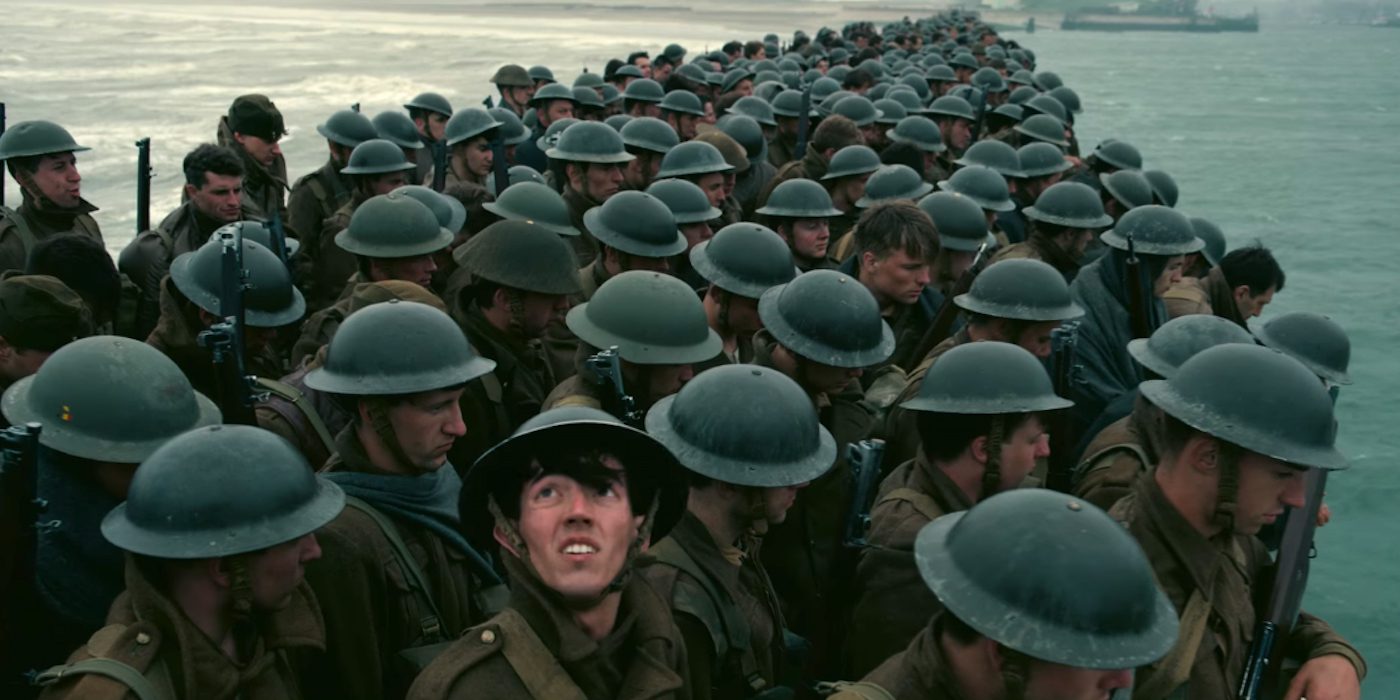
Taking place within the World War II Battle of Dunkirk, the film depicts three intersecting perspectives related to a massive evacuation of Allied soldiers (primarily British) from the French coast of the English Channel. From the air, from the sea, and from the beach, we witness three contrasting vantage points in this massive conflict. Everything comes from the level of the soldiers, giving a grounded feeling of immediacy to the entire situation. There are no flashbacks or backstories, everything is in-the-moment-immersion into the conflict at hand. Each facet of this triptych is equally engaging, and watching them intersect is cinema at its finest.
Nolan has never done a war film before, nor a film based on true events but manages to apply some of his signature themes here still. A primary theme in "Dunkirk" is time, and specifically, the manipulation of it. Each of the three stories takes place over different speeds of real time that we’re told of at each of their beginning's. From each perspective, the tension lasts a different length (depending on their position), and without saying too much, Nolan addresses this head on.
While many films are re-formatted for IMAX as a way to fill the premium space, there is truly no other filmmaker than Nolan working today who has a mastery of how to fill such an epic canvas.
Movies themselves are a manipulation of time: they can take place in under 90 minutes or across decades, as even a single cut can move us millenniums (most famously in "2001: A Space Odyssey"). Nolan applies this exploration of moving time into a battle where time and escape were the most important driving forces on everyone’s minds, making him a perfect thematic match for "Dunkirk." I can’t think of another war movie before this that chooses to display a historical event in non-chronological order. This is just one of many ways in which the film stands out as unlike any war film I've ever seen before.
Much can be said about the experience of seeing this film in IMAX. The genuine IMAX screen at Universal Citywalk is where I was able to experience this film and it did not disappoint, as the visuals projected onto such a massive canvas are utterly breathtaking. Shots that would normally feel like conventional establishing shots play as jaw-dropping visuals on a screen so large you can’t see from top to bottom. Indeed, while many films are re-formatted for IMAX as a way to fill the premium space, there is truly no other filmmaker than Nolan working today who has a mastery of how to fill such an epic canvas. Many other films may market themselves as being needed to be seen on a big screen, but "Dunkirk" is one of the few that truly lives up to that promise.
At a lean 106 minutes in running time (his shortest by a margin, excluding his first feature film, "Following"), there is not a single wasted moment in "Dunkirk." It’s a captivating journey made unforgettable by how uniquely it’s told. It has been a great summer for independent film, but "Dunkirk" is a reason to believe in the power of a great blockbuster when made by a great filmmaker. It’s a great continuation of Christopher Nolan's legendary filmography, and easily one of the best films of the year.
106 minutes. "Dunkirk" is rated PG-13 for intense war experience and some language. Now playing in theaters everywhere.
https://www.youtube.com/watch?v=T7O7BtBnsG4

'Monkey Business' Review: The Story of Curious George’s Creators
For most people born in the U.S. over the last 50 years, the Curious George books are as ubiquitous as Beatrix Potter’s Peter Rabbit or Dr. Seuss's The Grinch.
Yet before Curious George's widespread appeal hit the mainstream, there was an extraordinary adventure from his creators, without which we would never know him and his unforgettable charm. The documentary "Monkey Business: The Adventures of Curious George’s Creators " is a mixed-medium look at the true story of the husband-wife team that created Curious George– Hans and Margret Rey.
The Reys were German Jews, born at the turn of the 20th Century in 1898 and 1906, respectively. Hans was the artist and possessed many of the personality traits that their fictitious monkey George did, most notably, of course, an insatiable curiosity and cheeky sense of humor. In contrast, Margret was the businesswoman, no-nonsense and always pushing for the best; like George, she always crafted solutions to challenging situations. Through the film, small details help us fully realize the shared traits in Geroge that come from both of these characters. Case in point, Hans’s biography (Selling Bathtubs on the Amazon) is revealed to be a tongue-in-cheek joke. Margret’s determination is comically blunt and allows her to succeed: she takes a boat all the way from Germany to Brazil to tell Hans that she is going to marry him, even though they have never dated. These are two of many anecdotes that make "Monkey Business" so enjoyable to watch. Each step of their journey, which starts as two separate ones but shortly becomes tandem, is a beautiful mix of whimsical and adventurous, even during the hardest of times like escaping Nazi France with George sketches in hand.
For the Reys, the children’s book-making that eventually led to the creation of their most famous character, Curious George, was a form of emotional release and a positive way to get through everything that they’d experienced.
For the Reys, the children’s book-making that eventually led to the creation of their most famous character, Curious George, was a form of emotional release and a positive way to get through everything that they’d experienced. Like another great documentary from this year’s LA Film Festival, "Liyana," "Monkey Business" is rooted in the theme that stories have the power to transform the world. Stories can offer an essential escape to those who need it, especially in times of tragedy and darkness.
I’ve saved the film’s highlight for last, which is its decision to incorporate the same animation style as the Curious George books to tell the Rey’s own story. The execution of this perfectly tailored animation is what makes the entire story shine. Despite living through hardships, the Reys chose to view life with this whimsy optimism. According to their neighbors who were interviewed for the film, they described escaping Europe on bicycles as the ultimate adventure instead of the harrowing task it most likely was. It’s easy to see that their relationship, a lifelong love and true partnership, allowed them to thrive in all situations, perilous or otherwise. With Hans’ jubilance and Margret’s stubbornness, their journey was never dull.
Like many of the great recent documentaries, "Monkey Business," narrated by Sam Waterston, is proof that animation in nonfiction filmmaking is a match made in heaven, and I frankly can’t get enough of these mixed-medium films. Director Ema Ryan Yamazaki clearly shows her astute knowledge of the source material and knows how to keep the story moving, again mainly served by the animation sequences. Some of the book-style transitions look a little too computer animated for my taste (it could’ve easily been done well using a mix of more actual books). But the animation that matters most, the story of the Rey duo, is impeccable– looking like another adventure in the Curious George series. This is a terrific documentary that’s simultaneously ground-breaking and uplifting.
"Monkey Business: The Adventures of Curious George’s Creators " will be released by The Orchard in theaters and on VOD this August, and I look forward to sharing it with storytellers and story lovers of all ages when it does.
'Liyana' Review: This Hybrid Documentary Proves That Children are Fantastic Storytellers
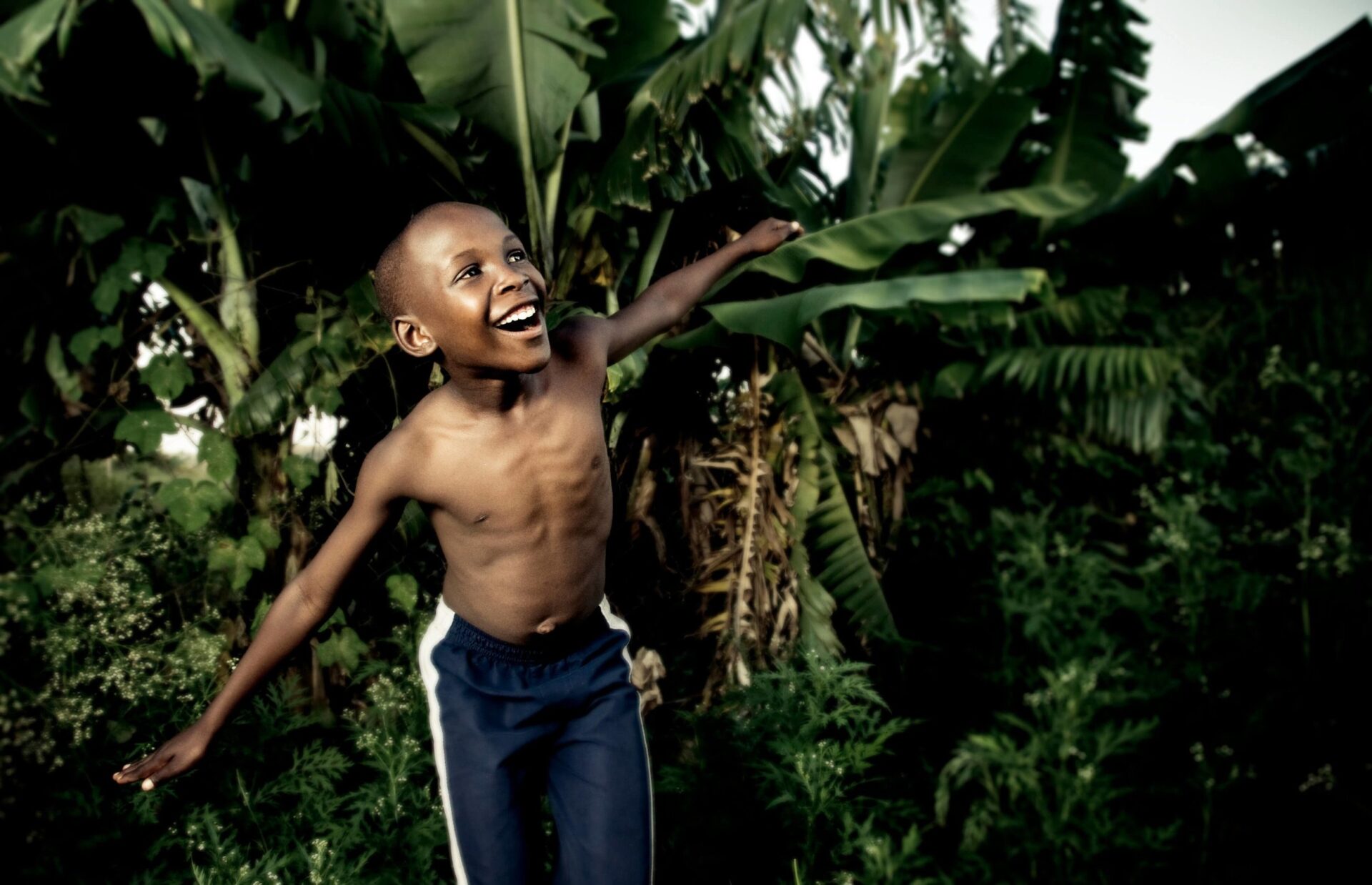
In an orphanage in the southern part of the African country of Swaziland, a group of students are brought together and given an extraordinary project. They are going to forge the story of Liyana, a fictional heroine born from their collective experiences and imaginations. The film of the same title, "Liyana," is both a telling of this original story, as well as the non-fiction story of its young creators who made it up.
Early on it’s established that, while the story of Liyana is fictional, it is born from a combination of every orphan’s experiences. In a traditional documentary, we’d be given backstory on each of our protagonists and how they ended up in the orphanage. Instead, through Liyana’s story, a few universal themes tell us all we need to know: parental neglect, HIV/AIDS, robberies, and abuse all play contributing roles. But the fictional story of Liyana is also unfiltered by adulthood and is a joyful odyssey of adventure and fable. It should come as no surprise that children are fantastic storytellers.
The documentary side of the film uses a mix of individual interviews and sequences with the orphanage. For Liyana’s story, beautiful, one-of-a-kind animation matched with the voices of various interweaved students tells her hero’s journey. It’s a true children’s story of overcoming obstacles and going on an adventure. As a fable, the story is able to incorporate exciting adventures for Liyana unrestrained by non-fiction (rich with animals, monsters, and other fantastical elements), but that clearly parallels the emotional journey each of these children has been on. The fact that "Liyana" is a universal tale so richly realized by children based equally on their unrestrained imagination and own experiences creates something truly special and compelling to watch given the context of its creation. This film is a testament to the power of story.
"Liyana" is a beautifully realized documentary from director duo Aaron Kopp and Amanda Kopp, and exactly the type of gem that represents the great stories LA Film Festival offers year after year.
A hero of the non-fiction story is the story advisor Gcina Mhlophe, described as a Swazi rockstar by the filmmakers. Mhlophe uses the power of ‘creative therapy’ to bring this story to life. A few great moments show her in action, discussing ideas for what should happen to Liyana next, not restricting any of the kids and their imaginations. One of the most powerful scenes is when the kids discuss how Liyana will start their journey, and without any backstory needed we understand this inciting incident is born from their own memories and past, resulting in a great launching point for the journey to come.
I love the power of storytelling and I find that films which address it can enhance our understanding of its capability. At LA Film Festival this year, both this film and "Monkey Business" address this topic with emotional resonance enhanced by the multi-medium elements documentaries are capable of. Stories (including movies) have frequently been a great means to understand cultures and experiences far from our own. Toward the end of "Liyana," one of the storytelling students says, “When people remember Liyana I want them to remember us, our words.” Hearing this story alone will not end poverty or empower the underprivileged, but is a necessary and powerful step toward continued worldwide empathy. "Liyana" is a beautifully realized documentary from director duo Aaron Kopp and Amanda Kopp, and exactly the type of gem that represents the great stories LA Film Festival offers year after year.
To learn more about the film, it’s extended journey toward release, and updates for future screenings, be sure to visit the film’s website and subscribe to their mailing list: http://www.liyanathemovie.com/#the-film
'Camera Obscura' Review: Implausibilities Plague This Indie Horror Film
An independent, low-budget horror/thriller is primarily judged by how well it can keep you on the edge of your seat.
Bonus points if it is able to make you forget that the film was made for a small fraction of the cost of what’s playing at your local AMC. The genre is a boom when done well, and entirely forgettable when not. Unfortunately, Camera Obscura falls into the latter camp.
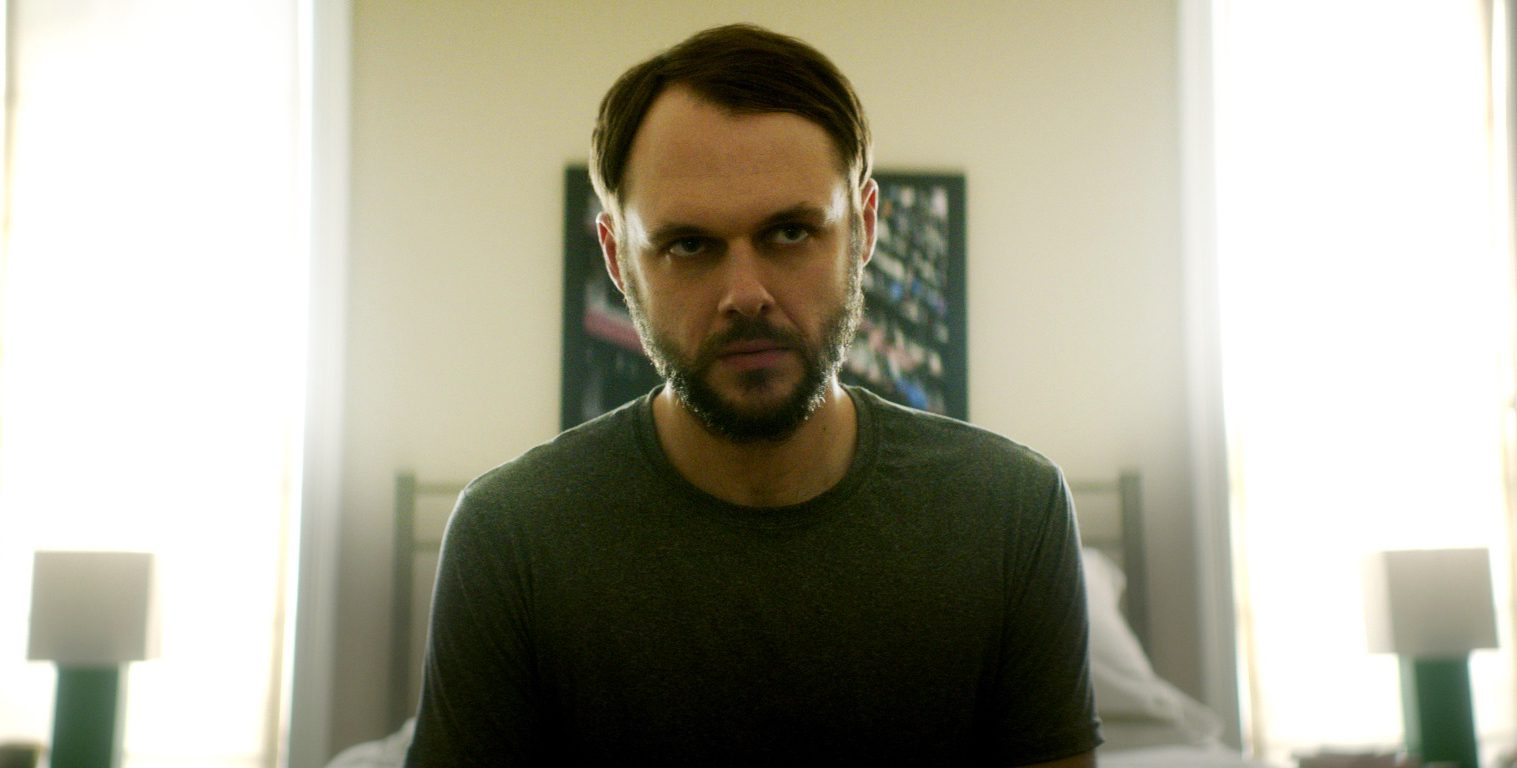
Starting initially as a drama, the film follows Jack Zeller (Christopher Denham), a former war photographer, who struggles with PTSD. He is haunted by his past, taking photos of horrors without actually stepping in to help. His wife (Nadja Bobyleva) buys him a vintage camera and with her encouragement to get back into taking pictures, he books a basic photography gig to get him back on his feet. However, the camera has a mind of its own, turning out developed photos that feature deaths waiting to happen. In order to avoid tragedy, Jack finds himself trying to steer the camera away from showing the death of his loved ones. As it escalates, more people die and Jack goes further over the edge in an attempt to save people he loves.
There’s an immediate issue with the film’s premise that makes it impossible to suspend my disbelief. A present day, Middle East war photographer is using a film camera? It’s a tough, anachronistic sell considering the universal usage of digital in photojournalism for obvious practical reasons. It’s even harder to believe that he’d take a vintage camera to take corporate photos of a real estate development. Even letting this go, his photos come out on glossy, Walgreens style prints that look distractingly unprofessional. He goes to a “One Hour Photo” (another dubious plot element) to get them developed. We see them being developed in a brightly lit room. Even for someone who has never personally developed a film, it is widespread knowledge that photos are developed in a darkroom.
While this wouldn’t matter as much if the supernatural side of the story were effective, the film’s mythology is so implausible and confusing it’s hard to care.
These points may sound nit-picky, but every step of the way, Camera Obscura feels sloppy and poorly executed, making it impossible for me to overlook these fundamental mistakes in its foundation from which it is built. The movie’s handful of stilted supernatural sequences feel even more amateurish than if it had stayed grounded because they’re so poorly rendered. Even small components continually show a lack of attention to detail from the filmmakers. Take, for example, a news story on television has laughably bad graphics supposed to look like a news station. (For filmmakers out there, click here for a free template of an exponentially more realistic looking graphic than Camera Obscura sports). The fact that it’s so easy to point out these oversights constantly throughout the film is frustrating for me to watch as a viewer when there are similarly budgeted films that transcend their financial limitations. The one sequence that is supposed to take place in the Middle East features abysmally inaccurate production design (resembling my local grocery store more than a war zone) that again, I’m irritated at the lack of effort to immerse us in this story.
Maybe this is all tongue-in-cheek and self-aware? Catherine Curtin’s line about millennials indicates it could be, one of the few clear attempts at a laugh from the film. If that’s the case, the premise alone teeters on being offensive to war photographers and the great work that they do. War photography plays a vital role in capturing moments of anguish for the rest of the world to see, and here his backstory is continually handled with remiss. While this wouldn’t matter as much if the supernatural side of the story were effective, the film’s mythology is so implausible and confusing it’s hard to care. All of the originality is bogged down in confusion and overlooked details.
My respect for the challenges and tribulations of making a low-budget film remains steadfast, but when other contemporary films are able to pull off greatness, perhaps on even lower budgets than this film, it’s aggravating to see a movie that feels careless from start to finish.
"Camera Obscura" is not rated. 95 minutes. Opening this Friday at Arena Cinelounge Sunset, available on VOD Tuesday, June 13th.
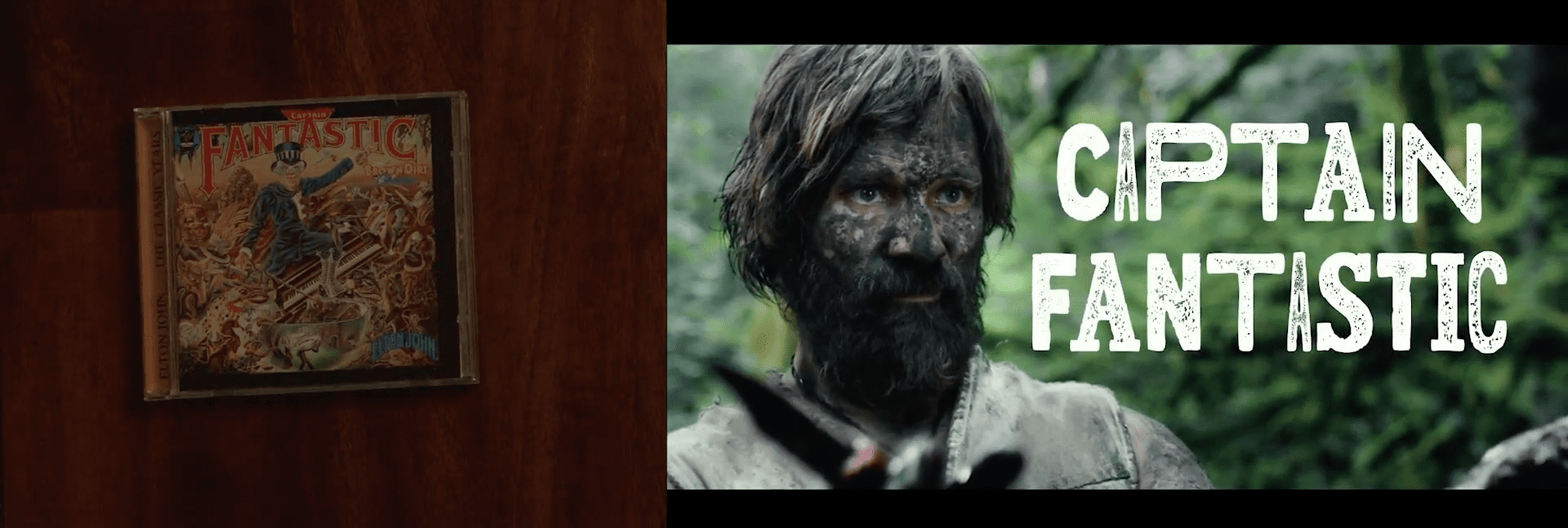
Captain Fantastic Reading List: An Unofficial Guide [WATCH]
When I saw “Captain Fantastic” last summer, I was mesmerized by the number of books and other learning materials presented in the background as pieces of the character’s alternative education.
This helped the movie feel extremely lived-in and made me want to expand my educational horizons. Getting home from the movie theater, I immediately searched online for some form of a reading list and tweeted and reddit-ed at writer/director Matt Ross to ask for some form of a list. Even reading the screenplay was limiting given that so many were strictly in the production design.
Seeing a void, I created my own "Unofficial Captain Fantastic Reading List" to the film as an entry point to becoming a philosopher king. Few films have inspired education so much as this one, and while you won’t find me moving to the Washington State backcountry anytime soon, we could all take a few pages from the Cash family book.
Many thanks to the numerous branches of the LA Public Library, as well as eBay, for making this compilation a reality:
The Unofficial Reading List:
 Captain Fantastic and the Dirt Brown Cowboy (1975) by Elton John
The Brothers Karamazov (2002) by Fyodor Dostoevsky
Guns, Germs & Steel: The Fate of Human Societies (1999) by Jared Diamond
The Fabric of the Cosmos (2004) by Brian Greene, Chapter 12: The World on a String

Middlemarch: a study of provincial life (1872)
by George Eliot
“No Fractura Hidráulica” T-Shirt
Marxism in Our Time (1973) by Isaac Deutscher
Trotskyism and Maoism: Theory and Practice in France and the United States (1989) by A. Belden Fields

Stalinism: Russian and Western Views at the Turn of the Millennium (2005) by Alter Litvin and John Keep
Maoism in Action (1974) by C. L. Chiou
Three "Whys" of the Russian Revolution (1997) by Richard Pipes

Scientific American - The Neuroscience of Habits (June 2014)
Scientific American - A Crisis in Physics? (May 2014)
E-Book - Fascism vs. Capitalism by Llewellyn H. Rockwell Jr. (2013)
Pol Pot: Anatomy of a Nightmare (2005) by Philip Short

Coolidge (2012) by Amity Shales
Lolita (1955) by Vladmir V. Nabokov
National Geographic - Wild Pets: The Debate of Owning Exotic Animals (April 2014)

Grammar - “Unique and other modifiers”
Titanic Soundtrack, “My Heart Will Go On” (1997) by James Horner & Celine Dion
The Hammer and the Cross (1980) by Michael Scott Rohan
Noam Chomsky has written many books and has contributed his views in countless places. Here are the books featured in the video:

The Chomsky Reader (1987) by Noam Chomsky
The Chomsky Effect: A Radical Works Beyond the Ivory Tower (2007) by Robert F. Barsky
Because We Say So (2015) by Noam Chomsky

Who Rules the World (2016) by Noam Chomsky
Noam Chomsky: Class Warfare, Interviews with David Barsamian (1996)
Understanding Power: The Indispensable Chomsky (2002)

The Joy of Sex (1972) by Alex Comfort
Nike, Goddess of Victory by Wikipedia
The Gods and Goddesses of Olympus (1994) by Aliki
Killer Instinct - Xbox One (2013)
Maus (1980) by Art Spiegelman

The United States Constitution (Book shown by Kristal Leebrick)
The U.S. Bill of Rights (1789)
The Story of Citizens United v. FEC by The Story of Stuff (2011)
ACLU Poster - Click here to buy

Samadhi: Personal Journeys to Spiritual Truth (2000) by Derek Biermann
Bach - Goldberg Variations by Glenn Gould
Yo-Yo Ma - Cello Suites inspired by Bach
Star Trek: The Original Series (1966-1969)

The Pocket Book of Baby & Child Care (1947) by Dr.
Benjamin Spock
The Indian Runner (1991) dir. Sean Penn starring Viggo Mortensen
Buddhism: World Religions (many different publications)
The Holy Bible (many different publications), Matthew 18 verses 15-20

Republic by Plato (380 BCE) - translated by Robin Waterfield (1993)
A cover of Guns N Roses’ “Sweet Child O’ Mine” from Appetite for Destruction (1987)
ACLU (2nd time seen in film) - Click here to donate

Jesse Jackson for President, 1988 by Wikipedia
The Nez Perce Indians and the Opening of the Northwest (1965) by Alvin M. Josephy
More context via NPS
Full transcript: Treaty with the Nez Percés, 1855
The Unofficial "Captain Fantastic" Reading List has also been featured on No Film School and First Showing.
'Berlin Syndrome' Review: An Unsettling White-Knuckle Thrill Ride
This review previously ran on January 22, 2017, during the Sundance Film Festival
The premiere of Cate Shortland’s new film, unfortunately, may have been overshadowed by two major faux pas and technical errors that occurred during the screening.
And while some who attended may choose to make those accidental errors the headline, this film is more than worthy of talking about beyond that unwanted attention.
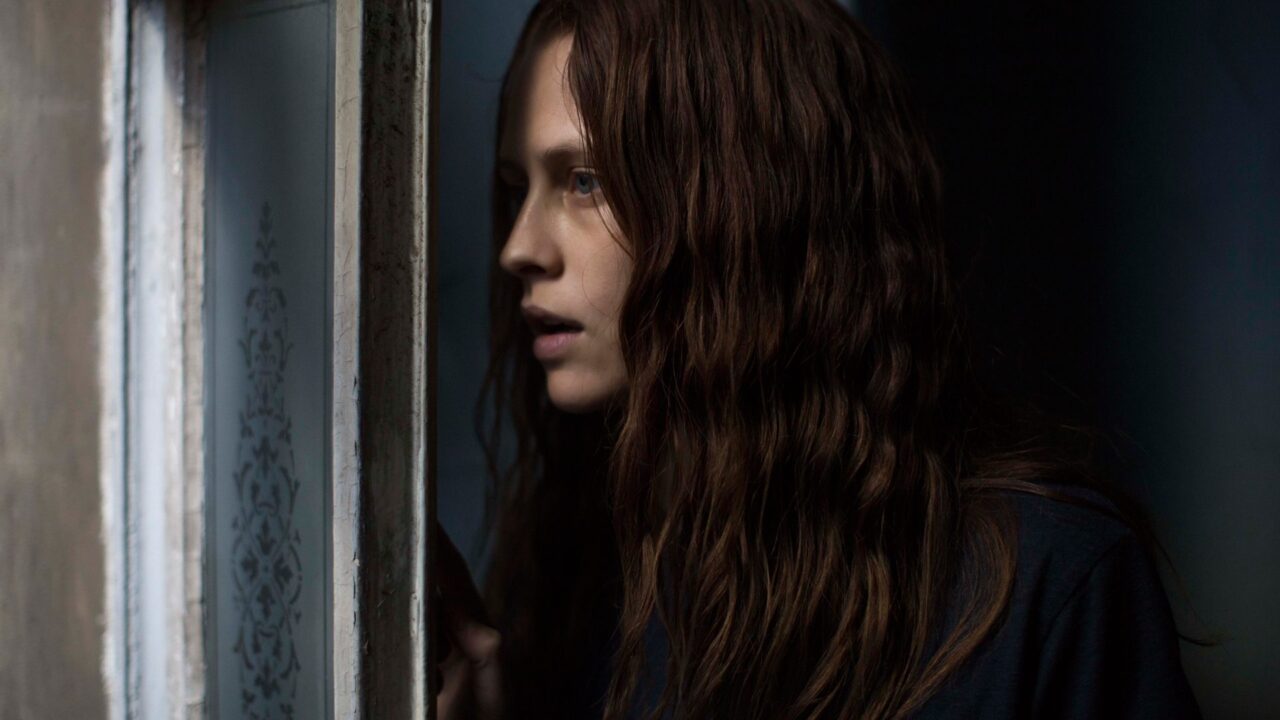
Berlin Syndrome is the story of an Australian backpacker Clare (Teresa Palmer) who finds her way into a one night stand with a savvy local German named Andi (Max Riemelt) that ultimately turns into a possessive, dangerous relationship she isn’t able to walk away from. It’s a tense, painful journey as Clare becomes completely trapped in this dysfunctional relationship. For the majority of the duration, we watch as she grapples with attempts at escape and also an insidious acceptance of the grim, sickening fate that she may have found herself in.
The title, presumably, is a play on the colloquialism ‘Stockholm Syndrome’ in which we too find ourselves in Clare’s situation over the course of the film– equally unable to break out of her circumstances. The resulting story becomes a visceral and emotionally thought-provoking thrill ride from start to finish.
On top of being a thriller that’s impossible to not get engrossed in (and wishing for an escape the entire time), the story manages to work in some greater subtext...
On top of being a thriller that’s impossible to not get engrossed in (and wishing for an escape the entire time), the story manages to work in some greater subtext that I hope to explore further as the film finds release: the city of Berlin is a defining character here, representing a city with a totalitarian past. Another detail (thanks to the brief Q&A) is that Berlin is a city filled with young men who were abandoned by their mothers. These layers establish themselves as directly building on the movie’s setting. This ends up refining the film not only as a late-night thriller but also a nuanced, complex look at a tumultuous city in the wake of a divided past. Within this, Andi’s apartment, the pivotal location, also serves as a continual metaphor for both the city’s history and what the character goes through in this story. These elements make this a film immediately worthy of revisiting as it has time to reach the cultural zeitgeist.
For combining a white-knuckle mental thrill ride with more profound undertones, Berlin Syndrome stands out as an early film to watch from Sundance 2017. The film was pre-bought by Netflix, so anticipate this film as one to watch this coming year.
'Berlin Syndrome' is rated R for disturbing violent content, strong sexuality, nudity and some language. 116 minutes. Now playing at ArcLight Hollywood and on VOD.
'Guardians of the Galaxy Vol. 2' Review: A Fresh Take on a Familiar Storyline
Despite all of these different subsets of films within the Marvel Universe, Guardians of the Galaxy is arguably able to distance itself as the one that has cultivated its own identity.
We are nearing the 10th anniversary as well as the rumored end of Robert Downey Jr.’s breakout role in Iron Man, and the aftermath has proven that there are essentially two types of people: those who are going to see every Marvel feature no matter what, and those who lost interest sometime during the past 14 movies (with 8 more scheduled over the next 3 years). Indeed, with so many sequels, characters, and connecting storylines, it now seems so long ago when The Avengers (2012) was one of my favorite films of the year. Yet at this point, like a multi-season TV show, I’m far enough into the Marvel Universe that I plan to stick it out until the ‘finale’ scheduled for 2019.
Despite all of these different subsets of films, Guardians of the Galaxy is arguably able to distance itself as the one that has cultivated its own identity. Playing more like a superhero version of Star Wars, Guardians spins separately from the Avengers characters by making their own rules while still under the Marvel umbrella.
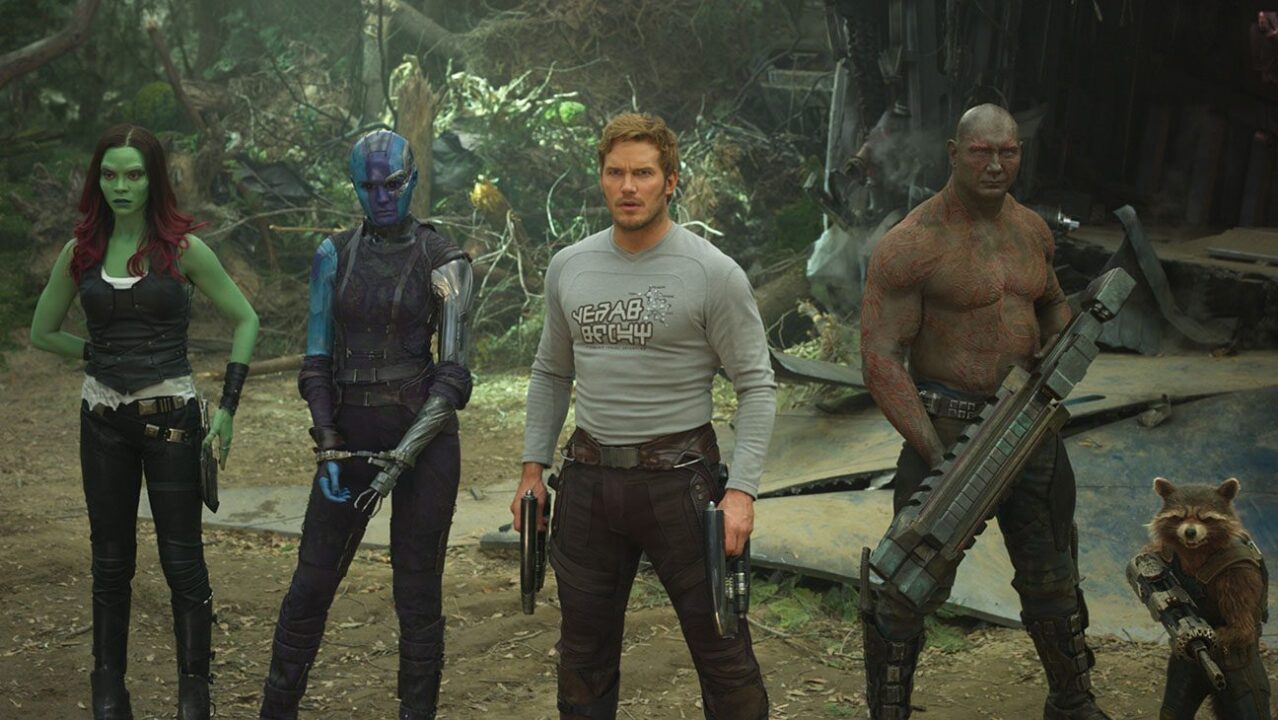
Guardians of the Galaxy Vol. 2 catches us up to speed with all the characters we met in the original. If you liked Vol. 1, you will certainly like this one: it’s a comforting return to form with all the signatures: zany aliens, jabbing banter, and a great soundtrack. But I’m happy to say that unlike other Marvel sequels, which retread their characters entirely, writer-director James Gunn has found interesting ways to develop each character a bit further. There’s a great rivalry between the heroic Gamora (Zoe Saldana) and her mostly villainous sister Nebula (Karen Gillan) that is more at the center of this film than the previous one. Drax (Dave Bautista), a standout from the first film, continues his same brand of humor but with a little more self-awareness. And Baby Groot (Vin Diesel) is impossible not to love. It’s impressive that within this ensemble, each actor brings a freshness to the role while developing their respective character.
...Unlike other Marvel sequels, which retread their characters entirely, writer-director James Gunn has found interesting ways to develop each character a bit further.
Another praiseworthy note is that this universe has a great sense of color. Every alien comes in a variety of bright yellow, blue, and other eye-catching hues, making for a stunning visual much richer than a comparable action/adventure movie. The CGI is present but there are plenty of characters in full make-up and practicals rather than being entirely artificial, and this combination works seamlessly here.
While I was annoyed that the trailer announced Kurt Russell as being Star-Lord aka Peter Quill's (Chris Pratt) father, Emperor J'son (a fact that seemed like a spoiler), it actually proved more enticing, taking the audience on the journey of their new relationship as a father and son. Like the rest of the ensemble cast, Star-Lord and J’son are given challenges that enhance and further develop their characters. As formulaic and familiar as it all may seem, Guardians of the Galaxy Vol. 2 is fresh enough for those invested in the Marvel universe. After seeing this installment, I am eagerly anticipating the next time these characters mesh with The Avengers on the big screen.
Guardians of the Galaxy Vol. 2 is rated PG-13. 121 minutes. Opening this Friday in theaters everywhere.
'Citizen Jane: Battle for the City' Review: Celebrating an Urban Visionary
As I write all this, I realize I’m hardly even reviewing the movie, but sharing some of the insight and revelation I’ve gained by watching it.
A primary purpose of nonfiction filmmaking is rooted in education and a deeper understanding of a topic. So while film aficionados are often looking for boundary-pushing methods and devices to tell these stories, there is something inherently important about the simple matter of using documentary as a tool of education. And a documentary like Citizen Jane: Battle for the City is an education that we all could stand to gain from.
The ultimate shake-up experienced by watching Citizen Jane is that the design of the cities we inhabit does not have to be this way. Many cities are constructed and planned so poorly for the masses, or done in a way to make a handful of people wealthy. Two examples I accept as "must-haves" for cities are: busy/wide avenues for cars and massive high rises. These are both concepts designed to inflate the wealth of the auto and construction industries and result in a massive degradation of public spaces and the essential human interaction that comes from it. And not every city depends on either to grow large and create inhabitable spaces.
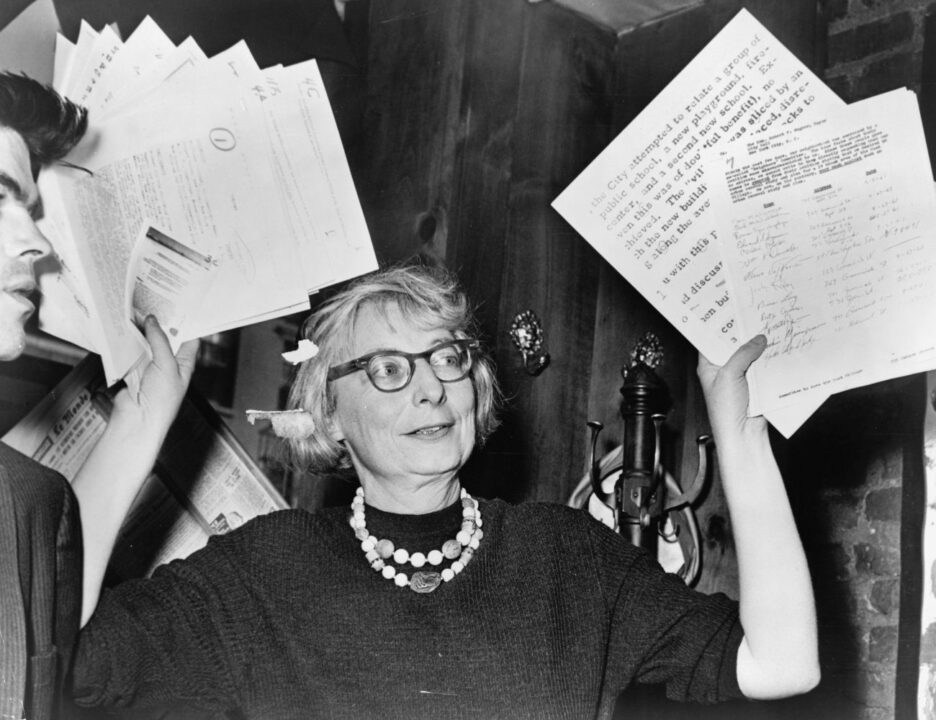
This historical doc hones in on a period post-WWII when modernism was all the rage and a handful of elites were attempting to draw the city of the future, which turned out to be a design that looked nice from the top down but had no bearing on what the people inhabiting it would actually find useful. In opposition, an individual named Jane Jacobs called out how disastrous these ideas were. Jane Jacobs was a person of the people: she lived in a city, she took the time to see how it operated. Her famous book The Death and Life of the Great American Cities was a carefully researched look at how cities operate as living organisms and ecosystems that grew character and functionality from the bottom-up, rather than some master plan. These are concepts I have never fully understood and had accepted the way cities are designed as a standard when in fact they are counter to these arguments. Alas, my sister, who is a published graduate student in geography studies, undoubtedly has been aware of Jane Jacobs’ philosophies for years at this point. Seeing everything laid out here is an education I had yet to experience, and I imagine is true of most city dwellers.
Her famous book The Death and Life of the Great American Cities was a carefully researched look at how cities operate as living organisms and ecosystems that grew character and functionality from the bottom-up, rather than some master plan.
The film follows a few of the battles Jane waged against urban tycoon Robert Moses, who attempted to eradicate affordable housing and public community spaces in favor of massive high-rise projects and vast highways. Today, cities (especially Los Angeles) are so car-dependent it’s hard for us to imagine a design where they aren’t needed. The most well-functioning cities are not. Through a series of expert interviews and archival images, we get a sense of the formation of many cities that were designed to be modern, yet most of which ended up being failures and becoming dilapidated. It’s inspiring to see what people can do to oppose terrible legislation decisions, and I only wish that I personally knew how to stand up as an activist in the tangible way Jane Jacobs did. Despite seeing some of her successes, this film is by no means a how-to.
As I write all this, I realize I’m hardly even reviewing the movie, but sharing some of the insight and revelation I’ve gained by watching it. There is much to be learned from watching this film and it will leave a profound look at how cities function and operate, something we all can benefit from. In my hometown of Denver, Colorado, mayor Michael Hancock has been notorious for approving so-called ‘modern’ high rises. Like Robert Moses in this film, there is much money to be made. And yet after seeing this movie, there is evidence that suggests how detrimental these are toward the community and the vitality that makes a city feel inhabited. It’s a straightforward think piece, but one that feels extremely beneficial to have walked away from, and for that alone, I implore all fellow urbanites to check out the education of Citizen Jane.
'Citizen Jane: Battle for the City' is not rated. 92 minutes. Now playing at the Nuart Theatre.
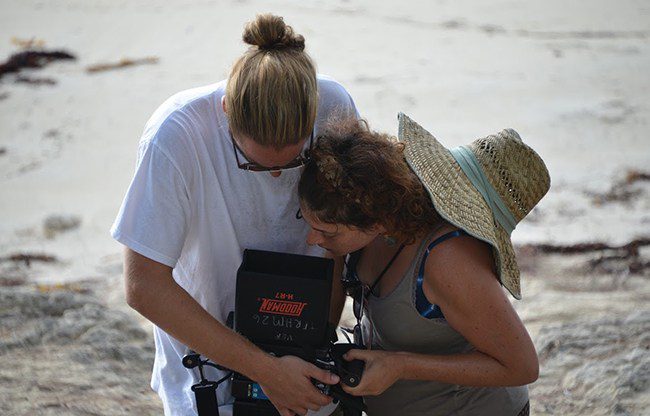
Director Logan Sandler and DP Daniella Nowitz on Colorless Paradise in 'Live Cargo'
We've been quoted as saying "Live Cargo" is "An unforgettable filmmaking debut," and after talking to director Logan Sandler and cinematographer Daniella Nowitz, we even further emphasize that statement. In our exclusive interview, which took place the day before the film's Los Angeles release (now playing at Arena Cinelounge Sunset), Sandler and Nowitz talk about the beginning of their creative relationship at AFI Film School, their disregard in following the traditional "classic" film structure, and the decision to shoot the picturesque island of Bimini in black and white.
The film has such a distinct visual style, and I'm always interested in the director/DP relationship. Have you two worked together before?
Logan Sandler: Yeah, we did our AFI thesis film together called "Tracks." How AFI works is you collaborate with your crew for about a year prior to shooting, so Daniella and I already had a visual style and vocabulary already established prior to us making "Live Cargo."
Daniella Nowitz: I remember being so impressed by Logan at AFI because I worked on one of his sets in my first year and we had this entire conversation about [Michelangelo] Antonioni. None of the other directors really cared who Antonioni was, and the school is so focused on American cinema, so it was really exciting to meet someone who also liked European cinema.
What was the leap like going from a short film to a feature film?
LS: There are so many other things at play when making a feature. Having Daniella onboard made that initial process of bringing the script to visual light was familiar.
DN: In the short, we got to experiment visually, and a lot of those things we took to the next level in the feature. Mostly, the long handheld moves that track with the character and not cutting away a lot. We also got to shoot with the same actor, Lakeith Stanfield, which was really helpful because I already knew how he would photograph and move.
"We ended up turning efficiency into a creative strength." -Logan Sandler

It sounds like you had a great director/DP/actor dynamic. How did the three of you work together?
LS: My process with Lakeith is very organic and intuitive. We've established a sense of trust between actor, director, and camera. He was very in tune to understanding how we worked and what we wanted from him.
DN: Knowing that Logan wanted these long, flowing handheld shots, I was able to bring on my camera operator, Julián Estrada, who also worked on the short. I am 5 feet tall... haha. I can operate handheld but when you have to do long tracking shots of people who are taller, I need to work with an operator. Julián is amazing, he also collaborated with us and was ready to do the craziest, longest shots.
Was the script ready when you signed on?
DN: There was a script, and I told Logan it was one of the most beautiful things I have ever read and I have to shoot this movie. I think we had first imagined "Live Cargo" as a more "classic" film with "classic" structure, but when we got to the Bahamas, the place took over the story. In the best possible way! It really dictated so many of our decisions, including the black and white look and non-traditional narrative structure. That structure is one of my favorite things about the movie because I think it really reflects the experience of being on this island, the way life flows over you- like the waves of the ocean.
LS: Yeah, it wasn't necessarily possible to bring a dolly or other instruments we use to achieve certain cinematic moments. In order to achieve the authenticity of the location, we chose to use a handheld camera for a lot of the shoot because it opened us up to capturing the characters in their true self. It allowed them to roam freely without weighing them down.
DN: On a lighting level, we kept it very simplistic. We wanted the authenticity of the place, we didn't want to light this like a Hollywood movie. Whenever we could shoot without lights, like in a bar or in a club, we would shoot without lights. And it's not like we had a truck with a lift gate, we were on this island that has one main road that's very narrow at parts and not paved. There was no way we could ride around with [a ton of gear].
LS: We ended up turning efficiency into a creative strength.
I loved the decision to shoot in black and white, that's what made "Live Cargo" leave a lasting imprint in my mind.
LS: To be frank, one of the reasons why we chose to shoot in black and white, outside of our thematic, metaphorical, and other artistic reasons, was because after looking at our test stills with our collaborators, many times people would walk away from the images and the first thing they would remember was how blue the water was. That's not something we wanted to portray in the film. So there was confidence in the freshness and originality of approaching it in black and white.
DN: I still remember the moment Logan brought up the black and white idea. We had gone down to the Bahamas to location scout and shoot some test footage, and after watching the footage back, something felt off. I remember we were having a beer at the end of the day and Logan just said, "What if we just shot this movie in black and white?" As a cinematographer, my first reaction was like, "That's crazy! Look at where we're at, look at these colors!" After I thought about it for a minute, I knew that was it.
"...Logan just said, "What if we just shot this movie in black and white?" As a cinematographer, my first reaction was like, "That's crazy! Look at where we're at, look at these colors!'" -Daniella Nowitz

Is there anything you want audiences to know about the culture in the Bahamas?
DN: I've shot in almost 30 countries and I'm very used to going into a culture and absorbing it. What was different for me [in the Bahamas] was the feeling of the place, the feeling of island life. Everybody knows each other. The day we left the island, people were crying because they were so sad to see us go. We became a part of the fabric of this island. For me, the real experience here is going to a tiny place and becoming a part of it.
LS: Yeah, everybody in the crew put away their laptops... no one was on Facebook or Twitter or Instagram because the atmosphere there opens up to a lot more self-reflection. Myself, the actors, the crew- there was a lot more self-reflection during the shoot even though we were busy as shit. I think everyone grew, and became a better person in a way, once we left the island because of that.
After wrapping up the shoot for a day, how would you prepare for the next day?
LS: Oh it was crazy, insane. I'm not gonna lie, it was like out of one of Werner Herzog's crazier documentaries. There were a lot of issues with closing down locations and confirming locations for the next day. There were countless times when Daniella and I had scouted and confirmed a location, and about 50% of the time, once we got there [to shoot], the owners of the location wouldn't answer! So as far as planning for the next day of shooting, we always had to have a backup plan, and a lot of times, multiple backup plans.
DN: And because of that, we had to be ready to shoot any part of the movie at any given moment. It wasn't like a regular shoot where you know what scenes you're shooting in week one. We tried to do that as much as possible but we had to be flexible with the island. But for as hard as it was in the moment, in retrospect, some of the most beautiful moments in the film came out of those scenarios. Like the scene where Dree Hemingway is dancing in the club; we had a different location planned but we just came across that place and it was perfect. We literally just asked if we could come in and shoot and we shot the scene in about an hour.
"So there was confidence in the freshness and originality of approaching it in black and white." -Logan Sandler

Has anyone from the island been able to see the film?
LS: The local audience that has seen the film has received it very well. We screened at the Bahama Film Festival and won the top award there. What really blew me away was the night of our Tribeca premiere: Two of our locations were provided by the same family and they had been tracking the film since we left. On their own, they bought tickets to New York City, got a hotel, and were waiting at the film's premiere at the Tribeca Film Festival. They bought tickets and everything, they wanted to see it! It was definitely a film made by a community, I can say that.
Do you have any advice, specific to your roles as director and DP, for those working in independent film?
DN: The most important thing, in the same vein of what we've been talking about, is being flexible. Also, understand the importance of the collaboration process you're a part of. And having a good time! As hard as the shoot was, what made the actors and crew enjoy themselves and the locals happy to have us is that we all did this shoot with so much love. It sounds like a cliche but it's really true.
LS: That's well said! I would echo those same sentiments. The only way to get an indie film done is with your team. There will be a lot of trials and tribulations along the way and it's not going to be easy, but if you're determined enough to make it happen and believe in your heart that what you're doing is really what you should be doing, then the sky's the limit.
'Salt and Fire' Review: Werner Herzog's Latest is Bizarre. Very Bizarre.
Whatever plot exists in the film is essentially is a veil for a handful of characters to speak in Herzog-ian dialogue.
Midway through Salt and Fire, a character who has been in a wheelchair for the entire film suddenly stands up and starts walking around. Laura (Veronica Ferres), our protagonist, says to him:
“Dr. Krauss. I see you walking. Is this a miracle?”
“No. I only use the wheelchair when I'm tired of life”
This is a taste of the bizarre dialogue from Salt and Fire. In addition to being nonsensical, it’s given such a wooden delivery it actually feels like a movie dubbed by someone who doesn't speak English. It's so bizarre, it had me wondering how aware the filmmaker was of the film's delivery– if this were a first-time filmmaker I would assume they had absolutely no idea what they're doing.
However, this is a film made by acclaimed filmmaker Werner Herzog, who just last year directed two top-tier, intellectually challenging documentaries. His career is full of artfully crafted (although certainly eccentric) works of cinema.
Yet with his latest outing, Salt and Fire, the further I watched, the more I began to theorize a most unusual thought: is Werner Herzog trolling us right now? Knowing what he is capable of and his recent work, it seems hard to imagine that he can watch this film back and say it’s great filmmaking.
Whatever plot exists in the film is essentially is a veil for a handful of characters to speak in Herzog-ian dialogue. In recent years, Herzog’s eccentric persona has become a bit of a caricature that he himself has embraced, because as he has said, saying big words with his Bavarian accent is a recipe for intrigue.
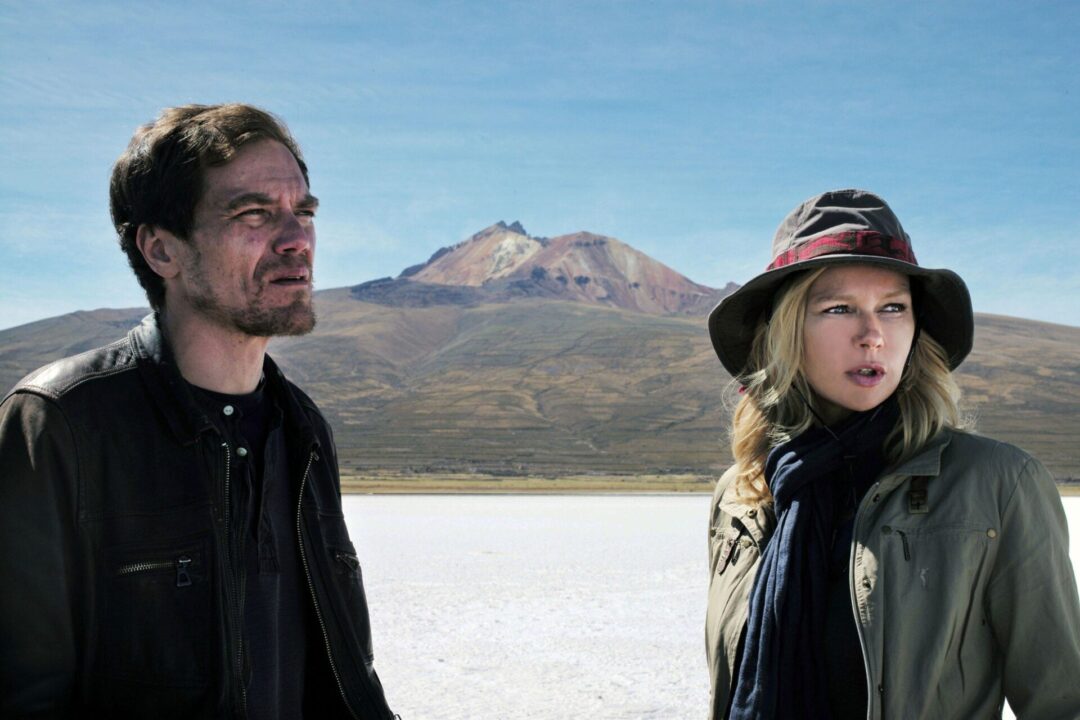
It’s even more bizarre when talented actors like Michael Shannon and Gael Garcia Bernal, who we’ve seen deliver powerhouse performances elsewhere, speak using Herzog vocabulary but in a robotic and nonsensical matter.
It’s even more bizarre when talented actors like Michael Shannon and Gael Garcia Bernal, who we’ve seen deliver powerhouse performances elsewhere, speak using Herzog vocabulary but in a robotic and nonsensical matter. One of the main characters, Dr. Krauss, is not played by an actor, but by an actual scientist, and his delivery is painfully bad but sounds normal because everyone else in this universe is speaking in such an unnatural manner.
Other clues suggest some sort of self-aware tomfoolery at foot. In one shot that takes place on an airplane, Herzog makes a director’s cameo sitting behind the characters on the flight. It becomes comical as the scene runs, in a single take, for well over 5 minutes with Herzog looming the background the entire time.
However, the moment that most assured me this must be trolling is when Michael Shannon, midway through a conversation about the earth and nature, breaks the fourth wall, looking directly at the camera and says the movie’s title. Salt and Fire. Any self-seriousness is gone with a moment like that.
Regardless of if Herzog is intentionally trolling us or not, the movie is frankly unwatchable. Thankfully it’s only 98 minutes, but this is the type of bad cinema that could make a casual moviegoer never want to enter their local indie movie theater again. Maybe, one day this film will be rediscovered as Herzog’s misunderstood commentary on the self-seriousness of the world. But more likely, it’s destined to live at the bottom of the 99-cent bargain bin section… amidst other pieces of salt… and fire…
'Salt and Fire' is not rated. 98 minutes. Opening at the today the Arena Cinelounge Sunset and on VOD.