

Review: 'White Shadow', 'Wrenched', 'Two Days, One Night (Deux Jours, Une Nuit)'
I was able to catch the last 2 days of the 10-day festival but still managed to see a great cross-section of festival movies. While Denver does not attract as massive of a crowd of industry folk, every film I saw had a full house of patrons, and there is interest here akin to the higher-profile festivals. Here are my thoughts on each one, as well as a bit on when their planned release is.

White Shadow (Germany)
Director: Noaz Deshe
Writers: Noaz Deshe, James Masson
Stars: Hamisi Bazili, Salum Abdallah, Riziki Ally
This is a festival thoroughbred, having already played at Venice and Sundance already, to name a few. A vérité style depiction of Alias, a young albino growing up in the outskirts of an unnamed city in Tanzania. The primary conflict is that as an albino, Alias is the prey of witch doctors, who cut up albinos and use them for outlandish potions and mysticism. His journey shows us all sorts of elements of a world that is completely foreign to us, but remains wholly individual and never tries to be the definitive “Africa story” that would be an easy route to take. Because of the film’s looser style, it requires extra attention from the viewer and doesn’t have a clear through line, but is compelling because of how otherworldly it feels. There isn’t a big takeaway or call to action, but the film’s expose cannot help but leave a mark. There are a few incredible sequences, including a betting scene and a sequence where the protagonists are digging through e-waste looking for salvageable electronics, but the collective whole still feels looser than it needs to be, and the stylistic elements of the film are not employed often enough to be the focus of the movie. White Shadow will most likely not be playing in US theaters anytime soon due to a depiction of animal cruelty that probably wasn’t fake (although is rather tame compared to any day at a US meat factory). However, as a festival film, it is intriguing and unlike anything else you will see, and for that alone it may be worth your time.

Wrenched (USA)
Director: MI Lincoln
Stars: Edward Abbey, Dave Foreman, Peg Millet
A small-scale environmental documentary with a big message, director ML Lincoln’s Wrenched is about the writer and radical conservationist Edward Abbey and how his message and legacy carried on after his death. Abbey is known for writing Desert Solitare and The Monkey Wrench Gang, both classic books for anyone who cares about wilderness and ecology, but also did some “night work” as he called it, involving tearing down billboards, destroying bulldozers, and other behavior all with the intention of stopping the destruction of the natural world. While neither are required reading, knowing the material will make the film that much more enjoyable, especially Monkey Wrench Gang, which turned out to be much less fiction than one would believe. The documentary has a great deal of archival footage which makes it easy to see the movement and get excited about what is going on, and the film chronicles from the 1970’s until present day but never feels like too broad of a scale to cover.
One of the key elements of Abbey’s work that made it so successful was that he made being an environmentalist fun and something that people should want to do instead of a chore or obligation. There is something truly special about the wilderness and its unfortunate that fewer people with each passing generation will have access to it, a message the film will not let you forget. There is no definitive villain shown here either: it is the mass corporations building dams and mines that permanently scar the natural world. It is hard not to see this movie and be moved to action, and Lincoln does a great job of inspiring young people today rather than seeing it as a lost cause. Edward Abbey had a spirit that continues to leave a legacy, and despite being labeled an “ecoterrorist,” his principles are about respecting the natural world and realizing how imperative it is for our long term survival, something often overlooked. Wrenched is not meant to be provocative, none of what has happened should be shocking, but is actually meant to be moving and entertaining, at which it succeeds. The film is still making the festival rounds so may not see distribution until next year, but if you are interested in learning more, check out the website and you may even be able to request a screening! http://wrenched-themovie.com/

Two Days One Night (Deux Jours, Une Nuit) (Belgium)
Director: Jean-Pierre Dardenne, Luc Dardenne
Writers: Jean-Pierre Dardenne, Luc Dardenne
Stars: Marion Cotillard, Fabrizio Rongione, Pili Groyne
Lastly Belguim’s official submission to the Academy Awards, Two Days One Night, which also screened at AFI Film Festival. The film centers around Sandra (Marion Cotillard), a married mother who is overworking to make ends meet, but has just been fired from her job. Her foreman has agreed she can get her job back if the majority of her co-workers vote yes to her return. But, there’s a catch: if she gets her job back, all of her 16 co-workers will lose their bonus. From there, the film is a depiction of Sandra’s journey of visiting all of her co-workers asking them to vote in her favor. What sounds simple enough turns out to be a fascinating display of the human spirit and the insidious affects money has on anyone who is working to make end’s meet. Every one of her co-workers has a different response to this Hobson’s choice that she presents them with, and the story builds extremely well throughout. What makes the film so effective is the style that is employed. Rather than favoring conventional coverage, with a mixture of close-ups and cuts between dialogue, every interaction Sandra has is an uninterrupted take, and the result is stunning. There is no flashy shot that draws attention to this effect – in fact, as a regular film viewer it would be easy to overlook this directing feat. There is no clear reason as to why this technique is used, but because it is so effective at drawing the viewer in, it doesn’t really matter. What matters is that when you strip the film down, it is about authenticity and human experience, and Cotillard brings that to the fullest. It is not an ostentatious showcase of acting range, so, unfortunately, she might be overlooked come awards season, but instead she is on point at displaying the emotional exhaustion of a person in her state. This is as relatable of a film as they come, and touches on experiences that everyone has had at some point. Without a doubt, this is one of the finest dramas of the year. Two Days One Night played at Cannes and Toronto earlier this year, and will get a limited release on December 24th.


Review: 'Punch-Drunk Love'
There’s a common feeling when you start watching a movie on Netflix. As the movie begins, you’re still adjusting the position where you’re sitting, the volume, the brightness. It’s usually a little harder than a movie theater to dive right into a movie. In my own case, when I first watched Punch-Drunk Love on Netflix, I was still just getting into the movie when less than 5 minutes in, a random, chaotic event immediately sucks in your attention. The moment might feel like a gimmick, but from that point forward, you’re going to be engulfed in the movie.
Barry Egan (Adam Sandler, but hold your groans for a moment) is caught up between his deadbeat job and overwhelming pressure from his seven daunting older sisters. He has no connection to anybody and is lonely and confused beyond rational measure, and at times he is prone to violent outbreaks. He tries calling a phone sex line just to feel some sort of human connection, but to no avail. Suddenly, Lena (Emily Watson) enters his life, and for the first time he begins experiencing love and human connection but has no idea how to handle it.
Rather than getting too caught up in reality, the film flows with a poetic, fantastical grace. Elements are hyperbolic, but doesn’t everything feel that way when you first fall in love?
Prior to making this movie, director Paul Thomas Anderson made two sweeping, 3-hour-long ensemble pieces, Magnolia and Boogie Nights, both hailed as master works. Having maxed out his energy on that type of movie, he challenged himself to create the exact opposite: a 90-minute movie with essentially 2 characters. Rather than getting too caught up in reality, the film flows with a poetic, fantastical grace. Elements are hyperbolic, but doesn’t everything feel that way when you first fall in love? This is a classic example of the rare film that is style over substance, yet succeeds in gripping your emotions. Rather than pretending that the audience doesn’t already have an opinion on Adam Sandler (positive or negative), Anderson recognizes the actor he is working with and utilizes it, playing up Sandler’s zany caricature to express the frustration inside of him. There is no better sign of a master director than one who can take any actor and mold an iconic performance from them. This is just one example of how much the film defies expectations, and throughout the movie, we take twists and turns both in story and in style, but we are rooted in a passionate love story to stronger heights than most romantic films reach taking a conventional approach.
I have returned to this film multiple times as I’ve grown up myself. It’s short enough that it doesn’t require the same commitment many great movies demand to watch, one of the reasons it’s perfect for a Streamable Sunday. Instead, its simplicity matched with its unconventionality are so captivating and intriguing, and like a Rorschach picture means something different to anyone. Personally, I am hard pressed to find a romantic film that had a more moving impact on me. This is one of the first films that I ever streamed on Netflix. Today, it remains one of the absolute best.
https://www.youtube.com/watch?v=VNeZi1y_v88
Review: 'Still Alice'
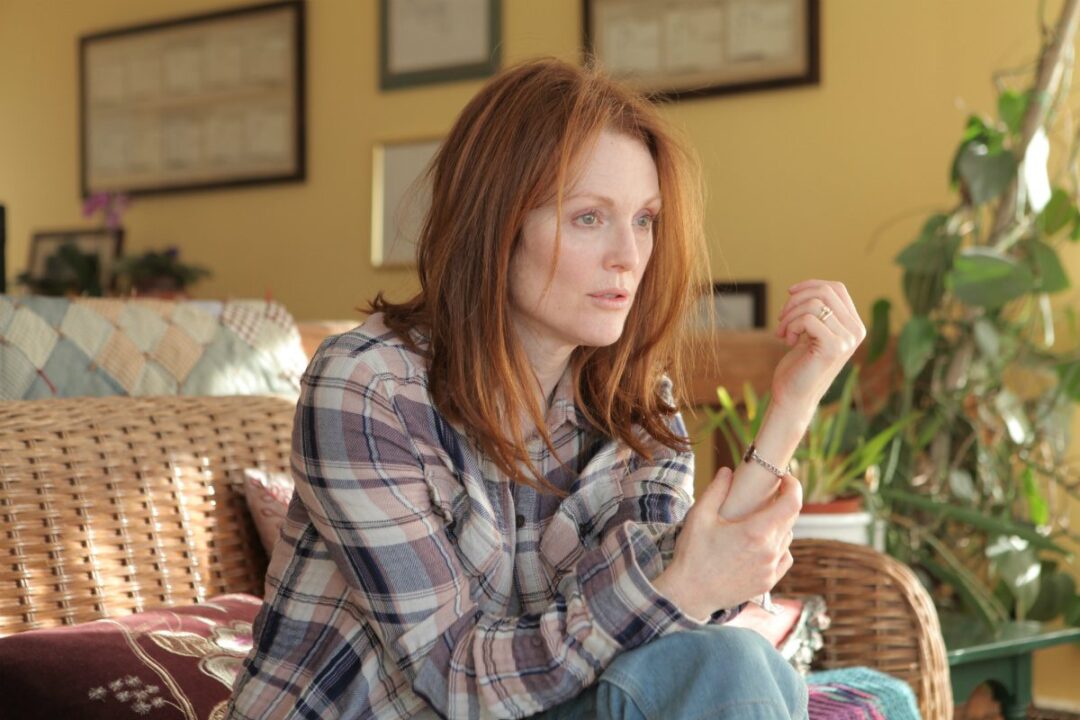
Alzheimer’s is a disease associated with old age and years beyond the golden years, so when renowned professor 50-year-old Alice (Julianne Moore) finds her day-to-day memory occasionally failing her, she has reason to be alarmed, and her worst nightmare is all but true.
The film takes a few unique choices, mostly in what parts of her mental crippling it chooses to show and the ones that it omits. There is a lot to be said about Julianne Moore, whose performance is so natural and smooth that it feels more like watching a relative than watching a major movie star. She controls every scene of the movie, notably a showstopper about 2/3 of the way into the film that evokes emotions in everyone regardless of your experience with Alzheimers.
It’s frustrating how flat and generic everyone else seems next to Julianne Moore. One exquisite performance can only carry the movie so far.
Beyond her performance, however, there is little to say about the film. It doesn’t aim to tackle very much and leaves all of the supporting cast, including Alec Baldwin, Kristen Stewart, and Kate Bosworth with one-dimensional characters who are little more than their two-word descriptors (aspiring actor, tenured professor, expecting mother). In fact, it’s frustrating how flat and generic everyone else seems next to Julianne Moore. One exquisite performance can only carry the movie so far.
Overall, the film is not particularly challenging or covers any new material. It will illicit emotion given the subject matter of the film, and it doesn’t do anything poorly. Instead, it just left me feeling like there could have been much more substance and story beyond this one particular life event. While Julianne Moore will certainly be an Oscar nominee and may even find herself with a victory, there are no other elements of the film that I see as being outstanding or worthy of recognition.
https://www.youtube.com/watch?v=ZrXrZ5iiR0o
Review: 'Red Army'
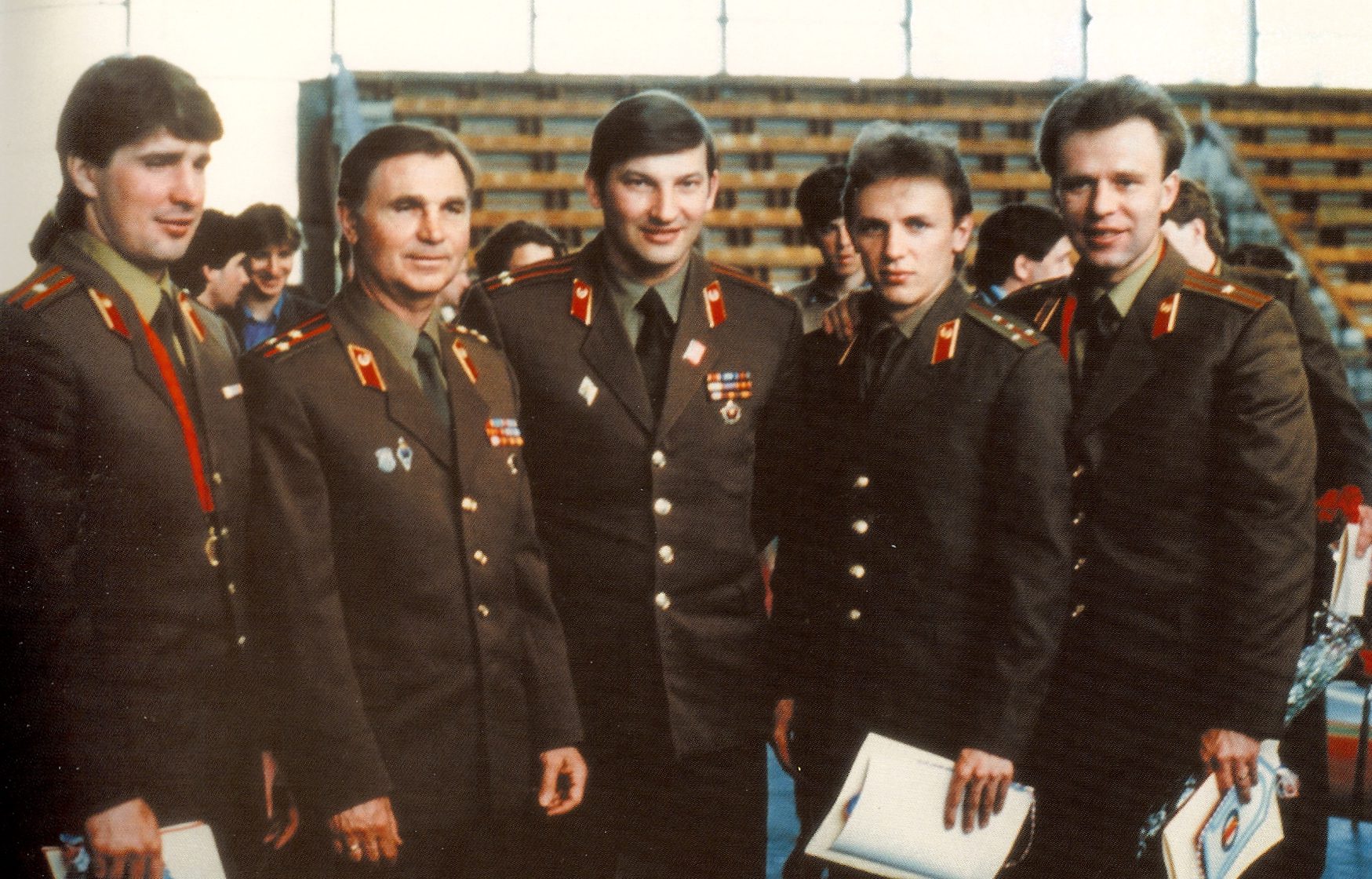
When the word documentary is used, the assumption is that it will be boring or serious, but in the case of Red Army, neither is entirely necessary. Nearly everyone is familiar with the movie Miracle and perhaps aware that it depicts an underdog story about the US overcoming the menacing Soviet Union in a winter Olympics. Red Army asks, and subsequently answers, “What if the other side of the story was even more interesting?”
The primary subject of the film is Slava Fetisov, who was captain of the Red Army Soviet Union hockey team. Starting out as a determined young boy and going all the way up to where he is today, his hockey career is nothing short of incredible. His interviews anchors the film tremendously with a great mixture of humor, emotion, and overall willingness to share his life experience. As Fetisov goes through his personal history, we see the parallel story of the Soviet Union as a whole, and he is the perfect representative of what the Soviet experience was like at that time. The reason the film works so well is because hockey is a narrow enough subject to dive into, but because of the value and the cultural connection hockey has to the Russians and former Soviets, it helps make sense of bigger political messages.
The reason the film works so well is because hockey is a narrow enough subject to dive into, but because of the value and the cultural connection hockey has to the Russians and former Soviets, it helps make sense of bigger political messages.
It’s rare that a film covers a serious topic without turning it into something drab, but Red Army manages to find fun within the entire story, in large part due to Fetisov’s off-beat interpretation of the interview questions and occasional language barrier. The film is also strongly boosted by the sport of hockey itself and a mass of great archive footage strung together to remind you how exciting this sport is. It also manages to educate about the difference between the Soviet and American hockey styles and why one was more successful, without coming across as a coaching video.
Overall, the film feels incredibly well put together, covering an ideal scope of material and still representing something larger. It is informative, engaging, funny, and even at times quite heartfelt. Red Army is not an attempt to celebrate the Soviet Union, nor is it saying how awful of a republic it was. Instead, it takes the people, like Fetisov, and shows just that: they are individuals with emotional range just like us, and they have a story worth listening to. I just found out that this film won the audience award at AFI Film Festival, where I saw it. I am not remotely surprised; above all else, this is a film that was meant to be entertaining and worth viewing for all.
https://www.youtube.com/watch?v=a_euhvZQMaw
Review: '21 Years: Richard Linklater'
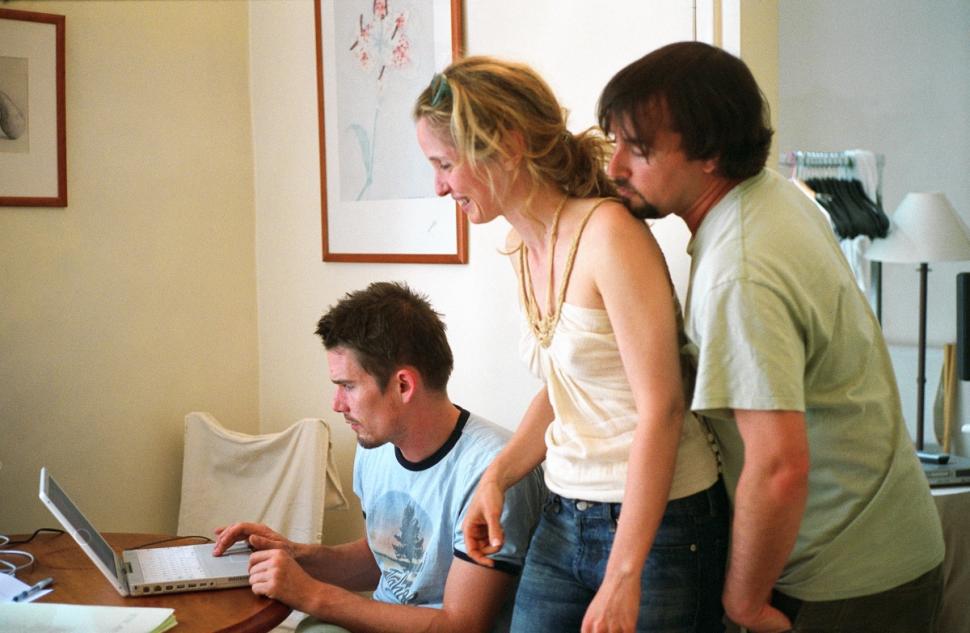
Richard Linklater is a director whose name has not become widely recognizable in the likes of Spielberg, Tarantino, or the Coen Brothers, but for anyone who studies film, he is a humble visionary whose eclectic filmography is truly that of an individual. With Boyhood on its way to Oscar recognition, the hope appears that his name will become more recognizable, and 21 Years: Richard Linklater is a collective tribute to the man behind such a variety of movies.
The inner workings behind many of Linklater’s films are gone through one by one as his favorite actors, many of whom he helped put on the map, reminisce in an interview about working with him. Ethan Hawke, Matthew McConaughey, Jack Black, and many more all have nothing but praise for their numerous collaborations with the director. Indeed, the film is inspiring to anyone who has dreamed of making movies in the same way that watching special features on a DVD used to be: it unmasks the wonder. In its brisk 78 minutes, the film is nothing more than interviews and clips of movies, mixed in with a few animated transitions for those with a short attention span. It behooves you to have seen the following Linklater films that are highlighted: Dazed and Confused, the Before trilogy, School of Rock, The Newton Boys, A Scanner Darkly, Bad News Bears, Me and Orson Welles, Bernie, and ending with Slacker, the micro-film that got the engine running for both Linklater and modern independent cinema. If you haven’t seen any of these, this movie will serve you no good, and the more you have seen the more you can get out of it. The film also dips into his contributions to the Austin Film Society, which definitely could have been extended as it potentially is a powerful tale in and of itself.
Indeed, the film is inspiring to anyone who has dreamed of making movies in the same way that watching special features on a DVD used to be: it unmasks the wonder.
It’s a niche film, but as a big Linklater fan myself, I can’t deny my shared thorough inspiration from the director that all his peers have. If you are a lover of film, it certainly would be worth your time to check out his filmography. Especially with Boyhood now in release, it gives it a perspective. Some say it is his masterpiece, but I stand by Before Sunrise, Before Sunset, and Before Midnight as a perfect trio of films and quintessential Linklater. Either way, I still have more of his movies to see myself, and this film serves as a reminder that even his less acclaimed movies are not a waste of your time.
This documentary never aspires to stand next to these movies as an equal, but to honor them and the man who put them together. In no way does it care to be as innovative as any of them, but it instead shows just how much work Linklater has done, all the while maintaining a truly unique yet humble vision. It’s an enjoyable love letter to the writer-director and anyone who views it will glimpse the unique contribution to cinema that has come from this man’s filmography.
https://www.youtube.com/watch?v=DpnJC_ZUhOs

Review: 'Interstellar'
We’re in an era where cinema and media is heading toward smaller venues, with emphasis on Netflix and other small screen content. While so many high profile directors are turning their back on grandiose movies, writer/director/producer Christopher Nolan is still keeping the embers burning. And with Interstellar, Nolan’s follow-up to the legendary Dark Knight Trilogy, he reminds the audience that “quality blockbuster” does not have to be a paradox.
Two things I’ll share about my experience watching this film: first, I went in knowing as little as possible. The less you know the better - I will thoroughly respect that in this article. Secondly, I saw it in 70mm IMAX. Like The Dark Knight Rises, I find it difficult to imagine seeing this movie in any other venue: it takes full advantage of the massive ratio. There is no gimmick: every foot of the frame feels utilized in some shots, and in other moments the mass scale simplicity of these mega spatial images is an all-engulfing experience. One particular shot from the first half stands out in my mind, which out of context is almost completely surreal, but within the narrative is fully engrossing. Moments of the film even feel like the Space Station IMAX movie that came out in the early 2000’s. If you have to be persuaded to see the film in IMAX, you may not know what you’re missing: there are no other working filmmakers who respect the potential of the massive screen the way Nolan does.
[Interstellar ] fits snugly between Inception and The Dark Knight in the Nolan canon as a modern blockbuster classic worthy of acclaim, and is undoubtedly the most emotionally charged project he has accomplished to date.
While the big points of the film are in space, what makes it work so well is how grounded the film is. We meet Cooper (Matthew McConaughey), a single father whose dream career as a space pilot was terminated after Earth’s resources began running out (the environmental component is only enough to get the story going), forcing him to be a farmer in a modern Dust Bowl. As you can imagine from the title, a turn of events brings him at the help of one big mission: to find hope for humanity deep in space.
In order to take this dream mission, he has to make the gut wrenching decision of leaving his children behind. The antagonist of the film is actually time itself: the longer and further we go into space, the harder it will be for the characters to ever return home. If you doubted that McConaughey deserved his Oscar last year, your skepticism will be silenced: here we see both a movie star and a driven actor, and his performance carries the film’s entire weight. Through his performance the film has emotional material that is rare for a blockbuster. The thought of missing out on precious time with loved ones is heart-wrenching for anyone, and while the long journey and risk of never returning has always been a touchstone of space adventures, never before have these heartstrings been pulled so poetically.
Along with the emotional weight of the film, the journey is loaded with surprises and pure fun as a good blockbuster should be. Over the three hour runtime, the film expertly balances heavy science and actual quantum physics without completely alienating the audience, and keeps us on the edge of our seat with tension and suspense, no small feat. Some suspension of disbelief is needed at first, but once in space, the movie’s logic holds up enough to enjoy the entire film. By an hour in, the scenario is gripping enough to sustain the rest of the movie, thanks to the combination of some well-placed thrills equally matched with the emotional component. With that balance, it’s hard to imagine a more satisfying cinematic experience than Interstellar. Regardless of if you think it’s a masterpiece, this is a film that begs to be discussed, picked apart, and analyzed. It may not become the definitive Nolan film that hype led it to believe, this fits snugly between Inception and The Dark Knight in the Nolan canon as a modern blockbuster classic worthy of acclaim, and is undoubtedly the most emotionally charged project he has accomplished to date. For all film fans, Nolan is a legend, and his prowess here continues. Like the space explorers in this film, one cannot help but hope for more in the future.
http://www.youtube.com/watch?v=0vxOhd4qlnA
Review: 'My Old Lady'
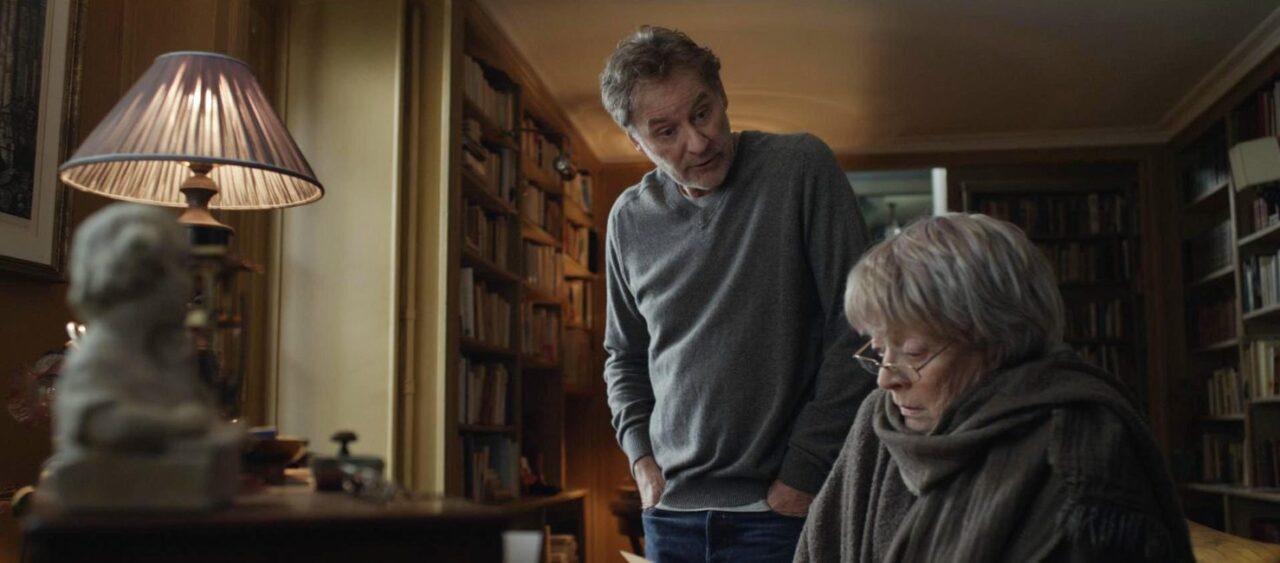
Based on a play by the film’s writer/director, My Old Lady follows Mathias (Kevin Kline), a penniless and depressed New Yorker, who's just inherited his father’s beautiful Parisian apartment, or so he thinks: when he arrives he discovers it is inhabited by 90-year-old Madame Girard (Maggie Smith) under a viager contract, meaning that until the old woman dies, he has to pay her a month sum, an old-fashioned system only known to France. Drama and comedy ensues as the odd couple temporarily reside together, along with Girard’s middle-aged daughter Chloé (Kristen Scott Thomas).
About a third of the way into the film, more about the apartment is revealed along with Madame Girard’s history, forcing the protagonists to come to terms with their pasts and decide how to best move forward. Once this shift occurs, the film swiftly transitions from carrying the light-hearted charm of the old lady to covering some serious personal struggles that the characters face. While the film is about middle-aged and elderly people, the primary topic is coming to terms with resentment toward parents, as each of the characters has lived with angst over all the pain that their parents thrust upon them.
While it certainly will not be the most moving drama of the year, My Old Lady connects with audiences easily by dissecting real and authentic familial issues.
It’s clear from the film’s setup that this is closely based on a play. There are a handful of added scenes that take place outside of the apartment, but even a casual observer won’t find it hard to notice that all of the key dramatic points happen within the confines of the French flat. While the painful situations that the characters have faced feel authentic, the unraveling takes a little longer than what would be best fit, both in screen time (the film clocks in just shy of 2 hours) and in movie time (you’d think that the characters would have faced these demons before reaching their fifties). This is a case where most of the dramatic dialogue between the three protagonists play a little over timed and start to feel redundant. That is not to say that each actors don't work well with the material. Kline is the focal character, and while some of the outrages feel melodramatic (likely better suited for the stage), he still feels comfortable within the role. Maggie Smith starts out as mere comic relief, but as the story goes on her character carries more dramatic intrigue than actual humor. And Kristen Scott Thomas, who has given a number of terrific performances albeit not in widely-seen commercial films, carries a fragile performance with grace and rich emotion.
While it certainly will not be the most moving drama of the year, My Old Lady connects with audiences easily by dissecting real and authentic familial issues. It will especially carry weight among older audiences, who will lavish at Maggie Smith’s fun yet balanced performance. How the film plays at Toronto Film Festival will determine if the performances are viewed as Oscar prospects, but personally I don’t see this film going that route. Regardless, the film is full of charm and fulfills what audiences will expect from the premise.
https://www.youtube.com/watch?v=Ck35r6E4VRM

Review: 'The Longest Week'
Ignoring the actor billing, The Longest Week centers around Jason Bateman as Conrad, who is essentially the antithesis of his famous character from Arrested Development – this time, he’s the one living off of his family wealth. He’s a 40-year-old who hasn’t worked a day in his life and struggles to find any meaning within it, given his skewed life perspective and general loneliness. His only friend is a similarly well off character, Dylan (Billy Crudup), and their relationship is filled with envious banter. Everything changes when they both fall for the same woman, Beatrice (Olivia Wilde), and over the course of one week (hence the title) we see as the love triangle rapidly shifts in various directions.
It’s clear that there is a great deal of films that this movie aspires to be within the wheelhouse of affluent protagonists reaching human epiphanies. The Royal Tenenbaums immediately comes to mind, especially given the emphasis on the narrator: both feature a non-character voice over to give them a more literary feeling. Even many elements of Woody Allen films such as Manhattan and Annie Hall come out in this movie. But unlike all of the films that it emulates, The Longest Week feels as shallow as its protagonist, who similarly strives for greatness in his writing, but lacks the drive or humanity to accomplish greatness. Rather than developing the characters organically, the film relies heavily on expository narration, which gives the scenes themselves significantly less impact.
Rather than developing the characters organically, the film relies heavily on expository narration, which gives the scenes significantly less impact.
That being said, there is nothing that is indigestible about this film. All of the performances are solid but almost certainly side projects for these big names, and at a brisk 85 minutes, nothing protrudes as severely bad. In fact, there are glimmers of hope that give the movie some authenticity. As the relationship between Conrad and Beatrice develops, some universal emotions of early love are displayed well. Yet most are sadly weighed down by the rest of the movie.
If anything, the movie feels extremely self-aware: toward the end of the film, Conrad publishes a book, and the criticisms of his writing are nearly identical to the easy criticisms of the film. What this means is not exactly clear, but it indicates that there’s a level of self-awareness with this project. There isn’t too much else to say with this film: it is by no means poorly constructed or bad quality, but it falls far beneath any benchmark of comparable films, both in the story and for these well-known actors.
https://www.youtube.com/watch?v=Qwu51SYfQQs

Review: 'The Notebook' ('Le Grand Cahier')
In 1944 Hungary, in the midst of World War II, two identical, inseparable twin boys are sent by their mother to the far countryside to avoid the dangers of war. They are sent to their grandmother (Piroska Molnár), a tough, vicious old woman who is known as the town witch. She is outraged that she is stuck with the boys, referring to them only as “bastards” and beating them daily. Despite their mother’s intention of protecting them, the boys are inevitably exposed to the horrors of war, and the twins decide to make themselves immune to suffering by taking drastic actions, including beating each other up and starving themselves, all in the name of becoming emotionally tough in the drama The Notebook ('Le Grand Cahier').
The film is an exploitation movie disguised under the veil of foreign World War II drama.
The synopsis of The Notebook is essentially a set-up to create as many disturbing situations as humanly possible in a two-hour film. Nearly any scenario possible to make an audience horrified is included: pedophilia, murder, starvation, anti-Semitism, rape, abuse of power, bombings, you get the idea. And what is all this trying to prove? Essentially nothing, other than it is awful to watch, which we could have easily guessed without enduring ourselves to this. There is no story, no tension, just a series of set-ups for sadistic circumstances. I understand that war is a horrific thing and has a massive ripple effect. Violence in movies is usually meant to serve a purpose in moving the story forward, or possibly commenting on a larger theme. Here we get neither, and by the halfway point, the film becomes absurd trash, as numerous side characters meet gruesome scenarios with no real purpose.
There is no saving grace to this film. The story is an absolute mess, the characters are unsympathetic. The film is an exploitation movie disguised under the veil of foreign World War II drama. As much as I am an advocate for foreign films, and despite my personal affinity for the country of Hungary, I must advise strongly that you spare yourself the misery of this nightmarish film.
https://www.youtube.com/watch?v=RIDVFkghoEs

Review: 'Dinosaur 13'
We live in a beautiful era for documentaries that push narratives and transcend what audiences previously believed they once could do. Sundance debut Dinosaur 13, director Todd Douglas Miller’s first feature, will now join those ranks. Like many great films, the less you know going in, the more gripping this story will be. In 1990, Peter Larson and a team of paleontologists in South Dakota unraveled what would be the greatest discovery of their lifetime: Sue, the most intact Tyrannosaurus Rex fossil ever to be uncovered. The title Dinosaur 13 comes from the fact that this was the thirteenth T-Rex fossil to be uncovered, and as most people know, 13 is not a lucky number. In the midst of the painstaking restoration process involved with archeology, shortly after the discovery a massive legal battle involving the federal government ensued over the rights to the dinosaur bones and turned the project into a lengthy nightmare of who would get to keep the coveted Sue.
Exposing us to a narrative that few people know, Dinosaur 13 is a roller coaster of a story in the best way possible. What starts as a humble yet passionate following of a group of paleontologists becomes a conflict that is bigger than they could ever expect. There is no need to give any part of the film away because there are so many twists and turns in this story. It is documentaries like this that make me question why even bother with writing stories when there are great ones like this that are more compelling than fiction.
Paleontology is essentially the study of history and uncovering the truth in the past: Dinosaur 13 has done the same for this powerful story that should be heard by all.
There are a few points in particular that make Dinosaur 13 the type of film you can resonate with. First, this is a film about small town USA, in this case, Hill City, SD (in close proximity to the Badlands), and the power of community in places like this, both in good times and bad. Secondly, this is a film about passionate people. The subjects of the film, notably Peter Larson, the paleontologist who is the primary focus, but also the many other folks involved, all share a beautiful love of what they do. Despite all adversity, carrying passion and optimism is a beautiful thing to watch. Anyone who is passionate about their subject matter will find themselves connecting with the dedicated work of paleontologist Peter Larson, regardless of the field of interest.
From a craft standpoint, the film greatly benefits from a high quantity of archival footage. The story begins in the late 1980’s and early 1990’s. Had these events transpired 20 years before, home videos would not have been commonplace and it would have to rely more on reenactments and interviews, but instead, a good amount of the film actually uses footage, along with some reenactments and some fantastic interviews. Like any documentary that has heavy portions that take place in a courtroom, the only part that isn’t well documented is the courtroom scenes, but the film still does quite well working around them. This is made up for in the fantastic interviews of the subjects, all of whom tell their stories in a way that leaps off the screen. Fortunately, the film’s climax is rich with archival footage, allowing the film to build to its ending incredibly well. In case it isn’t already clear, this is one of the best films that I have reviewed all summer, and to anyone I would definitely recommend taking the time to watch it. Paleontology is essentially the study of history and uncovering the truth in the past: Dinosaur 13 has done the same for this powerful story that should be heard by all.
The film is now playing in select theaters and available to rent on iTunes.
https://www.youtube.com/watch?v=XZywsT8Sy-c
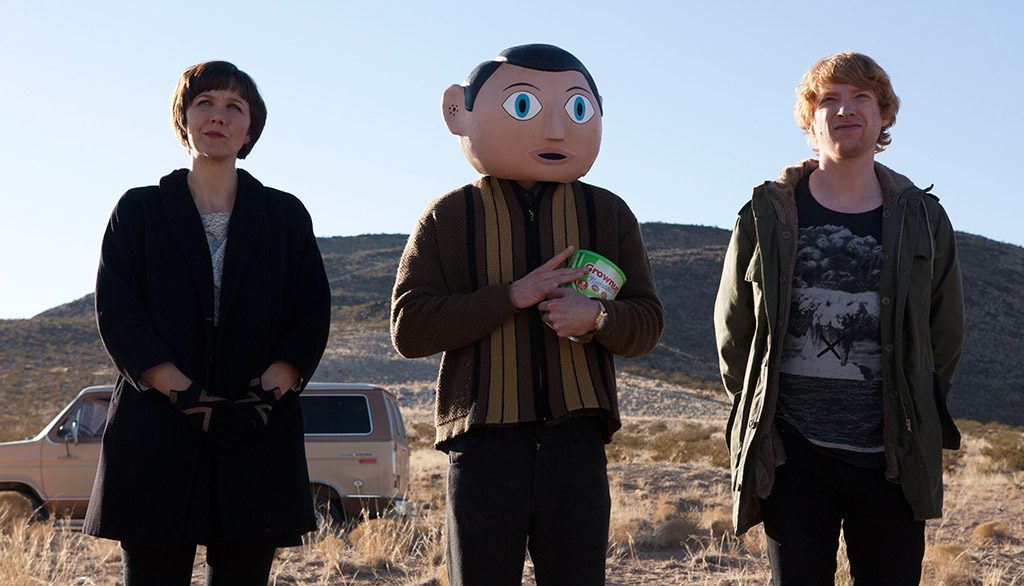
Review: 'Frank'
In its opening sequence of director Lenny Abrahamson’s Frank, the protagonist Jon (Domhnall Gleeson) does something I have never before seen in a film: using voice over narration, we hear this struggling musician attempting to compose music, through absurd and funny lyrics about his surroundings. He’s desperate to write the next big hit but has no immediate ideas, something anyone can relate to and laugh about.
This is the only exceptionally innovative moment in the film. Jon’s interest in music leads him to take desperate measures, and he finds himself joining a bizarre music band led by the titular Frank (Michael Fassbender), who is always wearing a giant mask. The group is interested in making music but have little idea how to do so. About the only thing the group has in common is that they all see Frank as some kind of idol. This has all kinds of consequences, as Frank blurs the line between being the most reasonable one in the group and also being the closest to insanity.
From the premise and the opening scene, it would indicate that this would be a comedic picture, and in my mind, this is where the film has its most success. Especially in the opening, but later on as well, the film delivers some great bits of humor. However, the film also manages to tackle some darker material and ends up being more focused on some really heavy material. When characters delve into stints at mental hospitals and it becomes clear that the people here are not in sane states of mind, the film has something to say about it in a non-joking manner. It’s good that they do not make light of these syndromes, but the juxtaposition of these darker elements interacted with the humor makes it increasingly difficult to laugh at when it goes back to humor. Even for a black comedy, this movie tackles some very serious topics that aren’t truly suited for jokes.
Perhaps the most important thing to know going into the movie is to not expect good music or a soundtrack that you’ll ever want to revisit.
The film could be saved with a great soundtrack, but alas, the music is bizarre and unmemorable. In reality, part of the message of the movie is that the music is not actually worth sharing because this group of people do not have the level of talent (or sanity) that they think they have. Perhaps the most important thing to know going into the movie is to not expect good music or a soundtrack that you’ll ever want to revisit.
Most of the film actually takes place on a farm with just a handful of characters. Some of the side characters get moments to shine, notably Clara (Maggie Gyllenhaal) and Don (Scoot McNairy), but like their characters, they all seem to be revolving around Fassbender (who supposedly never took the head off for the duration of filming). For all parties involved, I don’t see this as being the type of film that has too much impact on their career. It is an entertaining film at times, and the cast is an impressive mix, but for the most part, it does not leave the audience with much to walk away with. However, for what it's worth, the closing credits are superb.
https://www.youtube.com/watch?v=-catC4tBVyY
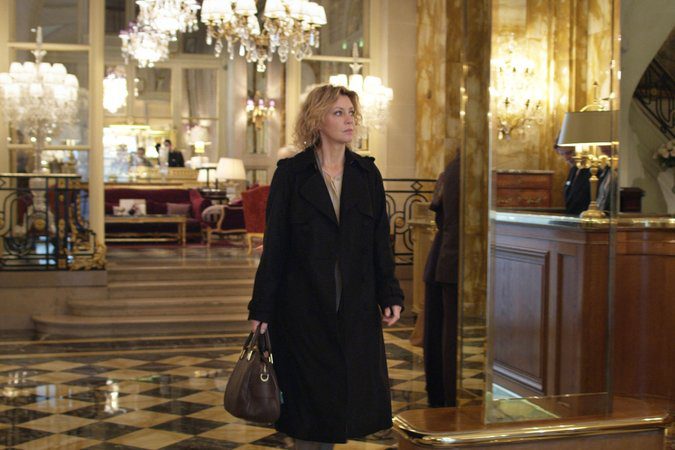
Review: 'A Five Star Life'
Irene (Margherita Buy) is in her 40’s, single, and has a job that sounds like a luxury: reviewing 5-star hotels in gorgeous locations. But mind you, her job isn’t just basking in all the amenities that a hotel provides, her job requires a meticulous attention to every possible detail, and all kinds of factors, from the amount of dust on the lamps to the timeliness of the staff, is thoroughly considered. Since her job requires her to be away from home so much, she is single and has estranged relationships with her family and friends. If the premise reminds you of Jason Reitman’s Up in the Air, you’re on the right track.
The premise of the film allows us as an audience to venture to some magnificent locations, and it’s immediately recognizable how well the film utilizes every location it visits. Paris, Berlin, The Alps, Marrakesh, and a few hotels in Italy all get the deluxe treatment and are showcased beautifully here. But where it would be easy to venture into imagery reminiscent of the travel channel, this film instead focuses on the sense of isolation that each hotel brings. Sure, the views are all exquisite, but the film wonderfully captures the hollow reality that these deluxe locations encapsulate. Thematically, the film encapsulates this sense of isolated beauty that Irene embodies. As fun as it is to gasp at the luxury, the purpose is not to envy Irene by the end of the film but to simply understand the world that she inhabits.
Despite being a movie about luxury, the biggest strength of the film ends up being its simplicity.
Despite being a movie about luxury, the biggest strength of the film ends up being its simplicity. There is no grand revelation or massive plot twist here, but we do feel the many themes that are shared with us. One of these is the concept of artificial comfort. Is having someone wait on you nonstop really a key to happiness? How arbitrary is our modern day measurement of luxury and quality? While the themes are played out visually in the various locations, we see them play out emotionally in Irene’s interactions when she is back at home. Her best friend and former lover is about to be a father because the mother believes it will make her happy, a tangible showing of how happiness has become a material good. Her relationship with her sister, brother-in-law, and nieces fluctuates but is her only hope for having family in her life. From the concept, it would appear that the heart of the film comes from her travels, but the film very uniquely also covers the many times that she comes home and the impact she has on those who don’t share her lifestyle.
A Five Star Life is a short, simple film but is fully engaging because of how well its themes are realized, both visually and emotionally. It may not have the same level of prowess that Up in the Air has, but for a smaller film, it certainly engages for the entire runtime.
https://www.youtube.com/watch?v=GYfiOINsMhM
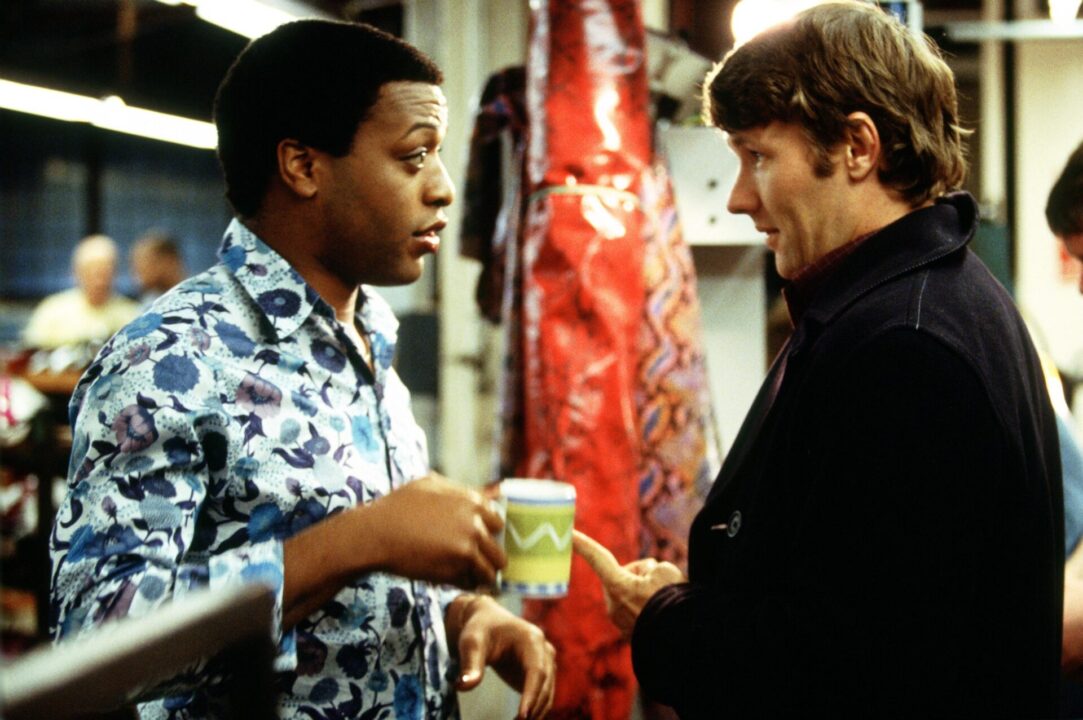
Review: 'Kinky Boots'
The mid-2000’s, specifically 2005, was a time of mainstream movies featuring non-hetero characters and themes. Of course, the horse that led the pack was Brokeback Mountain, but an enormous number of top-tier films followed, and for the first time, the novelty of depicting homosexual or transgender protagonists had worn off. While it’s still not quite at the representation level that it one day will be, this period of time is responsible for making it all the more mainstream.
However, only one of these movies made its way to Broadway, and that is Kinky Boots. Released in the UK in 2005, followed by Sundance and the US in 2006, today the title is more known for the massive Broadway hit that it currently stands as. However, there would have never been the show without the movie, and the movie can stand firmly in place alone.
Charlie Price (Joel Edgerton) has inherited his family’s shoe company only to discover that their product – beautiful men’s shoes built to last – are all but obsolete. In a turn of events, Charlie stumbles upon Lola (Chiwetel Ejiofor) a drag queen star who is tired of having to wear shoes built for women. The fit is perfect and before he knows it, Charlie starts making boots for men. Conflict and hilarity ensue.
The film became available on Netflix to stream earlier this month, and the treat is ours. Eight years since its release, the film is an absolute blast and it is no wonder that it inspired a bestselling show. The lead actors, Ejiofor and Edgerton are now more known for their Oscar-nominated movies, but it's likely they wouldn’t have landed roles in 12 Years A Slave or Zero Dark Thirty without building their independent credit from this movie. Ejiofor is especially captivating: he has some subtle nuances in his depiction manly femininity, avoiding easy clichés and capturing the full allure of Lola as both a man and a woman. His range is staggering, and selfishly I just want to see him in more leading roles with this level of range. And Edgerton, who still has yet to reach the A-list, plays the empathetic everyman in a way that invites and connects us to his life.
The lead actors, Ejiofor and Edgerton, are now more known for their Oscar-nominated movies, but it's likely they wouldn’t have landed roles in 12 Years A Slave or Zero Dark Thirty without building their independent credit from this movie.
The film is ultimately about accepting change, a beautiful message told here in a fun way. The characters who embrace this (Lola, Charlie, Lauren, and even Nick Frost's Don) are the ones that we root for, and conversely the characters who don’t are the villains. Often the structure of movies hides the characters’ transitions, but here it is the emphasis. Charlie has to adapt to a world that no longer appreciates his family’s livelihood, and the rest of the characters have changes that are too fun to spoil.
Personally speaking, my favorite types of films are the ones that can provide a balance of laughter and emotion. In this case, the film leans more toward the former, but by no means dismisses the dramatic elements of the movie. This is a film with a lot of heart, and while in today’s world it doesn’t push any new boundaries, it nonetheless enlivens for the entire runtime. I had an absolute blast watching this and hope that you do as well. The film is now available to stream on Netflix.
https://www.youtube.com/watch?v=83DXny5IQyM
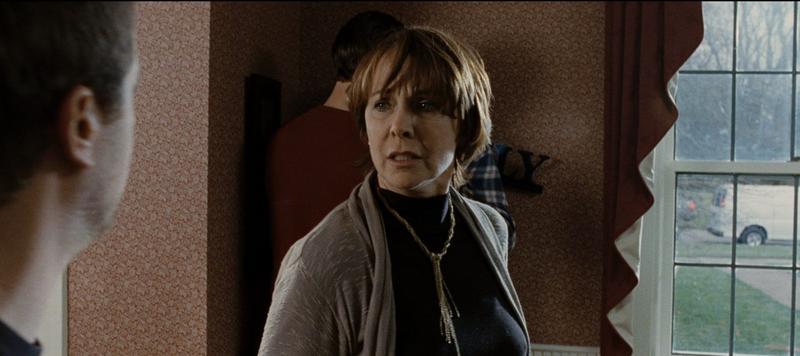
Review: 'After'
It’s 2002 in Rochester, New York, and the Valentino family have four grown children who are all facing their own battles and trying to make ends meet. The parents, Nora and Mitch (Kathleen Quinlan and John Doman) and their oldest son Christian (Orange is the New Black’s Pablo Schreiber) anchor the story, while two major events progress the film: the marriage of their daughter Max (Sabrina Gennarino) to Andy (Darrin Henson), and Mitch and Christian trying to pull their family business out of debt. Through the entire film, there is a constant tension hanging in the air, and some hints that there is more to this family than we know.
Even from the synopsis, the first thing to notice is that the film juggles an enormous ensemble cast, each with their own storyline. There are eight characters who are given focus, which ends up delineating the narrative. In this sense, the film feels more like something made for television, without a clear through-line as to what the message of the film is, because a movie runtime isn't enough to finish any of these stories. Toward the end of the film, the main message is revealed, but it lacks the build-up or punch that it could carry because it’s a plot point the audience hasn’t even seen as the main part of the story. Personally, I had been focused on other elements and didn’t realize until after the big reveal that I should have even been looking for that.
The ensemble offers a diverse slate of actors each with moments to shine and promises further potential in the future for all parties involved.
To make matters worse, a lot of these stories don’t quite add up. There’s an aunt character (based closely on the writer’s true life) who feels completely expendable to the film’s forward motion. Yet she gets plenty of screen time, including a quick romance that has nothing to do with the family. In an interview, writer Sabrina Gennarino stated that this was based off of a real character in her life (as are most of the protagonists), but this is a perfect example of a character that adds little to the story and could be left on the cutting room floor. Some worse examples are sequences that don’t make sense. Nicky (Adam Scarimbolo), one of the brothers, refuses to serve a customer for a reason we assume we’ll find out later, but never do. A fight ensues, but without knowing why, it leaves little personal impact. With a sprawling ensemble cast, these little character errors add up more than enough to become distracting.
As a drama, the film is effective in that it isn’t difficult to connect with what the characters are going through. However, like many movies billed primarily as a drama, there isn’t much to make light of in the film. It feels thoroughly moody to the point of melodrama. While After does feel like the honest and personal film it has set out to be, its pitfalls are many, and enough to detract the viewer from connecting to the characters. However, the ensemble offers a diverse slate of actors each with moments to shine and promises further potential in the future for all parties involved.
https://www.youtube.com/watch?v=bX5TzjqcS6Q
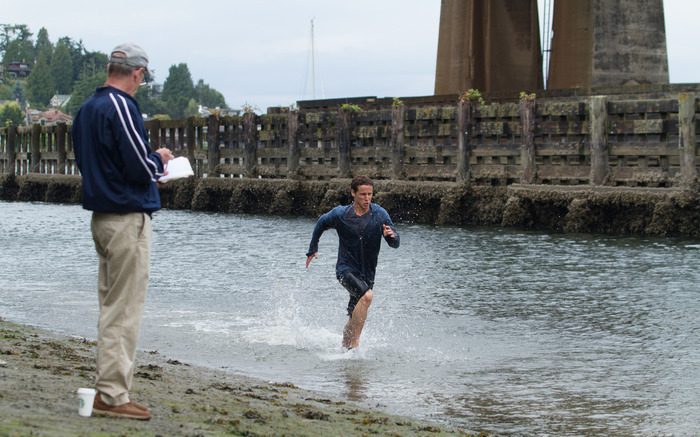
Review: '4 Minute Mile'
In coastal Seattle, Washington, Drew Jacobs (Kelly Blatz) is a high school runner with a deadbeat mom and an older brother with a spotty record. At first we learn that something happened to their father when they were kids, but this along with many other personal pieces of information about the protagonists, are omitted. Right as Drew decides to quit running for good, the former record-holding coach Coleman (Richard Jenkins) offers to train Drew for the 1-mile race, with the hopes that he can achieve the coveted, challenging, 4-minute mile.
Like any sports drama, 4 Minute Mile balances between time spent training, progressively getting better, mixed with personal life at home. Unfortunately, both storylines take a while to get going. There is a lot of redundant back and forth before Drew finally agrees to train. For the first half of the movie, at the end of every scene Drew says he quits, then comes back soon after by his own will or through Coleman’s wisdom. Meanwhile, his home life is a little confusing. There’s a romance with Lisa (Analeigh Tipton) that plays out well but rather conventionally. The confusing part is what is going on with his mother and brother. His mother is clearly traumatized or lost but it's never made clear why, other than the dad who is missing for undisclosed reasons. She falls to her son, Drew’s older brother Wes (Cam Gigandet), who forces his brother to go on “runs,” presumably carrying drugs or money, but this is unfortunately left vague and unexplained. His real purpose as a character is to show what Drew could end up like if he doesn’t follow through with running. A little more specificity behind his actions could have gone a long way in making their situation more empathetic and grounded.
Richard Jenkins is given a fun role of playing the Mr. Miyagi of running.
Richard Jenkins is given a fun role of playing the Mr. Miyagi of running. That homage is not just an allusion; the film makes a direct reference to the similarly structured classic The Karate Kid. Like Miyagi, Coach Coleman has a troubled past of his own, and through helping Drew, is able to get more on track, though his full storyline is never realized.
Pacing is one of the biggest issues that the movie faces. Some parts are very rushed, especially the back stories noted about of the main characters. Other parts, such as the decision to train, go on for a bit too long. Finding a bit more evenness would elevate the film significantly.
Regardless, the film builds to a very strong, unconventional conclusion. In fact, the last ten minutes may make the entire film worthwhile, using evocative visual cuts between two places to build suspense, then finishing with a surprising last look at our character’s future. Visually, the film is on point at all times, capturing the raw beauty of coastal Seattle and giving us a real sense of the neighborhood where these characters live. 4 Minute Mile many not be the best sports drama to come this way, but it has prominent moments of enjoyment scattered throughout the runtime. After debuting at the Seattle Film Festival in June, film is now available to purchase on iTunes and will be in select theaters shortly.
https://www.youtube.com/watch?v=IBRASZgKGRY