
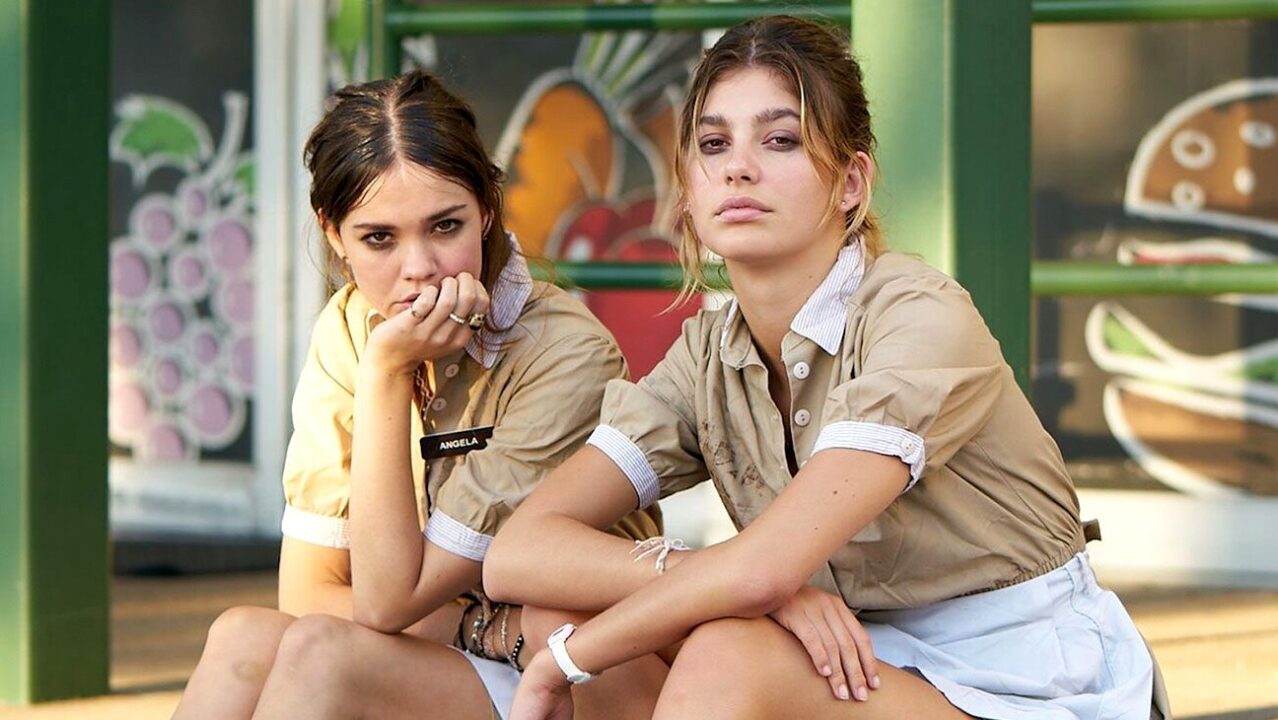
'Never Goin' Back' Review: Millennial Girls Gone Wild
Independent film distributor A24 is not one to shy away from provocative projects.
Following in the same rowdy footsteps as the company's 2012 hit Spring Breakers while keeping to a similar aesthetic as 2017's The Florida Project, comes Never Goin' Back. Set in an undisclosed small town in Texas, writer/director Augustine Frizzell's gritty girl drama is a mad dash of teenage woes, plans gone awry, and constipation, all set against a backdrop of an anticipated idyllic vacation getaway.
Angela (Maia Mitchell) and Jessie (Cami Morrone) are best friends- they share their bed, their job, and even their drug habit. It's no question, then, that Angela would pull out all the stops for Jessie's 17th birthday by surprising her with a trip to Galveston to chill at the beach and celebrate seventeen in style. Figuring it was a good idea to use next month's rent money to pay for the trip, with no financial security net to fall back on (you can see where the film is going...), the girls figure that another week's worth waitressing wages from the town's local diner would be all the money they need to make up for the rent. Having dropped out of high school to make quick cash, this job is all they have. What they didn't account for is getting fired from their job, losing all their money, and eating so many weed edibles they can't think straight.
From that summary, it's clear that Never Goin' Back shouldn't be pigeon-holed as solely a drama, in fact, it is hard to justify how this is even a "drama" at all. The film's hijinks start almost immediately after a robbery gone wrong, due to a shady deal by Jessie's brother Dustin (Joel Allen), that ends up with both girls in jail for completely unrelated charges. Angela and Jessie hit rock bottom multiple times throughout the film, and each time is more over-the-top and outlandish than the last.
What is refreshing about 'Never Goin' Back' is the fact that the story doesn't center around a boyfriend, a crush, or any love interest whatsoever.
The performances from Mitchell and Morrone are strong. As two overly-confident and brash teenagers, the duo makes their relationship as "best friends forever" incredibly believable. Much in the same way the Spring Breakers girls were overly affectionate with each other and had a touchy-feely codependency about them, Angela and Jessie are also very hands-on and physical. Taking charge as more of the leader, Mitchell plays Angela with a slight arrogance, but the little rays of admirable qualities make her watchable. Morrone plays the slightly (keyword: slightly) more responsible one who ultimately gives in to Angela's peer pressuring and follows her as they both continue to make terrible decisions. Kyle Mooney has a supporting role as the girls' creepy roommate Brandon, and his performance is everything you'd expect a Mooney performance to be: funny.
What is refreshing about Never Goin' Back is the fact that the story doesn't center around a boyfriend, a crush, or any love interest whatsoever. This is an ode to the power of female friendships, no matter how dysfunctional or troublesome they may be. There are moments that seem to blur the line between what their relationship actually is- platonic, romantic, etc. -however it is never addressed as queer or bi-curious. Relationship dissecting aside, the absence of sexual desire is what makes Never Goin' Back this summer's millennial feminist flick. A comedy of errors from start to finish, Never Goin' Back may be anxiety-ridden and stressful but it's definitely not boring.
'Never Goin' Back' is rated R for crude sexual content and language throughout, drug use and brief nudity - all involving teens. 85 minutes. Opening today at ArcLight Hollywood.

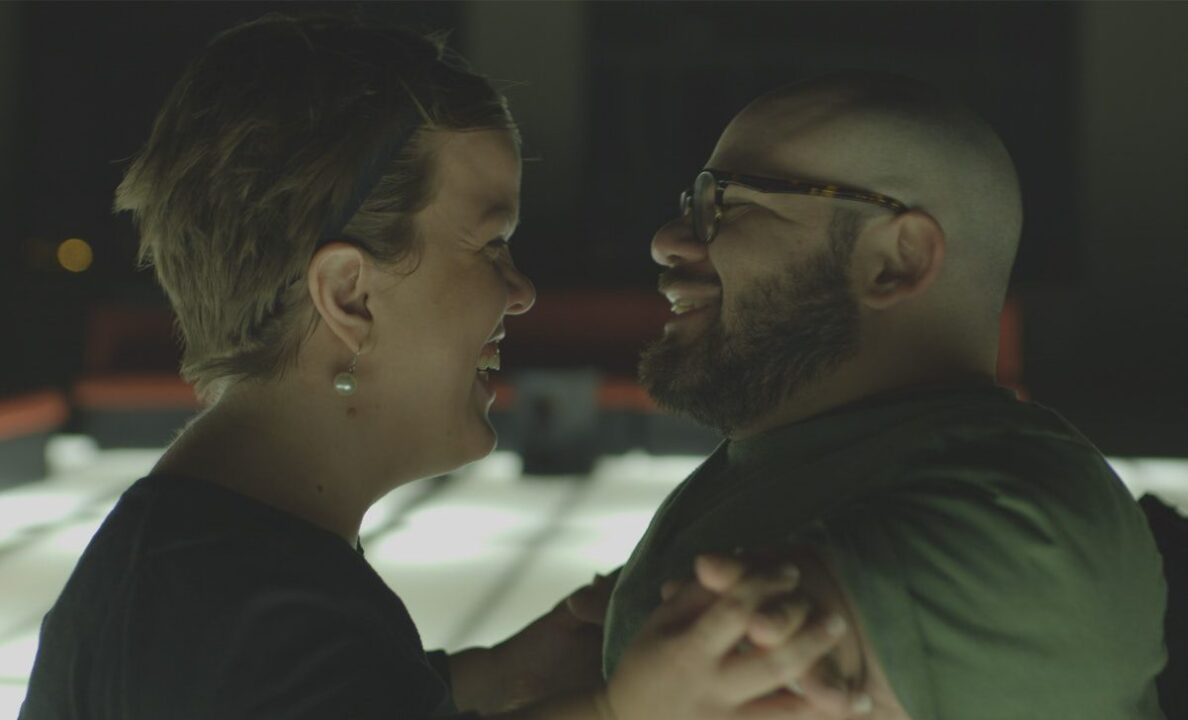
'Far From the Tree' Review: A Celebration of Differences
In a world where it seems everyone is looking to stand out as unique and special, being called "normal" is almost considered an insult.
However, for the subjects of Rachel Dretzin's documentary Far From the Tree, “normal” is the only label they desire. Based on the New York Times bestselling novel Far From the Tree: Parents, Children, and the Search for Identity, Dretzin and the book's author Andrew Solomon explore the ways in which the actual relationships within a family dynamic can prove to be drastically different from our expectations.
Even though we share some of the same DNA as our parents, there is no guarantee that we are going to grow up to be like them or have shared interests. The phrase 'You're turning into your mother' is often said in a joking manner, with a negative connotation. But what if there was no possibility of turning out to be anything like your mother or father? 41-year-old Jason was born with down syndrome and early into his diagnosis, his mother did everything she could to give him a shot at living a normal life. For the most part, it worked. Jason became a minor celebrity as the face of someone who was "overcoming physical disabilities"; he appeared on Sesame Street, was interviewed by Barbara Walters, and his future looked bright. But as he grew older, his mother knew that he would never be a man who could function normally in society. As she talks about her fears of what will happen to him when she passes away, Jason is sitting in his bedroom dressed in all blue and wearing a tiara, watching Frozen over and over again, as he talks about his plan to travel to Norway to visit his crush, Elsa.
Original music by Nico Muhly and Yo La Tengo add to the film's emotional undercurrent and offers a sense of optimism for those undergoing difficult times.
The parent/child relationships explored in the documentary are not typical ones. The primary caretakers talk of overwhelming hardships due to their extreme differences and challenges they face, but even throughout these trying times and feelings of overwhelm, there is a love like no other. For example, 13-year-old Jack has such a severe form of autism that he is not able to speak. To communicate, he uses a special keyboard to indicate the letters which then reads the sentences aloud for him, much like how the late Stephen Hawking was able to articulate his thoughts. While it may seem like a burden to endure the process of stringing together letter by letter, his parents recount their disbelief and overwhelming joy when a speech therapist first exposed Jack to this new form of communication and he was able to "talk" to his parents for the first time in his entire life.
Far From the Tree doesn't just focus on families of children with disabilities. We also hear the intimate stories from a couple with dwarfism and a mother and father whose son committed murder. How these children turned out to be so much different from their biological parents is something that has always fascinated Solomon, who is a self-proclaimed "weirdo." He was at odds with his parents for most of his life when he came out as gay, and eventually wrote the book as a sort of an investigative catharsis to understand how and why parents and their children can be so different from each other.
On some level, we are all imperfect. That is what makes us human. The biggest takeaway from Far From the Tree is to not discredit people due to visual differences because they might just surprise you. Original music by Nico Muhly and Yo La Tengo add to the film's emotional undercurrent and offers a sense of optimism for those undergoing difficult times. Far From the Tree should be required viewing for all, but be warned, side effects include a lump in the throat, goosebumps, and occasional teary eyes.
'Far From the Tree' is not rated. 93 minutes. Opening today at Laemmle's Royal Theatre.
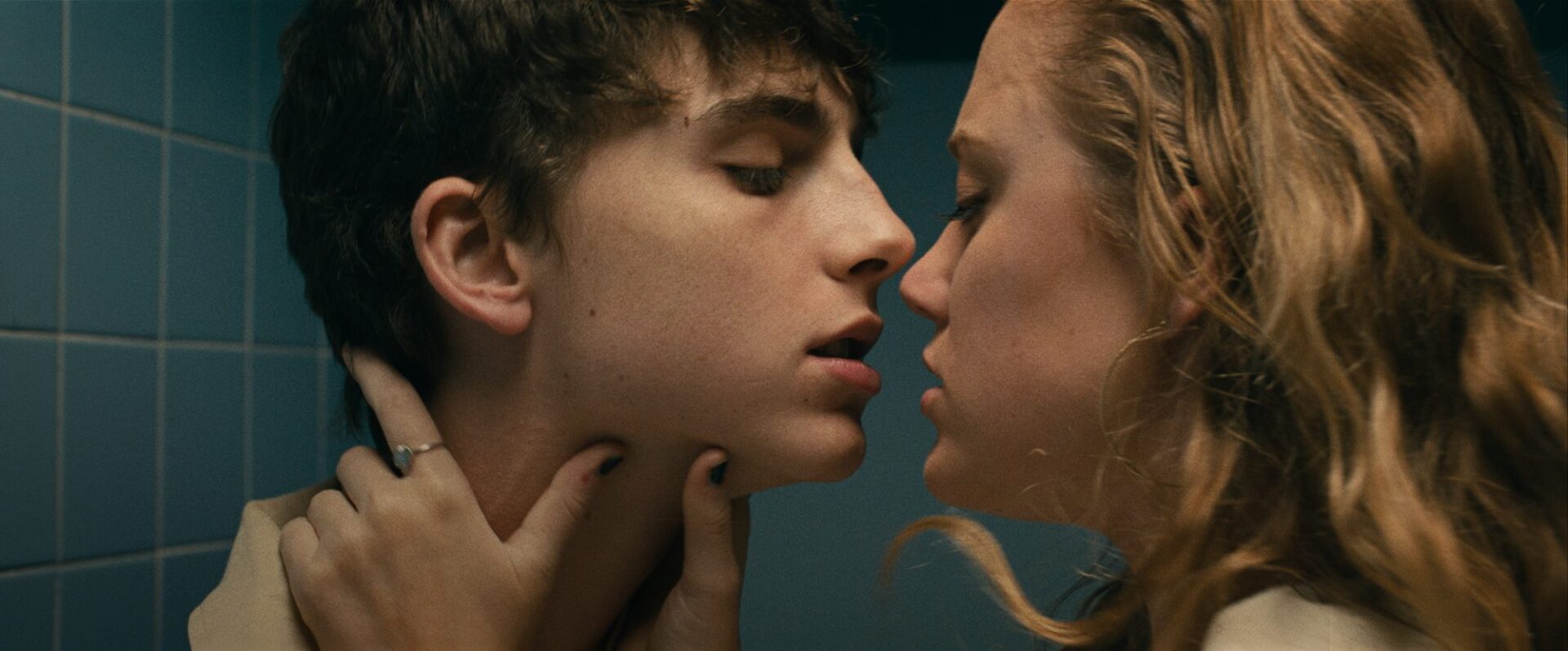
Hot Summer Nights
After starring in two of last year's most poignant coming of age films, Call Me By Your Name and Lady Bird, the young auteur takes on another emotionally demanding role in the independent drama, Hot Summer Nights. Set in the summer of 1991, writer/director Elijah Bynum's debut film is a confident and exciting new voice in the indie film genre. The original screenplay, which ended up on the Blacklist, coupled with fantastic performances from promising young talent makes Hot Summer Nights a rush of adrenaline we can't get enough of.
After graduating high school and with college on the horizon, the socially awkward and naive Daniel Middleton (Chalamet) is sent to spend the summer with his aunt in Cape Cod. He immediately has trouble finding his place as the "townies" treat him as an outsider and he cannot afford the luxury "summer birds" lifestyle. His isolation is interrupted when he meets alpha-male Hunter Strawberry (Alex Roe), the local drug dealer and infamous bad boy. The two strike up an unconventional relationship– Hunter introduces an asthmatic Daniel to smoking weed and, in turn, Daniel presents an opportunity for the two of them to go into business selling the product to an even larger audience, with an even bigger monetary gain. On paper, it looked like everything would work out according to plan.
What wasn't accounted for, however, was Daniel's growing romantic relationship with McKayla (Maika Monroe) who, unbeknownst to him, is Hunter's younger sister. Fearing that if either of the Strawberry siblings knew about his relationship with the other they would drop him, Daniel keeps up the facade of anonymity. For a while, he reaps the benefits of his double life by dating the most beautiful girl in town while having so much disposable income he doesn't know what to do with it all. But of course, all good things must come to an end and everything comes to a head when a large job opportunity to push cocaine comes his way and Daniel's secret relationship with both siblings is exposed, and not on his terms.
If 'Hot Summer Nights' is remembered for one thing, in addition to another earnest performance from everybody's favorite shining star Timothée Chalamet, let it be for the film's playlist.
Hot Summer Nights has a familiar feel to it while still ringing original. It seems as if director Elijah Bynum, who was 23 years old when he wrote the script, found influence in the aesthetic of Drive and the soundtrack of Baby Driver as Hot Summer Nights feels reminiscent of these high stakes films. His specific cinematic vision incorporates neon accents and saturated visuals. The soundtrack, which includes David Bowie's 'Space Oddity' and Mott The Hoople's 'All The Young Dudes', weave in and out seamlessly and contribute to some of the film's most standout scenes. If Hot Summer Nights is remembered for one thing, in addition to another earnest performance from everybody's favorite shining star Timothée Chalamet, let it be for the film's playlist.
Hot Summer Nights found its home with distributors A24, who seem to have nineties nostalgia lately (or so it seems from this release and it's highly anticipated, Jonah Hill-directed Mid90s). Incredible truth and honesty are at the heart of this coming of age film, and those looking for an emotionally-charged and vibrant story about the complexities of youth and love should look no further than Hot Summer Nights.
'Hot Summer Nights' is 107 minutes. Rated R for drug content and language throughout, sexual references, and some strong violence. Opening this Friday at the AMC Sunset 5 and on iTunes, VOD.
https://youtu.be/O5ROSS9ReUY
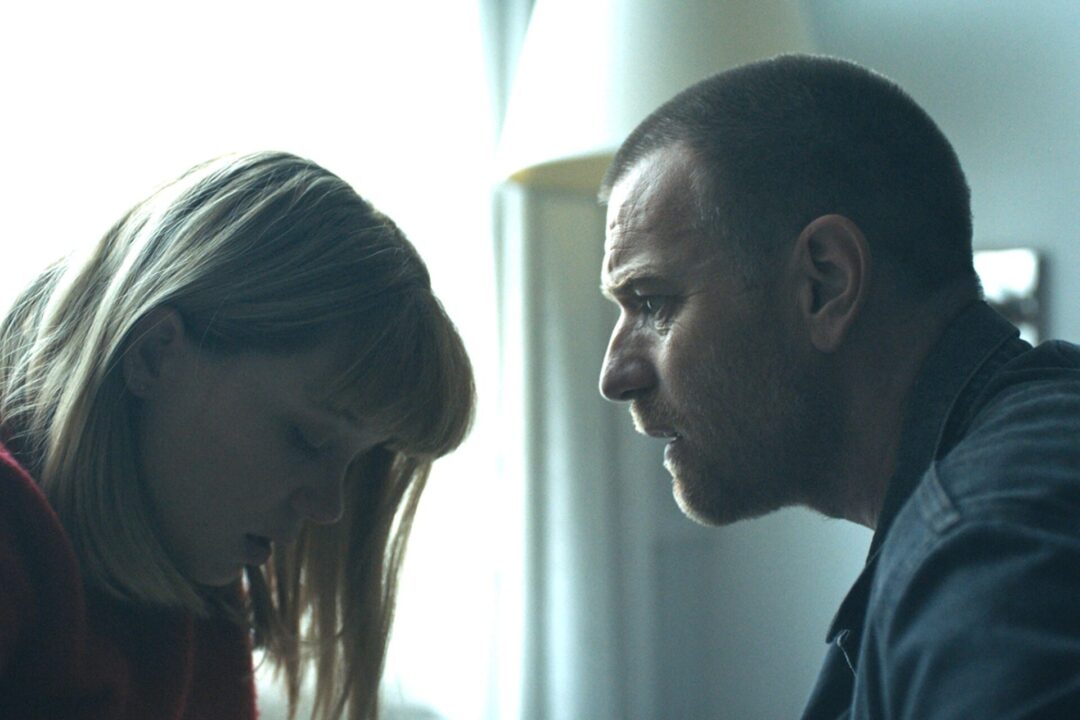
'Zoe' Review: The Meaning of Love, Explored
Drake Doremus has done it again.
The independent film director takes the familiar theme of love in modern relationships and adds an exciting new sci-fi element to his latest romantic drama, Zoe. Starring Ewan McGregor as an entrepreneur computer scientist and Léa Seydoux as his research assistant, Zoe is a beautiful and heartbreaking look at the complexities of love and the lengths one is willing to go to hold onto it.
Set in an undisclosed time in the future, Cole (McGregor) is at the forefront of revolutionizing romantic relationships. He has developed technology that determines the compatibility and likelihood of long-term success for couples looking to take that next step in their relationship. Each person is put through an intense question and answer session, with the results being run through Cole's computer system and then compared to those of their significant other's. In addition to the computer system, Cole has also been working on creating an ideal physical partner for singletons unlucky in love. “Synthetics,” as they're called, are programmed to be completely compatible with, and never betray, their partner– qualities that humans struggle with.

While working closely with Cole on this new development, Zoe (Seydoux) becomes increasingly overwhelmed with romantic feelings for him. Although she knows she shouldn't, Zoe asks if she can personally undergo the Q&A which ends up revealing intimate memories and vulnerabilities. When no one is looking, she runs a compatibility test with Cole with shocking results that reflect a 0.00% chance success rate. Dumbfounded, Zoe can't help but be honest with Cole about her discovery, and his explanation as to why their relationship could never work out, despite their mutual attraction, leaves Zoe questioning her entire existence.
This sentiment, while universal and fundamentally positive, turns out to have deeper implications than Zoe could have ever imagined, and is the crux of the film's emotional despair.
Doremus keeps to his signature 50 shades of blue color palette to create a moody and fresh vibe, similar to 2017's Newness. Partnering up with composer Dan Romer and music supervisor Chris Douridas, the score and music add another powerful element by giving the film its dark, dreamy tone. Songs from indie artists like Beach House are electrically hypnotic and the perfect companion to the visuals on screen.
The performances from McGregor and Seydoux are equally raw and vulnerable (and the irony of McGregor playing a man who strives to create the perfect companion who will 'never leave his partner' is not lost on me). Supporting actors Theo James, Rashida Jones, Matthew Gray Gubler, and even Christina Aguilera add further star power to the romantic sci-fi. Drake Doremus definitely knows a thing or two about how to portray an intangible thing like love as either the heaviest burden or the lightest, most effervescent feeling.
"What do you want your partner to see in you?" asks Cole in the very first line of the film. "I want them to see me for who I really am," answers Zoe. This sentiment, while universal and fundamentally positive, turns out to have deeper implications than Zoe could have ever imagined, and is the crux of the film's emotional despair. This philosophical questioning of love and authenticity is what makes Zoe so unforgettable among the sea of other festival films. As of this review, Zoe had been acquired by Amazon Prime for a summer release.
This review originally ran on April 26, 2018, during the Tribeca Film Festival.
'Zoe' is rated R for some sexual material and drug content. 104 minutes.
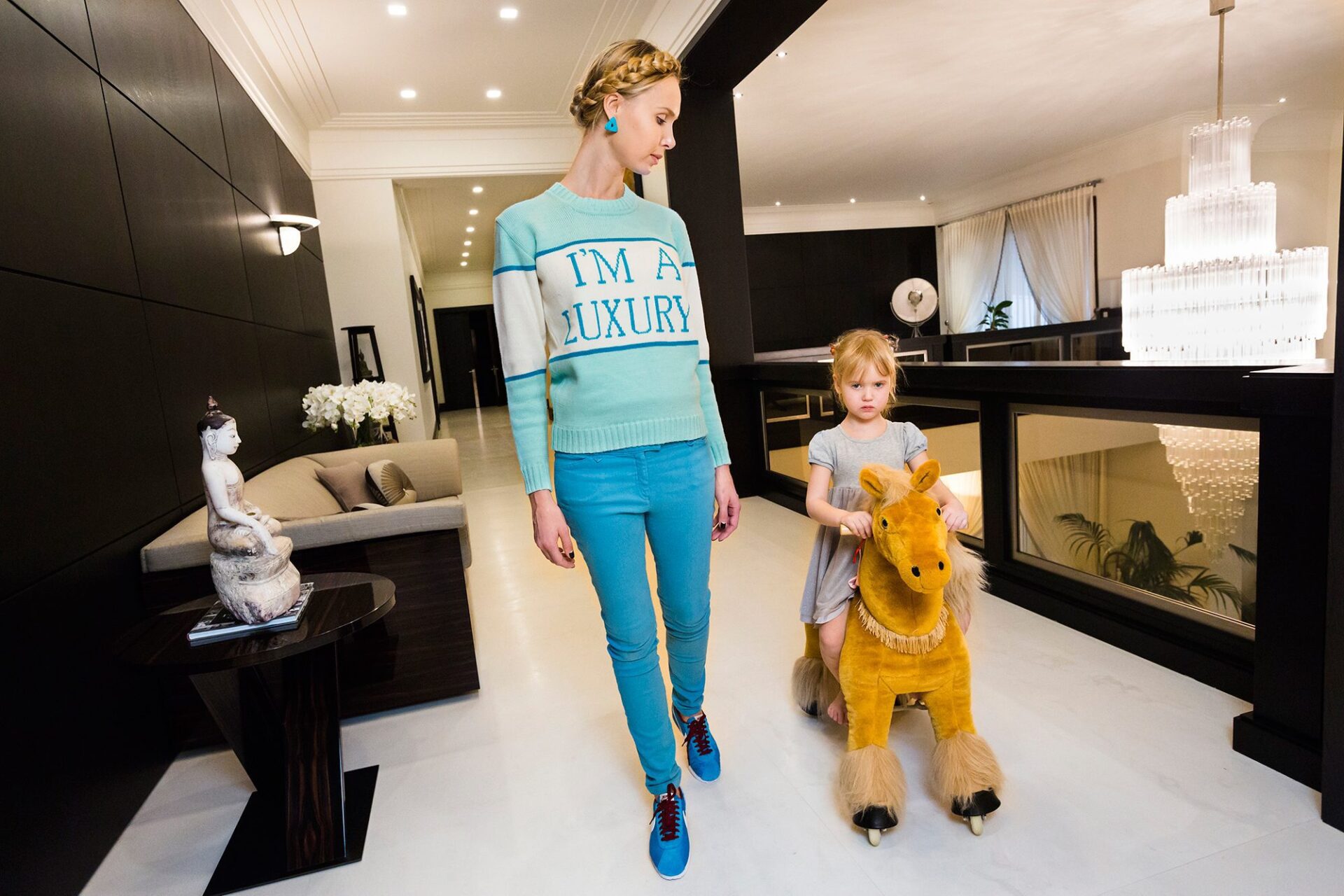
'Generation Wealth' Review: America's Dirty Little Secret Includes Plastic Surgery for Dogs
Yes, you read that right, plastic surgery for dogs.
If the jowls on your canine companion hang too low for your liking and you have enough dollars and cents (sans common sense) to want to fix it, you can now get facial reconstructive surgery... for your dog. Shockingly, this is only a sliver of the outlandish anecdotes in Lauren Greenfield's eye-opening documentary, Generation Wealth. Derived from years of photographing subjects from all around the world, Greenfield's independent film is a fascinating look at the 1% and the stark reality of what too much money can do when a person starts to lose sight of life's more important joys in favor of the superficial happiness cold hard cash can temporarily bring.
It can be argued that, in some respects, the character of modern-day society is in decline. Technologically, we are evolving at lightning speeds- autonomous cars, smart cities, artificial embryos and intelligence are just a few of the ways that we are attempting to better our quality of life. But remember, we sent a man to the moon before there was internet or Instagram, so technology is not the problem. It's the growing lack of human connection coupled with under-valuing close relationships, which is resulting in a more merciless society. Humans as a species have never been more self-aware and self-critical than we are right now. That said, we are in luck because, if we can afford it, we can pay our way to happiness, right? Wrong.
Generation Wealth is a 21st-century fairy-tale-meets-horror-story.
Photographer Lauren Greenfield knows first-hand how growing up in a well-to-do environment can shape one's outlook on life, and whether the effects are apparent or subconscious, they follow you forever. In Generation Wealth, Greenfield showcases how money affected her classmates at the prestigious Crossroads School in Santa Monica, some 20+ years post-graduation. She also exposes the privileged lives of more infamous figures, including Charlie Sheen's "$30,000 porn star friend" Kacey Jordan, a former hedge fund manager, Florian Homm, whose net worth exceeded $800 million and due to shady activity, sat on the FBI's most wanted list, and Jackie Siegel (aka The Queen of Versailles), owner of one of the largest and most expensive single-family houses in the United States.
What we learn from their stories plus the stories of others profiled in the film, is that more money often equals more problems. The green-eyed-monster doesn't discriminate between age, gender, or location, and while some people are able to navigate through this dark period in their lives with a lesson learned as the outcome, the majority of subjects are still really sad. Money couldn't buy them happiness, no matter what lies and false promises the affluent society had sold them.
As a whole, Generation Wealth feels like a cathartic experience for Greenfield, who addresses personal issues with her aging parents that had stemmed from childhood. Certain points of the film feel like we are eavesdropping on a closed therapy session, which at times can feel obtrusive and slightly removed from the film's bigger objective. When the film sticks to the script and delves into the unusual lives of various wealth-addicts, it is fascinating. However, when it starts to detour into Greenfield's issues of her mother abandoning her as a child, it starts to feel unnecessarily sad.
Generation Wealth is a 21st-century fairy-tale-meets-horror-story. Lauren Greenfield's energetic storytelling about America's dirty little secret will definitely keep audiences intrigued and fascinated during the entire runtime.
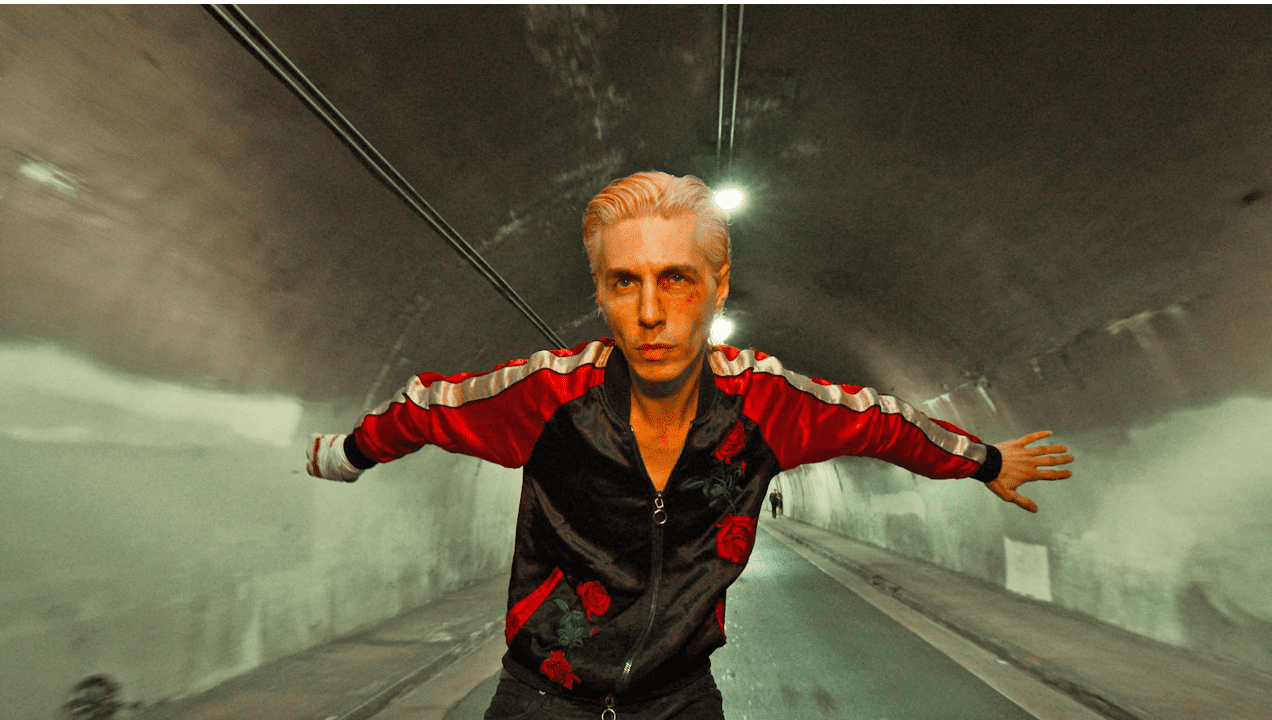
Joe Cardamone of The Icarus Line Proves Punk's Not Dead in East L.A.
Joe Cardamone is a staple in the L.A. rock music scene.
Equal parts punky and poetic, his band The Icarus Line went on to perform for over 17 years, receiving accolades from music buffs and critics alike. The Guardian went as far as to call The Icarus Line, "The greatest rock group of the 21st Century." But Cardamone had his sights set on other goals and disbanded the group in 2015. He has since taken to filmmaking as an alternate form of creative expression and in his film The Icarus Line Must Die, directed by music video connoisseur Michael Grodner (available on VOD platforms today), audiences get a peek into the life and times of this fascinating artist. In our exclusive interview, Cardamone talks about the beauty of East Los Angeles, the risks involved in creating art, and the universal struggle to succeed as an artist. We begin:
It's been said that artists are ultimately driven by a need to be understood, on some level. With a film like this, to what degree is your message trying to be "understood"?
In my life, art doesn't really function as a way for me to be understood by anything or anyone external. The process of making the work is more about sifting through the subconscious mind to piece together the missing parts of reality. Often, I don't know what the work is about completely until after it has been finished and there's enough space to digest. Having said that, with this film I was at a loss about why people would care about my day to day at first. At some point in the production, I realized this story was much more universal than it felt. The notion that the film is about all people who reach a place where they're struggling to keep the plates spinning, that really made it click for me.
The Icarus Line Must Die is so strong and precise in its art-house, black & white aesthetic. Did you have a visual style or certain imagery in mind that you were looking to reproduce in the film?
[Director Michael] Grodner and I had discussed the east side of Los Angeles becoming a main character in the film. The setting being handled with respect and attention to detail was really important. Our DP Jacob Mendel is extremely talented and I have to say that he captured the entire thing with some raw artistic class.

The Icarus Line. Courtesy of Playing With Chaos.
What have people asked you about the most after seeing the film?
They ask me which parts are true. Sometimes I answer them truthfully.
Unfortunately, founding guitarist Alvin DeGuzman (who was featured in the film) passed away in early October 2017. How did that affect you and/or the film?
The film was made and completed before he passed so I don't think it affected the film much directly. As far as the impact on me...he was my best friend for over 20 years.
The Icarus Line Must Die played at the Highland Park IFF last year. Was that a special experience, given that the majority of the film takes place in East LA (specifically Highland Park)?
It was cool to see a movie that I'm in at a theater that I have paid to get into. That's kind of a rush. I mean, the theater is in the film.

The Icarus Line Must Die premiere performance. Courtesy of Rock NYC Live and Recorded
Can you talk about the writing process with first-time feature director Michael Grodner?
The writing process was over the phone mostly. Some emails. We just tried to collect relevant info until an arc of some sort started to present itself. My partner Travis Keller would weigh in on the beats to check the authenticity of it. It was a super organic process.
Professionally, what’s the biggest risk you’ve taken that you feel has paid off?
Every time I make a move it feels like a risk. If it doesn't feel like a risk then you probably aren't doing it right. For sure leaving the band behind and hitting stages solo felt like a risk. Leaving the safety of rock music and moving toward the unknown.
Why should audiences seek out this indie film, now available on VOD today?
I think this film is specifically for people who have a long-term dream that they lean into and make it their life for better or worse. Most of the time it's both.

'Under the Tree' Review: Icelandic Dark Comedy is Both Hilarious and Horrifying
And who says Icelandics don't have a sense of humor?
Director Hafsteinn Gunnar Sigurðsson challenges that notion by bringing the dark comedy Under the Tree (Undir Trénu) to American audiences this Friday. Selected as the Icelandic entry for Best Foreign Language Film at the 90th Academy Awards, the plotline is quite simple, but oh how quickly everything gets turned on its head. What starts out as a small dispute between next-door neighbors
A tree is often regarded as symbolizing family, ancestry, and even a form of rebirth, but that is far from the case in this dark comedy – set on a quiet street in a suburb of Reykjavik, Iceland. Here, a single tree is at the center of what turns out to be some of the most vulgar and unnecessary violence between two neighbors. Inga (Edda Björgvinsdóttir) and Baldvin (Sigurður Sigurjónsson) are a sharp, older couple whose large tree in their backyard casts a shadow onto their neighbor's, Konrad (Þorsteinn Bachmann) and Eybjorg (Selma Björnsdóttir), sun deck. After numerous requests to cut down the tree are ignored, passive-aggressive pranks on each other start occurring, like the slashing of car tires and stealing garden gnomes. This back and forth bickering escalates drastically as blood, sweat, and tears are soon shed in the attempt to out-do each other, with the expectation that the "winner" will get to decide the fate of the problematic tree.
As if the stress of the quarrel wasn't enough, Inga and Baldvin's son, Atli (Steinþór Hróar Steinþórsson), has recently moved back into their home after his wife Agnes (Lára Jóhanna Jónsdóttir) accuses him of adultery. Dealing with the aftermath of a dissolving marriage and fighting for custody of his four-year-old daughter, Atli finds himself wrapped up in the tree debacle as well.
What is so darkly comedic about 'Under the Tree' is the question of how such a mundane and minor dispute becomes so blown out of proportion.
What is so darkly comedic about Under the Tree is the question of how such a mundane and minor dispute becomes so blown out of proportion. The methods used by each party involved are responses that only seem capable of happening in dreams, or in this case, nightmares. However, the fact that Iceland doesn't get a lot of sun creates an understandable reaction to any hindrance to that precious light, and doing so could very well constitute breaking out the chainsaws and guns.
Each person in front of the camera does a fantastic job of building suspension with every frantic phone call, rash decision, and emotionally unstable reaction. Edda Björgvinsdóttir steals the show as Inga, the feisty older woman who proves she is willing to do whatever it takes to not only succeed but make sure her opponent fails. It's a competitive quality that most people have buried somewhere within themselves but would never think of acting on to this degree.
Behind the lens, the visual style of Under the Sun highlights the country's beauty and tranquility as it projects Iceland with a naturalistic and softened aesthetic. Director Hafsteinn Gunnar Sigurðsson and cinematographer Monika Lenczewska notably pull design inspiration from famed directors including Joachim Trier, Ruben Östlund, David Lynch, Lynne Ramsay, and Derek Cianfrance, to name a few. The film's score is another wonderful surprise for the senses. Composer Daniel Bjarnason beautifully moves the film along its journey, with each high and low point accompanied by the subtle notes that Icelandic music is known for.
With tonal similarities to Greek director Yorgos Lanthimos' work, specifically, The Killing of a Sacred Deer, Under the Tree is a refreshing film by a young visionary. It is fantastical and darkly frightening, leaving audiences uneasy about whether to laugh or be horrified at the situation unfolding in front of them. And while this was most likely not the film's intention, Under the Tree also serves as an oddly cautionary tale about thinking twice before choosing who, and how, to confront someone over seemingly trivial matters.
'Under the Tree' is not rated. 89 minutes. Opening this Friday at Laemmle's Royal Theatre.
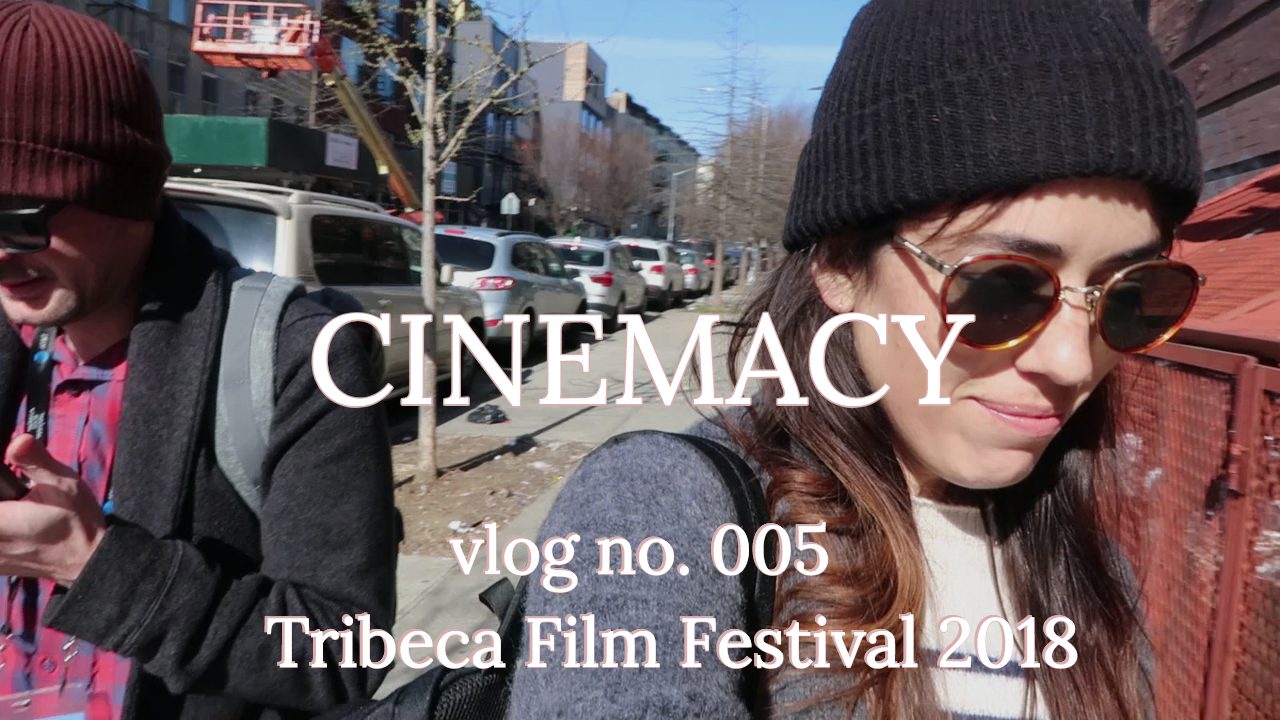
vlog no.005 | Tribeca Film Festival
A behind-the-scenes look at the 2018 Tribeca Film Festival.
On Camera: Morgan Rojas
Editing by: Morgan Rojas
Camera Assistance: Flynn Mitchell
Special Thanks to Cory Madsen for letting us stay at your beautiful Brooklyn apartment.
♫Music By♫
Joakim Karud - No Worries (feat. Dyalla)
Song - https://youtu.be/4E6Erhc0UaY
Dyalla - http://smarturl.it/Dyalla
Boost Song - https://youtu.be/cvOvQloDp14
Follow Joakim Karud - http://smarturl.it/joakimkarud