
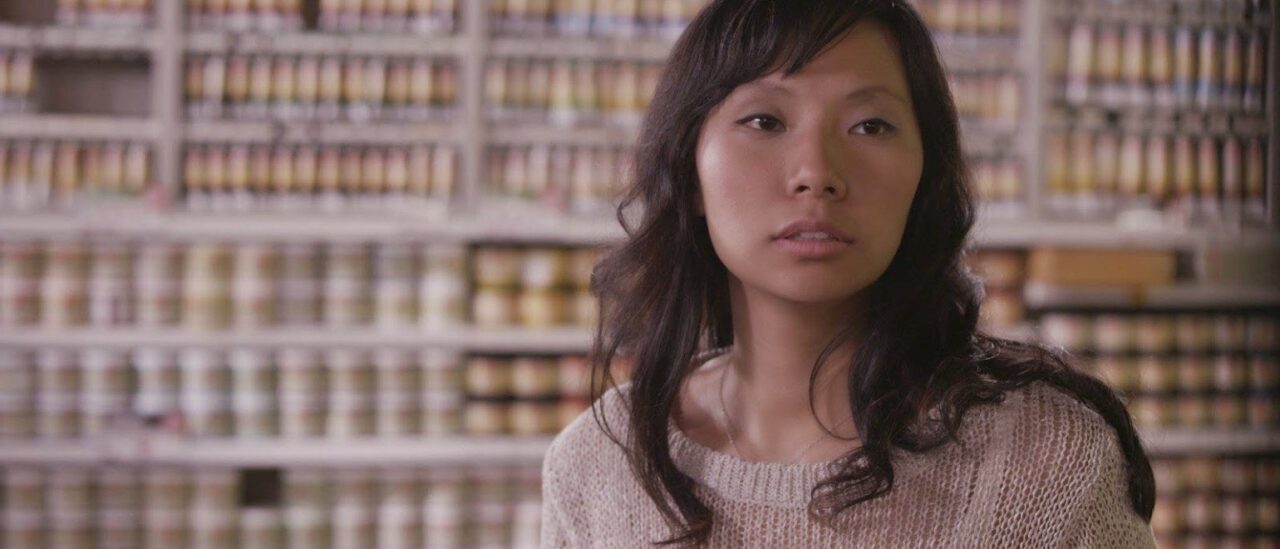
Livi Zheng: "I wanted to be in charge of the story"
Twenty-nine-year-old Livi Zheng should be proud.
Her latest film, Bali: Beats of Paradise, premiered to a packed house at the Academy of Motion Picture Arts and Sciences last week for its world premiere screening. With so many high-power individuals in the audience, including the Consulate General of Malaysia, diplomats from Bolivia, Kenya, Thailand, Myanmar, and the UCLA Chancellor Gene D. Block, it was clear that Bali: Beats of Paradise, which is a beautiful blend of sound and color, has worldwide appeal. In our exclusive interview, we talk about her career jump from a stunt woman to a director and celebrate her hometown opening its very first movie theatre. We begin:
Introducing Gamelan Music to the West.
Unless you're a composer or studying Gamelan music, you wouldn't really know about it. That's why I wanted to make this film in the first place.
As an Indonesian, I knew a little about Gamelan but its history isn't taught in school. You'll hear it at weddings, celebrations, and things like that. Indonesia has over 17,000 islands with all different types of dialects, so it's very rich in culture. I come from East Java, so going to Bali was a totally different experience for me. If you're Balinese, you cannot live your life without Gamelan music. When you're born, when you become a teenager, when you get married, and even when you pass away, Galeman is present.

Courtesy of Inzonesia
Going from stunt woman to director.
I've always done martial arts since I was young, and at 15-years-old I studied at the same school in Beijing as at Jet Lee. I always had an interest in film, so I started to get work as a stunt woman, but I realized that I wanted to be a director so I could be in charge of the story. As a stuntwoman, it was really fun but you're always hired to [tell] someone else's story. I wanted to do something about that.
I went to the U.S. for school and studied economy. I thought that would be a good foundation, but I still wanted to be on film sets. I started working on student films as a director, production designer, costumes, anything! Anything to understand the industry better.
Her hometown opened its first movie theatre this year.
My whole family comes from a small city, and we didn't have a movie theatre there until this year. So moviemaking wasn't really a career there. Indonesia is the 4th largest country in the world and we don't have many movie theaters. We maybe have 1,000, and in the U.S. it's closer to 40,000.
The road to success wasn't easy.
Growing up, I didn't have any mentors or anybody I could ask for help. So [when I started], it was just me and my brother. My brother and I wanted to make a film- at the time, of course, not knowing how hard it is haha. So we planned to shoot our film, Brush With Danger, with just three people, borrowing my friend's camera, you know? Also, the family of a friend of mine owns a bunch of restaurants so we were fed for free. What else do you need? Haha. I was determined to shoot it with or without a budget, I didn't want to wait for [the money]. After that, we started getting help from people, and more funding. I hadn't done anything prior to that, I had no other films on my resume, but it all [came together]. It got distributed internationally and I've been making movies ever since.

Courtesy of Buletin Dewata
Bali is a cultural mecca.
Bali culture is very interesting, their sense of community is very strong. You're expected to contribute. So if there is an event, you're expected to contribute in some way- whether that's playing Gamelan, preparing food or preparing offering or decorations. Like Nyoman Wenten, who lives in the U.S., he still contributes to his community. Anytime he's back [in Indonesia], he'll play Gamelan.
When we were filming Bali: Beats of Paradise, I told my crew that we needed to stay with the locals. We can't be staying in a hotel in a touristy area while trying to make a documentary about Balinese Gamelan. The whole place is super artistic- from the architecture to what people wear- it's fascinating. Even as an Indonesian, it was fascinating.
'Bali: Beats of Paradise' is now playing at the Laemmle Theatre Music Hall.

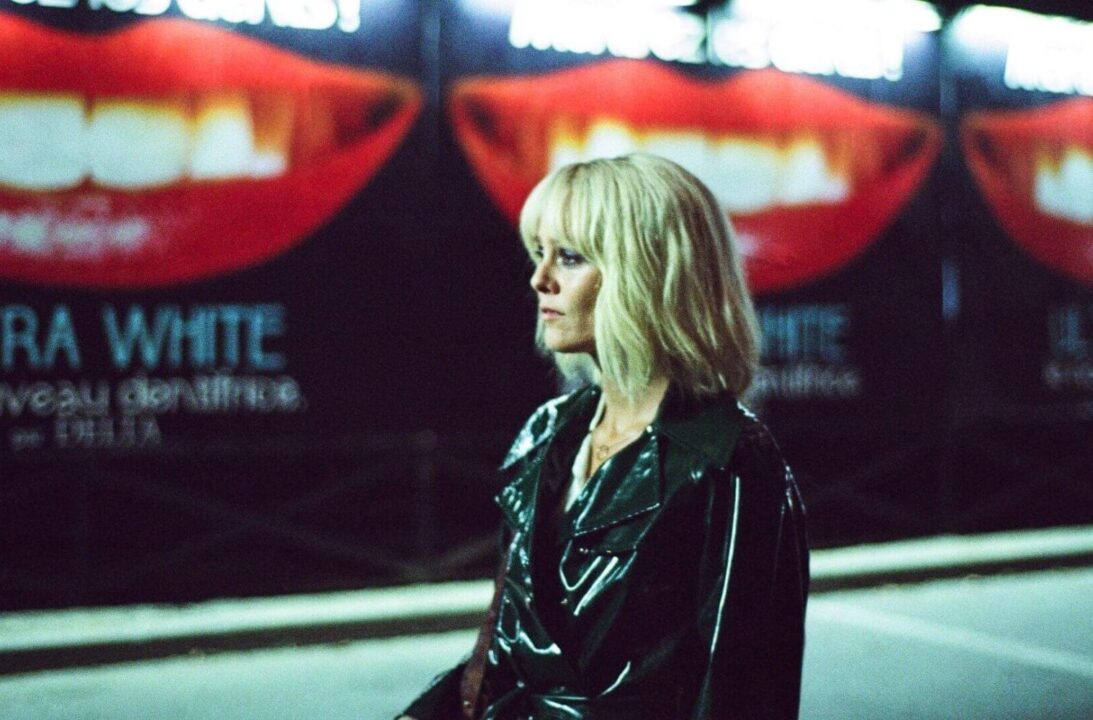
'Knife+Heart' Review: Psycho Killer
Vanessa Paradis stars as a lovesick porn producer in the 1970's set slasher film, Knife+Heart.
This bold entry, which screened in the Midnight section of the AFI Film Festival, is fueled by burning sensations and taboo promiscuity, creating a very specific je ne sais quoi quality that, after watching, will be impossible to forget.
There is a killer madman on the loose in Paris and he is targeting men in the porn industry. Actors are brutally and mysteriously getting killed off one by one. Aware of the growing threat but determined to continue making movies, Anne (Paradis) throws herself into her work. She scours the streets for common folk to bring into the industry, finding one promising boy on a construction site and gets inspired all over again. With her film company in jeopardy due to the evolving porn industry and posed threat to the actor's safety, Anne seeks comfort from her former lover and the company's editor, Loïs (Kate Moran). When her pleas for love go unreturned, Anne faces the harsh truth that it is every man (and woman) for themselves in these trying times.
From here, Knife+Heart continues down the path of an erotic psychosexual thriller film. Abhorrently graphic and violent from start to finish, French director Yann Gonzalez is relentless in creating a palpable mood. This fantastical, unclassifiable film is not an easy watch by any means, but for those adventurous cinephiles looking for a film that "quenches all thirsts", I cautiously welcome you to watch. The biggest driving force that attracted me to seek out Knife+Heart in the first place is the soundtrack, composed by the French electronic group M83. Their synth-pop score fuels the film's heartbeat with an otherworldly sound that pays homage to the taboo films of the past.
Knife+Heart is definitely not a family film and would be a really awkward first date movie as well, you've been warned. Knife+Heart is planning a theatrical release in early 2019.
'Knife+Heart' is not rated. 110 minutes.
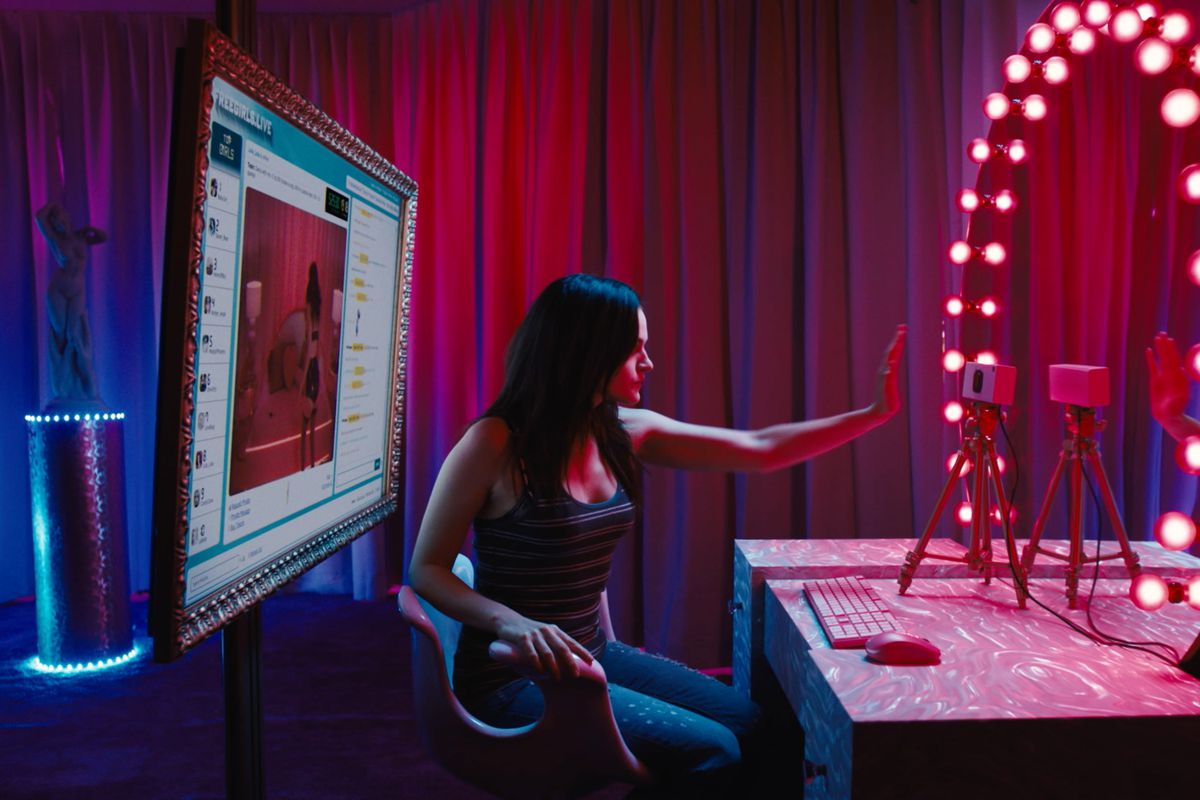
'Cam' Review: Revenge of the Sex Worker
There is perhaps no better platform to premiere a thriller about cam girls than AFI Fest's midnight slot.
On the night (or actually the early morning?) of its AFI Film Fest debut, director Daniel Goldhaber was shocked to see the theater near capacity with only a few empty seats remaining. Embracing the moment, he said, "This movie will never be seen by this many people in one room again." The audience burst out laughing- Goldhaber had just teed us up for a night of mayhem and mystery, but no amount of forewarning could have prepared us for what we were about to see.
From the producers of Get Out, Cam is a psychological thriller set in the underbelly of webcam pornography. Alice (Madeline Brewer) is a young and ambitious cam girl who is working her way through the ranks and will stop at nothing to reach the #1 slot. Every night, she sets up elaborate scenarios for her male-dominated audience and encourages them to tip her by acting out their cheekiest fantasies and fetishes. With her growing notoriety, people begin to take notice, and not necessarily in a good way. Not only is her career affecting her relationships with her brother Jordan (Devin Druid) and mom (Melora Walters), but her online cam account becomes suspiciously sabotaged overnight.
When Alice realizes that she has lost control of her account, livelihood, and status, her revenge is kicked into high gear. To make matters worse and very confusing, it looks as if the person behind the hacking is an exact replica of herself, and so begins the "mind-bending psychological thriller" aspect of the film. Determined to reclaim her identity and her ranking, Alice uses her skills from past webcam experiences to attempt to defeat this mysterious evil twin.
What is perhaps the most fascinating aspect of Cam is the fact that it was written by a former sex worker, Isa Mazzei. Cam marks Mazzei's first and only screenplay, and it's clear that this film has a serious and personal underlying message about the women who cam. The stigma of sex work may have somewhat decreased over time, but it is still considered a taboo topic and Mazzei sets out to dispell any false assumptions about these women. What Mazzei brings to the film is far from an exploitation of this profession- yes there is nudity, yes, it is provocative, but above all else, Cam gives the audience an opportunity to sympathize with a sex worker. We feel her pain and desperation and see the desire for basic wants and needs that every human being deserves. We root for her and want her to kick ass.
Cam is a technology-driven, women-empowering film that will push audiences past their comfort zone and into the very real lives of cam girls. It is informative, eye-opening, and will hopefully leave audiences with some aspect of appreciation for the people and professions that have been overlooked or regarded as "less than". All this packaged as a devilishly fun thrill ride makes Cam a film not to be missed.
'Cam' is not rated. 94 minutes. Streaming this Friday on Netflix, opening Friday, 11/23, at Arena Cinelounge.
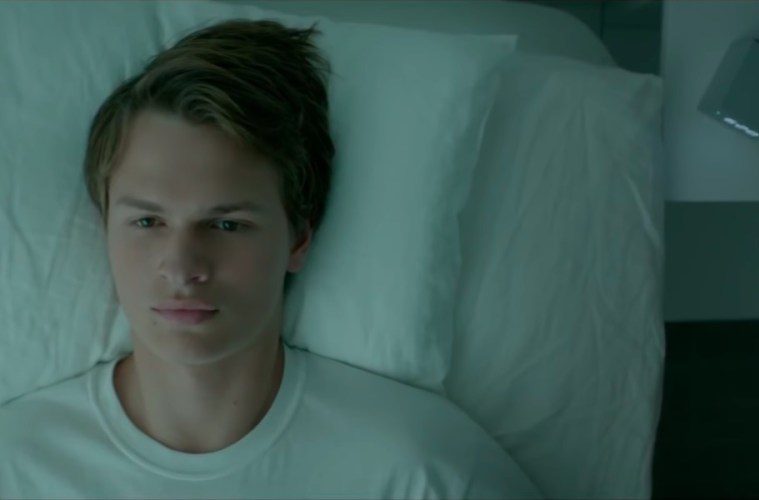
'Jonathan' Review: Twin Terror
I wanted to catch Jonathan when it premiered at the Tribeca Film Festival earlier this year but unfortunately, my schedule conflicted.
From first looks, this moody sci-fi flick seemed right up my alley. Reminiscent of a Drake Doremus color palette with two actors that seemed highly compatible on screen, I was hoping Jonathan would get picked up by a distributor so I would have a chance to see it in theaters. Thankfully, Jonathan is having its big screen debut this Friday and I am very happy to say that it lived up to my expectation and months-long anticipation.
Like an episode of Black Mirror, Jonathan follows the titular character – Jonathan (Ansel Elgort), a handsome young man who shares a body with… his brother. Now, don't write this film off based on this premise of symbiotic multi-consciousness, because the "why" remains a mystery for about a third of the movie (and I'd hate to ruin the surprise, so just go along with it for now). The way in which his body is shared is quite interesting as well. There is a daytime Jonathan – who acts as our protagonist – and a nighttime Jonathan – or "John" – whom we never actually meet. They each take 12-hour shifts within the body, with Jonathan being conscious from 7 am to 7 pm and John awake from 7 pm to 7 am. Since they don’t share a brain – only a body – they communicate about the days and nights events through videotaped monologues, catching each other up on whose turn it is to do the laundry or informing what groceries have been purchased.
'Jonathan' is twisted sci-fi through and through...
Their routine, while absurd, works for them. That is until Jonathan realizes John has been lying and secretly dating a girl named Elena (Suki Waterhouse). For obvious reasons, romantic attachments are strictly against their rules, and after an argument (which lasts for a couple of days since they need time to watch their videotaped fights and then reply), John goes radio silent, “ghosting” Jonathan and not recording tapes. Lost and confused, daytime Jonathan doesn’t know who to turn to, who to trust, or what's going to happen next.
First-time feature director Bill Oliver does such a fantastic job of building the suspense in Jonathan's world without overcomplicating or rushing key plot points. A tricky aspect of suspenseful surrealism convinces the audience of the story's realism, no matter how outlandish the plot. Jonathan is twisted sci-fi through and through, and Oliver's patient unraveling of information, along with cinematographer Zach Kuperstein's grounding camerawork, and a hauntingly good score from the Blair Brothers (Green Room, Blue Ruin) make this mind-bending thriller a fun and worthwhile watch.
Jonathan serves a double dose of Ansel Elgort, which is sure to excite fans of the twenty-four-year-old Baby Driver star. Thankfully, his character is more than just eye-candy to entice girls to the theatre. Here, Elgort is (literally) embodying two different personalities and acting against himself on screen. It's quite the challenge, yet he pulls it off so well and with such control, even when his character is anything but stable.
Jonathan is daring and bold, a fine film all the way around. It is sure to satisfy fans of the science fiction genre in a gently challenging way, but even if symbiotic multi-consciousness isn't your thing, there's still much to admire in this little indie film that could.
'Jonathan' is not rated. 95 minutes. Opening this Friday at Arena Cinelounge and on VOD.

The 5 Things We're Looking Forward To At This Year's AFI Film Fest
It was a shock to hear that LA Film Festival, a place where Cinemacy has had so many great and unforgettable memories over the years, will not return next year.
While losing this platform to showcase indie film is a hard hit for LA's cinephiles and fans alike, we're fortunate that the AFI Film Fest has no signs of winding down. All eyes are on the festival, which starts tomorrow, and in anticipation of the event, we're highlighting the five things we’re most looking forward to. If you can’t make it out, be sure to follow Cinemacy as we cover the festival from start to finish on Instagram, Twitter, and Facebook!

Sally Field, Miles Teller, Rebecca Hall, and Adam Driver at the Indie Contender's Reception at AFI Fest 2016
Morgan's pick: Women in Film Roundtables
The roundtable discussions at the AFI Film Festival are always an enlightening and inspiring event, but this year's focus on Women in Film makes me so happy. Not only will there be a presentation by director Nina Menkes on female representation in cinema, but there will also be a panel dedicated to female film critics! This panel appeals to me for obvious reasons, with topics of conversation ranging from the state of film criticism and how media outlets, studios, and film festivals are working to increase representation among critics and journalists.

Shoplifters film still
Ryan's pick: This year's Cannes Film Fest Palm d'Or winner, Shoplifters
In the context of prestigious film festivals, we can always look to the Cannes Film Festival (bucket list destination) to point to cinematic accomplishment and excellence. Credit the power of AFI Fest for being able to land this year's Palm d'Or winner at the festival, Shoplifters. Other than the fact that this Japanese film won Cannes' highest award, I don't know much else about this drama centered around a band of misfit family members – which is enough to get me to check it out.

ROMA film still
Morgan's pick: Roma
This may be cheating as I was fortunate enough to see Roma last night (followed by an incredible and intimate Q&A with select cast and crew), but I speak from experience when I say you MUST see this film on the big screen. Alfonso Cuarón's latest masterpiece is a black and white Mexican epic centered around family, which was inspired by Cuarón's own childhood. The film will have a divisive limited theatrical run in mid-December followed by it's Netflix release, but if you're able to catch Roma at the AFI Film Fest, then I highly, highly recommend that you do.

Vox Lux film still
Ryan's pick: Girls rocking hard in Vox Lux and Her Smell
Count me in for any hard-rocking movies centered around rockstars. A pair of femme-punk fronted films are screening at this year's festival, and I'm excited to see Natalie Portman returning to the big screen as a national pop-star in Vox Lux, and Elizabeth Moss going punk rock with Her Smell. In a year where women's voices are being heard louder than before, I'm excited to see more films where ladies turn it up to eleven on the DGAF scale.

The Ballad of Buster Scruggs film still
Ryan's pick: Netflix's big screen debuts, The Ballad of Buster Scruggs and Roma
It might sound counter-intuitive, but among all of the films I'll be watching this upcoming week are ones that I'll eventually be able to stream on my couch before the end of the year. Netflix inserts itself into Awards season with two films made by some of the most accomplished working directors in the business today, and the fact that these cinema-purists have gotten into business with the streaming giant shows how far the movie landscape has changed. The Coen Brothers' screwball Hollywood satire Hail, Caesar! didn't particularly win me over but nonetheless, I anticipate every one of their films, and my newest must-see is The Ballad of Buster Scruggs (originally conceived as a mini-series for Netflix, but will be an anthology of Western stories). The other Netflix title that is among my most anticipated of the year is Alfonso Cuarón's Roma, which has been receiving rave reviews (see above) and will certainly kick start "Best Picture" conversations into high gear.
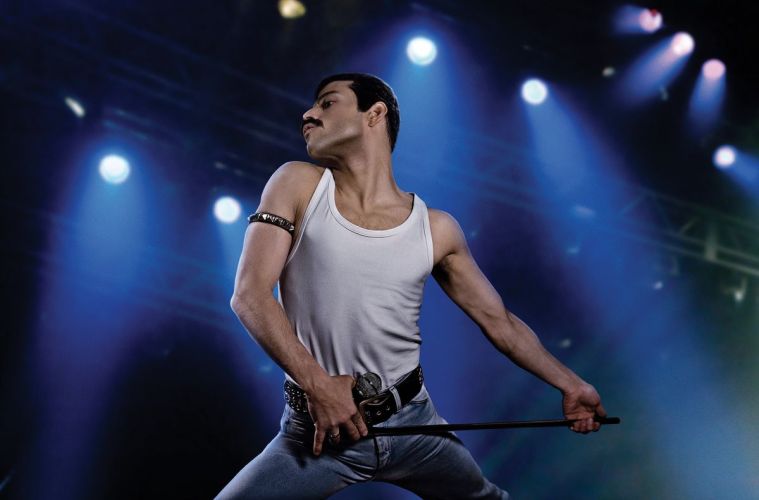
'Bohemian Rhapsody' Review: Queen Reigns Supreme
I wasn't born when Queen performed at the legendary Live Aid Benefit show in July of 1985.
I was barely three-years-old when frontman Freddie Mercury died from AIDs-related symptoms in 1991. But man, did I feel like I was experiencing the mesmerizing talent of the iconic glam rock superstar in person, with a front row seat to one of the greatest moments in musical history. It tested my physical self-control to not stand up and headbang while singing along to the songs I grew up listening to in my childhood (thanks to the many summers spent in Drama Camp where the director used them during pre-performance warm-ups). No, I wasn't alive when Queen reigned supreme, but seeing Bohemian Rhapsody in theaters was the next best thing.
Bryan Singer's musical biopic about the enigma Farrokh Bulsara aka Freddie Mercury is a colorful and whimsical dive into the life of a societal outcast who found confidence and compassion within his chosen family of musicians. As an Indian immigrant who suffered from physical and sexual insecurities, Mercury consciously suppressed his negativity by putting his undeniable talent front and center, and it didn't take long for people to notice. His vocal capabilities were a way to override his anxiety, as he quickly bonded with his Queen bandmates Brian May (Gwilym Lee), Roger Taylor (Ben Hardy), and John Deacon (Joe Mazzello). He became engaged to the lovely Mary (Lucy Boynton) and went on to have international acclaim with #1 hits, and too much money to know what to do with. Talk about Killer Queen.
'Bohemian Rhapsody' is a film for the optimists, the music lovers, and the champions of the world.
The band's musical style evolved from anthem rock to opera soliloquies to disco-inspired-dance beats to emotional ballads and beyond. Mixing these genres was intentional, as Queen always wrote and performed their songs with the audience in mind. They wanted to create music that made the audience feel like it belonged to them too, they wanted the audience to feel a part of the band. And the audience loved it. But despite seemingly having it all, Mercury was selfish, self-admittedly "hideous", and often alone. While his outward confidence continued to grow with the band's success, behind the curtain, his off-stage persona was still an isolated immigrant teenager who longed for authentic, personal connections. It's poignantly ironic that the film's beginning montage is "Somebody To Love" (which, like every other song, left me with chills).
Director Bryan Singer, who is best known for the X-Men series, portrays Freddie as a flawed but lovable man who may have been blinded by fame, yet throughout his journey of self-discovery, ultimately comes to a place of self-acceptance. Singer keeps the story moving along quite swiftly (my only criticism is at times, the journey seems a little too easy) but the most impressive feat is how mind-blowing the performances are, especially the concert footage in the last scene. From small stages at local bars to London's Wembley Stadium, Singer recreates the crowd's uncontrollable energy and transforms the audience's theater seats to stadium risers.
It's quite audacious to take on the role of such a well-known individual, and it's another feat to completely become him. Rami Malik nails Mercury's nuanced mannerisms with his flamboyant stage prancing and exaggerated over-bite (due to having 4 extra incisors that made his mouth much larger than most), while also respecting his internal emotional struggle. Malik is magnetic on screen and gives a performance that makes Bohemian Rhapsody what is it: bold, in your face, and unforgettable.
Queen was a band of misfits, and they were universally embraced because of their authenticity. It was their creative spirits and steadfast dedication to musical exploration and inventive storytelling, fronted by an enigmatic lead singer, that landed them on the top of the charts. Freddie Mercury left absolutely everything he had on the stage and fought till the end. A bittersweet account of a man who dared to be different, Bohemian Rhapsody is a film for the optimists, the music lovers, and the champions of the world.
PS- While this film should definitely be experienced in a theater with surround sound, I also recommend watching it again in the comfort of your own home so you can rock out with no judgment.
'Bohemian Rhapsody' is rated PG-13 for thematic elements, suggestive material, drug content, and language. 134 minutes. Now playing in theaters.
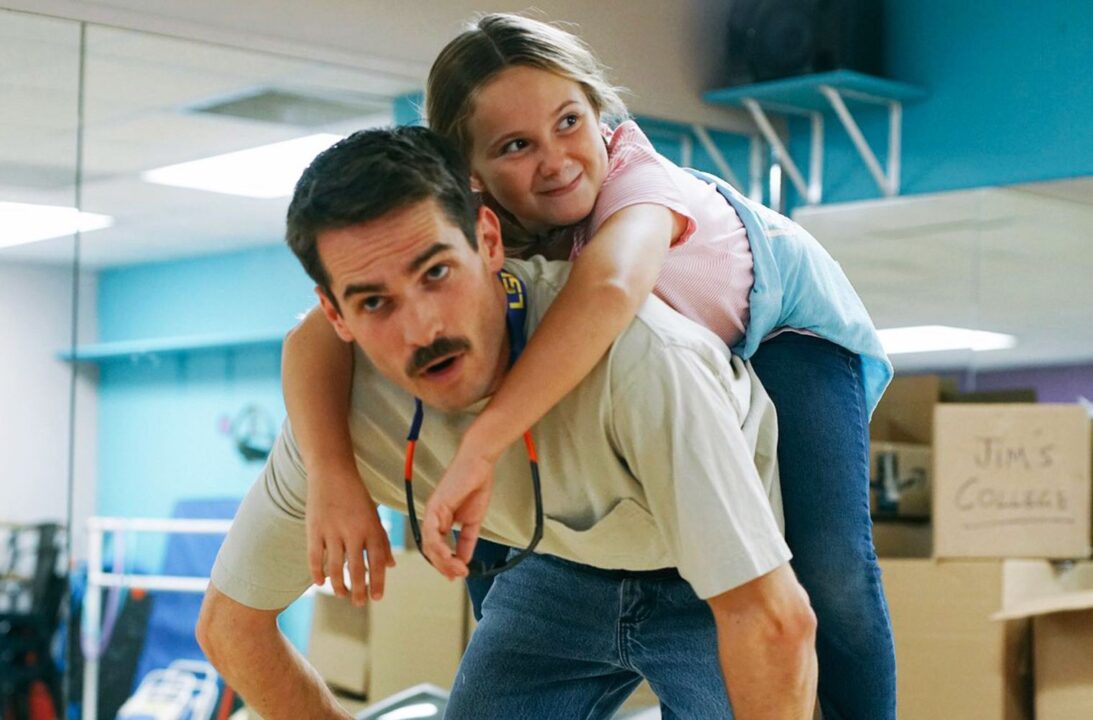
'Thunder Road' Review: An Off-Kilter Look at Love and Loss
An impressive 12-minute long one-take sets the scene in writer/director/actor Jim Cummings' dark comedy, Thunder Road.
Aside from the impressive technical accomplishment of capturing this mammoth of a monologue, which is performed by Cummings alone, it's clear from the beginning that this is going to be a very off-kilter viewing experience. Emotionally in tune with the struggles of being both a parent and a child, Cummings creates a bittersweet love letter that speaks to the complexities of family dynamics while keeping the overall tone of the film interesting and unconventional.
Thunder Road is Jim Cummings' movie, through and through. He plays the fragile protagonist, police officer Jim Arnaud, and when we first meet him, he is delivering a heartfelt tribute to his deceased mother at her funeral. Dressed in his uniform, Jim uses his platform for a cathartic release of his pent-up regret about his past behavior of acting out towards his mother during childhood. He ultimately eulogizes her with an interpretive dance to Bruce Springsteen's "Thunder Road", providing a much-needed chuckle after nearly 10-minutes of grief-stricken sobbing.
As if losing his mother wasn't enough, Jim is also in the midst of a divorce, having issues at work, and struggling to connect with his young daughter, Crystal (Kendal Farr). After all, there is only so much advice a father can give his pre-teen daughter about boys and wearing makeup. Jim's unrelenting heartbreak is heavy, it seems as if he is never happy and that is a tough thing to sit through for an hour and a half. But Jim is resilient in his quest to give and receive love, which offers a silver lining during his struggle.
Directorial choices like these are what make 'Thunder Road' inventive both in front of and behind the lens.
A limited musical score adds to this dark comedy's overall feeling of unrest. When there is music, it comes from one lone, depressing violin, except for the beautiful sound of Bon Iver's "Skinny Love" performed by a string quartet in the film's final scene. That moment is sure to give anyone chills. This non-use of music is quite unconventional, and some may view it as flat. While there are moments that could have been aided by a more consistent score, the silence further adds focus to Cummings performance as an actor- distraction free.
Directorial choices like these are what make Thunder Road inventive both in front of and behind the lens. Cinematographer Lowell A. Meyer is patient with the long-takes and smooth with the subtle movements, breathing life into every scene.
Based off of and built upon Cummings' short film of the same name, which won the Short Film Grand Jury Prize at the 2016 Sundance Film festival, the 12-minute long short was quickly adapted into the feature-length film that is playing in theaters today. Thunder Road was also honored with the SXSW 2018 Feature Film Grand Jury Award and was in the top five best-reviewed films at Cannes this year where it premiered internationally.
'Thunder Road' is not rated. 92 minutes. Now playing at Laemmle theaters in Glendale, Pasadena, and Santa Monica and available on VOD.
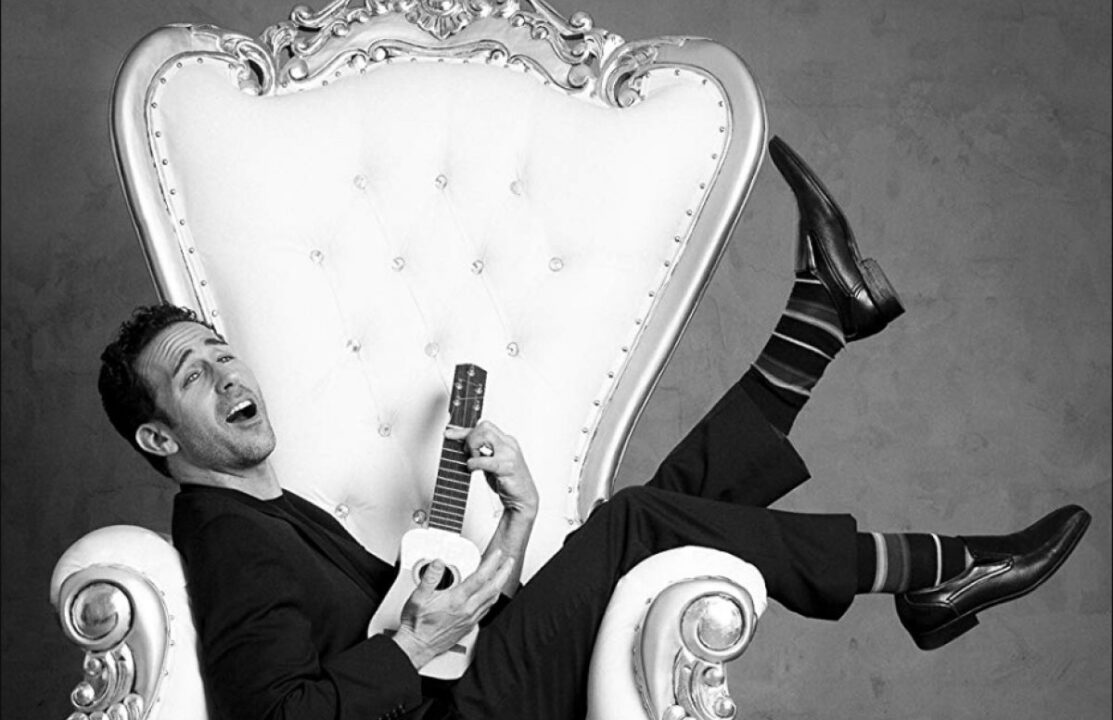
David Majzlin: "Don't use music as a crutch"
David Majzlin is a busy guy, just ask director Paul Weitz.
In-between work on the award-winning TV show Mozart in the Jungle and his recent project Bel Canto, both of which were lead by Weitz, the Emmy-nominated composer has been immersed in creating classical tunes for the big and small screen. Wanting to become a musician since he was two-years-old, Majzlin is literally living his dream as he continues to expand his repertoire, both in working with filmmakers and learning new instruments. In our exclusive interview, I talked with Majzlin about working with the legendary opera singer Renée Fleming and how he discovered Bel Canto's key instrument at a party. We begin:
On deciding between a career as a composer or film critic.
"I like to say that I got my start when I was two or three and I destroyed my parents piano. The name of my publishing company is Toy Hammer Music and that's because my parents had this piano with ivory keys on it and I really beat it up with this toy hammer. They thought I was just playing until they came into the room and there are ivory keys all over the floor. That really freaked them out.
But all joking aside, I studied music my whole life. I had piano lessons growing up and then in my teens, I started playing guitar and bass. I always absorbed a lot of different kinds of music. I never had one set "style."
And then I started scoring films in New York. I actually did my masters in a film criticism program at New York University. I wasn't sure a hundred percent if I was going to do music, I loved music and film, and I had a really hard time deciding which passion I wanted to pursue."

On working with opera legend Renée Fleming (who dubbed over Julianne Moore's voice).
"The greatest challenge is always time.
I was working on Mozart in the Jungle simultaneous to working on Bel Canto and I normally I wouldn't do two projects like that at the same time, but they were both for [director] Paul Weitz. You don't get a lot of time to write these things, [the production] has to move very, very quickly. You know what they say- you never finish a film, you just run out of time or money.
That's definitely the case with writing music for a film. We get maybe 8 to 12 weeks to work on everything. There were two challenges with this film. One is that Bel Canto is a film about music featuring someone as prolific as Renee Fleming. I had to be very careful not to overstep the composition because her voice is what the film is about, the whole idea of classical music as a conduit for love.
I had to be very careful given that Renee's voice is such a powerful instrument on its own, and then you have Julianne Moore, who's spectacular, and I didn't want to step over her. So that's the challenge."
Never heard of the "Timple"? Neither had David.
"Bel Canto takes place in an undetermined Latin American country. We don't say what country it is, so I needed to find an instrument that wasn't specific to a certain country. Like if I picked the Berimbau, for example, the Berimbau is definitely Brazilian, the Tarang is Indian, etc.
I was at a party once and I met this girl, a musician, who was moving to Mexico and was selling this instrument. Well, actually, it wasn't for sale at first but I convinced her to sell it.
It's called a Timple, which is often used in the Canary Islands and in Latin America. I'd never heard of this instrument but when I went to her place, I saw it on the wall and it really spoke to me. I got her to let me play it and I just fell in love. It was like love at first sight. I just knew that this is the instrument that's going to serve for the whole film. This is going to be my palate. This is going to be unique."

On telling directors not to use music as a crutch.
"No matter who the director is unless the director is a musician, there's always a sense of uncertainty and trepidation because music composition is not their language. The directors are visually oriented people. It's sort of like you're taking their baby to college and you're like, 'Don't worry, it's going to be better!'
I ask the editor to edit for as long as possible without any music at all. I try to get them to get all the way to the end with no music that way you can see what's missing. That way you don't use the music as a crutch. A lot of times, the number one request I'll get for music is, 'Oh, the scene is boring or it's slow or the energy's low' and I'm always thinking, 'Well, maybe you should cut that scene because if it's slow then why is it in there?' You know what I mean?
You have to know why you're using that music. If you don't, then you run the risk of people not understanding what you're intending."
Listen here:
https://open.spotify.com/artist/5Hz5BSLJuxBF7dWNIwfhgs