
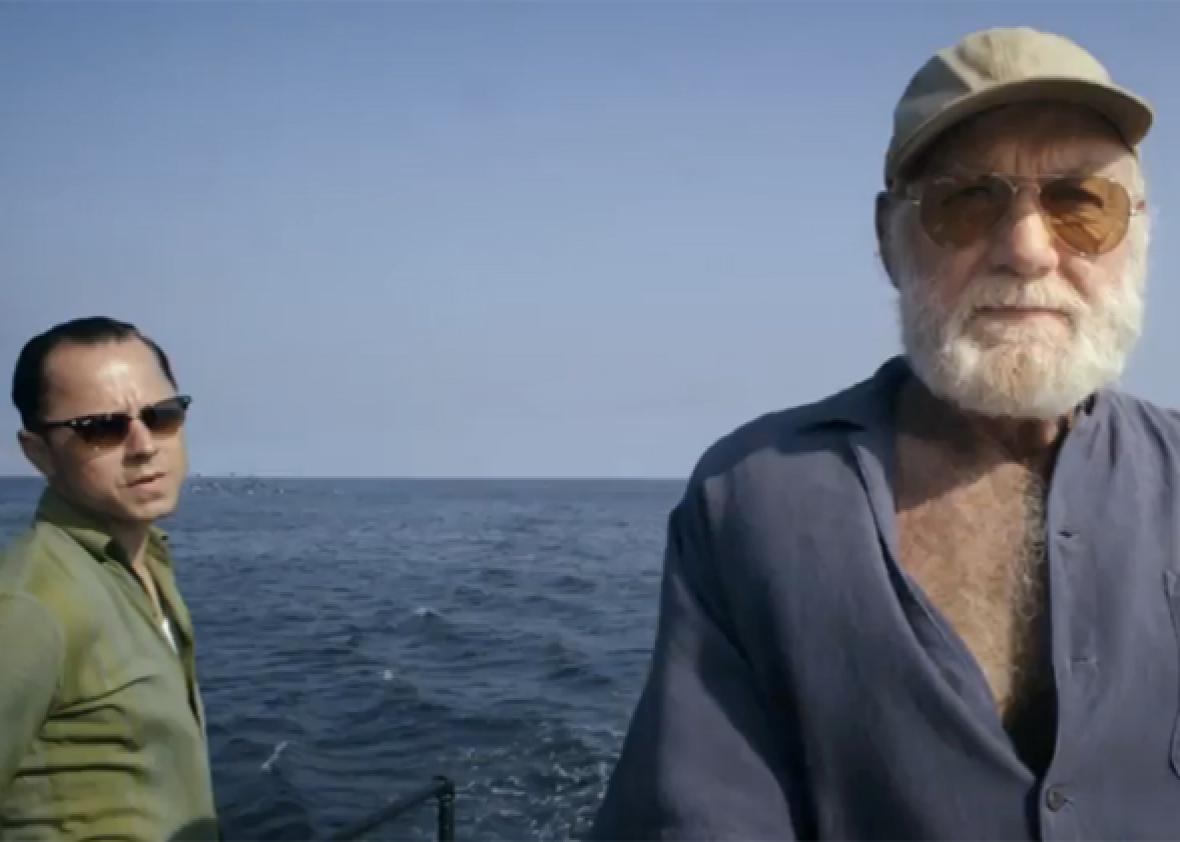
'Papa: Hemingway in Cuba' Shows the Dark Days of a Genius in Crisis
In literature, there is a term called the "Hemingway Hero," which is essentially a set of noble traits and honorable qualities that the reader should aspire to, much like any character in an Ernest Hemingway novel. Every writer attempting to create this attribute will find that the qualities that make up a hero today compared to that of Hemingway's day are consistent and timeless. This idea of what makes a man a man, and living a life of "honor, courage and endurance in a world that is sometimes chaotic, often stressful, and always painful” will forever ring true to those in search of a deeper meaning of life. The Bob Yari-directed film Papa: Hemingway in Cuba, tells the true story of one man's relationship with the legendary writer Ernest Hemingway, and essentially starting his journey to find his own, literal, "Hemingway Hero".
"What do you say to the man who changed your life, and never even knew you?" Ed Myers (Giovanni Ribisi), a journalist at the Miami Herald in the 1950s, asks this question while struggling to find the words for a letter he plans to send to his idol, Ernest Hemingway (Adrian Sparks). Growing up an orphan during the depression, Myers' voice-over explanation reveals that he had always wanted to be a writer and an adventurer. His lack of family ties created a longing for someone to look up to, someone to be a father figure. He writes all of this and more in his letter, spilling his soul onto the page. Then, one day, Myers gets a life-changing phone call from the man himself, telling him how much he appreciated the letter and then asking him to travel to Cuba to spend time with him.
While the first third of the film tends to drag a bit slowly, it really comes alive when we follow Myers to Cuba and get to meet Hemingway. The atmosphere of the city and live music are electrifying, a juxtaposition to the man Hemingway had become by that point in his life. Myers quickly develops a closeness to Hemingway and his wife Mary (Joely Richardson), considering them the family he never had. However, their blissful life erupts into chaos as they immediately find themselves in the middle of the Cuban revolution.
The fact that this is a true story alone is worth watching, but probably the biggest selling point is that this is the first Hollywood film to be shot in Cuba in over 50 years. The authenticity of being able to shoot in the original locations including the bar El Floridito and Hemingway's actually home in Finca Vigia, which is now preserved as a national museum, is a fascinating thing to see. Possibly the coolest memento of all, though, is that the typewriter used in the film is Hemingway's original one.
Personally, a big fan of Hemingway myself, (I did name my dog Ernest after all), seeing this time period in his life is difficult as we all know the outcome of his losing battle with depression. It is a hard pill to swallow watching him stick a revolver in his mouth and beat his wife. For as beautiful the worlds he created in his books, the man we see on screen is a tortured artist that is struggling to see the purpose of his own life. Adrian Sparks captures both Hemingway's brilliance and demons in his performance, truly giving justice and respect to the late author.
As much as you become absorbed in Sparks' performance, there are moments that can take you out of the film. At times Ribisi comes off somewhat flat, for example, getting that initial call from his idol, Hemingway himself, he barely seems to muster up any excitement. Instead, it feels as if that scene may have been rehearsed one too many times and, by that take, he was just going through the motions. Another head scratching moment is how quickly the film jumps into some scenes without much setup. One moment, Myers is on the beach in Cuba, the next he's on the beach in Florida telling his girlfriend (Minka Kelly) about his trip to Cuba. It feels rushed, but at this point, we've become invested in these characters that we're along for the ride so we don't really care where we're going or how we get there.
Papa: Hemingway in Cuba is a stunning portrait of one of the greatest authors and storytellers of the 20th century. Bob Yari takes the biopic and breathes life into the genre just by the sheer amount of authentic details (like the shooting locations alone), plus this inspiring and true story of one man's search for the meaning of life is something we can all relate to. Bonus- Keep an eye out for a quick cameo from Ernest's granddaughter Mariel Hemingway.
Papa: Hemingway in Cuba is rated R for language, sexuality, some violence, and nudity. Opens in select theaters on Friday, April 29th.

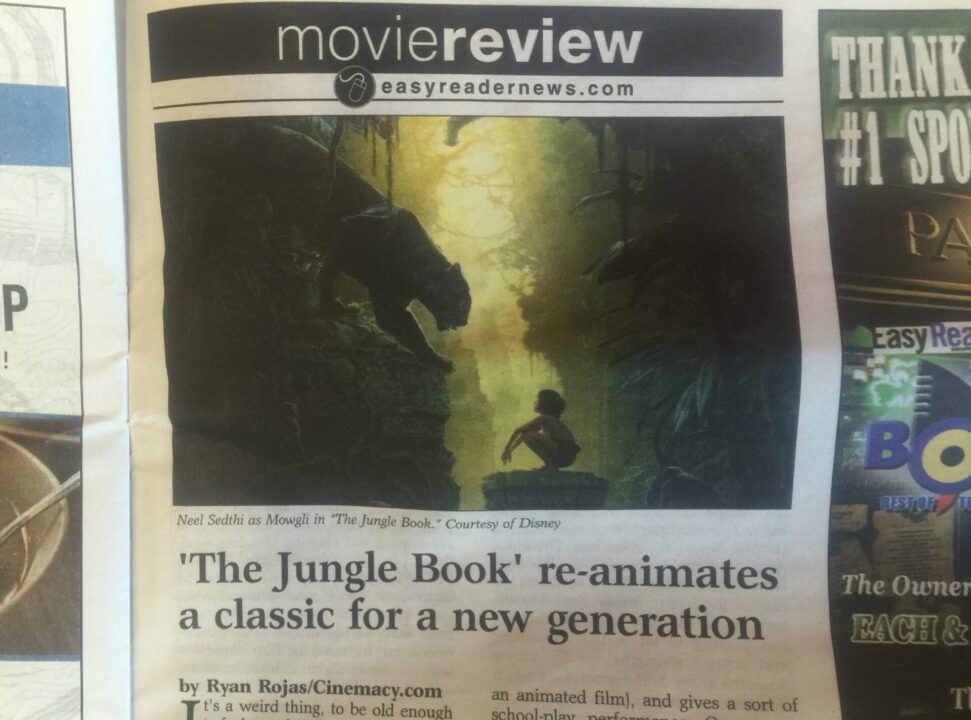
Letter from the Editor: Cinemacy is now in the Easy Reader Newspaper!
Cinemacy is expanding! We’ve partnered with the Easy Reader, the leading local news site for Hermosa Beach, Manhattan Beach, Redondo Beach, El Segundo and Palos Verdes, to bring our film reviews to an even bigger audience! And when we say bigger, we mean an additional print circulation of 50,000/weekly and 220,000/online visitors monthly! Together with our continuing weekly review in Herald Publications, Cinemacy is quickly becoming the source for quality film journalism in the South Bay. A huge THANK YOU for all of your continued support!

-Morgan, Editor-in-Chief

'Wedding Doll' Is a Delicate Story of Finding Love and Independence
Writer/Director Nitzan Gilady's charming film Wedding Doll won audiences over at the Jerusalem Film Festival and the Ophir Awards (Israeli Oscars), taking home the top honors of 'Best Actress' and 'Best Film', respectively, among others. Today, the festival favorite will hit screens stateside and is sure to attract American audiences with rising star Moran Rosenblatt's phenomenal performance of a mildly handicapped woman who wants to fall in love.
25-year-old Hagit (Rosenblatt) dreams of her wedding day, anticipating the moment she will put on the iconic white dress that she's become obsessed with- magazine cutouts of gowns and brides cover her bedroom walls like boy band posters from the 90's. However, Hagit doesn't realize her fairy tale romance may never come to fruition because of her mild mental handicap, making her dependent on her mother's help for many everyday tasks. When she is not under constant supervision of her mother Sara (Assi Levy), Hagit works in a small factory manufacturing and assembling toilet paper packages and makes little wedding dolls out of toilet paper to pass the time. She has become infatuated with her boss's son Omri (Roy Assaf), who happens to be the only other person working at the factory. They strike up a friendship, but she perceives it is much more. When the factory realizes it needs to shut it's doors for good, Hagit's desire for independence and quest to find true love is pushed further than she may be capable of understanding.
Rosenblatt embodies Hagit with such detail, nailing every quirky trait no matter how small. Her reactions to being called 'weirdo' and 'goofy' are understated, but we see the sharp pangs of pain etched on her face. But this isn't just Hagit's story, it is as much that of her mother, Sara, as we see her struggle to keep a job as a hotel housekeeper, as well as the relentless responsibility of being Hagit's sole parental guardian while trying to also have a love life. Sara attempts to do all three, but as a result of biting off more than she can chew, does none of them well. Assi Levy plays Sara with the necessary confidence to allow audiences to trust her choices, yet with a strain of vulnerability that evokes sympathy for her.
Not only does Wedding Doll nail the performances, the cinematography is just as engaging. Set in the desert on the outskirts of the city, the aesthetic is rich in color and incorporates various textures as well; the abundance of stone, tile, water, and paper make for a pallet any artist would envy.
Wedding Doll runs at a swift 80 minutes and thankfully, never feels rushed. Every scene is engaging and there is purpose and value in every moment. Gilady has managed to trim the fat and delivers a sleek and concise coming-of-age love story that is far more unique than others of recent production.
Wedding Doll is now playing at Laemmle's Music Hall 3 and Town Center 5.

Jean-Luc Godard's 'A Married Woman' Returns to the Big Screen
The Cohen Film Collection, together with the Nuart Theatre, is hosting a very special theatrical engagement of Jean-Luc Godard's 1964 film, A Married Woman (Une Femme Mariée). For those who have not seen this classic film, now is the perfect opportunity to dip your toe into one of French New Wave's most memorable films. For those who have seen , it is definitely worth revisiting on the big screen. This retrospective runs from Friday, April 15th until Thursday, April 21st.
A Married Woman is an intimate portrait of one woman's marital and extramarital relationships and her wavering emotions surrounding a complicated love triangle. Describing herself as the verb "To follow," Charlotte (Macha Méril) is a naive, confused woman who finds herself torn between indulging in exciting morning affairs with her actor-lover Robert (Bernard Noël) and consistent mundane evenings with her son and pilot husband Pierre (Philippe Leroy). Her aimlessness doesn't last long, however, when Charlotte discovers she is pregnant and without knowing who the father is, she is forced her to confront her illicit behavior once and for all.
Jean-Luc Godard was truly a master filmmaker as A Married Woman is the type of film that can tell the story purely by images, no words are even necessary to express the emotion and passion onscreen. Despite its racy subject, the characters come across as very modest. The seduction is in the camerawork, moments when a steady shot holds on Charlotte's bare legs in bed or her collarbone are provocative without overindulging in sexual exploitation.
A Married Woman is a refreshing walk down memory lane, cinematically speaking, and while the techniques of fading to black between practically every shot may seem redundant and may push the average moviegoer out of their comfort zone of fast moving, high-intensity pacing, it is refreshing to see how far film, in general, has grown and pushed technical boundaries. The subject matter and story line are still very much relevant today, just ask any guest on Maury or daytime talk show.
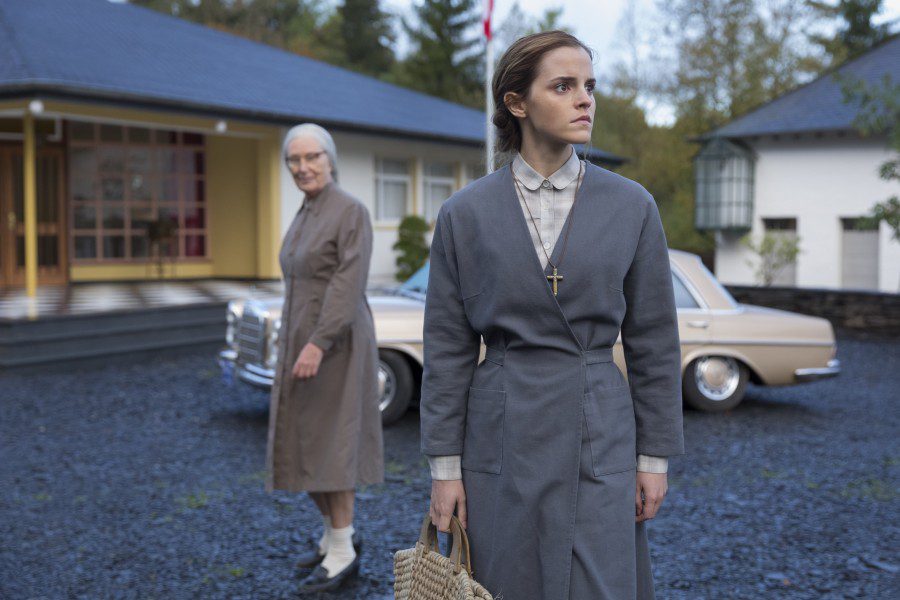
Sacrificial Torture and Secret Worlds in 'Colonia'
Bill Withers' "Ain't No Sunshine" accompanies archiva
While enjoying their time together, Daniel receives a phone call that shifts the political tide and changes everything. This results in chaos erupting in the streets, leading to their capture by the Chilean soldiers. Daniel gets abducted and taken to a hidden cult in a rural area called Colonia Dignidad, run by ex-Nazi Paul Schäfer (Michael Nyqvist). Left with no other choice, Lena willfully joins the Colonia as a desperate, last-ditch effort to find her boyfriend, risking her own life to bring him home as she discovers that those who enter the cult never leave.
Emma Watson and Daniel Brühl play Lena and Daniel with an innocence about them that has you rooting for their success. Watson is unquestionably beautiful and smart, her outspokenness gets her into trouble. Brühl takes a more unconventional risk with his character by playing the role of a mentally challenged person in an effort to trick his captors into thinking he is not a threat. Watson and Brühl are crucial to the film's success, but individually speaking, these roles won't likely result in a significant boost to their careers.
Colonia can't escape the comparisons to Eli Roth's The Sacrament or the documentary Kidnapped for Christ (if you haven't seen it, it's available to stream on Netflix, and is a MUST-watch), which may hurt Colonia's overall success because it is not as riveting by comparison. Audiences know what they are getting with an Eli Roth film, and a documentary has its own sense of wonderment, but Colonia tends to jump from the political thriller to love story to religious brainwashing in a patchwork way that feels a bit all over the place, and it is this "clumpy" genre blending that may be the film's weakest point. Plus, Daniel and Lena's relationship is never fully established in the beginning of the film, so we are left to wonder why she would risk her life to save this person.
At its core, Colonia is an interesting story, but not a very memorable film. It doesn't provide enough tension to overshadow The Sacrament, nor does it have the foundation to be a solid romance. The fact that it is based on a true story is what keeps the film afloat and the inclusion the smuggled archival photos of the real Colonia Dignidad at the end is a much-needed gem. Yet, even with cinema-savvy actors Emma Watson and Daniel Brühl, Colonia can't quite seem to gain the traction needed to be a standout film.
Colonia is not rated, opens at the Laemmle NoHo on Friday, April 15th.
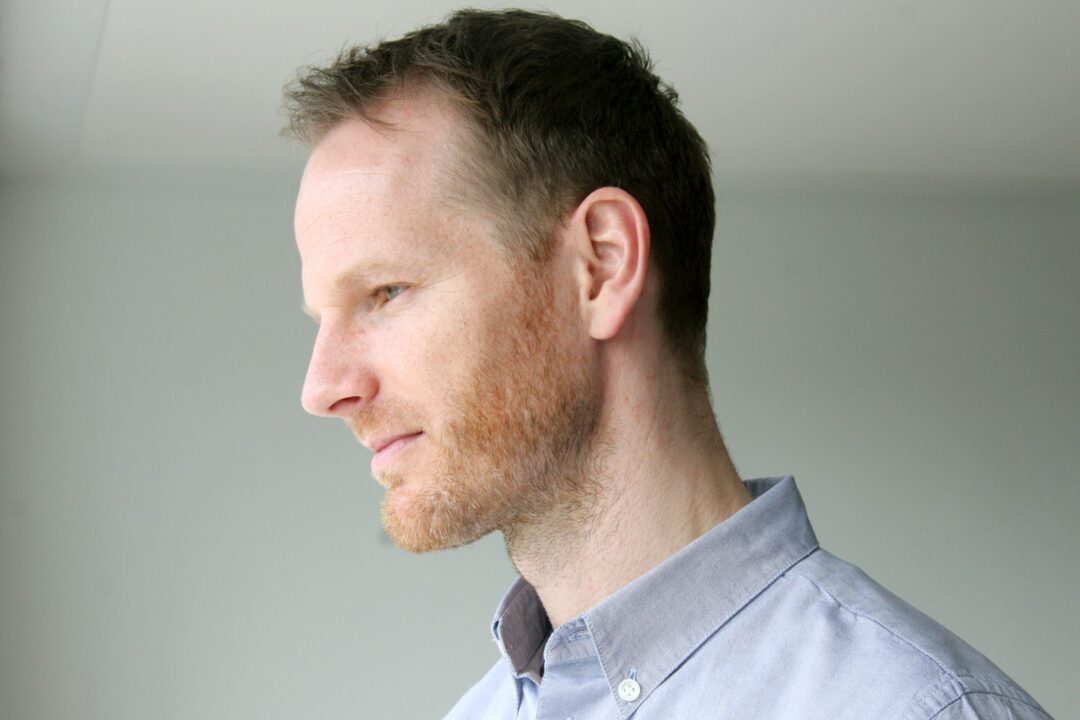
'Louder Than Bombs' Director Joachim Trier on the Hardest Part of Pitching His Film [LISTEN]
[soundcloud url="https://api.soundcloud.com/tracks/257831546" params="color=ff5500&auto_play=false&hide_related=false&show_comments=true&show_user=true&show_reposts=false" width="100%" height="166" iframe="true" /]
In 2007, Joachim Trier was named one of Variety's "10 Directors to Watch" with his release of "Reprise" and this Friday, fans of the Norwegian-born director will be greeted with his first English-language feature film, "Louder Than Bombs" (Read our full review, here). A melancholic drama that includes multi-layered narratives, "Louder Than Bombs" tells the story of one family's struggle to process and then move on from the death of their loved one. "Louder Than Bombs" has a strong narrative storyline with a stunning and unique cinematic style that will resonate with audiences long after the film ends. Trier's directorial risks pay off as the juxtaposition between external reality and personal feelings are the film's selling point. I had the opportunity to sit down with Trier last week, and we talk skateboarding, being in the moment, and the hardest part about pitching his film. We begin:
I read that you had grown up skateboarding; I know the mentality of a skater is when you fall you get right back up and keep going. Has that mentality affected you as a director?
There is this identity test called Big 5, and I guess I score as a "high-risk taker," haha. I've broken both of my arms and my ribs three times and had concussions and kept skating. I think when I do a film, more in a mental way, it's like a slam. I'm terribly grateful to be allowed to do movies but it takes something out of you every time. I think I get satisfied with taking risks. I used to make skateboarding videos, filming my friends jump down staircases. It was like setting up a stunt. With "Louder Than Bombs," there were certain scenes I was unsure of how would turn out. You don't know until you film it and cut it if it'll work, and every time it's a bit of a risk.
What drew you to the subject of a woman war photographer?
I was interested in the fact that it presented the character of the mother, who had such a strong absence in the film, with a virtuous and admirable profession. So for the family, it's hard to grieve someone that you couldn't even criticize for their importance in the world if you see what I mean. The other thing is the dichotomy in life between work and family becomes so poignant with that job. The third thing is dealing with the idea of how to convey portraits of human beings in the world today with a massive, rapid imagery, which, in the world of journalism, seems to be geared toward immediacy.

Your film sidesteps clichés when dealing with the character's grief, can you talk about that?
Grief is a universal theme that I was trying to be specific about and in this case, I was very curious about the modern family dynamic. Coming from Scandinavia my mom was a feminist in the 70s, and that allowed me to explore different forms of father characters who are not necessarily the "authoritarian", rather he smothers them with love in the more "traditional" mother sense. And avoiding clichés, well that's the name of the game. We're trying to do our thing and I'm glad it resonates.
What were some of the biggest challenges of making your first English-language film?
I think getting this level of a budget ($11,000,000) is tricky in the beginning because it's not the most commercial premise... I make un-pitchable films. I don't know if you've tried yet to describe them, but it's not so easy! But actually getting on set, getting the actors, all of that was fine! The team was amazing. We shot it all in New York, American film teams are the best in the world. Jesse Eisenberg was shooting "Batman v Superman" at the same time, but was very eager to do this film, which I'm very grateful for, so he got Warner Brothers to release him for 5 weeks or something to shoot this in the middle of it. He went from Lex Luther to Jonah and back!
"Jesse Eisenberg was shooting "Batman v Superman" at the same time, but was very eager to do this film–which I'm very grateful for–so he got Warner Brothers to release him for five weeks or something to shoot this in the middle of it. He went from Lex Luther to Jonah and back!"

The surreal moments in the film are some of my favorite, where did you draw your inspiration from?
Since this is a film that tries to portray the minds of the characters as much as the events around them, [I wanted to show that] their interior thoughts and dreams matter. I like to try to find ways of telling stories that bring you into their minds. How do I come up with them? I try to be intuitive when I work. I have a tendency to plan a lot, and there are moments for that, but there are also moments to just let go and realize that something came up for a reason.
Is there something the actors brought out that you didn't see during the writing process?
Oh, all of them. I think Devin had great authority on being a 15-year-old in a much more nuanced way; he fought for that character to be complex and not simple. Jesse was very funny and sometimes almost made the character cynical with a touch of heart. With Isabelle, you don't know what you're going to get but it's always remarkable, she's amazing. Gabriel came in and was very supportive of everyone on set, it was a very natural role for him. 
What is the one thing you are the proudest of?
Days like this, when people come in and talk about different elements and interpretations of the film. Just today I've had people come in and talk about how they've related to the 15-year-old who needed to create the space in the world to speak his voice. Someone else comes in and talks about how difficult it is to be a working mother and still be a good mother and wife at home while someone else talks about modern fatherhood. If people can take all that stuff out of this film, that's great.
"Louder Than Bombs" is rated R for language, some sexual content, nudity and violent images, 109 minutes. Opens this Friday 4/8 at Laemmle’s Royal Theatre and Sundance Sunset Cinema.
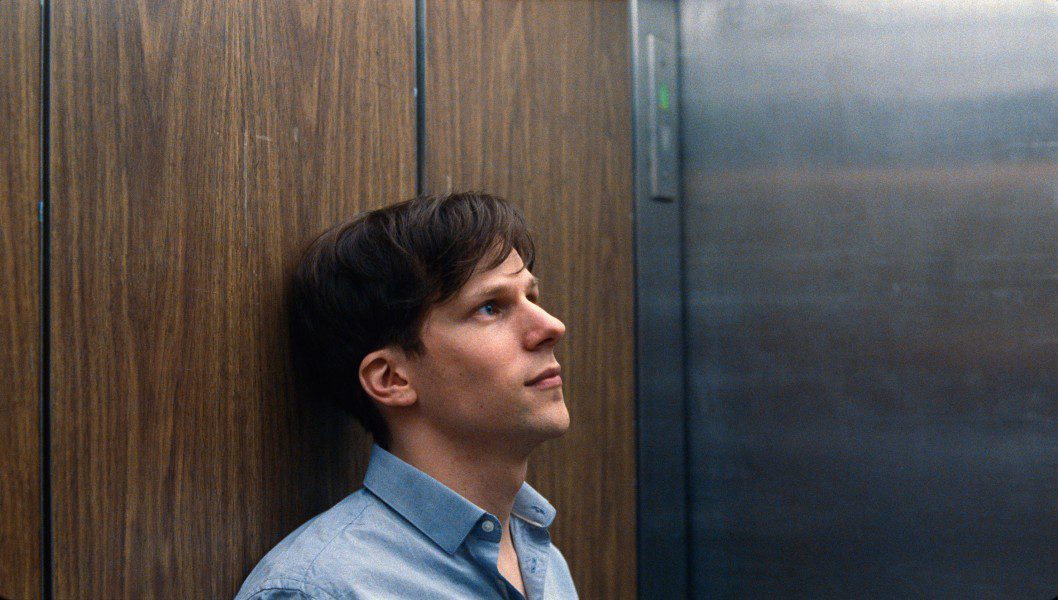
'Louder Than Bombs' Review: Confronting the Human Desire for Connection
Director Joachim Trier makes his English-language debut with the drama Louder Than Bombs, an intimate portrayal of one family's relationship and the struggles they must overcome in the face of death. The film made its debut at the 2015 Cannes Film Festival and is sure to make waves in the indie/art-house film scene.
The Painful Aftermath of a Mother's Death
Isabelle Reed (Isabelle Huppert) a famed photographer who feels most comfortable in war and conflict-ridden areas, is the center of her husband Gene (Gabriel Byrne) and their two sons, Jonah (Jesse Eisenberg) and Conrad (Devin Druid), worlds. No one could have predicted that she would leave behind a familial conflict of her own doing after her untimely and suspicious death. Three years after the accident, Isabelle's works are thrust into the spotlight when a museum in New York asks to use her photographs for a retrospective gallery installation. Her husband accepts, as he is slowly moving on with his life, and sees this as a great opportunity to honor her.
However, he discovers that an accompanying New York Times article speculating Isabelle's actual cause of death is set to run simultaneously with the gallery opening. This threatens to expose the devastating truth that Gene is intent on hiding from Conrad. He has no choice but to enlist his oldest son Jonah to help him with another painful confrontation.
Confronts the Human Desire for Connection
Louder Than Bombs is an unwavering look at the human desire for connection and the need to be understood. It's obvious in Conrad's behavior as he alienates himself from his father's attempt to reconnect. It's also seen in Jonah's promiscuity, even when he has a wife and newborn baby at home. Gene's attempt to bond with his two sons is affected by his flaws. This humanistic condition for connection is at the forefront of the film. It engages the audience in contemplating how and why we act the way we do, focusing on the relationships within our own family.
What sets Louder Than Bombs apart are the surreal moments Trier infuses within the story. He disregards the traditional method of linear storytelling by shifting between the past and the present. These added moments put visuals to feelings that have a hard time being expressed otherwise. They are not the character's dreams, rather, they are daydreams- or what one wonders about without limitations. These moments are hauntingly beautiful and stand out as works of art.
Jesse Eisenberg Leads this Excellent Cast
On the acting front, the assembled cast could not have been better. Jesse Eisenberg is fantastic in the role of Jonah. His trademark quick-witted clamor serves as the voice of reason in the film. Gabriel Byrne plays Gene with sensitivity as a conflicted father who is not without his flaws. Devin Druid embodies the angsty, brooding teenager while still holding onto the innocence of being a misunderstood child. These, plus the stellar performances from Isabella Huppert, David Strathairn, and Amy Ryan, truly give the film its footing.
Takeaway
The title- Louder Than Bombs- suggests an epic, grandiose drama. Instead, Trier creates a meditative and restrained film that is not loud or brash. Rather, it celebrates uniqueness and coming together to fulfill the family dynamic. There is no doubt that Joachim Trier took a risk with Louder Than Bombs. I believe his creative vision has the potential to pay off tenfold.

'Take Me to the River' Director Matt Sobel Talks the Nightmare That Inspired the Film
On the day of the theatrical release of his debut film, "Take Me to the River," director Matt Sobel took a few minutes to chat with us about the 2015 Sundance darling. The film stars Logan Miller as Ryder, a gay teenager from LA who is none too pleased when his parents decide to drag him to rural Nebraska for a family reunion. The ensuing collision of value systems causes tensions to rise -- eventually threatening to expose a painful family secret. We talk about how a nightmare inspired the film's story, his likeness to the protagonist, Ryder, and dissecting what his family's saying "If it don't scare the horses" means to him. We begin:
Was the idea for "Take Me to the River" something you've been holding onto for awhile?
Yeah, I wrote it my senior year of school. I didn't go to film school [Sobel studied fine arts at UCLA] but I always knew how I wanted the film to feel. I was figuring out the logistics and the industry on my own, so it was a bumpy ride to say the least.
This film felt and looked exactly like my family reunion in Idaho a few years ago. Eerily similar. How personal was this film for you?
The farm in the film is my family’s actual farm in Nebraska, and I grew up going to that family reunion. The location and set up is entirely real. [Like Ryder] I was the only cousin not from Nebraska. For example, the scene where his cousins ask him to draw them all pictures, that was me. Another similarity about my family [and the family in TMTTR], which has maybe been heightened from heritage, is the inability to speak about interpersonal issues. That is a very midwestern mentality. My family has a saying, "If it don't scare the horses." What they mean by that is if it doesn't disturb business on the farm, then there's no business in talking about it.

Is it fair to say you purposefully pushed audiences to the brink of their comfort zone?
Definitely, I wanted to push viewers in the writing of the script, but especially in the editing. I was always looking for opportunities to not allow the audience a traditional moment of relief. In many films, there is a balance of mounting tension followed by relief. It is a little unorthodox to cut out all of the moments of relief, but that's what we did here. An obvious example of this is the scene with Ryder (Logan Miller), his Uncle Keith (Josh Hamilton), and the loaded gun. The result we wanted was the slow broiling, ratcheting up of tension.
This being your debut feature film, what are you most proud of?
I feel like capturing the uncanny dreamlike tone was the hardest part. The idea for the film came from a nightmare and I wanted it to feel that way in the movie. It's hard to recreate the feeling of a dream in a film because usually they feel overworked. While you're dreaming, the events taking place don't seem so strange, just a little off, but you can't understand why. I would say Take Me to the River is closer to uncanny than surreal because it is simultaneously familiar and unfamiliar. I realized the creepiest thing would be to shoot it like an awkward scene out of a comedy. We wanted to send the audience mixed signals about how they should feel in a certain scene, and I feel like we achieved that. That was the most rewarding because we spoke about achieving that visceral aesthetic the most out of everything.

What were you looking for in casting your actors?
Robin Weigert has an incredible mind, she is an intelligent, brilliant person. When she came on the project, we spoke regularly about elaborating the backstory in different drafts of the script. The draft that she read when we began was markedly different than the one that we ended up shooting. She had quite a lot to say about the topics of childhood sexuality, the role that shame plays in adults chastising children for what is a natural exploration of our bodies. Her input was really invaluable. With Logan, I was looking for someone who seemed to be completely at ease in this world of extreme awkwardness, someone who was able to bounce back and forth between wanting to scream and wanting to laugh. While he maybe wasn't the most obvious, he was the right choice. His intuition would always be in the right emotional space. With Josh Hamilton, I was looking for someone who would surprise us, who wasn't instantly readable as "the villain". He would rise out of the ensemble and unnerve us with deadpan motivation.
Rivers usually symbolize rebirth or baptism, but in this film, it doesn't seem so pure.
Yes, we had extensive conversations about symbolic nature of the river. I feel like it does represent a sort of baptism, a coming-of-age. However, Ryder's coming of age doesn't end with him finding his path in life, he's actually less sure about life than before. He began overly confident in himself but ends up feeling like the world's more gray. Because of this, I like to describe Take Me To The River as an inverted coming-of-age story. This is more what ‘real life’ coming-of-age is like—the moment when you realize you don’t know as much as you thought you did. I’m also interested in equating growing up with a type of baptism, or more specifically, a reverse baptism. Becoming an adult, as I see it, is more of a muddying than a cleansing. That's also why we chose the image for the poster- the symbolism of Ryder lying on the river bank with mud on his body.

What was it like showcasing the film at Sundance in 2015?
The first time I went to Sundance was on a family trip when I was 13, and the first movie I ever saw was Memento. We had tickets for another movie later that day but we decided to skip it and just go to dinner and talk about what we just watched. For me, that became the mark of a film's success or not- if you want to keep talking about it after the movie's over. We actually screened Take Me to the River in the same room [the Library Theater] that I saw that first film, Memento, in, so it's been very special.
What's next for you?
I'm attached to direct the screen adaptation of Maggie Stiefvater's New York Times bestselling young adult novel, The Scorpio Races, which couldn't be more different. This film taps into another part of me. Growing up my favorite film was Jurassic Park, and this film falls in the same vein as that. The chance to make young audiences feel like I how I felt about Jurassic Park, I couldn't pass that up. I'm also writing a science-fiction film that's set in China about 2 orphan sisters who are recruited by a Chinese sports camp to be trained as Olympic synchronized high-divers.